

Sunnova Bundle

Who Really Owns Sunnova Energy?
Unraveling the intricate web of Sunnova SWOT Analysis ownership is key to understanding its future. With Sunnova Energy International Inc. navigating significant shifts, including a Chapter 11 filing in June 2025, understanding the ownership structure is more critical than ever. The decisions of Sunnova investors and executives are directly influenced by who holds the reins, impacting everything from strategic direction to financial performance.

Founded by William J. (John) Berger in 2012, Sunnova Energy's journey from its headquarters in Houston, Texas, to its current market position is a story shaped by its ownership. As of March 28, 2025, with a market capitalization of approximately $38.98 million, understanding who owns Sunnova stock and the evolution of its ownership is crucial. This analysis will explore the company's history, including its major shareholders and the impact of recent financial developments, providing insights into the company's future. Key questions include: Who is the CEO of Sunnova? Who founded Sunnova? Where is Sunnova headquarters located? Is Sunnova a publicly traded company? How to invest in Sunnova?
Who Founded Sunnova?
Sunnova Energy International Inc. was established in 2012 by William J. (John) Berger and Jordan Kozar. Their aim was to reshape the energy market by offering affordable, reliable, and sustainable energy solutions to residential clients. They focused on providing solar and solar-plus-energy storage services.
John Berger played a crucial role in leading the company from its inception through its initial public offering (IPO). The founders' vision included providing 'energy independence' through services like operations and maintenance, monitoring, and repair.
The company's early growth suggests a reliance on early funding to expand operations across the United States. The business model included partnering with local dealers to design, install, and manage solar and energy storage systems. Initial ownership agreements likely included standard provisions for early-stage companies.

Early Funding and Business Model
Early backers and angel investors are not explicitly named in publicly available information. The company's approach involved partnering with local dealers for solar system installations.
- The initial focus was on residential customers.
- The company's services included operations, maintenance, and monitoring.
- The company's main goal was to provide affordable and sustainable energy solutions.
- The company's growth strategy is discussed in detail in Growth Strategy of Sunnova.
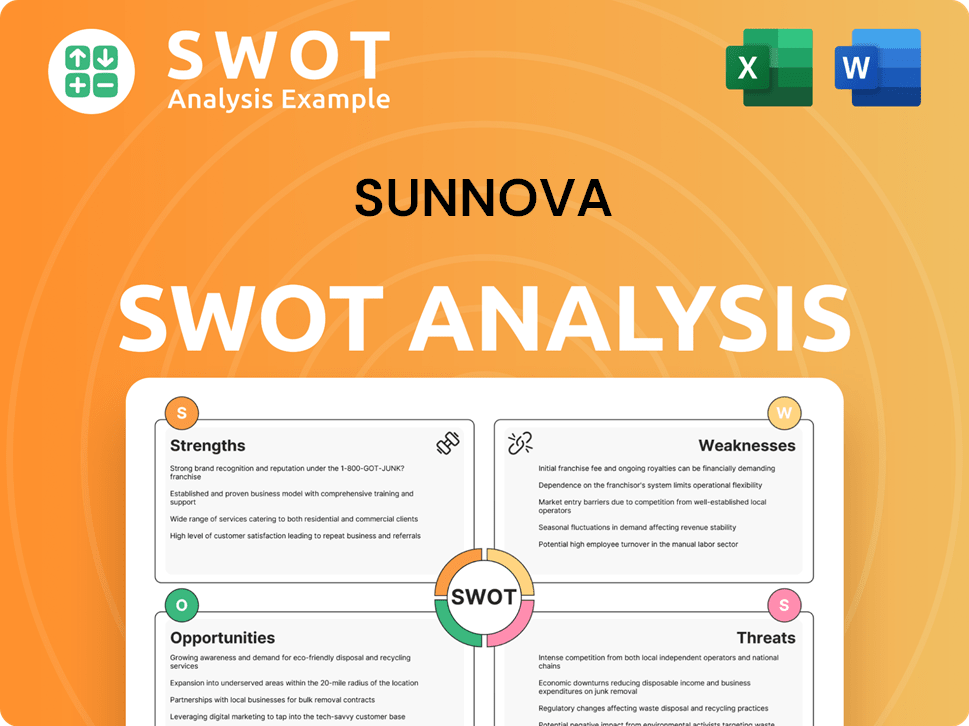
Sunnova SWOT Analysis
- Complete SWOT Breakdown
- Fully Customizable
- Editable in Excel & Word
- Professional Formatting
- Investor-Ready Format
How Has Sunnova’s Ownership Changed Over Time?
The evolution of Sunnova Energy's ownership structure began with its initial public offering (IPO) on July 25, 2019. The IPO, priced at $12.00 per share, raised approximately $168 million. This event marked a significant shift, transforming the company from a privately held entity to a publicly traded one, accessible to a broader range of investors. The IPO set the stage for the subsequent ownership dynamics, including the involvement of institutional investors, mutual funds, and individual shareholders. As of December 31, 2024, the company had approximately $1.4 billion in U.S. federal Net Operating Losses (NOLs), which underscores the importance of maintaining stable ownership to protect these financial assets.
The ownership landscape of Sunnova Energy has seen fluctuations, particularly among institutional investors and mutual funds. As of May 2025, institutional investors held 73.77% of the shares, while mutual funds held 33.14%. Insiders slightly increased their holdings to 0.41%. Earlier, in February 2025, institutional holdings remained high at 99.46%, but mutual funds decreased their holdings from 55.06% to 50.11%. These movements highlight the dynamic nature of Sunnova stock ownership and the influence of various investment strategies.
| Shareholder | Shares Held (as of March 31, 2025) | Shareholder Type |
|---|---|---|
| BlackRock, Inc. | 8,586,419 | Institutional |
| Vanguard Group Inc | 6,872,660 | Institutional |
| Newlight Partners LP | 6,505,811 | Institutional |
| Sylebra Capital LLC | 5,561,874 | Institutional |
| Blackstone Inc. | 5,500,000 | Institutional |
| AQR Capital Management LLC | 4,919,101 | Institutional |
Sunnova Energy's major institutional shareholders include BlackRock, Inc., and The Vanguard Group, Inc., as of March 31, 2025. In March 2025, the company implemented a Tax Asset Preservation Plan to safeguard its NOLs. This plan aims to prevent any single entity or group from acquiring 4.9% or more of the outstanding common stock, which could trigger an ownership change under IRS Section 382. This proactive measure reflects the company's commitment to maintaining its financial stability and protecting its assets. For more insights into the company's strategic initiatives, consider reading about the Marketing Strategy of Sunnova.
Key Takeaways on Sunnova Ownership
Sunnova ownership is primarily held by institutional investors. The company's IPO in 2019 marked a significant shift in its ownership structure.
- Institutional investors hold a significant portion of Sunnova Energy shares.
- The company has implemented measures to protect its financial assets.
- Major shareholders include BlackRock, Inc. and Vanguard Group Inc.
- Sunnova Energy's leadership team is focused on maintaining financial stability.
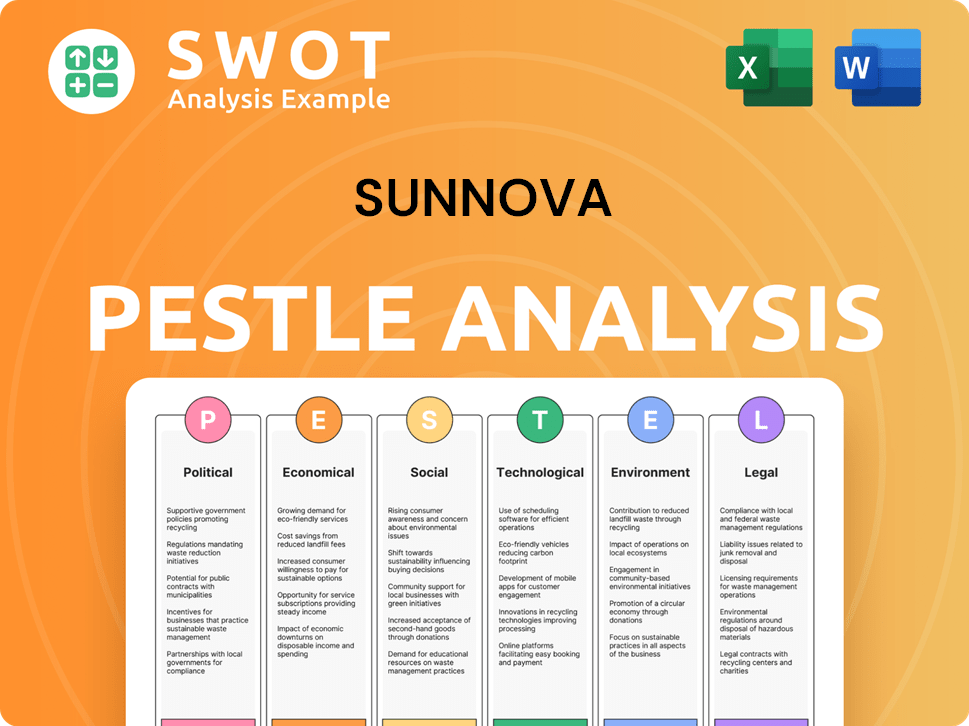
Sunnova PESTLE Analysis
- Covers All 6 PESTLE Categories
- No Research Needed – Save Hours of Work
- Built by Experts, Trusted by Consultants
- Instant Download, Ready to Use
- 100% Editable, Fully Customizable
Who Sits on Sunnova’s Board?
As of March 2025, the leadership of Sunnova underwent significant changes. Paul S. Mathews assumed the roles of President and CEO, succeeding William J. Berger, the founder, who transitioned from Chairman, President, and CEO and resigned as a Class I director. C. Park Shaper was appointed as Chairman of the Board. This restructuring reflects a strategic shift in the company's leadership, influencing the direction of Sunnova Energy.
Further changes in March 2025 included Robyn Liska's appointment as interim Chief Financial Officer and Alisha Leveston's appointment as Executive Vice President, Operations. Additionally, in April 2025, Ryan Omohundro was named Chief Restructuring Officer. These appointments highlight the company's focus on financial management and operational efficiency, key factors for Sunnova investors.
| Position | Name | Date of Appointment |
|---|---|---|
| President and CEO | Paul S. Mathews | March 2025 |
| Chairman of the Board | C. Park Shaper | March 2025 |
| Interim Chief Financial Officer | Robyn Liska | March 2025 |
| Executive Vice President, Operations | Alisha Leveston | March 2025 |
| Chief Restructuring Officer | Ryan Omohundro | April 2025 |
While the exact voting structure isn't fully detailed in recent public information, Sunnova ownership is managed through the Tax Asset Preservation Plan adopted in March 2025. This plan aims to prevent any single entity from acquiring 4.9% or more of Sunnova's common stock. The Board has the authority to exempt any individual or group from these restrictions. This approach suggests a 'one-share-one-vote' system for general shareholders, with a protective measure against concentrated ownership that could affect the company's tax assets. To learn more about the company's strategic approach, you can read about the target market of Sunnova.
Key Takeaways on Leadership and Ownership
Sunnova's leadership team has seen significant changes, with new appointments in key executive roles. The Tax Asset Preservation Plan indicates a focus on protecting the company's tax assets. These changes are crucial for understanding the future direction of Sunnova stock and the company's financial health.
- Paul S. Mathews is the current President and CEO.
- C. Park Shaper serves as the Chairman of the Board.
- The Tax Asset Preservation Plan limits ownership concentration.
- These changes impact Sunnova Energy's strategic direction.
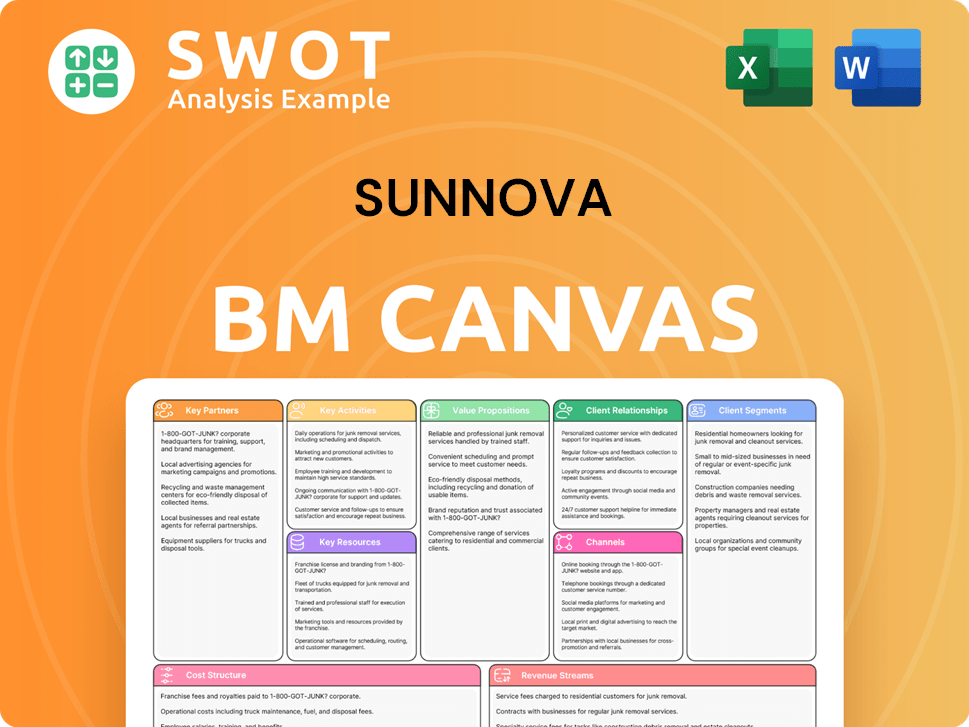
Sunnova Business Model Canvas
- Complete 9-Block Business Model Canvas
- Effortlessly Communicate Your Business Strategy
- Investor-Ready BMC Format
- 100% Editable and Customizable
- Clear and Structured Layout
What Recent Changes Have Shaped Sunnova’s Ownership Landscape?
Over the past few years, the ownership structure of Sunnova has undergone significant changes. In June 2025, the company filed for Chapter 11 bankruptcy to facilitate a sale process, following the bankruptcy filing of its subsidiary, Sunnova TEP Developer. This strategic move aims to secure new ownership and ensure the continuation of its business operations, with the company committed to servicing customer systems throughout this period. As part of this restructuring, Lennar Homes LLC is set to acquire certain assets from Sunnova's New Homes business unit for approximately $16 million.
A key development in March 2025 involved Sunnova adopting a Tax Asset Preservation Plan, effective until March 27, 2028. This plan is designed to protect its approximately $1.4 billion in U.S. federal net operating loss carryforwards (NOLs) as of December 31, 2024. The plan discourages any individual or group from acquiring 4.9% or more of Sunnova's outstanding common stock to prevent an 'ownership change' that could limit the use of these tax assets. This reflects a broader industry trend where companies with substantial tax assets implement similar plans to safeguard their financial positions. Additionally, Oaktree Capital Management acquired approximately $400 million of Sunnova's $8.5 billion in debt, signaling a shift in the company's debt profile.
| Key Development | Details | Date |
|---|---|---|
| Chapter 11 Filing | Facilitating asset sale and restructuring. | June 2025 |
| Asset Acquisition | Lennar Homes LLC to acquire assets for approximately $16 million. | June 2025 |
| Tax Asset Preservation Plan | Protecting $1.4 billion in NOLs. | March 2025 |
| Debt Acquisition | Oaktree Capital Management purchased approximately $400 million of debt. | Ongoing |
Leadership changes also occurred, with Paul S. Mathews appointed President and CEO in March 2025, succeeding founder William J. Berger. Robyn Liska was named interim Chief Financial Officer in the same month. The company's headquarters is located in Houston, Texas. The company also announced a $70 million cost reduction initiative. These developments highlight the challenges faced by U.S. residential solar firms, including high debt and policy uncertainty. For more insights into the competitive landscape, consider reviewing the Competitors Landscape of Sunnova.
 Sunnova Ownership Structure
The company's ownership has seen shifts, including a Chapter 11 filing and asset sales.
Sunnova Financial Strategy
A Tax Asset Preservation Plan was implemented to protect significant tax assets, reflecting strategic financial planning.
Sunnova Leadership Changes
New leadership appointments, including a new CEO and interim CFO, have been made.
Sunnova Challenges
The company faces challenges, including non-compliance with NYSE listing standards due to the stock price falling below $1.00.
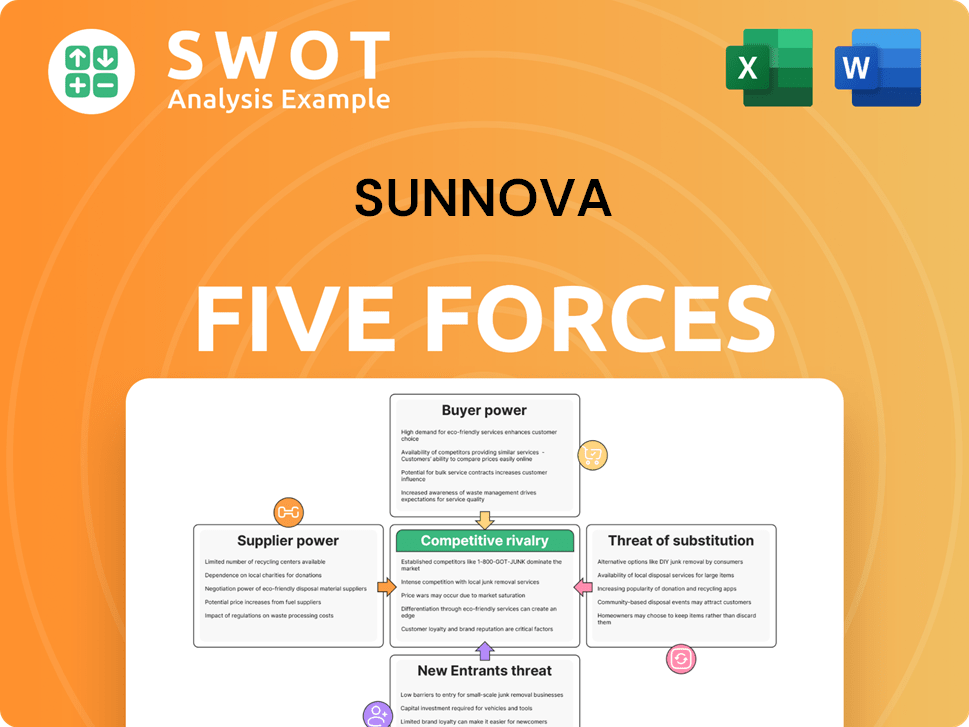
Sunnova Porter's Five Forces Analysis
- Covers All 5 Competitive Forces in Detail
- Structured for Consultants, Students, and Founders
- 100% Editable in Microsoft Word & Excel
- Instant Digital Download – Use Immediately
- Compatible with Mac & PC – Fully Unlocked
Related Blogs

- What are Mission Vision & Core Values of Sunnova Company?
- What is Competitive Landscape of Sunnova Company?
- What is Growth Strategy and Future Prospects of Sunnova Company?
- How Does Sunnova Company Work?
- What is Sales and Marketing Strategy of Sunnova Company?
- What is Brief History of Sunnova Company?
- What is Customer Demographics and Target Market of Sunnova Company?
Disclaimer
All information, articles, and product details provided on this website are for general informational and educational purposes only. We do not claim any ownership over, nor do we intend to infringe upon, any trademarks, copyrights, logos, brand names, or other intellectual property mentioned or depicted on this site. Such intellectual property remains the property of its respective owners, and any references here are made solely for identification or informational purposes, without implying any affiliation, endorsement, or partnership.
We make no representations or warranties, express or implied, regarding the accuracy, completeness, or suitability of any content or products presented. Nothing on this website should be construed as legal, tax, investment, financial, medical, or other professional advice. In addition, no part of this site—including articles or product references—constitutes a solicitation, recommendation, endorsement, advertisement, or offer to buy or sell any securities, franchises, or other financial instruments, particularly in jurisdictions where such activity would be unlawful.
All content is of a general nature and may not address the specific circumstances of any individual or entity. It is not a substitute for professional advice or services. Any actions you take based on the information provided here are strictly at your own risk. You accept full responsibility for any decisions or outcomes arising from your use of this website and agree to release us from any liability in connection with your use of, or reliance upon, the content or products found herein.