

Sunnova Bundle

How Does Sunnova Stack Up in the Cutthroat Solar Market?
The residential solar sector is booming, fueled by technological leaps and consumer demand for sustainable energy. Sunnova Energy International Inc. is a key player, providing comprehensive solar and energy storage solutions. Founded in 2012, Sunnova has rapidly expanded, becoming a prominent residential solar service provider across the United States. Understanding its position in this dynamic market is crucial.

As the solar energy industry analysis evolves, understanding Sunnova's Sunnova SWOT Analysis is essential. This analysis will explore Sunnova's competitive landscape, including its Sunnova competitors and Sunnova market share. We'll examine Sunnova's main competitors in 2024, its competitive advantages, and how it compares to other residential solar companies and solar panel providers to provide actionable insights.
Where Does Sunnova’ Stand in the Current Market?
Sunnova Energy International Inc. is a leading player in the U.S. residential solar and energy storage market. Its core operations revolve around providing solar energy systems, battery storage solutions, and energy management services to homeowners. This includes monitoring and control devices designed to optimize energy usage and enhance grid independence.
The company's value proposition centers on offering reliable, sustainable, and cost-effective energy solutions. Sunnova aims to empower homeowners with the ability to generate their own electricity, reduce their carbon footprint, and achieve greater energy independence. This is particularly attractive in regions with high electricity rates and strong solar incentives.
 Sunnova's Market Presence
Sunnova maintains a strong position within the U.S. residential solar market. The company's geographic presence spans across more than 20 states and U.S. territories. This extensive reach allows Sunnova to serve a diverse customer base seeking sustainable energy solutions.
Key Product Offerings
Sunnova's primary offerings include solar energy systems, battery storage solutions, and energy management services. These services often include monitoring and control technologies. The integration of battery storage has become increasingly important, reflecting a shift towards energy resilience.
Customer Base and Growth
Sunnova has demonstrated substantial growth in its customer base. In the first quarter of 2024, the company reported an increase in its total number of customers. This expansion underscores the increasing adoption of its services and the company's ability to attract new clients.
Strategic Initiatives
Sunnova supports its growth through strategic financing initiatives and partnerships. These efforts solidify its financial health relative to industry averages. The company's focus on markets with favorable incentives enhances its competitive advantage.
The Sunnova competitive landscape is shaped by its position as a leading service provider in the residential solar market. While specific Sunnova market share figures fluctuate, the company consistently ranks among the top residential solar installers in the United States. This places it in direct competition with other major players in the solar energy industry analysis. The company's continued growth is further detailed in Growth Strategy of Sunnova.

Key Market Factors
Sunnova's success is influenced by several key factors, including market demand, government incentives, and technological advancements. Its ability to offer comprehensive solutions, including solar panels and battery storage, positions it well to meet evolving customer needs.
- Strong presence in markets with high electricity rates.
- Strategic partnerships to support growth and financing.
- Focus on energy resilience through battery storage solutions.
- Expansion of customer base, as indicated by the latest financial reports.
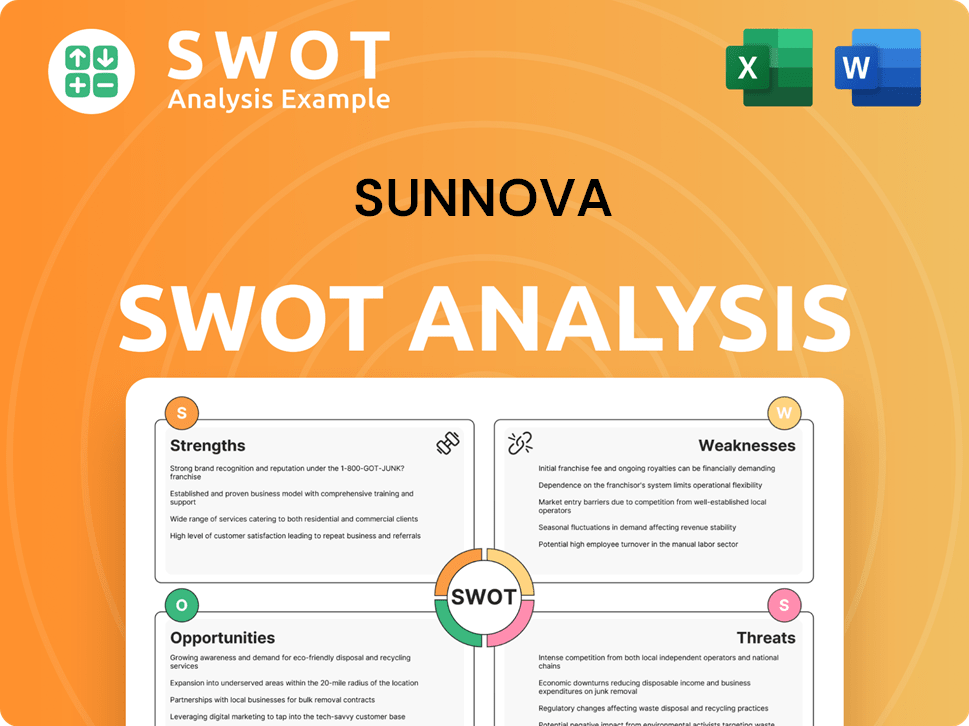
Sunnova SWOT Analysis
- Complete SWOT Breakdown
- Fully Customizable
- Editable in Excel & Word
- Professional Formatting
- Investor-Ready Format
Who Are the Main Competitors Challenging Sunnova?
The residential solar and energy storage market is highly competitive, and understanding the Sunnova competitive landscape is crucial for investors and industry analysts. Several companies vie for market share, offering various solar and storage solutions to homeowners across the United States. This analysis provides insights into Sunnova's competitors and their strategies.
The solar energy industry analysis reveals a dynamic environment where companies constantly innovate to gain an edge. Factors such as technological advancements, financing options, and customer service play significant roles in determining market success. This overview will help you understand Sunnova's market position in the US and how it stacks up against its rivals.

Sunrun Inc.
Sunrun is often considered Sunnova's primary competitor. Both companies offer similar comprehensive solar and battery storage solutions. They frequently compete for market share, particularly in key U.S. states like California and Texas.
Tesla Energy
Tesla Energy leverages its strong brand recognition and integration with electric vehicles to compete. They offer solar panel and Powerwall battery offerings, appealing to customers seeking integrated home energy solutions. Tesla's market presence continues to grow.
Regional and Local Solar Installers
These installers often have strong community ties and may offer more personalized services. They can present significant competition, especially in specific regional markets. Their local expertise and customer relationships are key advantages.
Traditional Utility Companies
Traditional utilities are increasingly investing in renewable energy projects and offering their own demand-side management programs. This indirect competition can impact the market dynamics. Utilities have significant resources and customer bases.
Community Solar Initiatives
New business models like community solar initiatives present evolving competitive pressures. These models allow customers to participate in solar energy without owning panels. They are becoming increasingly popular.
Technological Advancements
Ongoing innovation in battery technology and energy management systems drives competitive dynamics. Companies strive to offer more efficient and cost-effective solutions. These advancements can significantly shift the market.
Understanding the competitive landscape requires examining Sunnova's market share and strategies. For example, in 2024, the company's financial performance and Sunnova's growth strategy and expansion plans will be critical. For more details on the company's business model and revenue streams, you can read the article about Revenue Streams & Business Model of Sunnova.
Key Competitive Factors
Several factors influence the competitive dynamics within the residential solar market. These include pricing and financing options, customer acquisition strategies, and service offerings.
- Pricing and Financing: Competitive pricing and flexible financing options are crucial for attracting customers. Companies offer various plans, including leases, power purchase agreements (PPAs), and loans.
- Customer Acquisition: Effective marketing and sales strategies are essential. This includes online advertising, direct sales, and partnerships.
- Service Offerings: Differentiating through service offerings, such as monitoring, maintenance, and energy management, is key.
- Technological Innovation: The adoption of advanced technologies, like smart inverters and battery storage, can provide a competitive edge.
- Market Expansion: Expanding into new geographic markets and targeting specific customer segments can drive growth.
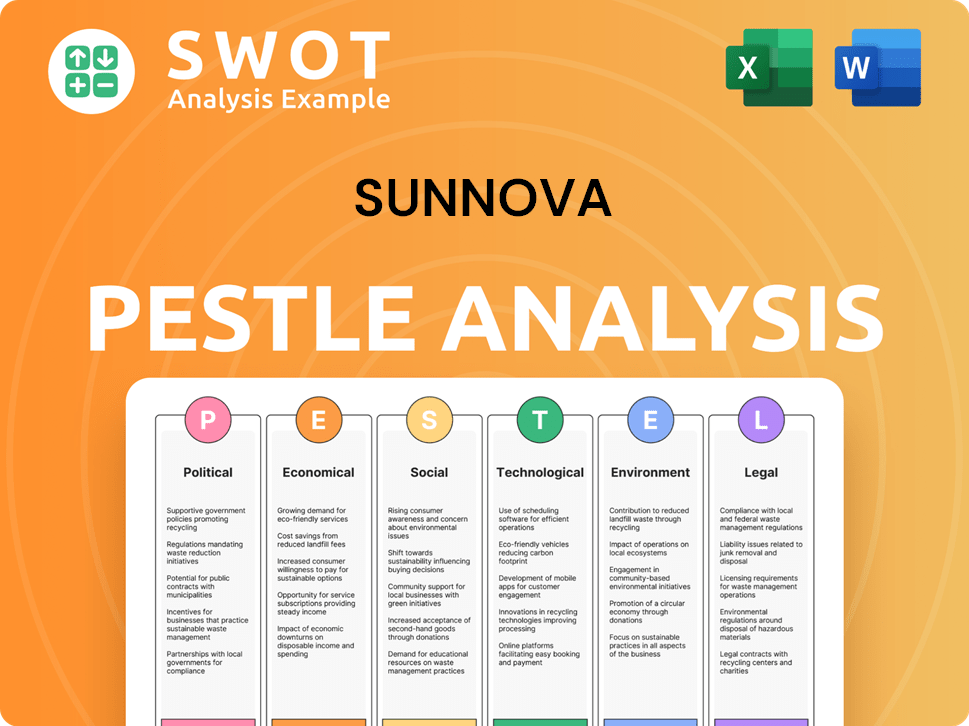
Sunnova PESTLE Analysis
- Covers All 6 PESTLE Categories
- No Research Needed – Save Hours of Work
- Built by Experts, Trusted by Consultants
- Instant Download, Ready to Use
- 100% Editable, Fully Customizable
What Gives Sunnova a Competitive Edge Over Its Rivals?
Examining the Marketing Strategy of Sunnova reveals a competitive landscape shaped by its comprehensive service model and customer-centric approach. The company distinguishes itself by providing end-to-end services, encompassing design, financing, installation, monitoring, and maintenance. This integrated approach streamlines the solar adoption process, enhancing customer loyalty and reducing friction, which is a key factor in the Sunnova competitive landscape.
Sunnova's competitive edge is further solidified by its diverse financing options, including leases, power purchase agreements (PPAs), and loans, which cater to a broad customer base. This flexibility makes solar energy more accessible and supports the company's market penetration. The company's strategic focus on customer satisfaction and its ability to offer tailored energy solutions contribute significantly to its market position. Understanding the dynamics of the solar energy industry analysis is crucial to assessing its competitive advantages.
The strength of Sunnova's relationships with a network of local installation partners is another significant advantage. This distributed network enables efficient scaling and localized service delivery, adapting to regional market nuances and ensuring high-quality installations. These operational efficiencies, coupled with advanced energy monitoring and control technologies, contribute to a seamless customer experience, which is essential in the Sunnova vs Tesla solar comparison.
Comprehensive Service Model
Sunnova offers end-to-end services, including design, financing, installation, monitoring, and maintenance. This integrated approach simplifies the adoption process for customers. It enhances customer loyalty and reduces the complexity often associated with fragmented service providers.
Diverse Financing Options
The company provides various financing options, such as leases, power purchase agreements (PPAs), and loans. This flexibility makes solar energy accessible to a wider range of customers. These options support the company's market penetration and customer acquisition strategies.
Strong Partnerships
Sunnova has strong relationships with a network of local installation partners. This distributed network enables efficient scaling and localized service delivery. It allows the company to adapt to regional market nuances and ensure high-quality installations.
Advanced Technology
The company invests in advanced energy monitoring and control technologies. This empowers homeowners with greater insight and management over their energy consumption and storage. Proprietary technologies contribute to a seamless customer experience.
Key Competitive Advantages
Sunnova's competitive advantages include its comprehensive service model, diverse financing options, and strong partnerships. These factors contribute to its market position and customer satisfaction. The company's focus on technological advancements further strengthens its competitive edge.
- End-to-end service offerings simplify the solar adoption process.
- Diverse financing options increase accessibility to solar energy.
- Strong partnerships ensure efficient scaling and localized service delivery.
- Advanced technologies enhance customer control and management.
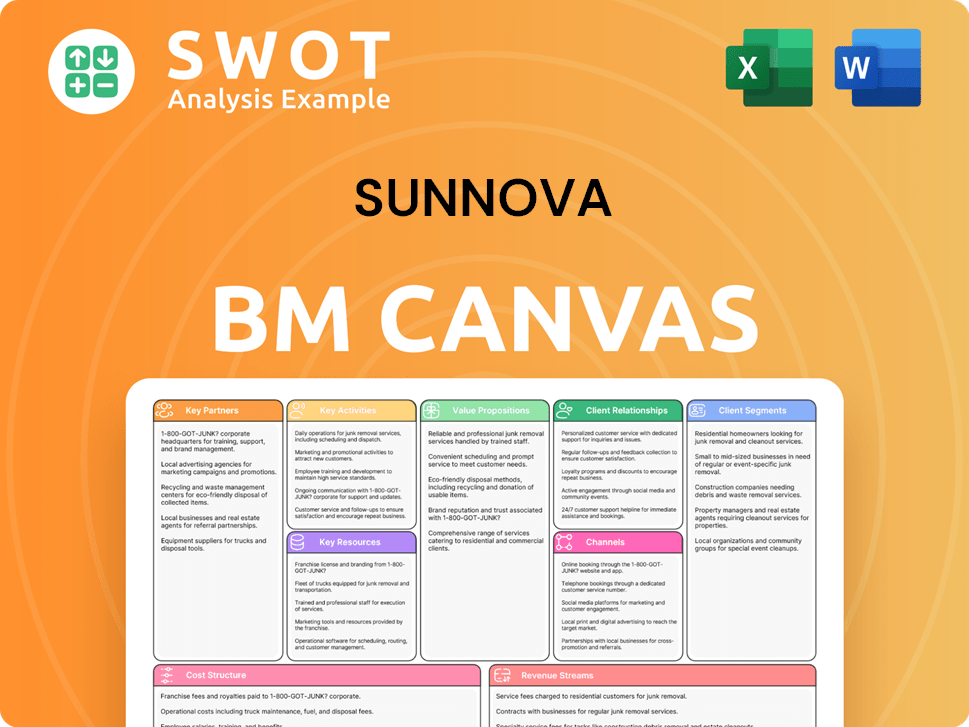
Sunnova Business Model Canvas
- Complete 9-Block Business Model Canvas
- Effortlessly Communicate Your Business Strategy
- Investor-Ready BMC Format
- 100% Editable and Customizable
- Clear and Structured Layout
What Industry Trends Are Reshaping Sunnova’s Competitive Landscape?
The residential solar and energy storage market is experiencing significant shifts, driven by technological advancements, evolving consumer preferences, and changes in regulatory environments. These trends present both opportunities and challenges for companies like Sunnova. Understanding the competitive landscape is crucial for evaluating Sunnova's market position, identifying potential risks, and assessing its future outlook. For an overview of the company, you can check out the Brief History of Sunnova.
The solar energy industry analysis reveals a dynamic environment where innovation, strategic partnerships, and operational efficiency are key to success. The increasing demand for energy independence and the need for resilient energy solutions are major drivers. However, companies must navigate supply chain issues, rising interest rates, and intense competition to maintain profitability and market share.
Industry Trends
The residential solar market is seeing a surge in battery storage adoption, driven by grid instability and consumer demand for backup power. Technological advancements are improving solar panel efficiency and battery capacity, lowering costs, and increasing system performance. Regulatory changes, such as net metering policies and incentive programs, significantly impact the economic viability of solar installations.
Future Challenges
Supply chain disruptions, particularly for components like solar panels and batteries, can increase costs and delay installations. Rising interest rates can make financing solar projects more expensive, potentially reducing demand. Intense competition leads to price compression, impacting profit margins. Aggressive new market entrants with disruptive technologies or business models pose a threat.
Opportunities
Expanding battery storage offerings and developing sophisticated energy management solutions are key growth areas. The growing demand for energy resilience, driven by grid instability and extreme weather events, provides a significant market opportunity. Virtual power plants (VPPs) and grid services offer new revenue streams and market expansion possibilities.
Sunnova's Strategy
Sunnova should focus on product innovation, including advanced battery storage and energy management systems. Strategic partnerships to enhance its service ecosystem are essential. Optimizing operational efficiencies to maintain cost competitiveness is critical. Adapting to evolving regulatory frameworks and market dynamics is crucial for long-term success.
Sunnova's Competitive Landscape
The Sunnova competitive landscape includes a mix of national and regional players. Key Sunnova competitors include Tesla, SunPower, and regional installers. Sunnova's market share is influenced by its ability to offer competitive pricing, financing options, and comprehensive service packages. The company's focus on customer service and innovative energy solutions helps to differentiate it in the market.
- Tesla: A major player with integrated solar and battery solutions, leveraging its brand recognition and direct-to-consumer sales model.
- SunPower: Known for high-efficiency solar panels and a strong reputation for quality, targeting premium customers.
- Regional Installers: Numerous local and regional companies offer competitive pricing and personalized service, creating localized competition.
- Competition Analysis: In 2024, the competitive landscape includes a mix of established national brands and emerging regional players, with pricing, financing, and service offerings as key differentiators.
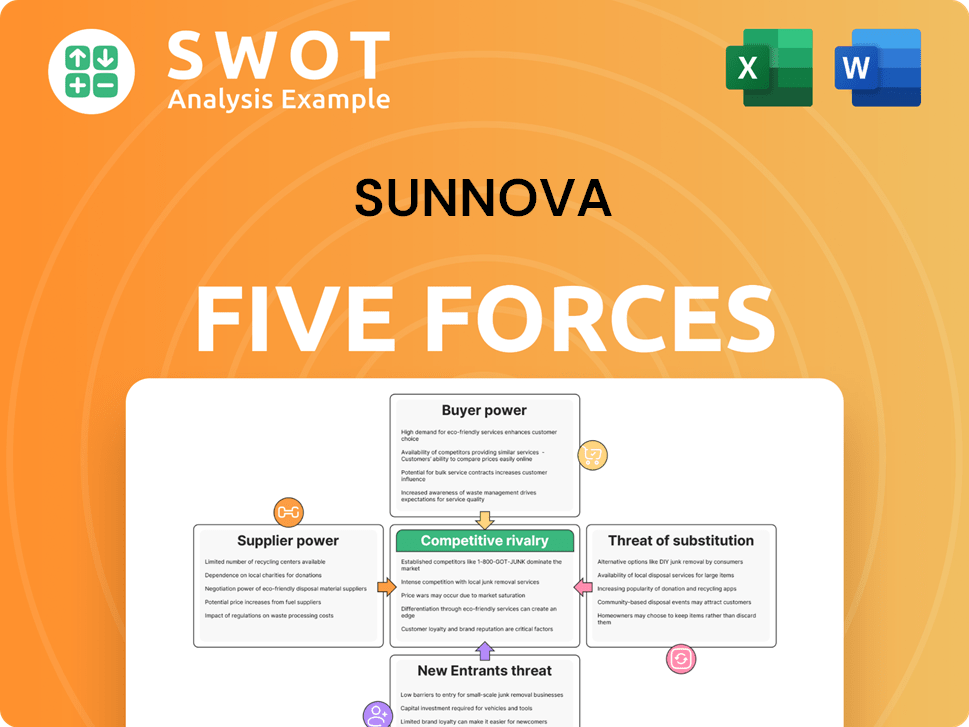
Sunnova Porter's Five Forces Analysis
- Covers All 5 Competitive Forces in Detail
- Structured for Consultants, Students, and Founders
- 100% Editable in Microsoft Word & Excel
- Instant Digital Download – Use Immediately
- Compatible with Mac & PC – Fully Unlocked
Related Blogs

- What are Mission Vision & Core Values of Sunnova Company?
- What is Growth Strategy and Future Prospects of Sunnova Company?
- How Does Sunnova Company Work?
- What is Sales and Marketing Strategy of Sunnova Company?
- What is Brief History of Sunnova Company?
- Who Owns Sunnova Company?
- What is Customer Demographics and Target Market of Sunnova Company?
Disclaimer
All information, articles, and product details provided on this website are for general informational and educational purposes only. We do not claim any ownership over, nor do we intend to infringe upon, any trademarks, copyrights, logos, brand names, or other intellectual property mentioned or depicted on this site. Such intellectual property remains the property of its respective owners, and any references here are made solely for identification or informational purposes, without implying any affiliation, endorsement, or partnership.
We make no representations or warranties, express or implied, regarding the accuracy, completeness, or suitability of any content or products presented. Nothing on this website should be construed as legal, tax, investment, financial, medical, or other professional advice. In addition, no part of this site—including articles or product references—constitutes a solicitation, recommendation, endorsement, advertisement, or offer to buy or sell any securities, franchises, or other financial instruments, particularly in jurisdictions where such activity would be unlawful.
All content is of a general nature and may not address the specific circumstances of any individual or entity. It is not a substitute for professional advice or services. Any actions you take based on the information provided here are strictly at your own risk. You accept full responsibility for any decisions or outcomes arising from your use of this website and agree to release us from any liability in connection with your use of, or reliance upon, the content or products found herein.