

Sunnova Bundle

Can Sunnova Power Your Portfolio?
Sunnova Energy International Inc. (NYSE: NOVA) is a leading force in the U.S. residential solar and energy storage market. Founded in 2012, it offers a comprehensive suite of energy solutions to homeowners across the nation. However, recent financial struggles have raised critical questions about its future.

Despite managing over 3.0 gigawatts of solar power and 1,662 megawatt-hours of energy storage, Sunnova faces significant financial headwinds, making it crucial to understand its operational model. This analysis will dissect Sunnova's core business, including its revenue streams, Sunnova SWOT Analysis, and competitive landscape, providing insights for investors and stakeholders. Understanding the intricacies of this Sunnova solar energy company is key, especially when considering options like Sunnova solar panel cost, financing, and the overall Sunnova solar experience.
What Are the Key Operations Driving Sunnova’s Success?
The core operations of Sunnova revolve around its 'Energy as a Service' (EaaS) model, mainly targeting residential customers. This approach aims to make clean energy more accessible, reliable, and affordable. Sunnova provides a comprehensive suite of products and services, including solar panel installations, battery storage solutions, energy monitoring, and energy control devices. This integrated offering is known as the 'Sunnova Adaptive Home™,' designed to provide homeowners with solutions that combine solar, battery storage, and energy management technologies.
The operational process typically starts with customer acquisition through a network of local dealers and contractors. These partners handle the origination, design, and installation of solar and energy storage systems. Sunnova then provides ongoing services, including operations and maintenance, monitoring, repairs, replacements, and equipment upgrades. A key component is the Sunnova Protect® plan, which offers 25 years of coverage for maintenance, monitoring, repairs, and replacements, providing customers with peace of mind and zero out-of-pocket costs for covered components.
Sunnova's value proposition centers on enabling homeowners to adopt solar energy with little to no upfront costs. This is achieved through various financing options, including solar leases and power purchase agreements (PPAs). These models allow customers to pay for the energy produced by the solar systems over time, often at a predetermined rate lower than traditional utility rates. The company also offers direct cash sales. The company's focus on domestic content in its supply chain and its transition to a Third-Party Ownership (TPO) model are strategic moves that could create competitive barriers and potentially insulate it from some supply chain disruptions.
 Solar Panel Installation Process
The installation process begins with a consultation and site assessment to determine the best system size and placement. This is followed by permitting, system design, and the actual installation by certified professionals. After installation, the system undergoes inspection and activation, allowing homeowners to start using solar energy. Understanding the Sunnova owners can provide further insight into the operational aspects.
Financing Options
Sunnova offers various financing options to make solar energy accessible, including leases, PPAs, and cash purchases. Leases and PPAs require little to no upfront investment, allowing customers to pay for the energy produced. Cash purchases provide ownership from the start. The choice depends on individual financial goals and preferences, with each option having its own set of benefits and considerations.
Sunnova Protect® Plan
The Sunnova Protect® plan provides comprehensive coverage for 25 years, including maintenance, monitoring, repairs, and replacements. This plan offers peace of mind by covering all covered components with no out-of-pocket costs. It ensures that customers can enjoy their solar energy systems without worrying about unexpected maintenance expenses.
Value Proposition
Sunnova's value proposition centers around making solar energy accessible and affordable for homeowners. They offer various financing options, including leases and PPAs, allowing customers to adopt solar with little to no upfront costs. The company focuses on providing reliable, clean energy and long-term customer support through its Sunnova Protect® plan.

Key Features and Benefits
Sunnova's offerings provide several benefits for homeowners, including reduced energy bills, increased home value, and a smaller carbon footprint. The company's focus on customer service and long-term support, through plans like Sunnova Protect®, ensures a positive experience for customers. The company's commitment to using domestic content in its supply chain and its transition to a TPO model are strategic moves.
- Reduced energy bills through solar energy generation.
- Comprehensive coverage with the Sunnova Protect® plan.
- Various financing options to make solar accessible.
- Contribution to a cleaner environment.
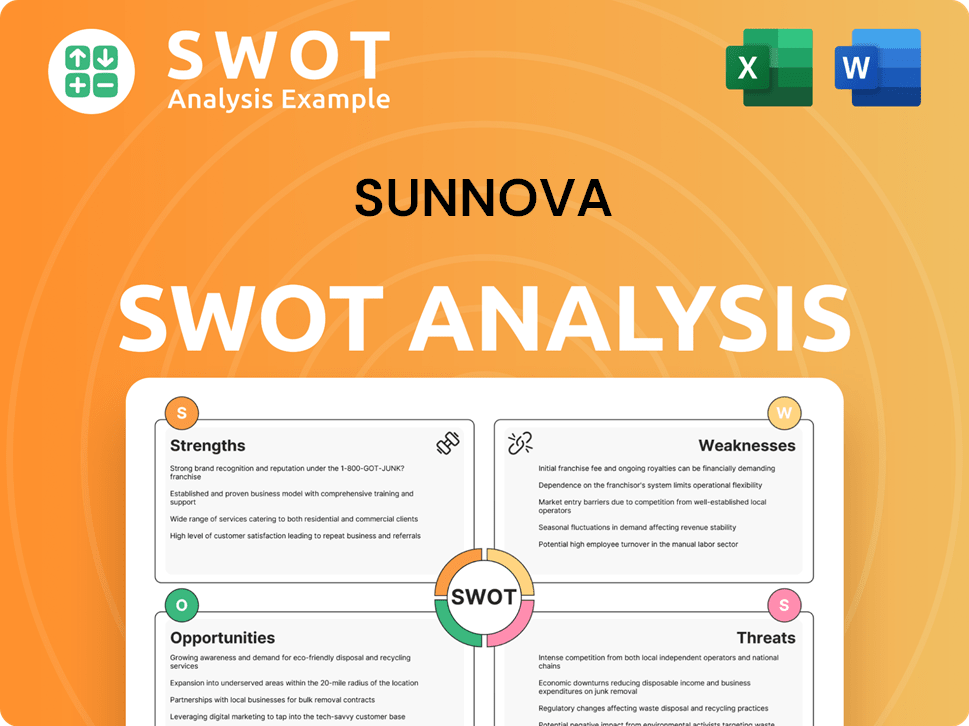
Sunnova SWOT Analysis
- Complete SWOT Breakdown
- Fully Customizable
- Editable in Excel & Word
- Professional Formatting
- Investor-Ready Format
How Does Sunnova Make Money?
The revenue streams and monetization strategies of the company are centered around its energy services, primarily through long-term customer agreements, and direct sales of solar and storage systems. This approach allows the company to generate income from various sources, providing flexibility and stability in its financial model. The company's ability to offer different financing options and bundled services also enhances its revenue-generating capabilities.
For the year ended December 31, 2024, the company demonstrated robust growth across its core business segments. Customer agreements and incentives revenue, a key component of its operations, saw a significant increase. This growth was supported by an expanding customer base and increased adoption of battery storage solutions.
Cash sales and interest income also contributed substantially to the company's revenue. The rise in cash sales reflects a growing preference for direct purchases of solar and storage systems. The increase in interest income, primarily from loan agreements, further indicates the effectiveness of its financing strategies and the expanding reach of its services.
Key Revenue Streams and Growth Metrics
The company's financial performance in 2024 highlights its successful monetization strategies. The increase in revenue across different segments underscores the company's ability to attract and retain customers while expanding its service offerings. Here's a breakdown of the key revenue streams and their growth:
- Customer Agreements and Incentives: Increased by 43% (+$163.4 million).
- Cash Sales: Increased by 49% (+$46.7 million), driven by a 24% increase in cash sales customers, reaching 7,200 in 2024.
- Interest Income: Increased by 29% (+$34.0 million), with a 32% rise in interest income from loan agreements.
- SREC Sales: Increased by 16% (+$8.2 million).
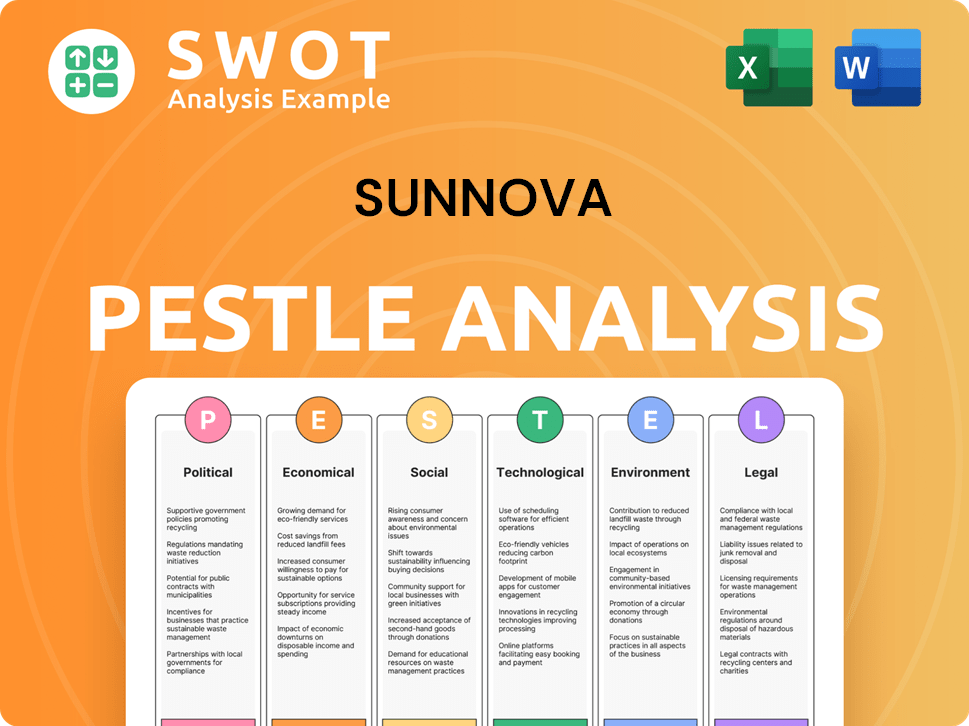
Sunnova PESTLE Analysis
- Covers All 6 PESTLE Categories
- No Research Needed – Save Hours of Work
- Built by Experts, Trusted by Consultants
- Instant Download, Ready to Use
- 100% Editable, Fully Customizable
Which Strategic Decisions Have Shaped Sunnova’s Business Model?
The company, a prominent player in the residential solar market, has navigated the dynamic solar energy sector through strategic initiatives and partnerships. These moves have been crucial for maintaining its competitive edge. In late 2024 and early 2025, the company focused on mandating domestic content for its dealers, aiming to increase its weighted average Investment Tax Credit (ITC) percentage.
The company also implemented price increases and simplified its business model to reduce costs. This included adjusting dealer payment terms to align with its funding sources. These actions were part of a broader optimization effort, estimated to reduce annual cash costs by $70 million. These adjustments reflect the company's commitment to operational efficiency and financial stability.
The company's strategic moves and partnerships, along with its focus on customer service, have positioned it as a leading residential solar provider. The company's adaptive energy platform, which integrates solar, battery storage, and energy control technologies, provides a unique selling proposition. This approach, combined with its established brand recognition, aims to drive future growth.
Key Milestones
A significant milestone was the exclusive partnership with Home Depot, making the company the sole provider of solar and battery storage services in all stores nationwide. This expanded access to over 2,000 locations. Another key development was the integration of AI-powered solar design software into its Catalyst™ dealer platform through a partnership with OpenSolar in February 2025.
Strategic Moves
The company focused on mandating domestic content for its dealers to increase its ITC. Price increases and business simplification were implemented to reduce costs. Adjustments to dealer payment terms were made to align with its funding sources. These strategic moves were part of a broader optimization effort aimed at reducing annual cash costs by $70 million.
Competitive Edge
The company's competitive advantages include established brand recognition as a leading residential solar provider, diverse product offerings including installation, financing, and energy storage, and customer-focused services. The adaptive energy platform, integrating solar, battery storage, and energy control technologies, offers a unique selling proposition. The company's focus on Sunnova's target market also contributes to its competitive standing.
Challenges and Financials
The company faced operational and market challenges, including liquidity issues and a substantial debt burden, which reached $8.49 billion as of December 31, 2024. Third-quarter 2024 results fell short of expectations, leading to a reevaluation of near-term prospects and updated guidance for 2025 and 2026, indicating a reduction in capital investment.
Partnerships and Financing
The company formed partnerships with Tenet Energy and Finturf in July 2024 to expand financing options for electric vehicles and other home energy improvements. The partnership with OpenSolar in February 2025, aimed to enhance design speed and precision for solar system proposals. These partnerships are crucial for expanding the company's service offerings and customer reach.
- Exclusive provider of solar and battery storage services in all Home Depot stores.
- Partnership with OpenSolar to integrate AI-powered solar design software.
- Collaborations with Tenet Energy and Finturf to expand financing options.
- Focus on mandating domestic content to increase ITC.
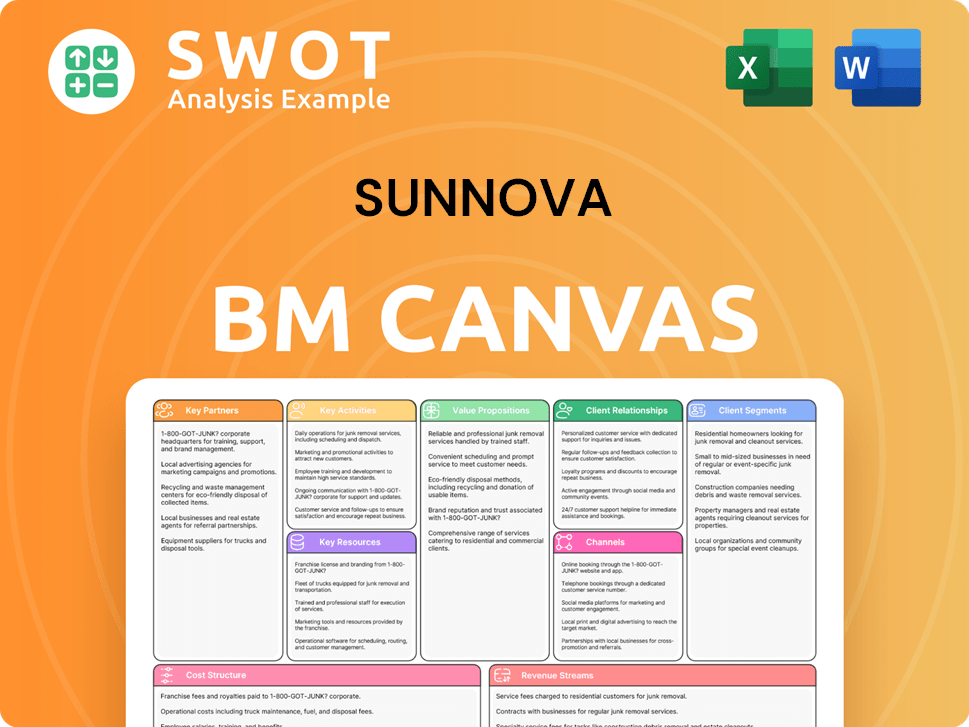
Sunnova Business Model Canvas
- Complete 9-Block Business Model Canvas
- Effortlessly Communicate Your Business Strategy
- Investor-Ready BMC Format
- 100% Editable and Customizable
- Clear and Structured Layout
How Is Sunnova Positioning Itself for Continued Success?
Sunnova Energy International Inc. operates within the competitive residential solar and energy storage market. The company focuses on an Energy as a Service (EaaS) model, customer-centric approach, and innovative solar and energy storage solutions. As of December 31, 2024, Sunnova had increased its total cumulative solar power generation and energy storage under management to 3.0 gigawatts and 1,662 megawatt hours, respectively. However, the company faces significant financial and operational challenges.
Sunnova's position is complicated by a substantial debt burden and operational headwinds. The company's financial health has been strained, leading to a series of critical events, including a subsidiary filing for Chapter 11 bankruptcy and significant workforce reductions. The future outlook hinges on successful debt restructuring and adaptation to market and policy changes. The company is navigating a complex landscape with high interest rates, regulatory uncertainties, and supply chain issues.
Industry Position
Sunnova competes in the residential solar and energy storage market. The company's EaaS model and focus on customer service aim to differentiate it. The company's total cumulative solar power generation and energy storage under management were 3.0 gigawatts and 1,662 megawatt hours as of December 31, 2024.
Risks
Sunnova faces significant risks, including a substantial debt burden of approximately $8.5 billion. Short-term obligations have exceeded liquid assets. A subsidiary filed for Chapter 11 bankruptcy, and the company announced substantial layoffs. The company's ability to sustain operations has been questioned.
Future Outlook
The future outlook for Sunnova depends on its ability to restructure debt and address liquidity issues. The company must adapt to evolving market and policy landscapes. Strategic initiatives include focusing on capital efficiency and prioritizing high-margin lease products. The company's net operating loss carryforwards (NOLs) were approximately $1.4 billion as of December 31, 2024.
Challenges
The industry faces challenges like high interest rates, regulatory uncertainties, and supply chain disruptions. Modifications to net metering and potential changes to tax incentives pose risks. The company's ability to navigate these challenges will determine its success. For more insights, consider exploring the Competitors Landscape of Sunnova.
Key Strategic Initiatives
Sunnova is focusing on capital efficiency and prioritizing high-margin lease products. The company is streamlining operations to reduce costs and implementing a Tax Asset Preservation Plan. These initiatives are crucial for navigating the current financial and market challenges.
- Focus on capital efficiency.
- Prioritizing high-margin lease products.
- Streamlining operations to reduce costs.
- Tax Asset Preservation Plan to protect NOLs.
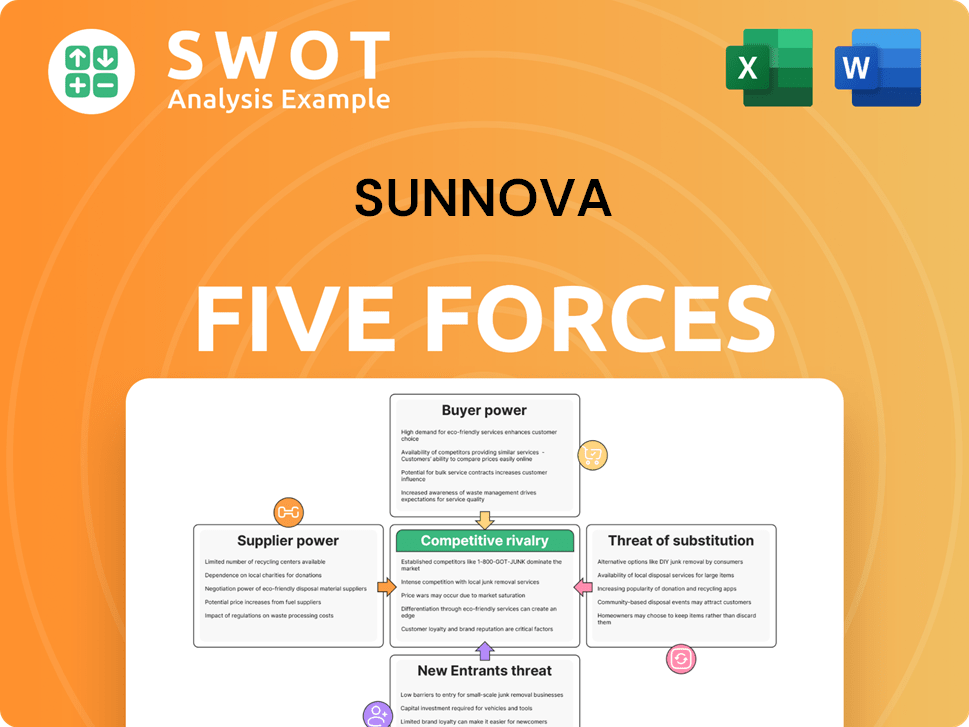
Sunnova Porter's Five Forces Analysis
- Covers All 5 Competitive Forces in Detail
- Structured for Consultants, Students, and Founders
- 100% Editable in Microsoft Word & Excel
- Instant Digital Download – Use Immediately
- Compatible with Mac & PC – Fully Unlocked
Related Blogs

- What are Mission Vision & Core Values of Sunnova Company?
- What is Competitive Landscape of Sunnova Company?
- What is Growth Strategy and Future Prospects of Sunnova Company?
- What is Sales and Marketing Strategy of Sunnova Company?
- What is Brief History of Sunnova Company?
- Who Owns Sunnova Company?
- What is Customer Demographics and Target Market of Sunnova Company?
Disclaimer
All information, articles, and product details provided on this website are for general informational and educational purposes only. We do not claim any ownership over, nor do we intend to infringe upon, any trademarks, copyrights, logos, brand names, or other intellectual property mentioned or depicted on this site. Such intellectual property remains the property of its respective owners, and any references here are made solely for identification or informational purposes, without implying any affiliation, endorsement, or partnership.
We make no representations or warranties, express or implied, regarding the accuracy, completeness, or suitability of any content or products presented. Nothing on this website should be construed as legal, tax, investment, financial, medical, or other professional advice. In addition, no part of this site—including articles or product references—constitutes a solicitation, recommendation, endorsement, advertisement, or offer to buy or sell any securities, franchises, or other financial instruments, particularly in jurisdictions where such activity would be unlawful.
All content is of a general nature and may not address the specific circumstances of any individual or entity. It is not a substitute for professional advice or services. Any actions you take based on the information provided here are strictly at your own risk. You accept full responsibility for any decisions or outcomes arising from your use of this website and agree to release us from any liability in connection with your use of, or reliance upon, the content or products found herein.