

Beijing BDStar Navigation Bundle

How did Beijing BDStar Navigate its Way to the Top?
Journey back to the year 2000 and discover the origins of Beijing BDStar Navigation Co., Ltd., a company that would become a powerhouse in China's satellite navigation sector. From humble beginnings, BDStar recognized the potential of GNSS technology, laying the groundwork for its impressive growth. This Beijing BDStar Navigation SWOT Analysis provides an in-depth look at their strategic position.

BDStar's success story is a compelling example of how strategic foresight and technological innovation can transform a company. Its early focus on GNSS technology and commitment to the BeiDou system propelled it to the forefront of the Chinese satellite navigation industry. This article explores the brief history of BDStar Navigation, examining its key milestones, technology development, and its significant contribution to China's space program and beyond.
What is the Beijing BDStar Navigation Founding Story?
The founding of Beijing BDStar Navigation Co., Ltd. on September 25, 2000, marked a pivotal moment in the development of Chinese satellite navigation technology. The company emerged from the vision of individuals who recognized the growing need for indigenous solutions in a market dominated by foreign technologies. This strategic foresight aligned with China's broader goals of technological self-reliance, setting the stage for BDStar's significant role in the BeiDou system.
The establishment of BDStar Navigation was driven by the ambition to address China's dependence on foreign Global Navigation Satellite System (GNSS) technologies. The company's early focus was on research and development, specifically concentrating on core GNSS components like chips and modules. These components were essential for building various navigation applications, reflecting a strategic move to develop the fundamental building blocks of the technology. The company's name, BDStar Navigation, reflects its dedication to the BeiDou (BDS) system, China's independent satellite navigation system.

Founding Story of BDStar Navigation
BDStar Navigation's founding was fueled by a strategic vision to develop indigenous GNSS solutions, addressing China's reliance on foreign technologies. The initial focus was on core GNSS components, including chips and modules, vital for various navigation applications.
- The company was officially established on September 25, 2000.
- The company's initial business model centered on R&D of core GNSS components.
- Early funding likely came from government support, venture capital, and possibly bootstrapping.
- The founders' expertise in satellite communications, electronics, and software was crucial.
Initial funding for BDStar likely came from a combination of government support, venture capital, and possibly bootstrapping, given the strategic importance of the satellite navigation sector in China. The founding team's expertise in satellite communications, electronics, and software development was crucial in navigating the complex technical challenges of developing precise navigation technologies from scratch. The broader economic context of the early 2000s in China, characterized by rapid industrialization and a growing emphasis on technological advancement, provided a fertile ground for the company's establishment and initial growth. For more detailed information, you can explore the Owners & Shareholders of Beijing BDStar Navigation.
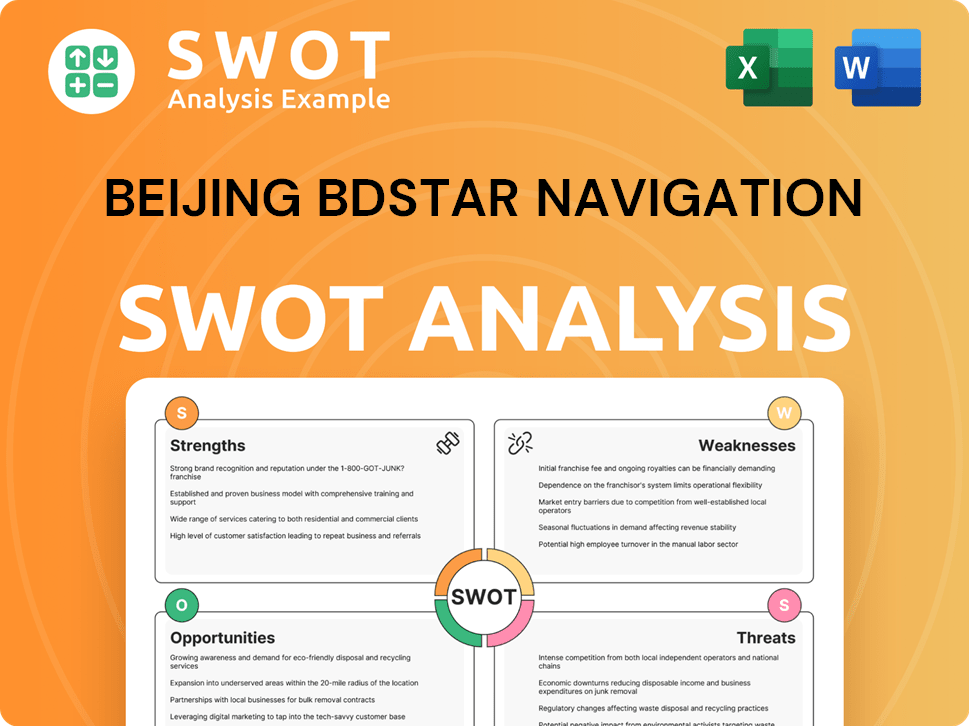
Beijing BDStar Navigation SWOT Analysis
- Complete SWOT Breakdown
- Fully Customizable
- Editable in Excel & Word
- Professional Formatting
- Investor-Ready Format
What Drove the Early Growth of Beijing BDStar Navigation?
The early growth of Beijing BDStar Navigation was marked by a focus on technological self-reliance and market penetration within China. The company's initial efforts were concentrated on developing proprietary GNSS technologies, leading to early product launches of chips and modules. These products were crucial for integrating satellite navigation capabilities into various devices. This period set the stage for its future expansion and strong position in the high-precision positioning segment.
 Technological Focus
In its early years, BDStar Navigation prioritized developing its own GNSS technologies. This involved creating chips and modules that were essential for integrating satellite navigation into various devices. This technological focus allowed the company to establish a strong foundation in the Chinese satellite navigation market.
Market Expansion
As BDStar history progressed, it expanded its team and established initial office and research facilities in Beijing. The company entered new market segments beyond core GNSS components, developing end-user products and providing integrated solutions. This expansion included areas like precision agriculture, surveying, and mapping, leveraging its core technology to address diverse industrial needs.
Strategic Acquisitions and Financial Milestones
Acquisitions and mergers played a key role in accelerating BDStar's growth. The acquisition of Hemispheric in 2012 significantly boosted its high-precision positioning capabilities and expanded its global reach. The initial public offering (IPO) on the Shenzhen Stock Exchange in 2007 provided funding for research and development and broader market expansion. For more insights, explore the Growth Strategy of Beijing BDStar Navigation.
Competitive Landscape and Strategic Shifts
Market reception to BDStar's products was generally positive, driven by the increasing demand for reliable and accurate navigation solutions in China. The company steadily gained ground by offering competitive domestic alternatives to international players. Strategic shifts included a move towards providing more comprehensive solutions rather than just components, anticipating the evolving needs of the market.
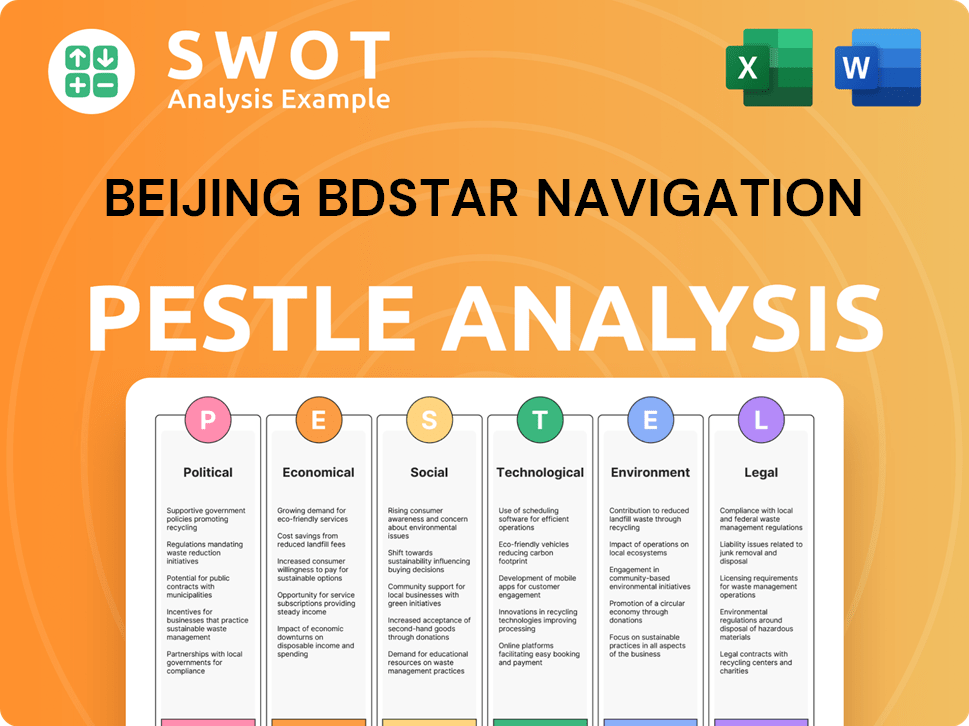
Beijing BDStar Navigation PESTLE Analysis
- Covers All 6 PESTLE Categories
- No Research Needed – Save Hours of Work
- Built by Experts, Trusted by Consultants
- Instant Download, Ready to Use
- 100% Editable, Fully Customizable
What are the key Milestones in Beijing BDStar Navigation history?
The brief history of Beijing BDStar Navigation Company, often referred to as BDStar Navigation, is marked by significant achievements in the field of Chinese satellite navigation. The company's journey includes several key milestones that have shaped its growth and impact on the BeiDou system and broader GNSS technology applications. This evolution showcases BDStar's commitment to innovation and its pivotal role in advancing China's space and technology sectors.
| Year | Milestone |
|---|---|
| Early 2000s | Establishment of BDStar, focusing on research and development in satellite navigation technologies. |
| Mid-2000s | Development and mass production of Beidou-compatible chips and modules, contributing to the widespread adoption of the Beidou system. |
| 2010s | Securing numerous patents in GNSS technology, reinforcing its intellectual property and leadership in the field. |
| 2010s | Major partnerships with automotive manufacturers and agricultural machinery companies, expanding its high-precision positioning solutions. |
| 2020s | Recognition for contributions to national technological advancement and its role in the BeiDou ecosystem. |
BDStar has consistently pursued innovation, particularly in the development of advanced GNSS technology. The company's 'Lyra' series of GNSS chips exemplifies its commitment to technological advancement, with widespread applications across various sectors. Further insights into their strategic approach can be found in an analysis of the Marketing Strategy of Beijing BDStar Navigation.

Beidou-Compatible Chips and Modules
Development and mass production of chips and modules that support the BeiDou system, facilitating its wider use.
'Lyra' Series GNSS Chips
The 'Lyra' series of GNSS chips have been widely adopted, showcasing BDStar's technological capabilities.
High-Precision Positioning Solutions
Development of high-precision positioning solutions for autonomous driving and intelligent agriculture.
Strategic Partnerships
Collaborations with automotive and agricultural machinery companies to expand the application of its technologies.
Patent Portfolio
Securing numerous patents in GNSS technology to protect its intellectual property and maintain a competitive edge.
Comprehensive Solutions
Diversifying its product portfolio to offer comprehensive solutions, moving beyond core components.
Despite its successes, BDStar has faced various challenges. These include market downturns, intense competition, and the constant need for technological advancements. The company has also navigated internal challenges such as rapid expansion and quality control.
Market Downturns
Navigating economic fluctuations that impact market demand and financial performance.
Competitive Threats
Facing intense competition from both domestic and international players in the GNSS technology market.
Technological Innovation
The need for continuous investment in R&D to keep pace with the rapid evolution of GNSS technology.
Product Failures
Addressing product failures and implementing iterative improvements to enhance reliability and performance.
Rapid Expansion
Managing rapid expansion and ensuring consistent quality control across all operations.
Evolving Market Demands
Adapting its business model to meet the changing demands of the market, including emerging areas like autonomous driving and IoT.
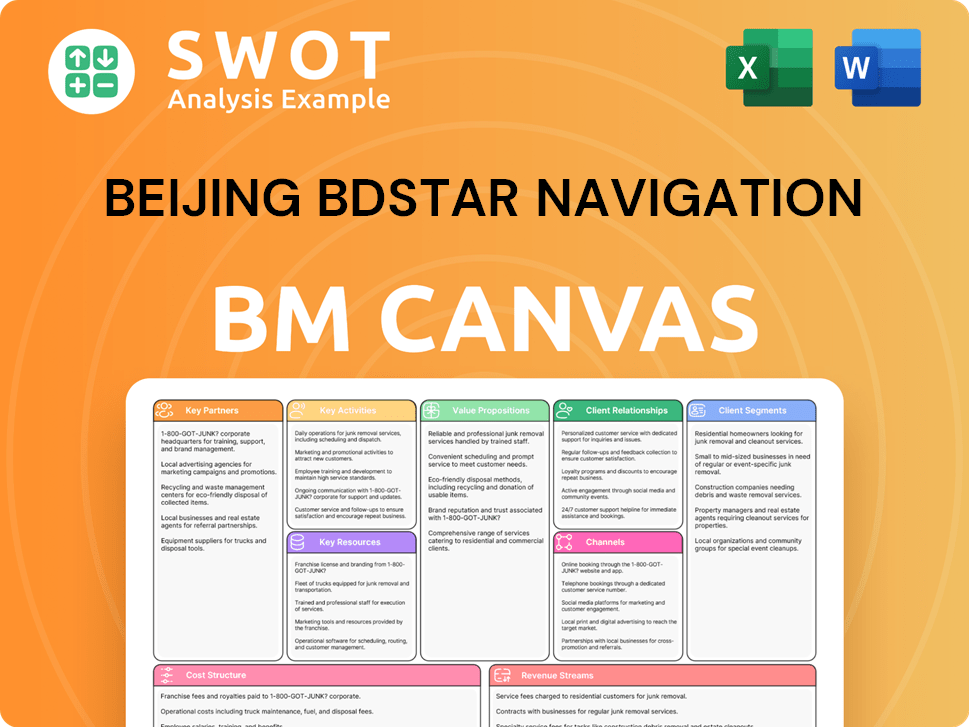
Beijing BDStar Navigation Business Model Canvas
- Complete 9-Block Business Model Canvas
- Effortlessly Communicate Your Business Strategy
- Investor-Ready BMC Format
- 100% Editable and Customizable
- Clear and Structured Layout
What is the Timeline of Key Events for Beijing BDStar Navigation?
The BDStar history is marked by significant advancements in Chinese satellite navigation and a growing global presence. The company has consistently focused on developing and implementing GNSS technology, playing a vital role in the BeiDou system and other related applications.
| Year | Key Event |
|---|---|
| 2003 | Founded in Beijing, BDStar Navigation was established to focus on satellite navigation and positioning technology. |
| 2008 | BDStar began to expand its product line, including high-precision GNSS modules and receivers. |
| 2010 | The company achieved a significant milestone by becoming a key supplier for the BeiDou system. |
| 2015 | BDStar Navigation was listed on the Shenzhen Stock Exchange, increasing its capital for further expansion. |
| 2018 | The company continued to enhance its technological capabilities, focusing on the development of autonomous driving and IoT applications. |
| 2020 | BDStar expanded its global presence by forming strategic partnerships and increasing its international market share. |
Technological Advancements
BDStar is expected to continue investing in research and development to enhance its GNSS technology. This includes improving the accuracy and reliability of its positioning systems. The company will likely focus on integrating its technology into emerging fields like autonomous driving.
Market Expansion
BDStar plans to further expand its global presence by entering new markets and strengthening existing partnerships. The company is likely to capitalize on the increasing demand for GNSS applications in various industries. BDStar aims to increase its revenue from overseas markets by at least 15% in the next 2-3 years.
Strategic Partnerships
The company will likely form new strategic partnerships to enhance its market position and technological capabilities. These partnerships could involve collaborations with automotive manufacturers and technology providers. BDStar aims to establish at least 5 major partnerships by the end of 2025.
Financial Performance
BDStar's financial performance is expected to continue growing, driven by increasing demand for its products and services. The company is projecting a revenue increase of approximately 20% in the next fiscal year. BDStar's focus on high-precision applications and its role in the BeiDou system will support its financial growth.
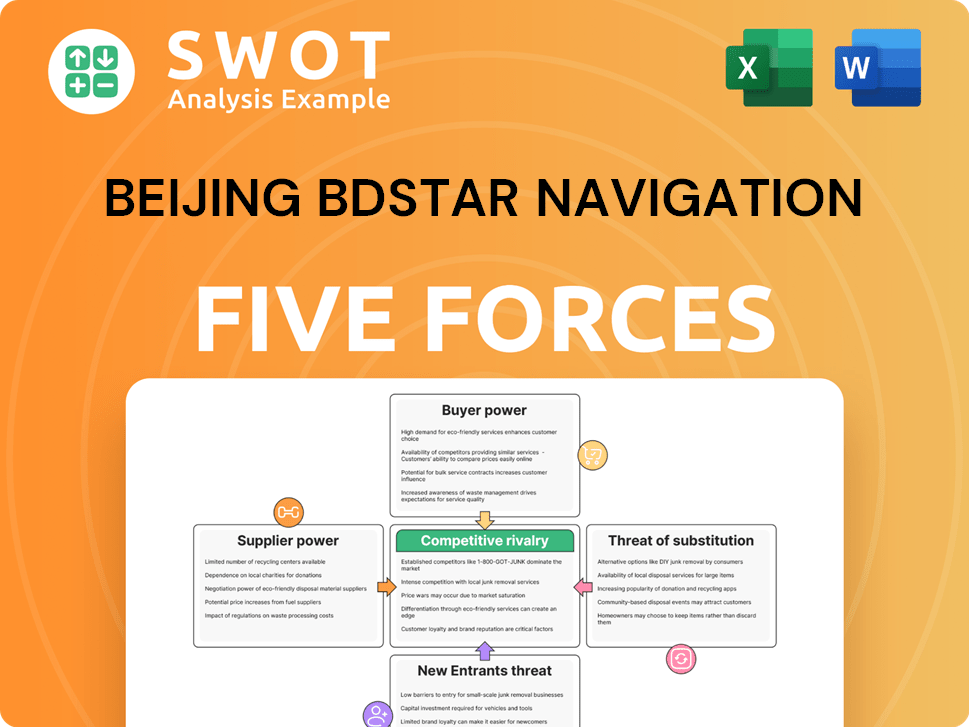
Beijing BDStar Navigation Porter's Five Forces Analysis
- Covers All 5 Competitive Forces in Detail
- Structured for Consultants, Students, and Founders
- 100% Editable in Microsoft Word & Excel
- Instant Digital Download – Use Immediately
- Compatible with Mac & PC – Fully Unlocked
Related Blogs

- What is Competitive Landscape of Beijing BDStar Navigation Company?
- What is Growth Strategy and Future Prospects of Beijing BDStar Navigation Company?
- How Does Beijing BDStar Navigation Company Work?
- What is Sales and Marketing Strategy of Beijing BDStar Navigation Company?
- What is Brief History of Beijing BDStar Navigation Company?
- Who Owns Beijing BDStar Navigation Company?
- What is Customer Demographics and Target Market of Beijing BDStar Navigation Company?
Disclaimer
All information, articles, and product details provided on this website are for general informational and educational purposes only. We do not claim any ownership over, nor do we intend to infringe upon, any trademarks, copyrights, logos, brand names, or other intellectual property mentioned or depicted on this site. Such intellectual property remains the property of its respective owners, and any references here are made solely for identification or informational purposes, without implying any affiliation, endorsement, or partnership.
We make no representations or warranties, express or implied, regarding the accuracy, completeness, or suitability of any content or products presented. Nothing on this website should be construed as legal, tax, investment, financial, medical, or other professional advice. In addition, no part of this site—including articles or product references—constitutes a solicitation, recommendation, endorsement, advertisement, or offer to buy or sell any securities, franchises, or other financial instruments, particularly in jurisdictions where such activity would be unlawful.
All content is of a general nature and may not address the specific circumstances of any individual or entity. It is not a substitute for professional advice or services. Any actions you take based on the information provided here are strictly at your own risk. You accept full responsibility for any decisions or outcomes arising from your use of this website and agree to release us from any liability in connection with your use of, or reliance upon, the content or products found herein.