

The New York Times Bundle

Who Are the Readers of The New York Times Today?
In today's fast-paced media environment, understanding the The New York Times SWOT Analysis is more critical than ever. The New York Times Company has undergone a dramatic transformation, shifting from print to a digital-first approach. This evolution necessitates a deep dive into its customer demographics and target market to ensure continued relevance and success.

This exploration delves into the core of who reads the New York Times, examining the age demographics of NYT subscribers, their income levels, and geographic locations. Analyzing the psychographics of New York Times readers and their media consumption habits will provide valuable insights into the company's strategic direction. Understanding the NYT's target audience profile is key to adapting content and business models for the future.
Who Are The New York Times’s Main Customers?
The New York Times Company primarily focuses on consumers (B2C), with a strong emphasis on digital subscription products. Understanding its customer demographics is key to its business strategy. The company's target market is characterized by highly educated, affluent individuals.
The core audience often resides in urban and suburban areas. The New York Times Company has expanded its reach through bundled offerings, including News, Games, Cooking, and Wirecutter. The company's ability to attract and retain subscribers is a testament to its understanding of its audience.
The New York Times Company added 300,000 digital-only subscribers in the fourth quarter of 2023, bringing its total digital-only subscriber count to 9.9 million. This growth underscores the effectiveness of its digital strategy and its ability to adapt to changing media consumption habits.
 Core Audience Characteristics
NYT readers are typically well-educated and have higher-than-average household incomes. They often hold professional or managerial positions. The audience has a strong interest in in-depth journalism, current events, and cultural content.
Digital Transformation
The company has shifted from a print-centric audience to a globally dispersed digital audience. This transition was driven by the adoption of smartphones and the internet. The digital strategy has been crucial for sustained growth and relevance.
Expanding Reach
The 'Games' and 'Cooking' apps attract a younger demographic, boosting subscriber growth. The Games product alone had over one million subscribers as of late 2023. This diversification helps broaden the customer base.
Strategic Focus
The company focuses on providing high-quality content and a seamless digital experience. This approach is designed to retain subscribers and attract new ones. The New York Times Company continues to evolve its strategies to meet the changing needs of its audience.

Key Takeaways
The New York Times Company's success is closely tied to its understanding of its customer demographics. It has successfully adapted to the digital age and expanded its target market. For more details, see Growth Strategy of The New York Times.
- The core audience is highly educated and affluent.
- Digital subscriptions are the primary driver of growth.
- Diversification through apps like Games and Cooking is essential.
- The company focuses on in-depth journalism and cultural content.
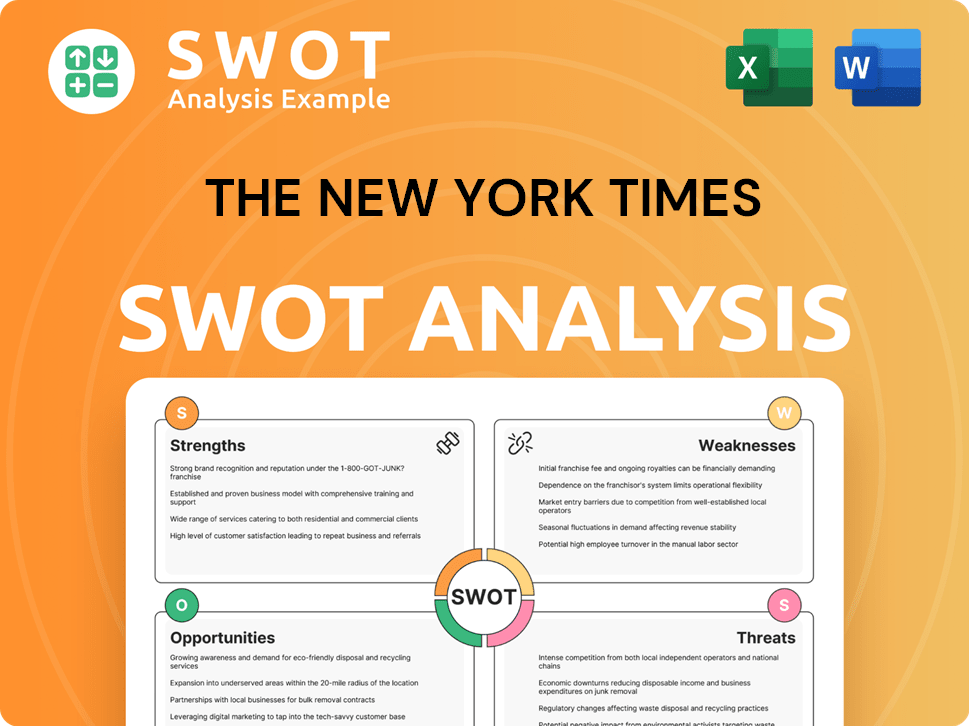
The New York Times SWOT Analysis
- Complete SWOT Breakdown
- Fully Customizable
- Editable in Excel & Word
- Professional Formatting
- Investor-Ready Format
What Do The New York Times’s Customers Want?
The New York Times Company's customers, or NYT readers, primarily seek high-quality, reliable, and in-depth information. Their purchasing decisions are often driven by a desire for comprehensive coverage of national and international events, along with nuanced analysis and diverse perspectives. Understanding these needs is crucial for effective audience analysis and tailoring content to meet their expectations.
Subscribers are often drawn to the perceived journalistic integrity and the breadth of content offered by the New York Times Company. Product usage patterns demonstrate strong engagement with digital platforms, including the website, mobile apps, and newsletters. Loyalty is fostered by the consistent delivery of valuable content, a seamless user experience, and a sense of connection to the Times's mission. This focus on quality and user experience is key to retaining subscribers in a competitive media landscape.
The New York Times Company understands that its customer demographics are varied, with different motivations driving their engagement. Psychological factors include the need to stay informed and intellectual curiosity, while practical drivers encompass access to essential news for professional or personal reasons. Aspirational drivers involve identifying with the informed and engaged community that the publication represents. This multifaceted approach allows the company to address a broad spectrum of reader needs.

Information Needs
Customers need reliable, in-depth information. They seek comprehensive coverage of events and nuanced analysis. This drives their subscription decisions and content consumption habits.
Product Usage
Digital platforms like the website, mobile apps, and newsletters are heavily utilized. Subscribers actively engage with various content formats. This highlights the importance of a strong digital presence.
Loyalty Factors
Loyalty is tied to valuable content, a seamless user experience, and a connection to the Times's mission. Consistent quality and user satisfaction are key to subscriber retention.
Psychological Drivers
Readers are driven by a need to stay informed and intellectual curiosity. They seek to engage with complex issues. Understanding these motivations helps tailor content effectively.
Practical Drivers
Access to essential news for professional or personal reasons is a key driver. Readers rely on the publication for critical information. This underscores the importance of reliable reporting.
Aspirational Drivers
Readers identify with the informed and engaged community. They aspire to be part of a well-informed audience. This sense of community strengthens readership.
Customer Needs and Preferences
The New York Times Company addresses common pain points like information overload and misinformation by providing curated, fact-checked content. Customer feedback and market trends have significantly influenced product development, leading to the expansion of offerings beyond traditional news. The company tailors its marketing by highlighting the depth of its investigative journalism and the utility of its diversified products, ensuring its features and content resonate with specific segments. For example, personalized content recommendations and targeted newsletters enhance the customer experience for different subscriber groups. Understanding the NYT's target audience profile is essential for creating content that resonates with its readers.
- The New York Times Company's strategy includes offering diverse content beyond news, such as the Cooking and Games apps, to cater to varied interests.
- Personalized content recommendations and targeted newsletters enhance the customer experience, ensuring content relevance for different subscriber groups.
- The company focuses on providing curated, fact-checked content to combat information overload and misinformation, addressing a key customer pain point.
- The New York Times Company continues to adapt its offerings based on customer feedback and market trends, demonstrating a commitment to meeting evolving reader needs.
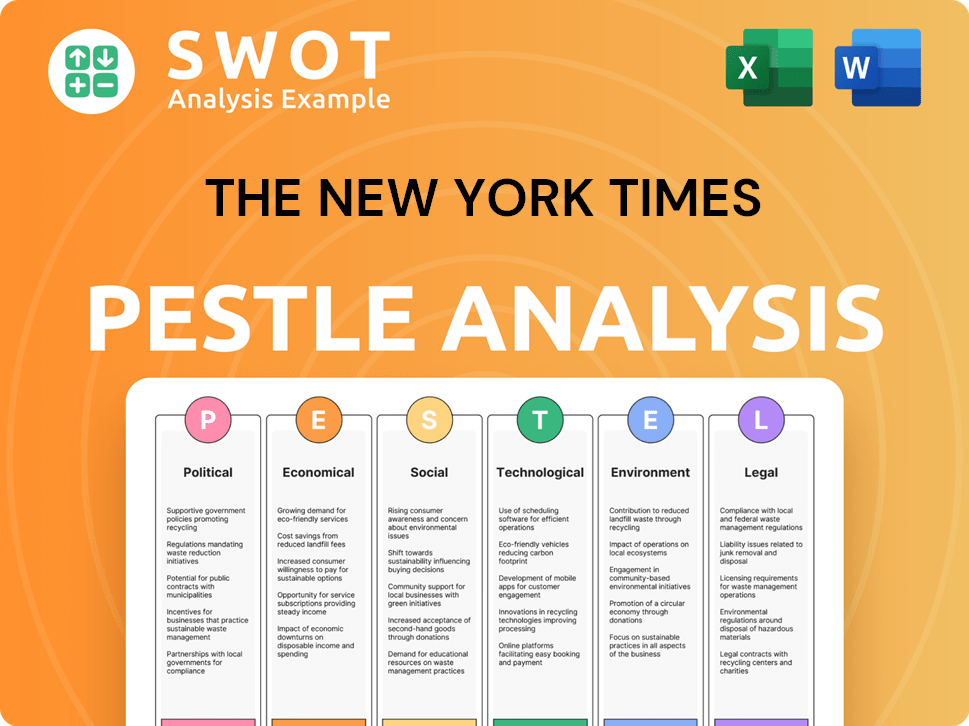
The New York Times PESTLE Analysis
- Covers All 6 PESTLE Categories
- No Research Needed – Save Hours of Work
- Built by Experts, Trusted by Consultants
- Instant Download, Ready to Use
- 100% Editable, Fully Customizable
Where does The New York Times operate?
The New York Times Company maintains a significant global presence, with its strongest market share and brand recognition in the United States. Its geographical reach extends across key metropolitan areas within the U.S., where it has historically held a dominant position in print and digital subscriptions. Internationally, the company has experienced substantial growth, particularly in English-speaking countries and regions with high demand for quality journalism.
The company's digital-first strategy has allowed it to transcend geographical boundaries more effectively than its print legacy. This shift has been crucial in expanding its audience beyond the constraints of traditional print distribution networks. The increasing importance of digital subscriptions reflects this evolving landscape, with a growing international subscriber base.
Differences in customer demographics, preferences, and buying power are evident across these regions. For instance, international subscribers may prioritize global news coverage and analysis of U.S. foreign policy, while domestic audiences might focus more on national politics and local issues. The New York Times Company localizes its offerings through dedicated international news desks and by ensuring its content is relevant to a global audience.
Geographical Reach
The company's geographic distribution of sales and growth increasingly reflects its digital subscriber base. This allows for broader reach compared to traditional print distribution.
International Growth
The company has seen substantial growth internationally, particularly in English-speaking countries and regions with high demand for independent journalism.
Digital Subscribers
As of Q4 2023, the New York Times had 9.9 million digital-only subscribers, indicating a robust global reach, which is a key factor in understanding the company's Competitors Landscape of The New York Times.
Localized Content
The New York Times localizes its offerings through dedicated international news desks, ensuring its content is relevant to a global audience.
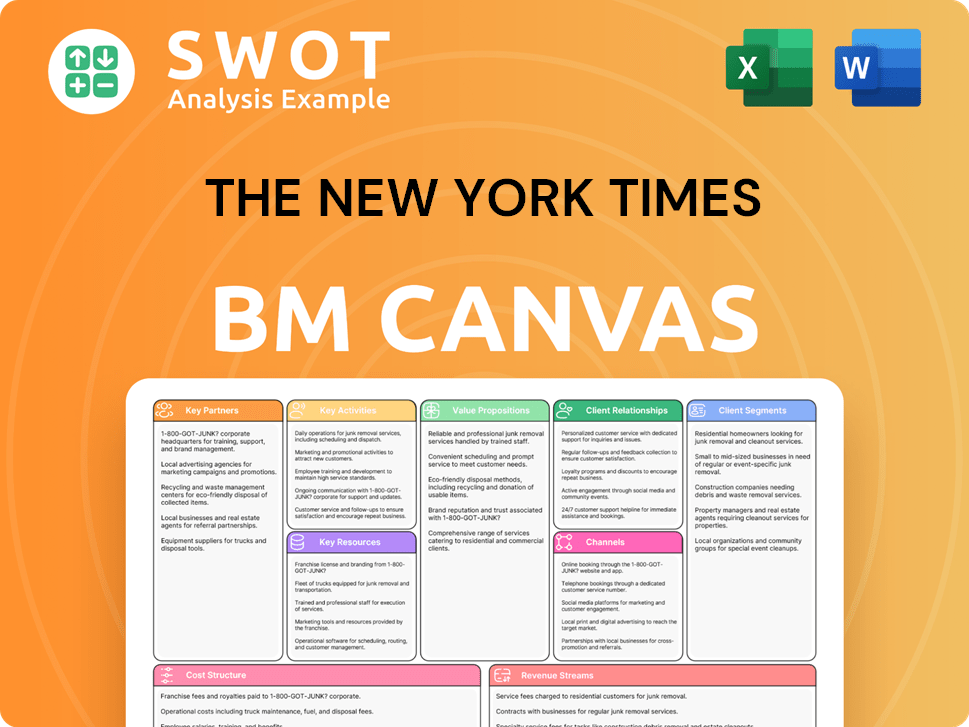
The New York Times Business Model Canvas
- Complete 9-Block Business Model Canvas
- Effortlessly Communicate Your Business Strategy
- Investor-Ready BMC Format
- 100% Editable and Customizable
- Clear and Structured Layout
How Does The New York Times Win & Keep Customers?
The New York Times Company's approach to customer acquisition and retention is heavily reliant on digital strategies. They use digital advertising, social media, and content marketing to reach potential subscribers. A 'freemium' model, offering a limited number of free articles, is a key tactic to convert casual readers into paying customers.
Sales strategies include promotional pricing and bundled offerings, such as combining news subscriptions with products like Games and Cooking. Retention efforts focus on enhancing customer lifetime value through personalization, robust CRM systems, and continuous innovation. These strategies are crucial in maintaining and growing their subscriber base.
The company tailors its marketing and content recommendations based on customer data, segmenting its audience to improve engagement. The focus on independent journalism and exclusive content helps attract new subscribers. Innovative retention initiatives, like subscriber-only content and community features, are designed to boost customer loyalty and reduce churn.
Digital Advertising
Digital advertising on various platforms is a primary channel for acquiring new customers. This includes targeted campaigns on social media, search engines, and other digital spaces. The goal is to reach potential subscribers based on their interests and demographics, driving them to subscribe to the publication.
Freemium Model
The 'freemium' model allows non-subscribers to access a limited number of articles for free. This strategy showcases the quality of their content and encourages casual readers to subscribe. This is a crucial step in converting interest into paid subscriptions.
Promotional Pricing
Offering promotional pricing for new subscribers is a common sales tactic. Discounts and special offers encourage potential customers to sign up. Bundled offerings that combine news subscriptions with products like Games and Cooking are also used to attract and retain customers.
Personalization and CRM
Customer data is used to personalize experiences, content recommendations, and user interfaces. Robust CRM systems help manage customer relationships and tailor marketing campaigns. This approach enhances customer engagement and retention.
The success of these strategies is evident in the company's subscriber growth. The evolution of the target market over time reflects a shift towards digital subscriptions and a broader range of content offerings. A Brief History of The New York Times shows how the company has adapted to changing media consumption habits and the importance of retaining a loyal, engaged digital community. The company's focus on digital subscriptions has paid off, with digital-only subscriptions reaching over 9.7 million in 2024, a testament to successful customer acquisition and retention efforts.
Content Diversification
Expanding content offerings beyond traditional news, such as Games and Cooking, has increased subscriber engagement. These additions provide extra value, improving retention rates and attracting a wider audience. This diversification has been a key factor in subscriber growth.
Community Building
Creating a loyal, engaged digital community is a core retention strategy. Subscriber-only content, newsletters, and interactive features foster a sense of belonging. This approach increases customer loyalty and reduces churn rates, contributing to long-term subscriber value.
Data-Driven Strategies
The company uses data analytics to understand customer behavior and preferences. This information informs targeted marketing campaigns and content recommendations. By tailoring its approach to individual customer needs, the company enhances engagement and retention.
Churn Reduction
Reducing churn rates is a significant goal. By focusing on customer lifetime value and addressing reasons for cancellation, the company improves its long-term financial performance. Retention efforts, such as personalized experiences and exclusive content, play a crucial role.
Subscription Bundling
Bundling news subscriptions with other products, like Games and Cooking, increases value for customers. This strategy encourages longer subscription periods and boosts overall customer lifetime value. These bundles often include exclusive content and features.
Customer Segmentation
Segmenting the audience based on demographics, interests, and behavior allows for more effective marketing. Tailoring campaigns and content recommendations to specific customer segments improves engagement. This data-driven approach is vital for acquisition and retention.
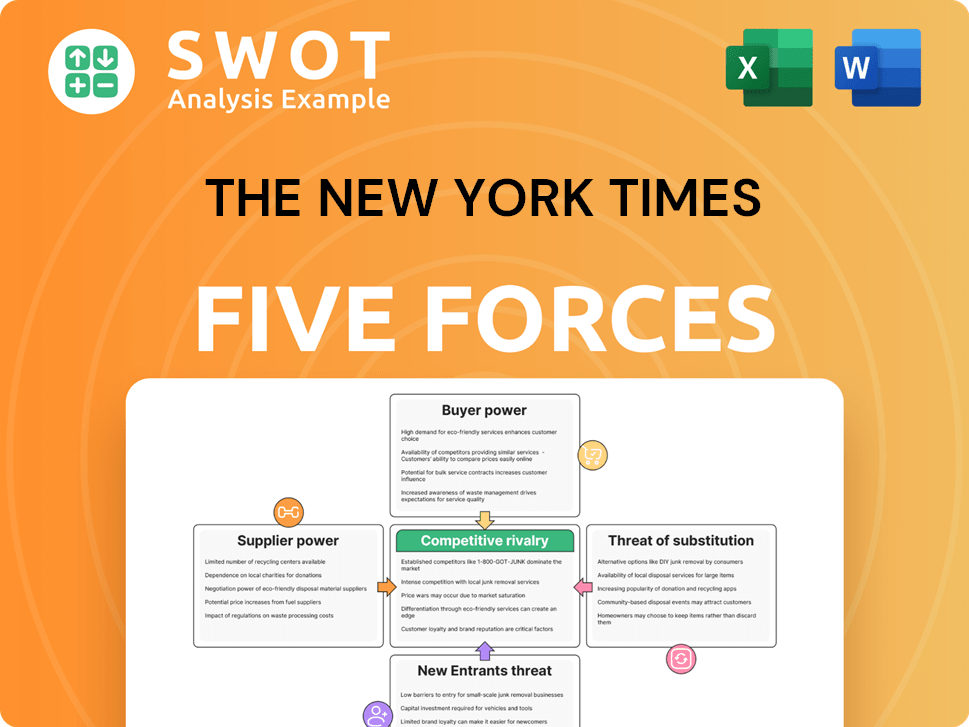
The New York Times Porter's Five Forces Analysis
- Covers All 5 Competitive Forces in Detail
- Structured for Consultants, Students, and Founders
- 100% Editable in Microsoft Word & Excel
- Instant Digital Download – Use Immediately
- Compatible with Mac & PC – Fully Unlocked
Related Blogs

- What are Mission Vision & Core Values of The New York Times Company?
- What is Competitive Landscape of The New York Times Company?
- What is Growth Strategy and Future Prospects of The New York Times Company?
- How Does The New York Times Company Work?
- What is Sales and Marketing Strategy of The New York Times Company?
- What is Brief History of The New York Times Company?
- Who Owns The New York Times Company?
Disclaimer
All information, articles, and product details provided on this website are for general informational and educational purposes only. We do not claim any ownership over, nor do we intend to infringe upon, any trademarks, copyrights, logos, brand names, or other intellectual property mentioned or depicted on this site. Such intellectual property remains the property of its respective owners, and any references here are made solely for identification or informational purposes, without implying any affiliation, endorsement, or partnership.
We make no representations or warranties, express or implied, regarding the accuracy, completeness, or suitability of any content or products presented. Nothing on this website should be construed as legal, tax, investment, financial, medical, or other professional advice. In addition, no part of this site—including articles or product references—constitutes a solicitation, recommendation, endorsement, advertisement, or offer to buy or sell any securities, franchises, or other financial instruments, particularly in jurisdictions where such activity would be unlawful.
All content is of a general nature and may not address the specific circumstances of any individual or entity. It is not a substitute for professional advice or services. Any actions you take based on the information provided here are strictly at your own risk. You accept full responsibility for any decisions or outcomes arising from your use of this website and agree to release us from any liability in connection with your use of, or reliance upon, the content or products found herein.