

The New York Times Bundle

How Does The New York Times Thrive in the Digital Age?
The New York Times, a venerable Newspaper Company, has not only survived but thrived in the face of digital disruption. With impressive Q1 2025 results showcasing robust revenue growth, the NYT demonstrates a powerful ability to adapt. This success story offers valuable insights into the future of Journalism and the evolving landscape of Media Companies.

The New York Times Company's strategic shift from print to digital, evidenced by its millions of digital subscribers, is a testament to its forward-thinking approach. Its diverse portfolio, including podcasts and games, alongside its core Journalism, showcases a multifaceted business model. To gain a deeper understanding, consider The New York Times SWOT Analysis to dissect its strengths, weaknesses, opportunities, and threats within the competitive media landscape, including its advertising revenue and New York Times digital subscriptions.
What Are the Key Operations Driving The New York Times’s Success?
The New York Times Company, a prominent media company, creates value by producing and distributing high-quality news and information. It offers diverse content through its digital and print editions, including specialized digital products. These offerings cater to a wide range of audiences, from those seeking in-depth news analysis to individuals interested in lifestyle content.
The core operations of the New York Times revolve around robust journalism, technological development, and sophisticated digital distribution. The company uses its editorial talent to produce original reporting and analysis. This content is then disseminated through its website, mobile applications, and traditional print newspaper. The digital platforms are continuously developed to enhance user experience and engagement.
The company's operational strategy is unique and effective due to its 'subscription-first' approach, combined with bundled offerings. This strategy encourages subscribers to engage with multiple products, increasing average revenue per user (ARPU) and reducing reliance on advertising revenues. The commitment to independent, quality journalism translates into customer benefits through trusted information and a diverse range of engaging content.
 Core Offerings
The New York Times offers a variety of content through its digital and print platforms. These include the digital and print editions of the New York Times, The Athletic, Cooking, Games, and Wirecutter. This diverse range caters to various interests and preferences of its readership.
Operational Processes
The operational processes involve robust journalism, technological development, and digital distribution. Editorial teams produce original reporting, which is disseminated through various platforms. Digital platforms are continuously updated to improve user experience and content delivery. The print operations include newsprint sourcing, printing, and distribution.
Competitive Advantage
The New York Times' 'subscription-first' strategy and bundled offerings are key differentiators. This approach boosts average revenue per user and reduces dependence on advertising. The focus on independent, quality journalism fosters customer loyalty and market differentiation. The company's commitment to quality journalism is a significant factor.
Value Proposition
The value proposition centers on providing trusted information and engaging content. This includes in-depth news analysis, lifestyle content, and entertainment. The company aims to offer a diverse range of content to a broad audience. The NYT's commitment to quality journalism builds trust and loyalty.

Key Financial and Operational Data
In 2024, The New York Times reported a total revenue of approximately $2.5 billion. Digital subscription revenue has been a significant growth driver, reaching over $800 million. The company's digital subscriptions continue to grow, with over 10 million subscriptions across all platforms as of early 2024. The New York Times's focus on digital subscriptions has allowed it to navigate shifts in the media landscape effectively.
- The NYT's commitment to quality journalism is a key factor.
- The company's digital subscription revenue is a significant growth driver.
- The New York Times has a strong brand reputation.
- The company continues to innovate with new digital products.
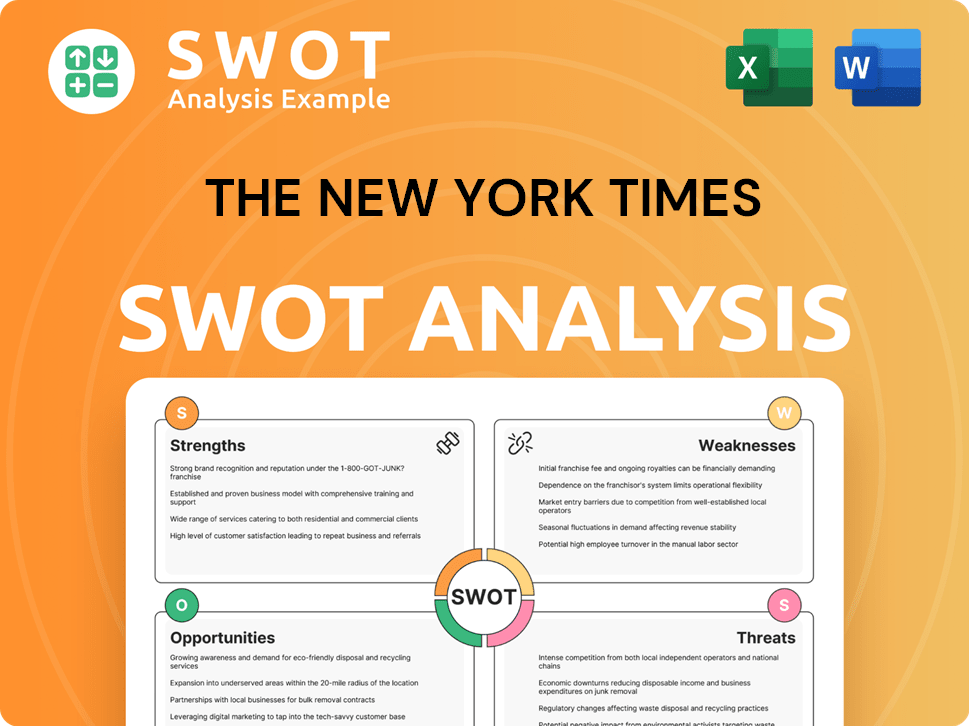
The New York Times SWOT Analysis
- Complete SWOT Breakdown
- Fully Customizable
- Editable in Excel & Word
- Professional Formatting
- Investor-Ready Format
How Does The New York Times Make Money?
The New York Times, a prominent media company, employs a dual revenue model centered on subscriptions and advertising. This strategy has evolved over time, with a significant shift towards digital platforms and subscription-based revenue.
Understanding how the New York Times makes money involves examining these core revenue streams and how they contribute to the overall financial performance of this newspaper company. The company's financial health relies heavily on its ability to attract and retain subscribers, as well as generate advertising revenue.
In the first quarter of 2025, the New York Times Company reported total revenues of $635.9 million, reflecting its diverse income sources and monetization strategies within the publishing and journalism industries.

Subscription Revenue
Subscription revenue is the primary source of income for the New York Times. Digital subscriptions are a key focus, driving growth through bundled offerings and price adjustments.
Digital Subscriptions
Digital-only subscription revenues increased significantly, up 14.4% in Q1 2025. This growth is fueled by multi-product subscriptions and strategic pricing.
Advertising Revenue
Advertising revenue is another critical component, with digital advertising showing strong growth. The company aims to increase digital advertising revenue in the coming quarters.
Print vs. Digital
Print subscription revenue declined, while digital revenues surged. This shift reflects the broader trend towards digital media consumption.
Other Revenue Streams
Other revenue streams, including affiliate and licensing, also contribute to the company's income. These areas are experiencing growth as well.
ARPU Growth
Digital-only Average Revenue Per User (ARPU) increased to $9.54 in Q1 2025. This rise indicates successful monetization strategies.
Detailed Financial Breakdown (Q1 2025)
In Q1 2025, the New York Times demonstrated a robust financial performance, with specific figures highlighting its revenue streams and growth areas.
- Total Revenues: $635.9 million
- Subscription Revenues: $464.3 million (8.2% increase year-over-year)
- Digital-Only Subscription Revenues: $335 million (14.4% increase)
- Print Subscription Revenues: $129.2 million (5% decline)
- Advertising Revenues: $108.1 million (4.2% increase)
- Digital Advertising Revenues: $70.9 million (12.4% increase)
- Print Advertising Revenues: $37.2 million (8.5% decline)
- Other Revenues: $63.6 million (3.7% increase)
- Digital-only ARPU: $9.54
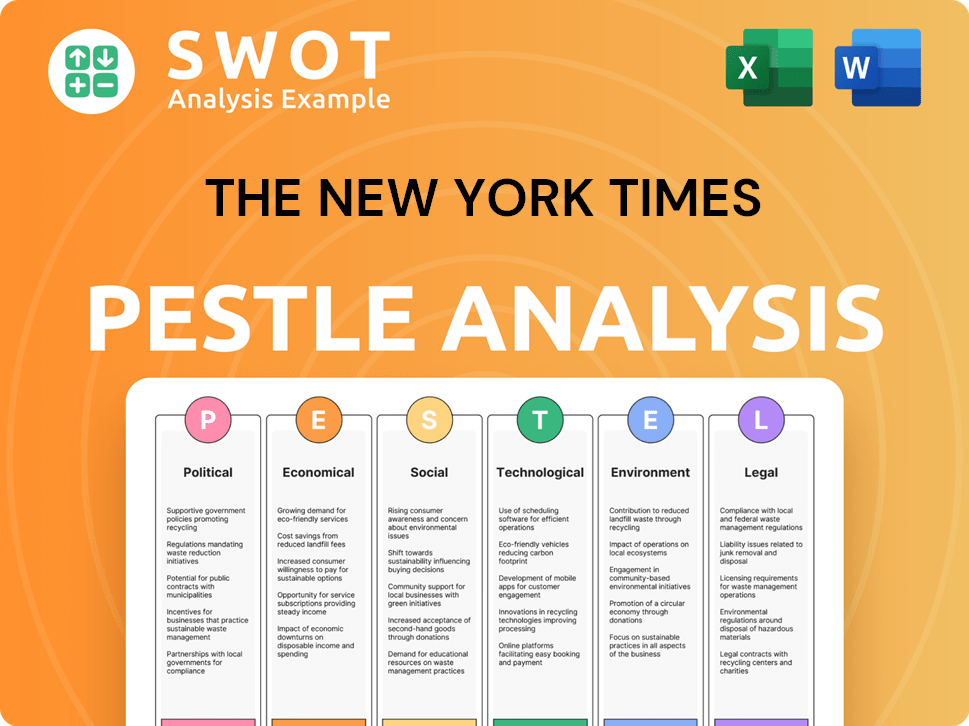
The New York Times PESTLE Analysis
- Covers All 6 PESTLE Categories
- No Research Needed – Save Hours of Work
- Built by Experts, Trusted by Consultants
- Instant Download, Ready to Use
- 100% Editable, Fully Customizable
Which Strategic Decisions Have Shaped The New York Times’s Business Model?
The New York Times Company, a prominent media company, has undergone a significant transformation, with key milestones shaping its trajectory. A pivotal shift was the adoption of a digital subscription model, which began gaining traction with the introduction of its digital paywall in 2011. This strategic move has redefined the company's operations and financial performance, setting the stage for its current business model.
Strategic moves, such as the acquisitions of The Athletic and Wirecutter, along with the development of popular games and cooking content, have been instrumental in diversifying content offerings. These initiatives have been pivotal in attracting a broader digital subscriber base. The company's 'bundle strategy,' where a substantial portion of its digital subscribers are on multi-product plans, has notably boosted average revenue per user (ARPU).
The Growth Strategy of The New York Times reflects its adaptability in a changing media landscape. The company continues to navigate operational and market challenges, including the decline in print advertising and subscription revenues. Simultaneously, it invests heavily in its digital products and marketing to offset these declines, ensuring sustained growth and relevance in the media industry.
Key Milestones
The introduction of the digital paywall in 2011 marked a significant turning point, driving the transition towards a digital subscription model. This strategic shift has been central to the company's financial performance. The acquisition of The Athletic and Wirecutter expanded its content portfolio, attracting a wider audience.
Strategic Moves
The 'bundle strategy' has been a key strategic move, with nearly half of digital subscribers on multi-product plans, boosting ARPU. The company's investment in digital products and marketing aims to offset declines in print revenue. The development of games and cooking content has diversified offerings, attracting more subscribers.
Competitive Edge
The NYT's strong brand recognition and reputation for high-quality journalism are key competitive advantages. Continuous investment in technology and content development, including a 'robust pipeline' of new games, supports its business model. The ability to adapt to new trends and focus on multi-product bundles helps maintain its edge in the media landscape.
Financial Performance
Digital-only subscription revenues jumped by 14.4% in Q1 2025, indicating strong growth in this area. Print subscription revenues dropped by 5% in Q1 2025, reflecting ongoing challenges in the print sector. Print advertising revenues fell by 8.5% in Q1 2025, highlighting the decline in traditional advertising.
Operational Challenges and Legal Issues
The company faces operational challenges, including the decline in print revenues and the need to invest in digital offerings. Legal challenges, such as the copyright infringement lawsuit against OpenAI and Microsoft, also represent ongoing considerations. The company spent $10.8 million on legal fees related to the OpenAI lawsuit in 2024.
- The NYT continues to invest in digital content and marketing.
- The company is adapting to the shift in media consumption habits.
- The focus on multi-product bundles is a key strategy for growth.
- Brand strength and reputation are crucial for attracting and retaining subscribers.
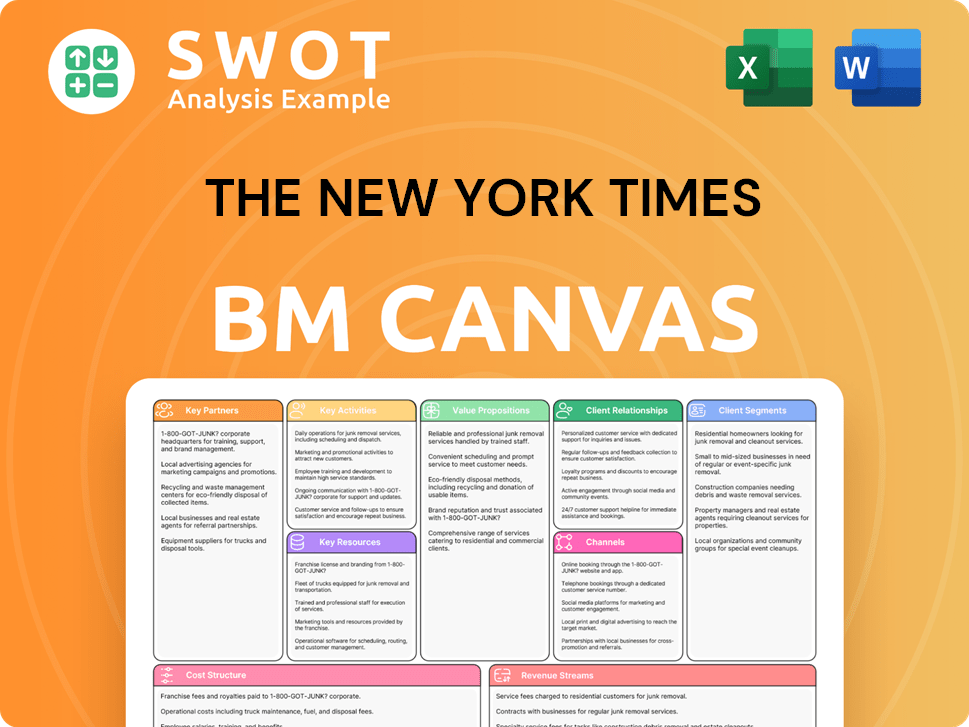
The New York Times Business Model Canvas
- Complete 9-Block Business Model Canvas
- Effortlessly Communicate Your Business Strategy
- Investor-Ready BMC Format
- 100% Editable and Customizable
- Clear and Structured Layout
How Is The New York Times Positioning Itself for Continued Success?
The New York Times Company, a prominent media company, holds a significant position in the global media landscape, particularly within the digital news and information sector. As of Q4 2024, it held a 17.76% market share within the newspaper publishing industry. The company's commitment to quality journalism and its strong brand contribute to high customer loyalty.
Despite its strong position, the company faces several key risks, including the continued decline in print advertising and subscription revenues, which necessitates sustained digital growth to offset. The ongoing lawsuit against OpenAI and Microsoft regarding copyright infringement highlights the evolving landscape of intellectual property in the age of AI. Changing consumer preferences for news consumption also require continuous adaptation. For a deeper dive into the company's origins, consider reading the Brief History of The New York Times.
Industry Position
The New York Times is a leading media company, particularly in the digital news and information sector. Its strong brand and quality journalism contribute to high customer loyalty. The company's digital subscriber base reached 11.06 million digital-only subscribers in Q1 2025, demonstrating its digital dominance.
Key Risks
The company faces risks like the decline in print revenue and the need for sustained digital growth. Regulatory changes regarding digital privacy and content distribution could impact operations. New competitors and technological disruptions, like AI advancements, also pose challenges.
Future Outlook
Management anticipates continued momentum in its digital business, projecting digital-only subscription revenues to rise by 13-16% and total subscription revenue growth of 8-10% in Q2 2025. The company's focus on its bundle strategy is central to its future growth.
Strategic Initiatives
Investments in technology and content development are expected to drive adjusted operating costs up by 5-6% in Q2 2025. The company aims to reach 15 million subscribers by the end of 2027. The company also maintains a disciplined capital allocation strategy, returning $81 million to shareholders in Q1 2025.
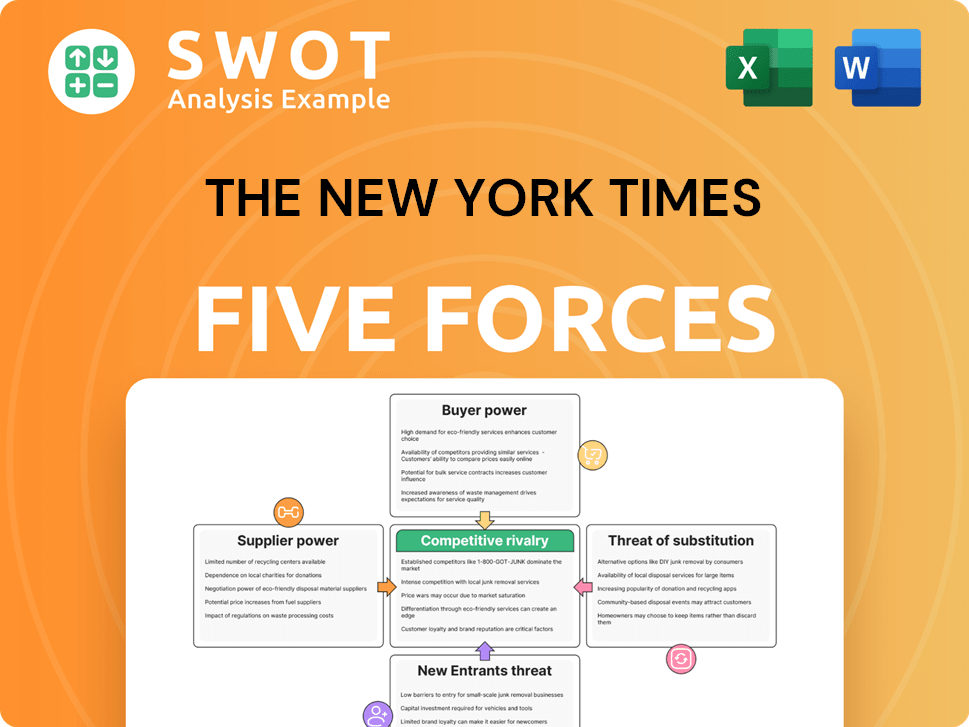
The New York Times Porter's Five Forces Analysis
- Covers All 5 Competitive Forces in Detail
- Structured for Consultants, Students, and Founders
- 100% Editable in Microsoft Word & Excel
- Instant Digital Download – Use Immediately
- Compatible with Mac & PC – Fully Unlocked
Related Blogs

- What are Mission Vision & Core Values of The New York Times Company?
- What is Competitive Landscape of The New York Times Company?
- What is Growth Strategy and Future Prospects of The New York Times Company?
- What is Sales and Marketing Strategy of The New York Times Company?
- What is Brief History of The New York Times Company?
- Who Owns The New York Times Company?
- What is Customer Demographics and Target Market of The New York Times Company?
Disclaimer
All information, articles, and product details provided on this website are for general informational and educational purposes only. We do not claim any ownership over, nor do we intend to infringe upon, any trademarks, copyrights, logos, brand names, or other intellectual property mentioned or depicted on this site. Such intellectual property remains the property of its respective owners, and any references here are made solely for identification or informational purposes, without implying any affiliation, endorsement, or partnership.
We make no representations or warranties, express or implied, regarding the accuracy, completeness, or suitability of any content or products presented. Nothing on this website should be construed as legal, tax, investment, financial, medical, or other professional advice. In addition, no part of this site—including articles or product references—constitutes a solicitation, recommendation, endorsement, advertisement, or offer to buy or sell any securities, franchises, or other financial instruments, particularly in jurisdictions where such activity would be unlawful.
All content is of a general nature and may not address the specific circumstances of any individual or entity. It is not a substitute for professional advice or services. Any actions you take based on the information provided here are strictly at your own risk. You accept full responsibility for any decisions or outcomes arising from your use of this website and agree to release us from any liability in connection with your use of, or reliance upon, the content or products found herein.