

SmileDirectClub Bundle

How Did SmileDirectClub's Sales and Marketing Strategies Ultimately Fail?
SmileDirectClub, a pioneer in the teledentistry space, revolutionized the orthodontics industry with its direct-to-consumer approach. Its rapid rise and subsequent fall offer a compelling case study in the power and pitfalls of innovative SmileDirectClub SWOT Analysis. This analysis delves into the core of its sales and marketing strategies, exploring how they fueled initial growth before contributing to its eventual bankruptcy. Understanding the nuances of SmileDirectClub's business model is crucial for anyone studying the evolution of the market.

This exploration of SmileDirectClub's journey will dissect its SmileDirectClub sales strategy, analyzing how it acquired customers and managed its sales funnel. We'll also examine its SmileDirectClub marketing strategy, including its digital marketing tactics and social media presence, to understand its brand positioning and competitive landscape. Furthermore, the SmileDirectClub business model will be scrutinized to reveal the factors that led to its operational cessation, providing invaluable lessons for businesses navigating the complexities of the modern market.
How Does SmileDirectClub Reach Its Customers?
The Growth Strategy of SmileDirectClub heavily relied on a direct-to-consumer (DTC) sales model. This approach was central to its business model, focusing on direct engagement with customers through various channels. The company aimed to control the entire customer experience, from initial assessment to treatment completion, to maximize efficiency and brand consistency.
The core of the SmileDirectClub sales strategy involved its e-commerce platform. Customers could order impression kits or schedule appointments at SmileShops via the website. These physical retail locations, at one point numbering in the hundreds across the United States and internationally, offered free 3D digital scans, enhancing the customer experience and providing a more accurate alternative to at-home impression kits.
The evolution of the SmileDirectClub marketing strategy saw a significant shift towards digital adoption. The company's website and app facilitated the entire customer journey, from initial assessment to treatment monitoring. While the DTC model was paramount, SmileDirectClub did explore partnerships, though its direct approach remained dominant. The performance of these channels was heavily reliant on lead generation through its extensive marketing efforts, driving traffic to both its online platform and physical SmileShops.
 E-commerce Platform
The primary sales channel was the e-commerce platform, where customers could order impression kits or schedule appointments. This digital platform was the first point of contact for many customers. The website and app were designed to guide customers through the entire process, from initial inquiry to treatment completion.
SmileShops
SmileShops, physical retail locations, played a crucial role in the sales funnel. These stores offered free 3D digital scans of customers' teeth, providing a more accurate alternative to at-home impression kits. At its peak, the company operated hundreds of SmileShops across the United States and internationally.
Digital Adoption
A significant emphasis was placed on digital adoption, with the website and app facilitating the entire customer journey. This included initial assessments, treatment monitoring, and customer support. The digital focus aimed to streamline the process and enhance the customer experience.
Partnerships
While the DTC model was dominant, SmileDirectClub explored partnerships with some dental practices. These partnerships allowed dentists to incorporate the company's clear aligners into their treatment plans. However, these were secondary to its direct sales efforts.

Key Sales Channels and Strategy
The primary sales channels were the e-commerce platform and SmileShops, supporting the direct-to-consumer model. The company focused on maximizing control over the customer experience and cost efficiency through its direct approach. Lead generation through extensive marketing efforts was crucial for driving traffic to both online and physical locations, influencing the SmileDirectClub sales funnel.
- Direct-to-Consumer (DTC) Model: The core strategy, focusing on direct engagement with customers.
- E-commerce Platform: The primary touchpoint for ordering impression kits and scheduling appointments.
- SmileShops: Physical retail locations offering free 3D scans and enhancing customer experience.
- Digital Adoption: Website and app facilitating the entire customer journey.
- Marketing Efforts: Driving traffic to online and physical locations through extensive campaigns.
SmileDirectClub SWOT Analysis
- Complete SWOT Breakdown
- Fully Customizable
- Editable in Excel & Word
- Professional Formatting
- Investor-Ready Format

What Marketing Tactics Does SmileDirectClub Use?
The marketing strategy of the company, focused heavily on digital channels to build brand awareness and generate sales. This approach included a mix of paid advertising, content marketing, and influencer partnerships. The company's success was significantly tied to its ability to effectively reach and engage potential customers online, making it a key aspect of its overall SmileDirectClub sales strategy.
The company employed a multi-faceted approach, with a strong emphasis on direct response campaigns to encourage immediate action. This strategy aimed to drive traffic to its online platforms and physical locations, known as SmileShops. The marketing mix consistently evolved, with a strong emphasis on direct response campaigns that encouraged immediate action, such as ordering an impression kit or booking a scan, which is a core element of the SmileDirectClub marketing strategy.
Traditional media, particularly television and radio advertisements, also played a role, especially during its rapid growth phase. These campaigns aimed to create widespread brand recognition and drive traffic to its online platforms and SmileShops. The company’s marketing efforts were designed to highlight the convenience and affordability of its clear aligners, which were key selling points in its messaging.

Digital Advertising
Paid advertising was a cornerstone of the company's strategy. This included search engine marketing (SEM), social media advertising (Facebook, Instagram, YouTube), and programmatic display ads. This approach was crucial for reaching a broad audience and driving traffic to its online platforms.
Content Marketing
Content marketing played a role in educating consumers about the benefits of clear aligners and the convenience of the company's teledentistry model. This often involved blog posts, explainer videos, and patient testimonials.
Influencer Partnerships
The company invested in influencer partnerships, collaborating with celebrities and social media personalities. This was done to reach a broader audience and build brand credibility. This was a key part of their SmileDirectClub business model.
Traditional Media
Television and radio advertisements were also critical components, especially during its rapid growth phase. These campaigns aimed to create widespread brand recognition and drive traffic to its online platforms and SmileShops.
Direct Response Campaigns
The marketing mix consistently evolved, with a strong emphasis on direct response campaigns that encouraged immediate action. This included ordering an impression kit or booking a scan. This was a core element of their strategy.
Data-Driven Marketing
The company embraced data-driven marketing, utilizing analytics to segment customers and personalize marketing messages. While specific technology platforms or advanced analytics tools beyond standard industry practices were not widely publicized, data played a role.
Key Tactics and Innovations
The company's marketing tactics included aggressive use of celebrity endorsements and a focus on convenience and affordability. This was a key part of their messaging. The company's strategy was designed to make orthodontic treatment more accessible and appealing to a broader audience.
- Celebrity Endorsements: Leveraging celebrity endorsements to build brand awareness and credibility.
- Convenience and Affordability: Highlighting the convenience and affordability of clear aligners as key selling points.
- Direct Response: Encouraging immediate action through direct response campaigns.
- Digital Focus: Prioritizing digital channels for advertising and customer engagement.
SmileDirectClub PESTLE Analysis
- Covers All 6 PESTLE Categories
- No Research Needed – Save Hours of Work
- Built by Experts, Trusted by Consultants
- Instant Download, Ready to Use
- 100% Editable, Fully Customizable

How Is SmileDirectClub Positioned in the Market?
The brand positioning of the company, positioned itself as a disruptor in the orthodontic industry. Its core message centered on providing an accessible, affordable, and convenient alternative to traditional orthodontic treatments. This approach directly challenged established practices, aiming to attract a broader audience, particularly those deterred by high costs or the inconvenience of traditional braces. The SmileDirectClub sales strategy and SmileDirectClub marketing strategy were built around this value proposition.
The company's brand identity was designed to be modern, friendly, and approachable, with the goal of demystifying the orthodontic process. This involved a focus on clear aligners, presented as a more convenient and cost-effective solution. The company's unique selling proposition (USP) was central to its brand identity, offering clear aligners at a significantly lower price point, often advertised as up to 60% less than traditional orthodontists.
The company's initial success was marked by strong brand recognition and a perception of innovation. However, the company's brand consistency faced scrutiny due to regulatory challenges and customer complaints. The company's response to shifts in consumer sentiment and competitive threats often involved reiterating its commitment to affordability and convenience, although this became increasingly difficult amidst its financial struggles and eventual operational cessation.
Democratizing Access
The company aimed to democratize access to orthodontic care by offering a more affordable and convenient alternative. This was a key element of its brand positioning, making straighter smiles accessible to a wider audience. The company's SmileDirectClub business model was built on this premise.
Value Proposition
The company's value proposition was centered on affordability and convenience. It offered clear aligners at a significantly lower price than traditional orthodontists, often advertised as up to 60% less. This was a core component of its SmileDirectClub sales strategy.
Target Audience
The company primarily targeted individuals seeking a straighter smile but were deterred by the high cost or inconvenience of traditional braces. The brand's marketing efforts focused on appealing to this demographic, emphasizing ease of use and affordability. Understanding the SmileDirectClub's target audience demographics was crucial.
Brand Messaging
The company's messaging was designed to be modern, friendly, and approachable, aiming to demystify the orthodontic process. This approach was intended to resonate with a broad consumer base, making orthodontic treatment seem less intimidating. The SmileDirectClub marketing campaign analysis reveals this focus.
The company's brand positioning faced challenges as it navigated regulatory issues and customer complaints. Data indicated a decline in trust and satisfaction among some consumers, which contributed to its downfall. The direct-to-consumer orthodontics model, while initially successful, faced increasing scrutiny. For a broader perspective, consider the Competitors Landscape of SmileDirectClub.
SmileDirectClub Business Model Canvas
- Complete 9-Block Business Model Canvas
- Effortlessly Communicate Your Business Strategy
- Investor-Ready BMC Format
- 100% Editable and Customizable
- Clear and Structured Layout

What Are SmileDirectClub’s Most Notable Campaigns?
The SmileDirectClub sales strategy heavily relied on impactful marketing campaigns to drive customer acquisition and establish brand recognition. These campaigns were crucial for building a strong customer base in the competitive direct-to-consumer orthodontics market. The company's approach centered on making orthodontic treatment accessible and affordable, which was a key element of their SmileDirectClub business model.
A significant portion of their marketing efforts focused on television advertising. These ads showcased dramatic before-and-after transformations, emphasizing the convenience and affordability of the service. This strategy was instrumental in driving initial growth and establishing SDC as a recognizable brand. The campaigns were designed to generate leads and encourage potential customers to visit their website or a physical SmileShop.
Another key component of their SmileDirectClub marketing strategy involved collaborations with influencers and celebrities. These partnerships aimed to boost brand visibility and build credibility by leveraging existing fan bases. While these strategies initially proved successful in generating social proof and reinforcing the brand's modern image, the company eventually faced significant challenges.
Direct-Response Television Ads
These ads highlighted before-and-after transformations to showcase the effectiveness of the aligners. They emphasized the ease and affordability of the service, encouraging viewers to visit the website or a SmileShop. This was a core element of their teledentistry marketing approach.
Influencer and Celebrity Collaborations
Partnering with influencers and celebrities aimed to increase brand visibility and credibility. These collaborations tapped into existing fan bases to promote the convenience of the teledentistry model. The goal was to generate social proof and reinforce the brand's modern image.
The success of these campaigns helped drive significant customer acquisition. However, as the company faced increasing legal and regulatory challenges, and ultimately bankruptcy in late 2023, the ability to execute new campaigns diminished. The challenges highlight the importance of not only effective marketing but also robust operational execution, regulatory compliance, and sustainable business practices.
Key Takeaways from SDC's Campaigns
The effectiveness of SmileDirectClub's marketing campaigns played a crucial role in its initial growth and market penetration. Analyzing these campaigns provides insights into the dynamics of the direct-to-consumer orthodontics sector. Understanding these strategies can provide valuable lessons for other businesses in similar markets. For a deeper dive, consider reading about the evolution of the company on this informative article: 0.
- Brand Awareness: Television ads and influencer marketing significantly increased brand recognition.
- Customer Acquisition: Campaigns were designed to drive leads and convert them into customers.
- Affordability Focus: The marketing emphasized the cost-effectiveness of the clear aligners.
- Modern Image: The brand positioned itself as a convenient and accessible alternative to traditional orthodontics.
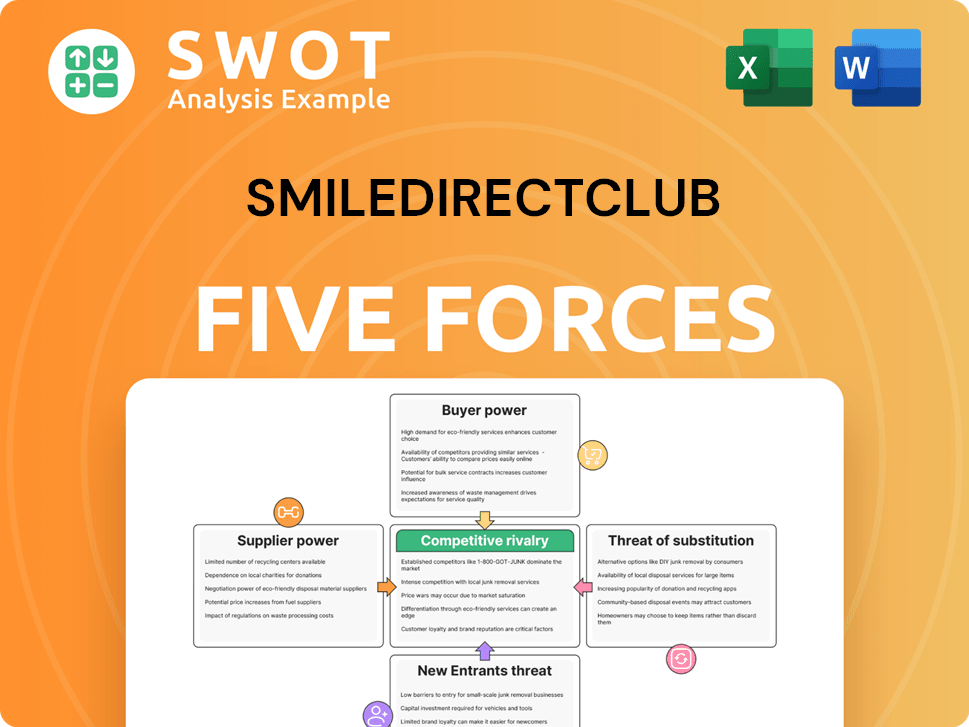
SmileDirectClub Porter's Five Forces Analysis
- Covers All 5 Competitive Forces in Detail
- Structured for Consultants, Students, and Founders
- 100% Editable in Microsoft Word & Excel
- Instant Digital Download – Use Immediately
- Compatible with Mac & PC – Fully Unlocked
Related Blogs

- What are Mission Vision & Core Values of SmileDirectClub Company?
- What is Competitive Landscape of SmileDirectClub Company?
- What is Growth Strategy and Future Prospects of SmileDirectClub Company?
- How Does SmileDirectClub Company Work?
- What is Brief History of SmileDirectClub Company?
- Who Owns SmileDirectClub Company?
- What is Customer Demographics and Target Market of SmileDirectClub Company?
Disclaimer
All information, articles, and product details provided on this website are for general informational and educational purposes only. We do not claim any ownership over, nor do we intend to infringe upon, any trademarks, copyrights, logos, brand names, or other intellectual property mentioned or depicted on this site. Such intellectual property remains the property of its respective owners, and any references here are made solely for identification or informational purposes, without implying any affiliation, endorsement, or partnership.
We make no representations or warranties, express or implied, regarding the accuracy, completeness, or suitability of any content or products presented. Nothing on this website should be construed as legal, tax, investment, financial, medical, or other professional advice. In addition, no part of this site—including articles or product references—constitutes a solicitation, recommendation, endorsement, advertisement, or offer to buy or sell any securities, franchises, or other financial instruments, particularly in jurisdictions where such activity would be unlawful.
All content is of a general nature and may not address the specific circumstances of any individual or entity. It is not a substitute for professional advice or services. Any actions you take based on the information provided here are strictly at your own risk. You accept full responsibility for any decisions or outcomes arising from your use of this website and agree to release us from any liability in connection with your use of, or reliance upon, the content or products found herein.