

SmileDirectClub Bundle

Can SmileDirectClub's Story Offer Lessons for Future Teledentistry Ventures?
Founded in 2014, SmileDirectClub disrupted the SmileDirectClub SWOT Analysis dental industry with its direct-to-consumer clear aligners, promising affordable and convenient teeth straightening. Initially valued at billions, the company's rapid rise and subsequent fall present a compelling case study in the volatile world of teledentistry. This analysis delves into SmileDirectClub's growth strategy and the factors that shaped its trajectory.

Understanding SmileDirectClub's journey requires a deep dive into its business model, market analysis, and the competitive landscape it navigated. While the company's initial success in offering clear aligners was undeniable, its ultimate demise highlights the critical importance of sustainable growth strategies and robust financial health. This exploration examines the impact of SmileDirectClub on orthodontics and what the future holds for at-home teeth aligners, considering its expansion plans and international market presence.
How Is SmileDirectClub Expanding Its Reach?
Prior to ceasing operations, the company, focused on significant expansion initiatives to fuel its growth. These efforts aimed to increase overall demand for its products and boost customer conversion rates. Key investment initiatives included expanding its 'SmileShop' footprint, enhancing its existing product platform, and introducing new offerings. The company's approach to growth was multifaceted, encompassing both physical and digital strategies.
The company's expansion strategy was designed to capture a larger share of the market. This involved a combination of physical retail locations, international market entries, and strategic partnerships. The aim was to reach a broader audience and solidify its position in the competitive clear aligners market.
The company's growth strategy included a strong emphasis on its physical retail presence. SmileShops, which provided in-person services like 3D digital images of teeth, were a cornerstone of the business. These locations were crucial for customer acquisition and contributed significantly to the company's revenue before the pandemic.
 SmileShop Expansion
At its peak, the company had over 225 SmileShops, with plans to expand to over a thousand locations. These physical locations were crucial for customer acquisition and provided in-person services. As of September 2023, the company had 110 SmileShop retail locations in the US.
International Expansion
International expansion was a key element of the company's growth strategy. The company launched in Canada in November 2018, Australia in the second quarter of 2019, and the UK in the third quarter of 2019. They identified significant international growth opportunities, estimating that approximately 75% of the total market opportunity lay outside the U.S.
Strategic Partnerships
The company explored collaborations with retailers and other third-party partnerships. This included an exclusive deal with Walmart to sell oral care products. They also planned to expand its professional channel through the Partner Network. This aimed to capture a larger market share of the teen and higher-household income demographics.
Market Focus
The company focused on the teen and higher-household income demographics. This targeted approach aimed to increase market share and customer acquisition. These efforts were part of a broader strategy to solidify its position in the dental industry.

Expansion Strategy and Market Analysis
The company's expansion strategy involved a multi-pronged approach. This included physical retail locations, international market entries, and strategic partnerships to reach a broader audience. The company's market analysis revealed significant opportunities for growth, particularly outside the U.S.
- The company aimed to increase overall demand and improve customer conversion rates.
- Physical locations, like SmileShops, were a key part of the business model.
- International expansion was focused on markets like Canada, Australia, and the UK.
- Partnerships with retailers like Walmart were part of the growth plan.
The company's approach to growth was ambitious, with plans to significantly increase its physical presence and expand its international footprint. The company's expansion initiatives were designed to capitalize on the growing demand for teledentistry and clear aligners. For more information on the competitive landscape, consider reading about the Competitors Landscape of SmileDirectClub.
SmileDirectClub SWOT Analysis
- Complete SWOT Breakdown
- Fully Customizable
- Editable in Excel & Word
- Professional Formatting
- Investor-Ready Format

How Does SmileDirectClub Invest in Innovation?
The company, leveraged innovation and technology as core elements of its business model to drive its growth strategy. It pioneered teledentistry, using a direct-to-consumer approach for clear aligner therapy. This approach involved customers taking at-home impression kits or visiting SmileShops for 3D digital images, which were then used to create personalized 3D-printed clear aligners.
This innovative approach combined telehealth with cutting-edge technology to provide affordable, accessible, and convenient dental treatments. This strategy allowed the company to disrupt the traditional dental industry, offering a more streamlined and cost-effective solution for teeth alignment. The company's ability to adapt and integrate new technologies has been crucial to its market position.
The company's business model centered on providing clear aligners directly to consumers, bypassing traditional dental practices. This approach, coupled with its use of technology, allowed it to offer competitive pricing and convenience, attracting a large customer base. The company's success hinged on its ability to manage the entire process, from initial assessment to aligner production and customer support, efficiently and effectively.

Teledentistry and Remote Monitoring
The company utilized teledentistry to connect customers with licensed dentists and orthodontists remotely. This allowed for virtual consultations and treatment plan approvals. This approach expanded access to orthodontic care, especially for those in underserved areas.
3D Printing and Customization
The company employed 3D printing technology to manufacture custom clear aligners. This allowed for personalized treatment plans tailored to each customer's specific needs. This technology enabled the company to scale its operations efficiently while maintaining high standards of quality.
SmileMaker Platform and SmileOS
The company invested in internal technology development, including the SmileMaker Platform and SmileOS. SmileOS, launched in 2021, was designed to optimize treatment efficiency and accuracy. These platforms enhanced the company's ability to manage and streamline the treatment process.
Data Analytics and AI
The company aimed to leverage its extensive data repository, accumulated from over 700,000 members, and use artificial intelligence and other technologies. This data-driven approach was intended to improve existing offerings, enhance manufacturing, and introduce new products. The use of AI could potentially improve treatment outcomes and customer satisfaction.
Expansion into Oral Care Products
In 2022, the company expanded its offerings into the broader oral care market by launching whitening kits and strips. This diversification strategy allowed the company to capture a larger share of the oral care market. This expansion could also enhance customer loyalty and increase revenue streams.
Direct-to-Consumer Approach
The direct-to-consumer model eliminated the need for traditional dental practices, reducing costs and increasing accessibility. This approach allowed the company to offer competitive pricing and convenience. This model was a key differentiator in the dental industry.
The company's innovation strategy was central to its growth strategy, allowing it to disrupt the traditional dental industry. By leveraging technology, the company aimed to provide affordable and convenient orthodontic solutions. The company's ability to adapt to changing market conditions and embrace new technologies will be critical to its future prospects. For more insights into the company's market approach, consider reading the Marketing Strategy of SmileDirectClub.
Key Technological and Innovation Strategies
The company's success was heavily reliant on its innovative use of technology and its ability to integrate these technologies into its business model. The company's focus on technology was designed to provide affordable and convenient orthodontic solutions.
- Teledentistry: Remote consultations and treatment monitoring.
- 3D Printing: Custom aligner manufacturing.
- Software Platforms: SmileMaker Platform and SmileOS for treatment planning and efficiency.
- Data Analytics and AI: Enhancing existing offerings, improving manufacturing, and introducing new products.
- Product Diversification: Expanding into oral care products.
SmileDirectClub PESTLE Analysis
- Covers All 6 PESTLE Categories
- No Research Needed – Save Hours of Work
- Built by Experts, Trusted by Consultants
- Instant Download, Ready to Use
- 100% Editable, Fully Customizable

What Is SmileDirectClub’s Growth Forecast?
The financial trajectory of SmileDirectClub, a company focused on clear aligners, ultimately proved unsustainable. Despite its initial growth, the company faced persistent challenges in achieving profitability. This ultimately led to its bankruptcy and the cessation of its operations, marking a significant shift in the teledentistry and clear aligners market.
SmileDirectClub's financial struggles are evident in its revenue and debt. In 2019, the company reported revenue of approximately $750 million. However, by 2022, this figure had dropped to $471 million, representing a decline of about 37.3%. The company also accumulated a substantial debt load, nearing $900 million, which further complicated its financial stability.
The company's inability to achieve profitability was a critical factor in its downfall. SmileDirectClub consistently reported losses, with a loss of $86.4 million reported in 2022. The company's cash burn rate, averaging around $45 million per quarter since the first quarter of 2021, further exacerbated its financial difficulties. These factors, combined with an inability to secure additional funding or a buyer, led to the conversion of its Chapter 11 case to a Chapter 7 liquidation proceeding on January 26, 2024.
Financial Performance Overview
The company's financial performance declined significantly. The drop in revenue from $750 million in 2019 to $471 million in 2022 highlights the challenges faced. The company never achieved profitability, which led to significant financial strain.
Debt and Liquidity Issues
SmileDirectClub carried a substantial debt burden, which became unsustainable. The company's cash position dwindled, with only $5 million in cash at the time of its bankruptcy filing in September 2023. Efforts to refinance debt and secure new capital were unsuccessful.
Market Capitalization Decline
The market capitalization of SmileDirectClub plummeted. In October 2023, the company's market capitalization dropped to $65 million, reflecting a loss of investor confidence. This decline further complicated the company's ability to attract investment or secure a sale.
Bankruptcy and Liquidation
The company filed for Chapter 11 bankruptcy in September 2023. The failure to restructure its debt or find a buyer led to the conversion of the case to a Chapter 7 liquidation. This resulted in the cessation of the company's operations.
Impact on the Dental Industry
The bankruptcy of SmileDirectClub has had a significant impact on the dental industry. The company's failure raises questions about the long-term viability of at-home teeth aligner models and the broader teledentistry market. The company's struggles highlight the challenges of balancing rapid growth with sustainable financial practices within the dental industry.
Future of At-Home Teeth Aligners
The future of at-home teeth aligners is uncertain following SmileDirectClub's bankruptcy. The company's demise has led to a reevaluation of the business model and the competitive landscape. The Revenue Streams & Business Model of SmileDirectClub provides further insight into the factors that contributed to the company's financial struggles.
SmileDirectClub Business Model Canvas
- Complete 9-Block Business Model Canvas
- Effortlessly Communicate Your Business Strategy
- Investor-Ready BMC Format
- 100% Editable and Customizable
- Clear and Structured Layout

What Risks Could Slow SmileDirectClub’s Growth?
The failure of the SmileDirectClub (SDC) stemmed from a confluence of strategic and operational risks. Its business model, centered on direct-to-consumer clear aligners, faced significant headwinds, ultimately leading to its downfall. These challenges underscore the complexities of the dental industry and the risks associated with disrupting established practices.
Intense competition, regulatory hurdles, and supply chain disruptions significantly impacted the company. Legal battles and evolving consumer behavior further eroded its market position. These factors combined to create an unsustainable environment for the SmileDirectClub.
The company's initial growth strategy was ambitious, but it failed to adapt to the evolving market dynamics. The direct-to-consumer model, while initially appealing, faced skepticism from dental professionals and regulatory bodies, contributing to its ultimate failure.
Intense Market Competition
The SmileDirectClub faced fierce competition, particularly from established players like Invisalign. These competitors had strong brand recognition and a well-established network of dental professionals, providing a significant advantage. The SmileDirectClub's lower price point was not enough to offset concerns about the efficacy and safety of its treatment.
Regulatory and Legal Challenges
The company encountered numerous lawsuits and regulatory scrutiny, which questioned the legality and safety of its remote treatment process. These legal battles diverted resources and damaged public trust. For example, California's Assembly Bill 1519, enacted in October 2019, increased in-person care requirements in teledentistry.
Supply Chain Vulnerabilities
Global supply chain disruptions led to delays in the procurement of raw materials, which affected aligner production and order fulfillment. Economic factors and shifting consumer behavior also impacted demand. The company's reliance on certain consumer demographics increased its vulnerability to economic downturns.
Financial Instability
High customer acquisition costs and an inability to achieve profitability further exacerbated the company's financial woes. The SmileDirectClub struggled to generate positive cash flow, making it difficult to sustain operations. The company's financial performance significantly deteriorated over time, leading to its eventual decline. You can read more about the people behind this company at Owners & Shareholders of SmileDirectClub.
Shifting Consumer Behavior
Changes in consumer spending habits, especially during economic downturns, negatively affected demand for elective dental treatments. Increased consumer caution and a preference for more traditional dental care options also played a role. The SmileDirectClub’s business model was particularly sensitive to these shifts.
Impact on Orthodontics
The rise and fall of SmileDirectClub highlighted the evolving landscape of orthodontics. While it aimed to make teeth straightening more accessible, it also prompted discussions about the importance of in-person dental care. The company's experience underscores the need for dental practices to adapt and innovate to meet changing consumer demands.
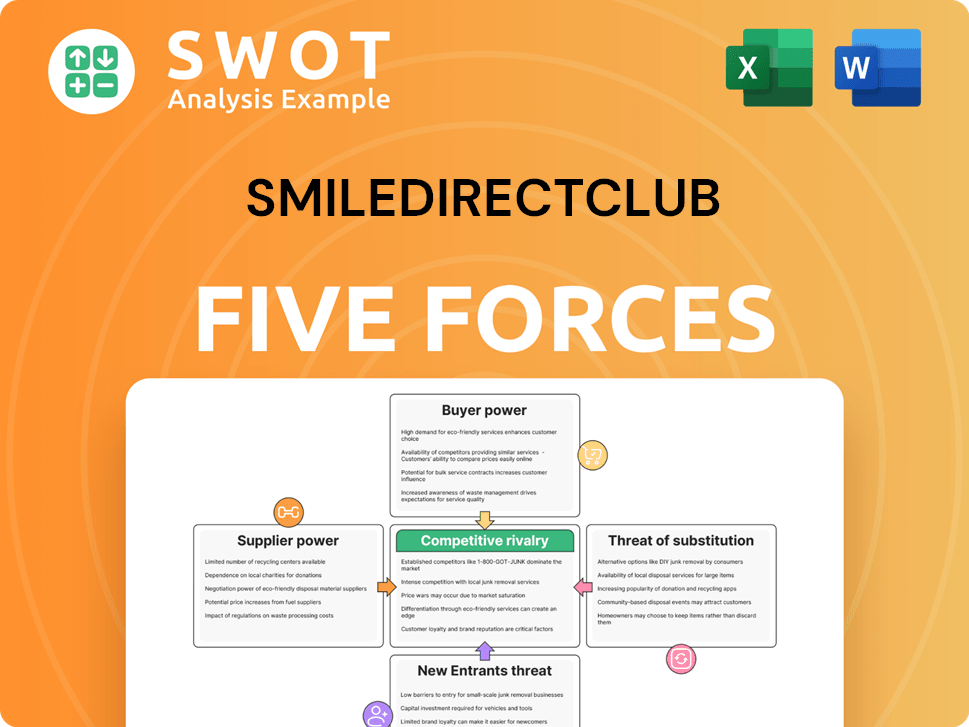
SmileDirectClub Porter's Five Forces Analysis
- Covers All 5 Competitive Forces in Detail
- Structured for Consultants, Students, and Founders
- 100% Editable in Microsoft Word & Excel
- Instant Digital Download – Use Immediately
- Compatible with Mac & PC – Fully Unlocked
Related Blogs

- What are Mission Vision & Core Values of SmileDirectClub Company?
- What is Competitive Landscape of SmileDirectClub Company?
- How Does SmileDirectClub Company Work?
- What is Sales and Marketing Strategy of SmileDirectClub Company?
- What is Brief History of SmileDirectClub Company?
- Who Owns SmileDirectClub Company?
- What is Customer Demographics and Target Market of SmileDirectClub Company?
Disclaimer
All information, articles, and product details provided on this website are for general informational and educational purposes only. We do not claim any ownership over, nor do we intend to infringe upon, any trademarks, copyrights, logos, brand names, or other intellectual property mentioned or depicted on this site. Such intellectual property remains the property of its respective owners, and any references here are made solely for identification or informational purposes, without implying any affiliation, endorsement, or partnership.
We make no representations or warranties, express or implied, regarding the accuracy, completeness, or suitability of any content or products presented. Nothing on this website should be construed as legal, tax, investment, financial, medical, or other professional advice. In addition, no part of this site—including articles or product references—constitutes a solicitation, recommendation, endorsement, advertisement, or offer to buy or sell any securities, franchises, or other financial instruments, particularly in jurisdictions where such activity would be unlawful.
All content is of a general nature and may not address the specific circumstances of any individual or entity. It is not a substitute for professional advice or services. Any actions you take based on the information provided here are strictly at your own risk. You accept full responsibility for any decisions or outcomes arising from your use of this website and agree to release us from any liability in connection with your use of, or reliance upon, the content or products found herein.