

Maersk Line A/S Bundle

How Does Maersk Line Navigate the Global Economy?
A.P. Moller - Maersk, a powerhouse in the global shipping industry, is far more than just a Maersk Line A/S SWOT Analysis; it's a linchpin of international trade. Its vast operations are critical to the flow of goods worldwide, connecting businesses and consumers in ways few other companies can. Understanding how Maersk, a leading shipping company, operates is essential for anyone seeking to grasp the intricacies of global commerce.

This exploration into Maersk Line will uncover the operational strategies and financial mechanisms that have made it a global leader in container shipping. We'll analyze its diverse revenue streams, strategic decisions, and competitive position within the dynamic logistics landscape. Whether you're an investor, a business strategist, or simply curious about the forces shaping global trade, this analysis offers valuable insights into how A P Moller Maersk consistently generates profit.
What Are the Key Operations Driving Maersk Line A/S’s Success?
The core operations of Maersk Line A/S center around streamlining global supply chains through integrated logistics solutions. Its primary focus areas include container shipping, port operations, and comprehensive land-based logistics services. This approach caters to a diverse clientele, ranging from large multinational corporations to smaller businesses, all seeking efficient cargo transportation and complex supply chain management.
The operational processes are intricate and highly coordinated. For instance, container shipping involves managing a vast fleet of vessels, optimizing routes, and ensuring timely delivery across oceans. Port operations are critical, with the company operating numerous terminals worldwide, providing essential infrastructure for cargo handling and storage. Logistics services encompass warehousing, distribution, customs clearance, and supply chain management, aiming to offer end-to-end solutions.
The company leverages advanced technology for route optimization, real-time tracking, and data analytics to enhance efficiency and visibility throughout the supply chain. Its extensive global network of offices, agents, and strategic partnerships further strengthens its distribution capabilities. The emphasis on integration aims to provide a seamless 'one-stop shop' for logistics needs, reducing complexity and cost for customers.
 Container Shipping Operations
The company manages a large fleet of container ships, optimizing routes for efficient global transport. It focuses on timely delivery and utilizes advanced technologies for tracking and monitoring shipments. This ensures goods reach their destinations reliably, supporting international trade.
Port Operations
The company operates numerous port terminals globally, providing essential infrastructure for cargo handling. These terminals facilitate the efficient loading, unloading, and storage of containers. Effective port operations are crucial for the overall supply chain efficiency.
Logistics Services
The company offers a range of logistics services, including warehousing, distribution, and customs clearance. These services provide end-to-end solutions, simplifying the supply chain for customers. This integrated approach enhances efficiency and reduces complexities.
Technology and Integration
The company uses advanced technology for route optimization, real-time tracking, and data analytics. This enhances efficiency and visibility throughout the supply chain. The goal is to provide a seamless 'one-stop shop' for logistics needs.

Key Customer Benefits
The integrated approach translates into increased supply chain efficiency, reduced lead times, and enhanced reliability. It aims to foster strong market differentiation by offering comprehensive, streamlined logistics solutions. This ultimately benefits customers by simplifying their operations and reducing costs.
- Increased Efficiency: Streamlined processes and optimized routes reduce transit times.
- Reduced Lead Times: Faster delivery of goods improves customer satisfaction.
- Enhanced Reliability: Advanced tracking and management systems ensure dependable service.
- Cost Reduction: Integrated solutions help lower overall logistics expenses.
Maersk Line A/S SWOT Analysis
- Complete SWOT Breakdown
- Fully Customizable
- Editable in Excel & Word
- Professional Formatting
- Investor-Ready Format

How Does Maersk Line A/S Make Money?
The primary revenue streams for Maersk Line A/S, a key player in the global shipping industry, are centered around its integrated logistics and ocean shipping services. The company's financial performance is closely tied to its ability to efficiently move goods across the globe. This includes managing complex supply chains and providing comprehensive services to its customers.
In 2023, A.P. Moller - Maersk reported a revenue of USD 51.1 billion, demonstrating the significant scale of its operations. This revenue is categorized into three main segments: Ocean, Logistics & Services, and Terminals. Each segment contributes differently to the overall financial health of the company, with ocean shipping traditionally being the largest revenue generator.
The company's strategic focus is on expanding its Logistics & Services segment to offer end-to-end solutions. This move is designed to reduce reliance on the volatile ocean freight market. This diversification is crucial for maintaining stable revenue streams and adapting to market changes.

Ocean Shipping Revenue
Ocean shipping generates revenue through freight rates, surcharges, and other fees. This segment is a core component of the company's financial performance.
Logistics & Services Revenue
This segment includes warehousing, distribution, and land transportation. It's a key area for growth, aiming to offer comprehensive supply chain solutions.
Terminals Revenue
Revenue comes from port calls, container handling, and storage. This segment supports the overall shipping and logistics network.
Monetization Strategies
The company uses bundled services and tiered pricing. Digital solutions and platforms are also key for new revenue streams.
Digital Solutions
Focus on data analytics and supply chain visibility tools. These are crucial for enhancing customer experience and operational efficiency.
Integrated Logistics
The goal is to diversify revenue and provide recurring income. This strategy supports long-term financial stability and growth.
Key Revenue Drivers and Strategies
The company's ability to adapt to market changes is critical, as highlighted in this article about Growth Strategy of Maersk Line A/S. Key elements include:
- Optimizing freight rates and managing surcharges in the Ocean segment.
- Expanding the Logistics & Services segment through acquisitions and organic growth.
- Leveraging digital platforms for data-driven insights and enhanced customer service.
- Developing bundled service offerings to provide comprehensive solutions.
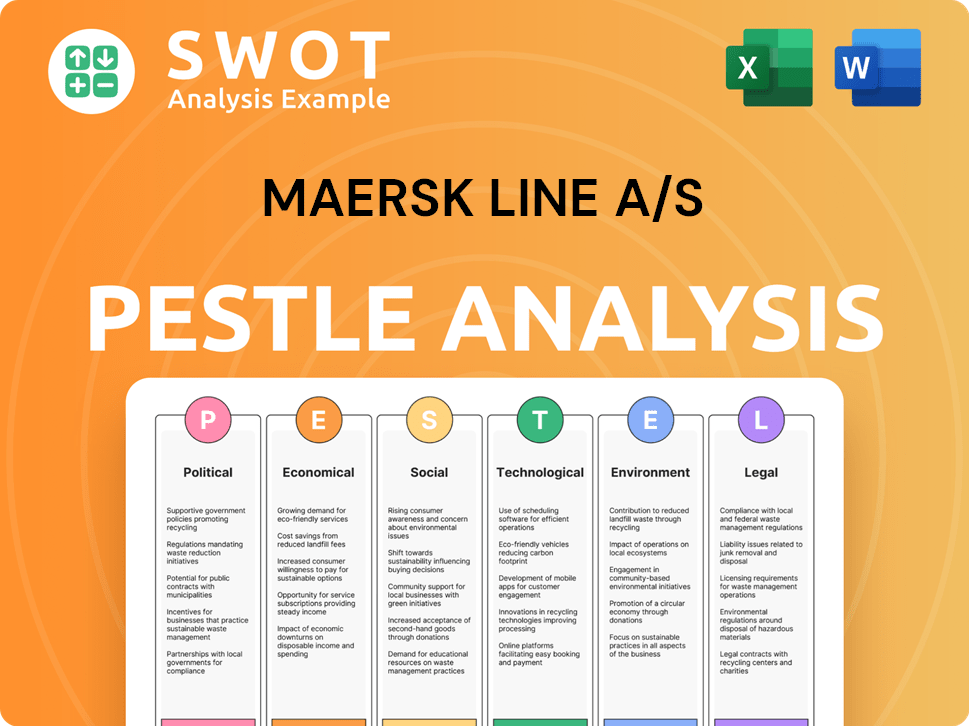
Maersk Line A/S PESTLE Analysis
- Covers All 6 PESTLE Categories
- No Research Needed – Save Hours of Work
- Built by Experts, Trusted by Consultants
- Instant Download, Ready to Use
- 100% Editable, Fully Customizable
Which Strategic Decisions Have Shaped Maersk Line A/S’s Business Model?
The journey of A.P. Moller - Maersk (Maersk Line) has been marked by significant milestones and strategic shifts. A key strategic move has been its transformation from a diversified conglomerate to an integrated logistics company. This involved divesting energy assets to focus on its core transport and logistics businesses. This strategic pivot has been largely completed in recent years, solidifying its commitment to end-to-end supply chain solutions.
Maersk has actively pursued acquisitions in the logistics space, such as the acquisition of LF Logistics in 2022, which significantly boosted its warehousing and distribution capabilities in Asia. These strategic partnerships and acquisitions are crucial for expanding its global footprint and enhancing its service offerings. Operational challenges, like the global supply chain disruptions during the COVID-19 pandemic, tested Maersk's resilience. The company responded by prioritizing digitalization and investing in fleet optimization to mitigate delays and improve efficiency.
Maersk's competitive advantages stem from several factors, including immense economies of scale. Operating one of the world's largest container fleets and port networks allows for cost efficiencies. Its strong brand recognition and extensive global network also provide a significant competitive edge. Furthermore, its integrated approach, offering a single point of contact for complex logistics needs, differentiates it from competitors. Maersk continues to adapt to new trends, including decarbonization efforts within the shipping industry, investing in green fuels and vessels. This adaptation to environmental sustainability and technological advancements is critical for maintaining its leadership position and responding to evolving market demands and competitive threats.
Key Milestones
Maersk's history includes significant milestones, such as its founding in 1904. Key events include expanding its container shipping operations and its strategic shift towards integrated logistics. The acquisition of P&O Nedlloyd in 2005 was a major step in expanding its global reach.
Strategic Moves
The company's strategic moves involve divesting its energy businesses to focus on logistics. This has included acquisitions in logistics, such as LF Logistics in 2022. Digitalization and investments in fleet optimization have been key strategies to improve efficiency and address supply chain disruptions.
Competitive Edge
Maersk's competitive edge comes from economies of scale, operating a vast container fleet and port network. Its strong brand recognition and global network are also significant advantages. The integrated approach to logistics, offering end-to-end solutions, differentiates it from competitors.
Recent Developments
In 2024, Maersk continues to invest in decarbonization, exploring green fuels and technologies. The company is also focused on expanding its logistics capabilities through acquisitions and partnerships. Adapting to market demands and competitive threats remains a priority.
Key Statistics and Data
In 2024, Maersk's revenue is expected to be around $50-55 billion. The company's container fleet capacity is one of the largest globally, with over 700 vessels. Maersk's market share in container shipping remains significant, and it continues to expand its logistics network worldwide.
- Maersk's revenue in 2023 was $51.05 billion.
- The company handled approximately 24.7 million containers (TEU) in 2023.
- Maersk's focus on sustainability includes a goal to achieve net-zero emissions by 2040.
- Maersk's global network includes over 300 offices and 100,000 employees worldwide.
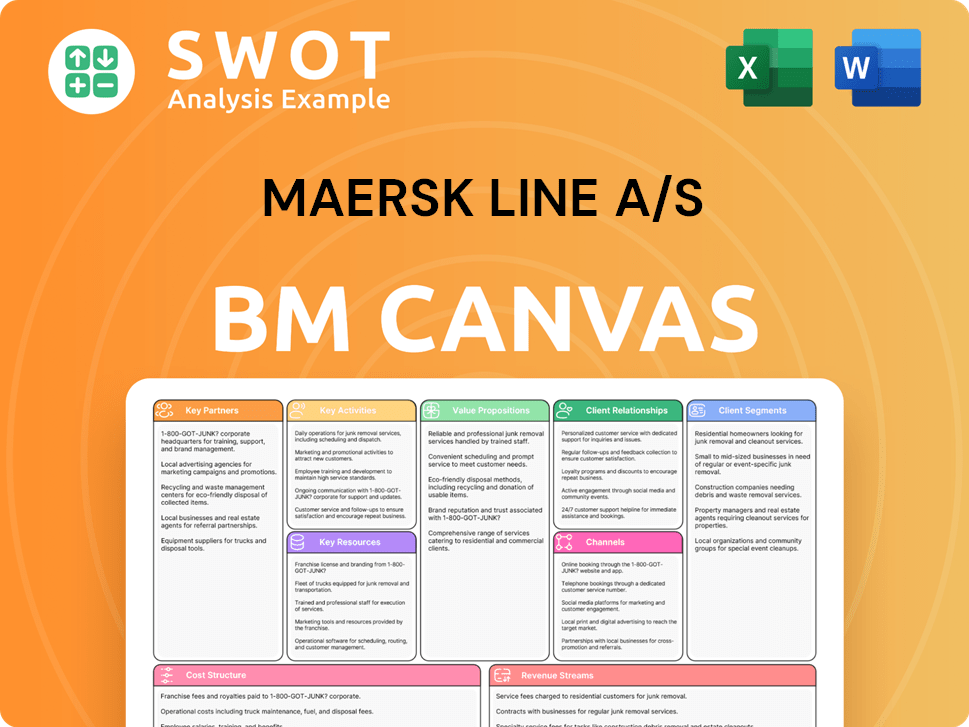
Maersk Line A/S Business Model Canvas
- Complete 9-Block Business Model Canvas
- Effortlessly Communicate Your Business Strategy
- Investor-Ready BMC Format
- 100% Editable and Customizable
- Clear and Structured Layout
How Is Maersk Line A/S Positioning Itself for Continued Success?
A.P. Moller - Maersk, operating as Maersk Line, holds a leading position in the global container shipping and logistics industry. Its extensive global reach, encompassing major trade lanes, and a vast network of ports and logistics facilities solidify its strong market presence. Maersk shipping consistently ranks among the top global carriers by capacity. Customer loyalty is fostered through its integrated service offerings and a reputation for reliability.
However, Maersk Line faces several key risks and headwinds. These include geopolitical uncertainties and trade tensions, which can disrupt global supply chains and impact shipping volumes. Fluctuations in freight rates, influenced by supply-demand dynamics and fuel prices, pose a significant financial risk. Regulatory changes, particularly those related to environmental regulations and decarbonization, require substantial investment and operational adjustments.
Industry Position
Maersk Line is a dominant player in the global container shipping market. It has a substantial market share in key trade lanes. The company's integrated logistics services provide a competitive edge.
Risks and Challenges
Geopolitical instability and trade wars can disrupt supply chains. Fluctuations in freight rates and fuel prices impact profitability. Environmental regulations and the need for decarbonization require significant investments.
Future Outlook
The company is focused on integrating its logistics offerings. It is investing heavily in digital transformation. Sustainability and decarbonization are key strategic priorities.
Strategic Initiatives
Maersk Line aims to deepen customer relationships. It is optimizing its operational network. The company is leading the industry in sustainable practices.
Key Strategies for Maersk
Maersk Line is focused on several key strategies to maintain its market position and profitability. These include expanding its integrated logistics offerings, investing in digital transformation, and leading in sustainable practices. The company is also working to deepen customer relationships through comprehensive service contracts.
- Focus on end-to-end logistics solutions.
- Investments in digital platforms for efficiency and customer experience.
- Commitment to sustainable shipping practices and decarbonization.
- Optimization of operational networks.
Maersk Line's future outlook is shaped by its ongoing strategic initiatives focused on further integrating its logistics offerings and achieving its ambitious decarbonization targets. The company is investing heavily in digital transformation to enhance efficiency, visibility, and customer experience across its supply chain. Its innovation roadmap includes exploring alternative fuels and developing sustainable shipping solutions. For more insights into the company's marketing approach, consider reading about the Marketing Strategy of Maersk Line A/S. Leadership statements emphasize a continued commitment to providing end-to-end logistics solutions, aiming to become a true integrator of container logistics. Maersk Line plans to sustain and expand its ability to make money by deepening customer relationships through comprehensive service contracts, optimizing its operational network, and leading the industry in sustainable practices, thereby securing its relevance and profitability in a rapidly evolving global trade landscape.
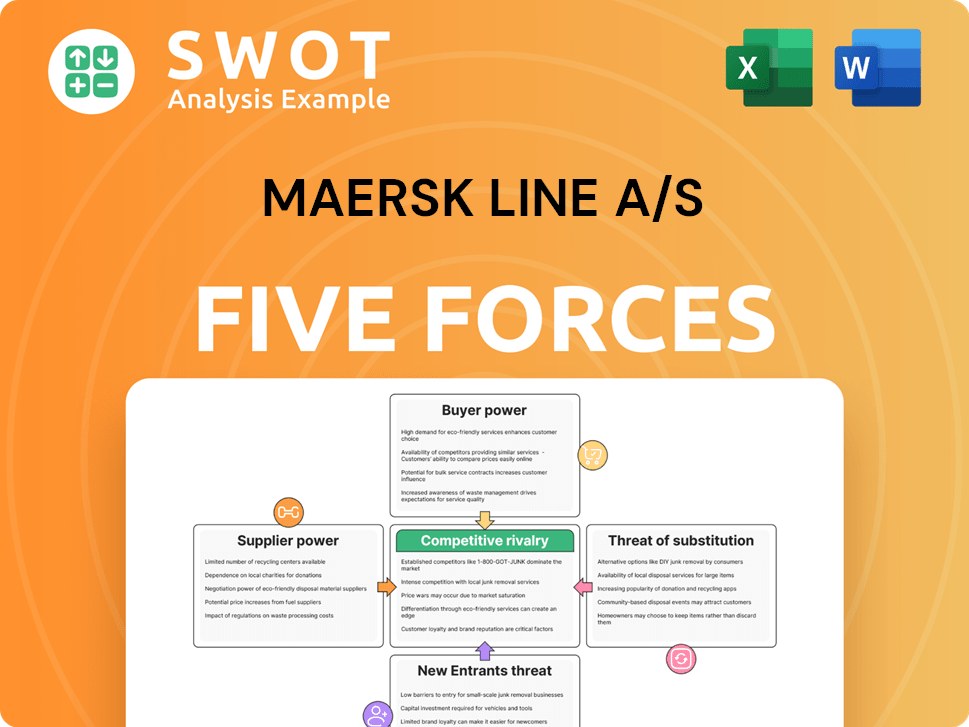
Maersk Line A/S Porter's Five Forces Analysis
- Covers All 5 Competitive Forces in Detail
- Structured for Consultants, Students, and Founders
- 100% Editable in Microsoft Word & Excel
- Instant Digital Download – Use Immediately
- Compatible with Mac & PC – Fully Unlocked
Related Blogs

- What are Mission Vision & Core Values of Maersk Line A/S Company?
- What is Competitive Landscape of Maersk Line A/S Company?
- What is Growth Strategy and Future Prospects of Maersk Line A/S Company?
- What is Sales and Marketing Strategy of Maersk Line A/S Company?
- What is Brief History of Maersk Line A/S Company?
- Who Owns Maersk Line A/S Company?
- What is Customer Demographics and Target Market of Maersk Line A/S Company?
Disclaimer
All information, articles, and product details provided on this website are for general informational and educational purposes only. We do not claim any ownership over, nor do we intend to infringe upon, any trademarks, copyrights, logos, brand names, or other intellectual property mentioned or depicted on this site. Such intellectual property remains the property of its respective owners, and any references here are made solely for identification or informational purposes, without implying any affiliation, endorsement, or partnership.
We make no representations or warranties, express or implied, regarding the accuracy, completeness, or suitability of any content or products presented. Nothing on this website should be construed as legal, tax, investment, financial, medical, or other professional advice. In addition, no part of this site—including articles or product references—constitutes a solicitation, recommendation, endorsement, advertisement, or offer to buy or sell any securities, franchises, or other financial instruments, particularly in jurisdictions where such activity would be unlawful.
All content is of a general nature and may not address the specific circumstances of any individual or entity. It is not a substitute for professional advice or services. Any actions you take based on the information provided here are strictly at your own risk. You accept full responsibility for any decisions or outcomes arising from your use of this website and agree to release us from any liability in connection with your use of, or reliance upon, the content or products found herein.