

Wish Bundle

Who Shops on Wish? Unveiling the E-commerce Giant's Customer Base
Understanding the Wish SWOT Analysis is just the beginning. To truly grasp Wish's potential, we must delve into its customer demographics and target market. This e-commerce platform, built on the promise of affordable goods, has cultivated a unique user base. But who are these bargain hunters, and what drives their purchasing decisions?

This Wish company analysis explores the Wish target market, examining the Wish customer profile, including factors such as Wish app user age range, income levels, and geographic locations. We'll dissect Wish's marketing strategies, customer acquisition, and retention strategies to understand how Wish effectively caters to its Wish user base and maintains its competitive edge in the e-commerce landscape. This deep dive will reveal the Wish customer buying behavior and purchase patterns.
Who Are Wish’s Main Customers?
The primary customer segments for the platform are largely defined by a business-to-consumer (B2C) model. This model directly connects shoppers with a global network of merchants. The core of the platform's user base has historically been price-sensitive consumers, often seeking highly discounted items across a wide range of categories.
While specific real-time demographic data for 2024-2025 is not publicly available in granular detail, historical trends suggest that a significant portion of the platform's customer base is composed of younger, budget-conscious individuals. This segment often includes students, individuals with lower to middle-income levels, and those in suburban or rural areas who may have limited access to traditional retail options.
The platform's appeal lies in its 'treasure hunt' shopping experience, where users can discover unique and inexpensive products. The platform's focus on improving delivery times and product quality suggests an effort to appeal to a broader segment of online shoppers who, while still value-conscious, also prioritize a more reliable and efficient shopping experience. Analyzing the Revenue Streams & Business Model of Wish can offer further insights into its customer acquisition strategies.
 Customer Demographics Overview
The Wish customer profile typically includes younger shoppers, often aged between 18 and 35. These users are frequently budget-conscious and actively seek deals. The platform's user base is diverse, spanning various income levels, with a significant portion falling into the lower to middle-income brackets.
Geographic Distribution
The Wish target market is global, with a strong presence in North America, Europe, and other regions. The platform's user base is spread across both urban and suburban areas. The platform’s reach extends to areas with limited access to traditional retail options, offering a convenient shopping alternative.
Buying Behavior and Preferences
Wish customer buying behavior is often characterized by impulse purchases and a focus on value. Popular products include apparel, electronics, home goods, and accessories. Users frequently browse for deals and are influenced by product ratings and reviews.
Market Segmentation Strategies
Wish market segmentation strategies involve targeting customers based on price sensitivity and product preferences. The platform utilizes data analytics to personalize product recommendations. The platform also segments its audience based on geographic location and shopping habits.

Key Customer Characteristics
The platform’s Wish user base is primarily composed of value-driven consumers. These consumers are often looking for affordable alternatives. The platform’s customer base is diverse in terms of age, income, and location.
- Price-sensitive shoppers: Users are always looking for deals and discounts.
- Mobile-first users: The platform is optimized for mobile devices, reflecting the preferences of its users.
- Global audience: The platform has a wide reach across various countries and regions.
- Value-driven purchasing: Customers prioritize affordability and are willing to explore various product options.
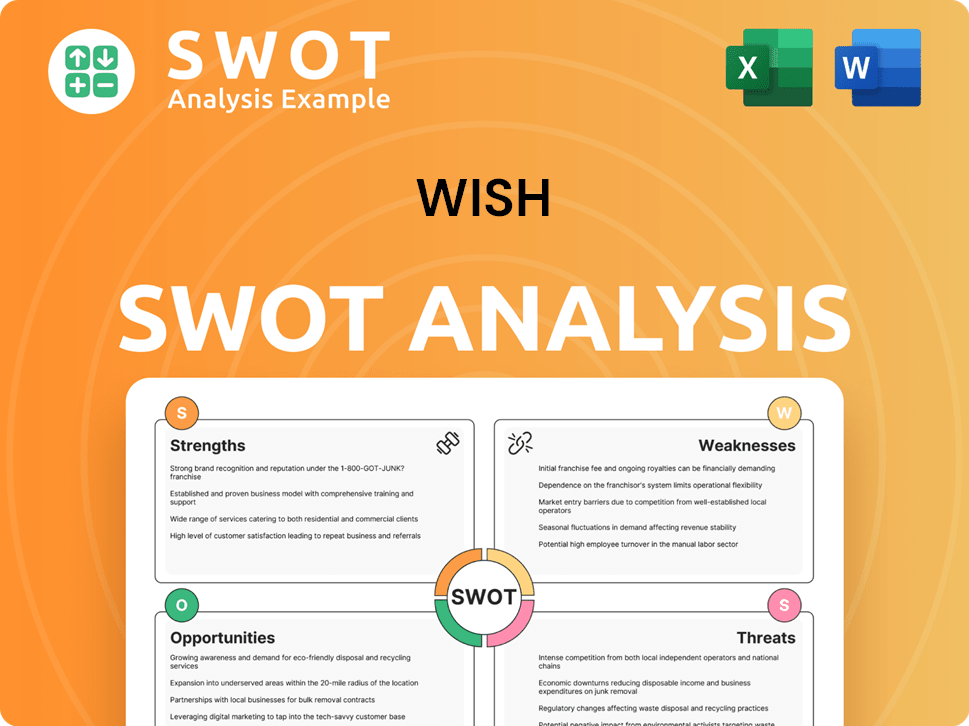
Wish SWOT Analysis
- Complete SWOT Breakdown
- Fully Customizable
- Editable in Excel & Word
- Professional Formatting
- Investor-Ready Format
What Do Wish’s Customers Want?
The key needs and preferences of customers using the platform are driven by affordability and the excitement of discovering new products. Customers are drawn to the platform because of its significantly lower prices compared to traditional retail options. They are often willing to accept longer shipping times in exchange for these substantial savings.
Purchasing behaviors are often characterized by impulse buys and a willingness to explore a vast catalog of products. Price, product images, and user reviews are key factors in decision-making, although the reliability of user reviews can vary. Product usage patterns are diverse, covering everything from everyday essentials to unique novelty items.
The psychological driver is often the satisfaction of getting a 'good deal' or finding unique, unexpected items. The platform addresses common pain points related to the high cost of goods elsewhere by offering direct-from-manufacturer pricing. Customer feedback, often related to product quality and shipping times, has influenced the platform's strategies, leading to initiatives aimed at improving logistics and product vetting.

Affordability
Customers prioritize low prices. They are motivated by the opportunity to save money on a variety of products. This focus on affordability is a core driver for the platform's user base.
Discovery and Variety
Users enjoy exploring a wide range of products. The platform's extensive catalog and the thrill of finding unique items are key attractions. This encourages impulse purchases and exploration.
Price-Driven Decisions
Price is a primary factor in purchasing decisions. Customers often compare prices and seek the best deals. This emphasizes the importance of competitive pricing strategies.
Acceptance of Trade-offs
Customers are willing to accept longer shipping times for lower prices. This indicates a trade-off between cost and convenience. This is a critical aspect of the platform's business model.
Impulse Buying
Impulse purchases are common due to the platform's vast product selection. The browsing experience encourages spontaneous buying. This is a significant aspect of the platform's sales strategy.
Value Perception
Customers seek perceived value in their purchases. The satisfaction of finding a bargain or a unique item drives customer loyalty. This perception is essential for customer retention.
The platform's customer base is diverse, but generally, it skews towards value-conscious consumers. The platform's strategies, including efforts to improve delivery speeds and product quality, are direct responses to customer feedback and expectations, demonstrating an adaptive approach to meet the needs of its user base. For more insights, consider exploring the Competitors Landscape of Wish.
Key Customer Preferences
Understanding the platform's customer preferences is crucial for effective market segmentation and customer acquisition. The platform's success relies on meeting these needs.
- Price Sensitivity: Customers are highly price-sensitive, seeking the lowest possible prices.
- Product Variety: A wide selection of products is a key attraction, encouraging browsing and discovery.
- Value for Money: Customers are looking for good deals and unique items that offer value.
- Convenience: While price is a priority, improvements in shipping times and overall convenience are valued.
- User Experience: A user-friendly interface and reliable product information are important for customer satisfaction.
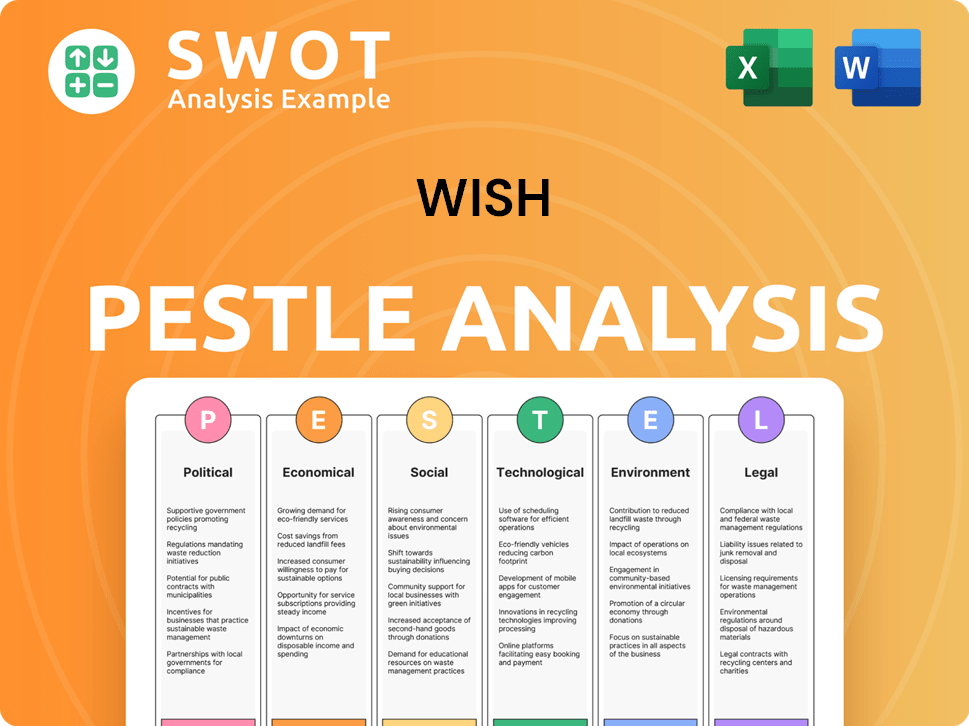
Wish PESTLE Analysis
- Covers All 6 PESTLE Categories
- No Research Needed – Save Hours of Work
- Built by Experts, Trusted by Consultants
- Instant Download, Ready to Use
- 100% Editable, Fully Customizable
Where does Wish operate?
The geographical market presence of the company is extensive, with a significant global footprint. While specific market share data for 2024-2025 isn't publicly available, the United States has consistently been a key market. This is due to the large customer base and sales volume generated within the country. The company's strategy involves adapting to the diverse preferences and buying behaviors across different regions.
Key markets beyond the U.S. include several countries in Western Europe, such as France, Germany, and the United Kingdom. These regions show strong consumer interest in discounted goods. The company tailors its offerings through language support, currency options, and region-specific marketing campaigns. These efforts aim to improve the overall customer experience.
The company has strategically focused on its core markets. This includes refining its operational focus and pursuing profitability. The company's logistics network has been improved to serve these diverse markets. This helps reduce shipping times and enhance the customer experience.
Customer Demographics
Understanding the customer demographics is crucial for the company. The Wish user base is diverse, but certain patterns emerge. The Wish customer profile often includes budget-conscious shoppers seeking value. This knowledge helps tailor marketing and product offerings.
Target Market Analysis
Analyzing the Wish target market involves understanding their needs and preferences. Factors like age, income, and location play significant roles. The company uses this information for effective market segmentation. This helps to refine its strategies.
Geographic Focus
The company's geographic focus is primarily on North America and Europe. The United States is a major market, with a substantial user base. Other key markets include the UK, France, and Germany. These regions show strong consumer interest in affordable products.
Marketing Strategies
The company uses various marketing strategies to reach its target audience. These include social media advertising, search engine optimization, and influencer marketing. These strategies help to acquire and retain customers. The company uses these strategies for customer acquisition.
Key Customer Insights
Gaining insights into the Wish customer buying behavior is essential. This includes understanding Wish customer purchase patterns and preferences. The company's strategies are designed to meet the needs of its Wish target audience location.
- The Wish app user age range is broad, encompassing various age groups.
- Wish customer income levels vary, but the platform appeals to budget-conscious shoppers.
- What products are popular on Wish often include affordable fashion, electronics, and home goods.
- The company's marketing strategies for customer acquisition are targeted and data-driven.
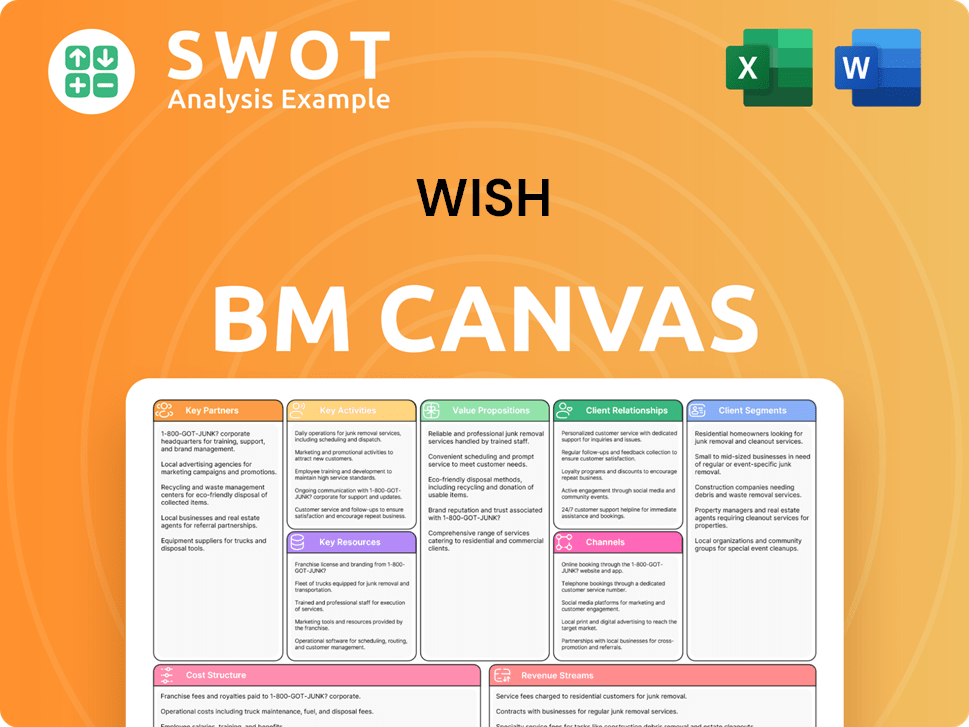
Wish Business Model Canvas
- Complete 9-Block Business Model Canvas
- Effortlessly Communicate Your Business Strategy
- Investor-Ready BMC Format
- 100% Editable and Customizable
- Clear and Structured Layout
How Does Wish Win & Keep Customers?
The strategies employed by the company for customer acquisition and retention are heavily reliant on digital marketing. Their approach focuses on attracting users through visually appealing advertisements, particularly on social media platforms. They use a combination of promotional tactics, including discounts and personalized recommendations, to drive sales and encourage repeat purchases. The company's success in this area is crucial for maintaining and expanding its customer base.
A key aspect of the company's strategy involves leveraging customer data and CRM systems. This allows for the segmentation of users and the delivery of targeted marketing campaigns. By understanding the customer demographics and preferences, the company can tailor its offerings and promotions to specific segments of its user base. This personalized approach is designed to improve customer engagement and drive sales.
The company has also been focusing on improving the post-purchase experience, which is critical for customer retention. This includes enhancing customer service and dispute resolution processes. By addressing issues such as shipping reliability and product quality, the company aims to build trust and foster customer loyalty. These efforts are designed to increase customer lifetime value.
Wish's Digital Marketing Focus
The company utilizes digital marketing, especially on platforms like Facebook and Instagram, to showcase products. This strategy is designed to attract new customers through visually engaging advertisements. These ads often highlight unique products and drive impulse purchases.
Personalized Shopping Experience
The company personalizes the shopping experience by tailoring product recommendations. This is achieved through algorithms that analyze browsing history and purchase patterns. This approach aims to enhance customer engagement and increase sales.
Customer Data and CRM Systems
Customer data and CRM systems are crucial for segmenting users and delivering targeted campaigns. This enables the company to understand its customer demographics and preferences. By understanding the customer demographics, the company can tailor its offerings and promotions to specific segments.
Post-Purchase Experience Improvements
The company focuses on improving the post-purchase experience, including customer service and dispute resolution. Efforts to improve shipping reliability and product quality are also key. These initiatives aim to enhance customer satisfaction and loyalty.
The company's strategy for customer acquisition and retention is multifaceted, emphasizing digital marketing and personalized experiences. The company's Owners & Shareholders of Wish understand the importance of these strategies. The company's user base, or Wish customer profile, is targeted through social media advertising and influencer marketing. Sales tactics include discounts and personalized recommendations. Customer data is used for market segmentation and targeted campaigns. Efforts to improve the post-purchase experience, including customer service, are central to retention. These initiatives aim to increase customer lifetime value.
Wish's Marketing Strategies
The company uses social media advertising, especially on Facebook and Instagram, for customer acquisition. Influencer marketing is also employed to reach specific demographics. Deep discounts and flash sales are common sales tactics.
Personalized Recommendations
The company personalizes product recommendations based on browsing history and past purchases. This personalized approach enhances the shopping experience. The algorithm tailors product feeds to individual users.
Customer Data and CRM
Customer data and CRM systems are crucial for segmenting users and delivering targeted campaigns. This allows for a better understanding of the Wish user base. These systems help tailor campaigns to specific customer segments.
Improving Post-Purchase Experience
The company focuses on improving the post-purchase experience to enhance customer retention. This includes improving customer service and dispute resolution processes. Efforts to improve shipping reliability and product quality are ongoing.
Customer Segmentation
The company uses customer segmentation to deliver targeted campaigns. This involves understanding the customer demographics. Segmentation helps tailor offers to specific customer groups.
Long-Term Goals
The ultimate goal is to increase customer lifetime value by fostering a trustworthy shopping environment. This is achieved through efficient operations and improved customer satisfaction. These efforts aim to build long-term customer loyalty.
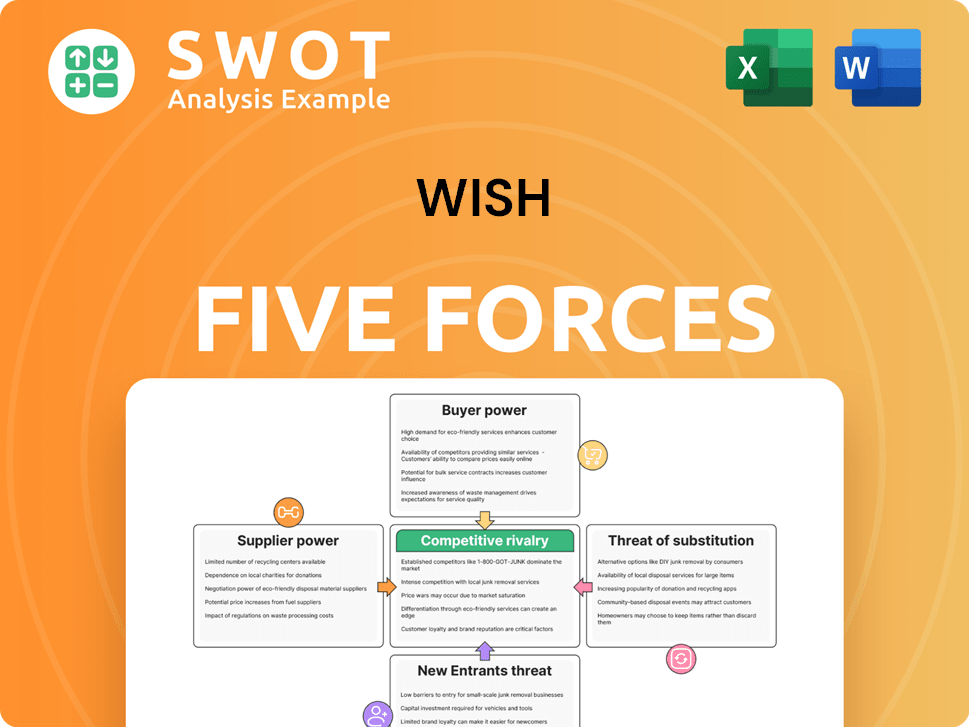
Wish Porter's Five Forces Analysis
- Covers All 5 Competitive Forces in Detail
- Structured for Consultants, Students, and Founders
- 100% Editable in Microsoft Word & Excel
- Instant Digital Download – Use Immediately
- Compatible with Mac & PC – Fully Unlocked
Related Blogs

- What are Mission Vision & Core Values of Wish Company?
- What is Competitive Landscape of Wish Company?
- What is Growth Strategy and Future Prospects of Wish Company?
- How Does Wish Company Work?
- What is Sales and Marketing Strategy of Wish Company?
- What is Brief History of Wish Company?
- Who Owns Wish Company?
Disclaimer
All information, articles, and product details provided on this website are for general informational and educational purposes only. We do not claim any ownership over, nor do we intend to infringe upon, any trademarks, copyrights, logos, brand names, or other intellectual property mentioned or depicted on this site. Such intellectual property remains the property of its respective owners, and any references here are made solely for identification or informational purposes, without implying any affiliation, endorsement, or partnership.
We make no representations or warranties, express or implied, regarding the accuracy, completeness, or suitability of any content or products presented. Nothing on this website should be construed as legal, tax, investment, financial, medical, or other professional advice. In addition, no part of this site—including articles or product references—constitutes a solicitation, recommendation, endorsement, advertisement, or offer to buy or sell any securities, franchises, or other financial instruments, particularly in jurisdictions where such activity would be unlawful.
All content is of a general nature and may not address the specific circumstances of any individual or entity. It is not a substitute for professional advice or services. Any actions you take based on the information provided here are strictly at your own risk. You accept full responsibility for any decisions or outcomes arising from your use of this website and agree to release us from any liability in connection with your use of, or reliance upon, the content or products found herein.