

Sewon Bundle

How Well Does Sewon Company Know Its Customers?
In the fast-paced world of automotive manufacturing, understanding Sewon SWOT Analysis is essential for staying ahead. This deep dive into Sewon Company's customer demographics and target market will reveal how they navigate industry shifts. We'll explore the evolving needs of their customers, particularly in the burgeoning EV market.

This exploration will cover the specific segments Sewon Company serves, providing a detailed target market analysis. We'll examine the customer profile, considering factors like age range, geographic location, and customer interests. Furthermore, we'll delve into the market segmentation strategy, offering insights into how Sewon Company adapts to the changing landscape, including the demographic breakdown of its customer base and the best ways to reach its audience.
Who Are Sewon’s Main Customers?
Understanding the Growth Strategy of Sewon involves a deep dive into its customer demographics and target market. As a Business-to-Business (B2B) supplier, the company's focus is on Original Equipment Manufacturers (OEMs) within the automotive industry. These OEMs require high-quality components for vehicle production, making them the primary customer segments for the company.
The company's customer profile is primarily defined by its production volume, technological needs, and adherence to strict quality standards. The company supplies parts for passenger cars, light commercial vehicles, and heavy commercial vehicles. The company’s strategic moves are influenced by the dynamics of the automotive market, including the growing demand for electric vehicles (EVs).
The company's target market is segmented based on the type of components required. Key segments include those needing car body parts, such as dash and panel assemblies, and chassis parts. The global automotive body parts market was valued at approximately $300 billion in 2024, while the global automotive chassis market was around $100 billion in 2024, indicating significant market opportunities.

Electric Vehicle Market Focus
A significant shift in the company's target market involves the growing EV segment. With a new facility in Georgia, USA, the company is geared towards producing EV body parts for OEMs like Hyundai Motor Group Metaplant America, starting in 2025.
- The global EV market is projected to reach 18.1 million new registrations in 2025, up from 16.3 million in 2024, despite a softening in growth rate.
- This strategic move is crucial for the company to capitalize on the burgeoning EV market.
- The EV components segment is poised for the fastest growth, reflecting the broader industry trend towards electrification.
- This positions the company as a 'star' business unit with high market share due to direct supply deals.
Sewon SWOT Analysis
- Complete SWOT Breakdown
- Fully Customizable
- Editable in Excel & Word
- Professional Formatting
- Investor-Ready Format

What Do Sewon’s Customers Want?
Understanding the customer needs and preferences is crucial for Owners & Shareholders of Sewon to maintain a competitive edge in the automotive component market. The company's business-to-business (B2B) model, primarily serving major automotive manufacturers, requires a deep understanding of their specific demands and evolving industry trends. This customer-centric approach allows for the development of products and services that meet and exceed the expectations of its clientele, driving long-term success.
The primary focus for these automotive manufacturers is on high-quality, reliable components that meet stringent industry standards. This emphasis on quality is a key driver in their purchasing decisions, influencing their choice of suppliers. In response, the company allocates a portion of its marketing budget to technology-focused campaigns to highlight its advanced manufacturing capabilities and rigorous quality control processes. This commitment to quality is essential for ensuring customer satisfaction and maintaining strong relationships within the automotive industry.
Purchasing behaviors are significantly influenced by long-term contracts and supply chain efficiency, with automakers prioritizing suppliers who can offer just-in-time delivery and manage complex logistics. Factors like competitive pricing, technological innovation, and the capacity for large-scale production are also critical in the decision-making process. This requires the company to continuously innovate and adapt to meet the evolving needs of its customers.

High-Quality Components
Automakers demand high-quality and reliable automotive components to meet stringent industry standards. The company's focus on advanced manufacturing and rigorous quality control directly addresses this need.
Supply Chain Efficiency
Purchasing decisions are heavily influenced by supply chain efficiency and the ability to integrate components seamlessly. Automakers prioritize suppliers offering just-in-time delivery and effective logistics management.
Lightweight Materials
There is an increasing demand for lightweight materials and EV-specific components to enhance fuel efficiency and extend EV range. The company invests in robotics for lightweight aluminum components.
Sustainable Practices
Customer preferences are influenced by the shift towards a circular economy and demand for recycled content. The company can capitalize on this by investing in sustainable materials and eco-friendly designs.
Strategic Location
The strategic location of new facilities, such as the Georgia plant near Hyundai Motor Group Metaplant America, streamlines supply chains and enhances responsiveness to customer needs.
Technological Innovation
Technological innovation is a key factor in the decision-making process for automakers. The company's investment in advanced manufacturing and robotics demonstrates its commitment to innovation.
Key Customer Preferences and Market Trends
The company's product development is heavily influenced by customer feedback and market trends. This includes a focus on lightweight materials, EV-specific components, and sustainable practices. The global automotive lightweight materials market was valued at $59.7 billion in 2024, reflecting the growing demand for fuel-efficient vehicles. The automotive recycling market is projected to reach $72.8 billion by 2030, highlighting the importance of sustainable materials and eco-friendly designs.
- Lightweight Materials: Automakers are seeking solutions to improve fuel efficiency and extend EV range.
- EV-Specific Components: Demand is increasing for components tailored to electric vehicles.
- Sustainable Materials: There's a growing preference for recycled content and eco-friendly designs.
- Supply Chain Efficiency: Just-in-time delivery and efficient logistics are crucial.
- Technological Innovation: Advanced manufacturing and robotics are key to meeting customer needs.
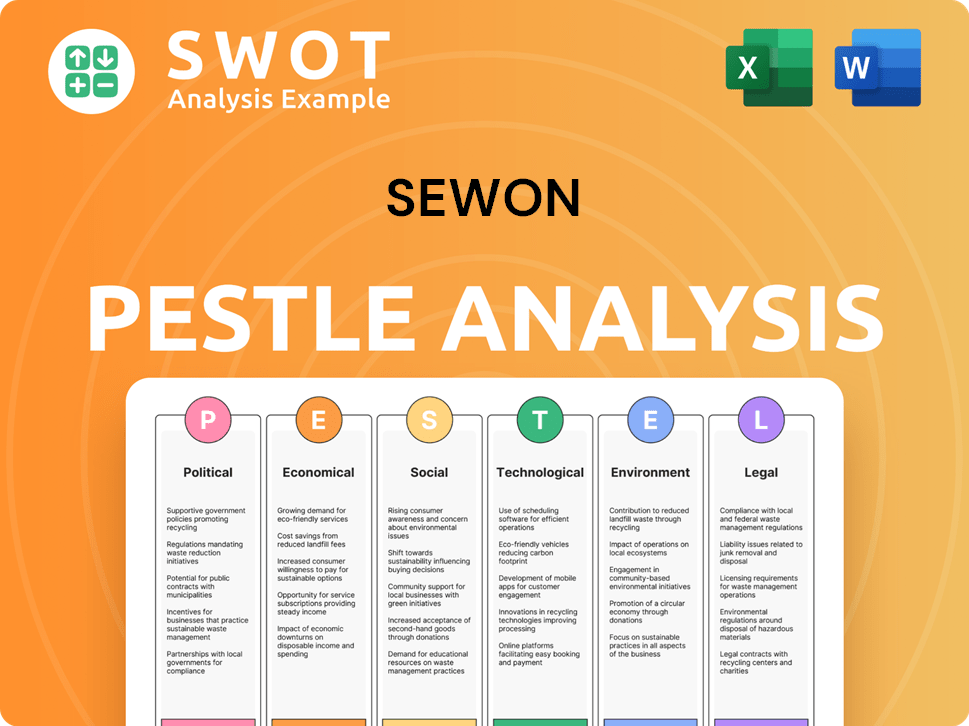
Sewon PESTLE Analysis
- Covers All 6 PESTLE Categories
- No Research Needed – Save Hours of Work
- Built by Experts, Trusted by Consultants
- Instant Download, Ready to Use
- 100% Editable, Fully Customizable
Where does Sewon operate?
The geographical market presence of the company is significantly shaped by its strategic alliances with major automotive manufacturers. The company's operations are strategically positioned across key automotive manufacturing hubs, including South Korea, China, and the United States. This global footprint is a cornerstone of its business strategy.
In South Korea, the company's headquarters is located in Daegu. In 2024, domestic sales reached 25.23 billion KRW, while overseas sales hit 132 billion KRW, demonstrating a strong international focus. This balance highlights the company's success in diversifying its market reach.
A key aspect of the company's expansion is its growing presence in North America. The new plant in Rincon, Georgia, is set to begin operations in 2025, specifically designed to produce EV body parts for original equipment manufacturers. This expansion into North America, a major automotive hub, aligns with the company's growth-focused strategy. For a deeper dive into the company's overall approach, consider reading the Marketing Strategy of Sewon.
 Geographic Expansion
The company is strategically expanding its manufacturing capabilities in North America to meet the growing demand for electric vehicle (EV) components.
Market Focus
The company's focus on the North American market is driven by the increasing adoption of EVs and the demand for advanced lightweight components.
Localization Strategy
The company's strategy includes strategically placing new facilities near major clients to streamline supply chains and improve responsiveness.
Technological Advancement
Investments in robotics for lightweight components support its success in diverse and technologically advanced markets.
The company's international sales accounted for 60% of its total revenue in 2024, underscoring the importance of its international markets. The Asia-Pacific region's automotive market grew by approximately 5% in 2024, offering further potential for expansion. This geographic diversification and strategic positioning near major clients are key components of the company's market segmentation and customer profile.
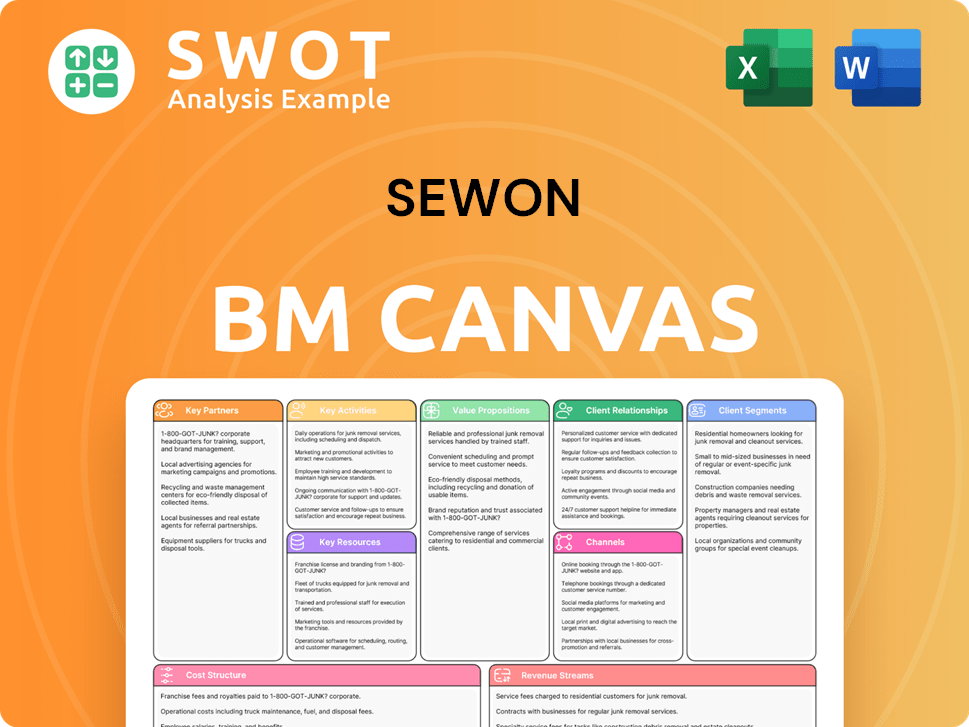
Sewon Business Model Canvas
- Complete 9-Block Business Model Canvas
- Effortlessly Communicate Your Business Strategy
- Investor-Ready BMC Format
- 100% Editable and Customizable
- Clear and Structured Layout
How Does Sewon Win & Keep Customers?
For the Sewon Company, customer acquisition and retention strategies are primarily geared toward the B2B automotive sector. This focus means direct supply agreements with major automotive manufacturers are key to acquiring new customers. The company's strategic moves, like the new Georgia plant opening in 2025, are designed to secure contracts and support the supply needs of key clients.
Retention strategies center on maintaining high product quality, ensuring reliable supply chains, and building strong relationships with clients. As a Tier-1 supplier, the company's position in the automotive supply chain is critical. New facilities are strategically placed to streamline supply chains and quickly meet customer needs, thereby strengthening client relationships. This approach is vital for repeat business and long-term partnerships.
The company's approach to customer acquisition and retention evolves with market trends, particularly the shift toward electric vehicles (EVs). This move not only opens new acquisition opportunities but also strengthens retention by ensuring the company remains a relevant and essential supplier in the changing automotive industry.
Direct Supply Agreements
One of the main ways the company gets new customers is through direct supply agreements with major automotive manufacturers. The new plant in Georgia, set to open in 2025, has a deal with Hyundai Motor Group Metaplant America for EV body parts. This demonstrates a strong acquisition strategy through partnerships with key industry players.
Emphasis on Quality and Technology
The company attracts and retains clients by focusing on advanced manufacturing technology and strict quality control. This is highlighted in promotional efforts. This is crucial for attracting and keeping customers who value superior automotive parts, which is a key aspect of the company's strategy.
High Product Quality
The company keeps customers by maintaining high product quality. This ensures that the products meet the standards and needs of the automotive manufacturers. This is a fundamental aspect of retaining clients in the competitive automotive supply chain.
Reliable Supply Chain
Ensuring a reliable supply chain is essential for retaining customers. The company's strategic placement of new facilities, such as the Georgia plant, is designed to streamline supply chains. This enhances responsiveness to customer needs, thereby strengthening client relationships.
Customer Data and Segmentation
In a B2B setting like the company, customer data and segmentation involves analyzing the production needs, growth plans, and technology roadmaps of different automotive manufacturers. This helps in anticipating demand for specific components, like EV parts or lightweight materials. This data-driven approach allows the company to tailor its offerings proactively.
- Production Needs Analysis: Assessing the current and future manufacturing requirements of each automotive client.
- Growth Trajectory Analysis: Understanding the expansion plans and market strategies of each manufacturer.
- Technological Roadmap Analysis: Evaluating the technological advancements and innovations planned by each client.
- Proactive Offering Customization: Tailoring products and services to meet the specific needs and future demands of each client.
Focus on the EV Market
The company is adapting to the growing EV market. This is a strategy for both acquiring new customers and retaining existing ones. This strategic shift is crucial for ensuring the company remains competitive and relevant in the industry.
Market Growth
The global automotive parts market was valued at $441.3 billion in 2023. It is expected to reach $592.5 billion by 2030. This growth is driven by the rising demand for passenger vehicles, especially EVs, which is a key factor.
Customer Lifetime Value
By focusing on high-growth segments like EV components, the company aims to increase its market share. It also aims to enhance customer lifetime value by adapting to the future needs of its clients. This is a long-term strategy.
B2B Relationships
The nature of B2B relationships in the automotive industry often involves ongoing technical support and collaborative product development. It also includes consistent communication to ensure customer satisfaction and loyalty. This approach is crucial for building strong and lasting partnerships.
Strategic Facility Placement
The strategic placement of new facilities is a key part of the company's strategy. It is designed to streamline supply chains and enhance responsiveness to customer needs. This helps strengthen client relationships and encourages repeat business.
CRM and Loyalty Programs
Specific CRM systems or loyalty programs are not detailed. The company relies on ongoing technical support and collaborative product development. It also emphasizes consistent communication to ensure customer satisfaction and loyalty.
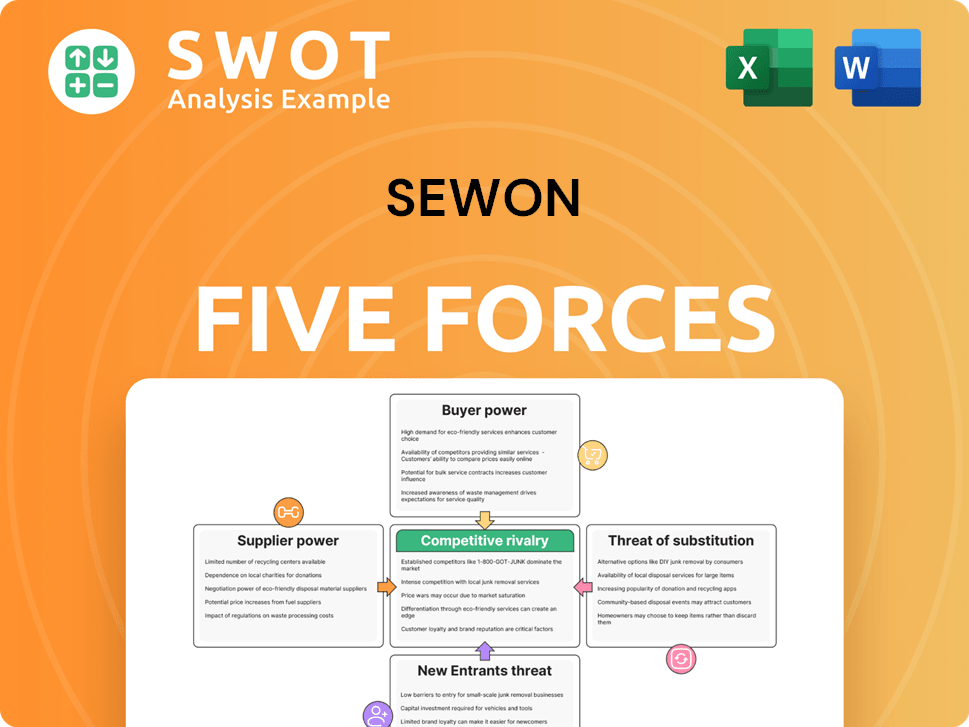
Sewon Porter's Five Forces Analysis
- Covers All 5 Competitive Forces in Detail
- Structured for Consultants, Students, and Founders
- 100% Editable in Microsoft Word & Excel
- Instant Digital Download – Use Immediately
- Compatible with Mac & PC – Fully Unlocked
Related Blogs

- What are Mission Vision & Core Values of Sewon Company?
- What is Competitive Landscape of Sewon Company?
- What is Growth Strategy and Future Prospects of Sewon Company?
- How Does Sewon Company Work?
- What is Sales and Marketing Strategy of Sewon Company?
- What is Brief History of Sewon Company?
- Who Owns Sewon Company?
Disclaimer
All information, articles, and product details provided on this website are for general informational and educational purposes only. We do not claim any ownership over, nor do we intend to infringe upon, any trademarks, copyrights, logos, brand names, or other intellectual property mentioned or depicted on this site. Such intellectual property remains the property of its respective owners, and any references here are made solely for identification or informational purposes, without implying any affiliation, endorsement, or partnership.
We make no representations or warranties, express or implied, regarding the accuracy, completeness, or suitability of any content or products presented. Nothing on this website should be construed as legal, tax, investment, financial, medical, or other professional advice. In addition, no part of this site—including articles or product references—constitutes a solicitation, recommendation, endorsement, advertisement, or offer to buy or sell any securities, franchises, or other financial instruments, particularly in jurisdictions where such activity would be unlawful.
All content is of a general nature and may not address the specific circumstances of any individual or entity. It is not a substitute for professional advice or services. Any actions you take based on the information provided here are strictly at your own risk. You accept full responsibility for any decisions or outcomes arising from your use of this website and agree to release us from any liability in connection with your use of, or reliance upon, the content or products found herein.