

Freenet Bundle

Who Does Freenet Serve? Unveiling Its Customer Base
In the ever-evolving telecommunications landscape, understanding the Freenet SWOT Analysis and its customer base is crucial. Freenet AG, a key player in the German market, has strategically adapted to shifts like the growing demand for converged services. This exploration delves into the customer demographics and target market of the Freenet company, providing insights into its evolution and current market position.

This analysis will examine the market segmentation strategies employed by Freenet, offering a comprehensive audience analysis of its diverse customer base. We will explore questions like "What are the demographics of Freenet users?" and "How to identify Freenet's target market?". This will include examining Freenet users' age range, income levels, geographic location, interests, and behavior to understand their needs and how Freenet aims to meet them.
Who Are Freenet’s Main Customers?
Analyzing the Freenet company's primary customer segments reveals a focus on the German consumer market. The company primarily operates in the B2C (business-to-consumer) sector, providing mobile communication, internet, and TV services. Understanding the customer demographics and target market is crucial for strategic planning and effective marketing.
Freenet's diverse brand portfolio, including mobilcom-debitel and klarmobil, suggests a market segmentation strategy catering to varying income levels and preferences. This approach allows the company to capture a broader audience within Germany. The company also serves businesses (B2B) through its subsidiary media Broadcast, which provides broadcasting infrastructure and services.
The Freenet target market spans a broad age range, from younger adults to families. Younger individuals or those seeking basic mobile connectivity might be drawn to brands like klarmobil, while those seeking a wider range of mobile tariffs and bundled services might prefer mobilcom-debitel. The fastest-growing segment for Freenet has been its 'TV and Media' segment, particularly driven by its freenet TV offering, which provides DVB-T2 HD services.
 Customer Demographics Overview
Freenet serves a broad age range, from younger adults to families. The company's diverse brand portfolio caters to varying income levels and preferences, offering both flexible and premium services. This allows Freenet to capture a wider audience within Germany.
Market Segmentation Strategy
Freenet employs a market segmentation strategy to target different customer groups. Brands like klarmobil focus on price-sensitive customers, while mobilcom-debitel targets those seeking a wide range of services. This approach allows Freenet to maximize its market share.
B2B Segment
Freenet also serves businesses through its subsidiary media Broadcast. This segment provides broadcasting infrastructure and services to enterprise-level clients. The B2B segment is crucial for Freenet's revenue diversification and market presence.
Growth Areas
The 'TV and Media' segment, particularly freenet TV, is a significant growth area for Freenet. This strategic shift towards converged services expands its market share in the digital home entertainment sector. This expansion allows Freenet to stay competitive.

Key Customer Segments
Freenet's primary customer segments include consumers seeking mobile, internet, and TV services, and businesses requiring broadcasting infrastructure. The company's market segmentation strategy targets varying income levels and preferences.
- Consumers: Individuals and families seeking mobile, internet, and TV services.
- Price-Sensitive Customers: Often targeted by brands like klarmobil.
- Customers Seeking Bundled Services: Often targeted by brands like mobilcom-debitel.
- Businesses: Enterprise-level clients needing broadcasting infrastructure and services.
Freenet SWOT Analysis
- Complete SWOT Breakdown
- Fully Customizable
- Editable in Excel & Word
- Professional Formatting
- Investor-Ready Format

What Do Freenet’s Customers Want?
Understanding the customer needs and preferences is crucial for the success of the Freenet company. The company's approach to customer satisfaction is multifaceted, focusing on both practical and psychological drivers. This involves a deep dive into what motivates customers to choose their services and how they behave when making purchasing decisions.
For mobile communication customers, the primary drivers include competitive pricing, reliable network coverage, and flexible contract terms. Meanwhile, TV and media customers are often motivated by access to a wide range of channels, high-definition quality, and on-demand content. Analyzing these factors helps in tailoring services to meet the specific demands of each customer segment.
Freenet addresses common customer pain points by offering transparent and simplified plans. This includes providing various customer support channels to assist users. The company continuously adapts to market trends, such as the increasing demand for high-speed internet and streaming services, to improve its product offerings.

Mobile Communication Needs
Mobile customers prioritize competitive pricing, reliable network coverage, and flexible contracts. They also value sufficient data allowances to meet their connectivity needs. The psychological driver often revolves around staying connected with others.
TV and Media Preferences
TV and media customers seek a wide range of channels, high-definition quality, and on-demand content. Aspirational drivers may include a desire for a premium home entertainment experience. These preferences guide content acquisition and service offerings.
Purchasing Behavior
Purchasing behaviors involve comparing tariffs and bundles, seeking value for money, and prioritizing convenience. Customers often look for ease of service activation and management. Transparency in pricing and plan details is a key factor.
Addressing Pain Points
Freenet addresses pain points like complex tariff structures by offering transparent plans. Customer support channels are also provided. This simplifies the customer experience and builds trust.
Influence of Market Trends
Market trends, such as the demand for high-speed internet and streaming services, influence product development. This leads to the expansion of fiber-optic internet offerings and enhancements to the freenet TV platform. Continuous adaptation is essential.
Tailored Marketing
Marketing is tailored to specific segments, highlighting benefits like unlimited data for heavy mobile users. For entertainment enthusiasts, the variety of channels available through freenet TV is emphasized. This targeted approach enhances customer engagement.
Key Customer Needs and Preferences
The Freenet company focuses on understanding and meeting the diverse needs of its customers. This involves analyzing the motivations behind their choices and adapting services accordingly. The company uses market segmentation to tailor its offerings.
- Connectivity: Customers need reliable and affordable mobile and internet services.
- Entertainment: Access to a wide variety of TV channels and on-demand content is crucial.
- Value: Customers seek cost-effective plans that offer good value for money.
- Convenience: Easy service activation, management, and accessible customer support are essential.
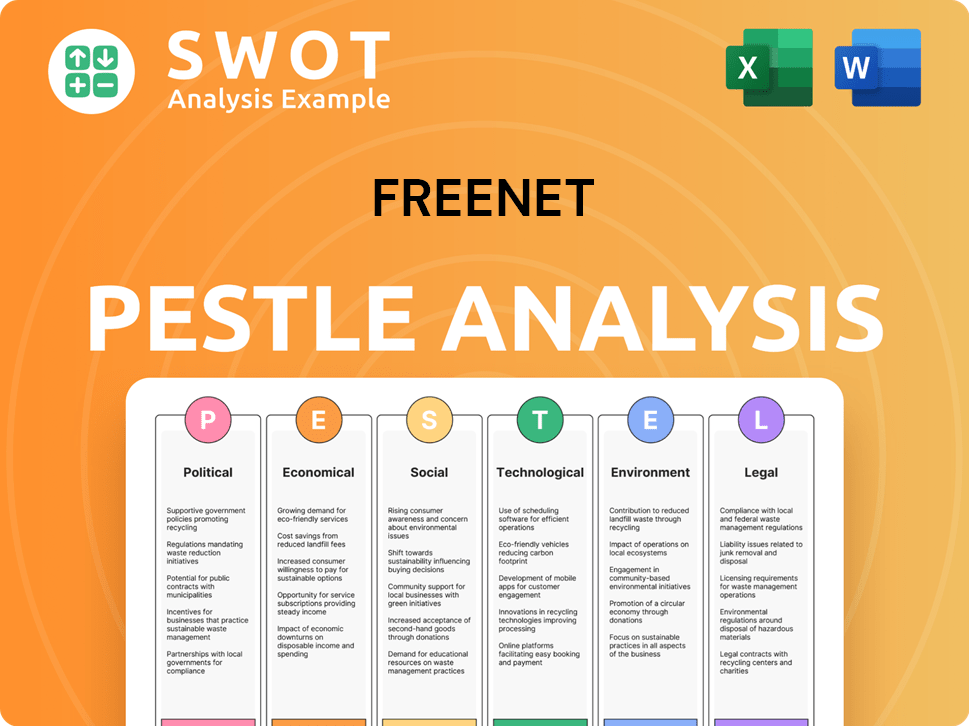
Freenet PESTLE Analysis
- Covers All 6 PESTLE Categories
- No Research Needed – Save Hours of Work
- Built by Experts, Trusted by Consultants
- Instant Download, Ready to Use
- 100% Editable, Fully Customizable
Where does Freenet operate?
The primary geographical market for the company is Germany. The company has a strong presence and brand recognition across the country, especially in urban and suburban areas. This focus is tied to high mobile and internet usage in these regions. Understanding the Growth Strategy of Freenet helps to see how this geographical focus supports its overall goals.
While specific regional market share data isn't always public, the company's mobile network and DVB-T2 HD broadcasting services ensure coverage across all 16 German states. This broad coverage is key to reaching its target market.
Differences in customer demographics and buying power are subtle within Germany. Urban areas often show higher demand for premium, high-speed services compared to rural areas. The company tailors its offerings through its diverse brand portfolio to address different customer segments and price points across the country. For example, local marketing campaigns might highlight specific regional network strengths or partnerships.
Market Focus in Germany
The company's main focus is on the German market, where it holds a significant market share. This concentration allows for efficient resource allocation and targeted marketing efforts. This approach helps to better understand the needs of its customer demographics.
Network Coverage
The company's network covers all 16 German states, ensuring a broad reach for its services. This comprehensive coverage is essential for attracting a wide range of Freenet users. The extensive network supports the company's ability to serve its target market.
Service Localization
The company customizes its services through different brands, catering to various customer segments and price points. This strategy allows for effective market segmentation. This approach is crucial for understanding the nuances of its audience analysis.
Sales Distribution
Sales volumes generally correlate with population density in Germany, with higher sales expected in more populous regions. This distribution reflects the company's focus on areas with greater customer potential. Understanding this helps in identifying Freenet's target market geographic location.
Key Market Considerations
The company's geographic strategy is primarily focused on Germany, leveraging its strong presence and network coverage to serve its customer base effectively. Recent expansions have prioritized strengthening converged services within Germany rather than significant international market entries. Understanding the Freenet customer profile examples helps in refining these strategies.
- Focus on Germany: The primary market remains Germany, utilizing a well-established network.
- Service Expansion: Recent growth has concentrated on strengthening services within Germany, particularly in TV and media.
- Sales Distribution: Sales correlate with population density, indicating a focus on populated areas.
- Customer Segmentation: The company uses different brands to target various customer segments and price points across Germany.
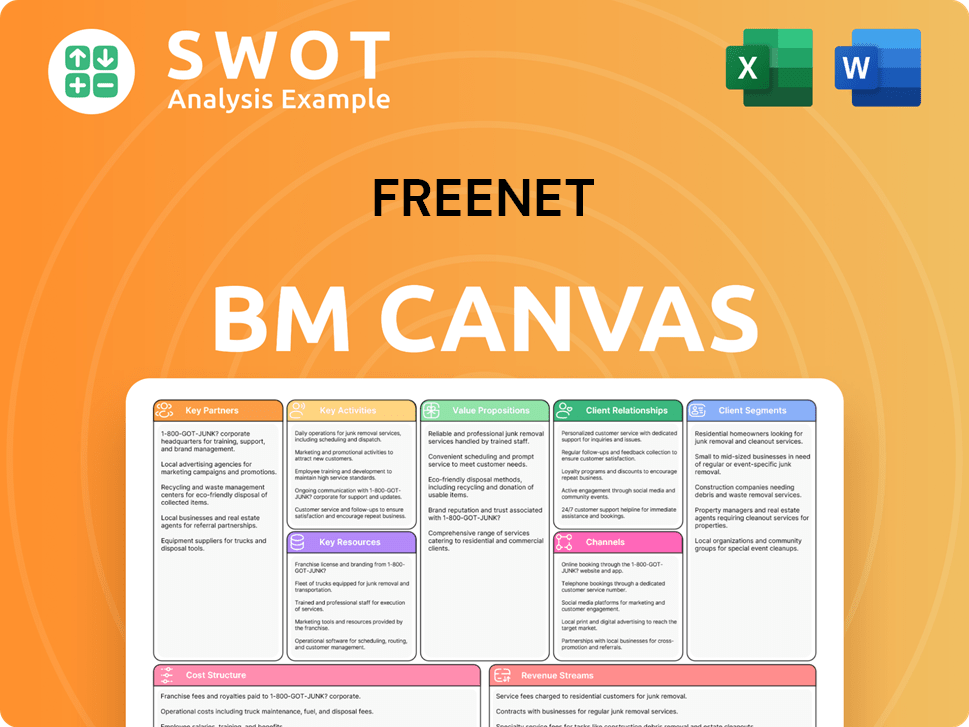
Freenet Business Model Canvas
- Complete 9-Block Business Model Canvas
- Effortlessly Communicate Your Business Strategy
- Investor-Ready BMC Format
- 100% Editable and Customizable
- Clear and Structured Layout
How Does Freenet Win & Keep Customers?
The company's customer acquisition and retention strategies are designed to attract and keep customers by using both digital and traditional marketing channels. Digital marketing includes online advertising, search engine optimization (SEO), and social media campaigns, while traditional methods involve TV commercials and print ads. Sales tactics focus on attractive introductory offers, bundled services, and competitive pricing to draw in new customers. This approach helps reach a broad audience and effectively communicates the value of their services.
Customer data and CRM systems are crucial for targeting campaigns, allowing the company to segment its customer base and deliver personalized offers and communications. Loyalty programs often include discounted upgrades or bonus data for long-term customers, aiming to increase customer lifetime value. After-sales service, such as customer support hotlines and online self-service portals, is also key for retaining customers by addressing issues promptly and maintaining satisfaction. These strategies are vital for maintaining a competitive edge in the telecommunications market.
Successful acquisition campaigns often emphasize the simplicity and value of the company's tariffs. Retention initiatives focus on enhancing customer lifetime value through consistent service quality and relevant upsell opportunities. Over time, the company has likely shifted its strategy to emphasize converged product offerings, recognizing the increasing demand for integrated solutions and the potential for higher customer loyalty and reduced churn rates that come with multi-service subscriptions. Understanding the Revenue Streams & Business Model of Freenet is essential.
Digital Marketing
The company uses online advertising, SEO, and social media to reach potential customers interested in mobile, internet, and TV services. This approach helps in targeting specific demographics and interests, driving traffic and conversions. Digital marketing is cost-effective and allows for precise targeting, which is essential for acquiring new customers.
Traditional Marketing
TV commercials and print advertisements are used to maintain broad brand awareness. This strategy helps in reaching a wider audience, including those who may not actively search online. Traditional marketing provides a strong foundation for brand recognition.
Sales Tactics
Attractive introductory offers, bundled services, and competitive pricing are employed to attract new customers. Bundling services, such as mobile and TV packages, increases customer loyalty. Competitive pricing ensures that the company remains attractive in the market.
Customer Relationship Management (CRM)
Customer data and CRM systems are used to segment the customer base and deliver personalized offers. This approach allows the company to tailor its marketing efforts to specific customer needs and preferences, leading to higher conversion rates. Personalized offers increase customer engagement.
Loyalty Programs
Loyalty programs often include discounted upgrades, exclusive content access, or bonus data for long-term customers. These programs are designed to reward customer loyalty and encourage continued use of services. Loyalty programs help reduce customer churn.
After-Sales Service
Customer support hotlines and online self-service portals are vital for retention. Addressing issues promptly and maintaining customer satisfaction are crucial for building trust. Efficient after-sales service enhances customer lifetime value.
Converged Product Offerings
The company likely emphasizes converged product offerings to meet the increasing demand for integrated solutions. This strategy can lead to higher customer loyalty and reduced churn rates. Integrated services are more convenient for customers.
Market Segmentation
Effective market segmentation allows the company to target specific customer groups with tailored marketing messages and offers. This improves the relevance of the marketing campaigns. Market segmentation helps in reaching the right customers.
Customer Lifetime Value (CLTV)
Retention initiatives focus on enhancing customer lifetime value through consistent service quality and relevant upsell opportunities. Increasing CLTV is a key goal. Upselling and cross-selling are common strategies.
Competitive Pricing
Competitive pricing is crucial for attracting and retaining customers in the telecommunications market. The company needs to offer value for money. Competitive pricing helps maintain market share.
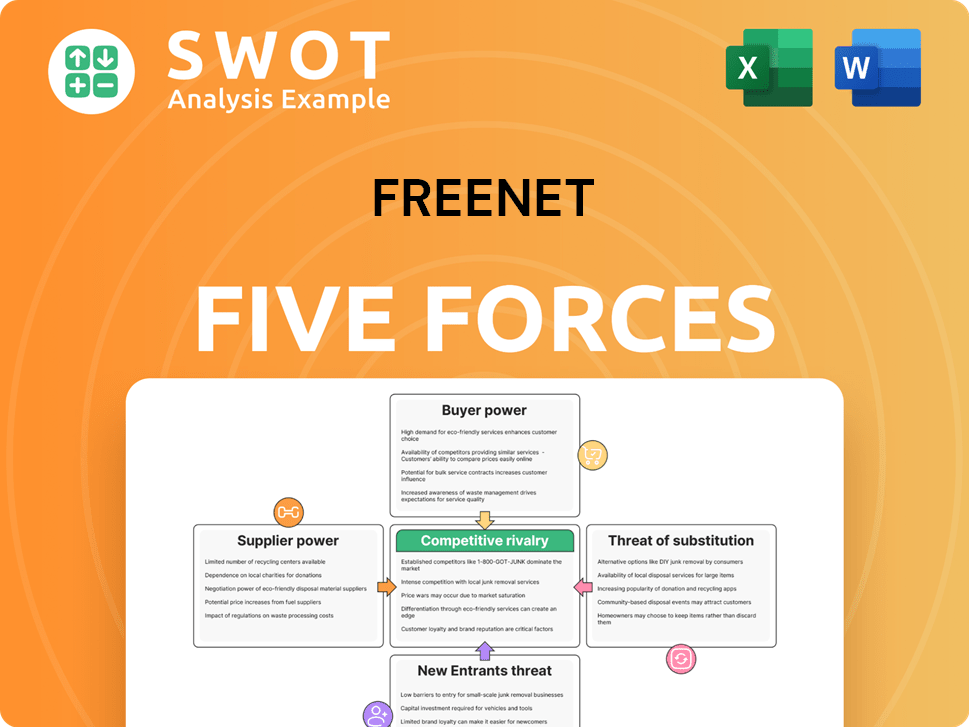
Freenet Porter's Five Forces Analysis
- Covers All 5 Competitive Forces in Detail
- Structured for Consultants, Students, and Founders
- 100% Editable in Microsoft Word & Excel
- Instant Digital Download – Use Immediately
- Compatible with Mac & PC – Fully Unlocked
Related Blogs

- What are Mission Vision & Core Values of Freenet Company?
- What is Competitive Landscape of Freenet Company?
- What is Growth Strategy and Future Prospects of Freenet Company?
- How Does Freenet Company Work?
- What is Sales and Marketing Strategy of Freenet Company?
- What is Brief History of Freenet Company?
- Who Owns Freenet Company?
Disclaimer
All information, articles, and product details provided on this website are for general informational and educational purposes only. We do not claim any ownership over, nor do we intend to infringe upon, any trademarks, copyrights, logos, brand names, or other intellectual property mentioned or depicted on this site. Such intellectual property remains the property of its respective owners, and any references here are made solely for identification or informational purposes, without implying any affiliation, endorsement, or partnership.
We make no representations or warranties, express or implied, regarding the accuracy, completeness, or suitability of any content or products presented. Nothing on this website should be construed as legal, tax, investment, financial, medical, or other professional advice. In addition, no part of this site—including articles or product references—constitutes a solicitation, recommendation, endorsement, advertisement, or offer to buy or sell any securities, franchises, or other financial instruments, particularly in jurisdictions where such activity would be unlawful.
All content is of a general nature and may not address the specific circumstances of any individual or entity. It is not a substitute for professional advice or services. Any actions you take based on the information provided here are strictly at your own risk. You accept full responsibility for any decisions or outcomes arising from your use of this website and agree to release us from any liability in connection with your use of, or reliance upon, the content or products found herein.