

Debenhams Bundle

Who Shops at Debenhams Now?
Understanding the Debenhams SWOT Analysis is crucial for any business, especially in the ever-evolving retail world. For Debenhams, a retailer with a rich history, adapting to shifts in customer demographics and the Debenhams target market has been key to survival. From its origins as a draper's shop to its current online presence, Debenhams' journey reflects the dynamic nature of consumer behavior and market demands.

The modern retail landscape demands a granular understanding of the Debenhams company's customer base. This analysis delves into the evolving retail customer analysis, exploring the department store demographics, and defining the target audience definition that now frequents the online marketplace. We'll explore questions like: What are the age demographics of Debenhams customers, and how do their shopping habits influence the brand's current strategy?
Who Are Debenhams’s Main Customers?
Understanding the Debenhams company's customer base is crucial for its success as an online department store. The primary focus is on the business-to-consumer (B2C) market, particularly in fashion and beauty. This strategic direction helps in defining the Debenhams target market and tailoring its offerings to meet specific consumer needs.
The shift to an online marketplace model, post-acquisition, has significantly boosted its performance. Debenhams aims to be a one-stop shop, offering a wide array of products. This approach allows the company to cater to a broad customer base. This strategy is vital for attracting new customers and increasing revenue, which is evident from the increase in gross merchandise value (GMV).
Debenhams, under Debenhams Group, aims to cater to a broad customer base, offering a wide range of products including women's clothing, menswear, beauty, kids, and homeware items. This diverse product offering allows Debenhams to appeal to a broad customer base, positioning itself as a one-stop shop for various needs.
 Customer Segmentation
Debenhams segments its customers by focusing on attitudes and behaviors rather than age. This approach allows for a more inclusive strategy. The company's product range includes women's clothing, menswear, beauty products, items for kids, and homeware, making it a versatile retailer.
Online Marketplace Success
Since its acquisition in 2021, Debenhams' online marketplace model has been successful. The gross merchandise value (GMV) rose by 65% to £359.69 million in the year to February 29, 2024. This demonstrates the effectiveness of the online platform.
Product Diversification
Debenhams offers a wide variety of brands, including luxury names such as Prada and Estee Lauder, alongside more accessible brands. This diversification strategy is key to attracting a broader customer base. The platform's extensive range of products caters to diverse consumer preferences.
Key Customer Segment
The core market includes women who are not restricted by age in their fashion choices. Debenhams refers to this segment as 'Claire' in past research. The company focuses on customer attitudes and behaviors to understand their needs.

Key Customer Demographics
The customer demographics for Debenhams are broad, with a significant focus on women. The company's approach to the Debenhams target market is inclusive, catering to various lifestyles and preferences. This strategy is reflected in the diverse product offerings and brand partnerships.
- Women of all ages who are fashion-conscious.
- Customers interested in a variety of products, from clothing to homeware.
- Online shoppers who value convenience and a wide selection.
- Consumers who appreciate both luxury and accessible brands.
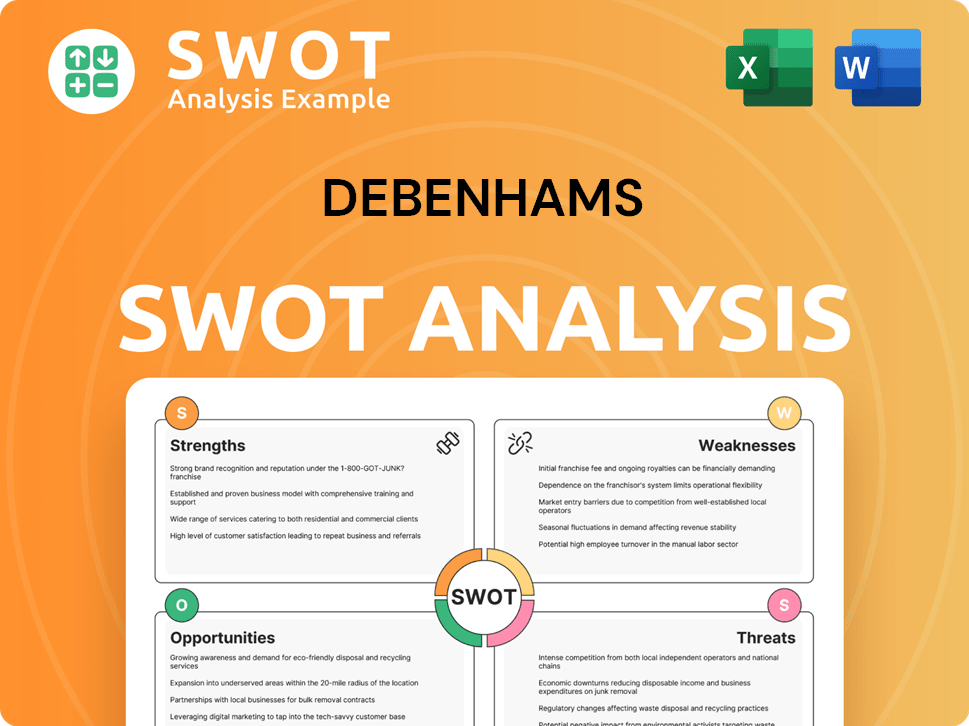
Debenhams SWOT Analysis
- Complete SWOT Breakdown
- Fully Customizable
- Editable in Excel & Word
- Professional Formatting
- Investor-Ready Format
What Do Debenhams’s Customers Want?
Understanding customer needs and preferences is crucial for the success of any retail business. For the former department store, this involves a deep dive into what drives customer purchasing decisions and how to meet those needs effectively. This analysis helps in defining the Debenhams target market and tailoring strategies to resonate with them.
The company's approach centers on providing convenience, personalization, and a wide selection, particularly in the online environment. This strategy is designed to cater to the evolving demands of consumers who prioritize a seamless shopping experience and access to a diverse range of products. The focus is on leveraging technology to enhance operations and improve customer experience.
The company's customer base is driven by the desire for a multi-brand shopping experience, access to both well-known and private-label goods, and the convenience of online purchasing. The company addresses unmet needs by offering personalized marketing strategies, tailoring promotions and recommendations through data analytics and customer insights.

Seamless Online Experience
Customers prioritize a smooth and easy online shopping journey. This includes fast website loading times, easy navigation, and a straightforward checkout process. The goal is to minimize friction and make the shopping experience as enjoyable as possible.
Diverse Product Range
Offering a wide variety of products from different brands is key. This allows customers to find everything they need in one place, from clothing and accessories to home goods. The availability of both well-known and private-label goods caters to different preferences and budgets.
Personalized Recommendations
Customers appreciate personalized recommendations based on their past purchases, browsing history, and expressed preferences. This helps them discover new products they might like and makes the shopping experience more relevant.
Value and Promotions
Customers are always looking for good value, whether through discounts, sales, or loyalty programs. Regular promotions and special offers can attract new customers and keep existing ones engaged. Competitive pricing is also a factor.
Convenience
Customers want convenience in all aspects of their shopping experience. This includes easy returns, flexible payment options, and the ability to shop anytime, anywhere. The convenience of online shopping is a major draw.
Customer Service
Excellent customer service is essential for building loyalty. This includes prompt responses to inquiries, helpful assistance, and a willingness to resolve issues quickly and efficiently. A positive customer service experience can turn a one-time buyer into a repeat customer.
Key Drivers and Strategies
The company focuses on the psychological, practical, and aspirational drivers behind customer choices. The goal is to create a shopping experience that resonates with these drivers. This involves understanding the Debenhams customer buying behavior and tailoring strategies accordingly.
- Personalization: Implementing personalized marketing strategies, including tailored promotions and recommendations, through data analytics and customer insights.
- Interactive Experiences: Launching AI and AR-powered consultation experiences, such as a Digital Skincare Advisor and Virtual Try-On for beauty products, to enhance customer confidence and provide tailored advice.
- Market Trends: Staying informed about market trends and customer feedback to adapt and improve offerings continually.
- Customer Loyalty Programs: Implementing customer loyalty programs to reward repeat purchases and encourage customer retention.
- Omnichannel Experience: Ensuring a seamless shopping experience across all channels, including online, mobile, and in-store (if applicable).
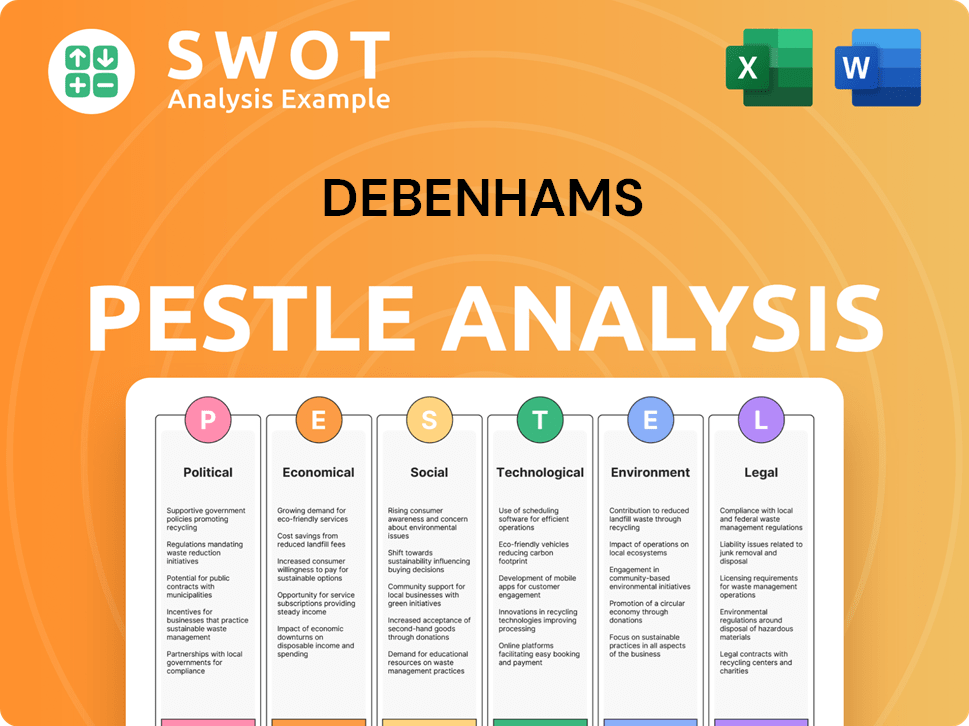
Debenhams PESTLE Analysis
- Covers All 6 PESTLE Categories
- No Research Needed – Save Hours of Work
- Built by Experts, Trusted by Consultants
- Instant Download, Ready to Use
- 100% Editable, Fully Customizable
Where does Debenhams operate?
Following its acquisition by Boohoo Group, the Growth Strategy of Debenhams has shifted its focus to an online-only retail model. This transition has significantly altered its geographical market presence. The primary geographical market for Debenhams is now the United Kingdom, operating as a digital department store within this region.
However, the company is actively pursuing international expansion to broaden its reach. This expansion strategy includes launching dedicated websites in key markets like Ireland and Australia. These moves are designed to capitalize on brand recognition and tap into new customer segments in regions where Debenhams previously had a physical presence.
The strategic shift towards online retail allows Debenhams to potentially reach a wider customer base. The introduction of localized websites is a key part of this strategy. This approach aims to tailor offerings to regional preferences and shopping habits, with the goal of becoming a global 'digital department store'.
Customer Demographics in the UK
In the UK, Debenhams likely targets a broad demographic, including various age groups, income levels, and lifestyles. Analyzing retail customer analysis data reveals a focus on customers seeking a range of products, from clothing to home goods. The department store demographics suggest a customer base that values brand recognition and convenience.
International Expansion Strategy
The launch of websites in Ireland and Australia is a strategic move to expand the target market. Debenhams aims to cater to local preferences by offering a wide selection of both local and international brands. This approach is intended to increase brand visibility and sales in these key regions.
Target Audience Definition
Debenhams' target audience definition involves understanding customer buying behavior and preferences across different regions. This includes analyzing shopping habits and customer location demographics to tailor marketing efforts. The goal is to create a personalized shopping experience that meets the needs of each customer segment.
Customer Data Analysis
Analyzing customer data is crucial for Debenhams to understand its target market segmentation. This involves examining customer gender distribution, income levels, and lifestyle analysis. By understanding these factors, Debenhams can refine its brand positioning and enhance customer loyalty programs.
The success of Debenhams' international expansion depends on several factors. These include understanding the specific customer demographics in each region, tailoring product offerings, and effectively managing logistics and marketing. The company's ability to adapt to local market conditions will be key to achieving its goal of becoming a global digital department store. The company's focus on online retail allows it to gather data on customer preferences and buying behavior, which can inform future strategies. The company is likely to use this data to refine its product offerings and marketing campaigns, ensuring it meets the needs of its target audience.
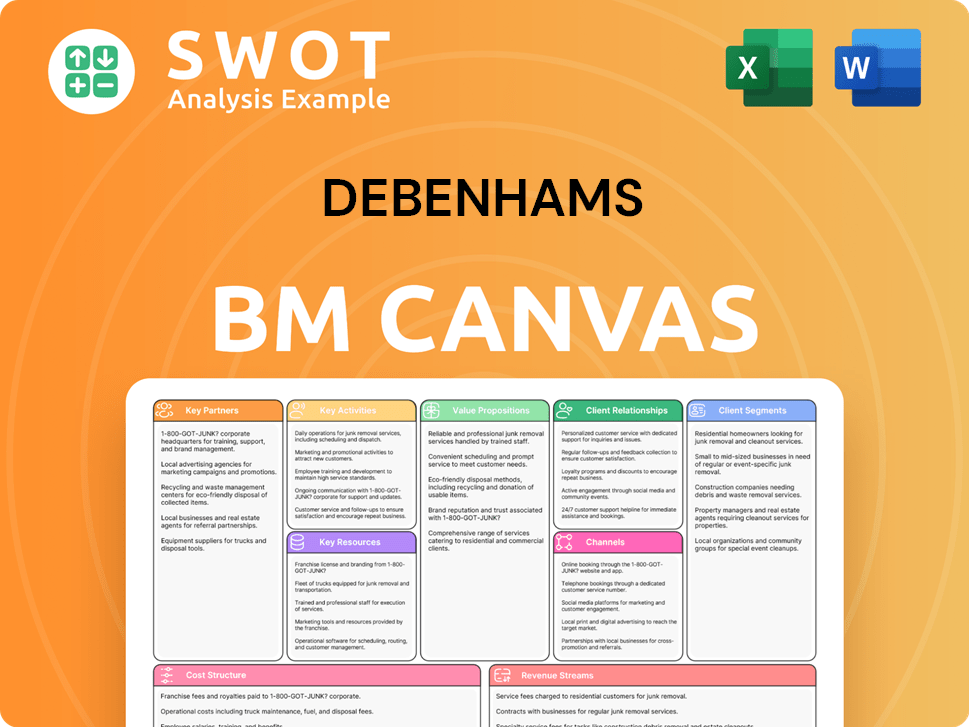
Debenhams Business Model Canvas
- Complete 9-Block Business Model Canvas
- Effortlessly Communicate Your Business Strategy
- Investor-Ready BMC Format
- 100% Editable and Customizable
- Clear and Structured Layout
How Does Debenhams Win & Keep Customers?
The strategy of customer acquisition and retention for the company revolves around a robust online presence and data-driven marketing. The company focuses on enhancing its digital footprint via its website, debenhams.com, to broaden its reach and boost sales. This encompasses digital marketing strategies and offering a seamless shopping experience.
Sales and marketing efforts are heavily influenced by data, allowing for customer segmentation based on preferences, behaviors, and demographics. This approach enables the creation of targeted marketing campaigns tailored to specific customer segments, aiming for higher conversion rates and increased customer loyalty. These strategies are crucial for understanding the Revenue Streams & Business Model of Debenhams.
For customer retention, the company leverages loyalty programs such as the 'Beauty Club' and 'Rewards Club.' These programs offer exclusive perks and rewards, incentivizing repeat purchases and fostering customer loyalty. Furthermore, the company focuses on personalized marketing through data analytics, tailoring messages and offers based on purchase history and browsing behavior to enhance engagement and sales.
Enhancing Online Presence
The company invests in its online platform, debenhams.com, to reach a broader audience. This includes digital marketing and offering a seamless shopping experience. The goal is to attract new customers and make it easier for existing ones to shop.
Data-Driven Marketing
The company uses customer data to segment its audience and create targeted campaigns. This segmentation is based on preferences, behaviors, and demographics. Such targeted approaches aim to improve conversion rates and boost customer loyalty.
Customer Loyalty Programs
The company operates loyalty programs such as the 'Beauty Club' and 'Rewards Club'. These programs offer exclusive rewards and incentives. These programs encourage repeat purchases and build customer loyalty.
Personalized Marketing
The company uses data analytics to personalize marketing messages and offers. This is based on purchase history and browsing behavior. The aim is to increase customer engagement and drive sales.
Key Strategies for Customer Acquisition and Retention
The company employs several key strategies to acquire and retain customers effectively. These strategies include enhancing its online presence, utilizing data-driven marketing, implementing loyalty programs, and personalizing marketing efforts.
- Online Presence: The company focuses on its online platform, debenhams.com, to broaden its reach and improve the shopping experience.
- Data-Driven Marketing: Customer data is used to segment the audience and create targeted marketing campaigns.
- Loyalty Programs: Programs like the 'Beauty Club' and 'Rewards Club' offer exclusive rewards to incentivize repeat purchases.
- Personalized Marketing: Data analytics are used to tailor marketing messages based on individual customer behavior, enhancing engagement and sales.
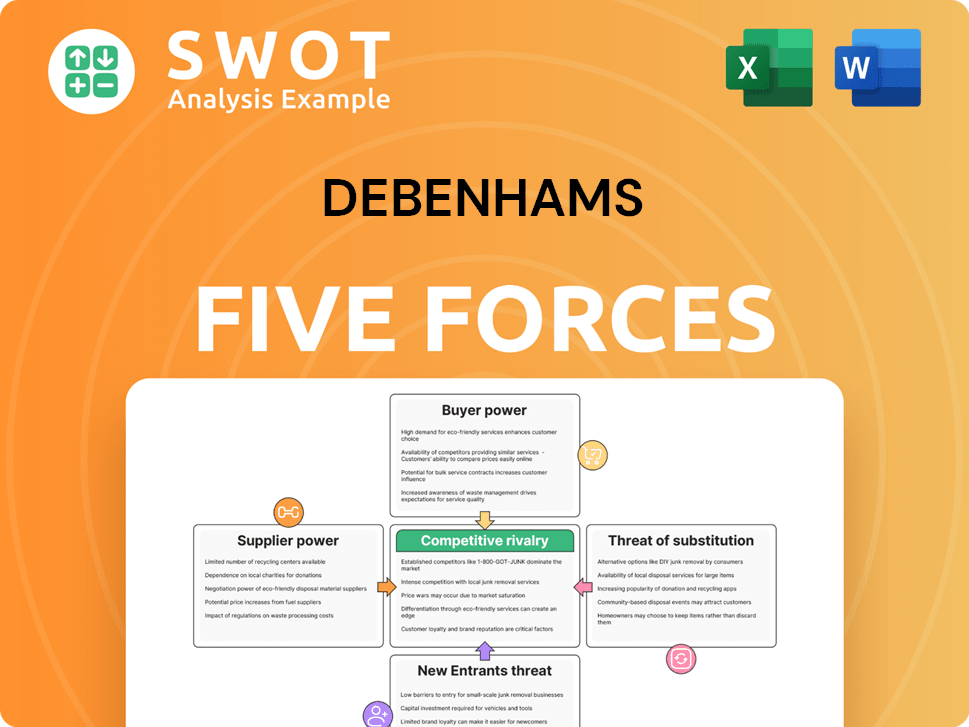
Debenhams Porter's Five Forces Analysis
- Covers All 5 Competitive Forces in Detail
- Structured for Consultants, Students, and Founders
- 100% Editable in Microsoft Word & Excel
- Instant Digital Download – Use Immediately
- Compatible with Mac & PC – Fully Unlocked
Related Blogs

- What are Mission Vision & Core Values of Debenhams Company?
- What is Competitive Landscape of Debenhams Company?
- What is Growth Strategy and Future Prospects of Debenhams Company?
- How Does Debenhams Company Work?
- What is Sales and Marketing Strategy of Debenhams Company?
- What is Brief History of Debenhams Company?
- Who Owns Debenhams Company?
Disclaimer
All information, articles, and product details provided on this website are for general informational and educational purposes only. We do not claim any ownership over, nor do we intend to infringe upon, any trademarks, copyrights, logos, brand names, or other intellectual property mentioned or depicted on this site. Such intellectual property remains the property of its respective owners, and any references here are made solely for identification or informational purposes, without implying any affiliation, endorsement, or partnership.
We make no representations or warranties, express or implied, regarding the accuracy, completeness, or suitability of any content or products presented. Nothing on this website should be construed as legal, tax, investment, financial, medical, or other professional advice. In addition, no part of this site—including articles or product references—constitutes a solicitation, recommendation, endorsement, advertisement, or offer to buy or sell any securities, franchises, or other financial instruments, particularly in jurisdictions where such activity would be unlawful.
All content is of a general nature and may not address the specific circumstances of any individual or entity. It is not a substitute for professional advice or services. Any actions you take based on the information provided here are strictly at your own risk. You accept full responsibility for any decisions or outcomes arising from your use of this website and agree to release us from any liability in connection with your use of, or reliance upon, the content or products found herein.