

Animalcare Group Bundle

Who are Animalcare Group's Key Customers?
The animal health sector is booming, and understanding the customer is crucial for success. For Animalcare Group SWOT Analysis, a deep dive into customer demographics and target market segments is essential. This knowledge shapes everything from product development to marketing strategies, driving sustained growth and market relevance.

Animalcare Group's journey from a UK-focused veterinary pharmaceutical provider to a global player highlights the importance of adapting to evolving market dynamics. A thorough market analysis, including detailed audience segmentation, is key to serving a diverse range of veterinary professionals and animal owners. This exploration will uncover the company's ideal customer profile, considering factors such as age range, income levels, and geographic location of pet owners, ultimately revealing how Animalcare Group meets its customer needs within the veterinary services landscape.
Who Are Animalcare Group’s Main Customers?
Understanding the Animalcare Group's primary customer segments is crucial for effective market analysis. The company primarily operates within a business-to-business (B2B) model, focusing on veterinary practices as its core customers. These practices are the direct purchasers and prescribers of Animalcare's veterinary pharmaceuticals and identification products.
Within the veterinary practice segment, there's further segmentation. This includes general veterinary practitioners, specialist veterinary clinics (e.g., equine, small animal referral centers), and potentially large animal practices serving agricultural sectors. Decision-makers within these practices are typically veterinarians or practice managers, whose demographics can vary widely by age, experience, and specialization. Analyzing these customer demographics provides insights into market trends and product needs.
Beyond direct veterinary practices, Animalcare’s products ultimately serve animal owners – both companion animal owners and livestock farmers. While these are not direct customers of Animalcare, their needs and preferences significantly influence the purchasing decisions of veterinarians. Companion animal owners often span a wide demographic range, with increasing pet ownership among younger generations and a continued strong bond with pets across all age groups.
 Veterinary Practices as Primary Customers
Veterinarians and veterinary practices form the core customer base. These are the direct purchasers of Animalcare's products. The target market includes general practitioners, specialist clinics, and large animal practices.
Companion Animal Owners
Animal owners are an indirect but significant segment influencing veterinary decisions. This group includes a wide demographic range. The increasing humanization of pets drives demand for advanced veterinary care.
Livestock Farmers
Livestock farmers represent a niche segment. They are often characterized by specific geographic locations and economic drivers related to agricultural production. Regulations in the livestock sector impact product needs.
Market Trends and Strategic Shifts
Animalcare's focus has shifted due to the humanization of pets and evolving regulations. Recent acquisitions, like Daxocox, show a strategic move to capture a larger market share. These shifts highlight the importance of ongoing market analysis.

Key Demographic and Market Insights
The veterinary market is evolving, with an increasing number of female veterinarians and younger professionals entering the field. Pet ownership continues to grow, with younger generations showing a strong interest. Analyzing the target market involves understanding the needs of both veterinarians and pet owners.
- The global veterinary pharmaceuticals market was valued at approximately $30.5 billion in 2023.
- The companion animal health market is experiencing growth, driven by increased pet ownership.
- The demand for pain management products in the companion animal segment is rising.
- Understanding these trends is vital for Animalcare Group's strategic planning and market analysis.
Animalcare Group SWOT Analysis
- Complete SWOT Breakdown
- Fully Customizable
- Editable in Excel & Word
- Professional Formatting
- Investor-Ready Format

What Do Animalcare Group’s Customers Want?
Understanding the customer needs and preferences is crucial for the success of any business, and for Animalcare Group, this means focusing on the veterinary professionals who are their primary customers. These veterinarians have specific needs and preferences that drive their purchasing decisions for pharmaceuticals and identification products. A deep dive into these factors helps to refine the company's market strategies and product development efforts.
The core of a veterinarian's needs revolves around providing the best possible care for their animal patients. This translates into a demand for high-quality, effective, and reliable products. Furthermore, practical considerations such as product availability, pricing, and customer service play a significant role in their choices. Veterinarians also value comprehensive product information and readily available technical support.
The purchasing behavior of veterinarians is often influenced by established protocols within their practices, recommendations from peers, and ongoing professional development. The reputation of the manufacturer, the reliability of the supply chain, and the level of educational support provided also significantly impact their decisions. For example, the development of innovative products for pain management, like the NSAID Daxocox, directly addresses a key need for effective and long-lasting solutions for canine osteoarthritis.

Efficacy and Quality
Veterinarians prioritize products that are proven to work effectively and safely for their animal patients. This includes medicines with minimal side effects and products that contribute to overall animal well-being.
Ease of Use
Products that integrate seamlessly into existing workflows are highly valued. This includes factors like ease of administration, clear instructions, and convenient packaging.
Reliability and Availability
Consistent product performance and a dependable supply chain are essential. Veterinarians need to be able to rely on the products being available when needed.
Customer Support
Veterinarians appreciate strong customer service, including readily available technical support and clear product information. This helps them to make informed decisions and address complex cases.
Competitive Pricing
While quality is paramount, competitive pricing is also a consideration. Veterinarians need to balance the cost of products with their effectiveness and value.
Manufacturer Reputation
The reputation of the manufacturer plays a significant role in purchasing decisions. Veterinarians often prefer to work with companies they trust and that have a track record of quality and innovation.
Product usage patterns and loyalty are built on consistent performance and positive patient outcomes. Animalcare Group tailors its marketing and product features by providing specific dosage forms, comprehensive training materials, and new formulations. For example, the need for palatable medications is a common preference addressed in product development. To gain a deeper understanding of the competitive landscape, consider exploring the Competitors Landscape of Animalcare Group. This helps in understanding the market dynamics and the specific needs of the target audience, which includes veterinarians and their clients, the pet owners. According to the American Pet Products Association (APPA), pet industry expenditures in the U.S. reached $147 billion in 2023, indicating a robust market for veterinary products and services.
Key Considerations for Animalcare Group
To effectively meet customer needs, Animalcare Group should focus on several key areas.
- Product Innovation: Continuously develop new and improved products that address unmet needs in veterinary medicine, such as pain management and ease of administration.
- Customer Education: Provide comprehensive training materials, clinical data, and technical support to help veterinarians make informed decisions.
- Supply Chain Reliability: Ensure a dependable supply chain to guarantee product availability and minimize disruptions.
- Customer Service: Offer excellent customer service, including responsive technical support and clear communication.
- Market Research: Conduct ongoing market research to understand evolving customer needs and preferences, allowing for targeted product development and marketing strategies.
Animalcare Group PESTLE Analysis
- Covers All 6 PESTLE Categories
- No Research Needed – Save Hours of Work
- Built by Experts, Trusted by Consultants
- Instant Download, Ready to Use
- 100% Editable, Fully Customizable

Where does Animalcare Group operate?
The geographical market presence of Animalcare Group PLC is primarily centered in the United Kingdom, where it originated and holds a strong market position. The company has strategically expanded its reach across Europe and into select international markets. This expansion is often facilitated through acquisitions, allowing access to established distribution networks and customer relationships.
While precise market share figures by country are not publicly detailed, Animalcare's focus on key European territories is evident in its annual reports and corporate communications. The company navigates varying regulatory environments for veterinary pharmaceuticals across Europe, requiring localized product registrations and marketing strategies. Cultural differences in pet ownership and livestock management also influence product demand.
Animalcare adapts its offerings to meet specific national regulatory requirements, tailors marketing messages to local veterinary communities, and partners with local distributors. Recent expansion efforts include broadening the product portfolio and geographical footprint, such as acquiring rights to veterinary products and expanding sales teams in specific European countries. The geographic distribution of sales shows a strong UK base with increasing contributions from key European markets.
UK Market Dominance
Animalcare Group PLC has a strong presence in the UK. The company was founded in the UK and has a significant market share. The UK serves as a foundational market for its operations and revenue generation.
European Expansion
Animalcare has expanded into several European countries. This expansion is often achieved through acquisitions and partnerships. The company focuses on key European territories to increase its market presence.
International Markets
The company has a presence in international markets beyond Europe, though specifics are limited. These markets represent opportunities for growth and diversification. Expansion strategies involve leveraging existing networks.
Localized Strategies
Animalcare adapts its products and marketing to local regulations and cultural preferences. This includes product registrations, marketing adjustments, and partnerships. Localized strategies are crucial for success in different markets.
The strategy of expanding geographically is a key element in the Growth Strategy of Animalcare Group. Animalcare's approach to market analysis involves understanding customer demographics and adapting to the specific needs of each region. This includes audience segmentation based on factors like pet ownership statistics and veterinary service customer demographics. Identifying Animalcare Group's target audience is crucial for effective market penetration, and requires a detailed analysis of demographic data for pet owners, including age range, income levels, and geographic location. The company's focus on understanding Animalcare Group customer needs allows it to tailor its offerings effectively.
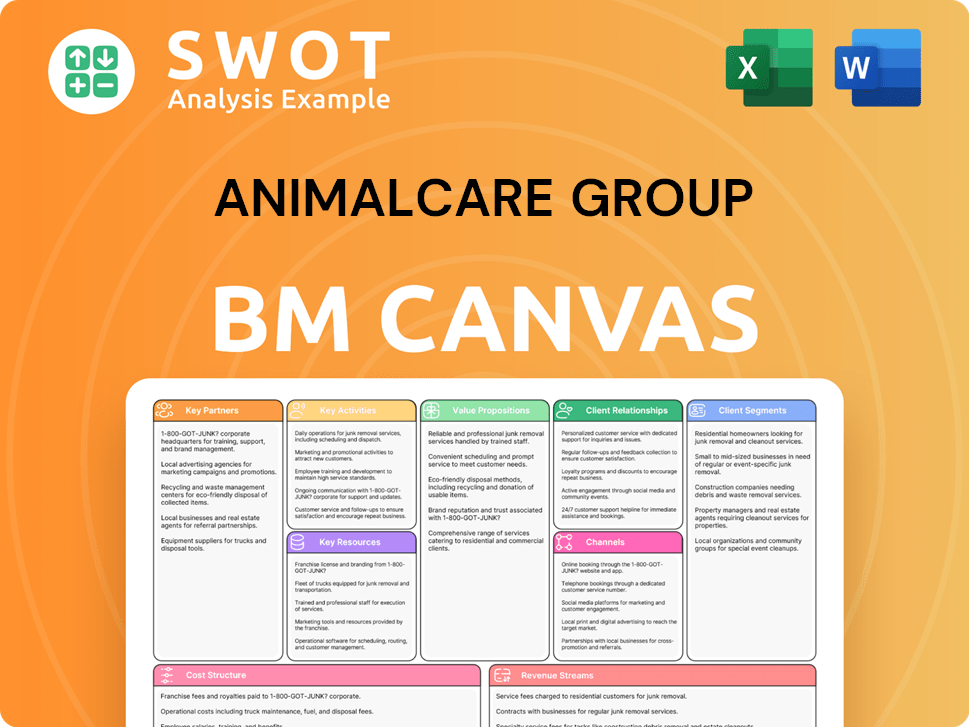
Animalcare Group Business Model Canvas
- Complete 9-Block Business Model Canvas
- Effortlessly Communicate Your Business Strategy
- Investor-Ready BMC Format
- 100% Editable and Customizable
- Clear and Structured Layout
How Does Animalcare Group Win & Keep Customers?
To acquire and retain customers, the [Company Name] employs a strategy focused on veterinary professionals. This business-to-business (B2B) approach centers on specialized marketing, relationship-driven sales, and providing extensive support. Digital marketing, including targeted online advertising and professional veterinary forums, is crucial for reaching the target market. Traditional methods, such as attending veterinary conferences, remain important for direct engagement.
The company's sales tactics involve a dedicated sales force that builds relationships with veterinary practices. They provide product information, technical support, and address specific practice needs. Customer data and CRM systems are used to segment the veterinary customer base, allowing for personalized communications and targeted product offerings. This data-driven approach helps identify high-value customers and tailor retention efforts.
Retention strategies focus on product availability, reliable supply, and exceptional after-sales service. This includes prompt responses to queries, troubleshooting assistance, and continuous product education. Campaigns highlight the efficacy and safety of products, supported by clinical data and testimonials. Innovative initiatives might include exclusive access to new product information and specialized training sessions. A deep understanding of Revenue Streams & Business Model of Animalcare Group is essential for effective customer acquisition and retention strategies.
Digital Marketing Strategies
Digital marketing is a key component, utilizing targeted online advertising, professional veterinary forums, and direct email campaigns. This approach allows for precise targeting of veterinary practices and professionals. The use of digital channels is increasing, with an estimated 70% of veterinary professionals using online platforms for professional development and information gathering.
Traditional Marketing Channels
Traditional marketing channels, such as veterinary conferences and industry publications, play a vital role in direct engagement. These events provide opportunities for product demonstrations and networking. Participation in industry events allows for face-to-face interactions, which are still valued by many veterinary professionals; approximately 80% of veterinary practices attend at least one major industry event annually.
Sales Force and Relationship Building
A dedicated sales force builds relationships with individual veterinary practices, offering product information and technical support. This approach fosters trust and understanding of specific practice needs. Successful sales teams often have a customer retention rate of over 85% due to strong relationship-building efforts.
Customer Data and CRM Systems
Customer Relationship Management (CRM) systems are crucial for segmenting the veterinary customer base. This enables personalized communications and targeted product offerings. Effective CRM implementation can increase customer lifetime value by up to 25%.
Product Availability and Supply
Ensuring product availability and a consistent supply chain are critical for customer retention. This reliability builds trust and supports the practices' operational needs. Studies show that supply chain reliability directly impacts customer satisfaction, with a 90% satisfaction rate when products are consistently available.
After-Sales Service and Technical Support
Providing exceptional after-sales service and technical support is vital for customer loyalty. Prompt responses to queries and troubleshooting assistance help maintain strong relationships. Companies with excellent after-sales service often see a customer retention rate increase of up to 15%.
Product Education and Training
Continuous product education and training keep veterinary professionals informed about product benefits. Webinars and scientific literature support their professional development. Practices that actively participate in product training often report a 20% increase in product utilization.
Efficacy and Safety Communication
Highlighting the efficacy and safety of products, supported by clinical data, builds trust. Testimonials from respected veterinary professionals further enhance credibility. Products with strong clinical data often experience a market adoption rate increase of 30%.
Innovative Retention Initiatives
Offering exclusive access to new product information and specialized training sessions can improve customer loyalty. Early-bird access to industry events also enhances engagement. These initiatives can increase customer lifetime value by up to 10%.
Economic Value Demonstration
Demonstrating the economic value of products to veterinary practices is crucial for long-term loyalty. This can be achieved by showcasing how the products improve practice profitability. Practices that understand the economic benefits of products often demonstrate a 15% increase in repeat purchases.
Animalcare Group Porter's Five Forces Analysis
- Covers All 5 Competitive Forces in Detail
- Structured for Consultants, Students, and Founders
- 100% Editable in Microsoft Word & Excel
- Instant Digital Download – Use Immediately
- Compatible with Mac & PC – Fully Unlocked

Related Blogs

- What are Mission Vision & Core Values of Animalcare Group Company?
- What is Competitive Landscape of Animalcare Group Company?
- What is Growth Strategy and Future Prospects of Animalcare Group Company?
- How Does Animalcare Group Company Work?
- What is Sales and Marketing Strategy of Animalcare Group Company?
- What is Brief History of Animalcare Group Company?
- Who Owns Animalcare Group Company?
Disclaimer
All information, articles, and product details provided on this website are for general informational and educational purposes only. We do not claim any ownership over, nor do we intend to infringe upon, any trademarks, copyrights, logos, brand names, or other intellectual property mentioned or depicted on this site. Such intellectual property remains the property of its respective owners, and any references here are made solely for identification or informational purposes, without implying any affiliation, endorsement, or partnership.
We make no representations or warranties, express or implied, regarding the accuracy, completeness, or suitability of any content or products presented. Nothing on this website should be construed as legal, tax, investment, financial, medical, or other professional advice. In addition, no part of this site—including articles or product references—constitutes a solicitation, recommendation, endorsement, advertisement, or offer to buy or sell any securities, franchises, or other financial instruments, particularly in jurisdictions where such activity would be unlawful.
All content is of a general nature and may not address the specific circumstances of any individual or entity. It is not a substitute for professional advice or services. Any actions you take based on the information provided here are strictly at your own risk. You accept full responsibility for any decisions or outcomes arising from your use of this website and agree to release us from any liability in connection with your use of, or reliance upon, the content or products found herein.