

Ranpak Bundle

Who Really Owns Ranpak?
Uncover the intricate ownership structure of Ranpak, a leader in sustainable packaging solutions. Understanding the Ranpak SWOT Analysis is just the beginning; knowing who controls the company is vital for any investor or strategist. From its origins to its current status as a publicly traded entity, the evolution of Ranpak's ownership reveals crucial insights.

Delving into the details of Ranpak ownership provides a clear view of its strategic direction and future prospects. Knowing Who owns Ranpak, including its major shareholders and the influence of its leadership, is essential for anyone evaluating the Ranpak corporation. This exploration will uncover the key players shaping the destiny of this innovative company, from its founders to its current investors, and answer questions like "Is Ranpak a publicly traded company?" and "Who are Ranpak's major shareholders?".
Who Founded Ranpak?
The story of the Ranpak company began with an innovative idea. George R. Johnson patented a machine in 1970 that transformed kraft paper into protective, crinkled packaging. This invention laid the foundation for what would become a significant player in the packaging industry.
In 1972, Johnson teamed up with Raymond Q. Armington, an entrepreneur and engineer, to formally establish the company. Armington took on the role of chairman, guiding the company through its early years. While specific details about the initial capital and ownership split remain undisclosed, the partnership marked the official start of Ranpak.
The early focus for Ranpak was on building a strong network of distributors worldwide. This strategic move was crucial for the company's growth and market reach. Later, in 1981, Steven E. Armington, Raymond's son, assumed leadership, continuing the company's development.

Early Acquisitions
Ranpak expanded its offerings through strategic acquisitions. Eco-Pak Industries, specializing in biodegradable packaging, was acquired in 1992. John Ratzenberger, the actor, was a part-owner of Eco-Pak. This, along with the purchase of Geami, broadened Ranpak's range of paper-based packaging solutions.
Founding Vision
The company's initial direction and growth were centered on providing sustainable, paper-based alternatives to plastic packaging. This vision was a key driver of Ranpak's early success.
Leadership Transition
Raymond Armington's leadership as chairman continued until his passing in 1993. Steven E. Armington took over leadership in 1981, guiding the company's operations.
Market Focus
Ranpak's strategy from the beginning involved establishing a global network of distributors. This approach was essential for expanding its market presence.
The early ownership of the Ranpak corporation was primarily held by its founders and early investors. While the exact ownership structure has evolved over time, the initial vision of providing sustainable packaging solutions remains central to the company's identity. The company's history reflects a commitment to innovation and environmental responsibility, shaping its growth and market position. The company's focus on paper-based alternatives has positioned it well in a market increasingly concerned with sustainability. As of late 2024, the company continues to innovate in the packaging space, with its ownership structure reflecting its evolution through various acquisitions and strategic partnerships.
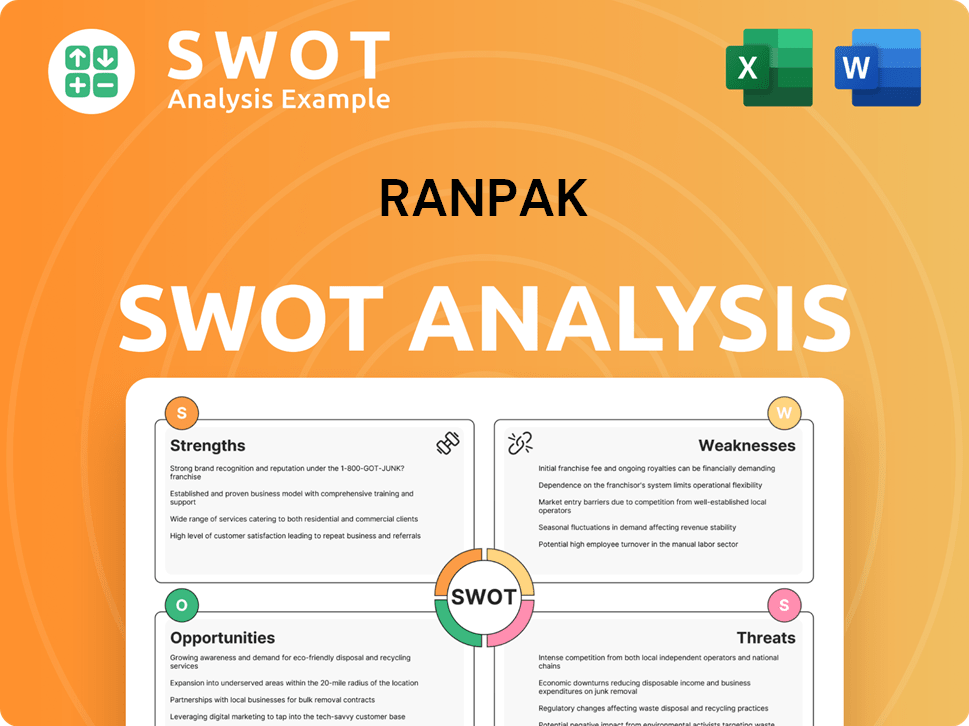
Ranpak SWOT Analysis
- Complete SWOT Breakdown
- Fully Customizable
- Editable in Excel & Word
- Professional Formatting
- Investor-Ready Format
How Has Ranpak’s Ownership Changed Over Time?
The ownership of the company has seen several shifts throughout its history. In December 2001, the company was acquired by First Atlantic Capital for over $100 million. Later, in December 2005, First Atlantic Capital sold the company to American Capital Strategies Ltd. The company then changed hands again in 2007, with Odyssey Investment Partners taking ownership. Rhone Group acquired the company in 2014.
A major change occurred in 2019 when a group led by One Madison Group and its founder, Omar Asali, purchased the company from Rhone Group for $950 million. This transaction led to the company becoming a publicly traded entity on the New York Stock Exchange under the ticker 'PACK.' As of June 3, 2025, the share price was $3.40.
| Ownership Timeline | Acquirer | Year |
|---|---|---|
| First Atlantic Capital | First Atlantic Capital | 2001 |
| American Capital Strategies Ltd. | American Capital Strategies Ltd. | 2005 |
| Odyssey Investment Partners | Odyssey Investment Partners | 2007 |
| Rhone Group | Rhone Group | 2014 |
| One Madison Group | One Madison Group | 2019 |
As a publicly traded company, a significant portion of the shares are held by institutional investors. In late 2024 and early 2025, institutional shareholders owned approximately 85.70% of the company, while insiders held around 49.95%, and retail investors held 0.00%. Major institutional shareholders include JS Capital Management LLC, which is the largest individual shareholder owning 30.53 million shares representing 36.25% of the company, Soros Capital Management LLC, G2 Investment Partners Management LLC, BlackRock, Inc., Dimensional Fund Advisors LP, ArrowMark Colorado Holdings LLC, Petrus Trust Company, LTA, and Vanguard Group Inc. Omar Asali, as an insider, holds a significant stake with 7.33 million shares, representing 8.70% of the company. These changes in ownership, particularly the transition to a public company, have likely influenced the company's strategy, emphasizing growth in e-commerce and automation solutions.

Key Takeaways on Company Ownership
The company's ownership has evolved significantly, transitioning from private equity firms to a publicly traded model. This shift has brought in institutional investors, altering the company's strategic focus.
- Institutional investors hold a significant majority of shares.
- Insiders, including Omar Asali, maintain a substantial ownership stake.
- The company's strategic direction now emphasizes growth in e-commerce and automation.
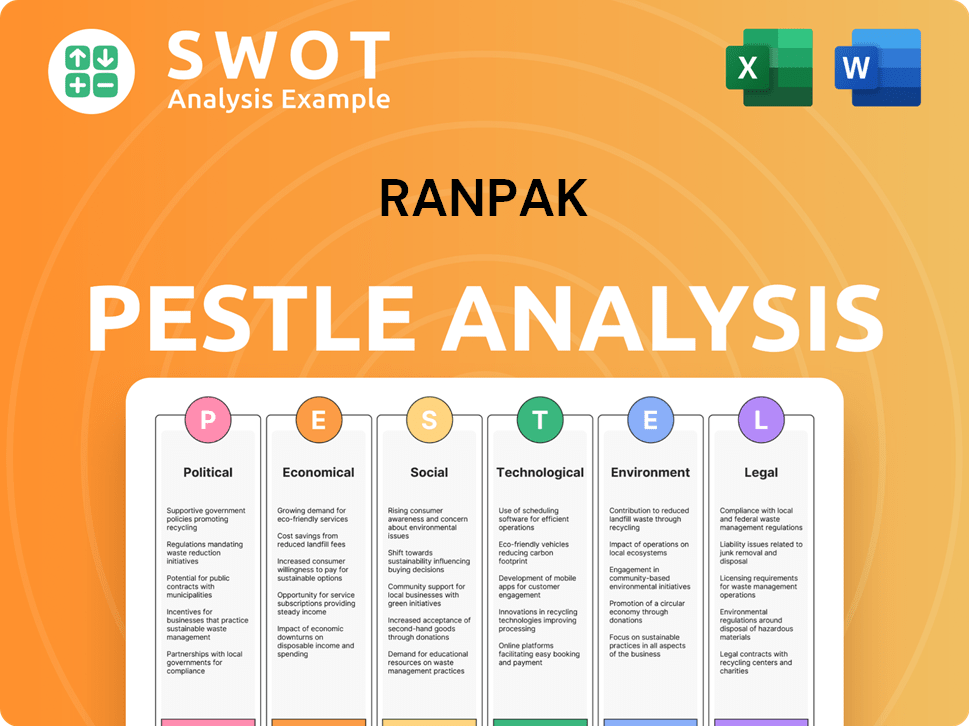
Ranpak PESTLE Analysis
- Covers All 6 PESTLE Categories
- No Research Needed – Save Hours of Work
- Built by Experts, Trusted by Consultants
- Instant Download, Ready to Use
- 100% Editable, Fully Customizable
Who Sits on Ranpak’s Board?
The current Board of Directors for the Ranpak company is pivotal in overseeing the company's strategy and governance. As of May 2025, the board is composed of Omar Asali, who holds the positions of Chairman and Chief Executive Officer, alongside Thomas F. Corley, Victoria L. Dolan, Pam El, Michael Gliedman, Michael A. Jones, Robert C. King, Salil Seshadri, and Alicia Tranen. Victoria L. Dolan's appointment to the Board occurred in October 2024.
The board members represent a blend of company leadership, major shareholders, and independent directors. For instance, Omar Asali, serving as CEO and Chairman, signifies leadership. Thomas F. Corley functions as an independent director and chairs the Nominating, Environmental, Social & Governance Committee. The voting structure for the Ranpak corporation involves a single class of directors elected by stockholders to serve three-year terms. Class I directors Michael Gliedman and Alicia Tranen were nominated for re-election at the 2023 annual meeting, with Class II and Class III directors up for election at the 2024 and 2025 annual meetings, respectively.
| Board Member | Position | Additional Information |
|---|---|---|
| Omar Asali | Chairman and CEO | Represents company leadership |
| Thomas F. Corley | Independent Director | Chairs Nominating, Environmental, Social & Governance Committee |
| Victoria L. Dolan | Director | Appointed October 2024 |
| Pam El | Director | |
| Michael Gliedman | Director | Class I Director |
| Michael A. Jones | Director | |
| Robert C. King | Director | |
| Salil Seshadri | Director | |
| Alicia Tranen | Director | Class I Director |
While specific details on dual-class shares or special voting rights aren't explicitly disclosed in recent public information, the substantial holdings of institutional investors and insiders, such as JS Capital Management LLC (36.25%) and Omar Asali (8.70%), indicate their significant influence over decision-making. There have been no widely reported proxy battles or activist investor campaigns in recent years, suggesting a relatively stable governance environment for the Ranpak stock.
Ranpak Ownership Structure
Understanding the board of directors and their voting power is crucial for anyone interested in the Ranpak company. This structure helps shape the strategic direction of the company and influences its performance.
- The board includes a mix of company leaders, independent directors, and major shareholders.
- Voting is structured with directors serving three-year terms.
- Significant influence is held by institutional investors and insiders.
- The current governance environment appears stable.
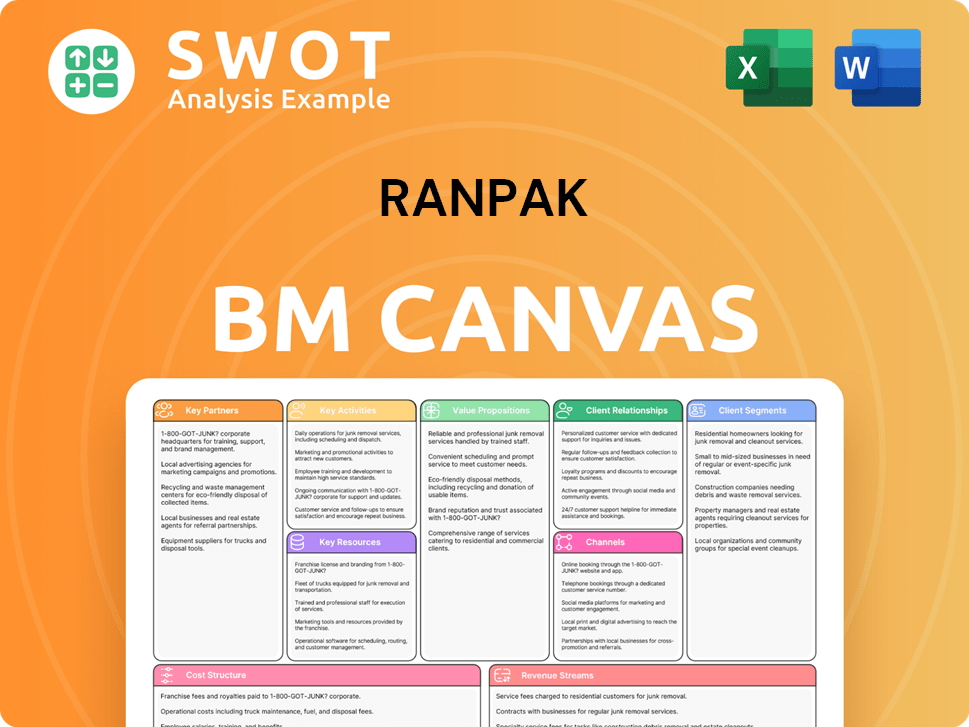
Ranpak Business Model Canvas
- Complete 9-Block Business Model Canvas
- Effortlessly Communicate Your Business Strategy
- Investor-Ready BMC Format
- 100% Editable and Customizable
- Clear and Structured Layout
What Recent Changes Have Shaped Ranpak’s Ownership Landscape?
In the past few years, the ownership of the Ranpak has seen some interesting shifts. A key development in January 2025 was a warrant transaction with Amazon. This deal aims to boost economic alignment and growth with Amazon, a major customer. This is expected to bring significant growth and cash flow for Ranpak in the coming years.
Financially, Ranpak performed well in 2024, with net revenue increasing by 10% to $368.9 million. Adjusted EBITDA grew by 14% to $83.8 million on a constant currency basis. The company anticipates continued growth in 2025, with net revenue expected to increase by 5% to 11% and Adjusted EBITDA by 5% to 16%. This growth is largely driven by increased contributions from strategic accounts in North America, especially the shift from plastic to paper packaging among large enterprise customers.
| Metric | 2024 | 2025 (Forecast) |
|---|---|---|
| Net Revenue | $368.9 million | 5% to 11% growth |
| Adjusted EBITDA | $83.8 million | 5% to 16% growth |
| Institutional Ownership (2025) | Approximately 85.70% |
Ownership trends show that institutional investors continue to hold a significant portion of Ranpak's shares, around 85.70% as of 2025. Insider ownership remains substantial, at about 49.95%, but there has been net selling by insiders in the last 12 months. Hedge fund activity in Q4 2024 showed some investors increasing their holdings, while others decreased their positions. For example, G2 Investment Partners Management LLC increased their holdings by 28.7%, while Goldman Sachs Group Inc. removed 53.9% of their shares. For more insights, you can check out the Competitors Landscape of Ranpak.
 Institutional Ownership
Institutional investors own approximately 85.70% of Ranpak's shares as of 2025, indicating strong confidence from major financial entities.
Insider Activity
There has been net selling by insiders over the last year, suggesting some adjustments in their holdings.
Hedge Fund Adjustments
In Q4 2024, some hedge funds increased their stakes, while others reduced their positions, reflecting varied market sentiment.
Amazon Deal
The warrant transaction with Amazon is expected to drive growth and provide cash flow for Ranpak in the coming years.
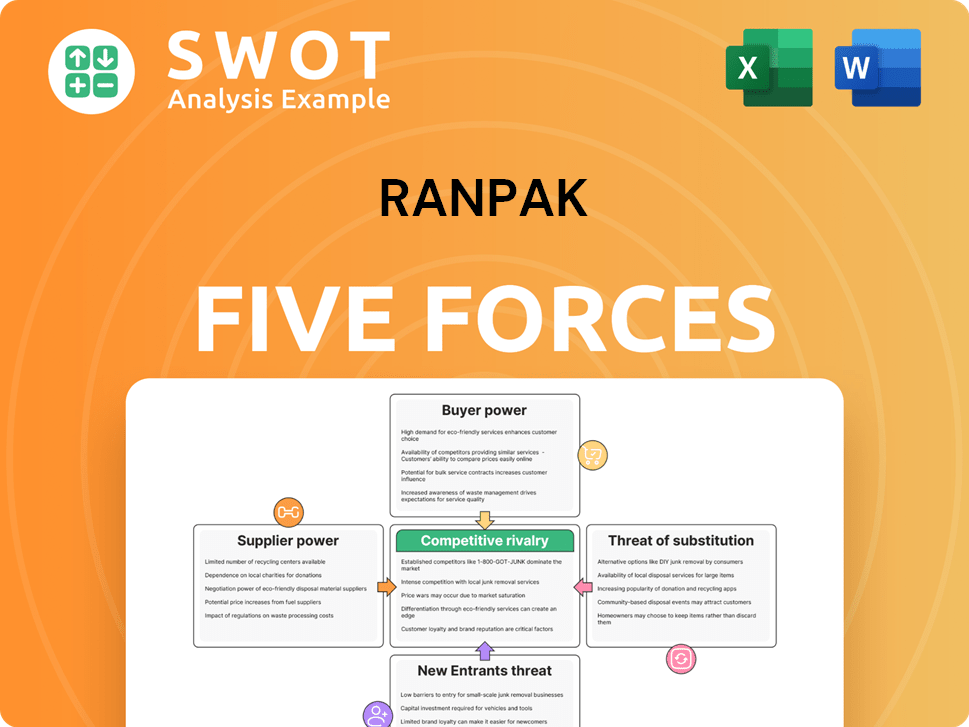
Ranpak Porter's Five Forces Analysis
- Covers All 5 Competitive Forces in Detail
- Structured for Consultants, Students, and Founders
- 100% Editable in Microsoft Word & Excel
- Instant Digital Download – Use Immediately
- Compatible with Mac & PC – Fully Unlocked
Related Blogs

- What are Mission Vision & Core Values of Ranpak Company?
- What is Competitive Landscape of Ranpak Company?
- What is Growth Strategy and Future Prospects of Ranpak Company?
- How Does Ranpak Company Work?
- What is Sales and Marketing Strategy of Ranpak Company?
- What is Brief History of Ranpak Company?
- What is Customer Demographics and Target Market of Ranpak Company?
Disclaimer
All information, articles, and product details provided on this website are for general informational and educational purposes only. We do not claim any ownership over, nor do we intend to infringe upon, any trademarks, copyrights, logos, brand names, or other intellectual property mentioned or depicted on this site. Such intellectual property remains the property of its respective owners, and any references here are made solely for identification or informational purposes, without implying any affiliation, endorsement, or partnership.
We make no representations or warranties, express or implied, regarding the accuracy, completeness, or suitability of any content or products presented. Nothing on this website should be construed as legal, tax, investment, financial, medical, or other professional advice. In addition, no part of this site—including articles or product references—constitutes a solicitation, recommendation, endorsement, advertisement, or offer to buy or sell any securities, franchises, or other financial instruments, particularly in jurisdictions where such activity would be unlawful.
All content is of a general nature and may not address the specific circumstances of any individual or entity. It is not a substitute for professional advice or services. Any actions you take based on the information provided here are strictly at your own risk. You accept full responsibility for any decisions or outcomes arising from your use of this website and agree to release us from any liability in connection with your use of, or reliance upon, the content or products found herein.