

Enova Bundle

Who Really Owns Enova?
Navigating the fast-paced world of fintech requires a deep understanding of the players involved, and that starts with knowing who pulls the strings. Unveiling the Enova SWOT Analysis can offer insights into its strategic direction. Understanding the Enova ownership structure is key to assessing its future.

From its roots as Check Giant to its current status as a publicly traded company, Enova's journey has been marked by significant shifts in its ownership. This evolution, from its initial founders to the current Enova shareholders, has profoundly impacted its strategic decisions and market position. Exploring the Enova company's ownership structure provides critical context for anyone analyzing the Enova stock and its potential for growth, as well as answering questions like "Who is the CEO of Enova?" and "Is Enova a public company?".
Who Founded Enova?
The story of Enova International's ownership begins in 2004 with the founding of 'Check Giant' by two brothers. This venture was quickly rebranded as CashNetUSA within the same year. CashNetUSA achieved profitability in a remarkably short timeframe, just 11 months after its launch, showcasing early success.
In 2006, Cash America acquired CashNetUSA. This acquisition marked a significant shift in the ownership structure, as the founders' direct equity was likely converted or bought out as part of the deal. This transition set the stage for the future of the company.
The independent Enova International, Inc. was formally established on September 7, 2011, as a subsidiary of Cash America International, Inc. The company later became an independent public entity on November 13, 2014, through a spin-off from Cash America. This method of going public, rather than an IPO, meant that the initial Enova ownership was distributed to Cash America's shareholders.

Early Beginnings
The company's roots trace back to 2004 with the founding of 'Check Giant'. The company quickly evolved.
Acquisition by Cash America
Cash America acquired CashNetUSA in 2006, changing the early ownership dynamics. This acquisition was a pivotal moment.
Spin-off and Independence
Enova International became an independent public company in 2014 through a spin-off. This was a significant shift.
Shareholder Distribution
The spin-off resulted in the distribution of Enova shares to Cash America's shareholders. This established the initial public ownership.
Public Company Status
Enova is a publicly traded company. Investors can buy and sell shares of Enova stock.
Ownership Evolution
The company's ownership structure has evolved over time. Understanding the history is important.

Key Takeaways on Enova Ownership
Understanding the history of Enova ownership is crucial for investors and stakeholders. The journey from 'Check Giant' to an independent public company highlights the evolution of the Enova company. The current Enova shareholders benefit from a company that has adapted and grown over time. For more insights, consider exploring the Target Market of Enova.
- The initial founders had their equity impacted by the 2006 acquisition.
- The spin-off in 2014 created the current public Enova ownership structure.
- The company's history shows a transition from private to public ownership.
- Detailed information on the original founders' stakes post-acquisition is not publicly available.
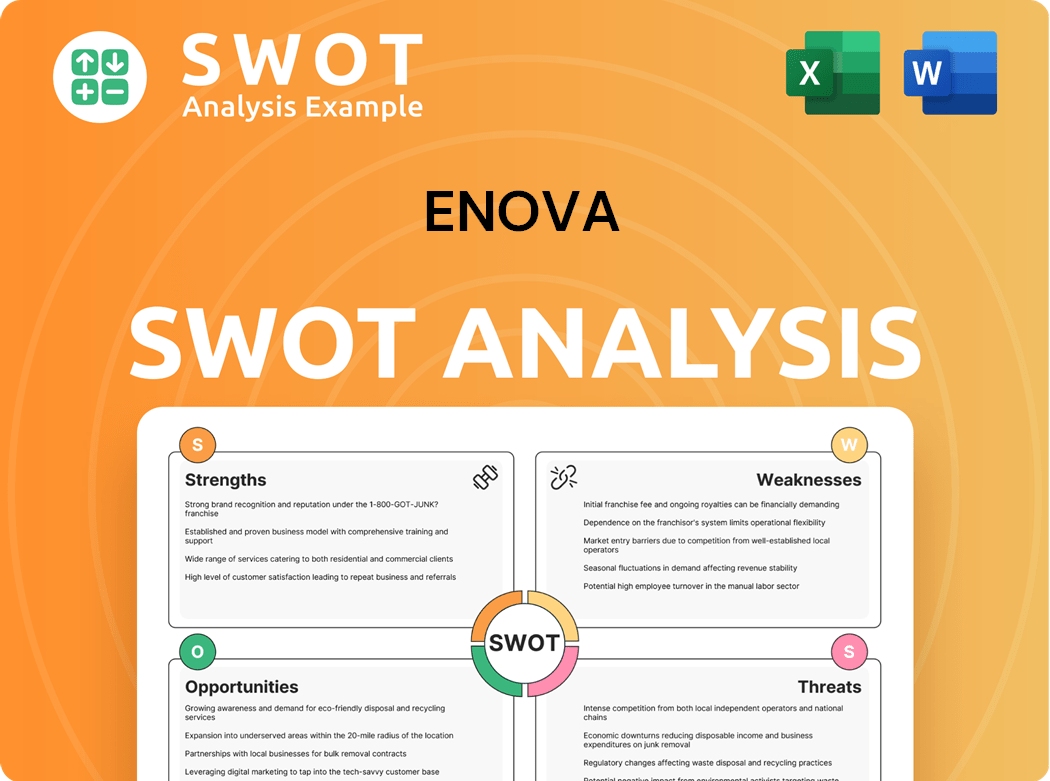
Enova SWOT Analysis
- Complete SWOT Breakdown
- Fully Customizable
- Editable in Excel & Word
- Professional Formatting
- Investor-Ready Format
How Has Enova’s Ownership Changed Over Time?
The evolution of Enova ownership has been marked by key events since its initial public offering (IPO). The company, now publicly traded, began trading on November 13, 2014. As of April 30, 2025, the market capitalization of the company was approximately $2.328 billion, reflecting its value in the market. Understanding the Enova ownership structure is crucial for investors and stakeholders alike, as it provides insights into the company's financial health and strategic direction.
One significant event influencing the ownership landscape was the acquisition of OnDeck Capital Inc. in 2020 for about $90 million. This strategic move expanded the company's presence in the small business lending market. The acquisition would have also influenced the overall ownership landscape as OnDeck shareholders would have received shares or cash, potentially altering the shareholder base. This expansion is a key part of the Brief History of Enova.
| Shareholder | Shares Held (as of) | Ownership Percentage |
|---|---|---|
| Rhumbline Advisers | 72,393 (May 29, 2025) | 0.285% |
| Amundi | 20,468 (May 16, 2025) | Not Specified |
| Vanguard Group Inc. | Schedule 13G/A filed April 30, 2025 | More than 5% |
| BlackRock Inc. | Schedule 13G/A filed April 23, 2025 | More than 5% |
Major institutional investors play a significant role in the Enova ownership structure. As of May 29, 2025, Rhumbline Advisers held 72,393 shares, representing 0.285% ownership. Amundi held 20,468 shares as of May 16, 2025. Other notable institutional shareholders include Vanguard Group Inc. and BlackRock Inc., who filed Schedule 13G/A reports on April 30, 2025, and April 23, 2025, respectively, indicating beneficial ownership of more than 5% of a class of equity securities. These holdings demonstrate a substantial portion of the company's shares are held by large investment firms, which can significantly influence the company's strategic decisions and governance.
Key Takeaways on Enova Ownership
Understanding who owns the company is crucial for investors and stakeholders.
- Institutional investors like Vanguard and BlackRock hold significant stakes.
- The OnDeck acquisition in 2020 changed the shareholder base.
- Shareholder actions can influence the company's strategy and governance.
- The market capitalization was approximately $2.328 billion as of April 30, 2025.
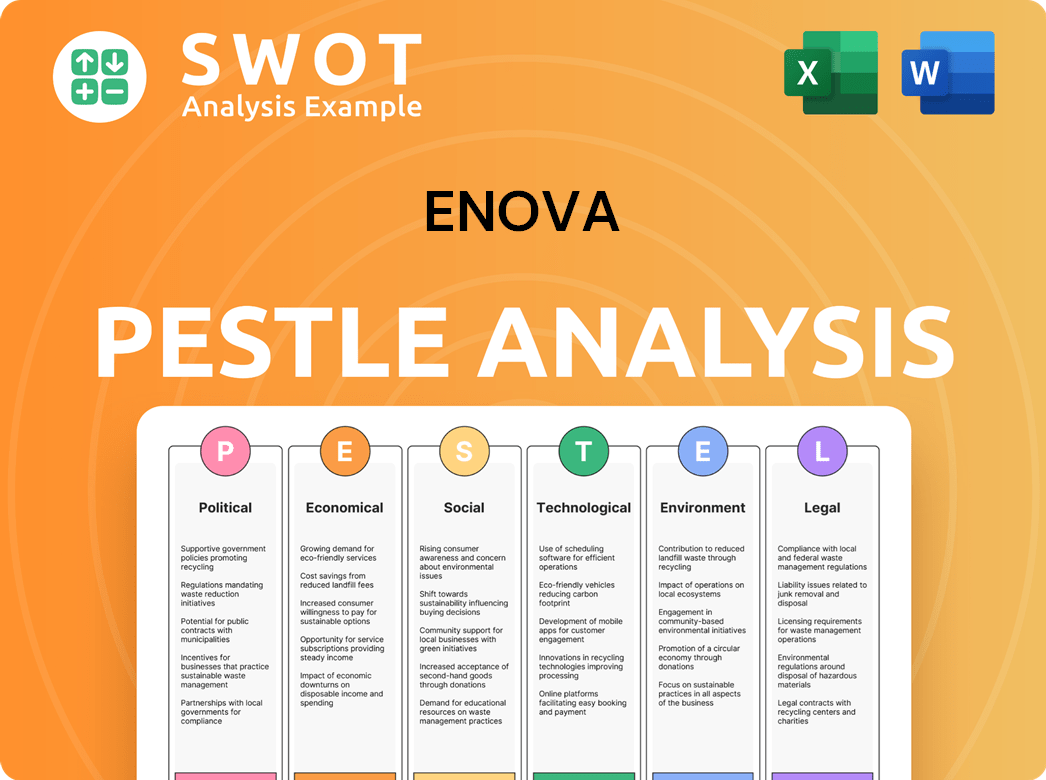
Enova PESTLE Analysis
- Covers All 6 PESTLE Categories
- No Research Needed – Save Hours of Work
- Built by Experts, Trusted by Consultants
- Instant Download, Ready to Use
- 100% Editable, Fully Customizable
Who Sits on Enova’s Board?
The Board of Directors at Enova International is responsible for overseeing the company's operations. As of August 7, 2024, the board included members with diverse experience, including Lindsay Corby, who brought expertise from the financial industry. The board's structure includes committees like the Audit Committee and the Management Development and Compensation Committee, all composed of independent directors. David Fisher serves as Chairman and CEO. Other board members include Ellen Carnahan, Mark Tebbe, Daniel Feehan, William Goodyear, Linda Rice, James Gray, Gregg Kaplan, and Mark McGowan.
The board's composition reflects a wealth of experience, with an average tenure of 10.7 years among the directors. This suggests a stable and knowledgeable leadership team guiding the company. The board's structure is designed to meet legal and NYSE listing requirements, ensuring proper governance and oversight of Enova's activities. Understanding the Growth Strategy of Enova provides additional context to the board's role in the company's development.
| Board Member | Title | Independent Director |
|---|---|---|
| David Fisher | Chairman and CEO | No |
| Lindsay Corby | Director | Yes |
| Ellen Carnahan | Director | Yes |
| Mark Tebbe | Director | Yes |
| Daniel Feehan | Director | Yes |
| William Goodyear | Director | Yes |
| Linda Rice | Director | Yes |
| James Gray | Director | Yes |
| Gregg Kaplan | Director | Yes |
| Mark McGowan | Director | Yes |
Regarding Enova ownership and voting rights, each holder of Common Stock is entitled to one vote per share. This structure means that larger shareholders have greater voting power. SEC filings from institutions like Vanguard Group Inc. and BlackRock Inc. indicate significant beneficial ownership. As of March 21, 2016, there were 33,158,148 shares of Common Stock outstanding, with stockholders holding 100% of the total voting power. Understanding who owns Enova is crucial for grasping the company's governance and strategic direction.
Enova Ownership and Voting Power
Enova's board is composed of experienced individuals, with a mix of financial and industry expertise. The voting structure is straightforward, with one vote per share. Key institutional investors hold significant shares, influencing voting outcomes.
- The board is structured to meet legal and NYSE requirements.
- Independent directors oversee key committees.
- Shareholders control 100% of the voting power.
- Large institutional investors have considerable influence.
Enova Business Model Canvas
- Complete 9-Block Business Model Canvas
- Effortlessly Communicate Your Business Strategy
- Investor-Ready BMC Format
- 100% Editable and Customizable
- Clear and Structured Layout

What Recent Changes Have Shaped Enova’s Ownership Landscape?
Over the past few years, the company has been actively managing its capital and focusing on strategic growth. A significant move was the announcement of a new $300 million share repurchase program on August 12, 2024, which is set to continue until December 31, 2025. This action, replacing a previous program, highlights the company's confidence in its value and its commitment to returning capital to Enova shareholders. During 2024 alone, approximately 4.2 million shares were repurchased, totaling around $274.5 million.
Financially, the company demonstrated strong performance in 2024, with total revenue increasing by 26% to $2.7 billion from $2.1 billion in 2023. Net income also saw a rise, increasing by 20% to $209 million, or $7.43 per diluted share, compared to $175 million, or $5.49 per diluted share, in 2023. The first quarter of 2025 showed continued growth, with revenue reaching $745.54 million, a 22.2% increase, and a 50.6% increase in net income to $72.94 million. The portfolio grew to nearly $4 billion in 2024, reflecting the company's expanding financial footprint.
| Metric | 2023 | 2024 |
|---|---|---|
| Total Revenue (USD) | $2.1 billion | $2.7 billion |
| Net Income (USD) | $175 million | $209 million |
| Diluted EPS | $5.49 | $7.43 |
| Share Repurchases (USD) | - | $274.5 million |
| Portfolio Size (USD) | - | $4 billion |
The company's ownership structure includes significant institutional investors. Firms like Rhumbline Advisers, Amundi, Vanguard Group Inc., and BlackRock Inc. hold substantial stakes in the company. Despite the trend of founder dilution, the CEO, David Fisher, retained a direct ownership of 0.81% of the company's shares, valued at $20.01 million, based on recent analysis. This indicates continued leadership involvement and alignment with the company's performance. The company anticipates at least a 15% growth in originations for the full year 2025, with adjusted EPS growth of at least 25%, indicating strong future prospects.
 Enova Ownership Insights
The company's financial performance shows strong revenue and net income growth, with continued strategic investments in share repurchases. These actions indicate confidence in its future. The company's portfolio expanded, demonstrating solid growth and market presence.
Key Shareholders
Institutional investors like Rhumbline Advisers, Amundi, Vanguard, and BlackRock hold significant positions. This indicates a strong institutional interest in the company. The CEO's continued ownership aligns leadership with shareholder value.
Future Outlook
The company projects at least 15% growth in originations for 2025, with adjusted EPS growth of at least 25%. This indicates a strong positive outlook for the company’s financial performance. The company's management has expressed optimism for its future.
Capital Management
The company's share repurchase program reflects a commitment to returning value to Enova shareholders. The new $300 million program, authorized until December 31, 2025, underscores this commitment. The company's financial strategy includes optimizing its debt structure.
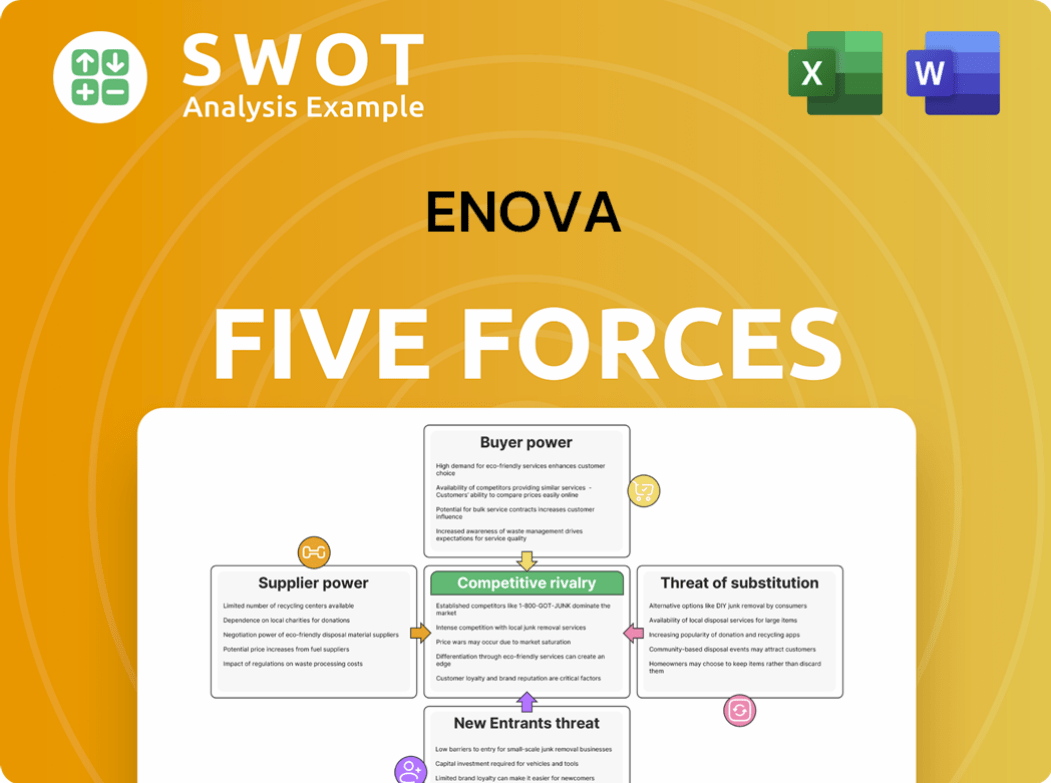
Enova Porter's Five Forces Analysis
- Covers All 5 Competitive Forces in Detail
- Structured for Consultants, Students, and Founders
- 100% Editable in Microsoft Word & Excel
- Instant Digital Download – Use Immediately
- Compatible with Mac & PC – Fully Unlocked
Related Blogs

- What are Mission Vision & Core Values of Enova Company?
- What is Competitive Landscape of Enova Company?
- What is Growth Strategy and Future Prospects of Enova Company?
- How Does Enova Company Work?
- What is Sales and Marketing Strategy of Enova Company?
- What is Brief History of Enova Company?
- What is Customer Demographics and Target Market of Enova Company?
Disclaimer
All information, articles, and product details provided on this website are for general informational and educational purposes only. We do not claim any ownership over, nor do we intend to infringe upon, any trademarks, copyrights, logos, brand names, or other intellectual property mentioned or depicted on this site. Such intellectual property remains the property of its respective owners, and any references here are made solely for identification or informational purposes, without implying any affiliation, endorsement, or partnership.
We make no representations or warranties, express or implied, regarding the accuracy, completeness, or suitability of any content or products presented. Nothing on this website should be construed as legal, tax, investment, financial, medical, or other professional advice. In addition, no part of this site—including articles or product references—constitutes a solicitation, recommendation, endorsement, advertisement, or offer to buy or sell any securities, franchises, or other financial instruments, particularly in jurisdictions where such activity would be unlawful.
All content is of a general nature and may not address the specific circumstances of any individual or entity. It is not a substitute for professional advice or services. Any actions you take based on the information provided here are strictly at your own risk. You accept full responsibility for any decisions or outcomes arising from your use of this website and agree to release us from any liability in connection with your use of, or reliance upon, the content or products found herein.