

DNOW Bundle

Who Really Controls DNOW?
Understanding DNOW ownership is key to grasping its strategic moves and future prospects. This article dives deep into the ownership structure of DistributionNOW, exploring its journey from a spin-off of National Oilwell Varco (NOV) to a publicly traded entity. From its humble beginnings in 1862, DNOW has evolved into a major player in the energy and industrial sectors.

This detailed analysis of DNOW SWOT Analysis will uncover the key players who shape the company's direction, from major institutional investors to individual shareholders. Discover the evolution of DNOW ownership, examining the impact of its public listing and the influence of its board of directors. Learn about the current DNOW ownership landscape and what it means for investors, providing a comprehensive DNOW company profile.
Who Founded DNOW?
Understanding the roots of DNOW ownership requires looking back to its spin-off from National Oilwell Varco (NOV). The modern structure of the company, now known as DNOW Inc., was established in late 2013 and formally separated from NOV in 2014.
Unlike companies founded by individuals, Who owns DNOW initially was determined by the distribution of shares to existing NOV stockholders. This unique origin shaped the early ownership landscape of the company.
The initial distribution of DNOW shares was straightforward. NOV shareholders received one share of NOW common stock for every four shares of NOV common stock they held as of May 22, 2014. This method ensured a broad distribution of ownership from the outset.

Early Ownership Structure
The early ownership of DNOW was not defined by traditional founders or angel investors. Instead, it was a direct distribution to the shareholders of National Oilwell Varco. This approach resulted in a wide dispersal of shares among existing investors.
Spin-off Dynamics
The spin-off structure meant that DNOW began as a publicly-owned company. There were no initial funding rounds or private equity involvement, which is common in many startup scenarios. This structure shaped its early governance and operational independence.
Governance and Control
The spin-off aimed to establish DNOW as an independent entity with its own management and Board of Directors. This structure was designed to allow DNOW to operate separately from NOV, with its own strategic vision and operational focus. The initial distribution of shares reflected this intent.
The DistributionNOW owner base, therefore, originated from the existing shareholders of NOV. The company's history is marked by this unique starting point, which contrasts with the typical founding stories of many other businesses. For more insights into the business model, you can check out Revenue Streams & Business Model of DNOW.
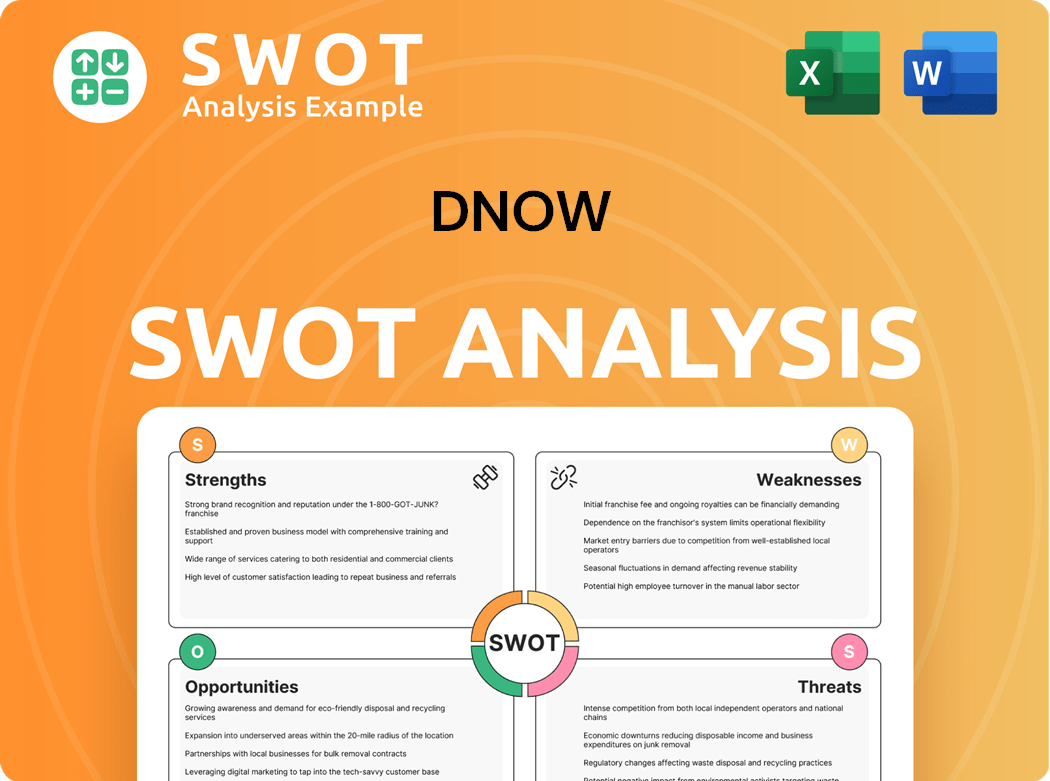
DNOW SWOT Analysis
- Complete SWOT Breakdown
- Fully Customizable
- Editable in Excel & Word
- Professional Formatting
- Investor-Ready Format
How Has DNOW’s Ownership Changed Over Time?
The ownership structure of DistributionNOW (DNOW), a public company, has been shaped by its spin-off from National Oilwell Varco (NOV) in June 2014. Since then, the company's ownership has primarily shifted towards institutional investors. This transition is typical for companies that have matured and are listed on major stock exchanges like the NYSE, where DNOW began trading.
The evolution of DNOW's ownership reflects a move towards a structure dominated by institutional investors, mutual funds, and index funds. This shift indicates that strategic decisions and corporate governance are significantly influenced by these major investment firms. For those interested in more details, a Brief History of DNOW provides additional context on the company's development.
| Shareholder Type | Approximate Ownership (June 1, 2025) | Notes |
|---|---|---|
| Institutional Investors | Approximately 98.33% | Includes BlackRock, Vanguard, and others. |
| Insider Ownership | Approximately 2.28% - 3.30% | Held by company executives and directors. |
| Public and Individual Investors | Approximately 18.70% - 35.33% | Variable due to market fluctuations. |
As of June 9, 2025, DNOW's market capitalization was approximately $1.56 billion, with around 106 million shares outstanding. Key institutional holders as of May-June 2025 include BlackRock Advisors LLC (16.74%), Vanguard Fiduciary Trust Co. (11.12%), and DFA Australia Ltd. (5.909%). These figures highlight the significant influence these large entities have on the company's direction. The company's 2024 annual report and 2025 proxy statements provide detailed insights into these holdings.

Key Takeaways on DNOW Ownership
DNOW's ownership is largely institutional, reflecting its status as a mature public company.
- Institutional investors hold the majority of shares.
- Insider ownership is a smaller percentage.
- Market capitalization provides a snapshot of the company's value.
- Understanding the ownership structure is crucial for investors.
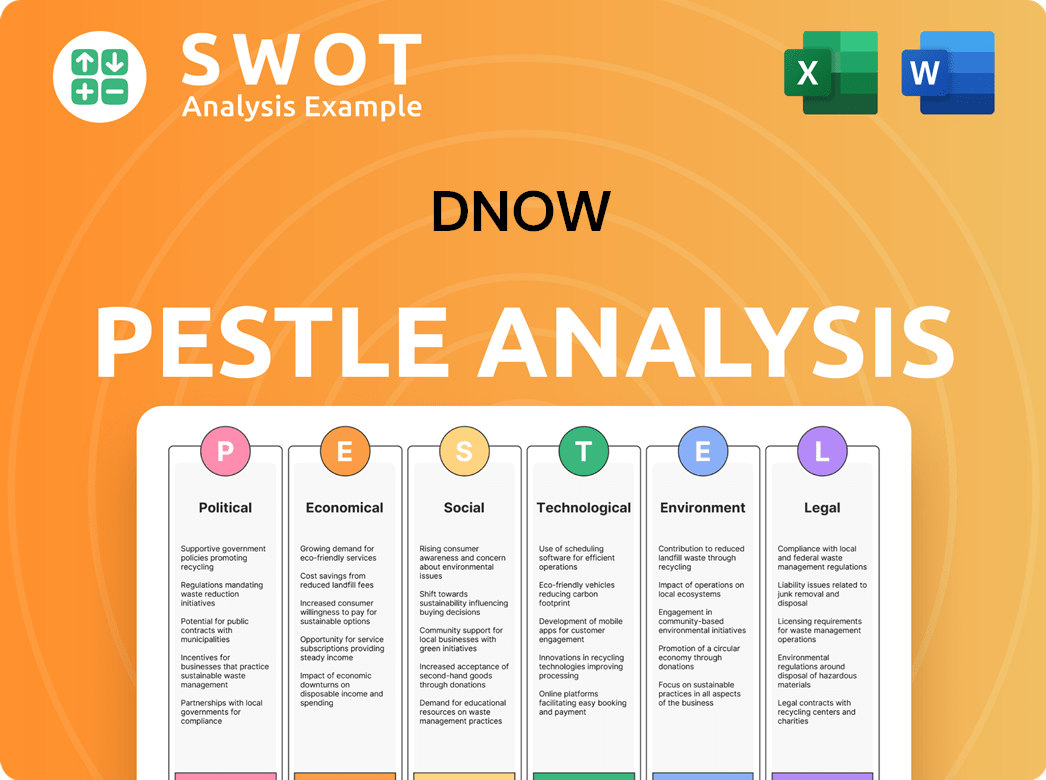
DNOW PESTLE Analysis
- Covers All 6 PESTLE Categories
- No Research Needed – Save Hours of Work
- Built by Experts, Trusted by Consultants
- Instant Download, Ready to Use
- 100% Editable, Fully Customizable
Who Sits on DNOW’s Board?
The Board of Directors at DNOW Inc. oversees the company's strategic direction and governance. As of May-June 2025, the board includes Dick Alario (Chairman), Terry Bonno, David Cherechinsky, Galen Cobb, Paul Coppinger, Karen David-Green, Rodney Eads, and Sonya Reed. David Cherechinsky also holds the positions of President and CEO. The board members have an average tenure of approximately 9.3 years, indicating a wealth of experience in guiding the company.
This experienced board is responsible for making key decisions that impact the DNOW ownership and guide the company's future. They ensure that the company operates efficiently and effectively, while also working to maximize shareholder value. Understanding the composition of the board is crucial for anyone interested in the DNOW company profile and its performance.
| Board Member | Title | Tenure (Approximate) |
|---|---|---|
| Dick Alario | Chairman | Not specified |
| David Cherechinsky | President and CEO | Not specified |
| Terry Bonno | Director | Not specified |
| Galen Cobb | Director | Not specified |
| Paul Coppinger | Director | Not specified |
| Karen David-Green | Director | Not specified |
| Rodney Eads | Director | Not specified |
| Sonya Reed | Director | Not specified |
DNOW operates with a straightforward 'one-share-one-vote' system, where each share of common stock equals one vote. This structure ensures that voting power directly reflects the number of shares held. There are no special voting rights. For the 2025 Annual Meeting, shareholders as of the record date (March 24, 2025) were eligible to vote. As of March 25, 2024, there were 108,894,127 shares of DNOW common stock issued and outstanding, with a quorum for adopting proposals set at 54,447,064 votes. This structure is a key aspect of understanding Who owns DNOW and how decisions are made within the company. For those looking to invest, knowing how to buy DNOW stock and understanding the voting structure is essential.
Key Takeaways on DNOW's Governance
The Board of Directors is composed of experienced members, including the President and CEO.
- Each share of common stock equals one vote.
- The company's bylaws require a majority of votes for director elections in uncontested elections.
- Shareholders of record as of March 24, 2025, were entitled to vote at the 2025 Annual Meeting.
- The company's governance structure aims to ensure orderly corporate processes.
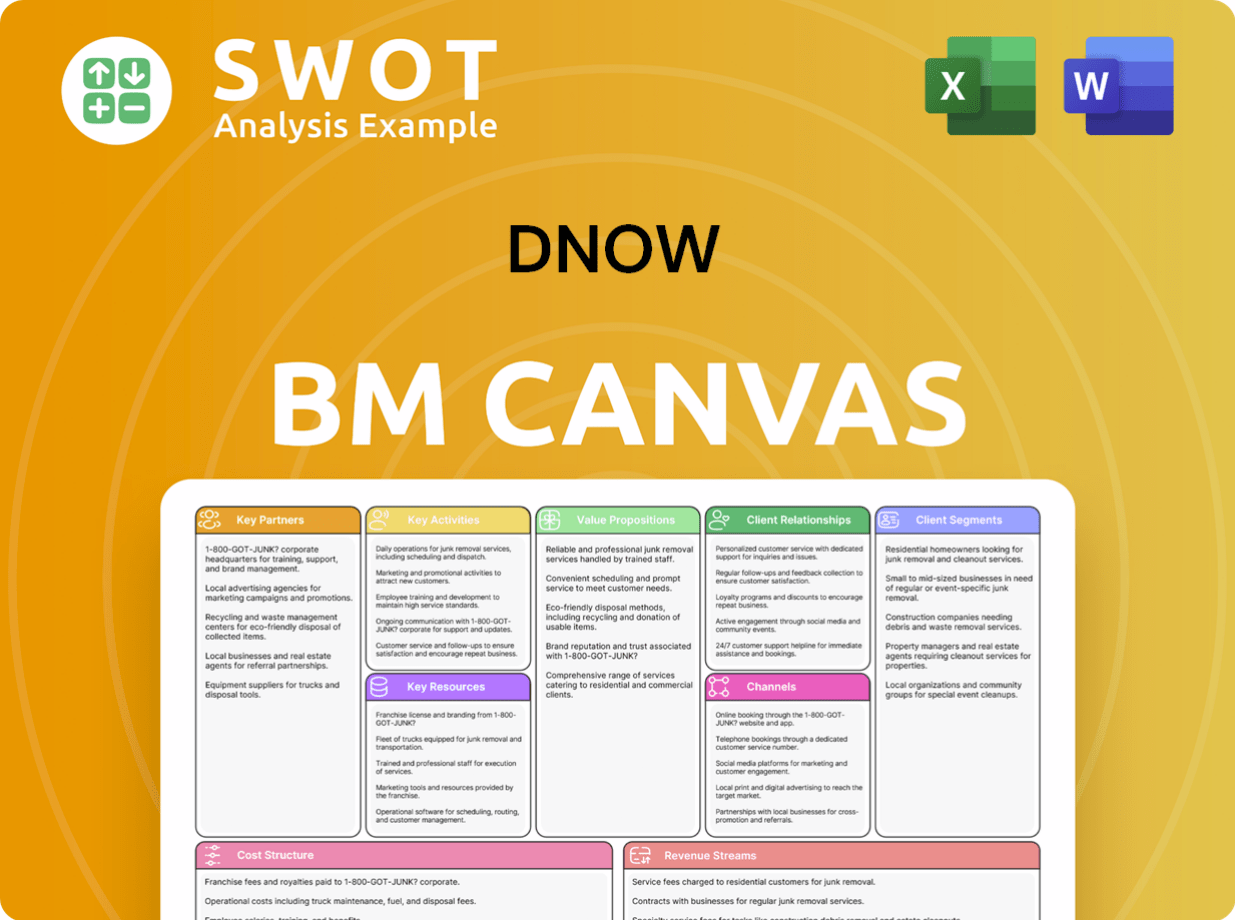
DNOW Business Model Canvas
- Complete 9-Block Business Model Canvas
- Effortlessly Communicate Your Business Strategy
- Investor-Ready BMC Format
- 100% Editable and Customizable
- Clear and Structured Layout
What Recent Changes Have Shaped DNOW’s Ownership Landscape?
Over the past few years, the company has focused on returning value to its shareholders, which has influenced its ownership profile. A key aspect of this is its share repurchase programs. In January 2025, the company announced a new $160 million share repurchase program, after successfully completing an $80 million program by the end of 2024. By May 7, 2025, the company had repurchased $16 million in shares under the new program. These buybacks can increase the ownership percentage of existing shareholders.
The company has also made strategic acquisitions to fuel growth. In April 2025, it acquired Natron International Pte. Ltd, expanding its MacLean International brand in the Asia Pacific region. Additionally, in November 2024, the company announced the acquisition of Trojan Rentals, LLC. These moves align with the company's strategy in both traditional and renewable energy sectors. For those interested in learning more about the business's strategies, consider reading about the Marketing Strategy of DNOW.
| Metric | Details | Year |
|---|---|---|
| Cash and Cash Equivalents | $256 million | December 31, 2024 |
| Total Liquidity | Approximately $556 million | December 31, 2024 |
| Institutional Ownership | Approximately 96-98% | 2025 |
The ownership of the company is heavily influenced by institutional investors, who hold approximately 96-98% of the stock as of 2025. While there's some fluidity, with some investors increasing and others decreasing their holdings, the overall trend indicates strong institutional interest. For example, PACER ADVISORS, INC. reduced its portfolio by 4,923,079 shares in Q1 2025, while AMERIPRISE FINANCIAL INC. added 2,302,738 shares during the same period. The company's strong financial position, with significant cash reserves and no long-term debt, supports its ability to pursue growth and return value to shareholders.
 DNOW Stock
The stock performance and ownership structure of the company reflect its financial health and strategic direction. Understanding the ownership is crucial for investors.
DNOW Ownership Trends
Institutional ownership dominates, with share repurchase programs and acquisitions shaping the ownership landscape. These trends are key to understanding who owns the company.
DNOW Financials
With a strong cash position, the company is well-positioned for growth. The company expects revenue increases and aims for substantial free cash flow in 2025.
Who Owns DNOW
Primarily institutional investors, with active share repurchase programs influencing ownership. This offers insights into the company's stability and future prospects.
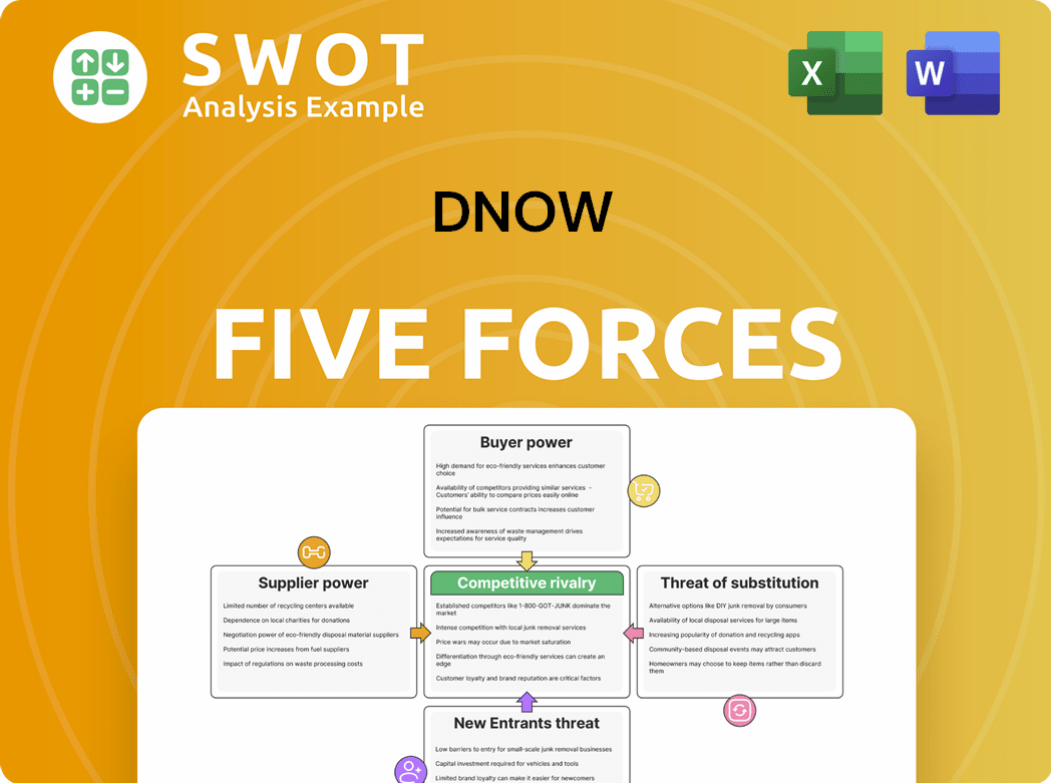
DNOW Porter's Five Forces Analysis
- Covers All 5 Competitive Forces in Detail
- Structured for Consultants, Students, and Founders
- 100% Editable in Microsoft Word & Excel
- Instant Digital Download – Use Immediately
- Compatible with Mac & PC – Fully Unlocked
Related Blogs

- What are Mission Vision & Core Values of DNOW Company?
- What is Competitive Landscape of DNOW Company?
- What is Growth Strategy and Future Prospects of DNOW Company?
- How Does DNOW Company Work?
- What is Sales and Marketing Strategy of DNOW Company?
- What is Brief History of DNOW Company?
- What is Customer Demographics and Target Market of DNOW Company?
Disclaimer
All information, articles, and product details provided on this website are for general informational and educational purposes only. We do not claim any ownership over, nor do we intend to infringe upon, any trademarks, copyrights, logos, brand names, or other intellectual property mentioned or depicted on this site. Such intellectual property remains the property of its respective owners, and any references here are made solely for identification or informational purposes, without implying any affiliation, endorsement, or partnership.
We make no representations or warranties, express or implied, regarding the accuracy, completeness, or suitability of any content or products presented. Nothing on this website should be construed as legal, tax, investment, financial, medical, or other professional advice. In addition, no part of this site—including articles or product references—constitutes a solicitation, recommendation, endorsement, advertisement, or offer to buy or sell any securities, franchises, or other financial instruments, particularly in jurisdictions where such activity would be unlawful.
All content is of a general nature and may not address the specific circumstances of any individual or entity. It is not a substitute for professional advice or services. Any actions you take based on the information provided here are strictly at your own risk. You accept full responsibility for any decisions or outcomes arising from your use of this website and agree to release us from any liability in connection with your use of, or reliance upon, the content or products found herein.