

Wipro Bundle

How has Wipro, a global IT giant, revolutionized its sales and marketing game?
From its humble beginnings as a vegetable oil manufacturer in 1945 to a global IT leader, Wipro's journey is a masterclass in strategic adaptation. This transformation highlights a significant shift in its go-to-market approach, evolving from a commodity-based business to a high-tech service provider. Explore how Wipro's Wipro SWOT Analysis reveals the core of its business strategy.

This deep dive into Wipro's sales and marketing strategy unveils the tactics behind its impressive revenue growth and market position. We will explore its digital transformation initiatives, including its strategic partnership with Google Cloud, and analyze its competitive landscape to understand how Wipro continues to thrive. Furthermore, we'll examine Wipro's marketing campaigns and initiatives, sales process optimization, and how it navigates the sales and marketing challenges in the dynamic IT industry, providing insights into its future market expansion strategies.
How Does Wipro Reach Its Customers?
The sales channels of the company are primarily built upon a direct sales model. This approach emphasizes cultivating strong, long-term relationships with enterprise clients across various sectors, including healthcare, financial services, retail, and manufacturing. This strategy is a key component of the overall Wipro sales strategy, focusing on direct engagement to understand and meet client needs effectively.
Strategic partnerships and collaborations with major technology providers such as Microsoft, Google, and AWS complement the direct sales model. These alliances are crucial for offering integrated solutions and expanding market reach, contributing to Wipro revenue growth. These partnerships have been instrumental in generating joint projects and boosting market share.
The company's sales channels have evolved to incorporate digital and remote service capabilities. Investments in cloud-based solutions and virtual collaboration tools have enabled efficient service delivery, regardless of geographical constraints. This digital transformation is a key element of the Wipro business strategy, especially in emerging markets.
 Direct Sales Model
The core of the sales strategy involves direct engagement with clients. This approach allows for a deeper understanding of client needs and the tailoring of solutions. This direct interaction is vital for building trust and ensuring client satisfaction, which is central to the Wipro customer relationship management strategies.
Strategic Partnerships
Collaborations with technology leaders like Microsoft, Google, and AWS are crucial. These partnerships help in expanding market reach and offering integrated solutions. These alliances are a key part of the Wipro marketing strategy, driving growth and market share.
Digital and Remote Capabilities
The company has embraced digital solutions and remote service capabilities. Cloud-based solutions and virtual collaboration tools are used to serve clients efficiently. This focus on digital adoption is a key aspect of the Wipro digital marketing strategy examples, especially in emerging markets.
Customer-Centric Engagement
A customer-centric engagement model is employed to understand client challenges and tailor solutions. This approach fosters long-lasting relationships. This consultative selling approach is a cornerstone of its 'place strategy,' ensuring tailored solutions that fit specific client requirements.
Wipro actively invests in emerging markets to capture new business opportunities and diversify its client base. This involves a consultative selling approach, ensuring tailored solutions that meet specific client needs. In Q4 FY25, the company's large deal bookings reached $1.763 billion, marking a 48.5% year-on-year increase in constant currency. For the full year FY25, large deal bookings were $5.4 billion, up by 17.5% year-on-year. This growth highlights the effectiveness of the company's sales channels and strategic partnerships. To gain a deeper understanding of the competitive environment, explore the Competitors Landscape of Wipro.

Key Sales Channel Strategies
The company's sales strategy is multifaceted, focusing on direct engagement, strategic partnerships, and digital transformation. These strategies are designed to enhance market reach and customer satisfaction. This approach is a key part of the Wipro sales process optimization.
- Direct Sales: Building and maintaining strong client relationships.
- Strategic Partnerships: Collaborating with tech giants to expand market presence.
- Digital Adoption: Utilizing cloud-based solutions and virtual tools for efficient service delivery.
- Customer-Centric Approach: Tailoring solutions to meet specific client needs.
Wipro SWOT Analysis
- Complete SWOT Breakdown
- Fully Customizable
- Editable in Excel & Word
- Professional Formatting
- Investor-Ready Format

What Marketing Tactics Does Wipro Use?
The company's marketing tactics are multifaceted, with a strong emphasis on digital strategies to boost brand awareness, generate leads, and ultimately drive sales. This comprehensive approach includes a variety of digital marketing techniques, all designed to engage potential customers and establish a strong market presence. The effectiveness of these tactics is evident in the company's ability to meet and exceed its marketing objectives.
The company's digital marketing efforts are extensive, encompassing content marketing, search engine optimization (SEO), paid advertising, email marketing, and active engagement across social media platforms such as LinkedIn, Twitter, Facebook, and Instagram. Through insightful blogs, white papers, case studies, and webinars, the company positions itself as a thought leader, focusing on key industry terms such as 'digital transformation,' 'cloud computing,' and 'cybersecurity.' This content marketing strategy is a crucial component of its lead generation efforts.
The company's data-driven marketing approach leverages data insights to effectively target specific customer segments, ensuring that marketing messages and tactics resonate with diverse audiences. This includes businesses of all sizes, industry-specific professionals, government agencies, technology partners, investors, and job seekers. The company also uses AI assistants to deepen customer understanding, automate sales interactions, and guide prospects through the sales funnel. The company's marketing efforts have achieved impressive results, including 100% on-time, error-free campaign delivery and improved brand adherence to 99.9%. Overall productivity has also seen a significant improvement of 25%.

Content Marketing Focus
The company utilizes content marketing to establish itself as a thought leader. This involves creating insightful blogs, white papers, case studies, and webinars. The focus is on key industry terms like digital transformation, cloud computing, and cybersecurity.
Digital Marketing Channels
The company leverages various digital channels to reach its target audience. These include search engine optimization (SEO), paid advertising, and email marketing. Active engagement on social media platforms is also a key component.
Targeted Customer Segmentation
The company employs a data-driven approach to target specific customer segments. This involves tailoring marketing messages and tactics to various audiences. These include businesses of all sizes, industry-specific professionals, and government agencies.
AI-Driven Sales Interactions
The company uses AI assistants to enhance customer understanding and automate sales interactions. This helps guide prospects through the sales funnel. This improves the overall customer experience.
Recent Initiatives
In 2024, the company launched an advanced cybersecurity platform leveraging AI. The company has also focused on promoting its 'Sustainability as a Service' offering. These initiatives highlight the company's commitment to innovation and sustainability.
Performance Metrics
The company has achieved impressive marketing results. This includes 100% on-time, error-free campaign delivery. The company has also improved brand adherence to 99.9% and seen a 25% increase in overall productivity.
Key Marketing Tactics and Strategies
The company employs a comprehensive approach to marketing, combining digital strategies with data-driven insights to achieve its business objectives. These tactics are crucial for the company's Wipro sales strategy and overall growth.
- Digital Marketing: Utilizing SEO, paid advertising, and content marketing to increase brand visibility.
- Content Marketing: Creating valuable content like blogs and case studies to establish thought leadership and generate leads.
- Social Media Engagement: Active participation on platforms like LinkedIn, Twitter, and Facebook to connect with the target audience.
- Customer Segmentation: Tailoring marketing messages to various customer segments, including businesses, professionals, and government agencies.
- AI Integration: Using AI assistants to enhance customer understanding and streamline sales interactions.
- Product Launches: Promoting new offerings like the advanced cybersecurity platform and 'Sustainability as a Service'.
- Performance Measurement: Tracking metrics such as campaign delivery, brand adherence, and productivity improvements to assess marketing effectiveness.
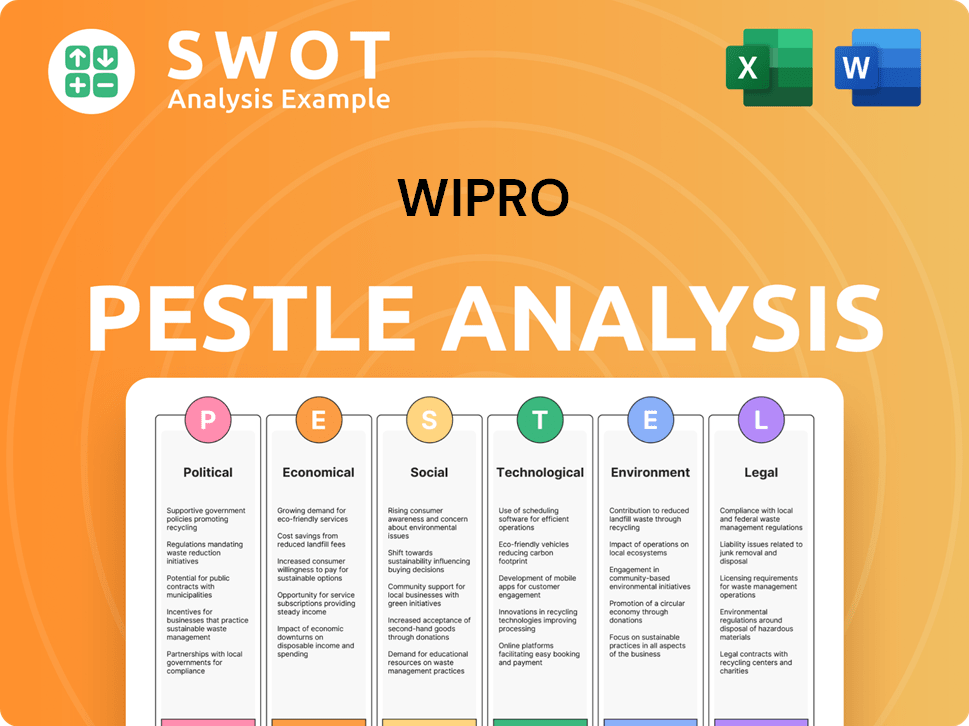
Wipro PESTLE Analysis
- Covers All 6 PESTLE Categories
- No Research Needed – Save Hours of Work
- Built by Experts, Trusted by Consultants
- Instant Download, Ready to Use
- 100% Editable, Fully Customizable
How Is Wipro Positioned in the Market?
The brand positioning of the company is strategically designed to highlight its role as a key driver of digital transformation. The core message focuses on leveraging advanced technologies such as cognitive computing, hyper-automation, and cloud services to help clients adapt and thrive in the digital era. This approach differentiates the company in a competitive market, aligning with the increasing demand for ethically sound and socially responsible digital solutions.
The company's brand identity is built around core values like respect, integrity, and inclusivity, encapsulated in the 'Spirit of Wipro' slogan. These values are crucial for building trust and fostering long-term client relationships. The company consistently ranks among the top IT service providers worldwide, a testament to its strong brand perception and commitment to customer-centricity.
The company appeals to its target audience through a commitment to innovation, quality, and a customer-centric approach. This strategy helps the company maintain a strong position in the market and drive Owners & Shareholders of Wipro value.
Wipro's Digital Transformation Focus
The company emphasizes its ability to help clients navigate and succeed in the digital world. This involves leveraging technologies like AI, cloud computing, and automation to provide innovative solutions. This focus allows the company to stay ahead of the curve and meet evolving client needs.
Value-Based Pricing Strategy
The company employs a value-based pricing strategy, setting prices based on the perceived value delivered to the client. This approach considers factors like project complexity and potential business impact. This strategy ensures clients recognize a strong return on investment.
Consultative Marketing Approach
The company distinguishes itself through a deep understanding of industry-specific challenges and opportunities. Solutions are tailored to nuanced client requirements. This approach helps build strong client relationships and drive customer satisfaction.
Investment in R&D
The company consistently invests in research and development, particularly in AI, cloud computing, and automation services. This reinforces its positioning as a forward-thinking and reliable partner. This investment helps the company stay competitive and meet future market demands.
Wipro Business Model Canvas
- Complete 9-Block Business Model Canvas
- Effortlessly Communicate Your Business Strategy
- Investor-Ready BMC Format
- 100% Editable and Customizable
- Clear and Structured Layout

What Are Wipro’s Most Notable Campaigns?
The company's sales and marketing strategy involves a series of key campaigns designed to boost its market presence and drive revenue. These initiatives are carefully crafted to highlight its core competencies and meet the evolving needs of its global clientele. Through strategic partnerships, innovative service offerings, and targeted marketing efforts, the company aims to solidify its position in the competitive IT services market.
The company's approach focuses on digital transformation, cybersecurity, and sustainability. These campaigns are supported by significant investments in technology and talent. The company's recent campaigns and strategic deals show its dedication to securing key contracts. The company's sales strategy is consistently adapting to the market dynamics.
The company's marketing strategy includes collaborations and influencer marketing. These efforts are aimed at expanding its reach and engaging with different audiences. The company's sales and marketing approach in 2024 has been particularly focused on these areas, driving growth and strengthening its brand.
Strategic Partnership with Google Cloud
In 2024, the company announced a strategic partnership with Google Cloud to accelerate digital transformation. This collaboration offers integrated solutions, positioning the company at the forefront of cloud-led transformations. This initiative is a core element of the company's strategy to provide comprehensive services.
Advanced Cybersecurity Platform Launch
The company launched an advanced cybersecurity platform in 2024, leveraging AI to enhance threat detection and response. This platform addresses critical client needs in an evolving threat landscape. The company has invested heavily in cybersecurity solutions.
Sustainability as a Service Offering
The company has promoted its 'Sustainability as a Service' offering, emphasizing its commitment to environmental stewardship. This aligns with growing consumer and corporate demand for sustainable practices. This is part of a broader focus on ESG (Environmental, Social, and Governance) initiatives.
Influencer Marketing with Linus Sebastian
In 2024, the company partnered with tech influencer Linus Sebastian to endorse its new range of consumer technology solutions. This demonstrates a move towards influencer marketing to increase visibility. This campaign helped the company reach a wider audience.
Key Deals and Financial Performance
In Q4 FY25, the company secured a major contract with FrieslandCampina. The company also won two mega deals in FY25, with large deal bookings increasing by 17.5% year-on-year for the full fiscal year. These achievements highlight the company's focus on securing significant contracts and expanding its market presence.
- The Google Cloud partnership is expected to generate significant revenue growth.
- The cybersecurity platform aims to capture a larger share of the cybersecurity market.
- The 'Sustainability as a Service' offering targets the growing demand for sustainable solutions.
- Influencer marketing is designed to enhance brand visibility and customer engagement.
To learn more about the company's overall approach, consider reading this article about the Growth Strategy of Wipro.
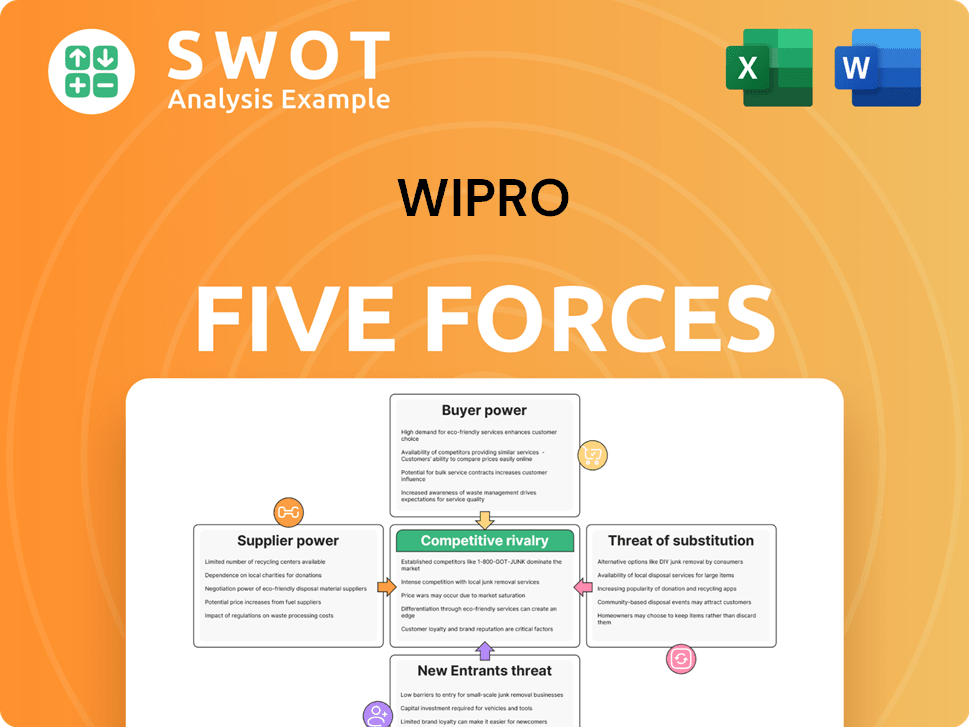
Wipro Porter's Five Forces Analysis
- Covers All 5 Competitive Forces in Detail
- Structured for Consultants, Students, and Founders
- 100% Editable in Microsoft Word & Excel
- Instant Digital Download – Use Immediately
- Compatible with Mac & PC – Fully Unlocked
Related Blogs

- What are Mission Vision & Core Values of Wipro Company?
- What is Competitive Landscape of Wipro Company?
- What is Growth Strategy and Future Prospects of Wipro Company?
- How Does Wipro Company Work?
- What is Brief History of Wipro Company?
- Who Owns Wipro Company?
- What is Customer Demographics and Target Market of Wipro Company?
Disclaimer
All information, articles, and product details provided on this website are for general informational and educational purposes only. We do not claim any ownership over, nor do we intend to infringe upon, any trademarks, copyrights, logos, brand names, or other intellectual property mentioned or depicted on this site. Such intellectual property remains the property of its respective owners, and any references here are made solely for identification or informational purposes, without implying any affiliation, endorsement, or partnership.
We make no representations or warranties, express or implied, regarding the accuracy, completeness, or suitability of any content or products presented. Nothing on this website should be construed as legal, tax, investment, financial, medical, or other professional advice. In addition, no part of this site—including articles or product references—constitutes a solicitation, recommendation, endorsement, advertisement, or offer to buy or sell any securities, franchises, or other financial instruments, particularly in jurisdictions where such activity would be unlawful.
All content is of a general nature and may not address the specific circumstances of any individual or entity. It is not a substitute for professional advice or services. Any actions you take based on the information provided here are strictly at your own risk. You accept full responsibility for any decisions or outcomes arising from your use of this website and agree to release us from any liability in connection with your use of, or reliance upon, the content or products found herein.