

Willis Towers Watson Bundle

How Does Willis Towers Watson Dominate the Global Advisory Landscape?
In the intricate world of global advisory services, understanding the Willis Towers Watson SWOT Analysis reveals the core of their success. This deep dive explores how this industry titan strategically navigates complex B2B sales cycles and client needs. Discover the secrets behind their integrated solutions approach and how they're shaping the future of risk, benefits, talent, and capital management.

This exploration delves into the heart of the WTW business strategy, examining their sales process overview and marketing strategy, from digital marketing initiatives to customer retention. We'll analyze how Willis Towers Watson targets its audience, manages client relationships, and allocates its marketing budget to maintain its competitive edge in the insurance industry marketing. Uncover the challenges and triumphs of their approach to risk management sales and employee benefits strategy.
How Does Willis Towers Watson Reach Its Customers?
The sales strategy of Willis Towers Watson (WTW) centers around a direct sales force, which is crucial for its complex advisory, broking, and solutions offerings. This approach emphasizes deep client relationships and tailored solutions. The company's global network of consultants and brokers forms the backbone of this channel, facilitating face-to-face interactions and strategic account management.
Complementing its direct sales efforts, WTW leverages its website and digital platforms as significant sales and lead generation channels. These platforms support the sales cycle through lead qualification, content delivery, and client portal access. The company has invested in enhancing its digital client experience and virtual engagement capabilities. The company's approach to customer retention is also a key aspect of its sales strategy.
Furthermore, WTW engages in strategic partnerships and collaborations, which act as indirect sales channels. These partnerships, often with technology providers and industry associations, extend their reach and offer integrated solutions to clients. For instance, collaborations in the InsurTech space or with HR technology platforms allow them to embed their expertise within broader ecosystems. To understand more about the company, you can read a Brief History of Willis Towers Watson.
 Direct Sales Force
The primary sales channel for WTW is its direct sales force. This includes a global network of consultants and brokers. This channel is essential for complex advisory services and building strong client relationships.
Digital Platforms
WTW utilizes its website and digital platforms for lead generation and sales support. These platforms offer content delivery, client portals, and virtual engagement capabilities. The focus is on enhancing the digital client experience.
Strategic Partnerships
Strategic partnerships and collaborations serve as indirect sales channels. These partnerships extend WTW's reach and offer integrated solutions. Collaborations with technology providers and industry associations are common.
Omnichannel Integration
WTW's sales strategy emphasizes omnichannel integration. This approach supports the direct sales force with digital tools and thought leadership. The goal is to provide a seamless client experience.

Key Strategies for Sales and Marketing
WTW's sales and marketing strategy focuses on building strong client relationships and providing tailored solutions. They use a direct sales force, digital platforms, and strategic partnerships. The company continually invests in digital client experiences and virtual engagement to meet evolving client needs.
- Direct Sales: Emphasizes face-to-face interactions and strategic account management.
- Digital Platforms: Used for lead generation, content delivery, and client portal access.
- Strategic Partnerships: Extend reach through collaborations with technology providers and industry associations.
- Omnichannel Approach: Integrating direct sales with digital tools and thought leadership.
Willis Towers Watson SWOT Analysis
- Complete SWOT Breakdown
- Fully Customizable
- Editable in Excel & Word
- Professional Formatting
- Investor-Ready Format

What Marketing Tactics Does Willis Towers Watson Use?
The company employs a multifaceted approach to its marketing efforts, primarily focusing on digital strategies to reach its business-to-business (B2B) clientele. This comprehensive Willis Towers Watson marketing strategy is designed to build brand awareness, generate leads, and drive sales across its diverse service offerings.
Content marketing is a core component of their strategy, with the company producing a wealth of thought leadership materials. These resources position the company as an expert in its fields, serving as a key lead generation tool. Digital advertising, email marketing, and social media engagement further support these efforts.
Data-driven marketing and personalization are also central to the company's approach, with a focus on customer segmentation and tailored communications. The company uses technology platforms and analytics tools to track engagement, score leads, and measure campaign performance, with recent innovations including AI-driven insights to refine targeting and predict client needs.

Content Marketing Dominance
The company heavily invests in content marketing, creating resources like white papers, research reports, webinars, and articles. This content is distributed through its website and various channels. This positions them as thought leaders and supports their Willis Towers Watson sales strategy.
SEO and Digital Advertising
Search engine optimization (SEO) is crucial for content discoverability, ensuring that valuable resources are found by the target audience. Digital advertising, including paid search and display campaigns, targets specific client segments.
Email Marketing and Lead Nurturing
Email marketing is used to nurture leads and maintain client relationships through personalized content and updates. This approach helps in building and sustaining client engagement. It's a key element in their WTW business strategy.
Internal 'Influencers' and Social Media
The company leverages its senior leaders and subject matter experts as internal 'influencers' through speaking engagements and networking. LinkedIn is actively used for corporate branding, sharing thought leadership, and engaging with industry professionals.
Data-Driven Marketing and Personalization
The company focuses on customer segmentation based on industry, company size, and specific needs. Personalization is applied to content delivery and client communications. This approach aims to provide relevant information.
Technology and Analytics
Technology platforms and analytics tools are integral to tracking engagement, lead scoring, and measuring campaign performance. Recent innovations include leveraging AI-driven insights to refine targeting and predict client needs.
Key Elements of the Marketing Tactics
The marketing tactics used by the company are designed to effectively reach and engage its target audience. The focus is on providing valuable content and personalized experiences. This strategy is essential for success in the insurance industry marketing.
- Content Marketing: This includes white papers, research reports, webinars, and articles to establish thought leadership.
- Digital Advertising: Paid search and display campaigns are used to target specific client segments.
- Email Marketing: Personalized content and updates are delivered to segmented audiences.
- Social Media: LinkedIn is used for corporate branding, thought leadership, and industry engagement.
- Data-Driven Marketing: Customer segmentation, personalization, and analytics tools are used to optimize campaigns.
- AI Integration: Leveraging AI for refining targeting and predicting client needs.
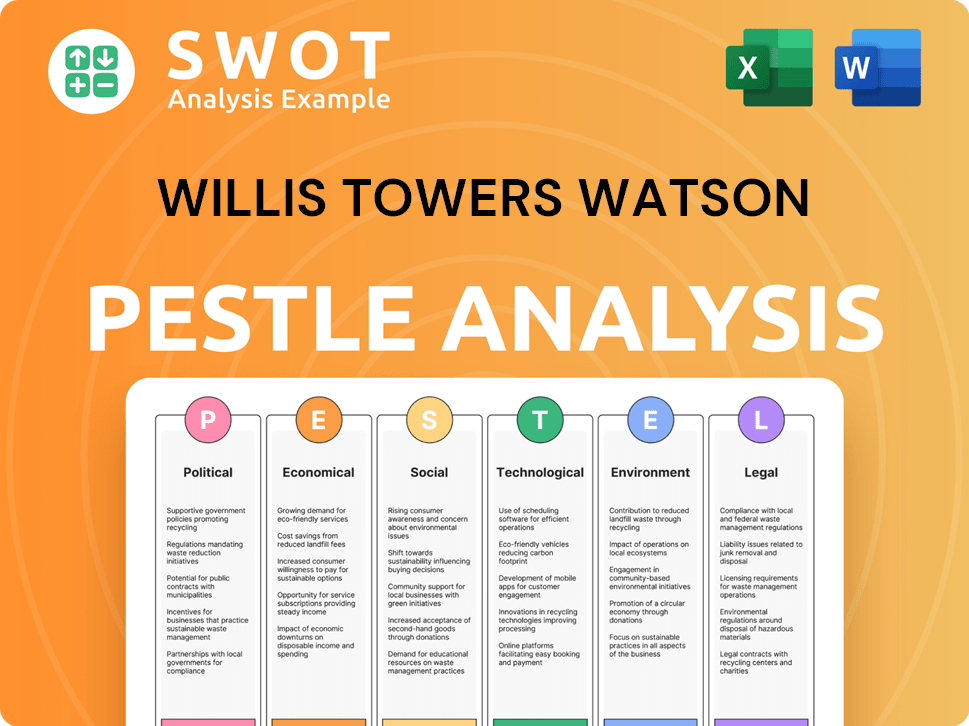
Willis Towers Watson PESTLE Analysis
- Covers All 6 PESTLE Categories
- No Research Needed – Save Hours of Work
- Built by Experts, Trusted by Consultants
- Instant Download, Ready to Use
- 100% Editable, Fully Customizable
How Is Willis Towers Watson Positioned in the Market?
Willis Towers Watson (WTW) positions itself as a premier global advisory firm, emphasizing expertise, integrity, and innovation. Their brand identity is built on being a trusted advisor, offering integrated solutions across risk, people, and capital. This approach differentiates them from competitors by providing holistic services rather than fragmented offerings.
The core message of WTW revolves around helping clients 'protect and strengthen institutions and individuals.' This is achieved by managing risk, optimizing benefits, cultivating talent, and expanding the power of capital. Their visual identity uses a professional and authoritative design, conveying stability and global reach. The company consistently receives industry recognition, reinforcing its brand's strength.
WTW's target audience includes C-suite executives and professionals in HR, finance, and risk management. They aim to deliver tailored solutions and measurable impact, fostering deep partnerships with clients. Brand consistency is maintained across all channels, ensuring a cohesive experience. WTW actively adapts its strategies to stay relevant, as seen in their focus on ESG advisory services and digital transformation.
Expertise and Trust
WTW's brand is built on being a trusted advisor, emphasizing expertise. This focus helps them build strong relationships with clients. Their reputation for integrity and innovation further solidifies their market position.
Integrated Solutions
WTW differentiates itself through an integrated approach. They offer holistic solutions across risk, people, and capital. This approach helps them stand out in the competitive landscape.
Client-Centric Approach
WTW's tone of voice is informed, insightful, and client-centric. They aim to provide tailored solutions. This approach helps them build strong, long-term client relationships.
Adaptability and Innovation
WTW actively monitors market trends and adapts accordingly. Their focus on ESG and digital transformation shows their responsiveness. This adaptability is crucial for long-term success.
The company's approach to brand positioning is crucial for its success in the insurance industry marketing and risk management sales. Their commitment to client success and their ability to deliver complex solutions are key. For a deeper understanding of their growth strategy, consider reading this article: Growth Strategy of Willis Towers Watson. WTW's focus on employee benefits strategy and its consistent recognition in industry awards further enhance its brand value. In 2024, the global insurance market was valued at approximately $6.7 trillion, highlighting the vast scope of the industry in which WTW operates. Their ability to navigate the challenges in sales and marketing is essential for maintaining their market share and achieving their goals.
Willis Towers Watson Business Model Canvas
- Complete 9-Block Business Model Canvas
- Effortlessly Communicate Your Business Strategy
- Investor-Ready BMC Format
- 100% Editable and Customizable
- Clear and Structured Layout

What Are Willis Towers Watson’s Most Notable Campaigns?
The sales and marketing strategy of Willis Towers Watson (WTW) focuses on thought leadership and targeted solution launches, primarily engaging in B2B marketing. Their approach emphasizes establishing expertise and driving lead generation within the insurance industry and related sectors. This strategy is designed to position WTW as a leading authority in areas like employee benefits, risk management, and climate resilience, aiming to generate new client engagements and reinforce their market position. A key aspect of their strategy involves leveraging digital channels, industry conferences, and expert-led webinars to reach their target audience.
WTW's marketing efforts are not centered around large-scale public campaigns. Instead, they focus on providing in-depth insights and solutions through various channels. This approach is particularly evident in their annual Global Benefits Attitudes Survey, which serves as a cornerstone of their employee benefits and workforce trends consulting services. The goal is to establish WTW as a leading authority, generating leads for their consulting services. This includes publishing detailed reports, hosting webinars, and engaging in speaking engagements by their experts. The success of these initiatives is measured by report downloads, webinar attendance, and new client engagements.
The company's approach to WTW's sales strategy and marketing involves a blend of research, content creation, and targeted outreach. They actively promote their proprietary software and analytics solutions through online demonstrations, case studies, and specialized content. The objective is to drive adoption of these tools among existing and new clients, providing tangible value beyond traditional consulting. Their success is measured by software licenses, user engagement, and the integration of these tools into client solutions.
Global Benefits Attitudes Survey
This annual survey is a key component of WTW's marketing strategy. It establishes WTW as a leader in employee benefits and workforce trends. The campaign uses reports, webinars, and expert engagements on platforms like LinkedIn to generate leads, with success measured by report downloads and new client engagements.
Climate and Resilience Solutions
WTW focuses on climate and resilience solutions, reflecting the growing market demand for ESG-related advisory services. This initiative positions WTW as a partner for organizations navigating climate risks. The campaign utilizes dedicated microsites, webinars, and participation in global climate summits. The firm has increased investment in this area, reflecting a strong response from clients.
Proprietary Software and Analytics
WTW promotes its software and analytics solutions through targeted digital campaigns. The aim is to drive adoption among existing and new clients. These campaigns include online demonstrations and case studies to provide value beyond traditional consulting. Success is measured by software licenses and user engagement.
Industry Conferences and Events
WTW's presence at industry conferences and events is a key part of their marketing strategy. These events are used to showcase expertise, network with potential clients, and strengthen relationships within the insurance and risk management sectors. Participation includes speaking engagements and booth displays.
Key Metrics and Success Indicators
WTW measures the success of its campaigns through various metrics. These include report downloads, webinar attendance, media mentions, and new client engagements. For software and analytics, success is measured by software licenses, user engagement, and integration into client solutions. These metrics help WTW assess the effectiveness of its marketing efforts and refine its approach.
- Report Downloads: Key for thought leadership campaigns.
- Webinar Attendance: Indicates engagement with educational content.
- New Client Engagements: The ultimate measure of lead generation.
- Software Licenses: Measure of adoption of technology solutions.
Willis Towers Watson Porter's Five Forces Analysis
- Covers All 5 Competitive Forces in Detail
- Structured for Consultants, Students, and Founders
- 100% Editable in Microsoft Word & Excel
- Instant Digital Download – Use Immediately
- Compatible with Mac & PC – Fully Unlocked

Related Blogs

- What are Mission Vision & Core Values of Willis Towers Watson Company?
- What is Competitive Landscape of Willis Towers Watson Company?
- What is Growth Strategy and Future Prospects of Willis Towers Watson Company?
- How Does Willis Towers Watson Company Work?
- What is Brief History of Willis Towers Watson Company?
- Who Owns Willis Towers Watson Company?
- What is Customer Demographics and Target Market of Willis Towers Watson Company?
Disclaimer
All information, articles, and product details provided on this website are for general informational and educational purposes only. We do not claim any ownership over, nor do we intend to infringe upon, any trademarks, copyrights, logos, brand names, or other intellectual property mentioned or depicted on this site. Such intellectual property remains the property of its respective owners, and any references here are made solely for identification or informational purposes, without implying any affiliation, endorsement, or partnership.
We make no representations or warranties, express or implied, regarding the accuracy, completeness, or suitability of any content or products presented. Nothing on this website should be construed as legal, tax, investment, financial, medical, or other professional advice. In addition, no part of this site—including articles or product references—constitutes a solicitation, recommendation, endorsement, advertisement, or offer to buy or sell any securities, franchises, or other financial instruments, particularly in jurisdictions where such activity would be unlawful.
All content is of a general nature and may not address the specific circumstances of any individual or entity. It is not a substitute for professional advice or services. Any actions you take based on the information provided here are strictly at your own risk. You accept full responsibility for any decisions or outcomes arising from your use of this website and agree to release us from any liability in connection with your use of, or reliance upon, the content or products found herein.