

Mister Spex Bundle

How has Mister Spex revolutionized the eyewear market?
Mister Spex, a pioneer in the online eyewear retail sector, has masterfully navigated the evolving landscape of the optical industry. From its inception in 2007, the company disrupted the traditional brick-and-mortar model, offering a vast selection and transparent pricing online. This article will dissect Mister Spex's innovative approach to sales and marketing, revealing the secrets behind its success.

This deep dive into Mister Spex's Mister Spex SWOT Analysis will explore its omnichannel strategy, examining how it leverages both online and physical stores to reach its target audience. We'll uncover the intricacies of its Mister Spex sales strategy and Mister Spex marketing strategy, including its digital marketing tactics and customer acquisition strategy, while also analyzing its Mister Spex business model and competitive advantages within the eyewear market analysis. Understanding Mister Spex's journey provides valuable insights for anyone interested in the strategies of a leading online eyewear retailer.
How Does Mister Spex Reach Its Customers?
The sales strategy of Mister Spex centers on an omnichannel approach, blending online and offline channels to reach customers. This strategy includes e-commerce platforms, physical retail locations, and partnerships with opticians. As an online eyewear retailer, Mister Spex has evolved its sales channels to meet customer needs and market demands.
Mister Spex's business model leverages a combination of direct online sales, owned retail stores, and collaborations with partner opticians. This integrated approach has been instrumental in its growth and market share, especially in Germany. The company's strategic focus in 2025 includes optimizing the profitability of its brick-and-mortar stores in Germany.
The company's digital presence is a core component, with online shops in ten European countries as of 2024. This is complemented by physical stores and a network of partner opticians, offering services such as eye tests and adjustments. This strategy allows Mister Spex to provide a comprehensive customer experience, enhancing its market position.
 E-commerce Platforms
The online shops are a primary sales channel, offering a wide selection of eyewear. Mister Spex launched its first online shop in Germany in April 2008. The online platforms are crucial for customer acquisition and sales.
Physical Retail Locations
Mister Spex operates physical retail stores to provide services like eye tests and adjustments. By the end of 2024, Mister Spex had exited its international store network to focus on its core German market. In Q1 2025, like-for-like (LFL) sales growth in the German store network was 13%.
Partner Optician Network
Mister Spex collaborates with partner opticians to offer in-person services. This network enhances the omnichannel offering, allowing customers to access eye examinations and frame adjustments. This strategy expands the company's reach and customer service capabilities.
Omnichannel Integration
Mister Spex integrates its online and offline channels to provide a seamless customer experience. This strategy includes online sales, physical stores, and partner opticians. The company's approach is designed to maximize customer reach and satisfaction.

Key Metrics and Performance
The 'SpexFocus' program led to a 13% revenue decline in the International segment in 2024. However, the German store network showed resilience. The average order value (AOV) for prescription glasses in German stores exceeded €200 in Q1 2025.
- In 2024, total offline sales in Germany increased by 5%.
- Store-based sales for prescription glasses grew by 7% in 2024.
- Sunglasses sales in stores increased by 5% in 2024.
- LFL sales growth in the German store network was 2% in 2024.
Mister Spex's customer acquisition strategy and digital marketing tactics are crucial for driving sales. For more details on the target market, you can read more about the Target Market of Mister Spex. The company's advertising channels and brand positioning strategy are key elements of its marketing efforts. The company's strategic focus in 2025 includes optimizing the profitability of its brick-and-mortar stores in Germany, which is a key part of its overall sales and marketing strategy.
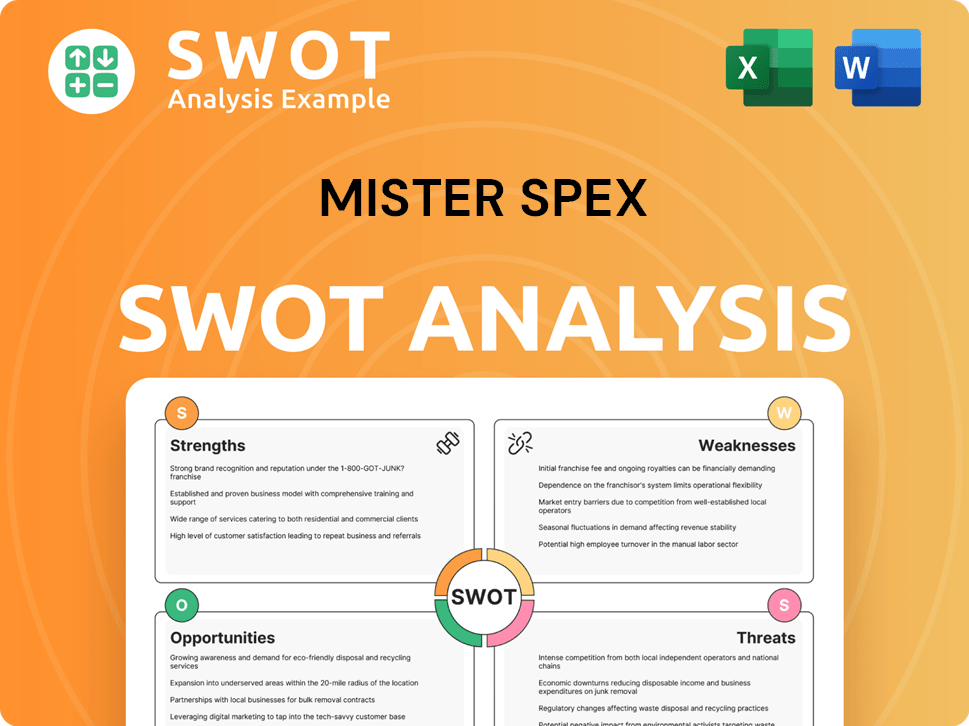
Mister Spex SWOT Analysis
- Complete SWOT Breakdown
- Fully Customizable
- Editable in Excel & Word
- Professional Formatting
- Investor-Ready Format
What Marketing Tactics Does Mister Spex Use?
The Mister Spex marketing strategy is a blend of digital and traditional methods designed to boost brand awareness and drive sales. As a leading online eyewear retailer, the company employs various tactics to reach its target audience. This approach includes content marketing, SEO, paid advertising, email marketing, and social media, all crucial components of their digital strategy.
Traditional marketing channels also play a role, with TV commercials being a key element. The company's campaigns often highlight the convenience and benefits of buying eyewear online. Furthermore, the company is increasingly data-driven, focusing on customer segmentation and personalization to refine its marketing efforts. The Mister Spex business model leverages these diverse strategies to maintain its market position.
The company's marketing tactics are designed to engage customers across multiple touchpoints, from digital platforms to physical stores. The "Optician of Your Life" campaign, launched in August 2024, demonstrates the company's commitment to reaching a broad audience through diverse channels. This integrated approach supports the company's overall Mister Spex sales strategy.

Digital Marketing Focus
Mister Spex heavily utilizes digital marketing, including content marketing and SEO, to improve its online visibility. This approach helps in customer acquisition and retention. The company also uses paid advertising to drive traffic and sales.
Innovative Digital Tools
A key innovation is the 3D virtual fitting tool, introduced in summer 2011, which allows customers to try on glasses virtually. This feature enhances the online shopping experience. This tool helps to differentiate the company from its Competitors Landscape of Mister Spex.
Traditional Media Campaigns
TV commercials are a staple, educating consumers about the benefits of buying eyewear online. The "Optician of Your Life" campaign, launched in August 2024, included TV spots and Video on Demand to reach a wider audience. These campaigns often highlight store locations.
Data-Driven Marketing
Mister Spex is increasingly data-driven, focusing on customer segmentation and personalization. The "SpexFocus" program, initiated in August 2024, aims to enhance profitability through better margin structures. This includes a "discount detox" strategy.
Margin Improvement Strategies
The "discount detox" strategy in Q4 2024 helped improve gross margins. The introduction of SpexPro, a private label for premium eyewear lenses in September 2024, also improved margins. SpexPro orders achieved an Average Order Value (AOV) exceeding €300 in Q4 2024.
Future Plans
The company plans to expand its innovative services in 2025. This includes systematic collection and analysis of customer vision needs and preferences. This will allow for more personalized recommendations.
Key Marketing Tactics and Results
Mister Spex employs a multi-channel marketing strategy that includes both digital and traditional advertising. This approach is designed to reach a broad customer base and drive sales. The company focuses on data-driven insights to optimize its marketing efforts.
- Digital Channels: Content marketing, SEO, paid advertising, email marketing, and social media are central to the strategy.
- Traditional Channels: TV commercials and regional activations on radio, print, and OOH media are used.
- Customer Segmentation: Focus on personalization to enhance customer experience.
- SpexPro Launch: The introduction of SpexPro in September 2024, with an AOV exceeding €300 in Q4 2024, nearly double that of white-label products, demonstrates a focus on premium offerings.
- Margin Improvement: The "discount detox" strategy in Q4 2024 contributed to a margin improvement of approximately 77 basis points in the prescription glasses category in the second half of 2024.
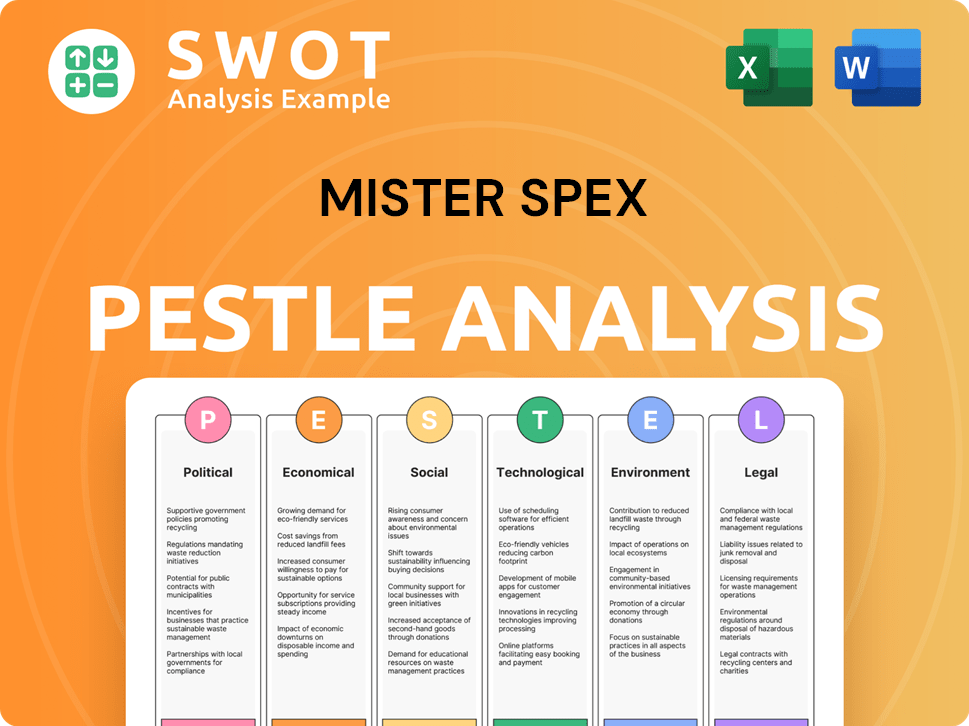
Mister Spex PESTLE Analysis
- Covers All 6 PESTLE Categories
- No Research Needed – Save Hours of Work
- Built by Experts, Trusted by Consultants
- Instant Download, Ready to Use
- 100% Editable, Fully Customizable
How Is Mister Spex Positioned in the Market?
Mister Spex, Europe's leading omnichannel optician, strategically positions itself to blend online convenience with offline expertise. This approach is central to its Mister Spex sales strategy. The company's brand positioning emphasizes its role as a trusted optician, focusing on optical expertise and comprehensive service. This is a key element of its Mister Spex marketing strategy, aiming to resonate with a target audience aged 40-60 who value expert advice.
The company's brand identity is built on transparency, quality, and value, differentiating it within the eyewear market. This is a core component of its Mister Spex business model. The brand's visual identity and tone of voice likely reflect a modern, approachable, and professional demeanor, consistent with its emphasis on both digital accessibility and expert service. This strategy is designed to attract and retain customers in the competitive online eyewear retailer landscape.
Mister Spex's commitment to its customers is evident through its wide range of products and professional services. The launch of SpexPro, its private label for premium eyewear lenses in September 2024, further reinforces its commitment to quality and higher-margin offerings. Consistency across online and offline platforms ensures a cohesive customer experience, as highlighted in Revenue Streams & Business Model of Mister Spex.
Brand Message
The core message centers on being a trusted optician for life. This emphasizes optical expertise and comprehensive service, crucial for building customer trust and loyalty.
Target Audience
The primary target group is adults aged 40-60. This demographic values well-founded optical advice and seeks a reliable, expert service.
Key Differentiators
Mister Spex differentiates itself through a seamless integration of online and offline experiences. This omnichannel strategy ensures a cohesive customer journey.
Core Values
Transparency, quality, and value for money are central to the brand. These values guide product offerings and customer interactions.
Brand Recognition and Awards
Mister Spex has received recognition for its brand and retail design, including the German Design Award 2024 for its Cologne flagship store. This highlights the company's commitment to creating a strong brand presence and a positive customer experience. The company also won three German Brand Awards in June 2024, demonstrating its commitment to its corporate culture and employees.
- German Design Award 2024: For the flagship store in Cologne, recognizing the effective link between online and offline customer experiences.
- German Brand Awards (June 2024): Awarded for its employer branding campaign 'SEE YOU! at #teamspex,' reflecting a strong corporate culture.
- SpexFocus Transformation Program (August 2024): This program aims to streamline costs, optimize the product portfolio, and improve profitability, showing a proactive response to market shifts.
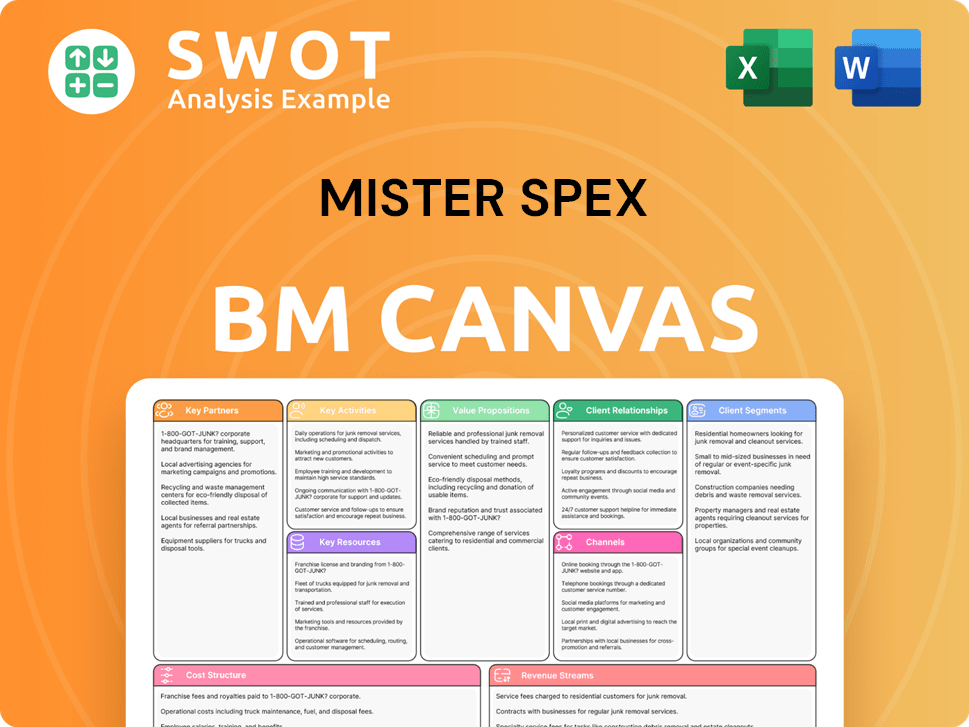
Mister Spex Business Model Canvas
- Complete 9-Block Business Model Canvas
- Effortlessly Communicate Your Business Strategy
- Investor-Ready BMC Format
- 100% Editable and Customizable
- Clear and Structured Layout
What Are Mister Spex’s Most Notable Campaigns?
The sales and marketing strategies of Mister Spex involve several key campaigns designed to enhance its brand presence and financial performance. These initiatives focus on repositioning the brand, expanding product offerings, and optimizing customer acquisition. The Growth Strategy of Mister Spex highlights the importance of these campaigns in the company's overall business model.
A key aspect of Mister Spex's marketing strategy is its omnichannel approach, which integrates online and offline channels to reach a wider audience. The company has implemented various marketing tactics, including television advertising, online campaigns, and in-store promotions. These strategies aim to improve customer engagement and drive sales.
Mister Spex's focus on high-margin products and customer segmentation is evident in its campaign strategies. By targeting specific demographics and promoting premium products, the company aims to increase profitability and strengthen its position in the competitive eyewear market.
The Optician of Your Life Campaign
Launched in August 2024, this campaign aimed to reposition the brand as a trusted optical expert. It targeted existing customers and the 40-60 age group, emphasizing professional optical advice. The campaign utilized TV, online, social media, and regional activations to drive foot traffic.
SpexPro Launch and Expansion
Introduced in September 2024, SpexPro is Mister Spex's private label for premium eyewear lenses. This initiative expanded the lens portfolio and improved gross margins. By Q4 2024, SpexPro accounted for approximately 20% of all prescription glasses orders, with an average order value exceeding €300.
'Discount Detox' Strategy
Implemented in Q4 2024, this involved reducing promotional activities to focus on profitability. Although it initially impacted online sales, it led to a margin improvement of approximately 77 basis points in the prescription glasses category in the second half of 2024. This strategy attracted a more selective customer base.
Black Friday 2024 Campaign
Mister Spex's Black Friday 2024 campaign saw like-for-like sales in its German stores grow by over 30% compared to 2023. This growth was driven by increased foot traffic and targeted marketing efforts. This demonstrates the effectiveness of its omnichannel approach.
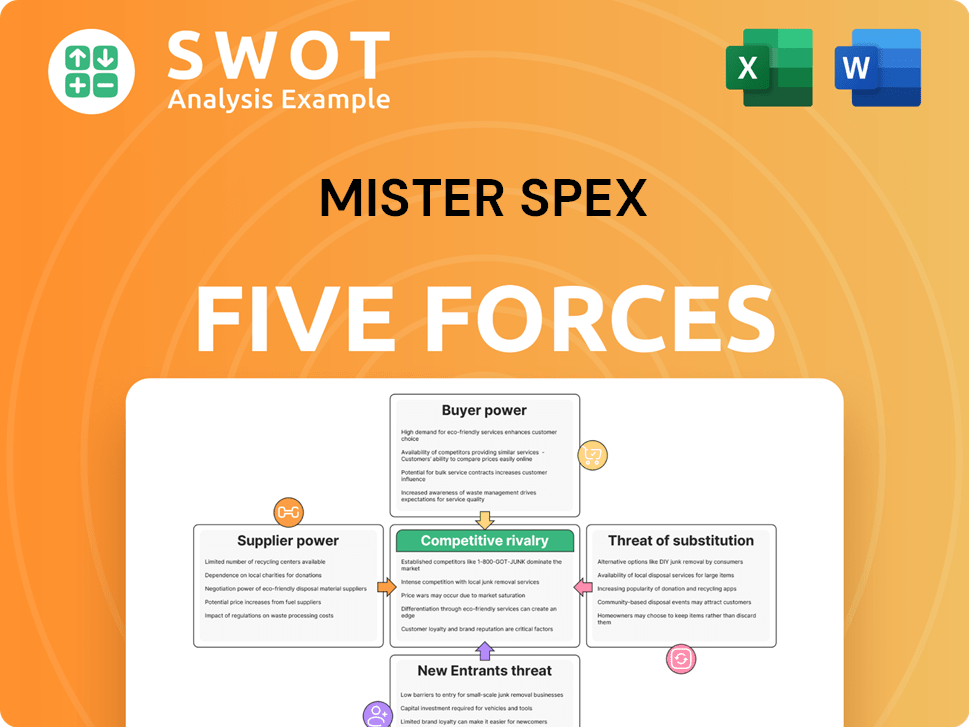
Mister Spex Porter's Five Forces Analysis
- Covers All 5 Competitive Forces in Detail
- Structured for Consultants, Students, and Founders
- 100% Editable in Microsoft Word & Excel
- Instant Digital Download – Use Immediately
- Compatible with Mac & PC – Fully Unlocked
Related Blogs

- What are Mission Vision & Core Values of Mister Spex Company?
- What is Competitive Landscape of Mister Spex Company?
- What is Growth Strategy and Future Prospects of Mister Spex Company?
- How Does Mister Spex Company Work?
- What is Brief History of Mister Spex Company?
- Who Owns Mister Spex Company?
- What is Customer Demographics and Target Market of Mister Spex Company?
Disclaimer
All information, articles, and product details provided on this website are for general informational and educational purposes only. We do not claim any ownership over, nor do we intend to infringe upon, any trademarks, copyrights, logos, brand names, or other intellectual property mentioned or depicted on this site. Such intellectual property remains the property of its respective owners, and any references here are made solely for identification or informational purposes, without implying any affiliation, endorsement, or partnership.
We make no representations or warranties, express or implied, regarding the accuracy, completeness, or suitability of any content or products presented. Nothing on this website should be construed as legal, tax, investment, financial, medical, or other professional advice. In addition, no part of this site—including articles or product references—constitutes a solicitation, recommendation, endorsement, advertisement, or offer to buy or sell any securities, franchises, or other financial instruments, particularly in jurisdictions where such activity would be unlawful.
All content is of a general nature and may not address the specific circumstances of any individual or entity. It is not a substitute for professional advice or services. Any actions you take based on the information provided here are strictly at your own risk. You accept full responsibility for any decisions or outcomes arising from your use of this website and agree to release us from any liability in connection with your use of, or reliance upon, the content or products found herein.