

Lemon Tree Hotels Bundle

How Does Lemon Tree Hotels Dominate the Indian Hotel Market?
Discover the innovative strategies behind Lemon Tree Hotels' remarkable success story in India's competitive hospitality sector. From its inception, Lemon Tree Hotels has disrupted the market by focusing on the underserved mid-priced segment, a move that propelled its growth. Explore how this strategic focus, combined with savvy sales and marketing, has made them a leading player in the Lemon Tree Hotels SWOT Analysis.

This analysis delves into Lemon Tree Hotels' comprehensive approach to sales and marketing, revealing the tactics that drive customer acquisition and brand loyalty. We'll dissect its Lemon Tree Hotels sales strategy, examining how it reaches its target audience and generates revenue. Furthermore, we'll uncover the intricacies of its Lemon Tree Hotels marketing strategy, including its digital initiatives, brand positioning, and customer relationship management within the Hotel industry India.
How Does Lemon Tree Hotels Reach Its Customers?
The sales strategy of Lemon Tree Hotels is multifaceted, utilizing a combination of online and offline channels to cater to a diverse clientele. Their customer base includes business travelers, leisure tourists, and those seeking MICE (Meetings, Incentives, Conferences, and Exhibitions) facilities, weddings, social events, and diplomatic and airline travel services. This approach allows the company to reach a broad audience and maximize revenue streams within the competitive Indian hotel market.
A key element of Lemon Tree Hotels' marketing strategy is its direct-to-consumer (D2C) approach. This strategy focuses on driving direct bookings through their website and mobile app. This allows them to gather valuable customer insights and potentially increase profit margins by reducing reliance on Online Travel Agencies (OTAs). This direct channel has been a focus for strategic shifts, with efforts to optimize the online platform for seamless booking and enhanced user experience.
Lemon Tree Hotels' business model also includes partnerships with e-commerce platforms and OTAs to broaden its online presence. The company's physical presence is significant, with hotels across India, Dubai, Bhutan, and Nepal. Their expansion strategy involves an asset-light model, particularly through management contracts. As of December 2023, they managed 3,928 rooms, with a robust pipeline of 3,677 rooms through management contracts, aiming for 70% managed inventory and over 20,000 rooms by FY28. This growth strategy is designed to increase market share and revenue through partnerships and franchise models, expanding into tier-II, III, and IV cities.
 Direct Bookings
The company emphasizes direct bookings through its website and mobile app. This strategy allows for better customer insights and potentially higher profit margins. They focus on optimizing their online platforms for a seamless booking experience.
Online Travel Agencies (OTAs)
Lemon Tree Hotels collaborates with various OTAs to maximize its online reach. This ensures wider visibility and accessibility for potential customers. This is a crucial element of their hospitality marketing strategy.
Physical Presence
They maintain a substantial physical presence with hotels across India, Dubai, Bhutan, and Nepal. This widespread network supports their brand positioning and customer service efforts. The physical presence is a key aspect of their brand.
Management Contracts
Lemon Tree Hotels is expanding through management contracts, reflecting an asset-light model. This strategy aims to grow market share and revenue. Carnation Hotels Private Limited, a subsidiary, manages many properties.

Key Sales Channels and Strategies
Lemon Tree Hotels employs a multi-channel sales approach to reach its target audience effectively. Their strategy includes direct bookings, partnerships with OTAs, and a focus on management contracts to expand their footprint.
- Direct Bookings: Encouraging customers to book directly through their website and app.
- Online Travel Agencies: Collaborating with OTAs to enhance online visibility.
- Management Contracts: Expanding their presence through asset-light management contracts.
- Physical Presence: Leveraging their extensive hotel network across multiple locations.
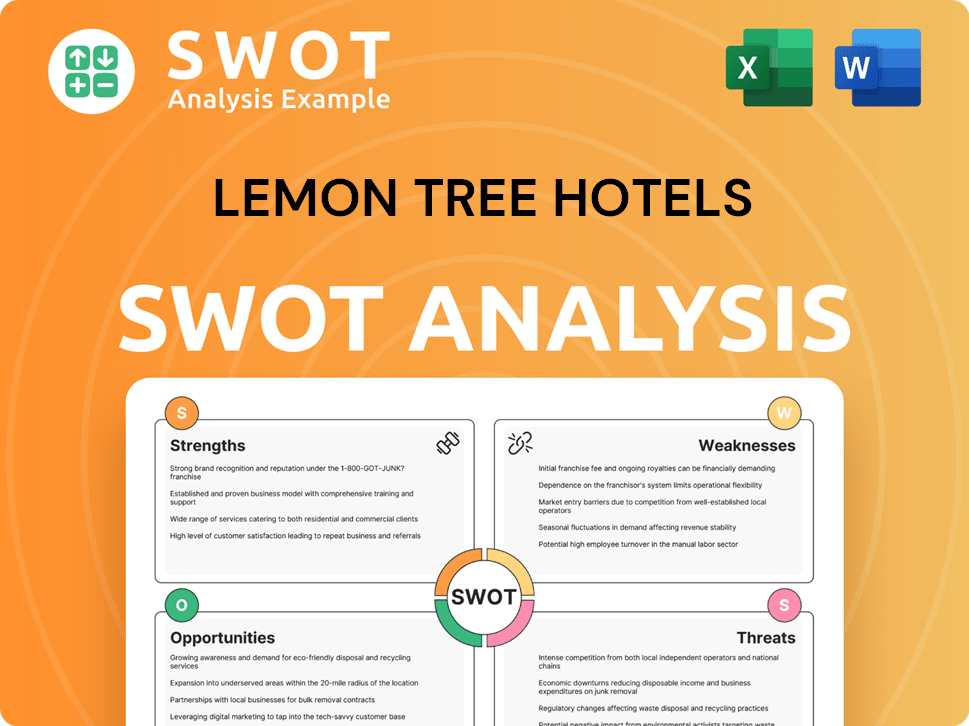
Lemon Tree Hotels SWOT Analysis
- Complete SWOT Breakdown
- Fully Customizable
- Editable in Excel & Word
- Professional Formatting
- Investor-Ready Format
What Marketing Tactics Does Lemon Tree Hotels Use?
The marketing tactics employed by Lemon Tree Hotels are designed to boost its sales strategy and overall market presence. They focus on a blend of digital and traditional methods to engage potential customers and drive revenue. The company's approach is data-driven, ensuring that its strategies align with customer preferences and market trends within the Indian hotel market.
A key component of Lemon Tree Hotels' marketing strategy involves a strong emphasis on digital channels. This includes content marketing, Search Engine Optimization (SEO), and paid advertising to enhance online visibility. Their recent partnership with CIN Universe in April 2025, highlights a commitment to strengthening their digital footprint through SEO, website development, and social media strategies.
Lemon Tree Hotels also utilizes traditional media channels, though specific recent campaigns are not detailed. They focus on understanding and targeting their audience through data-driven insights, tailoring offerings across various categories for diverse demographics, from leisure travelers to corporate clients. The company's historical use of mobile websites with features like location detection to drive direct sales showcases an early adoption of innovative digital strategies.

Digital Marketing Initiatives
Lemon Tree Hotels actively uses digital marketing to reach its target audience. This includes SEO, website development, and performance marketing (PPC).
Content Marketing
Content marketing is a key part of their strategy to engage and inform potential customers. This helps in building brand awareness and driving traffic.
Paid Advertising
Paid advertising campaigns are used to increase visibility and generate leads. This includes strategies like PPC to target specific demographics.
Mobile-First Approach
The company has historically used mobile websites with features like location detection to drive direct sales, showcasing an early adoption of innovative digital strategies.
Data-Driven Marketing
Lemon Tree Hotels uses data-driven insights to understand and target its audience effectively. This enables them to tailor their offerings and content to customer preferences.
Traditional Media Integration
While digital is a priority, the company still uses traditional media channels. The exact campaigns are not detailed, but the integration of traditional and digital is key.
Key Strategies
Lemon Tree Hotels focuses on several key marketing strategies to boost its presence in the hotel industry India. These strategies are designed to enhance their brand positioning and attract customers.
- SEO and Website Optimization: Enhancing online visibility through SEO and creating a mobile-responsive website with dynamic content.
- Performance Marketing: Utilizing PPC and other performance marketing tactics to drive targeted traffic and conversions.
- Social Media Engagement: Employing social media strategies to connect with customers and build brand awareness.
- Customer Segmentation: Tailoring offerings to different customer segments, including leisure and corporate travelers.
- Data Analytics: Leveraging data analytics to understand customer behavior and refine marketing efforts.
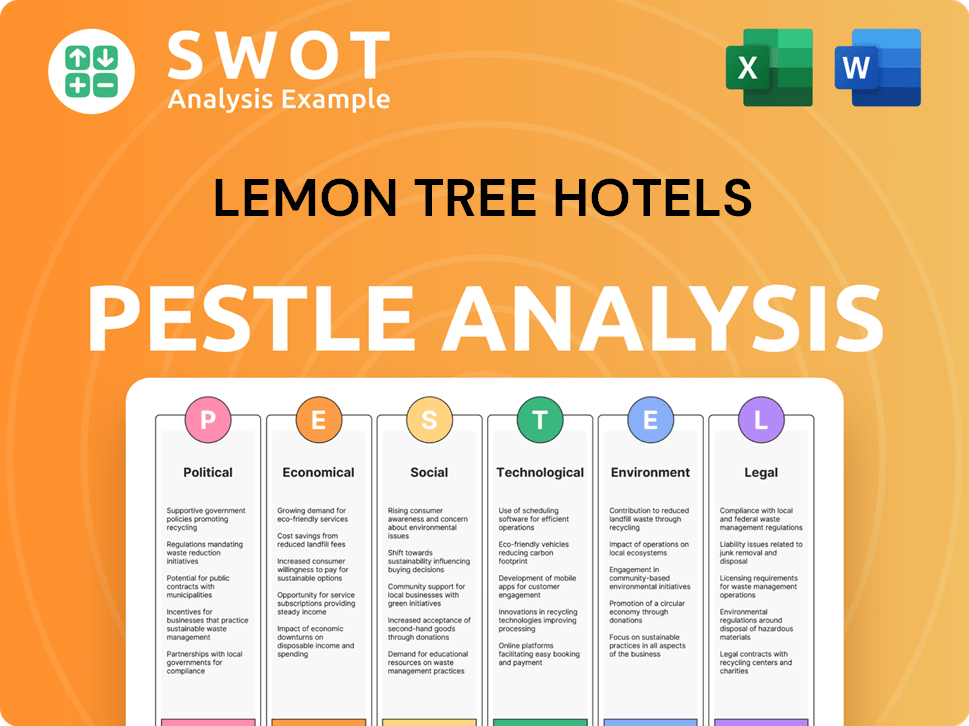
Lemon Tree Hotels PESTLE Analysis
- Covers All 6 PESTLE Categories
- No Research Needed – Save Hours of Work
- Built by Experts, Trusted by Consultants
- Instant Download, Ready to Use
- 100% Editable, Fully Customizable
How Is Lemon Tree Hotels Positioned in the Market?
Lemon Tree Hotels strategically positions itself as 'refreshingly different' within the Indian hotel market, aiming to be a leading hospitality chain. This brand positioning emphasizes freshness, comfort, and reliability, catering to both leisure and business travelers. Their approach focuses on offering a compelling value proposition across a diverse portfolio of brands, which is key to their Lemon Tree Hotels sales strategy.
The company's brand identity is built around providing differentiated and superior service, particularly targeting the underserved middle-class Indian consumer. This strategy allows them to offer a high-quality experience at a more accessible price point. The company's commitment to inclusivity, including employing persons with disabilities, further enhances its unique brand appeal, contributing to their overall hospitality marketing efforts.
The brand's responsiveness to market trends is evident in its expansion into the upscale segment with Aurika, aiming to capitalize on lucrative opportunities. This move highlights their ability to adapt and grow within the dynamic Indian hotel market. This expansion is a key component of their overall Lemon Tree Hotels business model.
Target Audience
The primary target demographic includes young, reasonably successful professionals aged 20-59, and a significant number of foreign visitors. This focus allows the company to tailor its services and marketing efforts to specific customer needs. Understanding the Lemon Tree Hotels target audience analysis is crucial for effective marketing.
Value Proposition
Offering an experience that is 80% of a five-star hotel at 50-60% of the price is a core element of their value proposition. This pricing strategy helps them attract a broad customer base. The focus on providing value is a key part of their competitive advantage.
Brand Consistency
Maintaining consistency across all channels and touchpoints ensures a unified customer experience. This approach helps build brand recognition and customer loyalty. This is a key element of their customer relationship management.
Inclusivity
Their commitment to creating a socially inclusive work environment, including employing persons with disabilities, sets them apart. This focus contributes to their unique brand appeal and has earned them national recognition. It is a key component of their brand positioning.
To further explore the company's growth strategy, you can read more about it in this article: Growth Strategy of Lemon Tree Hotels.
Lemon Tree Hotels Business Model Canvas
- Complete 9-Block Business Model Canvas
- Effortlessly Communicate Your Business Strategy
- Investor-Ready BMC Format
- 100% Editable and Customizable
- Clear and Structured Layout

What Are Lemon Tree Hotels’s Most Notable Campaigns?
The sales and marketing strategy of Lemon Tree Hotels is characterized by a continuous series of initiatives designed to drive growth and enhance brand recognition. While specific, large-scale advertising campaigns with detailed metrics are not always publicly available, the company's approach involves a combination of strategic expansion, rebranding efforts, and digital marketing to reach its target audience. This multifaceted approach has been instrumental in the company's recent financial successes.
A key component of the strategy is the aggressive expansion and rebranding initiatives. These efforts continuously reintroduce and highlight the diverse portfolio of the company. For instance, the rebranding of Keys Select by Lemon Tree Hotels, Pimpri, Pune, to Keys Prima by Lemon Tree Hotels, Pimpri, Pune, in April 2025, is a prime example. This upgrade included enhanced guest experiences with upgraded rooms, dining options, and expanded facilities, all aimed at strengthening market presence.
Another critical aspect is the focus on expanding into new locations and segments. Announcements of new hotel signings in various cities, such as Kota, Rajasthan, and Bareilly, Uttar Pradesh, serve to increase brand visibility and communicate growth to potential customers and investors. The first Public-Private Partnership (PPP) initiative to redevelop the Orchid Hotel in Shillong, Meghalaya, into an upscale Aurika-branded property, announced in December 2024, further reinforces this strategy, garnering attention and strengthening the brand's presence in the luxury segment. Learn more about the Target Market of Lemon Tree Hotels.
Rebranding and Facility Upgrades
The rebranding and facility upgrades, such as the recent changes at Keys Prima by Lemon Tree Hotels, Pimpri, Pune, are ongoing efforts. These initiatives aim to enhance guest experiences by improving rooms, dining options, and facilities, thus strengthening the company's market presence and customer satisfaction.
Strategic Expansion
The company's expansion into new locations and segments, including new hotel signings in various cities across India, is a core component. These announcements increase brand visibility and communicate the company's growth trajectory to stakeholders, including potential customers and investors, driving the Indian hotel market.
Digital Marketing Initiatives
Digital marketing, including SEO and website development through partnerships like the one with CIN Universe (starting April 2025), is an ongoing campaign. It enhances online visibility and drives direct bookings, a critical aspect of their sales strategy and customer relationship management.
Financial Performance
The effectiveness of these combined sales and marketing strategies is reflected in the company's financial performance. In Q2 FY25 (ending September 30, 2024), consolidated revenue increased by 24% year-on-year, and net profit grew by 34%, showcasing the impact of their approach.
Key Accolades and Customer Satisfaction
The company has received numerous accolades for customer satisfaction and brand impact. These awards, such as the Agoda Customer Review Award 2024 for Keys Lite by Lemon Tree Hotels, Udaipur, with a score of 8.3, highlight the success of their efforts in the hospitality marketing sector.
- Continuous expansion into new markets and segments.
- Aggressive rebranding and facility upgrade strategies.
- Strong focus on digital marketing to drive direct bookings.
- Consistent financial growth, including a 24% increase in revenue year-on-year in Q2 FY25.
- Recognition through awards for customer satisfaction and brand impact.
Lemon Tree Hotels Porter's Five Forces Analysis
- Covers All 5 Competitive Forces in Detail
- Structured for Consultants, Students, and Founders
- 100% Editable in Microsoft Word & Excel
- Instant Digital Download – Use Immediately
- Compatible with Mac & PC – Fully Unlocked

Related Blogs

- What are Mission Vision & Core Values of Lemon Tree Hotels Company?
- What is Competitive Landscape of Lemon Tree Hotels Company?
- What is Growth Strategy and Future Prospects of Lemon Tree Hotels Company?
- How Does Lemon Tree Hotels Company Work?
- What is Brief History of Lemon Tree Hotels Company?
- Who Owns Lemon Tree Hotels Company?
- What is Customer Demographics and Target Market of Lemon Tree Hotels Company?
Disclaimer
All information, articles, and product details provided on this website are for general informational and educational purposes only. We do not claim any ownership over, nor do we intend to infringe upon, any trademarks, copyrights, logos, brand names, or other intellectual property mentioned or depicted on this site. Such intellectual property remains the property of its respective owners, and any references here are made solely for identification or informational purposes, without implying any affiliation, endorsement, or partnership.
We make no representations or warranties, express or implied, regarding the accuracy, completeness, or suitability of any content or products presented. Nothing on this website should be construed as legal, tax, investment, financial, medical, or other professional advice. In addition, no part of this site—including articles or product references—constitutes a solicitation, recommendation, endorsement, advertisement, or offer to buy or sell any securities, franchises, or other financial instruments, particularly in jurisdictions where such activity would be unlawful.
All content is of a general nature and may not address the specific circumstances of any individual or entity. It is not a substitute for professional advice or services. Any actions you take based on the information provided here are strictly at your own risk. You accept full responsibility for any decisions or outcomes arising from your use of this website and agree to release us from any liability in connection with your use of, or reliance upon, the content or products found herein.