

Zensho Group Bundle

Unveiling Zensho Group: How Does This Food Service Giant Thrive?
Founded in 1970, Zensho Group (Zensho Company) has become a powerhouse in the global food service industry, particularly known for its fast-casual dining options. With a diverse portfolio including Sukiya and Hama-Sushi, Zensho has expanded its footprint to over 2,000 outlets worldwide. Its impressive financial performance, with substantial year-on-year growth, highlights the effectiveness of its operational strategies.

This deep dive into the Zensho Group SWOT Analysis will explore the Zensho business model, revealing how this Japanese restaurant chain has achieved such remarkable success. We'll examine its core operations, strategic acquisitions, and innovative approaches to restaurant management that have fueled its expansion and adaptation to changing consumer preferences. Whether you're an investor, industry professional, or simply curious, understanding Zensho's strategies is key to grasping the dynamics of the food service industry.
What Are the Key Operations Driving Zensho Group’s Success?
The Zensho Group creates value by operating a vast network of restaurants and utilizing its Mass Merchandising System (MMD). Their core offerings include diverse cuisines through brands like Sukiya (beef bowls), Hama-Sushi (sushi), Coco's (family restaurants), and Jolly Pasta (pasta). This strategy caters to a wide range of customers seeking affordable and high-quality dining experiences.
The MMD system is central to the Zensho Company’s operations, covering everything from sourcing raw materials to manufacturing, logistics, and sales. This integrated approach ensures a steady supply of fresh ingredients and timely production based on sales forecasts, minimizing waste and maintaining food freshness. The company also manages its own food processing and ingredient delivery across the country.
Food safety and quality are top priorities for Zensho Group, with thorough inspections of meat production plants and other facilities. This commitment is crucial for maintaining customer trust and ensuring the consistent quality that defines their brand. The company's integrated approach, as discussed in Growth Strategy of Zensho Group, is a key differentiator in the food service industry.
 Operational Uniqueness
The Zensho business model stands out due to its vertically integrated MMD system. This gives the company significant control over its supply chain, enabling efficient cost management. This is a key factor in their ability to offer competitive pricing and maintain consistent quality across their various restaurant brands.
Customer Experience Enhancement
Technology plays a crucial role in enhancing the customer experience. In 2024, a new mobile application was introduced to streamline ordering and provide personalized recommendations. This initiative has achieved an impressive 80% satisfaction rate among users.

Key Advantages
The Zensho Group benefits from its vertically integrated model, allowing for better control over quality and costs. This approach provides a competitive edge in the Japanese restaurant chain market.
- Cost Efficiency: The MMD system helps manage costs effectively.
- Quality Control: Direct control over the supply chain ensures consistent food quality.
- Customer Satisfaction: Technology investments, like the mobile app, improve customer experience.
- Brand Diversity: Multiple brands cater to various customer preferences and price points.
Zensho Group SWOT Analysis
- Complete SWOT Breakdown
- Fully Customizable
- Editable in Excel & Word
- Professional Formatting
- Investor-Ready Format

How Does Zensho Group Make Money?
The Zensho Group primarily generates revenue through its Restaurant business segment, with a smaller contribution from its Retail segment. This diversified approach allows the company to capture a broader market share within the food service industry. The Zensho Company has demonstrated consistent growth, reflecting its effective business model and strategic execution.
In the fiscal year ending March 31, 2025, the Zensho Group reported net sales of 1,136,684 million yen (approximately $7.45 billion USD), a significant 17.7% increase year-on-year. The company's earnings before interest and taxes (EBIT) for 2024 (TTM) were $0.32 billion USD, a 23.58% increase from the previous year, indicating robust financial health and operational efficiency.
The success of the Zensho business model is further highlighted by its strategic monetization strategies. The company's approach includes a focus on value-oriented pricing, which appeals to a broad consumer base, and innovative digital platforms to boost sales. The Zensho Group's diverse brand portfolio also enables it to cater to varied consumer preferences, thus broadening its revenue streams.

Revenue Streams
The main revenue stream for Zensho Group comes from its Restaurant business segment, with a significant contribution from the Sukiya chain's gyudon (beef bowl) sales. The Retail segment, which includes supermarkets and fruit and vegetable stores, also contributes to the overall revenue, diversifying the company's income sources.
Key Products and Services
The gyudon (beef bowl) product line, particularly from the Sukiya chain, is a major revenue driver, contributing approximately 65% to the overall revenue in fiscal year 2023. The company's diverse brand portfolio, including sushi, pasta, and family-style dining options, caters to a wide range of consumer preferences.
Monetization Strategies
Value-oriented pricing is a key strategy, attracting cost-conscious consumers. Enhancing digital ordering platforms has led to a 40% increase in online sales during the 2023 fiscal year. The company continues to expand its brand portfolio and international presence to broaden its revenue base.
Geographic Revenue Breakdown
International sales are a significant growth area, with a 15% increase in fiscal year 2023. The company is expanding its presence in various countries to capitalize on international market opportunities. The domestic market remains a core focus, with continuous efforts to improve customer experience and operational efficiency.
Sales Channels
The primary sales channel is through its physical restaurant locations, complemented by online ordering platforms. The company is investing in technology to streamline the ordering process and enhance the customer experience. The retail segment provides additional sales channels through supermarkets and other stores.
Pricing Strategies
The company employs value-oriented pricing to attract and retain customers, particularly in the competitive food service industry. Promotional offers and menu innovations are also used to drive sales and maintain customer interest. The pricing strategy is regularly reviewed to adapt to market conditions and consumer preferences.
Key Financial Metrics
The financial performance of Zensho Group demonstrates its strong position in the market. The company's ability to maintain profitability and achieve growth is a testament to its effective business strategies. For more information on how Zensho Group compares to its competitors, you can read about the Competitors Landscape of Zensho Group.
- Net sales for the fiscal year ending March 31, 2025, were 1,136,684 million yen (approximately $7.45 billion USD).
- EBIT for 2024 (TTM) was $0.32 billion USD.
- The gyudon product line contributed approximately 65% to overall revenue in fiscal year 2023.
- International sales grew by 15% in fiscal year 2023.
Zensho Group PESTLE Analysis
- Covers All 6 PESTLE Categories
- No Research Needed – Save Hours of Work
- Built by Experts, Trusted by Consultants
- Instant Download, Ready to Use
- 100% Editable, Fully Customizable

Which Strategic Decisions Have Shaped Zensho Group’s Business Model?
The Zensho Group has achieved significant milestones that have shaped its operations and financial performance. A key strategic move has been the expansion of its global footprint, aiming for over 10,000 overseas outlets by the fiscal year ending March 2024, making it one of the top 10 chains globally by store count. These strategic initiatives highlight the Zensho business model's adaptability and growth potential within the competitive food service industry.
Key acquisitions have also been instrumental in the Zensho Group's growth strategy. The acquisition of the US sushi specialist Snowfox Group in July 2024 and Sushi Circle Gastronomie GmbH in June 2023 demonstrates the company's commitment to expanding its international presence and diversifying its offerings, particularly in the grab-and-go sushi market. These moves are part of a broader strategy to strengthen its position in the Japanese restaurant chain market.
Furthermore, the company has focused on technological innovation, allocating approximately ¥3.5 billion towards research and development in 2024, leading to the introduction of 10 new menu items. Partnerships with tech firms have enhanced digital ordering platforms, resulting in a 40% increase in online sales in fiscal year 2023. These efforts are crucial for maintaining a competitive edge and improving the customer experience.
Operational Challenges and Solutions
Operational challenges, such as maintaining food safety and quality across a vast international network, are addressed through its comprehensive MMD system. This system manages the entire food supply chain from procurement to sales, ensuring consistent standards. This approach is essential for the Zensho Company to maintain its reputation.
Competitive Advantages
Zensho's competitive advantages include its strong brand recognition, particularly with Sukiya, and its economies of scale derived from its extensive network and integrated supply chain. The company's commitment to affordability and consistent quality also sustains its business model. These factors contribute to its resilience in the market.
Strategic Adaptations and Future Directions
Zensho continues to adapt by investing in sustainable food technologies and enhancing customer experience through digital transformation. These initiatives are crucial for long-term growth and sustainability. The company's focus on innovation and customer satisfaction positions it well for future challenges.
- Investment in sustainable food technologies.
- Enhancement of customer experience through digital transformation.
- Expansion of global footprint and diversification of offerings.
- Maintaining food safety and quality through the MMD system.
Zensho Group Business Model Canvas
- Complete 9-Block Business Model Canvas
- Effortlessly Communicate Your Business Strategy
- Investor-Ready BMC Format
- 100% Editable and Customizable
- Clear and Structured Layout

How Is Zensho Group Positioning Itself for Continued Success?
As a major player in the global food service industry, the Zensho Group, a prominent Japanese restaurant chain, holds a significant position, especially in the fast-casual dining segment. By 2024, Zensho Company had over 2,000 outlets across multiple countries, demonstrating its considerable market share. Its diverse portfolio, including brands like Sukiya and Nakau, caters to varied consumer preferences, contributing to strong customer loyalty and solidifying its place in the food service industry.
The Zensho business model faces several risks, including shifts in consumer tastes, fierce competition, and potential supply chain disruptions. Sustainability and environmental impact also present challenges, although the group is actively working on these areas. Understanding the dynamics of the Zensho Group company structure explained is crucial for investors and stakeholders alike, providing insights into its operational framework and strategic direction.
Industry Position
The Zensho Group is a leading entity in the global food service sector, particularly strong in the fast-casual dining market. It has a substantial presence in Japan and a growing international footprint. The company's diverse brand portfolio supports a broad consumer base, enhancing its market position.
Key Risks
Zensho Company faces risks such as changing consumer preferences and intense competition within the food service sector. Supply chain disruptions and sustainability concerns also pose challenges. Adapting to these factors is essential for maintaining competitiveness.
Future Outlook
Zensho Group aims for global expansion, with a goal to become the world's top food service company. Strategic initiatives include reducing CO2 emissions by 20% by 2025 and investing in sustainable food technologies. The company plans to enhance its digital platforms to improve customer engagement and operational efficiency, as detailed in Owners & Shareholders of Zensho Group.
Strategic Initiatives
The company is focused on global expansion and aims to be a top food service provider. It is investing in sustainable practices and enhancing digital platforms for better customer engagement. Maximizing supply chain efficiency and continuously improving product offerings are also key strategies.
Strategic Goals and Initiatives
Zensho Group's primary goal is to become the leading food service company globally. The company is expanding its operational footprint and maximizing supply chain efficiency. Enhancing product offerings and improving customer service are also critical components of its strategy.
- Global Expansion: Increase the number of outlets worldwide.
- Sustainability: Reduce CO2 emissions by 20% by 2025.
- Digital Enhancement: Improve customer engagement and operational efficiency through digital platforms.
- Supply Chain Optimization: Maximize efficiency to reduce costs and improve responsiveness.
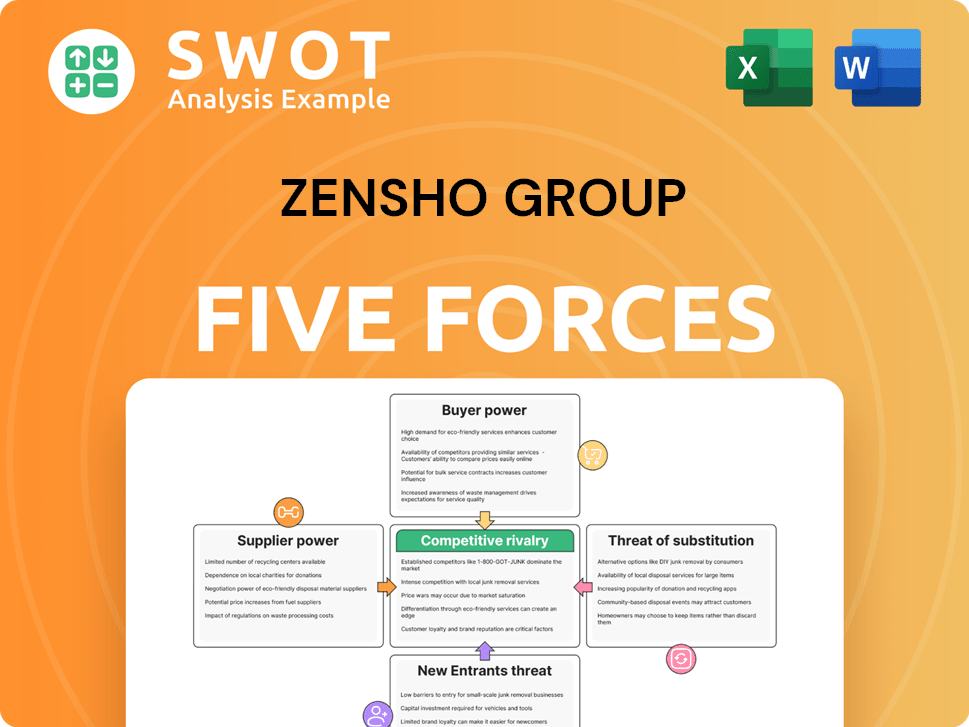
Zensho Group Porter's Five Forces Analysis
- Covers All 5 Competitive Forces in Detail
- Structured for Consultants, Students, and Founders
- 100% Editable in Microsoft Word & Excel
- Instant Digital Download – Use Immediately
- Compatible with Mac & PC – Fully Unlocked
Related Blogs

- What are Mission Vision & Core Values of Zensho Group Company?
- What is Competitive Landscape of Zensho Group Company?
- What is Growth Strategy and Future Prospects of Zensho Group Company?
- What is Sales and Marketing Strategy of Zensho Group Company?
- What is Brief History of Zensho Group Company?
- Who Owns Zensho Group Company?
- What is Customer Demographics and Target Market of Zensho Group Company?
Disclaimer
All information, articles, and product details provided on this website are for general informational and educational purposes only. We do not claim any ownership over, nor do we intend to infringe upon, any trademarks, copyrights, logos, brand names, or other intellectual property mentioned or depicted on this site. Such intellectual property remains the property of its respective owners, and any references here are made solely for identification or informational purposes, without implying any affiliation, endorsement, or partnership.
We make no representations or warranties, express or implied, regarding the accuracy, completeness, or suitability of any content or products presented. Nothing on this website should be construed as legal, tax, investment, financial, medical, or other professional advice. In addition, no part of this site—including articles or product references—constitutes a solicitation, recommendation, endorsement, advertisement, or offer to buy or sell any securities, franchises, or other financial instruments, particularly in jurisdictions where such activity would be unlawful.
All content is of a general nature and may not address the specific circumstances of any individual or entity. It is not a substitute for professional advice or services. Any actions you take based on the information provided here are strictly at your own risk. You accept full responsibility for any decisions or outcomes arising from your use of this website and agree to release us from any liability in connection with your use of, or reliance upon, the content or products found herein.