

Worldline Bundle

How Does Worldline Thrive in the Payments Landscape?
Worldline, a titan in the global payments industry, manages a vast ecosystem, serving millions of merchants and financial institutions. Despite economic headwinds, the Worldline SWOT Analysis reveals the company's strategic positioning and growth strategies. Its €4.6 billion revenue in 2024 showcases its resilience, but understanding its operational intricacies is key.

This exploration dives into how Worldline company operates, examining its core Worldline services and technology that drive its success. We'll dissect its business model, from merchant services to payment processing, and analyze the impact of its 'Power24' transformation program. Furthermore, we'll explore how Worldline payment solutions are adapting to market dynamics, technological advancements, and competitive pressures to achieve accelerated growth in the coming years, providing valuable insights for investors and industry professionals alike. Understanding how does Worldline process payments is crucial.
What Are the Key Operations Driving Worldline’s Success?
Worldline is a global leader in payment services, offering a comprehensive suite of technology-driven solutions for merchants, banks, and financial institutions. Its core business revolves around facilitating secure and efficient payment transactions across various channels. The company's value proposition centers on simplifying payment processes and enabling businesses to thrive in the digital economy.
Worldline's operations are designed to provide end-to-end payment solutions. This includes merchant payment acceptance, online payment processing, and issuing and acquiring services. The company serves a diverse customer base, from small businesses to large enterprises and financial institutions, offering tailored solutions to meet their specific needs.
The company is committed to innovation and strategic partnerships to expand its reach and enhance its service offerings. Worldline leverages a global factory approach, utilizing cloud technology and centralized IT platforms to deliver services efficiently and competitively. This approach allows Worldline to maintain high standards of security and reliability while managing costs effectively.
 Core Services
Worldline's primary services include merchant payment acceptance, online payments, and issuing and acquiring processing. These services are critical for businesses looking to accept payments in-store, online, or via mobile devices. The company's platform supports various payment methods, including cards, digital wallets, and emerging payment technologies.
Target Customers
Worldline caters to a wide range of customers, from small and medium-sized businesses (SMBs) to large enterprises and financial institutions. The company provides customized solutions to meet the unique needs of each segment. This includes tailored pricing, integration options, and support services.
Operational Strategy
Worldline employs a global factory approach, consolidating IT platforms and leveraging cloud technology. This approach aims to deliver services efficiently and at competitive prices. The company maintains competence centers and data centers as central assets. Strategic partnerships, such as the joint venture with Crédit Agricole, support its supply chain and distribution networks.
Value Proposition
Worldline's value proposition lies in simplifying payment processes, enabling businesses to attract more customers, and facilitating entry into new markets. It offers a single entry point for both merchants and banks, supported by open-innovation expertise. This allows for seamless integration of Fintech solutions and value-added services, ensuring compliance and revenue growth for its clients.

Key Features and Benefits
Worldline's platform offers a range of features designed to enhance the payment experience for both merchants and their customers. These include secure payment processing, fraud prevention tools, and comprehensive reporting and analytics. The company's solutions are designed to be scalable and adaptable to meet the evolving needs of businesses.
- Secure Payment Processing: Worldline ensures secure transactions through advanced encryption and fraud detection measures.
- Omnichannel Capabilities: The platform supports payments across various channels, including in-store, online, and mobile.
- Global Reach: Worldline has a significant global presence, allowing businesses to expand their reach into new markets.
- Integration and Support: The company provides robust integration options and customer support to ensure a smooth experience.
Worldline's focus on innovation and strategic partnerships, such as the collaboration with Wix for online payment solutions in Europe and Asia Pacific and with RCH in Italy for integrated point-of-sale solutions, underscores its commitment to providing cutting-edge payment technology. The company continues to invest in its platform to meet the changing demands of the market and maintain its competitive edge. To learn more about Worldline's strategic growth, consider reading the Growth Strategy of Worldline.
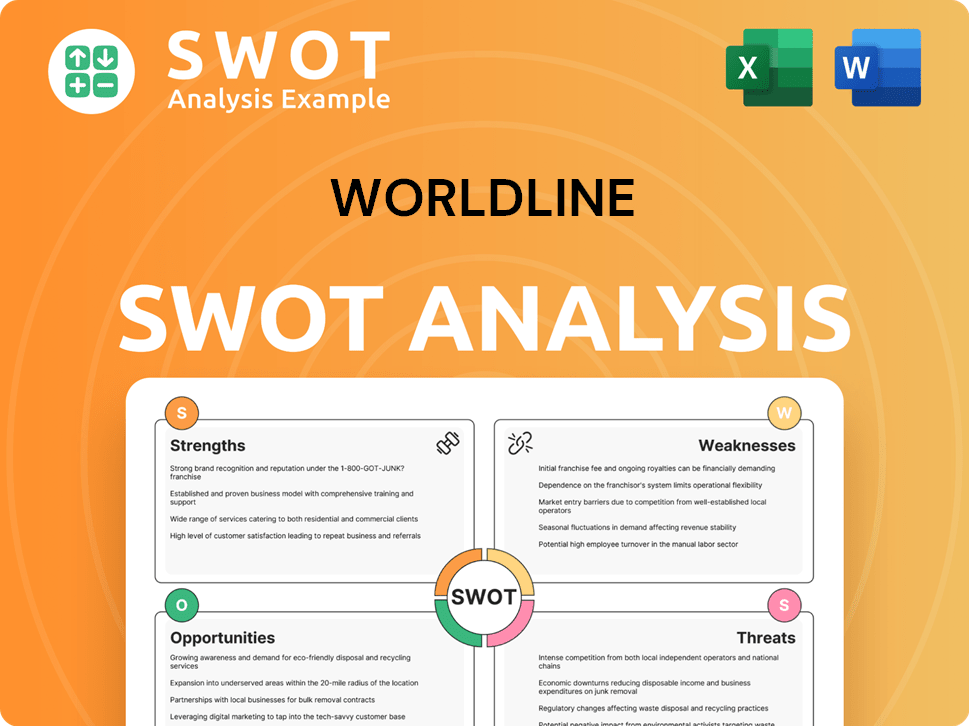
Worldline SWOT Analysis
- Complete SWOT Breakdown
- Fully Customizable
- Editable in Excel & Word
- Professional Formatting
- Investor-Ready Format
How Does Worldline Make Money?
The Worldline company generates revenue through three primary business lines: Merchant Services, Financial Services, and Mobility & e-Transactional Services. This diversified approach allows Worldline to serve a broad range of clients and markets. In 2024, the company's total revenue reached €4.6 billion, demonstrating its significant market presence and operational scale.
Merchant Services is the largest revenue contributor, while Financial Services and Mobility & e-Transactional Services also play crucial roles. The company employs various monetization strategies, including transaction fees, subscriptions, and potentially licensing its technology. Initiatives like the Power24 program are designed to enhance financial performance through cost control.
Understanding the revenue streams and monetization strategies of Worldline is essential for evaluating its financial health and growth potential. The company's ability to adapt to market changes and manage its costs effectively will be key to its future success. For a deeper look at the strategies, consider reading about the Marketing Strategy of Worldline.
Revenue Breakdown and Key Financial Metrics
In 2024, Worldline reported a total revenue of €4.6 billion. The Merchant Services segment generated €3.39 billion, with an organic growth of 1.9%. Financial Services contributed €891 million, while Mobility & e-Transactional Services brought in €351 million. The company's focus on cost control, through the Power24 program, aims to save €220 million in cash costs by the end of 2025.
- Merchant Services: €3.39 billion in 2024, with 1.9% organic growth. However, Q1 2025 saw a 1.0% organic decline, reaching €777 million.
- Financial Services: €891 million in 2024, a 5.1% decrease. Q1 2025 revenue was €204 million, down 8.9%.
- Mobility & e-Transactional Services: €351 million in 2024, growing 2.1%. Q1 2025 saw a 2.2% increase, reaching €87 million.
- Power24 Program: Aiming for €220 million in total cash cost savings by the end of 2025.
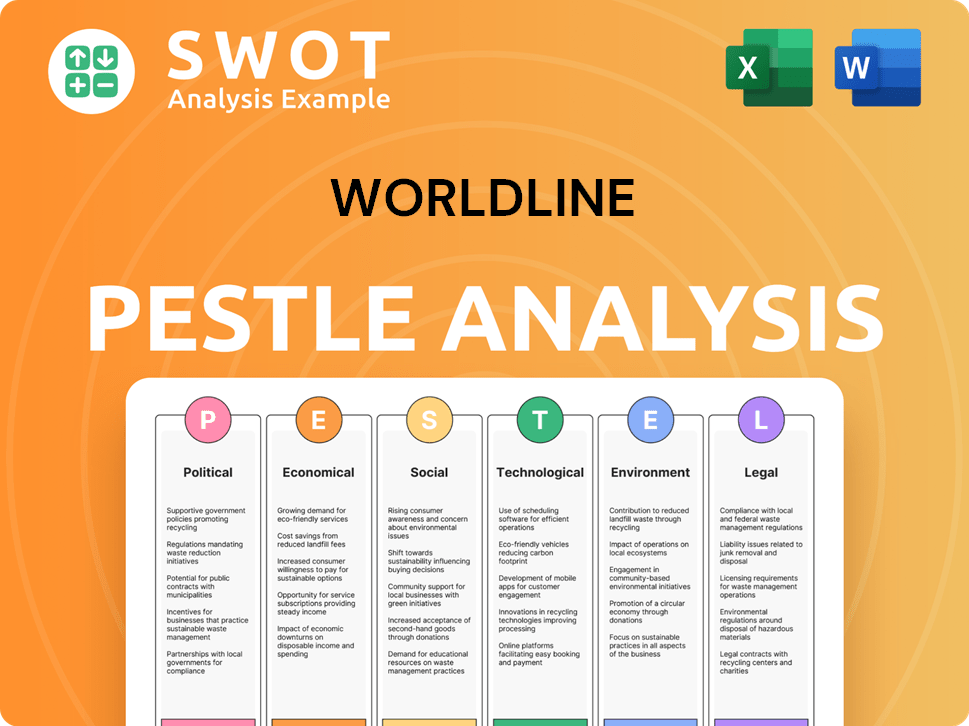
Worldline PESTLE Analysis
- Covers All 6 PESTLE Categories
- No Research Needed – Save Hours of Work
- Built by Experts, Trusted by Consultants
- Instant Download, Ready to Use
- 100% Editable, Fully Customizable
Which Strategic Decisions Have Shaped Worldline’s Business Model?
Navigating a dynamic landscape, the Worldline company has marked several key milestones and strategic shifts. A pivotal move is the 'Power24' transformation program, initiated in 2024. This program aims to reshape the company, targeting €220 million in annual cost savings by the close of 2025, and to bolster its competitive edge. This involves streamlining tech platforms, simplifying organizational structures, and optimizing procurement processes.
Operational and market challenges have included a softening macroeconomic environment in Europe, particularly affecting the latter half of 2024. The re-insourcing of services by a major Financial Services client added to the pressure. Moreover, the company faced merchant contract terminations and delays in the delivery of its next-generation hardware products, impacting its Merchant Services division. In response, Worldline has intensified its focus on cost control and initiated a strategic reset under the new CEO, Pierre-Antoine Vacheron, who took office on March 1, 2025. His strategic plan, expected in autumn 2025, will focus on robust growth and free cash flow generation, and may involve portfolio adjustments and new partnerships.
Worldline's competitive strengths are rooted in its position as the largest payment processor in Europe, serving over 1 million merchants and 1,200 financial institutions. It offers a comprehensive suite of end-to-end services and simplifies access to over 3,500 banks through a single API in Open Banking. The company leverages its industrial scale, standardized processes, and global resources to deliver services at competitive prices, supported by its competence centers, IT platforms, and data centers. To learn more about Worldline's mission, read about the Growth Strategy of Worldline.
Key Milestones
The 'Power24' transformation program was launched in 2024, aiming to reorganize the company. This program is designed to achieve significant cost savings and enhance competitiveness. The strategic reset under the new CEO, Pierre-Antoine Vacheron, is a key initiative.
Strategic Moves
Focus on cost control has been intensified in response to market challenges. The strategic plan, expected in autumn 2025, will focus on growth and free cash flow. Potential portfolio adjustments and new partnerships are under consideration.
Competitive Edge
Worldline is the largest payment processor in Europe, serving over 1 million merchants. It offers a comprehensive suite of end-to-end services. The company simplifies access to over 3,500 banks through a single API in Open Banking.
Future Outlook
The company is adapting to new trends by investing in product innovation and customer excellence. Partnerships for embedded payments and expansion into areas like EV charging and online gaming are part of its strategy. The strategic plan under the new CEO is expected to drive future growth.
Key Data Points
The 'Power24' program aims for €220 million in annual cost savings by the end of 2025. Worldline serves over 1 million merchants and 1,200 financial institutions. The company simplifies access to over 3,500 banks through a single API in Open Banking.
- The strategic reset is led by Pierre-Antoine Vacheron, who took office on March 1, 2025.
- The strategic plan is expected in autumn 2025.
- Worldline is investing in product innovation and customer excellence.
- Expansion into areas like EV charging and online gaming is part of its strategy.
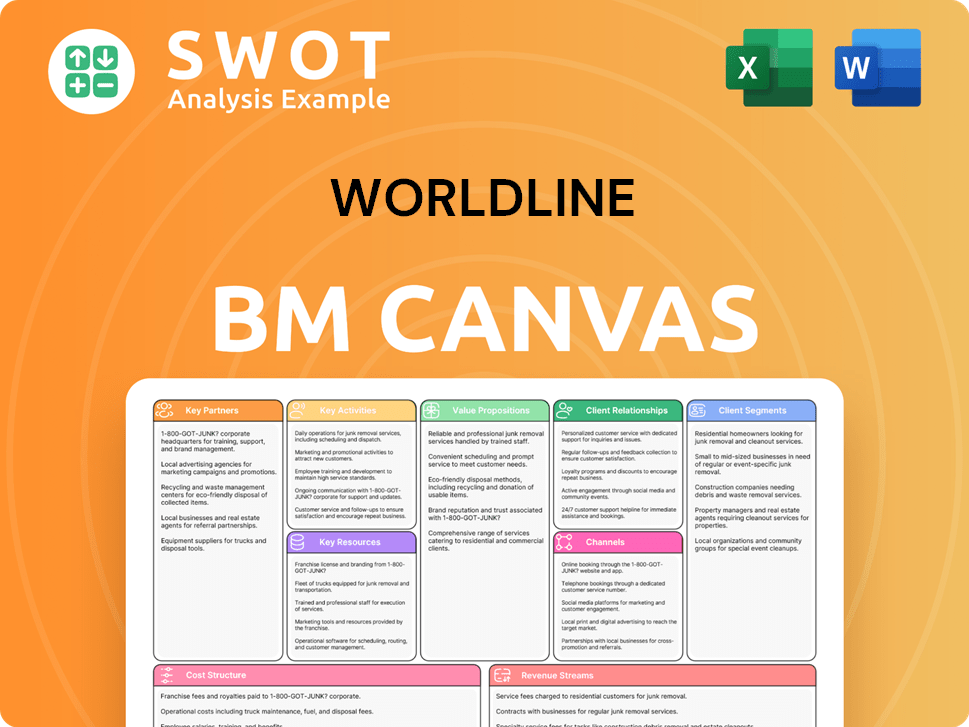
Worldline Business Model Canvas
- Complete 9-Block Business Model Canvas
- Effortlessly Communicate Your Business Strategy
- Investor-Ready BMC Format
- 100% Editable and Customizable
- Clear and Structured Layout
How Is Worldline Positioning Itself for Continued Success?
The Worldline company holds a prominent position in the European payment services sector, recognized as the largest payment processor in Europe and the fourth-largest globally. It serves over 1 million merchants and 1,200 financial institutions, showcasing its extensive reach and impact within the financial technology landscape. Despite its strong market presence, the company has faced challenges, including modest revenue growth in recent periods.
The company has experienced headwinds, including a soft macroeconomic environment and contract terminations. These factors have led to investor concerns, with the stock price near its 52-week low. These challenges highlight the dynamic nature of the payment processing industry and the need for strategic adaptability to maintain and grow market share. For further insights, you can read about the Owners & Shareholders of Worldline.
Industry Position
Worldline is the largest payment processor in Europe and ranks fourth globally, processing a significant volume of transactions for merchants and financial institutions. The company's extensive network and services make it a key player in the payment solutions industry.
Risks and Headwinds
Key risks include a soft macroeconomic environment, merchant contract terminations, and re-insourcing of services by major financial clients. S&P Global Ratings has a negative outlook due to higher restructuring costs and increased personnel expenses.
Future Outlook
Worldline expects 2025 to mirror 2024's growth, with acceleration in the second half of the year. The new CEO will unveil a strategic plan in autumn 2025, focusing on growth and free cash flow. Strategic initiatives include cost control and portfolio pruning.
Strategic Initiatives
The Power24 program aims for €220 million in savings by the end of 2025. The company is advancing its embedded payments strategy and exploring new partnerships, such as the joint venture with Crédit Agricole, expected to launch in early 2025.
Key Data Points
In 2024, Worldline reported a modest organic revenue growth of 0.5%. Q1 2025 saw a 2.3% organic revenue decline. S&P Global Ratings-adjusted debt to EBITDA was 3.9x in 2024, exceeding the 3.5x threshold. The Power24 program aims for €220 million in savings by the end of 2025.
- Organic revenue growth in 2024: 0.5%
- Organic revenue decline in Q1 2025: 2.3%
- S&P Global Ratings-adjusted debt to EBITDA (2024): 3.9x
- Power24 savings target by the end of 2025: €220 million
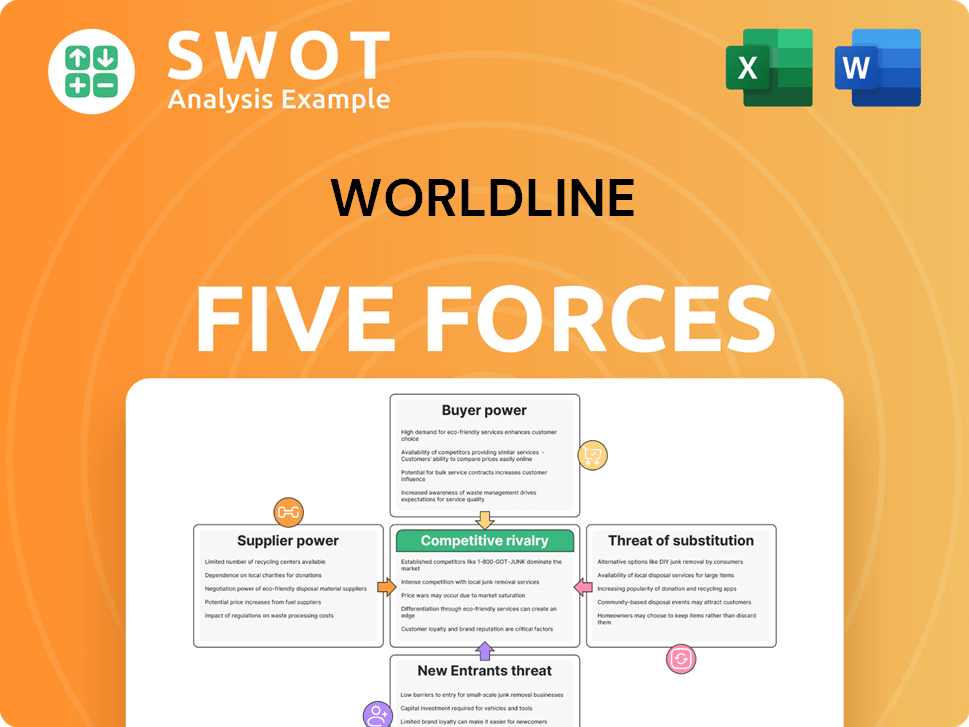
Worldline Porter's Five Forces Analysis
- Covers All 5 Competitive Forces in Detail
- Structured for Consultants, Students, and Founders
- 100% Editable in Microsoft Word & Excel
- Instant Digital Download – Use Immediately
- Compatible with Mac & PC – Fully Unlocked
Related Blogs

- What are Mission Vision & Core Values of Worldline Company?
- What is Competitive Landscape of Worldline Company?
- What is Growth Strategy and Future Prospects of Worldline Company?
- What is Sales and Marketing Strategy of Worldline Company?
- What is Brief History of Worldline Company?
- Who Owns Worldline Company?
- What is Customer Demographics and Target Market of Worldline Company?
Disclaimer
All information, articles, and product details provided on this website are for general informational and educational purposes only. We do not claim any ownership over, nor do we intend to infringe upon, any trademarks, copyrights, logos, brand names, or other intellectual property mentioned or depicted on this site. Such intellectual property remains the property of its respective owners, and any references here are made solely for identification or informational purposes, without implying any affiliation, endorsement, or partnership.
We make no representations or warranties, express or implied, regarding the accuracy, completeness, or suitability of any content or products presented. Nothing on this website should be construed as legal, tax, investment, financial, medical, or other professional advice. In addition, no part of this site—including articles or product references—constitutes a solicitation, recommendation, endorsement, advertisement, or offer to buy or sell any securities, franchises, or other financial instruments, particularly in jurisdictions where such activity would be unlawful.
All content is of a general nature and may not address the specific circumstances of any individual or entity. It is not a substitute for professional advice or services. Any actions you take based on the information provided here are strictly at your own risk. You accept full responsibility for any decisions or outcomes arising from your use of this website and agree to release us from any liability in connection with your use of, or reliance upon, the content or products found herein.