

WeWork Bundle

Can WeWork's Business Model Still Thrive?
WeWork, a pioneer in the flexible workspace arena, dramatically altered the landscape of commercial real estate. From its meteoric rise to its well-publicized challenges, the company's journey offers valuable lessons for investors, businesses, and anyone interested in the future of work. Its innovative approach to shared office space and community building has left a lasting impact on how we perceive and utilize office environments.

Delving into the WeWork SWOT Analysis reveals critical insights into its strengths, weaknesses, opportunities, and threats, offering a comprehensive understanding of the coworking company's position. Understanding the WeWork business model is crucial for evaluating the company's ability to adapt and succeed in a changing market, especially considering the rise of hybrid work. This analysis will explore how WeWork makes money, its membership cost structures, and the various flexible workspace options it provides, from hot desks to meeting room rentals across its worldwide locations.
What Are the Key Operations Driving WeWork’s Success?
The core of the WeWork business model revolves around providing flexible workspace solutions. This includes private offices, co-working spaces, and virtual office services. These offerings are designed to meet the needs of a wide range of clients, from freelancers to large corporations.
WeWork's value proposition centers on offering more than just office space; it aims to create a holistic work environment. This is achieved through community building, curated events, and shared spaces that foster collaboration and networking among its members. The company's focus is on creating a dynamic environment that supports various work styles and business needs.
Operationally, WeWork leases commercial properties, often in prime urban locations, and transforms them into fully furnished, managed workspaces. The company handles interior design, IT infrastructure, and provides common areas, meeting rooms, and amenities. WeWork then subleases these spaces to members on flexible terms, ranging from month-to-month to multi-year agreements. Key operational processes include real estate acquisition and development, community management, sales and marketing, and technology integration.
 WeWork's Offerings
WeWork provides a variety of workspace solutions. These include dedicated private offices, co-working spaces, and virtual office services. The company aims to cater to diverse needs, from freelancers to established businesses.
Operational Processes
The company focuses on real estate acquisition and development. It also emphasizes community management, sales and marketing, and technology integration. These processes are crucial for delivering a seamless member experience.
Value Proposition
WeWork offers more than just office space by building a community. It aims to foster collaboration and networking among its members. This approach differentiates it from traditional office solutions.
Target Audience
WeWork's flexible workspace options appeal to various groups. These include freelancers, small businesses, and large corporations. The company aims to accommodate diverse work styles and business needs.

Key Operational Aspects
WeWork's operational model involves leasing and transforming commercial properties. The company then subleases these spaces to members. Its supply chain includes partnerships with landlords, furniture suppliers, and technology providers.
- Real Estate Acquisition and Development: Securing and preparing properties for WeWork locations.
- Community Management: Creating and maintaining a collaborative environment.
- Sales and Marketing: Attracting and retaining members.
- Technology Integration: Providing a seamless member experience.
The company's distribution network is primarily its physical locations, complemented by a digital platform for booking and community engagement. WeWork's focus on community building, through curated events and shared spaces, aims to foster collaboration and networking among its members. The Growth Strategy of WeWork highlights the importance of adapting to changing market conditions and customer needs. As of early 2024, WeWork operates in numerous locations worldwide, offering various membership options to cater to different business requirements. The company's ability to provide flexible workspace solutions continues to be a key factor in its market presence.
WeWork SWOT Analysis
- Complete SWOT Breakdown
- Fully Customizable
- Editable in Excel & Word
- Professional Formatting
- Investor-Ready Format

How Does WeWork Make Money?
The primary revenue stream for WeWork comes from membership fees. These fees are generated by renting out shared office space, which includes private offices, dedicated desks, and hot-desking options within its coworking locations. The company's financial structure relies heavily on these recurring membership payments, making them the core of its business model.
Additional revenue is generated through various services. These include IT support, administrative assistance, meeting room bookings, and event spaces. While membership fees have historically accounted for the majority of revenue, these supplementary services contribute to the overall financial performance and enhance the value proposition for members. The company's approach is to offer a comprehensive workspace solution.
Post-bankruptcy, the focus has shifted towards streamlining and optimizing revenue per square foot. The restructuring plan, approved in May 2024, aims to shed unprofitable leases and renegotiate others. This strategic shift directly impacts future revenue generation and profitability, emphasizing efficient operations and sustainable financial practices.
Monetization Strategies
The company employs a tiered pricing model. Pricing is based on the type of space, lease duration, and included amenities. For instance, private offices with longer commitments typically offer lower monthly rates than flexible hot desks. This flexibility allows the company to cater to a wide range of businesses and individuals, from startups to established companies.
- Tiered Pricing: Rates vary based on space type and commitment length, offering options for different needs.
- Cross-selling: Enhancing the member experience and increasing revenue per user through supplementary services.
- Virtual Office Services: Providing a professional presence without the need for physical office space.
- Focus on Profitable Locations: Streamlining its portfolio and optimizing revenue per square foot.
WeWork PESTLE Analysis
- Covers All 6 PESTLE Categories
- No Research Needed – Save Hours of Work
- Built by Experts, Trusted by Consultants
- Instant Download, Ready to Use
- 100% Editable, Fully Customizable

Which Strategic Decisions Have Shaped WeWork’s Business Model?
The journey of WeWork has been marked by significant milestones and strategic shifts. Initially, the company experienced rapid global expansion, establishing a vast network of locations and becoming synonymous with flexible workspaces. However, the attempted IPO in 2019, which was withdrawn due to valuation concerns and governance issues, presented a major challenge. The company subsequently underwent substantial leadership changes and a restructuring effort. The COVID-19 pandemic further complicated operations as demand for office space plummeted.
In response to these challenges, WeWork adapted by emphasizing hybrid work solutions and focusing on enterprise clients seeking flexible arrangements for their employees. A key strategic move was the Chapter 11 bankruptcy filing in November 2023, which allowed the company to renegotiate or reject expensive leases and streamline its operations. This move was a direct response to a large real estate footprint that became unsustainable. The company continues to navigate the changing landscape of the workspace industry.
WeWork's competitive edge historically stemmed from its strong brand recognition, extensive global network of locations, and its focus on community building. While its brand was impacted by past controversies, the company continues to leverage its established presence and operational expertise in managing flexible spaces. Post-bankruptcy, WeWork is aiming to solidify its competitive position by focusing on profitability, efficient portfolio management, and catering to the persistent demand for flexible work solutions in a post-pandemic world. Its ability to adapt its business model to market realities and shed unprofitable ventures will be crucial for its sustained relevance.
Key Milestones
WeWork's key milestones include rapid global expansion in the mid-2010s, the failed IPO in 2019, and the Chapter 11 bankruptcy filing in November 2023. These events highlight the company's growth, challenges, and restructuring efforts. The company has had to adapt to market changes and financial pressures.
Strategic Moves
Strategic moves include the shift towards hybrid work solutions and enterprise clients, along with the Chapter 11 bankruptcy filing. These moves aimed to address the changing demand for office space and manage financial liabilities. The focus is now on profitability and efficient portfolio management.
Competitive Edge
WeWork's competitive edge has historically come from its strong brand recognition and extensive global network. The company continues to leverage its established presence in managing flexible spaces. Post-bankruptcy, the focus is on profitability and adapting to the evolving workspace market.
Recent Developments
As of early 2024, WeWork is focused on emerging from bankruptcy and restructuring its operations. The company aims to reduce its debt and optimize its real estate portfolio. It is also concentrating on attracting and retaining enterprise clients.
Financial and Operational Data
Post-bankruptcy, WeWork aims to reduce its debt and streamline operations. The company is focusing on optimizing its real estate portfolio and improving profitability. The company's ability to adapt to market realities will be crucial for its long-term success. For a detailed look at the company's journey, you can read more about the WeWork business model.
- WeWork filed for Chapter 11 bankruptcy in November 2023.
- The company is working to renegotiate leases and reduce its real estate footprint.
- WeWork is focusing on attracting enterprise clients and offering flexible workspace solutions.
- The company aims to achieve profitability and improve its financial performance.
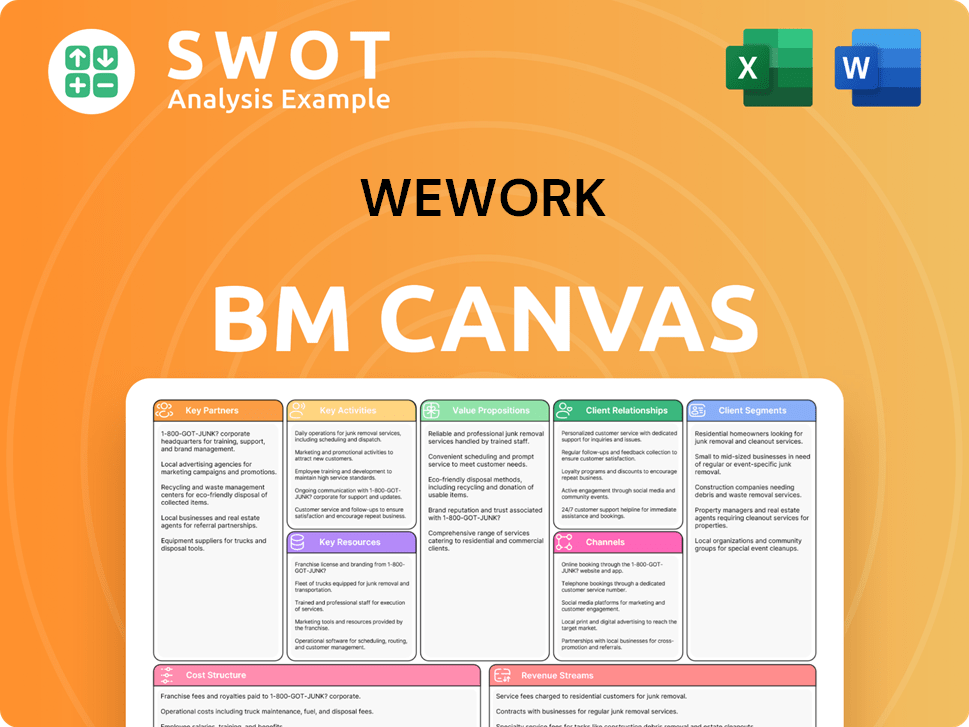
WeWork Business Model Canvas
- Complete 9-Block Business Model Canvas
- Effortlessly Communicate Your Business Strategy
- Investor-Ready BMC Format
- 100% Editable and Customizable
- Clear and Structured Layout
How Is WeWork Positioning Itself for Continued Success?
Despite past challenges, the flexible workspace industry still sees a significant presence from WeWork. While facing competition from established players and landlords offering flexible terms, WeWork's brand recognition and global footprint remain substantial. Customer loyalty is a key asset, especially among small to medium-sized businesses and enterprise clients seeking agility. The flexible workspace market is constantly evolving, and WeWork's ability to adapt will be crucial for its long-term success.
However, WeWork faces key risks, including regulatory changes and new competitors in the shared office space market. Technological disruption and changing consumer preferences, such as the shift toward remote work, also pose challenges. WeWork's strategic initiatives, post-bankruptcy, focus on optimizing its real estate portfolio and achieving sustainable profitability. The future outlook depends on executing its leaner business model and adapting to long-term trends in how and where people work, which includes understanding the Growth Strategy of WeWork.
Industry Position
WeWork remains a notable player in the flexible workspace market, despite its past struggles. It competes with established companies and landlords offering flexible terms directly. Strong brand recognition and a global presence give WeWork a significant market share within the coworking company segment.
Risks
Regulatory changes and new competitors, including property owners, pose risks. Technological disruption and changing consumer preferences, like the shift towards remote work, could also impact demand. WeWork must innovate its offerings to meet evolving client needs.
Future Outlook
WeWork aims to achieve sustainable profitability by streamlining operations and catering to demand for flexible workspaces. Its future depends on executing a leaner business model, attracting and retaining members, and adapting to long-term trends. The company's ability to navigate these changes will determine its long-term success.
Key Strategies
Post-bankruptcy, WeWork is focusing on optimizing its real estate portfolio. This involves exiting underperforming locations and renegotiating leases. The goal is to streamline operations and cater to the ongoing demand for flexible and managed workspaces.
WeWork's Challenges and Opportunities
WeWork's ability to adapt to market changes and execute its strategic initiatives will determine its success. The company must manage risks like regulatory changes and competition while capitalizing on opportunities in the flexible workspace market. Focusing on customer needs and operational efficiency is crucial.
- Market Competition: Facing competition from IWG, smaller regional providers, and landlords offering flexible terms directly.
- Technological Disruption: Need to innovate digital platforms and offerings to meet evolving client needs.
- Changing Preferences: Adapting to a sustained shift towards remote work and its impact on demand.
- Strategic Initiatives: Post-bankruptcy, focusing on optimizing the real estate portfolio.
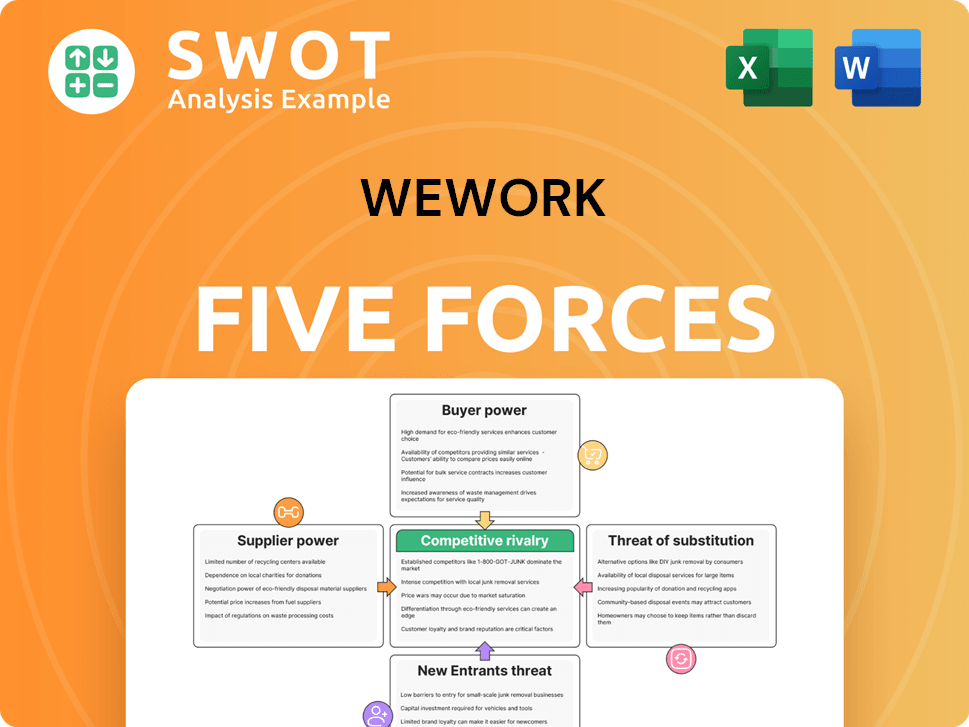
WeWork Porter's Five Forces Analysis
- Covers All 5 Competitive Forces in Detail
- Structured for Consultants, Students, and Founders
- 100% Editable in Microsoft Word & Excel
- Instant Digital Download – Use Immediately
- Compatible with Mac & PC – Fully Unlocked
Related Blogs

- What are Mission Vision & Core Values of WeWork Company?
- What is Competitive Landscape of WeWork Company?
- What is Growth Strategy and Future Prospects of WeWork Company?
- What is Sales and Marketing Strategy of WeWork Company?
- What is Brief History of WeWork Company?
- Who Owns WeWork Company?
- What is Customer Demographics and Target Market of WeWork Company?
Disclaimer
All information, articles, and product details provided on this website are for general informational and educational purposes only. We do not claim any ownership over, nor do we intend to infringe upon, any trademarks, copyrights, logos, brand names, or other intellectual property mentioned or depicted on this site. Such intellectual property remains the property of its respective owners, and any references here are made solely for identification or informational purposes, without implying any affiliation, endorsement, or partnership.
We make no representations or warranties, express or implied, regarding the accuracy, completeness, or suitability of any content or products presented. Nothing on this website should be construed as legal, tax, investment, financial, medical, or other professional advice. In addition, no part of this site—including articles or product references—constitutes a solicitation, recommendation, endorsement, advertisement, or offer to buy or sell any securities, franchises, or other financial instruments, particularly in jurisdictions where such activity would be unlawful.
All content is of a general nature and may not address the specific circumstances of any individual or entity. It is not a substitute for professional advice or services. Any actions you take based on the information provided here are strictly at your own risk. You accept full responsibility for any decisions or outcomes arising from your use of this website and agree to release us from any liability in connection with your use of, or reliance upon, the content or products found herein.