

Scentre Group Bundle

Unveiling Scentre Group: How Does This Retail Giant Operate?
Ever wondered how Scentre Group, the powerhouse behind Westfield shopping centres, truly functions? This deep dive explores the inner workings of a retail property titan, revealing its strategic approach to dominating the Australian and New Zealand markets. From its impressive portfolio to its innovative business model, understanding Scentre Group is key to grasping the future of retail.

Scentre Group, a leading real estate investment trust, shapes the retail property landscape with its Westfield shopping centres. Its Scentre Group SWOT Analysis provides a detailed look into its strengths and weaknesses. By examining its business model, investors and industry watchers alike can gain valuable insights into how this retail property giant generates revenue and maintains its market position. The company's strategic focus on creating vibrant, mixed-use destinations is central to its success in the competitive retail property sector.
What Are the Key Operations Driving Scentre Group’s Success?
Scentre Group's core operations are centered on owning, developing, and managing Westfield living centres. The company aims to create value through exceptional retail environments and experiences. Its primary focus involves providing premium retail spaces for a diverse range of tenants, from international luxury brands to local businesses, while also emphasizing services, entertainment, and community engagement.
The company's customer segments are broad, including shoppers looking for various retail and lifestyle options, and businesses seeking prime locations with high foot traffic. Scentre Group's operational processes are sophisticated, involving meticulous site selection, master planning, design, and construction of large-scale retail and mixed-use developments. This approach allows for integrated project delivery from conception to completion.
Post-development, Scentre Group's property management expertise ensures optimal operational efficiency, tenant relations, and customer satisfaction. The company's supply chain includes a vast network of construction partners, suppliers, and service providers. Distribution networks are tied to the physical locations of its centres, strategically placed in high-density urban and suburban areas. Scentre Group's focus on 'living centres' sets it apart, evolving beyond traditional shopping malls to offer a holistic experience.
 Scentre Group Business Model Overview
The Scentre Group business model revolves around the ownership, development, and management of Westfield shopping centres. It generates revenue primarily through rental income from tenants, service fees, and other related activities. The company focuses on creating vibrant retail environments that attract both customers and businesses.
Value Proposition of Scentre Group
Scentre Group offers a compelling value proposition to both tenants and customers. For tenants, it provides prime retail locations with high foot traffic and access to a large customer base. For customers, it offers a diverse range of retail, entertainment, and lifestyle options in a convenient and attractive environment.
Key Operational Processes
Scentre Group's operational processes include site selection, master planning, design, construction, and ongoing property management. These processes are crucial for ensuring the success and profitability of its shopping centres. The company leverages its in-house development capabilities to ensure integrated project delivery.
Market Position and Competitive Advantage
Scentre Group holds a strong market position in the retail property sector, particularly in Australia and New Zealand. Its competitive advantage stems from its premium locations, strong tenant relationships, and focus on creating 'living centres' that offer a holistic experience. This includes dining, entertainment, and community spaces.

Financial and Operational Highlights
In the first half of 2024, Scentre Group reported a net operating income of $573.4 million, demonstrating its strong performance. The company's focus on creating 'living centres' has led to increased customer dwell times and enhanced customer benefits. Scentre Group's strategic initiatives, including digital connectivity and data analytics, support its ability to understand consumer behavior and adapt to evolving market trends.
- Scentre Group's portfolio includes a significant number of shopping centres across Australia and New Zealand.
- The company’s focus on sustainability initiatives is becoming increasingly important.
- Tenant relationships are crucial for Scentre Group's success, with a focus on long-term partnerships.
- For more details, you can read about the Growth Strategy of Scentre Group.
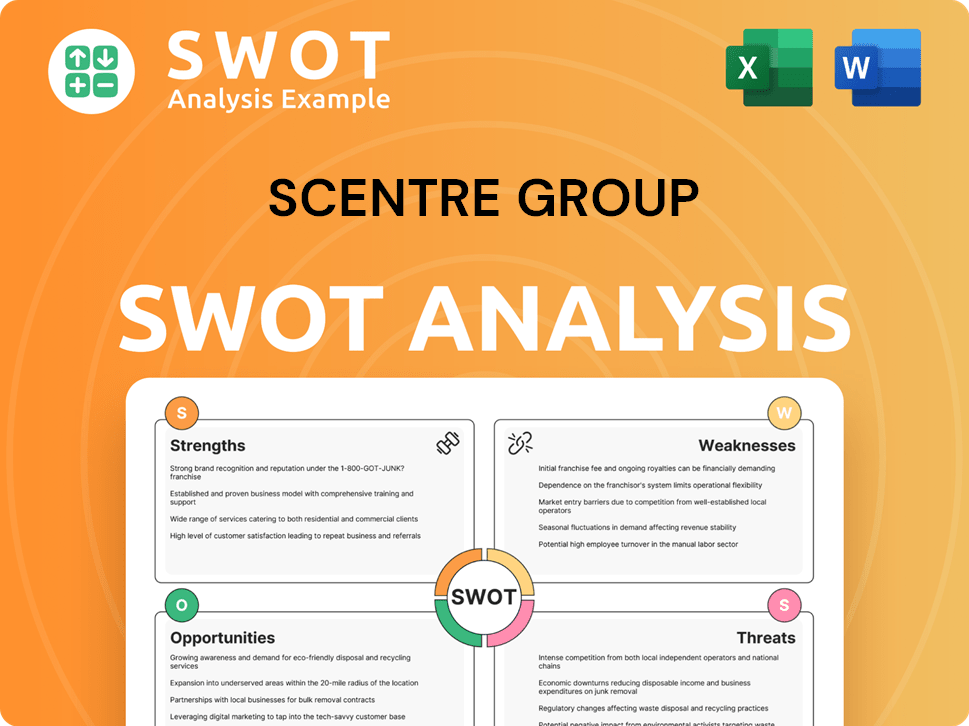
Scentre Group SWOT Analysis
- Complete SWOT Breakdown
- Fully Customizable
- Editable in Excel & Word
- Professional Formatting
- Investor-Ready Format
How Does Scentre Group Make Money?
The main revenue streams and monetization strategies of Scentre Group are centered around its portfolio of shopping centres, primarily under the Westfield brand. The company generates income mainly through retail rental income, property management services, and development activities. Scentre Group's financial health is closely tied to the performance of its tenants and the overall retail environment.
Scentre Group's financial performance in 2023 reflects the significance of its revenue model. In the full year ended December 31, 2023, Scentre Group reported funds from operations (FFO) of A$1,274.6 million, marking a 5.5% increase compared to the previous year. Net property income for the same period was A$1,972.1 million, which is a 7.2% increase. These figures highlight the importance of rental income in its overall financial success.
Beyond base rent, Scentre Group employs various monetization strategies to boost revenue. These include turnover rent, car park fees, commercialization of common areas, and advertising. Property management fees and development activities also contribute to its revenue. The company's ability to attract and retain a strong mix of retailers, along with its focus on customer experience, supports its diversified revenue model.
Monetization Strategies
Scentre Group uses several strategies to generate revenue and maximize the value of its assets. The company's focus on creating engaging customer experiences and attracting a mix of national and international retailers supports its diversified revenue model. Further insights into their marketing approach can be found in this article about the Marketing Strategy of Scentre Group.
- Rental Income: Primarily from leasing space to retailers in its shopping centres.
- Turnover Rent: A percentage of a tenant's sales, aligning the company's success with its retailers.
- Car Park Fees: Revenue generated from parking facilities within its properties.
- Commercialization: Income from events, pop-up activations, and advertising within its centres.
- Property Management Fees: Fees from joint venture partners.
- Development Activities: Revenue from redevelopments and expansions of existing centres.
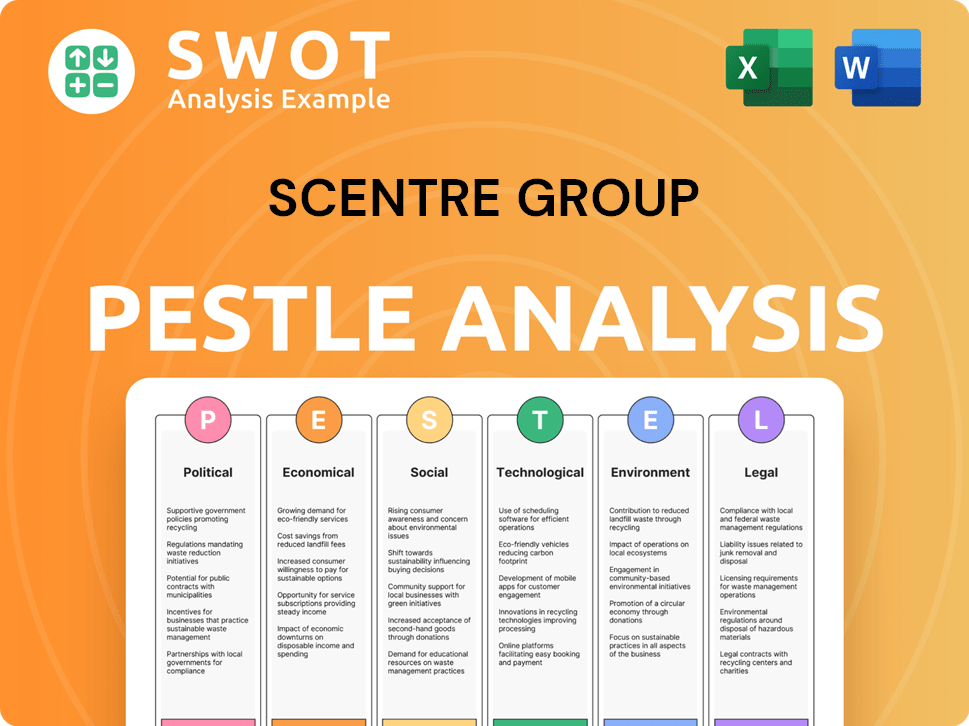
Scentre Group PESTLE Analysis
- Covers All 6 PESTLE Categories
- No Research Needed – Save Hours of Work
- Built by Experts, Trusted by Consultants
- Instant Download, Ready to Use
- 100% Editable, Fully Customizable
Which Strategic Decisions Have Shaped Scentre Group’s Business Model?
The journey of Scentre Group has been marked by significant milestones and strategic shifts that have shaped its operational and financial trajectory. A key event was its spin-off from Westfield Group in 2014, establishing a focused entity for the Australian and New Zealand markets. Since then, the company has consistently invested in the redevelopment and enhancement of its existing centres, transforming them into 'living centres' to meet evolving consumer demands.
Operational challenges have included navigating shifts in consumer behaviour towards online retail and adapting to the impact of global events such as the COVID-19 pandemic. Scentre Group responded by accelerating its digital strategy, enhancing its Westfield Plus membership program, and focusing on creating compelling in-centre experiences that cannot be replicated online. The company's ability to adapt to these changes has been crucial for its sustained performance.
Scentre Group's competitive advantages are multifaceted. The strong brand recognition associated with the 'Westfield' name provides a significant edge. The company benefits from economies of scale, owning and managing a vast portfolio of high-quality assets. Its deep expertise in retail property development and management, coupled with a data-driven approach to understanding consumer and retailer needs, further strengthens its position.
Key Milestones
The spin-off from Westfield Group in 2014 was a pivotal moment, creating a dedicated focus on the Australian and New Zealand markets. Ongoing investments in redevelopments have transformed centres into 'living centres'. In 2023, the company started A$750 million in development projects, including the redevelopment of Westfield Knox.
Strategic Moves
Responding to changing consumer behaviour, the company accelerated its digital strategy. Enhancements to the Westfield Plus membership program have been key. The focus remains on creating unique in-centre experiences that complement online retail.
Competitive Edge
The 'Westfield' brand provides strong recognition and a competitive advantage. Economies of scale from a large portfolio of high-quality assets are beneficial. A data-driven approach to understanding consumer and retailer needs strengthens its market position.
Recent Data
The Westfield Plus membership program reached 3.8 million members by December 31, 2023. The company continues to adapt to new trends by investing in technology and sustainability. Scentre Group's focus on curating diverse tenant mixes ensures its centres remain attractive.
Scentre Group's Competitive Advantages
Scentre Group's competitive advantages are multifaceted, including strong brand recognition and economies of scale. The company leverages deep expertise in retail property development and management. It also uses a data-driven approach to understand consumer and retailer needs.
- Strong brand recognition associated with the 'Westfield' name.
- Economies of scale from owning and managing a vast portfolio of high-quality assets.
- Deep expertise in retail property development and management.
- A data-driven approach to understanding consumer and retailer needs.
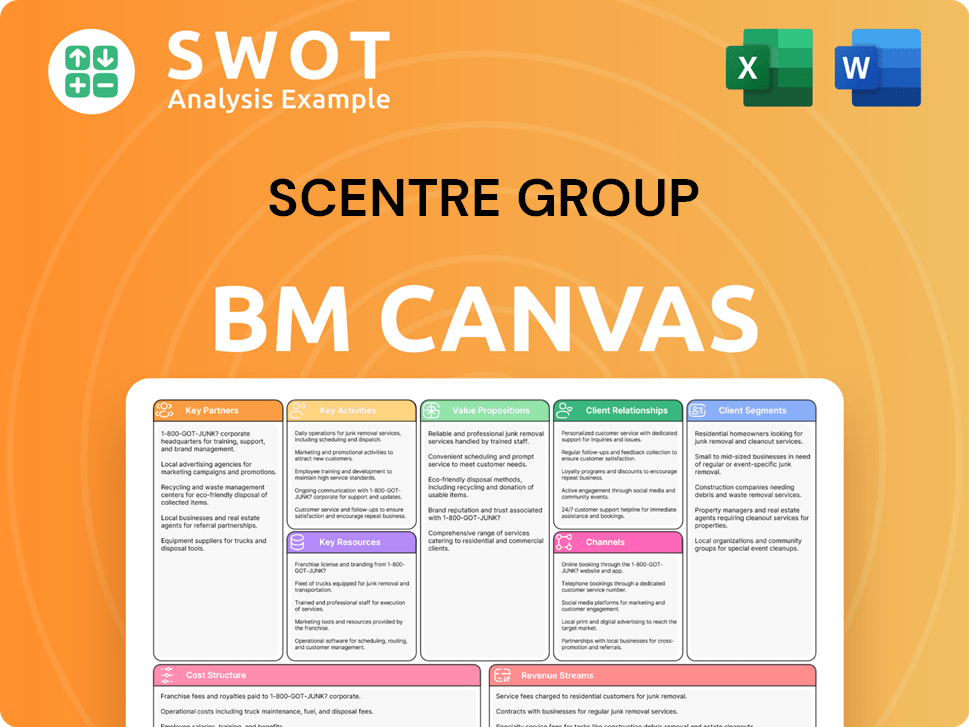
Scentre Group Business Model Canvas
- Complete 9-Block Business Model Canvas
- Effortlessly Communicate Your Business Strategy
- Investor-Ready BMC Format
- 100% Editable and Customizable
- Clear and Structured Layout
How Is Scentre Group Positioning Itself for Continued Success?
Scentre Group holds a leading position in the retail property sector across Australia and New Zealand. It operates a portfolio of 42 Westfield living centres and has a significant market capitalization. This strong market presence is built on creating premium, experiential destinations, which fosters customer loyalty and attracts high-quality tenants. The company's focus is on the regional shopping centre segment, where it holds a substantial market share.
However, Scentre Group faces challenges, including economic downturns and the rise of e-commerce. These factors can impact rental income, tenant solvency, and the need for continuous innovation. Regulatory changes and rising interest rates also pose risks to its operations and development plans. Despite these challenges, the company is committed to enhancing its centres and adapting to evolving consumer preferences.
Industry Position
Scentre Group's portfolio includes 42 Westfield living centres, making it a key player in the shopping centres industry. Its focus on large, high-quality centres in key metropolitan areas gives it a significant market share. The company's strategy emphasizes creating vibrant destinations that attract both consumers and retailers.
Risks
Economic downturns can impact consumer spending and, consequently, rental income. The growth of e-commerce poses a constant challenge, requiring Scentre Group to innovate its physical retail experiences. Regulatory changes and fluctuations in interest rates also present operational and financial risks.
Future Outlook
Scentre Group aims to enhance its living centres and expand mixed-use offerings. The company is leveraging technology to improve customer engagement and operational efficiency. A disciplined approach to capital management and development opportunities within its existing portfolio are also central to its strategy.
Strategic Initiatives
The company focuses on evolving its centres into integrated hubs. These hubs cater to the diverse needs of modern consumers, ensuring long-term relevance. Growth Strategy of Scentre Group includes creating sustainable and community-focused destinations.
Key Considerations for Scentre Group
The company's success depends on its ability to adapt to changing consumer behaviours and economic conditions. Scentre Group must continue to invest in its properties and enhance the customer experience to stay competitive. Managing financial risks, including interest rate fluctuations and potential economic downturns, is also crucial.
- Focus on creating engaging retail experiences.
- Strategic capital allocation and development.
- Adapt to the evolving retail landscape.
- Strong tenant relationships and community focus.
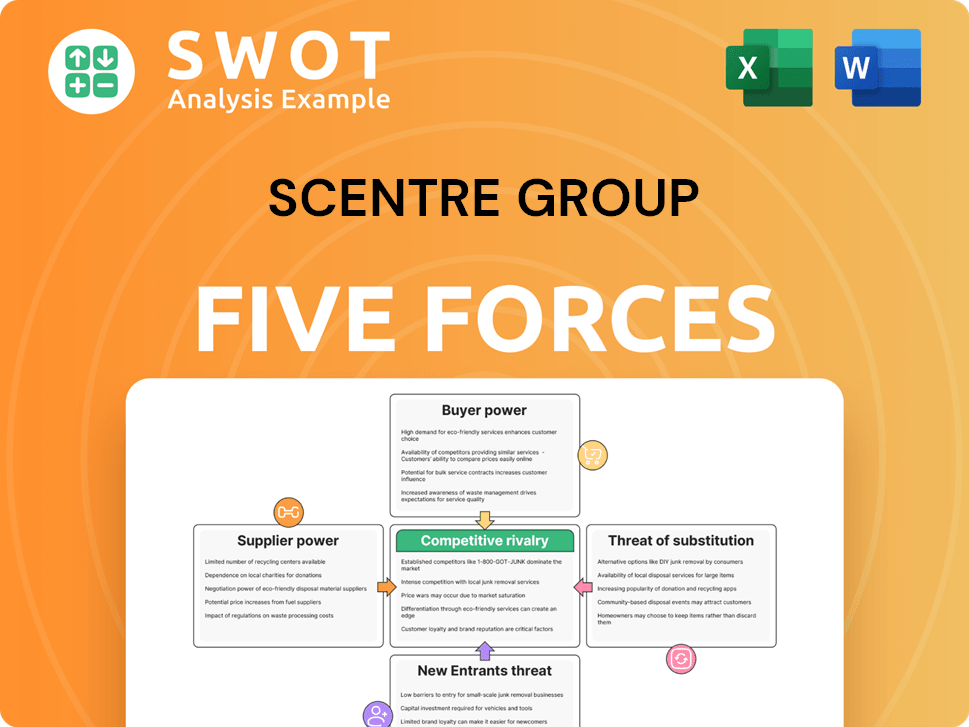
Scentre Group Porter's Five Forces Analysis
- Covers All 5 Competitive Forces in Detail
- Structured for Consultants, Students, and Founders
- 100% Editable in Microsoft Word & Excel
- Instant Digital Download – Use Immediately
- Compatible with Mac & PC – Fully Unlocked
Related Blogs

- What are Mission Vision & Core Values of Scentre Group Company?
- What is Competitive Landscape of Scentre Group Company?
- What is Growth Strategy and Future Prospects of Scentre Group Company?
- What is Sales and Marketing Strategy of Scentre Group Company?
- What is Brief History of Scentre Group Company?
- Who Owns Scentre Group Company?
- What is Customer Demographics and Target Market of Scentre Group Company?
Disclaimer
All information, articles, and product details provided on this website are for general informational and educational purposes only. We do not claim any ownership over, nor do we intend to infringe upon, any trademarks, copyrights, logos, brand names, or other intellectual property mentioned or depicted on this site. Such intellectual property remains the property of its respective owners, and any references here are made solely for identification or informational purposes, without implying any affiliation, endorsement, or partnership.
We make no representations or warranties, express or implied, regarding the accuracy, completeness, or suitability of any content or products presented. Nothing on this website should be construed as legal, tax, investment, financial, medical, or other professional advice. In addition, no part of this site—including articles or product references—constitutes a solicitation, recommendation, endorsement, advertisement, or offer to buy or sell any securities, franchises, or other financial instruments, particularly in jurisdictions where such activity would be unlawful.
All content is of a general nature and may not address the specific circumstances of any individual or entity. It is not a substitute for professional advice or services. Any actions you take based on the information provided here are strictly at your own risk. You accept full responsibility for any decisions or outcomes arising from your use of this website and agree to release us from any liability in connection with your use of, or reliance upon, the content or products found herein.