

Resona Holdings Bundle

How Does Resona Holdings Navigate Japan's Financial Landscape?
Resona Holdings, a key player in Japanese banking, offers a wide array of financial services to individuals and corporations. Recent financial results highlight its strength, with significant growth in both ordinary and net income during fiscal year 2024. This success underscores Resona Holdings' strategic importance and its ability to thrive in a competitive market.

With approximately ¥77 trillion in total assets, Resona Holdings ranks as the fourth-largest banking group in Japan. Its extensive network includes a strong presence in major Japanese cities and strategic international branches. To gain a deeper understanding of Resona Holdings SWOT Analysis, and its operational strategies, delve into how this financial powerhouse generates value and maintains its competitive edge in the dynamic financial services industry. This analysis will explore the intricacies of Resona Bank, its customer service, and its overall impact on the Japanese economy.
What Are the Key Operations Driving Resona Holdings’s Success?
Resona Holdings, a key player in Japanese banking, delivers value through a diverse range of financial services. These services are segmented into Retail, Corporate, Market, and Kansai Mirai Financial Group divisions. The company's operations are designed to serve both individual and corporate clients, offering a comprehensive suite of financial products and services.
The company's value proposition centers on its ability to provide tailored financial solutions. Resona Holdings focuses on meeting the specific needs of its customers, from personal loans and asset management for individuals to corporate lending and business succession support for companies. This customer-centric approach is supported by a strong operational infrastructure and a commitment to technological advancement.
Resona Holdings has a robust customer base, including approximately 16 million individual customers and 500,000 corporate customers. The company's focus on retail and SME clients is reflected in its loan portfolio, with loans to individuals and SMEs accounting for roughly 80% of the total. This strategic emphasis underscores Resona's commitment to these core segments.
 Retail Division Services
The Retail Division offers consulting services for personal loans, asset management, and asset succession. This division focuses on providing financial solutions tailored to individual customer needs. Resona Bank aims to build long-term relationships by offering personalized financial advice and support.
Corporate Division Services
The Corporate Division supports business growth through corporate lending, asset management using trusts, real estate operations, corporate pensions, and business succession. This division serves corporate clients, helping them achieve their financial goals. Resona Holdings provides comprehensive support to its corporate clients.
Market Division Activities
The Market Division engages in financing and investment of funds, foreign exchange, bonds, and derivatives through financial markets. This division manages Resona's financial market activities. Resona Bank aims to maximize returns through strategic market operations.
Kansai Mirai Financial Group
The Kansai Mirai Financial Group segment, which merged into Resona Holdings on April 1, 2024, conducts banking business primarily in the Kansai region, including deposit and lending services. This segment expands Resona's reach and service offerings. Resona Bank strengthens its presence in the Kansai region.

Operational Highlights
Resona's operational efficiency is enhanced by its extensive branch network and technological investments. The company has invested heavily in digital platforms and partnerships to improve customer service and streamline operations. These efforts have led to increased efficiency and enhanced customer satisfaction.
- As of March 31, 2022, Resona had 815 manned branches in Japan, facilitating direct customer interactions.
- A 10 billion yen investment in a low-code development platform has modernized the branch system, improving efficiency.
- Partnerships with technology providers like Fiserv and IBM have boosted digital platforms, with a 30% year-on-year increase in mobile banking downloads by March 2023.
- Resona's collaborations with regional banks have helped it capture approximately 25% of the market share in SME lending in the Kanto area in 2022.
For more insights into the specific customer groups Resona Holdings targets, you can explore the Target Market of Resona Holdings.
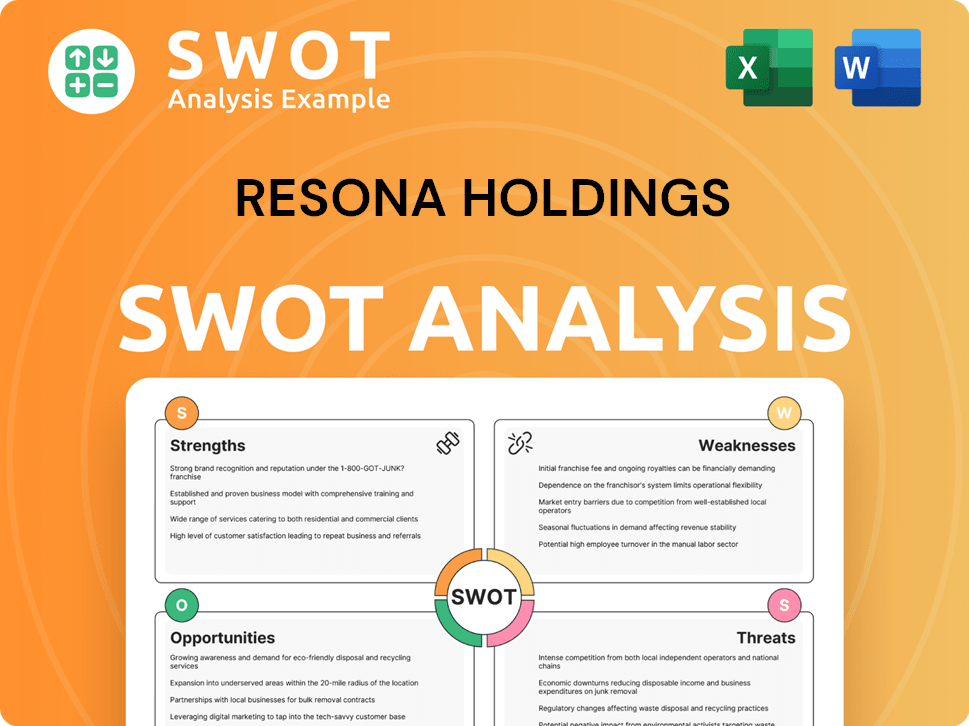
Resona Holdings SWOT Analysis
- Complete SWOT Breakdown
- Fully Customizable
- Editable in Excel & Word
- Professional Formatting
- Investor-Ready Format
How Does Resona Holdings Make Money?
Resona Holdings generates revenue through a mix of interest income, service fees, and other financial activities. The company's financial performance is a key indicator of its success in the Japanese banking sector. Understanding how Resona Holdings makes money provides valuable insights into its operations and strategic focus.
The company's consolidated ordinary income for fiscal year 2024 (April 1, 2024 - March 31, 2025) was reported at ¥1,117,491 million, marking an increase of 18.7% from the previous fiscal year. Net income attributable to owners of the parent for the same period was ¥213,324 million, reflecting a 34.2% rise. These figures highlight Resona Group's strong financial health and growth trajectory.
Resona Bank and its parent company employ various strategies to generate income and maintain a competitive edge in the financial services Japan market. These strategies are essential for the company's long-term sustainability and growth.

Interest Income
Interest income is a significant revenue stream for Resona Holdings, primarily derived from lending activities. For the fiscal year ending March 2023, interest income totaled approximately ¥469.4 billion. This revenue reflects the bank's loan portfolio and interest rates.
Service Fees
Service fees represent another critical revenue source. In fiscal year 2022, service fee income was about ¥138.2 billion. These fees come from various banking services, including account maintenance, transactions, and advisory services. Resona is expanding its fee-based businesses.
Corporate Banking Segment
The Corporate Banking segment was the primary revenue driver in the last 12 months (as of May 16, 2025), contributing JP¥457.9 billion, or 46% of total revenue. This segment's performance is crucial to Resona Holdings' overall financial success.
Monetization Strategies
Resona Holdings focuses on asset management services, especially with the development of NISA (Nippon Individual Savings Account) and other systems. The company leverages its corporate pension fund management expertise, with over 60 years of experience. The company is focused on expanding its top-line income.
Impact of Interest Rates
The lifting of the negative interest rate policy by the Bank of Japan in March 2024 is expected to benefit Resona Group's net interest income. The company's balance sheet is sensitive to interest rate changes. This strategic move supports the company's financial performance.
Debit Card Income
The company has seen growth in its fee income, with debit card income reaching ¥5.9 billion. This shows the effectiveness of its strategies in expanding its revenue streams. This growth is an important part of Resona Holdings' financial strategy.
Key Revenue Components
Resona Holdings' revenue streams are diverse, with interest income and service fees playing significant roles. The company's focus on expanding fee-based businesses and asset management services is part of its long-term strategy. For more details, you can read about the Brief History of Resona Holdings.
- Interest income from lending activities.
- Service fees from various banking services.
- Corporate Banking segment contributing a significant portion of revenue.
- Asset management services and NISA development.
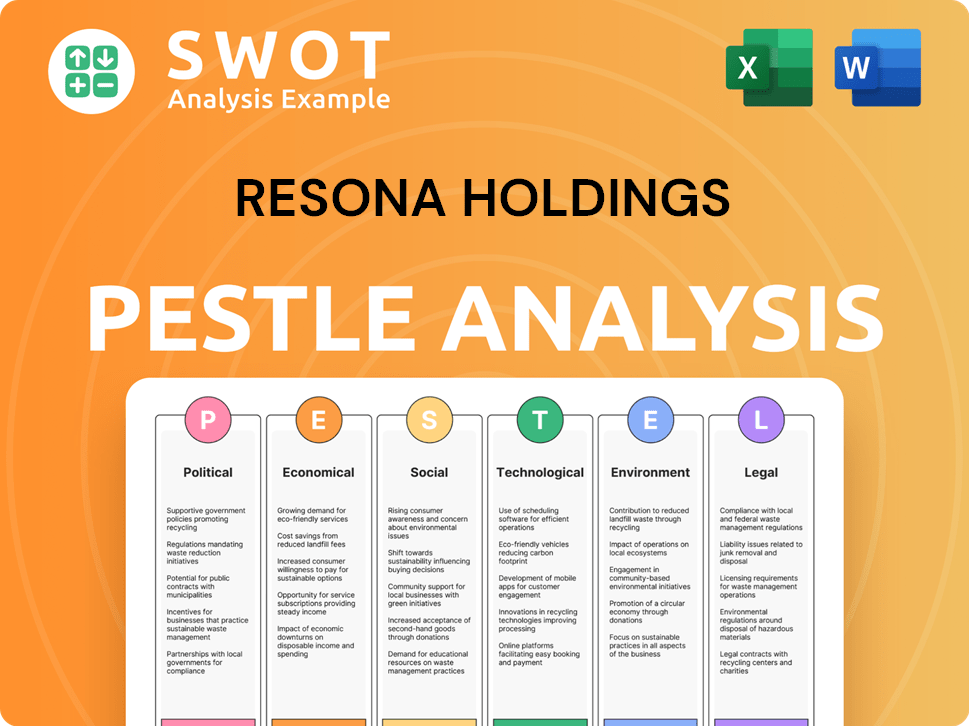
Resona Holdings PESTLE Analysis
- Covers All 6 PESTLE Categories
- No Research Needed – Save Hours of Work
- Built by Experts, Trusted by Consultants
- Instant Download, Ready to Use
- 100% Editable, Fully Customizable
Which Strategic Decisions Have Shaped Resona Holdings’s Business Model?
Resona Holdings has strategically navigated the evolving landscape of Japanese banking, achieving key milestones and implementing significant strategic moves. These actions have shaped its operations and financial performance, allowing it to maintain a competitive edge in the financial services sector. The company's focus on efficiency, strategic partnerships, and customer-centric services underscores its commitment to sustained growth.
The company's journey includes major operational overhauls and strategic acquisitions. These initiatives have not only expanded its reach but also enhanced its operational efficiency, particularly through technological advancements. The integration of acquired entities and the adaptation to changing market conditions demonstrate Resona's proactive approach to maintaining its market position and adapting to new challenges.
Resona Holdings' competitive strengths are rooted in its robust retail customer base and strong market presence. The company's strategic focus on specific segments, such as retail banking and asset management, allows it to differentiate itself from competitors. Furthermore, Resona's commitment to technological innovation and customer service enhances its ability to generate revenue and maintain a strong market share.
Key Milestones
A significant milestone was the investment of 10 billion yen in a new branch system, rolled out from April 2021 to December 2021. This initiative, supported by NTT DATA, aimed to reduce physical terminals by over half. The acquisition of Kansai Urban Banking and Minato Bank in 2017 expanded assets and revenue by approximately 20%.
Strategic Moves
The merger of Kansai Mirai Financial Group into Resona Holdings on April 1, 2024, streamlined the group structure. The integration of Minato Bank's back-office operations was completed in January 2025, supporting a 'one platform multiregional strategy'. The lifting of the negative interest rate policy by the Bank of Japan in March 2024 is a positive development.
Competitive Edge
Resona boasts a strong retail customer base, serving 16 million individual and 500,000 corporate customers. It holds significant market shares in key areas, such as around 40% in Saitama prefecture and nearly 20% in Osaka. The company's focus on retail and asset management helps avoid direct competition with larger banks.
Market Adaptation
Resona Holdings is actively engaged in asset management services. The company is responding to changing customer needs and adapting to new trends. Continued investment in efficient IT systems and user-friendly interfaces supports growth in fee revenue from mass-market investment products.
Financial Performance and Strategy
Resona Holdings' financial performance is influenced by its strategic decisions and market conditions. The company aims to expand top-line income by leveraging its retail customer base and consulting capabilities. The company is rebalancing its securities portfolio to adapt to the changing interest rate environment.
- Focus on retail segment, particularly housing and investment-property loans.
- Investment in efficient IT systems and user-friendly interfaces.
- Adaptation to new trends by actively engaging in asset management services.
- Focus on expanding top-line income by leveraging its strong retail customer base.
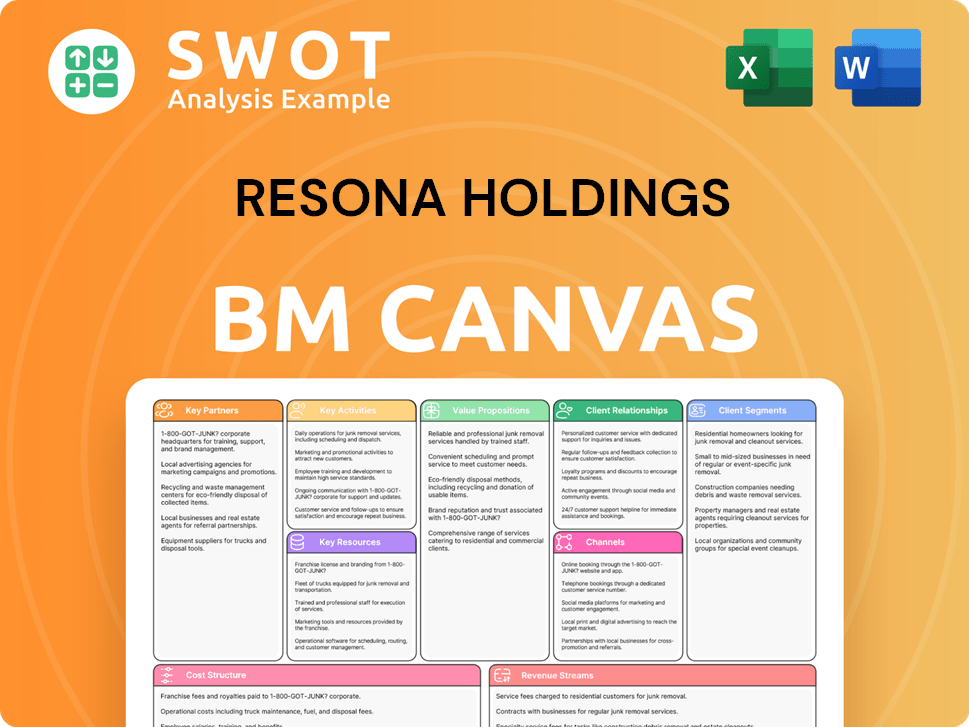
Resona Holdings Business Model Canvas
- Complete 9-Block Business Model Canvas
- Effortlessly Communicate Your Business Strategy
- Investor-Ready BMC Format
- 100% Editable and Customizable
- Clear and Structured Layout
How Is Resona Holdings Positioning Itself for Continued Success?
Resona Holdings holds a significant position within the Japanese banking industry, ranking among the top financial institutions. As of March 31, 2024, the company's total assets were approximately ¥77 trillion, making it the fourth-largest banking group in Japan. It focuses on retail banking and SMEs, which differentiates it from larger megabanks. The Owners & Shareholders of Resona Holdings are key to understanding its market dynamics.
Despite its strong market position, Resona Holdings faces several risks. These include nonperforming loans, business strategy risks, and challenges from regulatory changes. The company's nonperforming loan ratio was 1.51% as of June 2024, slightly higher than other major Japanese banks. However, the lifting of the negative interest rate policy is seen as a potential benefit.
Industry Position
Resona Holdings is a major player in the Japanese banking sector. As of March 31, 2024, it held approximately ¥77 trillion in total assets. Resona Group's strong market presence is particularly notable in Saitama and Osaka prefectures.
Risks
Resona faces risks related to nonperforming loans and strategic challenges. Its nonperforming loan ratio was 1.51% as of June 2024. The company is also exposed to regulatory changes and competition.
Future Outlook
Resona aims to expand profitability and shareholder returns. The company targets a net income attributable to owners of parent of ¥240 billion for the fiscal year ending March 31, 2026. Strategic initiatives include top-line income growth and loan quality improvements.
Financial Targets
Resona is focused on achieving specific financial goals. The company aims to reach ¥800 billion in top-line income. Resona plans to disclose ROE (Return on Equity) on a TSE standard basis, with a target of 8.4% for the current fiscal year, up from 7.8% in the previous fiscal year.
Strategic Initiatives
Resona Holdings is implementing several strategic initiatives to enhance its performance and achieve sustainable growth. These initiatives are designed to strengthen its market position and improve shareholder value.
- Expand top-line income by leveraging its strong retail customer base and consulting capabilities.
- Rebalance its securities portfolio.
- Increase fee income.
- Improve the quality of its loans.
- Reduce equity holdings by more than two-thirds over six years, aiming for a 94% reduction by 2030 compared to March 2003.
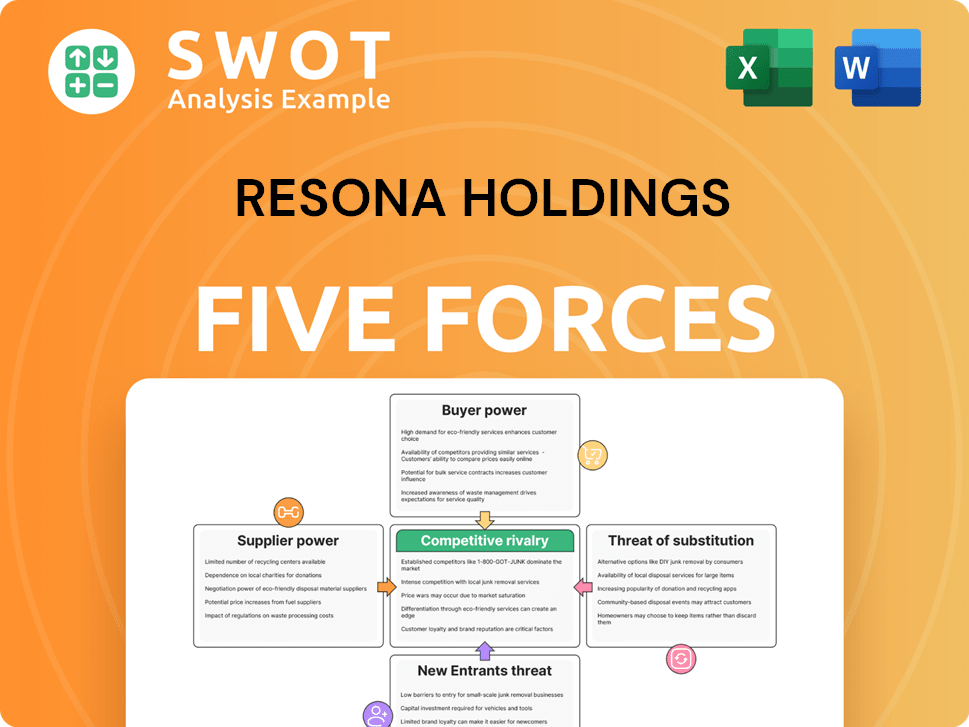
Resona Holdings Porter's Five Forces Analysis
- Covers All 5 Competitive Forces in Detail
- Structured for Consultants, Students, and Founders
- 100% Editable in Microsoft Word & Excel
- Instant Digital Download – Use Immediately
- Compatible with Mac & PC – Fully Unlocked
Related Blogs

- What are Mission Vision & Core Values of Resona Holdings Company?
- What is Competitive Landscape of Resona Holdings Company?
- What is Growth Strategy and Future Prospects of Resona Holdings Company?
- What is Sales and Marketing Strategy of Resona Holdings Company?
- What is Brief History of Resona Holdings Company?
- Who Owns Resona Holdings Company?
- What is Customer Demographics and Target Market of Resona Holdings Company?
Disclaimer
All information, articles, and product details provided on this website are for general informational and educational purposes only. We do not claim any ownership over, nor do we intend to infringe upon, any trademarks, copyrights, logos, brand names, or other intellectual property mentioned or depicted on this site. Such intellectual property remains the property of its respective owners, and any references here are made solely for identification or informational purposes, without implying any affiliation, endorsement, or partnership.
We make no representations or warranties, express or implied, regarding the accuracy, completeness, or suitability of any content or products presented. Nothing on this website should be construed as legal, tax, investment, financial, medical, or other professional advice. In addition, no part of this site—including articles or product references—constitutes a solicitation, recommendation, endorsement, advertisement, or offer to buy or sell any securities, franchises, or other financial instruments, particularly in jurisdictions where such activity would be unlawful.
All content is of a general nature and may not address the specific circumstances of any individual or entity. It is not a substitute for professional advice or services. Any actions you take based on the information provided here are strictly at your own risk. You accept full responsibility for any decisions or outcomes arising from your use of this website and agree to release us from any liability in connection with your use of, or reliance upon, the content or products found herein.