

Real Good Foods Bundle

How Does Real Good Foods Company Thrive in the Frozen Food Aisle?
In a market hungry for healthier options, Real Good Foods Company has become a notable name. This company is making waves with its focus on low-carb, high-protein, and real-ingredient frozen meals. But how does this innovative food company actually work, and what makes it tick?

From Real Good Foods SWOT Analysis to understanding their manufacturing process, we'll explore the strategies behind their success. Discover how Real Good Foods products cater to the growing demand for healthy eating, and the company's approach to offering convenient frozen meals. Learn about the Real Good Foods company mission and how it navigates the competitive landscape of low carb food and frozen meals.
What Are the Key Operations Driving Real Good Foods’s Success?
The core of the Real Good Foods Company revolves around creating and delivering nutritious frozen food products. These products are designed to be low in carbohydrates, high in protein, and made with real food ingredients. Their offerings include pizzas, entrees, and snacks, all tailored to meet the needs of health-conscious consumers seeking convenient and healthier alternatives.
The company's value proposition lies in offering guilt-free indulgence. They simplify healthy eating by providing a range of comfort foods that align with dietary preferences like keto, low-carb, and high-protein diets. This focus on both taste and nutritional value sets the company apart in the frozen food market.
The operational strategy of Real Good Foods involves sourcing high-quality ingredients, manufacturing them into various product lines, and distributing these through multiple channels. The company emphasizes its commitment to clean ingredients, which is crucial for their sourcing and quality control processes. Their distribution network primarily includes major grocery retailers across the United States. This specialization, combined with an emphasis on taste and convenience, translates into customer benefits by providing guilt-free indulgence and simplifying healthy eating.
 Sourcing and Manufacturing
The company focuses on sourcing high-quality, real food ingredients. Manufacturing processes are designed to maintain the nutritional integrity of the ingredients. Distribution occurs through major grocery retailers across the United States.
Product Range and Nutritional Profile
The product range includes pizzas, entrees, and snacks. All products are low in carbohydrates and high in protein. This caters to consumers following ketogenic, low-carb, or high-protein diets.
Customer Focus and Market Position
The primary customer segments include individuals focused on dietary health. The company positions itself as a provider of "better-for-you" options. They compete in the growing market for healthy frozen meals.
Value Proposition and Customer Benefits
The company offers guilt-free indulgence and simplifies healthy eating. Convenience is a key benefit for consumers. The products provide a balance of taste, convenience, and nutritional value.

Key Operational Aspects
The company emphasizes the use of real food ingredients and a focus on specific nutritional profiles. Their distribution network includes major grocery retailers, ensuring accessibility. The commitment to quality control and clean ingredients is a core operational principle.
- Sourcing high-quality ingredients is crucial for maintaining product standards.
- Manufacturing processes are designed to preserve nutritional value.
- Distribution through retail channels ensures product availability.
- The company’s strategy is detailed in the Marketing Strategy of Real Good Foods.
Real Good Foods SWOT Analysis
- Complete SWOT Breakdown
- Fully Customizable
- Editable in Excel & Word
- Professional Formatting
- Investor-Ready Format

How Does Real Good Foods Make Money?
The Real Good Foods Company primarily generates revenue through the sale of its frozen food products. These sales form the foundation of its financial performance, with a focus on expanding market presence and product offerings. The company's strategy centers on capturing a larger share of the health-conscious consumer market.
The company's revenue model is centered on product sales within the frozen food category. They aim to increase their footprint in retail channels and broaden their product lines. This approach is designed to cater to the growing demand for convenient, healthy eating options.
The Real Good Foods Company offers a variety of frozen meals. These include pizzas, entrees like enchiladas and bowls, and snacks such as poppers and breakfast sandwiches. This diverse portfolio is designed to appeal to a broad consumer base seeking convenient and healthier food choices.
Financial Performance and Strategy
As of early 2024, the company reported net sales of $28.3 million for the full year 2023. This reflects a strategic shift towards profitability. The company has also focused on improving its gross margins.
- The company aims to increase its market penetration by expanding its presence in retail stores.
- They are also focusing on product innovation to meet the evolving demands of the health-conscious consumer.
- The company is improving its operational efficiency.
- In Q4 2023, the company's gross margins reached 17.5%, up from 13.0% in Q4 2022.
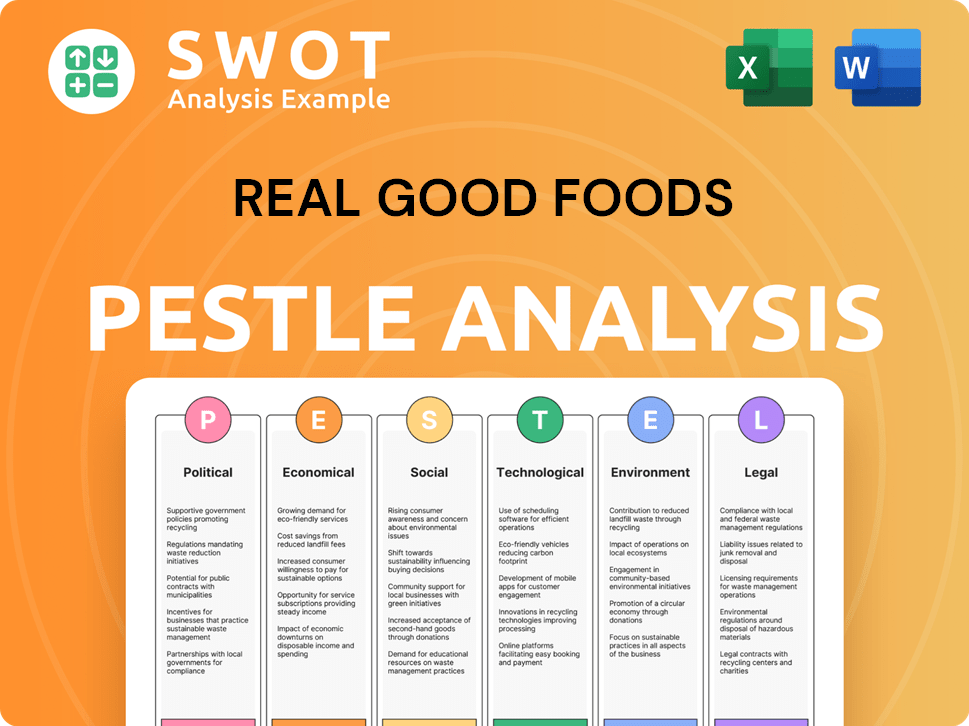
Real Good Foods PESTLE Analysis
- Covers All 6 PESTLE Categories
- No Research Needed – Save Hours of Work
- Built by Experts, Trusted by Consultants
- Instant Download, Ready to Use
- 100% Editable, Fully Customizable
Which Strategic Decisions Have Shaped Real Good Foods’s Business Model?
The evolution of the Real Good Foods Company has been marked by strategic decisions aimed at capturing a significant share of the health-focused frozen food market. A pivotal move was the expansion of its product lines beyond its initial offerings. This diversification included a broader array of frozen meals, pizzas, and snacks to cater to a wider consumer base interested in low-carb, high-protein options. The company has focused on broadening its retail footprint, ensuring its products are available in major grocery chains across the U.S., a key strategy to boost accessibility and market penetration.
Operationally, the company has navigated challenges common to the food industry, including supply chain disruptions and managing ingredient costs. In response, Real Good Foods has prioritized improving operational efficiencies and optimizing its gross margins. For instance, in Q4 2023, the company strategically reduced promotional activities to focus on profitability, leading to improved gross margins of 17.5%, up from 13.0% in Q4 2022. This reflects a shift towards sustainable growth over volume at any cost.
The company's competitive advantage primarily stems from its strong brand recognition within the niche of genuinely low-carb and high-protein frozen foods made with real ingredients. While many brands offer 'healthy' options, Real Good Foods distinguishes itself by strictly adhering to its nutritional profile, appealing directly to consumers on specific dietary regimens. Its ability to offer comfort food favorites in a healthier format also provides a unique selling proposition. Understanding the competitive landscape of Real Good Foods is crucial for investors.
Key Milestones
Key milestones include expanding product lines to include various frozen meals and snacks. Broadening retail presence across major grocery chains in the U.S. is another important strategic move. The company has focused on operational efficiencies to improve gross margins.
Strategic Moves
Strategic moves include a focus on product innovation and improving profitability. Strengthening retail partnerships and adapting to changing consumer preferences are also key. The company aims to balance growth with profitability by adjusting promotional strategies.
Competitive Edge
The company's competitive edge lies in its strong brand recognition within the low-carb and high-protein frozen food niche. It differentiates itself by strictly adhering to its nutritional profile. Offering healthier versions of comfort foods gives it a unique selling proposition.
Financial Performance
In Q4 2023, Real Good Foods reported improved gross margins of 17.5%. This increase reflects a strategic shift towards profitability. The company's focus on operational efficiencies has supported its financial performance.
Real Good Foods: Key Strategies and Advantages
Real Good Foods has strategically expanded its product offerings to meet diverse consumer needs. They have prioritized retail expansion, ensuring accessibility across major grocery chains. The company’s focus on genuine low-carb, high-protein ingredients sets it apart.
- Product Innovation: Continuously developing new frozen meal options.
- Retail Partnerships: Strengthening relationships with major grocery chains.
- Profitability Focus: Improving gross margins through strategic decisions.
- Brand Recognition: Building a strong brand in the health-focused food sector.
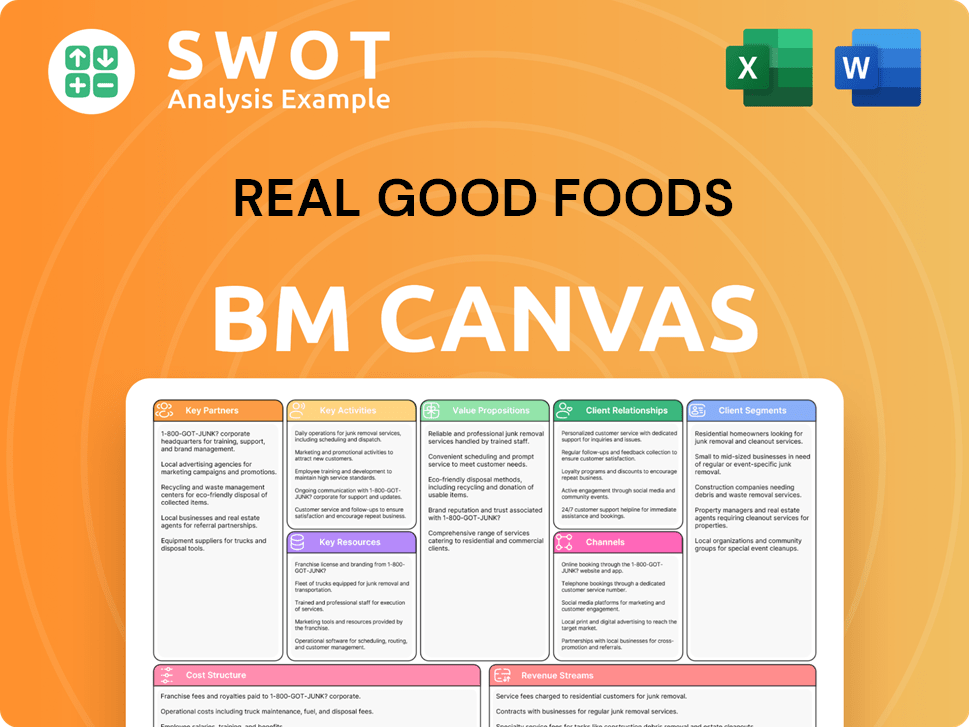
Real Good Foods Business Model Canvas
- Complete 9-Block Business Model Canvas
- Effortlessly Communicate Your Business Strategy
- Investor-Ready BMC Format
- 100% Editable and Customizable
- Clear and Structured Layout
How Is Real Good Foods Positioning Itself for Continued Success?
The Real Good Foods Company carves out a specific niche within the frozen food and health sectors, concentrating on low-carb, high-protein, and real-ingredient options. Its market position is defined by its focus on specific dietary needs, competing with other health-focused frozen meal brands and conventional frozen food companies that are expanding their 'better-for-you' product lines. Real Good Foods has established a strong brand presence, primarily selling nationally through major U.S. retail channels.
Key risks for Real Good Foods include fluctuating ingredient costs, potential shifts in consumer preferences, and increased competition. The company's financial performance in 2023 included net sales of $28.3 million, a decrease from the previous year, with a net loss of $29.2 million. However, Q4 2023 showed an improved gross margin of 17.5%.
Industry Position
The Real Good Foods Company is positioned in the frozen food and health and wellness market, focusing on low-carb, high-protein meals. It competes with other brands offering healthier frozen meals and conventional brands entering the 'better-for-you' space. Its market share is concentrated within its niche across major U.S. retail channels.
Risks
Risks include fluctuating ingredient costs, shifts in consumer preferences, and increased competition. Financial results for 2023 show a decrease in net sales to $28.3 million and a net loss of $29.2 million. The company must navigate these challenges to maintain profitability and market share.
Future Outlook
Real Good Foods is focused on strategic initiatives to improve profitability and expand its product offerings. The company aims to leverage its brand strength and consumer loyalty for growth. The ability to manage costs, innovate, and adapt to market changes is crucial.
Financial Performance
The company's financial performance in 2023 showed net sales of $28.3 million and a net loss of $29.2 million. However, the gross margin improved to 17.5% in Q4 2023. The company is working on improving profitability through various strategic initiatives.
Strategic Focus and Growth
The future for Real Good Foods involves continued innovation within its core low-carb, high-protein framework. This may include new product categories and expanded distribution. The company's success depends on effectively managing costs, innovating, and adapting to evolving market dynamics. For more detailed insights, you can read about the Growth Strategy of Real Good Foods.
- Focus on low-carb and high-protein options.
- Expansion through new product categories.
- Emphasis on managing costs and adapting to market changes.
- Leveraging brand loyalty for sustained growth.
Real Good Foods Porter's Five Forces Analysis
- Covers All 5 Competitive Forces in Detail
- Structured for Consultants, Students, and Founders
- 100% Editable in Microsoft Word & Excel
- Instant Digital Download – Use Immediately
- Compatible with Mac & PC – Fully Unlocked

Related Blogs

- What are Mission Vision & Core Values of Real Good Foods Company?
- What is Competitive Landscape of Real Good Foods Company?
- What is Growth Strategy and Future Prospects of Real Good Foods Company?
- What is Sales and Marketing Strategy of Real Good Foods Company?
- What is Brief History of Real Good Foods Company?
- Who Owns Real Good Foods Company?
- What is Customer Demographics and Target Market of Real Good Foods Company?
Disclaimer
All information, articles, and product details provided on this website are for general informational and educational purposes only. We do not claim any ownership over, nor do we intend to infringe upon, any trademarks, copyrights, logos, brand names, or other intellectual property mentioned or depicted on this site. Such intellectual property remains the property of its respective owners, and any references here are made solely for identification or informational purposes, without implying any affiliation, endorsement, or partnership.
We make no representations or warranties, express or implied, regarding the accuracy, completeness, or suitability of any content or products presented. Nothing on this website should be construed as legal, tax, investment, financial, medical, or other professional advice. In addition, no part of this site—including articles or product references—constitutes a solicitation, recommendation, endorsement, advertisement, or offer to buy or sell any securities, franchises, or other financial instruments, particularly in jurisdictions where such activity would be unlawful.
All content is of a general nature and may not address the specific circumstances of any individual or entity. It is not a substitute for professional advice or services. Any actions you take based on the information provided here are strictly at your own risk. You accept full responsibility for any decisions or outcomes arising from your use of this website and agree to release us from any liability in connection with your use of, or reliance upon, the content or products found herein.