

Tupperware Bundle

Can Tupperware Rebound?
Tupperware Brands Corporation, a name synonymous with innovative home storage, is at a critical juncture. From its iconic airtight seals to its pioneering direct selling model, Tupperware transformed how we preserve food and organize our homes. But can this legacy translate into future success in a rapidly evolving market?

This analysis explores the Tupperware SWOT Analysis, examining its current position and future trajectory. We'll dissect Tupperware's growth strategy, evaluating its initiatives for expansion, innovation, and financial performance. Understanding the challenges and opportunities facing the Tupperware brand today is crucial for assessing its long-term prospects in the competitive home products market, considering factors like direct selling, plastic containers, and consumer behavior.
How Is Tupperware Expanding Its Reach?
The company is currently implementing several expansion initiatives to revitalize its market position and boost future growth. A key aspect of its strategy involves diversifying its sales channels beyond the traditional direct selling model. This shift aims to broaden its customer base and adapt to contemporary consumer purchasing habits, representing a significant change in its approach to the market. These efforts are crucial for the company's long-term success.
Geographical expansion remains a central focus, especially in emerging markets where there is substantial potential for growth in home and kitchen products. The company is working to strengthen its presence in regions with growing middle-class populations and increasing demand for high-quality household goods. Furthermore, the company is committed to product category expansion, introducing new lines of sustainable and environmentally friendly products, aligning with global consumer trends towards eco-conscious living. This includes initiatives around reusable products and materials.
These initiatives are intended to reach new customer segments, diversify revenue streams, and maintain competitiveness in a rapidly evolving consumer goods landscape. Specific examples of these efforts include collaborations announced in late 2023 and early 2024 to expand distribution networks and introduce new product lines focused on sustainability. The company's Tupperware growth strategy is clearly focused on adapting to modern consumer behaviors and expanding its global footprint.
 Diversifying Sales Channels
The company is actively exploring partnerships with major retailers and e-commerce platforms. This strategy aims to reach a broader customer base. It moves beyond its historical reliance on independent sales representatives. This approach is essential for adapting to modern consumer purchasing habits.
Geographical Expansion
The company is focusing on emerging markets with significant growth potential. It aims to strengthen its presence in regions with growing middle-class populations. This includes areas with increasing demand for quality household goods. The company is targeting specific regions for strategic expansion.
Product Category Expansion
The company is introducing new lines of sustainable and environmentally friendly products. This aligns with global consumer trends towards eco-conscious living. Initiatives include reusable products and materials. This expansion is designed to meet evolving consumer demands.
Sustainability Initiatives
The company is committed to sustainability efforts, reflecting a broader industry trend. This includes the development of reusable products and eco-friendly materials. These initiatives are designed to appeal to environmentally conscious consumers. Sustainability is a key focus for the company's future.

Key Expansion Strategies
The company's expansion strategies include diversifying sales channels, geographical expansion, and product innovation. These initiatives are aimed at reaching new customer segments and diversifying revenue streams. The goal is to stay competitive in a rapidly changing market. For more insights, refer to Mission, Vision & Core Values of Tupperware.
- Diversification of Sales Channels: Expanding beyond direct selling to include retail and e-commerce.
- Geographical Expansion: Targeting emerging markets with high growth potential.
- Product Innovation: Introducing sustainable and eco-friendly product lines.
- Strategic Partnerships: Collaborations to expand distribution and introduce new products.
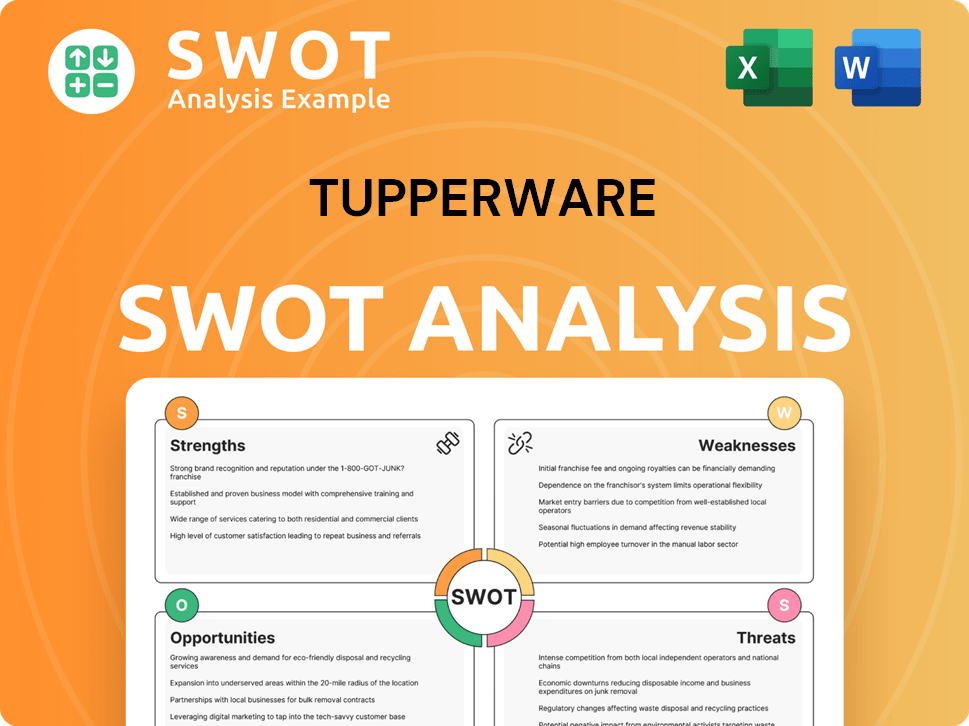
Tupperware SWOT Analysis
- Complete SWOT Breakdown
- Fully Customizable
- Editable in Excel & Word
- Professional Formatting
- Investor-Ready Format
How Does Tupperware Invest in Innovation?
The Tupperware growth strategy involves a multifaceted approach to ensure its long-term viability and competitiveness in the home products market. This strategy focuses on innovation, digital transformation, and sustainable practices to meet evolving consumer demands. The company aims to strengthen its market position by adapting to changing consumer behaviors and leveraging new technologies.
Tupperware's future prospects are closely tied to its ability to innovate and adapt. The company is working to enhance its product offerings and operational efficiency through technological advancements and sustainable practices. By focusing on these areas, Tupperware seeks to maintain its relevance and expand its market reach.
A key element of the Tupperware company analysis involves understanding its innovation and technology strategy. This includes investments in research and development, digital transformation, and sustainable product development. These initiatives are designed to create a more seamless customer experience and ensure the company's long-term success.

Innovation in Materials and Design
Tupperware invests in research and development to create new materials and designs. This focus aligns with consumer demands for durable, functional, and sustainable products. Recent product launches indicate a commitment to innovative designs and sustainable solutions.
Sustainable Product Development
A significant part of Tupperware's innovation strategy involves environmentally responsible products. This includes items made from recycled or bio-based materials. This approach addresses the growing consumer interest in sustainability.
Digital Transformation
Tupperware is enhancing its e-commerce capabilities and digital engagement platforms. This supports its evolving sales model and improves the online shopping experience. The company aims to provide advanced digital tools for its independent sales force.
E-commerce and Digital Tools
The company focuses on improving online shopping experiences for customers. It also provides advanced digital tools for its independent sales force. This creates a more integrated customer journey from product discovery to purchase.
Focus on the Sales Force
Tupperware is providing advanced digital tools for its independent sales force. The company is working to create a more seamless and integrated customer journey. This includes product discovery to purchase.
Maintaining Relevance
Tupperware's commitment to innovation is crucial for maintaining relevance in the housewares market. The company's strategic initiatives are aimed at adapting to changing consumer trends. This includes leveraging technology for growth.
Tupperware's innovation and technology strategy is critical for its Tupperware future prospects. The company's efforts in research and development, digital transformation, and sustainable product development are key to its long-term success. For a broader understanding of the competitive landscape, consider exploring the Competitors Landscape of Tupperware.
Key Initiatives and Impacts
Tupperware's initiatives include developing new materials, enhancing e-commerce, and focusing on sustainable products. These efforts aim to improve the customer experience and support its direct selling model. The company faces several Tupperware challenges, but its commitment to innovation offers significant Tupperware opportunities.
- Tupperware products are evolving to meet consumer demands for sustainability and functionality.
- Digital tools are being implemented to support the Tupperware sales force and enhance the customer journey.
- The company's focus on Tupperware sustainability is a key element of its long-term strategy.
- Tupperware's business model is adapting to incorporate digital platforms and sustainable practices.
Tupperware PESTLE Analysis
- Covers All 6 PESTLE Categories
- No Research Needed – Save Hours of Work
- Built by Experts, Trusted by Consultants
- Instant Download, Ready to Use
- 100% Editable, Fully Customizable

What Is Tupperware’s Growth Forecast?
The financial outlook for the company is currently focused on navigating a challenging period and implementing a turnaround strategy. Recent reports indicate a focus on stabilizing the financial position, addressing debt obligations, and improving cash flow. The company's ability to secure additional financing and successfully execute its restructuring plan will be critical to its future financial performance and overall Tupperware growth strategy.
In its Q3 2023 earnings report, the company reported net sales of $283.7 million, reflecting a decrease compared to the prior year. This highlights the ongoing need for strategic initiatives to improve sales performance. The company is actively managing its debt and exploring various financial strategies to support its long-term viability. The Tupperware company analysis reveals a commitment to financial stability and a return to profitability through strategic initiatives and cost efficiencies.
The company's financial health is closely tied to its ability to adapt to changing market conditions and consumer preferences. The Tupperware future prospects depend on successful execution of its turnaround plan, which includes efforts to optimize operational costs and improve liquidity. The company's financial narrative centers on achieving stability and returning to profitability through strategic initiatives and cost efficiencies.
Financial Challenges
The company faced significant financial challenges, including concerns about its ability to continue as a going concern, as disclosed in late 2023 and early 2024. These challenges have necessitated a comprehensive turnaround plan focused on debt reduction and operational improvements.
Strategic Initiatives
Key initiatives include improving liquidity and optimizing operational costs to stabilize the financial position. The company is actively managing its debt and exploring various financial strategies to support its long-term viability. These efforts are crucial for the Tupperware business model.
Revenue and Sales
In Q3 2023, net sales were $283.7 million, showing a decrease from the prior year. This underscores the importance of sales strategies and market adaptation. The company is focusing on initiatives to improve sales performance and market share.
Debt Management
Managing debt obligations is a critical part of the financial strategy. The company is actively working to reduce its debt burden and improve its overall financial health. This is essential for long-term sustainability and growth.
The company's financial performance over the last few years has been under pressure, with a need to address both immediate and long-term financial goals. The focus is on achieving financial stability and returning to profitability through strategic initiatives and cost efficiencies. The success of the turnaround plan, including securing additional financing, will be pivotal for the company's Tupperware market share and future financial health. For more insights, check out the Marketing Strategy of Tupperware.
Liquidity and Cash Flow
Improving liquidity and managing cash flow are key priorities in the turnaround plan. These measures are designed to provide the financial flexibility needed to support operations and investments. The company is focused on strategies to enhance its financial stability.
Operational Costs
Optimizing operational costs is a central element of the financial strategy. This includes streamlining processes and reducing expenses to improve profitability. Efficiency gains are crucial for long-term financial success.
Financial Strategies
The company is exploring various financial strategies to support its long-term viability. This may include securing additional financing and restructuring existing debt. These strategies are vital for ensuring financial resilience.
Profitability
Returning to profitability is a primary goal, driven by strategic initiatives and cost efficiencies. The company aims to achieve sustainable profitability through improved sales and reduced expenses. This is a key indicator of success.
Turnaround Plan
The successful implementation of the turnaround plan is crucial for the company's future. This plan includes measures to address debt, improve cash flow, and enhance operational efficiency. The plan's effectiveness will determine the company's trajectory.
Long-Term Viability
The focus on long-term viability includes strategies to ensure financial sustainability. This involves managing debt, improving cash flow, and adapting to market changes. These efforts are designed to secure the company's future.
Tupperware Business Model Canvas
- Complete 9-Block Business Model Canvas
- Effortlessly Communicate Your Business Strategy
- Investor-Ready BMC Format
- 100% Editable and Customizable
- Clear and Structured Layout

What Risks Could Slow Tupperware’s Growth?
The success of the Tupperware brand and its future prospects are significantly influenced by the challenges it faces. A primary obstacle is navigating the competitive landscape within the home products sector, where established brands and new e-commerce-driven entrants continuously reshape market dynamics. Adapting its business model, historically reliant on direct selling, to align with evolving consumer preferences for online shopping and diverse retail channels is crucial for sustained growth.
Supply chain vulnerabilities, including disruptions in manufacturing and logistics, also pose a considerable risk. Regulatory changes, particularly concerning product safety and environmental standards, can lead to costly adjustments in product development and manufacturing processes. Internal resource constraints, such as attracting and retaining a strong sales force and investing in technology and innovation, further complicate matters.
Financial performance, including debt levels and the ability to meet financial covenants, presents additional challenges. The company's ability to overcome these obstacles through strategic diversification of sales channels, cost optimization, and strengthening its financial liquidity will be key to achieving its long-term growth objectives and maintaining market relevance.
Market Competition
The home products market is highly competitive, with numerous brands vying for market share. Competitors often have more robust e-commerce capabilities and lower price points, posing a significant challenge to the company's market position. The company must innovate and differentiate its products to stay ahead.
Direct Selling Model
The historical reliance on direct selling presents a risk as consumer preferences shift towards online shopping. This requires the company to adapt its distribution channels. The company must balance its traditional sales methods with modern retail strategies to reach a wider audience.
Supply Chain Disruptions
Supply chain vulnerabilities, including disruptions in manufacturing and logistics, can significantly impact the company's operations. Recent global events have highlighted the need for resilient supply chains. The company must have a reliable supply chain to ensure the availability of its products.
Regulatory Changes
Changes in product safety and environmental standards can necessitate costly adjustments to product development and manufacturing. Compliance with regulations is essential, but it can increase operational costs. The company must stay ahead of regulatory changes to remain compliant.
Resource Constraints
Resource constraints, including attracting and retaining a strong sales force, can hinder growth. Adequate investment in technology and innovation is also crucial. The company must have a skilled sales force and invest in innovation to stay competitive.
Financial Challenges
Debt levels and the ability to maintain compliance with financial covenants can impact the company's financial stability. Managing debt and maintaining financial health are critical for long-term success. The company must manage its finances prudently to ensure sustainability.
Strategic Initiatives
The company is addressing these challenges through strategic diversification of sales channels, cost optimization, and efforts to strengthen its financial liquidity. These initiatives are designed to improve the company's overall financial performance and market position. The company is actively working to mitigate risks and capitalize on opportunities.
Market Adaptation
Adapting to changing consumer trends is a key focus, with the company exploring e-commerce and other retail channels. This includes enhancing its online presence and partnering with retailers to reach more customers. The company is working to make its products more accessible and convenient for consumers.
Tupperware Porter's Five Forces Analysis
- Covers All 5 Competitive Forces in Detail
- Structured for Consultants, Students, and Founders
- 100% Editable in Microsoft Word & Excel
- Instant Digital Download – Use Immediately
- Compatible with Mac & PC – Fully Unlocked

Related Blogs

- What are Mission Vision & Core Values of Tupperware Company?
- What is Competitive Landscape of Tupperware Company?
- How Does Tupperware Company Work?
- What is Sales and Marketing Strategy of Tupperware Company?
- What is Brief History of Tupperware Company?
- Who Owns Tupperware Company?
- What is Customer Demographics and Target Market of Tupperware Company?
Disclaimer
All information, articles, and product details provided on this website are for general informational and educational purposes only. We do not claim any ownership over, nor do we intend to infringe upon, any trademarks, copyrights, logos, brand names, or other intellectual property mentioned or depicted on this site. Such intellectual property remains the property of its respective owners, and any references here are made solely for identification or informational purposes, without implying any affiliation, endorsement, or partnership.
We make no representations or warranties, express or implied, regarding the accuracy, completeness, or suitability of any content or products presented. Nothing on this website should be construed as legal, tax, investment, financial, medical, or other professional advice. In addition, no part of this site—including articles or product references—constitutes a solicitation, recommendation, endorsement, advertisement, or offer to buy or sell any securities, franchises, or other financial instruments, particularly in jurisdictions where such activity would be unlawful.
All content is of a general nature and may not address the specific circumstances of any individual or entity. It is not a substitute for professional advice or services. Any actions you take based on the information provided here are strictly at your own risk. You accept full responsibility for any decisions or outcomes arising from your use of this website and agree to release us from any liability in connection with your use of, or reliance upon, the content or products found herein.