

Kroger Bundle

Can Kroger Conquer the Future of Grocery?
In the ever-evolving retail landscape, understanding a company's growth strategy is crucial for investors and strategists alike. Kroger, a grocery giant since 1883, has consistently adapted to market changes. This analysis dives deep into Kroger's Kroger SWOT Analysis and future prospects, offering a comprehensive look at its strategic initiatives.

As Kroger navigates the complex grocery industry trends and retail market expansion, its ability to innovate and adapt will determine its success. This Kroger company analysis will explore its business model, financial performance review, and digital transformation strategy. We'll examine how Kroger's strategic initiatives, including its e-commerce growth plans and expansion into new markets, are shaping its long-term investment strategy and competitive landscape analysis.
How Is Kroger Expanding Its Reach?
The Competitors Landscape of Kroger reveals a focus on strategic expansion to enhance its market position and achieve sustainable growth. Kroger's growth strategy involves significant investments in store projects, including new store openings and renovations, to boost sales and increase market share. As of February 2025, Kroger operates approximately 2,722 stores across 35 states, reflecting its commitment to physical retail expansion.
Kroger's future prospects are also shaped by its emphasis on diversifying offerings and improving customer accessibility. This includes the growth of its private-label portfolio, 'Our Brands,' which offers quality products at competitive prices. This strategy is crucial for maintaining a competitive edge and expanding profit margins within the grocery industry trends.
Kroger's business model is evolving to meet changing consumer behaviors, particularly through its digital operations and e-commerce initiatives. This includes investments in fulfillment centers and enhancing online shopping experiences, which are key components of Kroger's digital transformation strategy.
 Store Expansion and Investment
Kroger is actively expanding its physical presence through new store openings and significant investments in existing stores. These initiatives aim to accelerate sales growth and increase its market share. In 2024, Kroger announced plans to increase its investment in these key projects.
Private-Label Portfolio Growth
A major component of Kroger's expansion strategy is the growth of its 'Our Brands' private-label portfolio. This strategy aims to offer quality products at competitive prices, driving both customer loyalty and margin expansion. In 2024, private-label sales exceeded $32 billion.
E-commerce Expansion
Kroger is prioritizing its e-commerce capabilities by establishing a dedicated eCommerce Unit to accelerate online expansion. E-commerce sales reached $13 billion in 2024. This strategic move addresses the increasing trend of online grocery shopping.
Adaptation to Consumer Behavior
Kroger is adapting to evolving consumer preferences by investing in digital operations and fulfillment centers. These investments support the company's ability to meet changing customer expectations and enhance the overall shopping experience. While the proposed merger with Albertsons was terminated in December 2024, Kroger is proceeding as a stand-alone entity and focusing on internal growth strategies.

Key Expansion Initiatives
Kroger's strategic initiatives for 2024 and beyond are centered on expanding its physical and digital presence, enhancing its product offerings, and adapting to changing consumer behaviors. These initiatives are designed to drive long-term sustainable growth and improve Kroger's competitive position.
- Investing in new store openings and renovations to increase market share.
- Expanding the 'Our Brands' private-label portfolio to offer competitive prices and expand margins.
- Accelerating e-commerce growth through a dedicated eCommerce Unit and investments in fulfillment centers.
- Focusing on internal growth strategies and adapting to evolving consumer preferences.
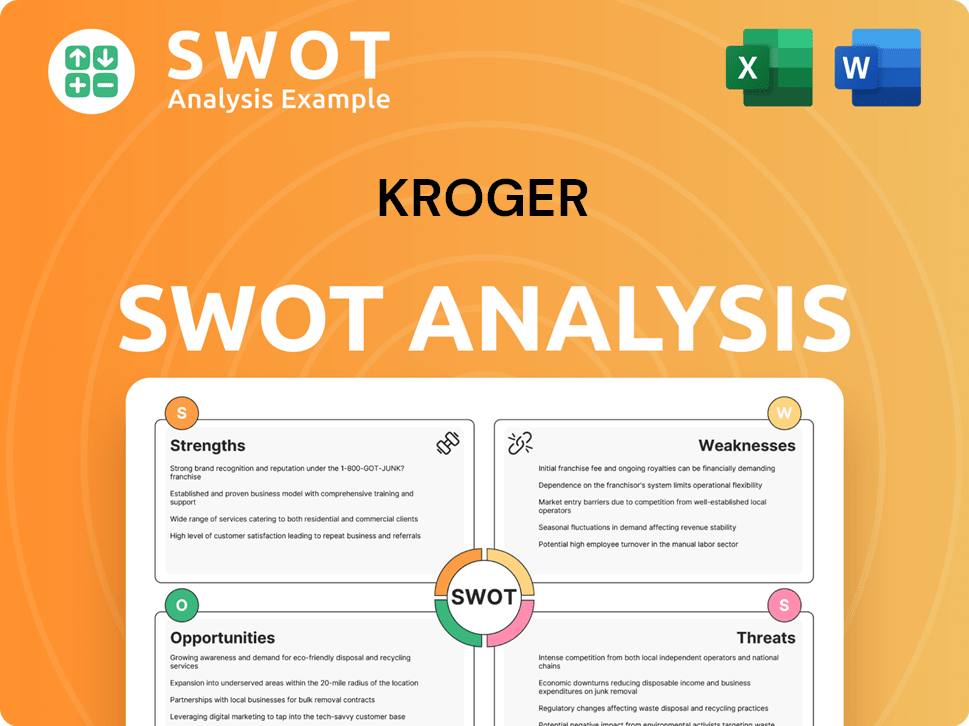
Kroger SWOT Analysis
- Complete SWOT Breakdown
- Fully Customizable
- Editable in Excel & Word
- Professional Formatting
- Investor-Ready Format
How Does Kroger Invest in Innovation?
The focus on innovation and technology is a key component of the Revenue Streams & Business Model of Kroger, driving its growth strategy. This approach is designed to improve customer experiences, optimize operations, and increase efficiency within the competitive grocery industry. By embracing digital transformation and strategic partnerships, the company aims to stay ahead of retail market expansion trends.
Kroger's commitment to technology and innovation is evident in its investments in AI-driven supply chain systems, personalized online shopping tools, automation, and predictive analytics. These technologies are designed to enhance inventory management, reduce operational costs, and provide greater convenience for shoppers. These initiatives are crucial for maintaining a strong position in the evolving grocery landscape.
The company's digital sales grew by 10% in fiscal 2024, with delivery solutions leading sales growth at an 18% increase. Digital sales reached $13 billion in 2024, highlighting the importance of its e-commerce growth plans. This growth underscores the effectiveness of Kroger's digital transformation strategy.

Strategic Partnerships
Kroger collaborates with various technology companies to enhance its capabilities. These partnerships support smart fulfillment, customer personalization, supply chain optimization, and seamless omnichannel experiences. These collaborations are vital for adapting to the competitive landscape analysis.
Key Partners
Notable partners include Google Cloud, Ocado, Nvidia, Gatik, Cooler Screens, and Drone Express. The partnership with Ocado for automated fulfillment centers is a key element of Kroger's supply chain optimization. These partnerships support Kroger's long-term investment strategy.
Investment in Technology
While specific R&D investment figures aren't always reported separately, Kroger's continuous investment in technology and digital initiatives demonstrates its commitment to innovation. This investment supports Kroger's market share analysis.
Simplifying Operations
The technology transformation also aims to simplify associates' work, allowing them to focus more on customer service. This approach helps to improve customer loyalty programs.
Sustainability Initiatives
Kroger integrates sustainability into its innovation strategy, aligning with environmentally conscious consumer preferences. These initiatives also contribute to operational efficiencies and cost reduction, impacting Kroger's impact on local communities.
Sustainability Goals
Kroger aims to achieve 95% food waste diversion by 2025, a goal met two years early in 2023. The company also plans to phase out single-use plastic shopping bags by 2025 and achieve 100% recyclable, compostable, and/or reusable packaging for its own brands by 2030. These efforts are part of Kroger's sustainability initiatives.
Key Takeaways
Kroger's innovation and technology strategy focuses on digital transformation, strategic partnerships, and sustainability. These initiatives are designed to drive growth, enhance customer experiences, and improve operational efficiency. This approach is critical for Kroger's future prospects.
- Digital sales growth of 10% in fiscal 2024.
- Partnerships with technology leaders like Google Cloud and Ocado.
- Commitment to sustainability with ambitious waste reduction and packaging goals.
- Focus on simplifying associates' work through technology.
- Strategic initiatives support Kroger's business model.
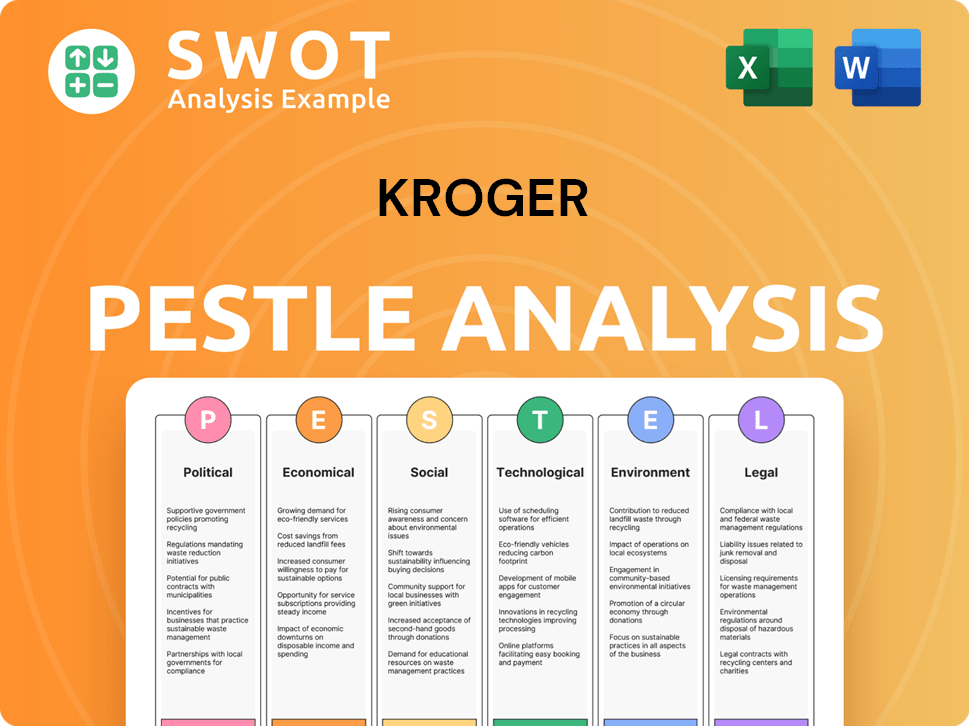
Kroger PESTLE Analysis
- Covers All 6 PESTLE Categories
- No Research Needed – Save Hours of Work
- Built by Experts, Trusted by Consultants
- Instant Download, Ready to Use
- 100% Editable, Fully Customizable
What Is Kroger’s Growth Forecast?
Kroger's financial outlook for 2025 indicates continued growth, building on the positive results from fiscal year 2024. This forecast reflects the company's strategic initiatives and its ability to adapt to evolving grocery industry trends. The company's focus on innovation and customer loyalty programs are key drivers of its anticipated performance.
For fiscal year 2025, Kroger projects identical sales, excluding fuel, to increase between 2.0% and 3.0%. This projection demonstrates the company's confidence in its business model and its ability to maintain and expand its market share. Kroger's strategic investments in its business are designed to support sustainable long-term net earnings growth.
Adjusted net earnings per diluted share are expected to be in the range of $4.60 to $4.80 for fiscal 2025, compared to $4.47 reported in fiscal 2024. This aligns with Wall Street's forecasts, reflecting a positive outlook for the company. The company's commitment to financial discipline and operational efficiency supports these earnings projections.
Adjusted FIFO Operating Profit
Kroger anticipates an adjusted FIFO operating profit of $4.7 billion to $4.9 billion for fiscal 2025. This is consistent with the $4.7 billion reported in fiscal 2024, indicating steady operational performance. The company's focus on supply chain optimization contributes to maintaining profitability.
Adjusted Free Cash Flow
Adjusted free cash flow is projected to be between $2.8 billion and $3.0 billion for fiscal 2025. This strong cash flow position supports Kroger's ability to invest in growth initiatives and return value to shareholders. The company’s financial health is further demonstrated by its investment-grade debt rating.
Capital Expenditures
Capital expenditures are expected to range from $3.6 billion to $3.8 billion for fiscal 2025. These investments are crucial for supporting Kroger's retail market expansion and enhancing its operational capabilities. The company is focused on strategic investments in its business.
Gross and Net Profit Margins
The gross profit margin for the latest twelve months ending January 31, 2025, was 23.5%, an increase from 23.0% in 2024. Kroger's net profit margin stood at 1.80%, an improvement of 15.59% from its three-year average. These improvements reflect the company's efficiency and pricing strategies.
Kroger's financial strategy also includes returning value to shareholders. In the fourth fiscal quarter of 2024, the company initiated a $5 billion accelerated share repurchase program, which is expected to be completed by the third fiscal quarter of 2025. For more insights into Kroger's performance, you can read this article about Kroger's financial performance review.
Alternative Profit Businesses
In fiscal 2024, Kroger generated $1.35 billion in operating profit from its alternative profit businesses. This segment includes media revenue, which saw a 17% increase, demonstrating the company’s diversification efforts. These businesses contribute to Kroger's overall financial health.
Debt Management
Kroger maintains a strong focus on debt management to sustain its investment-grade credit rating. The net total debt to adjusted EBITDA ratio was 1.79, well within the target range of 2.30 to 2.50. This disciplined approach to financial management supports Kroger's long-term investment strategy.
Strategic Investments
Kroger is committed to investing in its business to drive long-term sustainable net earnings growth. These investments support the company's strategic initiatives, including digital transformation, and expansion into new markets. The company's focus on innovation in food retail helps it stay competitive.
Share Repurchase Program
The $5 billion accelerated share repurchase program, initiated in late 2024, reflects Kroger's commitment to returning value to shareholders. This program is expected to be completed by the third quarter of 2025. This is part of Kroger's overall financial strategy.
E-commerce Growth
Kroger's e-commerce growth plans are a key element of its strategy. The company continues to invest in its digital platforms to enhance the customer experience and expand its online presence. This focus is crucial for adapting to changing consumer preferences.
Competitive Landscape
Kroger's competitive landscape analysis shows the company is well-positioned to compete in the grocery industry. Its strategic initiatives, including customer loyalty programs and supply chain optimization, support its ability to maintain a strong market position. Kroger's focus on sustainability initiatives also differentiates it from competitors.
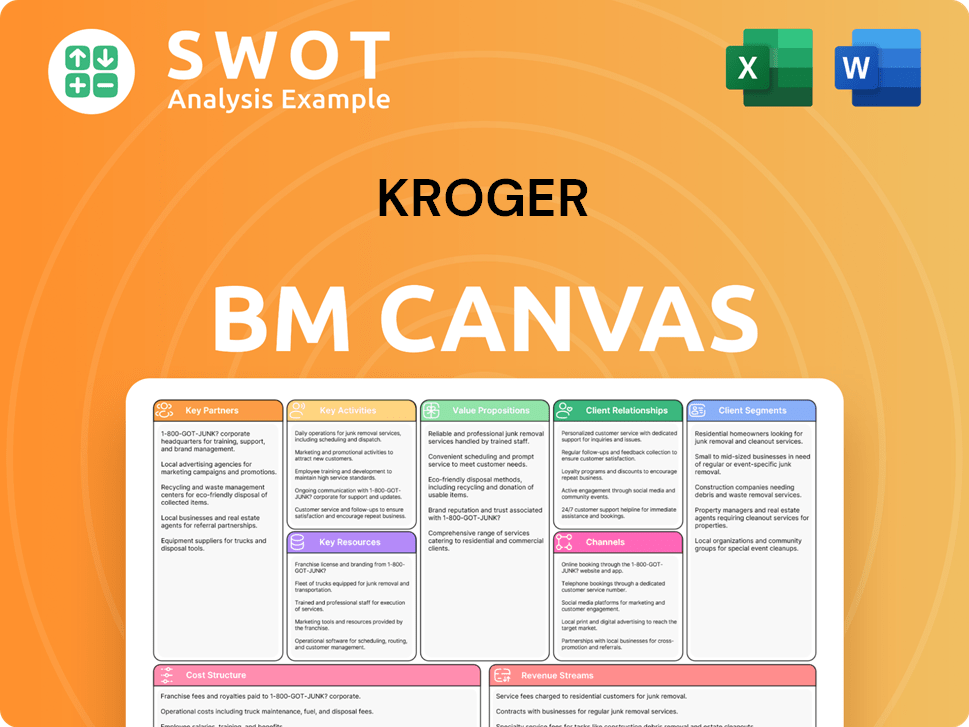
Kroger Business Model Canvas
- Complete 9-Block Business Model Canvas
- Effortlessly Communicate Your Business Strategy
- Investor-Ready BMC Format
- 100% Editable and Customizable
- Clear and Structured Layout
What Risks Could Slow Kroger’s Growth?
The Owners & Shareholders of Kroger face several potential risks and obstacles in their growth strategy and future prospects. The grocery retail market is intensely competitive, with major players like Walmart, Amazon, and others vying for market share. These challenges can impact profitability and require careful strategic planning and execution.
Regulatory changes and scrutiny, as seen with the terminated Albertsons merger, also pose challenges. Supply chain vulnerabilities, including inflation and rising costs, add further complexity. The company must navigate these issues to maintain a competitive edge.
Technological disruption and internal resource constraints, such as staffing issues and leadership changes, are ongoing challenges. The company needs to adapt to shifting consumer preferences and manage its operations effectively to ensure sustained growth.
Intense Competition
The grocery industry is highly competitive, with rivals like Walmart, Amazon (through Whole Foods), and discount grocers expanding rapidly. This competition puts pressure on pricing and market share. The company's ability to differentiate itself and maintain customer loyalty is crucial.
Regulatory Challenges
Regulatory scrutiny and potential restrictions on mergers and acquisitions, as demonstrated by the terminated Albertsons deal, can hinder expansion plans. Compliance with evolving regulations adds to operational complexity. Navigating these challenges is essential for future growth.
Supply Chain Vulnerabilities
Inflation, rising food prices, and labor costs impact product availability and operational expenses. External factors like climate change can also disrupt the supply chain. Efficient supply chain management is vital for maintaining profitability.
Technological Disruption
Adapting to the digital transformation and the growth of e-commerce is a constant challenge. Maintaining profitability in online operations and keeping up with changing consumer behaviors requires significant investment and strategic focus. The company must continually innovate to meet customer demands.
Internal Resource Constraints
Staffing challenges, labor shortages, and leadership transitions, such as the unexpected resignation of the CEO in March 2025, can create uncertainty. The company must manage these constraints effectively to maintain stability and execute its strategic initiatives.
E-commerce Profitability
Online orders can be margin-dilutive due to fulfillment costs. The company must find ways to scale its e-commerce operations while maintaining profitability. This includes optimizing delivery methods and managing costs effectively.
Strategic Initiatives
Focusing on profitable private-label brands and optimizing the supply chain are key strategies. Improving inventory management and leveraging technology to automate processes are also important. The company is also enhancing customer loyalty programs to retain customers.
Financial Performance
The company's financial performance is closely tied to its ability to manage costs and pricing effectively. The company must carefully monitor its expenses and pricing strategies to remain competitive. The company's ability to adapt to market changes is crucial for its financial health.
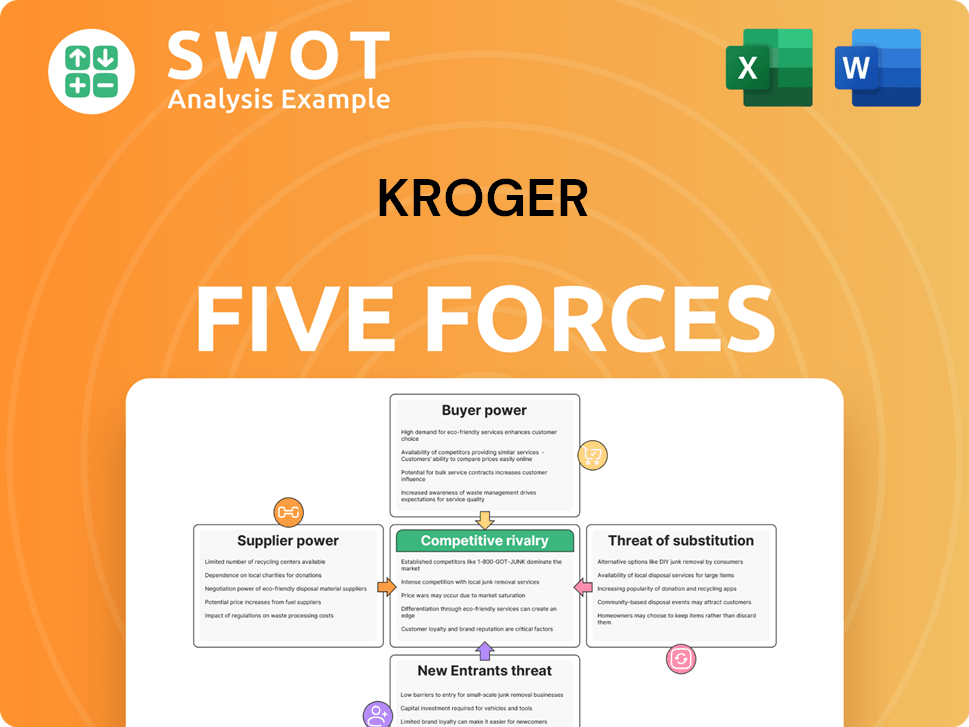
Kroger Porter's Five Forces Analysis
- Covers All 5 Competitive Forces in Detail
- Structured for Consultants, Students, and Founders
- 100% Editable in Microsoft Word & Excel
- Instant Digital Download – Use Immediately
- Compatible with Mac & PC – Fully Unlocked
Related Blogs

- What are Mission Vision & Core Values of Kroger Company?
- What is Competitive Landscape of Kroger Company?
- How Does Kroger Company Work?
- What is Sales and Marketing Strategy of Kroger Company?
- What is Brief History of Kroger Company?
- Who Owns Kroger Company?
- What is Customer Demographics and Target Market of Kroger Company?
Disclaimer
All information, articles, and product details provided on this website are for general informational and educational purposes only. We do not claim any ownership over, nor do we intend to infringe upon, any trademarks, copyrights, logos, brand names, or other intellectual property mentioned or depicted on this site. Such intellectual property remains the property of its respective owners, and any references here are made solely for identification or informational purposes, without implying any affiliation, endorsement, or partnership.
We make no representations or warranties, express or implied, regarding the accuracy, completeness, or suitability of any content or products presented. Nothing on this website should be construed as legal, tax, investment, financial, medical, or other professional advice. In addition, no part of this site—including articles or product references—constitutes a solicitation, recommendation, endorsement, advertisement, or offer to buy or sell any securities, franchises, or other financial instruments, particularly in jurisdictions where such activity would be unlawful.
All content is of a general nature and may not address the specific circumstances of any individual or entity. It is not a substitute for professional advice or services. Any actions you take based on the information provided here are strictly at your own risk. You accept full responsibility for any decisions or outcomes arising from your use of this website and agree to release us from any liability in connection with your use of, or reliance upon, the content or products found herein.