

PRA Group Bundle

Can PRA Group Continue its Ascent in the Debt Purchasing Industry?
PRA Group, a global leader in the debt purchasing industry, has consistently evolved its PRA Group SWOT Analysis to navigate the complexities of the financial services sector. From its inception in 1996, the company has transformed the management of nonperforming loans into a specialized service. This article delves into PRA Group's journey, examining its strategic initiatives and future prospects.

PRA Group's impressive growth from a small venture to a major international player highlights the importance of a robust growth strategy. This analysis will explore PRA Group's expansion plans, technological innovations, and financial planning, providing insights into its potential for future success. We'll also examine the challenges and opportunities that could impact the company's performance, offering a comprehensive view of its long-term growth potential within the competitive landscape of the financial services sector.
How Is PRA Group Expanding Its Reach?
The expansion initiatives of PRA Group are primarily centered around strengthening its presence in existing markets and strategically acquiring assets to boost its portfolio and operational scale. The company is consistently investing in its core business of acquiring nonperforming loan portfolios from banks and other financial institutions. This approach is a key component of the PRA Group Growth Strategy, driving its expansion and market share within the debt purchasing industry.
In 2024, the company demonstrated its commitment to this growth avenue by reporting significant portfolio purchases. For instance, the fourth quarter of 2024 showed robust cash collections from purchased portfolios, reflecting ongoing acquisition activity and effective collection strategies. This focus on strategic acquisitions is essential for maintaining and expanding the company's revenue streams within the financial services sector.
PRA Group aims to access new customer segments and diversify its revenue streams by strategically targeting various types of nonperforming loans. This diversification helps mitigate risks and enhances the company's long-term growth potential. The company's approach to PRA Group Future Prospects involves a careful assessment of market conditions and regulatory environments, ensuring sustainable and compliant expansion.
 Geographical Presence and Optimization
PRA Group has a strong presence in the Americas and Europe. The company continually optimizes operations within these regions. This geographical focus is a key element of their PRA Group Company's expansion strategy.
Product and Service Enhancements
The company is focused on enhancing its product and service offerings within the debt collection lifecycle. This includes refining customer engagement strategies and optimizing recovery processes. These enhancements contribute to improved PRA Group performance.
Partnership Strategies
PRA Group often forms long-term relationships with financial institutions. These partnerships ensure a steady supply of portfolios and foster trust within the industry. These strategic alliances are crucial for sustained growth.
Acquisition of Nonperforming Loans
A core component of PRA Group's strategy is the acquisition of nonperforming loans. This involves identifying and purchasing debt portfolios. The company's expertise in this area drives its expansion.
PRA Group's expansion strategy includes a focus on strategic acquisitions and optimizing its operational footprint. The company's approach is data-driven, focusing on sustainable growth and adapting to market dynamics. For a deeper dive into the company's financial performance and strategic initiatives, you can refer to this detailed analysis of PRA Group's business model explained.

Key Expansion Initiatives
PRA Group's expansion initiatives are multifaceted, focusing on both organic growth and strategic acquisitions. The company aims to enhance its market position and diversify its revenue streams through these initiatives. These efforts are designed to drive long-term value.
- Strategic Acquisitions: Acquiring nonperforming loan portfolios to expand its asset base.
- Geographical Optimization: Strengthening its presence in existing markets, particularly in the Americas and Europe.
- Product and Service Enhancements: Refining customer engagement and recovery processes to improve efficiency.
- Partnership Development: Building long-term relationships with financial institutions for a steady supply of portfolios.
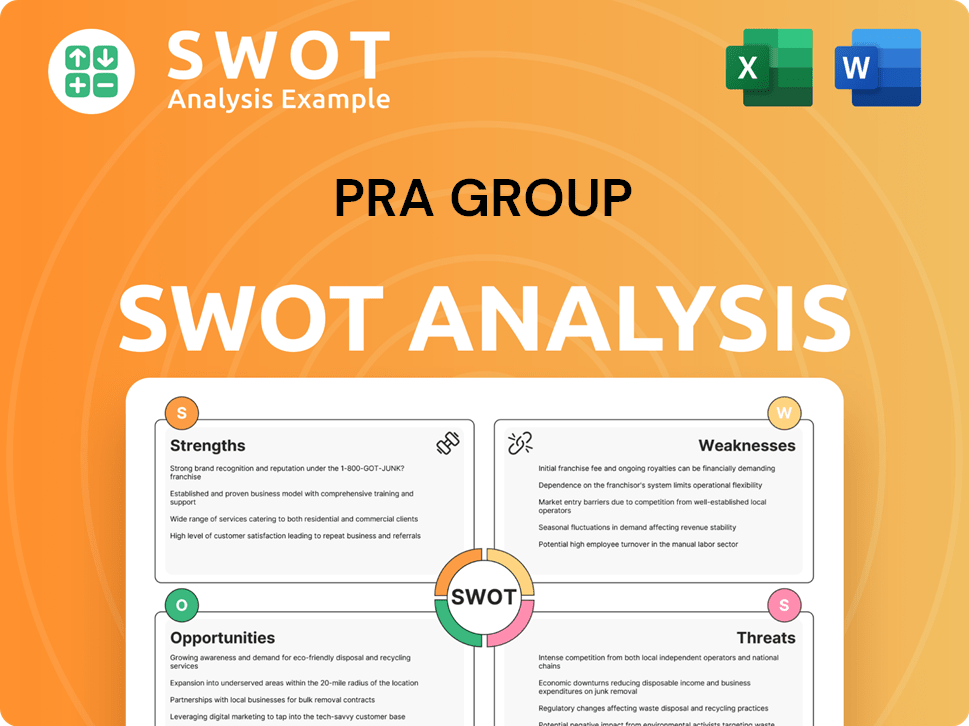
PRA Group SWOT Analysis
- Complete SWOT Breakdown
- Fully Customizable
- Editable in Excel & Word
- Professional Formatting
- Investor-Ready Format
How Does PRA Group Invest in Innovation?
PRA Group's innovation and technology strategy is central to its operational efficiency and compliance within the debt collection industry. The company focuses on leveraging technology to improve collection effectiveness. This approach involves significant investment in data analytics, automation, and digital transformation.
The core of PRA Group's strategy involves using advanced data analytics to better assess the value of nonperforming loan portfolios. This data-driven approach allows for tailored collection strategies, aiming to improve recovery rates while maintaining consumer respect. Digital transformation efforts streamline internal processes, enhance consumer communication, and offer convenient payment options.
Automation is a crucial component, managing high volumes of accounts and standardizing routine tasks. This frees up resources for more complex interactions. The company's commitment to ethical collection practices is often supported by technology that ensures transparency and compliance with consumer protection laws.

Data Analytics for Enhanced Efficiency
PRA Group utilizes data analytics to refine its approach to debt collection. This includes analyzing consumer behavior and financial situations to improve collection strategies. The goal is to maximize recovery rates while adhering to regulatory standards.
Automation in Operations
Automation plays a key role in managing a large volume of accounts. This includes automating routine tasks to improve efficiency. Automation helps PRA Group streamline its operations and reduce operational costs.
Digital Transformation Initiatives
PRA Group invests in digital transformation to modernize its processes. This includes developing new platforms for internal use and consumer interaction. These initiatives aim to improve the overall customer experience.
Focus on Regulatory Compliance
Technology supports PRA Group's commitment to ethical collection practices. This includes ensuring transparency and compliance with consumer protection laws. The company uses technology to maintain high standards of regulatory adherence.
Investment in Technology
PRA Group consistently invests in technology to improve its operations. This includes investments in software, data infrastructure, and digital platforms. These investments are key to maintaining a competitive edge in the Competitors Landscape of PRA Group.
Consumer-Centric Approach
PRA Group's technology strategy supports a consumer-centric approach. This includes providing convenient payment options and enhancing communication channels. The focus is on improving the overall consumer experience.
Key Technological Investments
PRA Group's technology strategy is marked by significant investments in various areas. These investments are crucial for maintaining a competitive edge and driving operational improvements. The company's focus on technology helps it adapt to evolving market demands and regulatory changes.
- Data Analytics: Advanced analytics tools to assess debt portfolios and tailor collection strategies.
- Automation: Implementing automated systems for routine tasks, improving efficiency and reducing costs.
- Digital Platforms: Development of new platforms to streamline internal processes and enhance consumer communication.
- Compliance Technology: Utilizing technology to ensure transparency and adherence to consumer protection laws.
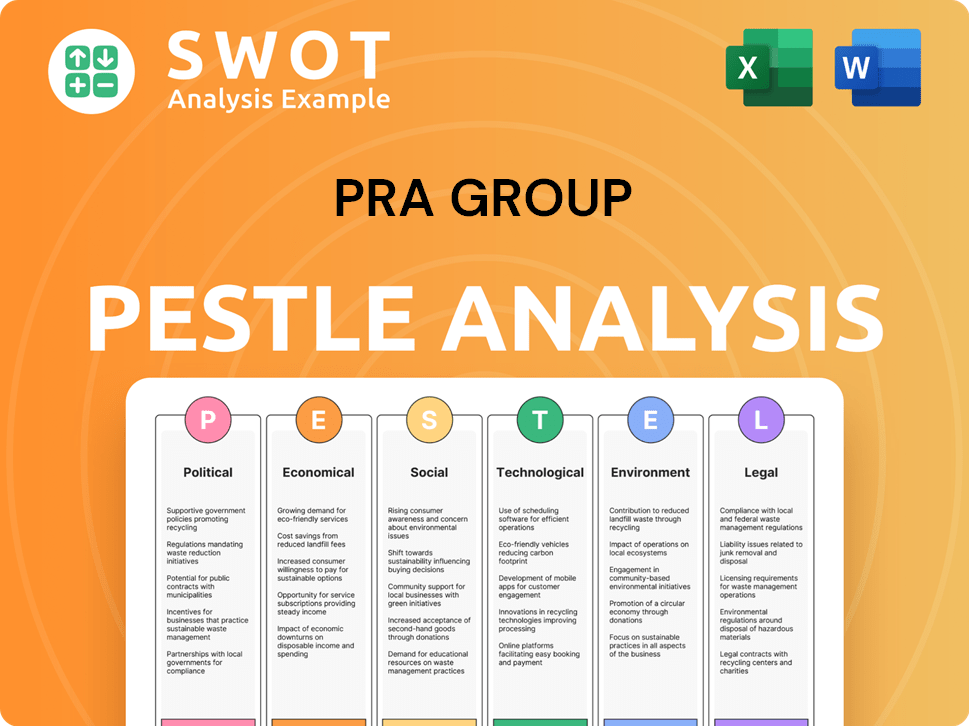
PRA Group PESTLE Analysis
- Covers All 6 PESTLE Categories
- No Research Needed – Save Hours of Work
- Built by Experts, Trusted by Consultants
- Instant Download, Ready to Use
- 100% Editable, Fully Customizable
What Is PRA Group’s Growth Forecast?
The financial outlook for PRA Group is centered on sustainable cash generation and disciplined capital allocation. The company's performance in the debt purchasing industry reflects the cyclical nature of the nonperforming loan market. PRA Group’s strategic responses to market conditions are key to its financial health. For the fiscal year 2024, PRA Group reported cash collections that demonstrated resilience despite economic fluctuations, a testament to its effective collection strategies.
Analysts generally maintain a positive outlook for PRA Group, citing its strong market position and effective collection strategies. The company's financial strategy involves carefully managing its portfolio acquisitions while maintaining efficient collection operations. PRA Group’s long-term financial goals include generating consistent returns for shareholders and maintaining a strong balance sheet, which is crucial in the financial services sector.
Recent quarterly reports highlight PRA Group's efforts to manage expenses and enhance operational efficiency, which are critical for improving profit margins. While specific revenue targets or detailed profit margin projections for 2025 are subject to market dynamics and company guidance, PRA Group's financial narrative emphasizes a commitment to prudent financial management and strategic growth. For a deeper understanding of the company's structure, you can explore Owners & Shareholders of PRA Group.
PRA Group Performance Review
PRA Group's financial performance is closely tied to its ability to acquire and collect on nonperforming loans. The company's success is influenced by economic trends, regulatory changes, and its operational efficiency. PRA Group's financial performance review often includes analysis of collection rates, portfolio yields, and expense management.
PRA Group's Revenue Streams
PRA Group generates revenue primarily from the collection of purchased debt portfolios. The company's revenue streams are diversified across various debt types and geographies. PRA Group's revenue is affected by the volume and price of debt portfolios acquired and the efficiency of its collection efforts.
PRA Group's Profitability and Margins
PRA Group's profitability is driven by the difference between the purchase price of debt and the amount collected. Profit margins can fluctuate based on market conditions and collection efficiency. PRA Group's profitability and margins are key indicators of its financial health and operational effectiveness.
Impact of Economic Trends on PRA Group
Economic trends significantly impact PRA Group's performance. Factors such as unemployment rates and consumer debt levels affect the supply of nonperforming loans. Economic downturns can increase the volume of debt available for purchase, but also pose challenges to collection efforts.
PRA Group's Long-Term Growth Potential
PRA Group's long-term growth potential is supported by its ability to acquire and effectively manage debt portfolios. The company's growth is influenced by market opportunities, strategic acquisitions, and operational improvements. PRA Group's long-term growth potential includes expansion into new markets and diversification of debt portfolios.
- Expanding into new geographic markets.
- Improving collection efficiency through technology.
- Acquiring larger and more diverse debt portfolios.
- Optimizing operational costs to improve margins.
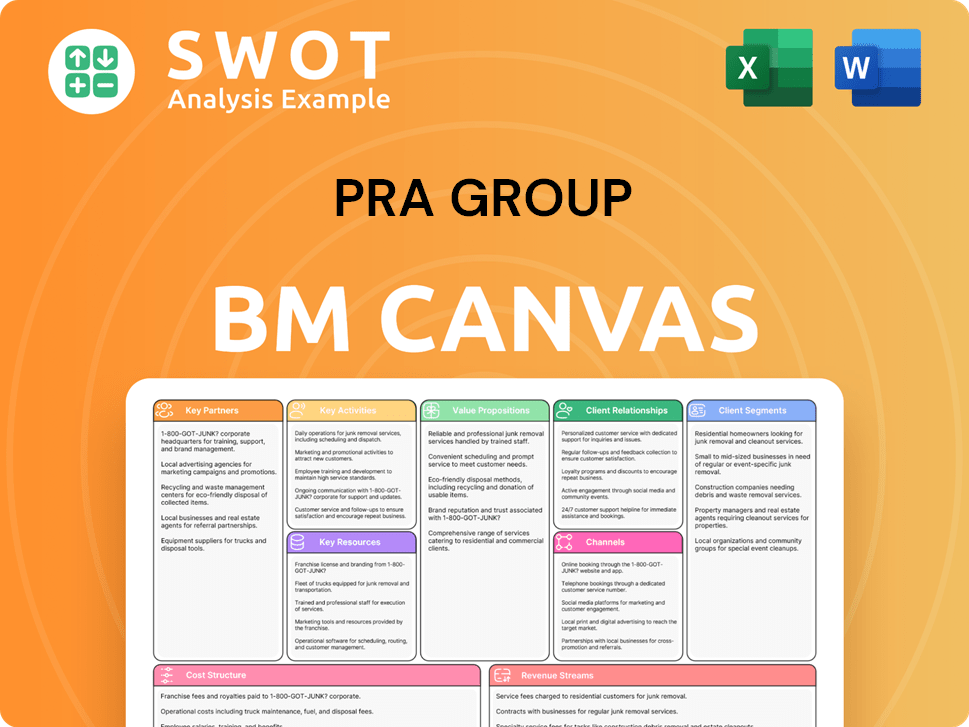
PRA Group Business Model Canvas
- Complete 9-Block Business Model Canvas
- Effortlessly Communicate Your Business Strategy
- Investor-Ready BMC Format
- 100% Editable and Customizable
- Clear and Structured Layout
What Risks Could Slow PRA Group’s Growth?
The growth strategy and future prospects of the company face several potential risks and obstacles. The debt purchasing industry and the financial services sector are highly competitive, with numerous players vying for nonperforming loan portfolios. Regulatory changes and economic downturns can also significantly impact the company's operations and financial performance.
Furthermore, technological advancements and evolving consumer behaviors pose challenges to traditional debt collection methods. Despite these challenges, the company employs several strategies to mitigate risks, including diversification, robust risk management, and continuous monitoring of the regulatory landscape.
Understanding these potential hurdles is crucial for evaluating the company's long-term growth potential and investment viability. The company's ability to navigate these challenges will be a key determinant of its future success in the debt purchasing industry.
Market Competition
Intense competition within the debt purchasing industry can drive up acquisition prices, impacting profitability. Numerous firms compete for nonperforming loan portfolios, creating pricing pressures. This competition necessitates efficient operational strategies and effective portfolio management to maintain margins.
Regulatory Changes
The debt collection industry is subject to stringent regulations, with new laws and stricter enforcement posing risks. Changes in consumer protection laws and data privacy regulations can necessitate significant operational adjustments. Compliance costs, particularly regarding data handling, can increase due to evolving regulations.
Economic Downturns
Economic downturns can impact consumers' ability to repay debts, affecting collection rates. While the company's business model can be counter-cyclical, collection effectiveness may be compromised during economic stress. High unemployment rates and reduced consumer spending can exacerbate these challenges.
Technological Disruption
Technological advancements and new fintech companies could challenge traditional collection methods. Innovative approaches and digital platforms can disrupt established practices. Adapting to technological changes and integrating new tools is crucial for maintaining competitiveness.
Collection Rates
The company's collection rates are a critical performance indicator, which can be affected by economic conditions and regulatory changes. Fluctuations in collection rates directly impact the company's revenue and profitability. Monitoring and adapting to these factors are essential for sustaining financial health.
Portfolio Diversification
Diversifying the debt portfolio helps mitigate risks associated with specific debt types or geographic regions. A diversified portfolio reduces the impact of economic downturns in any single market. This strategy enhances the company's resilience and stability.
Risk Mitigation Strategies
The company employs robust risk management frameworks to identify and address potential threats. Continuous monitoring of the regulatory landscape is essential to adapt to changes proactively. The company utilizes scenario planning to assess potential obstacles and maintain strong relationships with regulators. For more insights into the company's target market, consider reading about the Target Market of PRA Group.
Impact of Economic Trends
Economic trends significantly influence the company's performance, particularly collection rates. High unemployment rates and reduced consumer spending can decrease the ability of consumers to repay debts. Monitoring economic indicators and adjusting strategies accordingly is vital for maintaining financial stability.
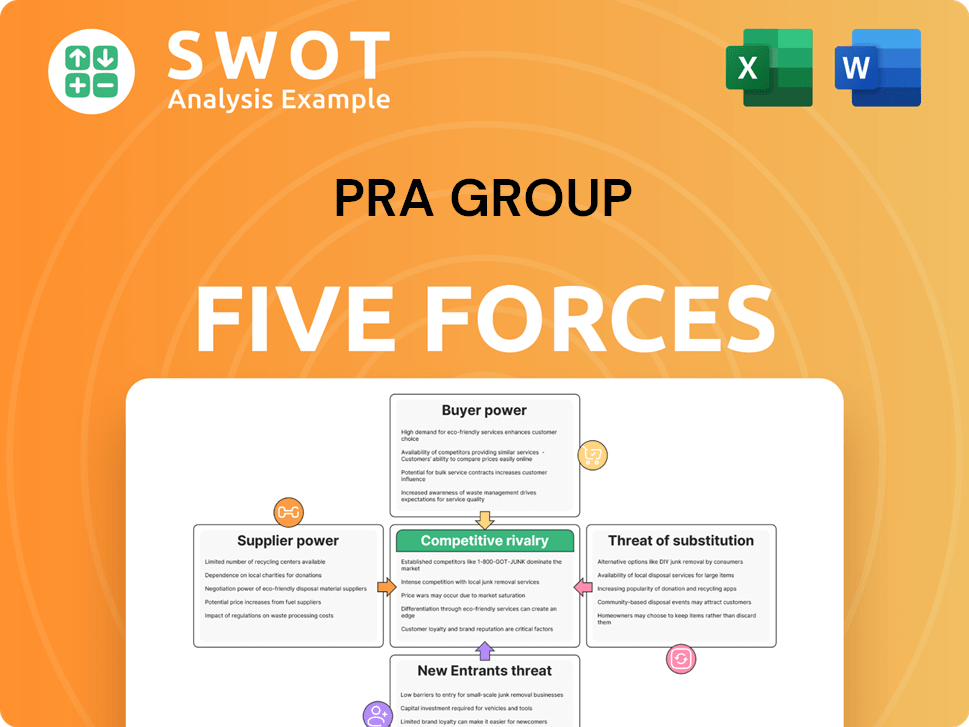
PRA Group Porter's Five Forces Analysis
- Covers All 5 Competitive Forces in Detail
- Structured for Consultants, Students, and Founders
- 100% Editable in Microsoft Word & Excel
- Instant Digital Download – Use Immediately
- Compatible with Mac & PC – Fully Unlocked
Related Blogs

- What are Mission Vision & Core Values of PRA Group Company?
- What is Competitive Landscape of PRA Group Company?
- How Does PRA Group Company Work?
- What is Sales and Marketing Strategy of PRA Group Company?
- What is Brief History of PRA Group Company?
- Who Owns PRA Group Company?
- What is Customer Demographics and Target Market of PRA Group Company?
Disclaimer
All information, articles, and product details provided on this website are for general informational and educational purposes only. We do not claim any ownership over, nor do we intend to infringe upon, any trademarks, copyrights, logos, brand names, or other intellectual property mentioned or depicted on this site. Such intellectual property remains the property of its respective owners, and any references here are made solely for identification or informational purposes, without implying any affiliation, endorsement, or partnership.
We make no representations or warranties, express or implied, regarding the accuracy, completeness, or suitability of any content or products presented. Nothing on this website should be construed as legal, tax, investment, financial, medical, or other professional advice. In addition, no part of this site—including articles or product references—constitutes a solicitation, recommendation, endorsement, advertisement, or offer to buy or sell any securities, franchises, or other financial instruments, particularly in jurisdictions where such activity would be unlawful.
All content is of a general nature and may not address the specific circumstances of any individual or entity. It is not a substitute for professional advice or services. Any actions you take based on the information provided here are strictly at your own risk. You accept full responsibility for any decisions or outcomes arising from your use of this website and agree to release us from any liability in connection with your use of, or reliance upon, the content or products found herein.