

Nautilus Bundle

Can Nautilus Company Reclaim Its Fitness Throne?
The fitness industry is a dynamic arena, and Nautilus, Inc. stands at a crucial juncture. Founded on innovation, the company has evolved from specialized machines to a broader range of home fitness solutions. This evolution necessitates a deep dive into its Nautilus SWOT Analysis to understand its current position and future trajectory in a competitive market.

This exploration of the Nautilus company's growth strategy will examine its business development initiatives, market analysis, and strategic planning to navigate the evolving fitness landscape. We'll analyze the future prospects of Nautilus company, considering its expansion opportunities and new product development strategy. Understanding the challenges facing Nautilus company growth is key to assessing its long-term growth potential and investment opportunities within the context of market trends and forecasts, ultimately determining its ability to secure sustainable growth strategies.
How Is Nautilus Expanding Its Reach?
The expansion initiatives of the fitness company, focus on enhancing product offerings and growing its digital ecosystem. This strategy aims to reach new customers and diversify revenue streams. The company's primary focus is on home-use exercise equipment, including treadmills, ellipticals, bikes, and strength training products.
A key element of this strategy is the JRNY digital fitness platform. This platform provides adaptive fitness experiences. The company aims to increase conversion to paid subscribers, which are growing faster than overall member numbers. The company is also working to transform its supply chain into a strategic advantage.
As of Q3 Fiscal 2023, JRNY had approximately 450,000 members, which represented an 88% growth compared to Q3 Fiscal 2022. The target was approximately 500,000 members by the end of fiscal year 2023. This demonstrates a strong emphasis on expanding its digital subscription base.
 Product Innovation
The company's growth strategy includes continuous innovation in its product line. This involves developing new equipment and enhancing existing models to meet evolving customer needs. New product development is crucial for maintaining a competitive edge and attracting new customers.
Digital Platform Growth
Expanding the JRNY digital fitness platform is a core focus. This includes adding new features, content, and workout programs to enhance user engagement. Increasing the number of paid subscribers is a key metric for the company's future revenue streams and overall growth potential.
Supply Chain Optimization
The company aims to transform its supply chain to improve efficiency and reduce risks. This includes creating geographic diversity to reduce transport times. Strategic planning in supply chain management is crucial for sustainable growth strategies.
Strategic Acquisitions
While specific acquisitions in 2024-2025 aren't detailed, the company has a history of strategic acquisitions. This suggests a willingness to acquire businesses to strengthen its market position. A strategic business plan may include future acquisitions to accelerate growth.

Key Expansion Strategies
The company's growth strategy is multifaceted, focusing on product innovation, digital platform expansion, and supply chain optimization. These initiatives are designed to drive revenue growth and enhance the company's market share. Owners & Shareholders of Nautilus should be aware of these strategies.
- Continuous product development to meet customer needs.
- Enhancement of the JRNY digital fitness platform.
- Strategic supply chain improvements.
- Potential for future acquisitions to boost market presence.
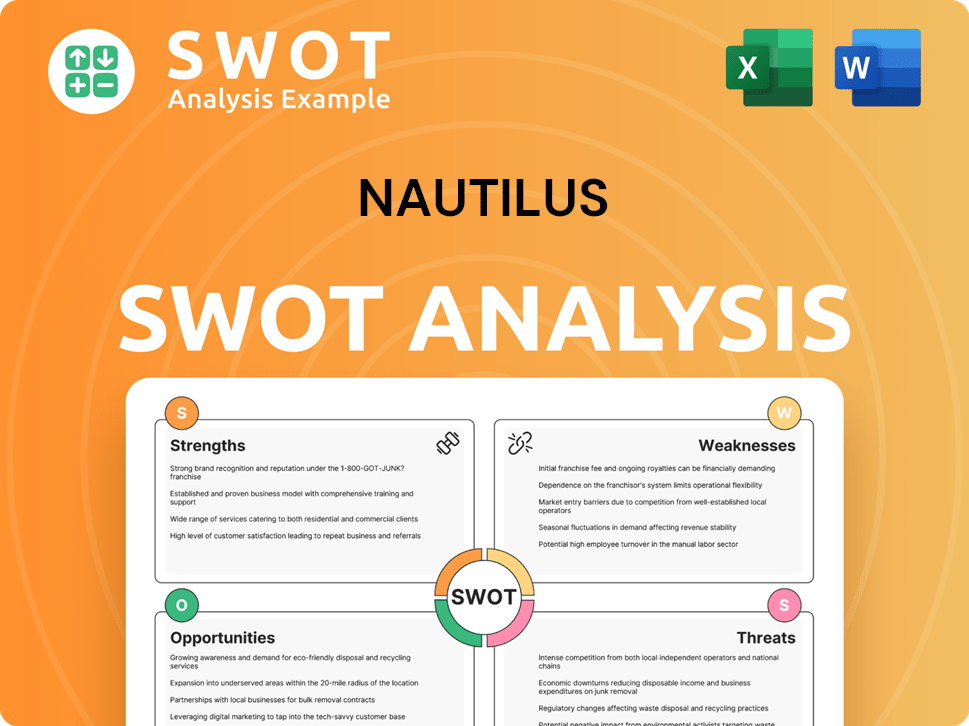
Nautilus SWOT Analysis
- Complete SWOT Breakdown
- Fully Customizable
- Editable in Excel & Word
- Professional Formatting
- Investor-Ready Format
How Does Nautilus Invest in Innovation?
The Brief History of Nautilus shows that the company's growth strategy heavily relies on innovation and technology. This is particularly evident in its digital fitness platform, JRNY, and the integration of cutting-edge technologies. The fitness industry is experiencing a surge in connected fitness solutions, making this a crucial area for the company's strategic focus.
Nautilus, Inc. leverages technology to drive sustained growth, especially through its digital fitness platform, JRNY. This platform offers interactive and personalized workout experiences. This approach enhances user engagement and motivation, supporting the company's growth objectives.
The company's commitment to digital transformation is highlighted by its emphasis on connected fitness solutions. The JRNY digital fitness platform and app underwent a major overhaul in 2021, showcasing its dedication to evolving its digital offerings. This focus aligns with the increasing consumer demand for personalized and convenient fitness solutions.

Digital Fitness Platform
JRNY is a key element of the company's growth strategy. It provides users with interactive and personalized workout experiences. This enhances user engagement and supports the company's goals.
Integration of Advanced Technologies
The fitness equipment market is seeing increased integration of advanced technologies such as AI and IoT. These technologies enable connected devices to offer more precise measurements and customized workout plans. This enhances the overall user experience.
R&D Focus
While specific details on R&D investments for 2024-2025 were not extensively detailed, the company's focus on digital platform development and smart technology integration aligns with the industry's direction. This strategic alignment positions the company to capitalize on the increasing consumer demand for personalized fitness solutions.
Market Trends
The industry is moving towards AI-driven workout programs and connected ecosystems. This trend supports the company's strategic focus on digital fitness. The company is well-positioned to benefit from these evolving market trends.
Strategic Alignment and Future Prospects
The company's growth strategy is closely tied to its ability to innovate and integrate technology. This includes the enhancement of its digital fitness platform and the adoption of AI and IoT. The company is well-positioned to capitalize on the increasing demand for personalized and convenient fitness solutions.
- Continued investment in the JRNY platform to improve user experience.
- Integration of AI and IoT to offer more personalized workout plans and data analysis.
- Focus on connected fitness solutions to meet evolving market demands.
- Strategic planning to align with industry trends towards AI-driven programs.
Nautilus PESTLE Analysis
- Covers All 6 PESTLE Categories
- No Research Needed – Save Hours of Work
- Built by Experts, Trusted by Consultants
- Instant Download, Ready to Use
- 100% Editable, Fully Customizable

What Is Nautilus’s Growth Forecast?
Analyzing the financial outlook of Nautilus Biotechnology (NASDAQ: NAUT) reveals key aspects of its growth strategy and future prospects. The company's financial performance in Q1 2025 and its projections for the coming years provide insights into its strategic planning and market analysis.
In Q1 2025, the company reported a net loss of $16.6 million, an improvement compared to the $18.7 million loss in Q1 2024. This reduction in losses indicates progress in managing expenses and optimizing operations. The company's strategic focus on its proteomics platform and planned commercial launch in late 2026 are key drivers for long-term growth potential.
Nautilus Biotechnology's commitment to innovation and strategic partnerships positions it for sustainable growth. The company's financial health, including a strong cash position of $192.8 million as of March 31, 2025, supports its ability to invest in research and development, and pursue business development opportunities.
Q1 2025 Financial Performance
The company reported a net loss of $16.6 million in Q1 2025, an improvement from the $18.7 million loss in Q1 2024. Operating expenses decreased by 13% to $18.8 million in Q1 2025, down from $21.6 million in the corresponding prior year period. This decrease was attributed to cost optimization and timing of R&D activities.
Full Year 2024 Financials
For the full fiscal year 2024, operating expenses increased by 7% to $81.5 million from $76.2 million in 2023. The net loss for 2024 was $70.8 million. These figures reflect the investment in the company's growth strategy and new product development strategy.
Cash Position and Runway
As of March 31, 2025, the company maintained a strong cash position of $192.8 million. The company projects its cash runway to extend through 2027, providing a stable financial foundation. This financial stability supports the company's strategic business plan.
Future Projections
The company expects its 2025 operating expenses to be at or below 2024 levels. Nautilus Biotechnology anticipates forming its first partnership in the academic or nonprofit sector within the first half of 2025. These partnerships are key to improving Nautilus company sales.
Key Strategic Initiatives
The company is focused on its proteomics platform, with a planned commercial launch in late 2026. The company's growth strategy includes forming partnerships and managing expenses effectively. This approach aims to address the challenges facing Nautilus company growth.
- Commercial launch of proteomics platform in late 2026.
- Strategic partnerships in the academic or nonprofit sector.
- Cost optimization and efficient R&D spending.
- Maintaining a strong cash position.
Nautilus Business Model Canvas
- Complete 9-Block Business Model Canvas
- Effortlessly Communicate Your Business Strategy
- Investor-Ready BMC Format
- 100% Editable and Customizable
- Clear and Structured Layout

What Risks Could Slow Nautilus’s Growth?
The Nautilus company faces several risks that could impact its growth strategy and future prospects. These challenges span both its biotechnology and fitness divisions, requiring careful strategic planning to navigate successfully. Understanding these potential obstacles is crucial for investors and stakeholders evaluating the company's long-term viability.
For the biotechnology segment, the primary risk is the commercialization of its proteome analysis platform, which has been delayed to late 2026. This delay, along with other factors like supply chain issues and economic pressures, could impact short-term revenue. The fitness division also faces market competition and operational challenges.
These risks necessitate a proactive approach to business development and strategic planning to ensure sustained growth. The company must adapt to evolving market dynamics and mitigate potential disruptions to achieve its long-term goals.
Biotechnology Development Risks
The launch of the proteome analysis platform is delayed until late 2026, impacting potential short-term revenue. Scientific and technical development, collaboration outcomes, and commercialization timelines are uncertain. The company must overcome technical and market entry barriers to commercialize its proteomics platform.
Financial and Operational Challenges
Supply chain resilience, tariffs, and economic pressures pose challenges. The company must manage costs effectively. Reduced government funding could lead to longer sales cycles in the academic market. Maintaining investor confidence is essential during the transition from development to commercialization.
Fitness Industry Competition
The fitness equipment industry is highly competitive, requiring constant adaptation. Regulatory changes, supply chain vulnerabilities, and technological disruption are ongoing risks. Persistent retail headwinds were noted in early 2023. The company's Canadian entity entered receivership in November 2024, highlighting financial risks.
Strategic Mitigation Efforts
The company has implemented cost management efforts, including a 16% workforce reduction, to extend its financial runway. Its strong cash position, projected to extend through 2027, provides a buffer. Management is creating geographic diversity in its supply chain to reduce risk and transport times.
Partnership and Funding Risks
Potential delays in forming strategic partnerships could impact growth projections. Challenges in acquiring funds due to reduced government funding could extend sales cycles. Successfully navigating these challenges is vital for achieving the company's growth strategy.
Market Entry Challenges
Successfully commercializing the proteomics platform requires overcoming technical and market entry barriers. The company’s ability to navigate these challenges will significantly impact its future prospects. A detailed market analysis is essential for strategic planning.
Mitigating Supply Chain Risks
To reduce supply chain vulnerabilities, the company focuses on geographic diversity. This strategy aims to lessen the impact of tariffs and transport delays. Diversifying suppliers is a key element of the company’s strategic planning.
Financial Runway and Cost Management
The company’s strong cash position, projected to extend through 2027, provides a financial buffer. Cost management, including workforce reductions, is a key strategy. This approach helps in navigating economic pressures and ensuring sustainable growth.
Market Dynamics and Competition
The fitness equipment market is highly competitive, requiring constant adaptation. The company's focus on home-use equipment and digital fitness subscriptions is a strategic response. Understanding market trends and forecasts is crucial for success.
Strategic Focus and Adaptation
The company’s shift to home-use equipment and digital fitness subscriptions is a strategic adaptation. These initiatives are designed to navigate industry changes and maintain a competitive edge. For more insights, explore the Target Market of Nautilus.
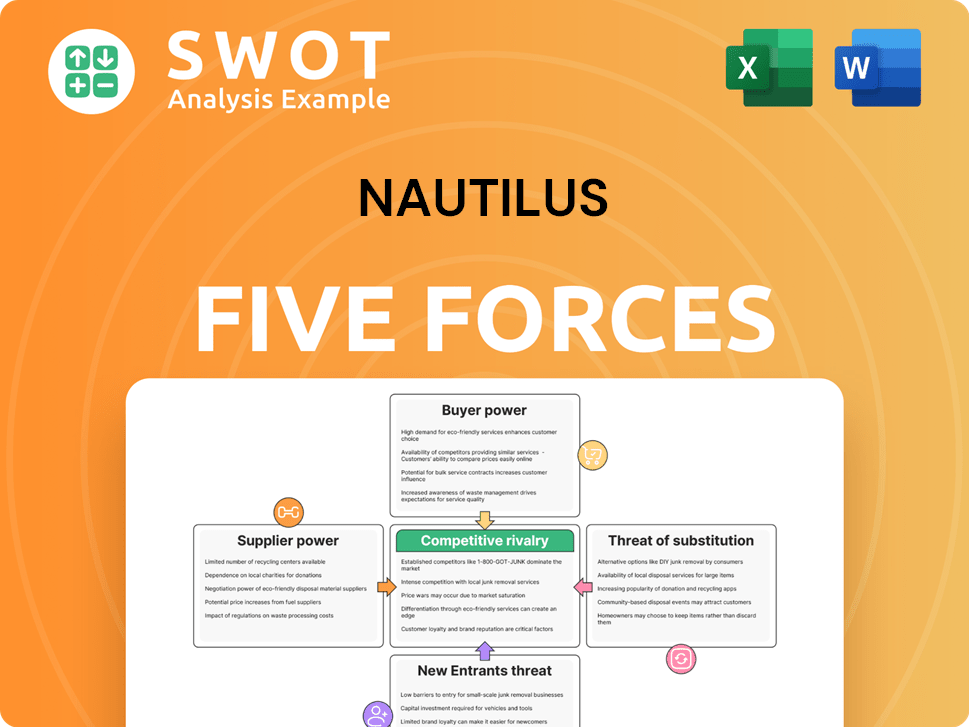
Nautilus Porter's Five Forces Analysis
- Covers All 5 Competitive Forces in Detail
- Structured for Consultants, Students, and Founders
- 100% Editable in Microsoft Word & Excel
- Instant Digital Download – Use Immediately
- Compatible with Mac & PC – Fully Unlocked
Related Blogs

- What are Mission Vision & Core Values of Nautilus Company?
- What is Competitive Landscape of Nautilus Company?
- How Does Nautilus Company Work?
- What is Sales and Marketing Strategy of Nautilus Company?
- What is Brief History of Nautilus Company?
- Who Owns Nautilus Company?
- What is Customer Demographics and Target Market of Nautilus Company?
Disclaimer
All information, articles, and product details provided on this website are for general informational and educational purposes only. We do not claim any ownership over, nor do we intend to infringe upon, any trademarks, copyrights, logos, brand names, or other intellectual property mentioned or depicted on this site. Such intellectual property remains the property of its respective owners, and any references here are made solely for identification or informational purposes, without implying any affiliation, endorsement, or partnership.
We make no representations or warranties, express or implied, regarding the accuracy, completeness, or suitability of any content or products presented. Nothing on this website should be construed as legal, tax, investment, financial, medical, or other professional advice. In addition, no part of this site—including articles or product references—constitutes a solicitation, recommendation, endorsement, advertisement, or offer to buy or sell any securities, franchises, or other financial instruments, particularly in jurisdictions where such activity would be unlawful.
All content is of a general nature and may not address the specific circumstances of any individual or entity. It is not a substitute for professional advice or services. Any actions you take based on the information provided here are strictly at your own risk. You accept full responsibility for any decisions or outcomes arising from your use of this website and agree to release us from any liability in connection with your use of, or reliance upon, the content or products found herein.