

Koch Foods Bundle

Can Koch Foods Continue to Soar in the Poultry Industry?
From a single-room operation to a multi-billion dollar enterprise, Koch Foods has become a powerhouse in the food processing market. Founded in 1973, the company's journey exemplifies remarkable growth, evolving from a simple chicken deboning business to a vertically integrated poultry giant. This exploration dives into the Koch Foods SWOT Analysis to understand its strategic initiatives and future trajectory within the competitive landscape.

Understanding the Koch Foods Growth Strategy is crucial for anyone interested in the Food Processing Market. This analysis will dissect Koch Foods' expansion plans, market share analysis, and financial performance review to provide a comprehensive understanding of its future prospects. We'll also examine the company's innovative approaches and sustainable practices within the Poultry Industry Analysis and how these factors will shape its continued success.
How Is Koch Foods Expanding Its Reach?
The company is actively pursuing expansion initiatives to strengthen its market presence and improve operational capabilities. These efforts are crucial for accessing new customers, diversifying revenue streams, and maintaining a competitive edge in a dynamic industry. The company's strategy includes significant investments in its facilities to boost production and distribution.
A key aspect of the company's growth strategy involves strategic investments in its facilities. The company's expansion plans are designed to increase its production capacity and broaden its distribution network. These investments are vital for the company to meet the growing demand and maintain its competitive position within the food processing market.
The company's approach to market penetration is multifaceted, as evidenced by its diverse sales segments. The company's sales are diversified across segments, with 40% from foodservice, 20% from retail, 15% from institutional clients, 10% from industrial sales, and 15% from exports, indicating a multi-faceted approach to market penetration.
 Recent Investments
In November 2024, the company announced a $145.5 million project to expand and 'rehab' its chicken plant in Morton, Mississippi. This expansion is designed to increase production and enhance distribution operations. It is projected to create 128 new jobs over the next five years, demonstrating a commitment to both growth and local economic impact.
Previous Expansions
The company previously invested $220 million in the expansion of its poultry plant in Fairfield, Ohio, and planned a cold storage facility in the same area. These investments highlight the company's ongoing efforts to enhance its operational capabilities and meet the growing demand in the food processing market. These moves are part of the broader Competitors Landscape of Koch Foods.

Key Expansion Details
The recent expansion in Morton, Mississippi, is a significant commitment to increasing production capacity and creating new employment opportunities. The company's sales are diversified across segments, with 40% from foodservice, 20% from retail, 15% from institutional clients, 10% from industrial sales, and 15% from exports, indicating a multi-faceted approach to market penetration.
- $145.5 million investment in Morton, Mississippi plant.
- Creation of 128 new jobs over five years.
- Diversified sales across foodservice, retail, institutional, industrial, and export segments.
- Previous $220 million investment in Fairfield, Ohio, plant.
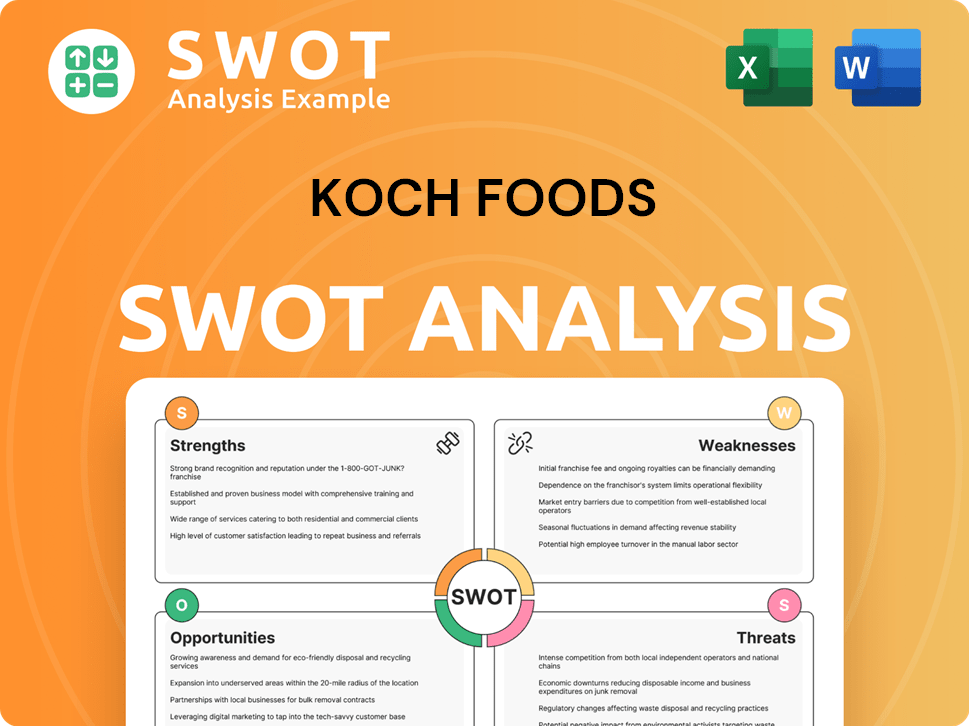
Koch Foods SWOT Analysis
- Complete SWOT Breakdown
- Fully Customizable
- Editable in Excel & Word
- Professional Formatting
- Investor-Ready Format
How Does Koch Foods Invest in Innovation?
The company's strategy emphasizes innovation and continuous improvement as key drivers for sustained growth. While specific details about research and development (R&D) investments or patents are not readily available in public sources, the focus on advanced production processes and state-of-the-art facilities suggests a strong commitment to leveraging technology. This approach is crucial for maintaining a competitive edge in the dynamic food processing market.
The poultry industry, in general, is experiencing a significant push toward automation and artificial intelligence (AI) to boost output and productivity. Competitors within the sector are investing heavily in highly automated facilities. This trend indicates a broader industry shift towards technological advancements to improve efficiency and meet evolving consumer demands. This commitment to innovation is essential for long-term success.
The company's investment in facility expansion and modernization, including 'rehabbing' existing sites, points to an adoption of modern processing and distribution technologies. This is crucial for enhancing operational efficiency and maintaining high standards of product quality. By embracing technological advancements, the company aims to optimize its operations and improve its market position. This proactive approach supports the company's long-term growth strategy.

Automation in Production
The adoption of automation and AI is a key trend in the poultry industry. This includes using robotics for processing and packaging. Automation helps enhance efficiency and reduce labor costs.
AI for Quality Control
AI is being used for real-time quality control in food processing. This involves using machine learning to detect defects and ensure product consistency. This improves product quality and reduces waste.
Predictive Maintenance
Predictive maintenance uses data analytics to anticipate equipment failures. This minimizes downtime and reduces maintenance costs. This proactive approach enhances operational efficiency.
Supply Chain Optimization
AI and data analytics are used to optimize supply chains. This includes improving logistics, reducing waste, and ensuring timely delivery. This enhances overall supply chain efficiency.
Sustainable Practices
The food industry is increasingly focused on sustainable practices. This includes reducing carbon footprints and using eco-friendly packaging. This addresses consumer demand for environmentally friendly products.
Cleaner Ingredients
There is a growing trend towards using cleaner ingredients in food production. This involves reducing artificial additives and preservatives. This aligns with consumer preferences for healthier options.
The company's vertically integrated structure allows it to respond quickly to changes in customer needs and market trends. This integrated approach, combined with a focus on quality and customer service, provides a strong foundation for innovation. The broader food manufacturing industry is witnessing increased adoption of AI and automation for quality control, predictive maintenance, and supply chain optimization, as well as a focus on sustainable practices and cleaner ingredients. While specific data for the company is not available, these industry trends suggest areas where the company likely invests in innovation to remain competitive and meet evolving consumer demands. For more insights into the company's marketing strategies, consider reading the Marketing Strategy of Koch Foods.
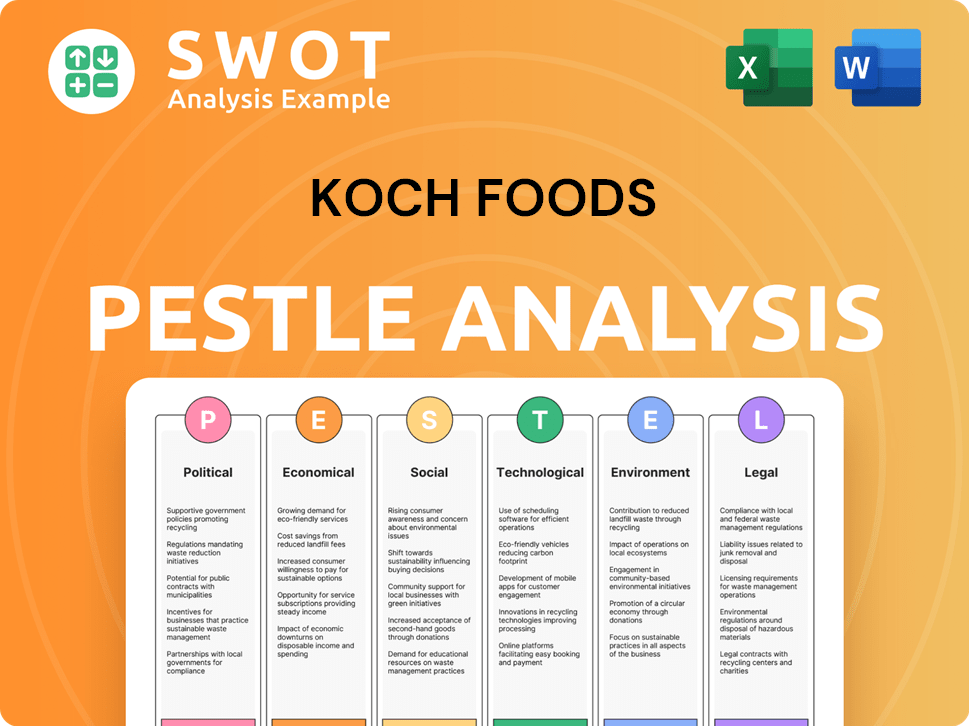
Koch Foods PESTLE Analysis
- Covers All 6 PESTLE Categories
- No Research Needed – Save Hours of Work
- Built by Experts, Trusted by Consultants
- Instant Download, Ready to Use
- 100% Editable, Fully Customizable
What Is Koch Foods’s Growth Forecast?
Analyzing the financial outlook for Koch Foods requires piecing together information from various sources, as the company is privately held and does not publicly disclose detailed financial reports. However, available data offers insights into its financial performance and market position. The company's financial health and strategic moves are crucial for understanding its trajectory within the food processing market.
As of November 2024, Forbes reported Koch Foods' revenue at $5.3 billion, indicating a substantial scale of operations. Other sources suggest that sales in 2024 were approximately $5.1 billion, aligning with the figures from 2023. Understanding these revenue figures is vital for assessing the company's overall financial health and its ability to compete in the poultry industry.
Zippia reported a peak revenue of $11.0 billion in 2024, which provides a broader perspective on the company's financial potential. In 2023, Koch Foods generated $5.1 billion in sales, slightly down from $5.3 billion the previous year. This slight decrease may be attributed to various factors, including market conditions and operational adjustments. A detailed Koch Foods company history can help to better understand the company's financial performance.
Revenue Breakdown
In 2023, Koch Foods' sales were divided across different sectors. Foodservice accounted for 40% of sales, while retail represented 20%. Institutional sales made up 15%, with industrial and exports each contributing 10% and 15%, respectively. This breakdown highlights the company's diverse market presence and its ability to cater to various customer segments.
Product Mix
Koch Foods' product mix consists of 75% frozen and 25% fresh items. This distribution indicates a strategic focus on both frozen and fresh poultry products, catering to different consumer preferences and distribution channels. Understanding the product mix is essential for analyzing Koch Foods' competitive position within the food processing market.
Investment and Expansion
Koch Foods has made significant investments in its operations. The recent $145.5 million investment in its Mississippi plant, combined with a previous $220 million expansion in Ohio, demonstrates a commitment to growth. These investments are supported by state tax credits, indicating a favorable environment for its expansion initiatives and future growth predictions.
Capital Allocation
The allocation of capital towards plant expansions highlights Koch Foods' strategic focus on increasing production capacity and market reach. This investment strategy supports the company's long-term growth objectives and reinforces its position in the food processing market. These strategic moves are essential for understanding Koch Foods' business.
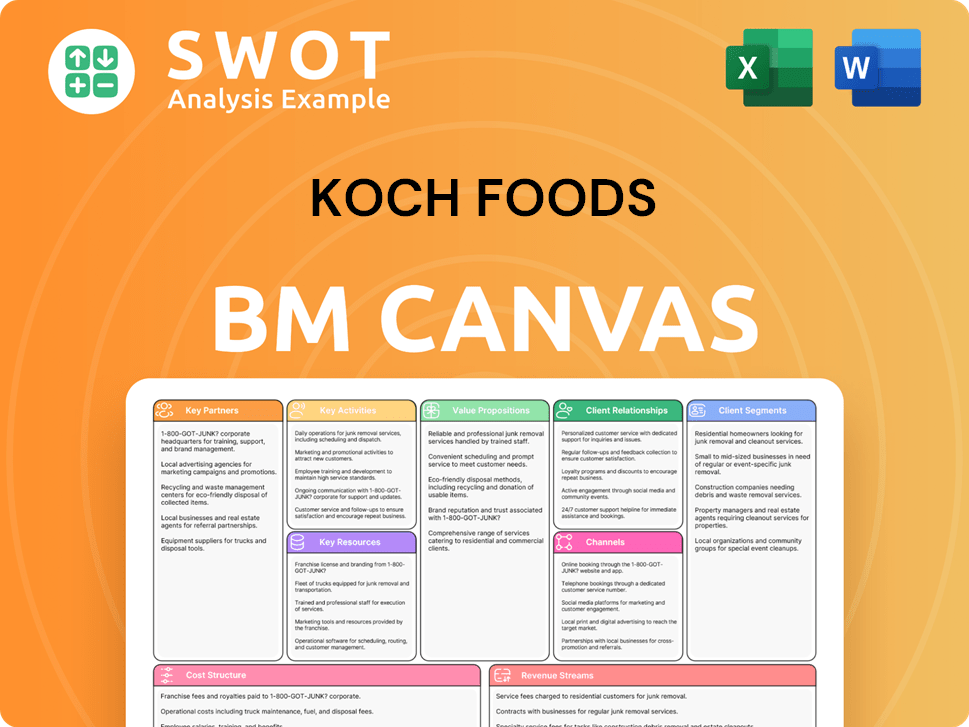
Koch Foods Business Model Canvas
- Complete 9-Block Business Model Canvas
- Effortlessly Communicate Your Business Strategy
- Investor-Ready BMC Format
- 100% Editable and Customizable
- Clear and Structured Layout
What Risks Could Slow Koch Foods’s Growth?
The path forward for Koch Foods, like any major player in the food processing market, is fraught with potential pitfalls. These challenges include intense competition within the poultry industry and the need to adapt to evolving regulations. Understanding these risks is crucial for evaluating the long-term viability of Koch Foods' business model and its strategic initiatives.
One of the most significant obstacles is the dynamic competitive landscape. Major competitors are continually investing in advanced technologies and consolidating operations, which could intensify the pressure on Koch Foods' market share. Furthermore, the poultry industry analysis reveals that regulatory changes concerning food safety and environmental impact are becoming increasingly stringent, requiring continuous compliance efforts and investments.
Supply chain vulnerabilities also pose a considerable threat. Fluctuations in feed prices and potential disruptions in distribution networks can significantly impact profitability. Additionally, the broader agricultural sector faces economic uncertainties, adding another layer of complexity to Koch Foods' operations. These factors highlight the need for robust risk management strategies and proactive measures to maintain operational efficiency.
Market Competition
The food processing market is highly competitive, with companies like Tyson Foods investing heavily in automation. This constant evolution demands that Koch Foods continuously innovate to maintain its market position. Competitive pressures require strategic agility and a focus on operational efficiency to stay ahead.
Regulatory Changes
Regulatory changes, especially regarding food safety and environmental impact, pose ongoing challenges. The industry is navigating new traceability requirements slated for 2026. Compliance necessitates continuous investment and adaptation to meet evolving standards.
Supply Chain Risks
Supply chain vulnerabilities, including feed price volatility and distribution disruptions, are inherent risks. The agricultural sector's economic challenges add to these complexities. Managing these risks effectively is crucial for maintaining profitability and operational stability.
Legal and Ethical Considerations
Past legal challenges, such as those involving price fixing, highlight the importance of robust risk management. Ethical operational practices are essential to maintain consumer trust and avoid costly litigation. A strong ethical framework is crucial.
Emerging Risks
Emerging risks include technological disruptions from alternative protein sources and evolving consumer preferences. Consumer demand for sustainable practices is increasing. Adapting to these changes is essential for long-term success.
Economic Factors
The agricultural sector faces economic uncertainties, which can affect feed costs and overall profitability. External economic conditions can significantly impact operational costs. Strategic financial planning is essential.
To mitigate these risks, Koch Foods' Mission, Vision & Core Values of Koch Foods strategy of diversification across multiple markets, including foodservice, retail, and export, is crucial. Continuous improvement and responsiveness to customer needs are also critical. The company's ability to adapt and innovate will be key to navigating the challenges and capitalizing on future opportunities within the dynamic poultry industry.
Food Safety Regulations
The food processing market must comply with stringent food safety regulations. The Food Safety Modernization Act (FSMA) is a key driver. These regulations require continuous investment and adaptation to maintain compliance.
Sustainability Initiatives
Consumer demand for sustainable practices is increasing. Companies must adopt sustainable practices to meet consumer expectations. This includes reducing environmental impact and sourcing responsibly.
Supply Chain Disruptions
Supply chain disruptions, such as those seen in 2020-2023, highlight the need for resilient supply chains. Diversifying suppliers and improving logistics are key strategies. These disruptions can impact profitability.
Alternative Proteins
The rise of alternative proteins poses a long-term threat to the poultry industry. Companies must innovate and adapt to changing consumer preferences. This includes exploring new product offerings.
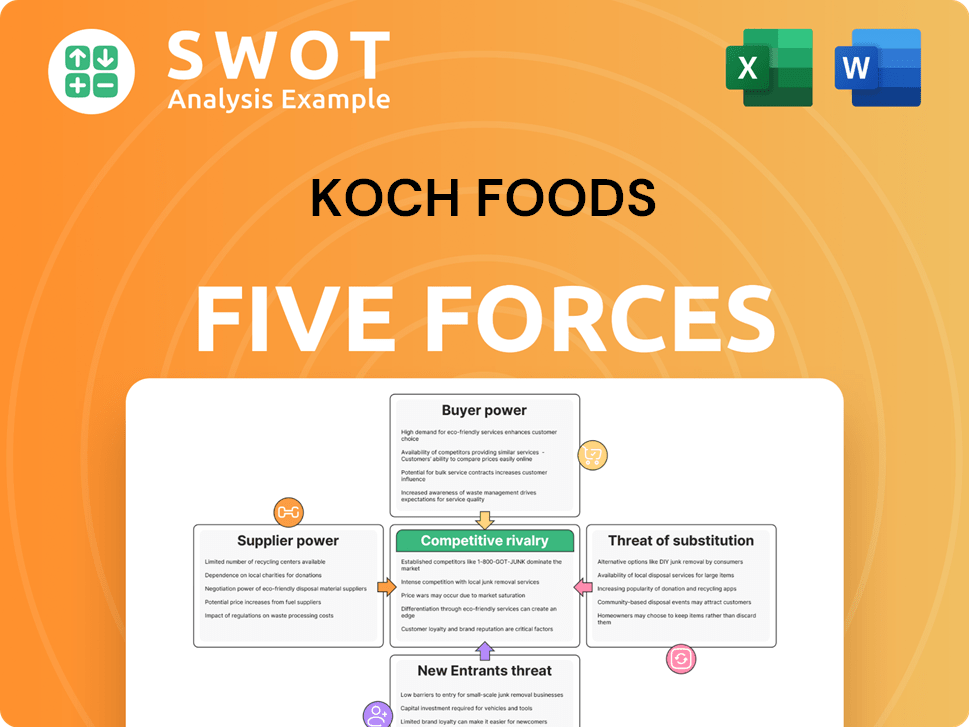
Koch Foods Porter's Five Forces Analysis
- Covers All 5 Competitive Forces in Detail
- Structured for Consultants, Students, and Founders
- 100% Editable in Microsoft Word & Excel
- Instant Digital Download – Use Immediately
- Compatible with Mac & PC – Fully Unlocked
Related Blogs

- What are Mission Vision & Core Values of Koch Foods Company?
- What is Competitive Landscape of Koch Foods Company?
- How Does Koch Foods Company Work?
- What is Sales and Marketing Strategy of Koch Foods Company?
- What is Brief History of Koch Foods Company?
- Who Owns Koch Foods Company?
- What is Customer Demographics and Target Market of Koch Foods Company?
Disclaimer
All information, articles, and product details provided on this website are for general informational and educational purposes only. We do not claim any ownership over, nor do we intend to infringe upon, any trademarks, copyrights, logos, brand names, or other intellectual property mentioned or depicted on this site. Such intellectual property remains the property of its respective owners, and any references here are made solely for identification or informational purposes, without implying any affiliation, endorsement, or partnership.
We make no representations or warranties, express or implied, regarding the accuracy, completeness, or suitability of any content or products presented. Nothing on this website should be construed as legal, tax, investment, financial, medical, or other professional advice. In addition, no part of this site—including articles or product references—constitutes a solicitation, recommendation, endorsement, advertisement, or offer to buy or sell any securities, franchises, or other financial instruments, particularly in jurisdictions where such activity would be unlawful.
All content is of a general nature and may not address the specific circumstances of any individual or entity. It is not a substitute for professional advice or services. Any actions you take based on the information provided here are strictly at your own risk. You accept full responsibility for any decisions or outcomes arising from your use of this website and agree to release us from any liability in connection with your use of, or reliance upon, the content or products found herein.