

Intercontinental Hotels Group Bundle

Can IHG Continue Its Reign in the Hotel Industry?
InterContinental Hotels Group (IHG) has consistently demonstrated a powerful growth strategy, evolving with global travel trends to maintain its leadership. From its origins in brewing to its current status as a global hospitality giant, IHG's journey is a study in strategic adaptation. This analysis delves into IHG's past and future, offering insights for investors and industry professionals alike.

IHG's success stems from its strategic foresight and ability to capitalize on the evolving hospitality market. Its diverse brand portfolio and global expansion efforts have been instrumental in navigating the complexities of the hotel industry. To further understand IHG's strategic positioning, consider a comprehensive Intercontinental Hotels Group SWOT Analysis. This in-depth look at IHG's strengths, weaknesses, opportunities, and threats provides valuable insights into its future prospects and potential investment opportunities within the dynamic landscape of the hospitality market.
How Is Intercontinental Hotels Group Expanding Its Reach?
Intercontinental Hotels Group's (IHG) expansion initiatives are primarily focused on strategic market entry, brand portfolio diversification, and targeted mergers and acquisitions to capitalize on evolving travel demands. This approach is crucial for maintaining and enhancing its position within the competitive Hotel industry.
A key element of IHG's IHG growth strategy involves expanding its presence in high-growth markets, particularly in the luxury and lifestyle segments. The company's commitment to asset-light growth, primarily through management and franchise agreements, allows it to expand its brand presence with reduced capital expenditure, focusing on Global expansion.
IHG is also actively pursuing growth in its midscale and extended-stay brands, recognizing the increasing demand for value-driven and longer-duration accommodations. The company's partnership strategies, including collaborations with real estate developers and local hospitality groups, are crucial for facilitating this expansion and mitigating direct investment risks. For more insights, check out the Mission, Vision & Core Values of Intercontinental Hotels Group.
 Strategic Market Entry
IHG focuses on entering high-growth markets, particularly in the luxury and lifestyle segments. This involves identifying and capitalizing on emerging travel trends and consumer preferences. The company strategically selects locations with high potential for revenue and brand visibility.
Brand Portfolio Diversification
IHG diversifies its brand portfolio to cater to a wide range of customer segments and travel needs. This includes expanding its presence in the midscale and extended-stay segments. The strategy aims to offer diverse experiences, from luxury to value-driven accommodations.
Mergers and Acquisitions
Targeted mergers and acquisitions are part of IHG's growth strategy. These activities aim to enhance market share and expand the brand portfolio. IHG carefully evaluates potential acquisitions to ensure they align with its strategic goals.
Partnership Strategies
Collaborations with real estate developers and local hospitality groups are crucial for expansion. These partnerships facilitate market entry and mitigate investment risks. IHG leverages these alliances to accelerate growth and increase its footprint.

Key Expansion Metrics
As of the end of 2024, IHG's pipeline stood at 1,979 hotels, representing 306,800 rooms. This significant pipeline indicates a strong commitment to growth and expansion. IHG's strategic alliances and continuous evaluation of new business models are also integral to its long-term expansion plans.
- Pipeline Growth: IHG's pipeline reflects a deliberate effort to expand its geographical reach and penetrate new urban and leisure destinations.
- Asset-Light Model: The focus on management and franchise agreements enables rapid expansion with reduced capital expenditure.
- Market Focus: Expansion is targeted at high-growth markets and segments, including luxury, lifestyle, midscale, and extended-stay accommodations.
- Strategic Alliances: Partnerships with developers and local groups are crucial for facilitating expansion and mitigating risks.
Intercontinental Hotels Group SWOT Analysis
- Complete SWOT Breakdown
- Fully Customizable
- Editable in Excel & Word
- Professional Formatting
- Investor-Ready Format

How Does Intercontinental Hotels Group Invest in Innovation?
The company, known for its diverse portfolio of hotel brands, strategically leverages innovation and technology to enhance guest experiences, optimize operations, and drive sustained growth. This approach is critical in the dynamic Hotel industry, where adapting to changing consumer preferences and technological advancements is essential for maintaining a competitive edge.
A key focus of its strategy is digital transformation, aiming to create a seamless and personalized guest journey. This includes advancements in mobile applications, online booking platforms, and loyalty program interfaces, all designed to improve user engagement and convenience. The company's commitment to innovation is also reflected in its sustainability initiatives, aligning with the growing importance of responsible tourism.
The company is actively investing in in-house development and collaborating with external innovators to integrate cutting-edge technologies across its portfolio. This approach ensures the company remains at the forefront of industry trends, enhancing its ability to meet evolving consumer expectations and maintain a competitive advantage in the Hospitality market.

Digital Transformation
Digital transformation is a core element of the company's strategy, focusing on creating a seamless and personalized guest journey. This involves continuous improvements in mobile applications, online booking platforms, and loyalty program interfaces. These enhancements aim to improve user engagement and convenience, driving customer loyalty and repeat business.
IHG One Rewards
The IHG One Rewards program is a key component of the digital strategy, utilizing data analytics to offer personalized rewards and experiences. This data-driven approach allows the company to understand guest preferences better and tailor offerings accordingly. The program drives repeat business and enhances customer loyalty.
AI and IoT Integration
The company leverages Artificial Intelligence (AI) and the Internet of Things (IoT) to enhance guest experiences and operational efficiency. AI is used for personalized guest interactions, optimizing pricing strategies, and predictive analytics. IoT applications, such as smart room controls and energy management systems, contribute to guest comfort and sustainability.
Sustainability Initiatives
The company's commitment to sustainability is demonstrated through its 'Journey to Tomorrow' plan, which outlines ambitious targets for reducing environmental impact and promoting responsible tourism. These initiatives are increasingly important as consumers prioritize sustainable practices. This focus enhances the company's brand image and attracts environmentally conscious travelers.
Innovation in Operations
The company continuously innovates its operational technologies to improve efficiency and guest satisfaction. This includes investments in smart building technologies, automated processes, and data analytics to optimize resource allocation. These advancements enhance the overall guest experience and streamline internal operations.
Collaboration and Development
The company actively collaborates with external innovators and invests in in-house development to stay at the forefront of technological advancements. This approach allows the company to integrate cutting-edge technologies across its portfolio. This strategy ensures that the company remains competitive and responsive to changing market demands.
Key Technological and Innovation Strategies
The company's innovation strategy is multifaceted, encompassing digital transformation, AI and IoT integration, and sustainability initiatives. These strategies are designed to enhance guest experiences, optimize operations, and drive sustainable growth. The company's commitment to innovation ensures it remains competitive in the Global expansion.
- Digital Platforms: Continuous upgrades to mobile apps and online booking systems for improved user experience.
- AI Applications: Implementation of AI for personalized guest interactions and optimized pricing strategies.
- IoT Integration: Use of smart room controls and energy management systems for enhanced guest comfort and sustainability.
- Data Analytics: Leveraging data analytics through the IHG One Rewards program to personalize rewards and improve customer loyalty.
- Sustainability Initiatives: Execution of the 'Journey to Tomorrow' plan to reduce environmental impact and promote responsible tourism.
Intercontinental Hotels Group PESTLE Analysis
- Covers All 6 PESTLE Categories
- No Research Needed – Save Hours of Work
- Built by Experts, Trusted by Consultants
- Instant Download, Ready to Use
- 100% Editable, Fully Customizable

What Is Intercontinental Hotels Group’s Growth Forecast?
The financial outlook for Intercontinental Hotels Group (IHG) indicates strong growth potential, supported by robust revenue targets and strategic investments. IHG's performance in 2024 reflects the ongoing recovery and strength of the global travel market. The company's asset-light model, primarily relying on management and franchise fees, contributes to a stable and high-margin revenue stream.
For the full year 2024, IHG reported significant financial achievements. Group revenue increased by 19% to $4.6 billion, and operating profit rose by 23% to $1.1 billion. This performance underscores IHG's resilience and ability to capitalize on the expanding hospitality market. The company's strategic focus on expansion, particularly in the luxury and lifestyle segments, is expected to drive revenue per available room (RevPAR) growth.
IHG's commitment to shareholder returns is evident through a 10% increase in its final dividend to 104.0 cents per share and an $800 million share buyback program. IHG's net debt to adjusted EBITDA ratio stood at 2.1x as of December 31, 2024, demonstrating a healthy financial position. The company's strategic expansion initiatives, brand portfolio, and digital capabilities suggest a sustained focus on top-line and bottom-line growth in the coming years, making it an interesting topic for Owners & Shareholders of Intercontinental Hotels Group.
IHG Revenue Growth
IHG's revenue grew by 19% to $4.6 billion in 2024, demonstrating strong financial performance. This growth reflects the company's ability to capitalize on the recovery of the global travel market and its effective business strategies. The increase in revenue is a key indicator of IHG's success in the competitive hotel industry.
Operating Profit Increase
Operating profit for IHG increased by 23% to $1.1 billion in 2024. This significant increase highlights the company's operational efficiency and its ability to manage costs effectively. The growth in operating profit is a positive sign for IHG's future prospects and its ability to generate profits.
Dividend and Share Buyback
IHG announced a 10% increase in its final dividend to 104.0 cents per share and a new $800 million share buyback program. These actions demonstrate the company's confidence in its financial health and its commitment to returning value to shareholders. They also reflect IHG's strong cash flow generation.
Net Debt to Adjusted EBITDA
As of December 31, 2024, IHG's net debt to adjusted EBITDA ratio was 2.1x. This ratio indicates a healthy financial position, showing that the company is managing its debt effectively. A low ratio is a positive sign for investors, indicating financial stability and the ability to invest in future growth.
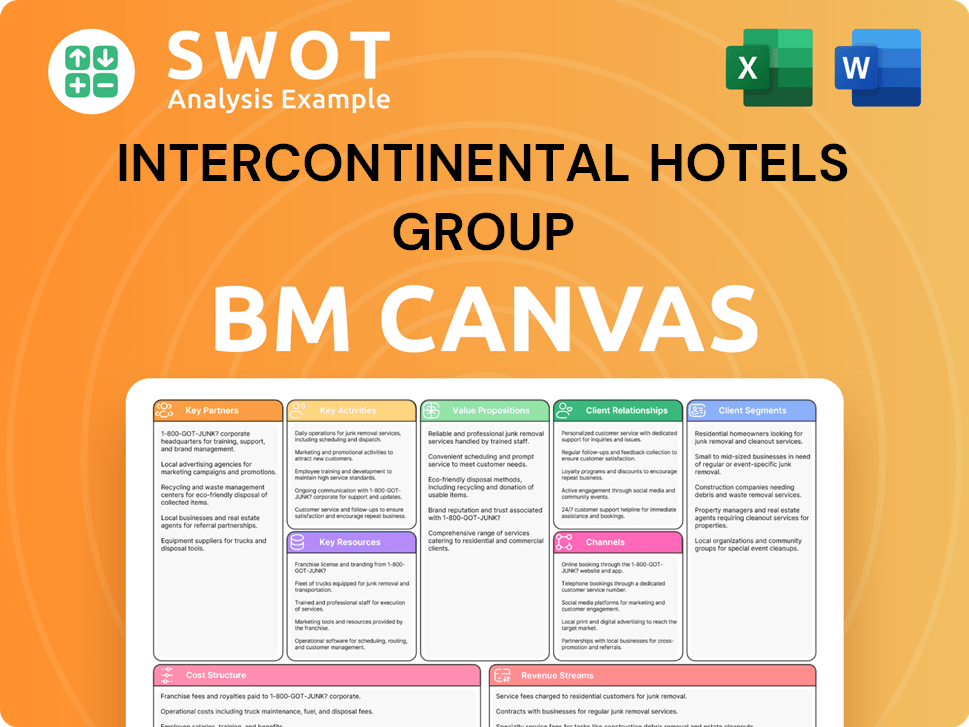
Intercontinental Hotels Group Business Model Canvas
- Complete 9-Block Business Model Canvas
- Effortlessly Communicate Your Business Strategy
- Investor-Ready BMC Format
- 100% Editable and Customizable
- Clear and Structured Layout
What Risks Could Slow Intercontinental Hotels Group’s Growth?
The growth strategy of Intercontinental Hotels Group (IHG) faces several risks and obstacles inherent in the dynamic hotel industry. These challenges include intense competition, regulatory changes, and exposure to geopolitical and economic uncertainties. Understanding and proactively managing these risks is crucial for IHG's long-term success and sustained expansion within the hospitality market.
Market competition remains a significant hurdle, as numerous global and regional hotel chains constantly vie for market share. IHG's operations are also vulnerable to regulatory changes, particularly concerning international travel, labor laws, and environmental standards across its global footprint. Moreover, the company must navigate geopolitical events and economic downturns, which can directly impact travel demand and consumer spending, influencing the company's financial performance.
Supply chain vulnerabilities and technological disruptions pose additional threats to IHG's operations. Internal resource constraints, such as talent acquisition and retention, could also hinder operational efficiency and growth. IHG addresses these challenges through diversification of its brand portfolio and geographical presence, coupled with robust risk management frameworks and strategic planning.
Market Competition
The hotel industry is highly competitive, with major players like Marriott International and Hilton Hotels & Resorts vying for market share. IHG's ability to differentiate its offerings and maintain customer loyalty is critical for its IHG future prospects. Continuous innovation and strategic partnerships are essential to stay ahead in this competitive landscape.
Regulatory and Geopolitical Risks
Changes in international travel regulations, labor laws, and environmental standards can significantly impact IHG's operations and profitability. Geopolitical events and economic downturns in key regions also pose risks, influencing travel demand. IHG must adapt to these external factors to maintain stability and Intercontinental Hotels Group growth.
Technological Disruption
The rapid evolution of technology presents both opportunities and risks for IHG. Failure to keep pace with digital experiences and personalized services could lead to a loss of market share. IHG's digital transformation strategy and investment in technology are vital for adapting to changing consumer behaviors and maintaining a competitive edge.
Supply Chain Vulnerabilities
Disruptions in the supply chain can affect hotel operations, particularly concerning sourcing amenities, food and beverage, and construction materials. IHG needs resilient supply chain management to mitigate these risks. Diversifying suppliers and building strong relationships are crucial for operational continuity.
Internal Resource Constraints
Talent acquisition and retention in a competitive labor market can hinder operational efficiency and growth. IHG must invest in employee development and create a positive work environment to attract and retain skilled staff. Effective human resource management is key to sustaining IHG growth strategy.
Sustainability and Responsible Tourism
Increasing emphasis on sustainability and responsible tourism could lead to greater regulatory scrutiny and changes in consumer preferences. IHG must adapt by investing in sustainable practices. This includes reducing environmental impact and meeting evolving consumer expectations for eco-friendly options.
Mitigation Strategies
IHG employs several strategies to mitigate these risks, including diversifying its brand portfolio and geographical presence, which helps cushion the impact of localized downturns. The company uses robust risk management frameworks, including scenario planning and contingency measures, to prepare for unforeseen challenges. The company's response to the COVID-19 pandemic illustrates its ability to adapt operations and focus on core strengths. For additional insights, explore the Competitors Landscape of Intercontinental Hotels Group.
Financial Performance and Market Share
In 2024, IHG reported strong financial results, with a significant increase in revenue per available room (RevPAR) and overall revenue growth. The company's market share analysis shows its continued strong position in the global hospitality market. IHG's ability to maintain and grow its market share is crucial for its long-term success. In 2023, IHG's operating profit reached $828 million, reflecting a robust recovery in the hotel industry.
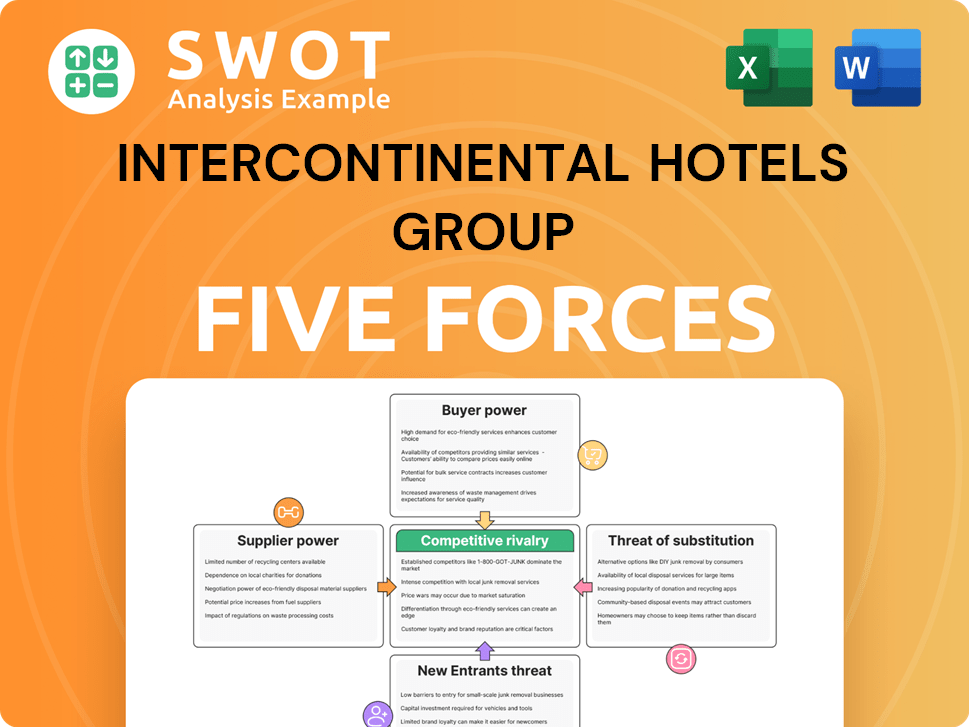
Intercontinental Hotels Group Porter's Five Forces Analysis
- Covers All 5 Competitive Forces in Detail
- Structured for Consultants, Students, and Founders
- 100% Editable in Microsoft Word & Excel
- Instant Digital Download – Use Immediately
- Compatible with Mac & PC – Fully Unlocked
Related Blogs

- What are Mission Vision & Core Values of Intercontinental Hotels Group Company?
- What is Competitive Landscape of Intercontinental Hotels Group Company?
- How Does Intercontinental Hotels Group Company Work?
- What is Sales and Marketing Strategy of Intercontinental Hotels Group Company?
- What is Brief History of Intercontinental Hotels Group Company?
- Who Owns Intercontinental Hotels Group Company?
- What is Customer Demographics and Target Market of Intercontinental Hotels Group Company?
Disclaimer
All information, articles, and product details provided on this website are for general informational and educational purposes only. We do not claim any ownership over, nor do we intend to infringe upon, any trademarks, copyrights, logos, brand names, or other intellectual property mentioned or depicted on this site. Such intellectual property remains the property of its respective owners, and any references here are made solely for identification or informational purposes, without implying any affiliation, endorsement, or partnership.
We make no representations or warranties, express or implied, regarding the accuracy, completeness, or suitability of any content or products presented. Nothing on this website should be construed as legal, tax, investment, financial, medical, or other professional advice. In addition, no part of this site—including articles or product references—constitutes a solicitation, recommendation, endorsement, advertisement, or offer to buy or sell any securities, franchises, or other financial instruments, particularly in jurisdictions where such activity would be unlawful.
All content is of a general nature and may not address the specific circumstances of any individual or entity. It is not a substitute for professional advice or services. Any actions you take based on the information provided here are strictly at your own risk. You accept full responsibility for any decisions or outcomes arising from your use of this website and agree to release us from any liability in connection with your use of, or reliance upon, the content or products found herein.