

GMS Bundle

Can GMS Company Continue Its Ascent in the Building Materials Industry?
GMS Inc. has established itself as a key player in the North American building materials distribution sector, but what does the future hold? This analysis delves into the GMS SWOT Analysis, exploring the company's dynamic growth strategy and future prospects within the ever-evolving construction landscape. We'll examine the strategic decisions that have propelled GMS to its current market position and consider the factors driving its future success.

From its IPO in 2016, GMS has strategically expanded its reach, leveraging acquisitions and operational efficiencies to strengthen its market leadership. This exploration of GMS’s business development strategy will highlight key elements of its growth strategy, focusing on geographical expansion, product diversification, and innovative service offerings. Understanding GMS's approach to market analysis and strategic planning is crucial for assessing its long-term viability and identifying potential investment opportunities within the industry.
How Is GMS Expanding Its Reach?
The company's growth strategy is multifaceted, focusing on both expanding its geographical footprint and diversifying its product offerings. This approach aims to strengthen its market position and create new revenue streams. The company's expansion initiatives are designed to capitalize on market opportunities and enhance its competitive advantage.
A key element of the growth strategy involves strategic acquisitions. These acquisitions are carefully chosen to complement existing product lines or extend the company's geographic reach. Beyond acquisitions, the company is also focused on organic growth through the opening of new greenfield locations.
Furthermore, the company is expanding its product portfolio, particularly in complementary products, which now account for a significant portion of its net sales. This diversification reduces reliance on core products and offers new revenue streams. The company continuously evaluates international expansion opportunities within North America, with a strong foundation in Canada.
 Acquisitions as a Growth Driver
The acquisition of Kamco Supply Corporation in Q4 of fiscal year 2024 significantly boosted the company's presence in the New York City metropolitan area. This strategic move aligns with the company's goal to fortify its market position in key metropolitan areas. The company actively seeks targets that offer complementary product lines or expand its geographic reach.
Organic Growth Through New Locations
The company opened three new greenfield locations in fiscal year 2024. These locations are strategically chosen to enhance service capabilities and capture market share in underserved or growing regions. This organic expansion demonstrates the company's commitment to reaching new customer segments.
Product Diversification
Complementary products now represent a significant portion of net sales. In Q3 of fiscal year 2024, these products accounted for 55.4% of net sales. The company aims to increase sales in areas like tools, fasteners, and other construction accessories.
International and Service Enhancements
While not a primary focus, international expansion is continuously evaluated within North America, with a strong presence in Canada. The company is enhancing service offerings, including digital solutions for order placement and tracking. Investment in fleet and logistics is ongoing to ensure efficient delivery.

Key Expansion Strategies
The company's growth strategy includes acquisitions, organic growth through new locations, and product diversification. These initiatives are supported by enhancing service offerings and investing in logistics. For a deeper dive into the company's customer base, consider exploring the Target Market of GMS.
- Strategic Acquisitions: Focus on companies that complement existing product lines or expand geographic reach.
- Organic Growth: Opening new greenfield locations to enhance service capabilities.
- Product Diversification: Expanding the product portfolio, particularly in complementary products.
- Service Enhancements: Improving customer experience through digital solutions and efficient logistics.
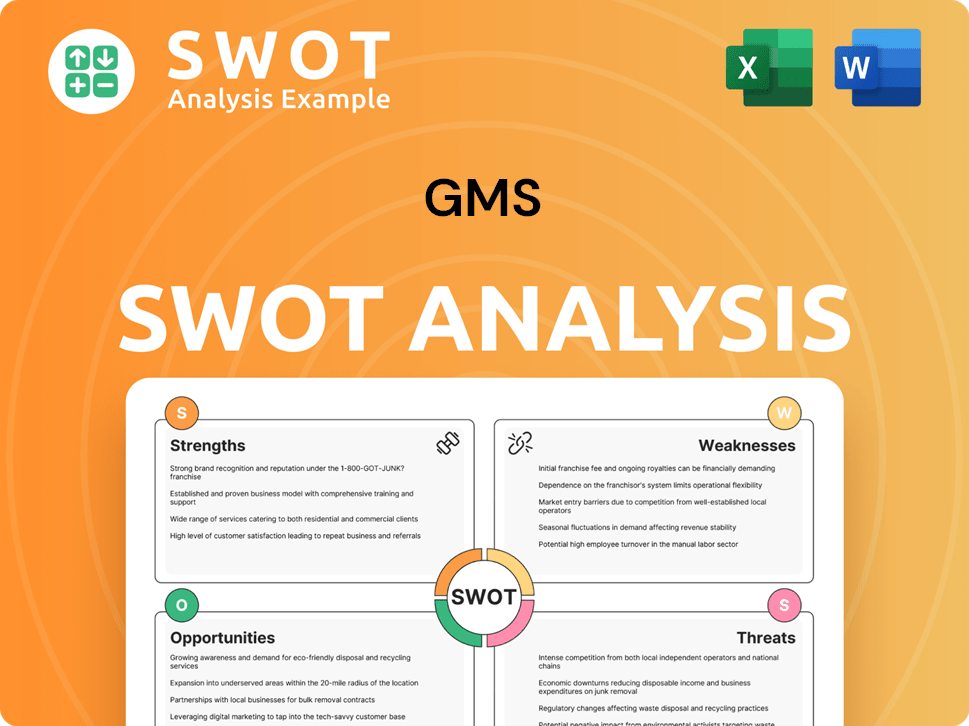
GMS SWOT Analysis
- Complete SWOT Breakdown
- Fully Customizable
- Editable in Excel & Word
- Professional Formatting
- Investor-Ready Format
How Does GMS Invest in Innovation?
The GMS company is strategically leveraging innovation and technology to enhance operational efficiency, improve customer experience, and drive sustained growth. This approach is crucial for its long-term success in the construction supply industry. The company's focus on digital transformation and sustainable practices reflects its commitment to adapting to evolving market demands and customer preferences.
A key aspect of the GMS company's strategy involves integrating digital tools for its customers. This includes developing and enhancing online portals and mobile applications that allow contractors and builders to easily browse products, place orders, track deliveries, and manage their accounts. By providing a seamless digital experience, GMS aims to increase customer loyalty and attract new clients, particularly those who value convenience and efficiency in their procurement processes.
GMS is also exploring opportunities to incorporate sustainable practices into its operations, aligning with broader industry trends and customer preferences for environmentally responsible building materials. This could involve optimizing delivery routes to reduce fuel consumption, investing in more energy-efficient facilities, or promoting the distribution of green building products. These initiatives demonstrate a forward-thinking approach to innovation that extends beyond traditional product offerings to encompass operational and environmental sustainability.

Digital Transformation Initiatives
GMS is actively investing in digital transformation, focusing on streamlining its supply chain and improving inventory management. This involves implementing advanced enterprise resource planning (ERP) systems to optimize order processing, logistics, and financial reporting. This provides real-time data for better decision-making.
Customer-Centric Digital Tools
The company is developing online portals and mobile applications to enhance the customer experience. These tools allow contractors and builders to easily browse products, place orders, track deliveries, and manage accounts. This focus aims to increase customer loyalty and attract new clients.
Data Analytics and Operational Efficiency
While specific details on R&D investments are not extensively publicized, GMS's focus on digitalizing its core business functions suggests a commitment to leveraging data analytics. This is to optimize routing, predict demand, and enhance overall operational performance.
Sustainable Practices
GMS is exploring opportunities to incorporate sustainable practices into its operations. This includes optimizing delivery routes to reduce fuel consumption, investing in more energy-efficient facilities, and promoting green building products. This aligns with industry trends and customer preferences.
Supply Chain Optimization
The implementation of ERP systems plays a crucial role in optimizing the supply chain. This includes streamlining order processing, logistics, and financial reporting. The goal is to create a more agile and responsive distribution network.
Focus on Green Building Materials
Promoting the distribution of green building products is a key aspect of GMS's sustainability efforts. This aligns with the growing demand for environmentally responsible building materials. This initiative supports the company's long-term growth strategy.
Key Elements of GMS's Innovation and Technology Strategy
GMS's approach to innovation and technology is multifaceted, focusing on operational efficiency, customer experience, and sustainability. These elements are critical for the company's future prospects and its ability to maintain a competitive edge in the construction supply industry. The company's commitment to digital transformation, customer-centric tools, and sustainable practices underscores its dedication to long-term growth and adaptability. For more insights into the financial aspects, consider exploring the Revenue Streams & Business Model of GMS.
- Digital Transformation: Implementation of ERP systems to optimize supply chain and improve inventory management.
- Customer Experience: Development of online portals and mobile applications for easy product browsing, ordering, and account management.
- Data Analytics: Leveraging data analytics to optimize routing, predict demand, and enhance operational performance.
- Sustainability: Incorporating sustainable practices, such as optimizing delivery routes and promoting green building products.
- Operational Efficiency: Streamlining order processing, logistics, and financial reporting through technology.
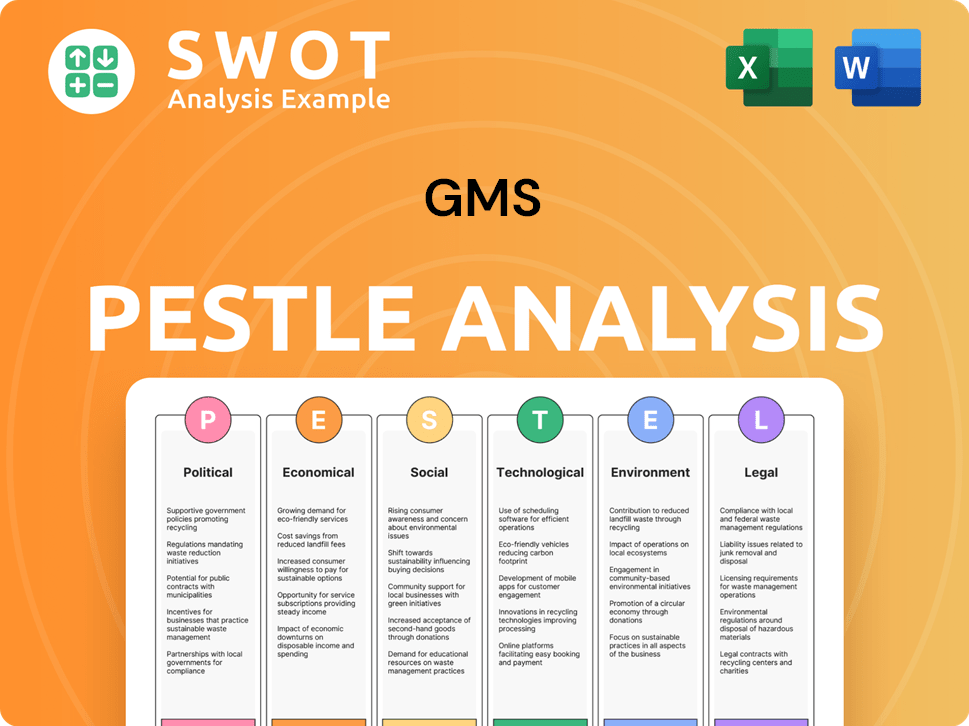
GMS PESTLE Analysis
- Covers All 6 PESTLE Categories
- No Research Needed – Save Hours of Work
- Built by Experts, Trusted by Consultants
- Instant Download, Ready to Use
- 100% Editable, Fully Customizable
What Is GMS’s Growth Forecast?
The financial outlook for GMS is robust, supported by consistent revenue growth and strategic investments. The company's focus on expanding its market share through both greenfield openings and strategic mergers and acquisitions, particularly in fragmented markets, is a key element of its growth strategy. This approach, coupled with effective supply chain management, positions GMS to capitalize on ongoing construction activity across North America. Understanding the Marketing Strategy of GMS can provide further insights into the company's financial health.
In the third quarter of fiscal year 2024, GMS reported net sales of $1.3 billion, reflecting a 2.5% increase compared to the prior year quarter. This growth was driven by a rise in complementary product sales, which increased by 5.5% to $713.8 million, representing 55.4% of total net sales. Wallboard sales also saw a slight increase of 0.7% to $574.6 million. The company's adjusted EBITDA for the third quarter of fiscal year 2024 was $161.4 million, with an adjusted EBITDA margin of 12.5%.
Looking ahead, GMS anticipates continued growth, supported by strategic acquisitions and organic expansion initiatives. For the fourth quarter of fiscal year 2024, GMS projects net sales to be between $1.25 billion and $1.35 billion. The company's capital allocation strategy prioritizes investments in growth initiatives, debt reduction, and opportunistic share repurchases. GMS's strong balance sheet and healthy cash flow generation provide the flexibility to pursue these growth strategies while maintaining financial stability.
Revenue Growth
GMS demonstrated revenue growth in the third quarter of fiscal year 2024, with net sales reaching $1.3 billion. This growth is a positive indicator of the company's performance and its ability to increase sales. The increase in complementary product sales is a key driver of this revenue growth.
Strategic Investments
GMS is investing in strategic initiatives to drive future growth. These investments include expanding market share through acquisitions and organic expansion. The company's capital allocation strategy prioritizes growth initiatives, debt reduction, and share repurchases.
EBITDA and Profitability
The adjusted EBITDA for the third quarter of fiscal year 2024 was $161.4 million, with an adjusted EBITDA margin of 12.5%. This demonstrates the company's ability to maintain profitability. The focus on higher-margin complementary products is expected to contribute to sustained profitability.
Future Projections
For the fourth quarter of fiscal year 2024, GMS projects net sales to be between $1.25 billion and $1.35 billion. This forecast indicates continued growth and positive expectations for the company's financial performance. The company's long-term financial goals include expanding its market share.
Market Position
Analysts view GMS's financial position favorably, citing its resilient business model and strong operational execution. The company's ability to manage its supply chain and leverage its distribution network positions it well to capitalize on construction activity. GMS's focus on diversifying its product mix is expected to contribute to sustained profitability.
GMS Business Model Canvas
- Complete 9-Block Business Model Canvas
- Effortlessly Communicate Your Business Strategy
- Investor-Ready BMC Format
- 100% Editable and Customizable
- Clear and Structured Layout

What Risks Could Slow GMS’s Growth?
The GMS company's ambitions for growth are accompanied by potential risks and obstacles. The construction industry's cyclical nature, market competition, supply chain vulnerabilities, regulatory changes, and internal resource constraints all pose challenges. A proactive approach to risk management, including scenario planning and continuous market analysis, is crucial for navigating these potential obstacles and sustaining its growth trajectory.
Understanding these potential pitfalls is essential for assessing the GMS company's future prospects. By proactively addressing these challenges, GMS can better position itself for sustained success and capitalize on opportunities for business development. This strategic foresight is key to navigating the complexities of the building materials market.
The GMS company's ability to adapt and innovate will be critical to overcoming these obstacles. Strategic planning, market analysis, and a focus on operational excellence will be key to mitigating risks and achieving its long-term goals. For more insights into the company's foundational principles, consider reading about the Mission, Vision & Core Values of GMS.
Cyclical Industry Dynamics
Economic downturns and fluctuations in construction activity directly impact demand for building materials. Interest rate changes can also affect the construction sector. The company must be prepared for market volatility, which could impact sales and profitability.
Competitive Market Pressures
The building materials distribution industry is highly competitive, with numerous regional and national players. Intense price competition and the emergence of new distribution models can squeeze margins. Maintaining a competitive edge requires a focus on superior service and strong customer relationships.
Supply Chain Disruptions
Geopolitical events, natural disasters, and material price volatility can disrupt the supply chain. Labor shortages and other unforeseen events can also affect product availability. Diversified sourcing and robust inventory management are vital to mitigate these risks.
Regulatory Compliance
Changes in building codes, environmental standards, and trade policies can introduce new costs and operational complexities. The company must actively monitor the regulatory landscape and adapt its operations accordingly. Staying compliant is crucial for long-term sustainability.
Internal Resource Constraints
Availability of skilled labor for distribution centers and delivery operations can impact efficiency and growth. Investing in training and retention programs is essential to maintain operational excellence. A well-trained workforce is a key asset.
Economic Slowdowns
A slowdown in residential or commercial construction can directly impact demand. Economic downturns can lead to decreased sales and profitability. The company needs to have a diverse customer base to mitigate these risks.
Market Volatility
The construction industry is sensitive to economic cycles, with fluctuations in demand. Rising interest rates and economic downturns can significantly impact sales and profitability. The company's geographic footprint and customer base help to balance these fluctuations.
Competitive Landscape
The building materials distribution sector is highly competitive, with many regional and local players. Intense price wars and aggressive marketing strategies can pressure margins. The company focuses on superior service and a wide product offering to differentiate itself.
Supply Chain Risks
Disruptions from geopolitical events, natural disasters, and labor shortages can affect product availability. Price volatility in raw materials can also impact costs. Diversified sourcing and inventory management are critical for mitigating these supply chain risks.
Regulatory Changes
Changes in building codes, environmental standards, and trade policies can introduce new costs and operational complexities. The company must actively monitor the regulatory landscape. Adapting operations ensures compliance and long-term sustainability.
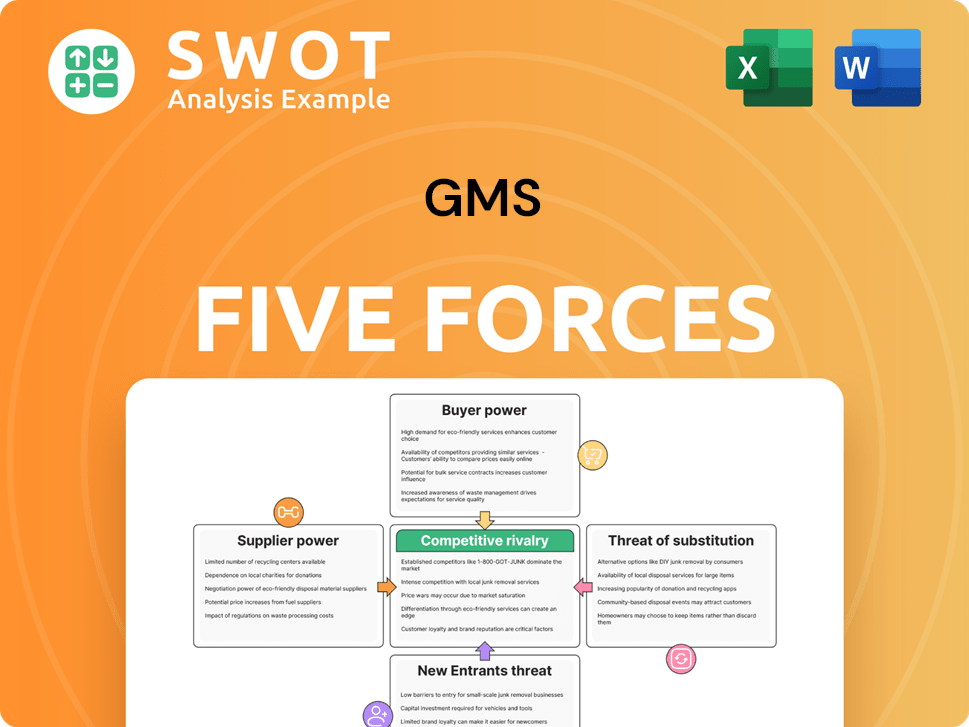
GMS Porter's Five Forces Analysis
- Covers All 5 Competitive Forces in Detail
- Structured for Consultants, Students, and Founders
- 100% Editable in Microsoft Word & Excel
- Instant Digital Download – Use Immediately
- Compatible with Mac & PC – Fully Unlocked
Related Blogs

Disclaimer
All information, articles, and product details provided on this website are for general informational and educational purposes only. We do not claim any ownership over, nor do we intend to infringe upon, any trademarks, copyrights, logos, brand names, or other intellectual property mentioned or depicted on this site. Such intellectual property remains the property of its respective owners, and any references here are made solely for identification or informational purposes, without implying any affiliation, endorsement, or partnership.
We make no representations or warranties, express or implied, regarding the accuracy, completeness, or suitability of any content or products presented. Nothing on this website should be construed as legal, tax, investment, financial, medical, or other professional advice. In addition, no part of this site—including articles or product references—constitutes a solicitation, recommendation, endorsement, advertisement, or offer to buy or sell any securities, franchises, or other financial instruments, particularly in jurisdictions where such activity would be unlawful.
All content is of a general nature and may not address the specific circumstances of any individual or entity. It is not a substitute for professional advice or services. Any actions you take based on the information provided here are strictly at your own risk. You accept full responsibility for any decisions or outcomes arising from your use of this website and agree to release us from any liability in connection with your use of, or reliance upon, the content or products found herein.