

Joint Stock Commercial Bank for Foreign Trade of Vietnam Bundle

How Does Vietcombank Dominate the Vietnamese Banking Scene?
The Vietnamese banking sector is a hotbed of competition, and at its heart lies Joint Stock Commercial Bank for Foreign Trade of Vietnam, or Vietcombank. Understanding Vietcombank's position is vital for anyone looking to navigate the dynamic financial services landscape of Vietnam. This analysis dives deep into the Joint Stock Commercial Bank for Foreign Trade of Vietnam SWOT Analysis, revealing its strengths, weaknesses, opportunities, and threats.

This exploration of the Vietcombank competitive landscape will dissect its market share, analyze its financial performance, and identify its key rivals within the Vietnamese banking sector. We'll examine the factors influencing Vietcombank's success, including its strategic initiatives and international presence, offering a detailed competitive analysis. Furthermore, we'll consider the impact of economic trends and digital banking services on Vietcombank's future growth prospects, providing actionable insights for investors and stakeholders.
Where Does Joint Stock Commercial Bank for Foreign Trade of Vietnam’ Stand in the Current Market?
Vietcombank holds a strong market position within Vietnam's banking sector. It consistently ranks among the top commercial banks. As of the end of 2023, the bank maintained its leading position in terms of market capitalization among Vietnamese banks, demonstrating its significant influence within the Vietnamese banking sector. This solidifies its status in the competitive landscape.
The bank's total assets reached approximately VND 1.84 triệu tỷ (approximately USD 75 billion) by the end of 2024. This reflects its significant scale within the sector. Vietcombank is a dominant player in key segments, including foreign currency transactions, international trade finance, and payments. Its primary product lines cover a wide array of financial services, catering to diverse customer segments.
Vietcombank's focus on large corporate clients and foreign trade has historically been a stronghold. It continues to expand its retail banking segment to capture a larger share of the individual customer market. This strategic move aims to strengthen its position in the financial services Vietnam market.
 Market Share Leadership
Vietcombank consistently holds a leading position in market share, particularly in key areas like foreign currency transactions and international trade finance. This dominance is a key factor in its competitive landscape. The bank's strong performance reflects its strategic focus and operational efficiency.
Extensive Network
Vietcombank boasts an extensive network across Vietnam, with branches and transaction offices in all major cities and provinces. This wide reach allows it to serve a broad customer base effectively. The bank's ATM network further enhances accessibility for customers.
Financial Performance
Vietcombank consistently reports strong profitability and asset quality, often outperforming industry averages. Its pre-tax profit in 2023 reached VND 41.255 trillion (approximately USD 1.7 billion), demonstrating robust financial performance. This strong financial health supports its competitive advantage.
Digital Transformation
Vietcombank has strategically shifted towards digital transformation, investing heavily in digital banking platforms and mobile applications. This move enhances customer experience and operational efficiency. It allows the bank to cater to a broader, digitally-savvy customer base.

Key Strengths
Vietcombank's success is driven by several factors, including its strong brand reputation, extensive network, and robust financial performance. The bank's focus on customer service and digital innovation further strengthens its market position. These strengths contribute to its ability to compete effectively in the banking industry competition.
- Leading market share in key segments.
- Extensive branch and ATM network.
- Strong financial performance and profitability.
- Strategic focus on digital transformation.
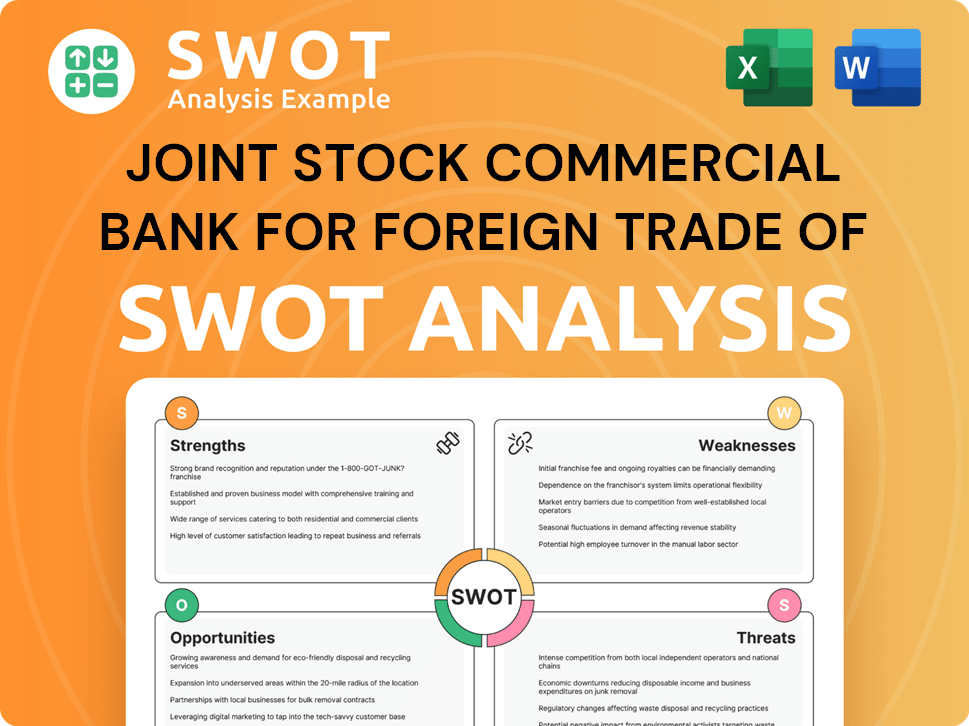
Joint Stock Commercial Bank for Foreign Trade of Vietnam SWOT Analysis
- Complete SWOT Breakdown
- Fully Customizable
- Editable in Excel & Word
- Professional Formatting
- Investor-Ready Format
Who Are the Main Competitors Challenging Joint Stock Commercial Bank for Foreign Trade of Vietnam?
The Vietcombank competitive landscape in Vietnam is dynamic and shaped by various players in the Vietnamese banking sector. As a leading financial institution, it faces competition from both state-owned and private banks, as well as foreign banks and emerging fintech companies. Understanding these competitors is crucial for a comprehensive Vietcombank market analysis.
Joint Stock Commercial Bank for Foreign Trade of Vietnam, or Vietcombank, competes in a market characterized by intense rivalry. The banking industry competition is influenced by factors such as digital innovation, customer service, and strategic partnerships. This analysis explores the key competitors and their impact on Vietcombank's market position.
Vietcombank operates in a highly competitive environment, facing challenges from various types of banks. Its main competitors include state-owned commercial banks, private commercial banks, and foreign banks. These institutions compete for market share by offering various financial products and services.

State-Owned Commercial Banks
Vietcombank's primary competitors include other large state-owned banks. These banks often have extensive branch networks and strong government backing. They compete directly with Vietcombank for large corporate loans and infrastructure financing.
Agribank
Agribank, while also state-owned, focuses on the agricultural and rural sectors. It has a vast reach in rural areas, offering a different competitive angle. This focus allows Agribank to serve a specific segment of the market.
Private Commercial Banks
Major private commercial banks also pose a significant challenge. These banks differentiate themselves through aggressive digital banking strategies and innovative product offerings. They aim to attract customers with enhanced services.
VPBank
VPBank has made significant strides in consumer finance and digital lending. It directly challenges Vietcombank's retail banking ambitions. This strategic move allows VPBank to capture a larger share of the retail market.
Foreign Banks
Foreign banks such as HSBC, Standard Chartered, and Citibank also compete in the market. They focus on corporate and investment banking segments. Their international networks and expertise give them a competitive edge.
Fintech Companies
Fintech companies and digital payment platforms disrupt traditional banking services. They indirectly challenge banks to innovate and adapt. This disruption forces banks to evolve their services.
Key Competitive Factors
Several factors influence Vietcombank's competitive position. These include branch network size, digital banking capabilities, customer service quality, and financial performance. Understanding these factors is crucial for assessing Vietcombank's strengths and weaknesses.
- Branch Network: Extensive branch networks provide a significant advantage in customer reach.
- Digital Banking: Advanced digital platforms are essential for attracting and retaining customers.
- Customer Service: High-quality customer service enhances customer loyalty.
- Financial Performance: Strong financial results demonstrate stability and profitability.
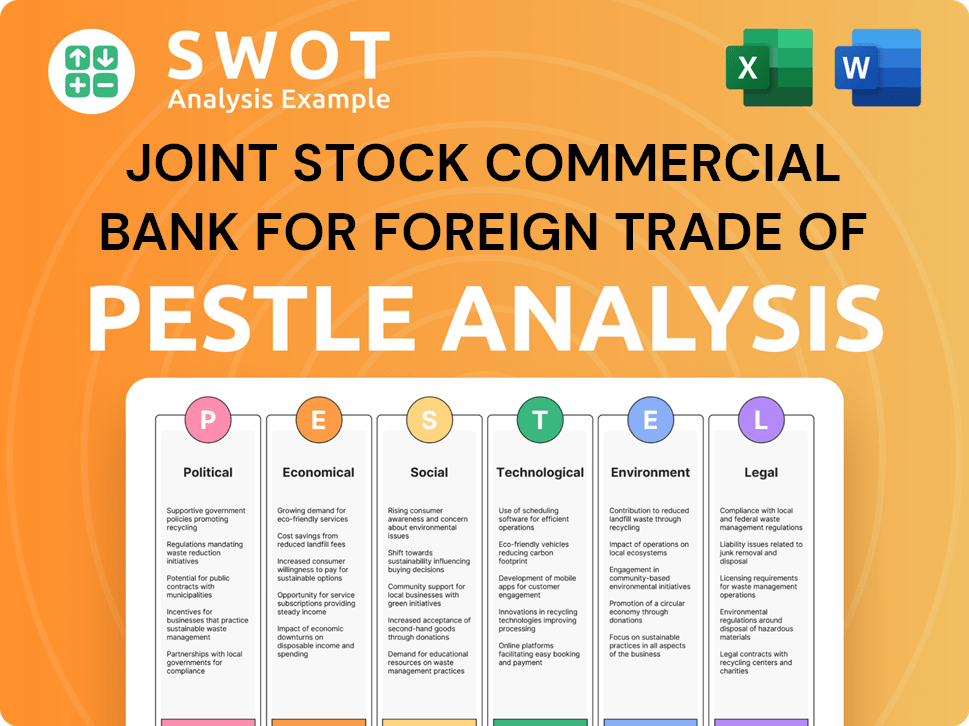
Joint Stock Commercial Bank for Foreign Trade of Vietnam PESTLE Analysis
- Covers All 6 PESTLE Categories
- No Research Needed – Save Hours of Work
- Built by Experts, Trusted by Consultants
- Instant Download, Ready to Use
- 100% Editable, Fully Customizable
What Gives Joint Stock Commercial Bank for Foreign Trade of Vietnam a Competitive Edge Over Its Rivals?
The Joint Stock Commercial Bank for Foreign Trade of Vietnam, commonly known as Vietcombank, holds a prominent position in the Vietnamese banking sector. Its competitive advantages stem from a blend of historical strength, strategic initiatives, and robust financial performance. Understanding the Vietcombank competitive landscape is crucial for anyone analyzing the Vietnamese banking sector.
Vietcombank has built a solid reputation over the years, which has translated into strong customer loyalty, particularly among large corporations and government entities. Its extensive distribution network and financial stability further solidify its position. The bank's focus on digital transformation and international trade finance also adds to its competitive edge, making it a key player in the financial services Vietnam market.
This article will delve into the specific competitive advantages that position Vietcombank favorably in the market. We will explore its brand equity, financial health, service offerings, and strategic initiatives to provide a comprehensive Vietcombank market analysis.
Strong Brand and Reputation
Vietcombank benefits from a strong brand reputation, built over decades as a leading state-owned bank. This long-standing trust fosters significant customer loyalty, especially among large corporations and government entities. The bank's brand recognition is a key factor influencing its success in the competitive market.
Extensive Distribution Network
The bank's extensive network of branches and ATMs across Vietnam provides unparalleled reach and accessibility. This physical presence is a significant advantage, particularly in a market where digital adoption is still evolving across all demographics. This wide reach allows Vietcombank to serve a diverse customer base effectively.
Robust Financial Health
Vietcombank's robust financial health and stability, supported by government backing, enhance its credibility. Its strong capital adequacy ratios and consistent profitability provide a solid foundation for expansion and investment. The bank's financial performance is a key factor in its competitive standing.
Expertise in International Trade
Vietcombank's expertise in foreign exchange and international trade finance remains a significant differentiator. The bank has developed deep relationships with international banks and possesses specialized knowledge in facilitating cross-border transactions. This expertise makes it a preferred choice for businesses engaged in international trade.
Key Competitive Advantages
Vietcombank's competitive advantages are multifaceted, encompassing brand strength, extensive reach, financial stability, and specialized services. These factors contribute significantly to its success. For more details on the bank's strategic initiatives, consider reading about the Growth Strategy of Joint Stock Commercial Bank for Foreign Trade of Vietnam.
- Brand Equity and Reputation: Strong brand recognition and customer loyalty.
- Extensive Distribution Network: Wide reach through branches and ATMs.
- Financial Stability: Robust capital and consistent profitability. The bank's ROA and ROE consistently rank among the highest in the industry.
- Expertise in International Trade: Specialized knowledge in cross-border transactions.
Joint Stock Commercial Bank for Foreign Trade of Vietnam Business Model Canvas
- Complete 9-Block Business Model Canvas
- Effortlessly Communicate Your Business Strategy
- Investor-Ready BMC Format
- 100% Editable and Customizable
- Clear and Structured Layout

What Industry Trends Are Reshaping Joint Stock Commercial Bank for Foreign Trade of Vietnam’s Competitive Landscape?
The Vietcombank competitive landscape is significantly shaped by the dynamic trends within the Vietnamese banking sector. The bank faces both opportunities and challenges arising from digital transformation, regulatory changes, and economic fluctuations. A thorough Vietcombank market analysis is crucial for understanding its position and future prospects.
Joint Stock Commercial Bank for Foreign Trade of Vietnam, or Vietcombank, must navigate these trends to maintain its market share and profitability. The ability to adapt to technological advancements, comply with evolving regulations, and manage economic risks will be critical to its success. This chapter explores the industry trends, future challenges, and opportunities facing Vietcombank.
Industry Trends
The Vietnamese banking sector is undergoing rapid digital transformation. There's a growing emphasis on digital banking services, mobile payments, and online transactions. Fintech companies and non-bank payment service providers are also increasing competition. The government's push for a cashless society further fuels this trend.
Regulatory Changes
The State Bank of Vietnam (SBV) continuously introduces new policies to enhance financial stability and improve risk management. These regulations impact capital requirements, lending practices, and operational procedures. Increased scrutiny on credit quality and non-performing loans also affect banks' profitability.
Future Challenges
Maintaining a competitive edge in the face of digital disruption is a key challenge. Adapting to evolving regulatory requirements and managing risks associated with non-performing loans are also significant hurdles. Global economic factors, such as interest rate changes and geopolitical tensions, can impact foreign currency flows and trade finance, affecting Vietcombank's business.
Opportunities
Vietnam's robust economic growth, projected at around 6.0-6.5% in 2024, drives demand for credit and financial services. The expanding middle class and rising disposable incomes present opportunities for retail banking. The government's focus on infrastructure development and FDI creates opportunities for corporate banking and project financing.
Strategic Initiatives and Outlook
To remain competitive, Vietcombank is likely to continue investing in digital transformation and diversifying its product portfolio. Enhancing risk management frameworks and exploring opportunities in emerging customer segments are also crucial. Strategic partnerships may also be key.
- Digital Transformation: Investing in advanced IT infrastructure and cybersecurity.
- Product Diversification: Expanding consumer loans, mortgages, and wealth management products.
- Risk Management: Strengthening frameworks to manage credit quality and non-performing loans.
- Strategic Partnerships: Collaborating with fintech companies to enhance market penetration.
For a deeper dive into how Vietcombank approaches its market strategy, consider reading Marketing Strategy of Joint Stock Commercial Bank for Foreign Trade of Vietnam.
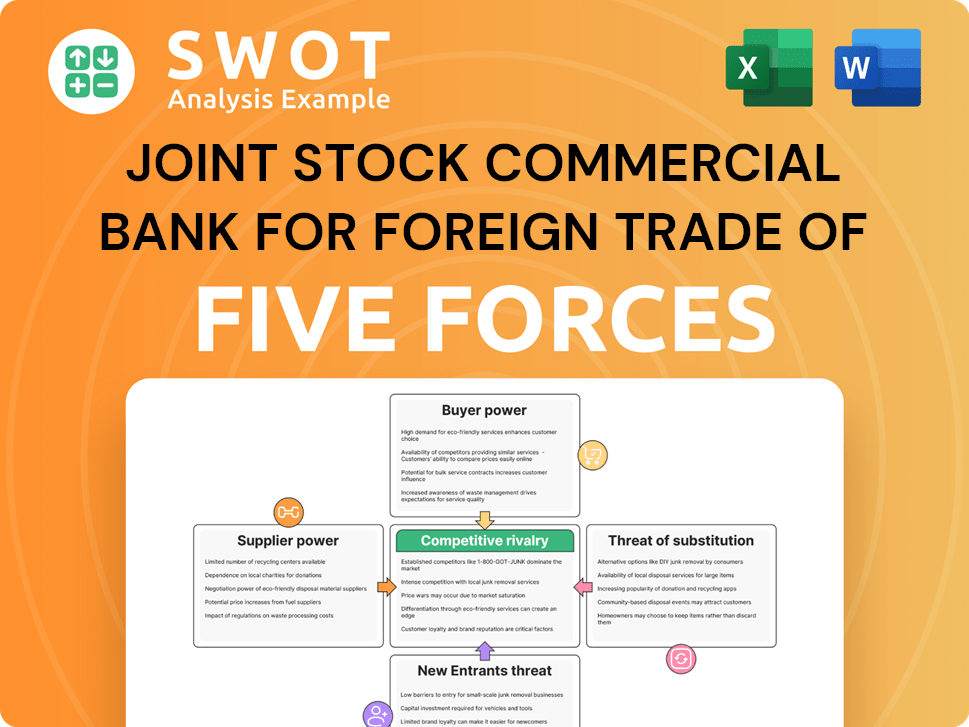
Joint Stock Commercial Bank for Foreign Trade of Vietnam Porter's Five Forces Analysis
- Covers All 5 Competitive Forces in Detail
- Structured for Consultants, Students, and Founders
- 100% Editable in Microsoft Word & Excel
- Instant Digital Download – Use Immediately
- Compatible with Mac & PC – Fully Unlocked
Related Blogs

- What are Mission Vision & Core Values of Joint Stock Commercial Bank for Foreign Trade of Vietnam Company?
- What is Growth Strategy and Future Prospects of Joint Stock Commercial Bank for Foreign Trade of Vietnam Company?
- How Does Joint Stock Commercial Bank for Foreign Trade of Vietnam Company Work?
- What is Sales and Marketing Strategy of Joint Stock Commercial Bank for Foreign Trade of Vietnam Company?
- What is Brief History of Joint Stock Commercial Bank for Foreign Trade of Vietnam Company?
- Who Owns Joint Stock Commercial Bank for Foreign Trade of Vietnam Company?
- What is Customer Demographics and Target Market of Joint Stock Commercial Bank for Foreign Trade of Vietnam Company?
Disclaimer
All information, articles, and product details provided on this website are for general informational and educational purposes only. We do not claim any ownership over, nor do we intend to infringe upon, any trademarks, copyrights, logos, brand names, or other intellectual property mentioned or depicted on this site. Such intellectual property remains the property of its respective owners, and any references here are made solely for identification or informational purposes, without implying any affiliation, endorsement, or partnership.
We make no representations or warranties, express or implied, regarding the accuracy, completeness, or suitability of any content or products presented. Nothing on this website should be construed as legal, tax, investment, financial, medical, or other professional advice. In addition, no part of this site—including articles or product references—constitutes a solicitation, recommendation, endorsement, advertisement, or offer to buy or sell any securities, franchises, or other financial instruments, particularly in jurisdictions where such activity would be unlawful.
All content is of a general nature and may not address the specific circumstances of any individual or entity. It is not a substitute for professional advice or services. Any actions you take based on the information provided here are strictly at your own risk. You accept full responsibility for any decisions or outcomes arising from your use of this website and agree to release us from any liability in connection with your use of, or reliance upon, the content or products found herein.