

Perry Ellis International Bundle

Can Perry Ellis International Thrive in Today's Fashion Arena?
The fashion industry, a multi-trillion-dollar global market, is a battlefield of brands constantly vying for consumer attention. Perry Ellis International, a key player since 1967, navigates this competitive landscape with a diverse portfolio of brands and a global presence. Understanding its position requires a deep dive into its rivals, strategies, and market dynamics.

This Perry Ellis International SWOT Analysis offers a comprehensive view of the company's strengths, weaknesses, opportunities, and threats. Analyzing the Perry Ellis International competitive landscape is crucial for investors, analysts, and strategists aiming to understand the company's business strategy and its ability to capitalize on industry trends. This Company Analysis will explore the key players and Perry Ellis International's market position, providing valuable insights into its future prospects and growth strategies.
Where Does Perry Ellis International’ Stand in the Current Market?
Perry Ellis International (PEI) holds a notable position in the global apparel market, which was valued at approximately $1.7 trillion in 2024 and is projected to reach $1.84 trillion by 2025. The company's business model allows it to sell across various retail levels, from luxury to mass markets, providing a diverse product range. As of May 2025, PEI's estimated annual revenue reached $750 million, reflecting its substantial presence in the industry.
The company's core operations involve the design, sourcing, marketing, and distribution of a wide array of apparel, accessories, and fragrances. PEI's diverse brand portfolio caters to different consumer segments, including men's and women's apparel, golf sportswear, and activewear. The company's value proposition lies in offering high-quality products across multiple price points and distribution channels, making its brands accessible to a broad consumer base. For an in-depth look, explore the Revenue Streams & Business Model of Perry Ellis International.
PEI's financial performance shows net sales of $895.7 million for fiscal year 2023, with approximately $772.8 million in fiscal year 2024. The gross profit margin was around 39% in 2024. The company's product lines include dress and casual shirts, golf sportswear, sweaters, dress and casual pants, shorts, jeanswear, activewear, dresses, and swimwear.
 Market Share
PEI's market share is significant within its niche, considering its diverse brand portfolio and global presence. While precise market share figures are not available, the company's substantial revenue and retail sales exceeding $1.5 billion indicate a strong competitive position.
Industry Trends
Industry trends include a focus on digital transformation and expanding international presence. PEI is adapting to these trends by growing its digital sales and opening new stores globally. The company is also expanding into new product categories through strategic licensing agreements.
Business Strategy
PEI's business strategy involves a multi-brand approach, selling products across various retail levels. The company focuses on expanding its international presence and leveraging digital channels for growth. Strategic licensing agreements and new store openings are key elements of its growth strategy.
Competitive Advantage
PEI's competitive advantage lies in its diversified brand portfolio and global distribution network. Its ability to cater to different consumer segments and adapt to market trends, such as digital sales growth and strategic licensing, further strengthens its position. The company's retail sales exceeding $1.5 billion demonstrate its market strength.

Key Players in the Perry Ellis International Market
The competitive landscape includes major players in the apparel industry. PEI competes with a wide range of companies, from mass-market retailers to luxury brands. Understanding these competitors is crucial for assessing PEI's market position and growth strategies.
- Mass-market retailers offering similar product categories.
- Luxury brands that compete in the premium segment.
- Specialty apparel companies focusing on specific niches.
- Global brands with extensive international presence.
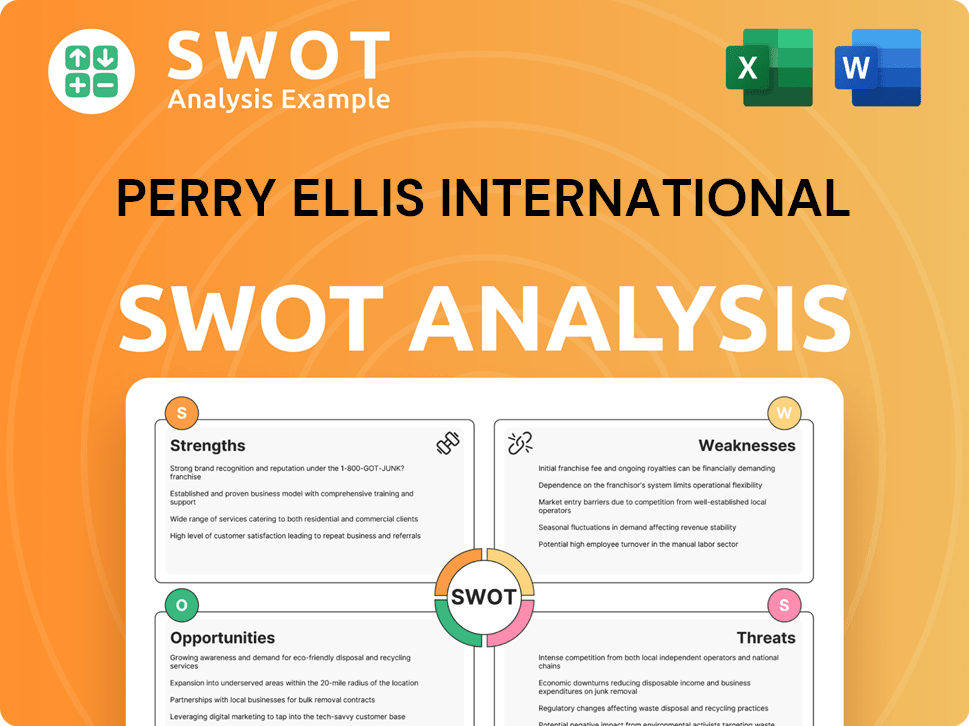
Perry Ellis International SWOT Analysis
- Complete SWOT Breakdown
- Fully Customizable
- Editable in Excel & Word
- Professional Formatting
- Investor-Ready Format
Who Are the Main Competitors Challenging Perry Ellis International?
The Competitive Landscape for Perry Ellis International is complex, encompassing a wide array of competitors across various market segments. This company analysis reveals that Perry Ellis International faces challenges from both established brands and emerging players in the apparel industry. Understanding these competitive dynamics is crucial for assessing Perry Ellis International's market position and future prospects.
The competitive environment impacts Perry Ellis International's business strategy, influencing decisions related to product offerings, pricing, distribution, and marketing. The company must continually adapt to industry trends and consumer preferences to maintain its market share. The competitive landscape is also shaped by broader economic factors, including consumer spending patterns and supply chain dynamics.
Perry Ellis International's competitive advantage depends on its ability to differentiate itself through branding, innovation, and operational efficiency. The company's financial performance compared to competitors is a key indicator of its success in navigating this challenging landscape. Recent acquisitions and partnerships also play a role in shaping its competitive position.

Direct Competitors
Direct competitors of Perry Ellis International include brands that offer similar products and target the same customer segments. These competitors often compete on price, quality, and brand recognition. Examples include Massimo Dutti, Volcom, and RVCA.
Indirect Competitors
Indirect competitors offer alternative products or services that fulfill similar consumer needs. These competitors may focus on different market segments or distribution channels. Examples include Nordstrom, Saks Off 5th, and Dick's Sporting Goods.
Fast Fashion Competitors
Fast fashion brands pose a significant threat due to their ability to quickly produce trendy, affordable clothing. These companies often have a shorter product cycle and a broader appeal. Examples include H&M, Zara, and Shein.
E-commerce and Online Retailers
E-commerce platforms and online retailers compete by offering a wide selection of products and convenient shopping experiences. They often leverage data analytics to personalize offerings. Examples include Etsy and True Religion Apparel.
Men's Fashion Competitors
In the men's fashion market, Perry Ellis International faces competition from brands known for their styles. These brands often focus on specific niches or luxury segments. Examples include Tom Ford and John Varvatos.
Secondhand Apparel Market
The secondhand apparel market is growing, providing consumers with alternative options and impacting the competitive landscape. Platforms like ThredUp and others are increasing sales, offering consumers alternatives. The secondhand apparel market saw growth in 2024.
Key Competitive Strategies
Perry Ellis International employs various strategies to compete effectively. These include brand diversification, product innovation, and strategic partnerships. The company also focuses on optimizing its retail presence and e-commerce capabilities.
- Brand Portfolio Management: Managing a diverse portfolio of brands to cater to different customer segments and price points.
- Product Innovation: Introducing new products and collections that align with current fashion trends and consumer preferences.
- Strategic Partnerships: Forming alliances with other companies to expand market reach and offer new products. For instance, the partnership with David's Bridal for a menswear collection in March 2025.
- Retail and E-commerce Optimization: Enhancing the retail presence and improving the online shopping experience.
- Supply Chain Management: Ensuring efficient supply chain operations to control costs and meet demand.
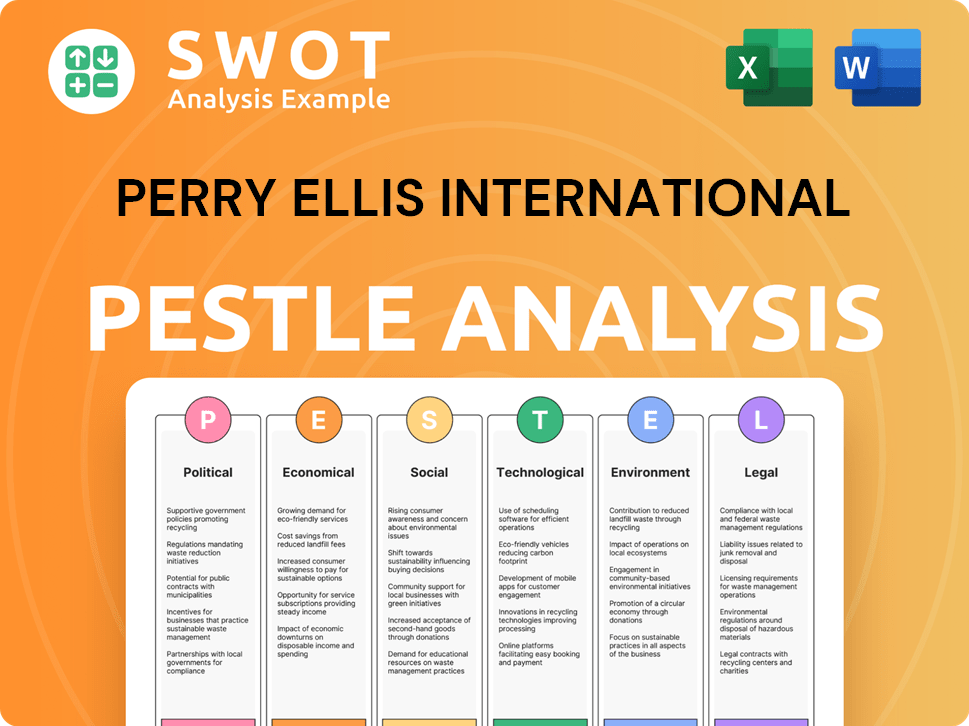
Perry Ellis International PESTLE Analysis
- Covers All 6 PESTLE Categories
- No Research Needed – Save Hours of Work
- Built by Experts, Trusted by Consultants
- Instant Download, Ready to Use
- 100% Editable, Fully Customizable
What Gives Perry Ellis International a Competitive Edge Over Its Rivals?
To understand the competitive landscape of Perry Ellis International, it's crucial to examine its key milestones, strategic moves, and competitive advantages. The company has built a strong presence in the apparel industry through a diversified brand portfolio and strategic partnerships. A deep dive into its business model reveals how it maintains its market position and navigates industry trends. This company analysis highlights the factors that contribute to its success and distinguish it from competitors.
Examining the competitive landscape of Perry Ellis International involves assessing its strengths, weaknesses, opportunities, and threats. The company's ability to adapt to changing consumer preferences and economic conditions is a key factor in its sustained performance. Understanding its market share and industry outlook provides insights into its future prospects and growth strategies. This analysis aims to provide a comprehensive view of Perry Ellis International's competitive position.
The company's strategic approach includes leveraging its brand portfolio and operational efficiencies. The company's focus on innovation and technology, along with its established licensing agreements, contributes to its competitive edge. The following sections will delve into these aspects, providing a detailed look at its competitive advantages and how it compares to its peers. For more insights into the company's growth strategy, consider reading Growth Strategy of Perry Ellis International.
Diversified Brand Portfolio
Perry Ellis International's diverse brand portfolio, including Perry Ellis, Original Penguin, and Farah, is a significant competitive advantage. This diversification helps mitigate risks associated with shifts in consumer preferences or economic downturns. The broad range of brands caters to various consumer segments and price points, enhancing its market reach and stability. This strategy allows the company to adapt to evolving lifestyles and consumer demands effectively.
Licensing Agreements and Supply Chain Management
The company's established licensing agreements and supply chain management expertise are crucial. With over 145 active licensees in more than 55 countries, licensing revenue reached $120 million in fiscal year 2024. Its global network includes relationships with over 500 vendors, allowing for global sourcing and enhanced negotiation leverage. This deep understanding of global sourcing, manufacturing, and distribution makes it difficult for new competitors to replicate.
Strong Brand Recognition and Customer Loyalty
Strong brand recognition and customer loyalty across its well-known brands contribute significantly to Perry Ellis International's competitive edge. This fosters customer loyalty, enabling the company to maintain its market position even in a price-sensitive market. Brands like Perry Ellis and Original Penguin have established reputations, driving repeat purchases and brand advocacy.
Innovation and Technology
Perry Ellis International's commitment to innovation and technology is another key differentiator. The company employs a 'smart-to-market' approach using 3D technology in its design and development processes, which has led to a significant reduction in physical samples by 50% and improved fit confidence. This digital transformation streamlines workflows, enhances efficiency, and allows for quicker adaptation to market demands.
Key Competitive Advantages
Perry Ellis International's competitive advantages are multifaceted, contributing to its strong market position. These advantages include a diversified brand portfolio, established licensing agreements, and a focus on innovation. The company's entrepreneurial spirit and family culture also play a crucial role in its success.
- Diversified Brand Portfolio: Reduces reliance on any single brand or market segment.
- Licensing Agreements: Generate substantial revenue and expand market reach.
- Supply Chain Management: Enables efficient global sourcing and distribution.
- Innovation and Technology: Improves efficiency and adaptability.
- Strong Brand Recognition: Fosters customer loyalty.
Perry Ellis International Business Model Canvas
- Complete 9-Block Business Model Canvas
- Effortlessly Communicate Your Business Strategy
- Investor-Ready BMC Format
- 100% Editable and Customizable
- Clear and Structured Layout

What Industry Trends Are Reshaping Perry Ellis International’s Competitive Landscape?
The apparel industry's Competitive Landscape is currently undergoing a significant transformation, with Perry Ellis International navigating economic uncertainties, evolving consumer behaviors, and rapid technological advancements. This dynamic environment presents both challenges and opportunities for the company. The global fashion market is projected to see sluggish growth in 2024 and 2025, with revenue growth stabilizing in the low single digits.
Understanding the Company Analysis and its position requires a look at the evolving Industry Trends. These include a growing demand for sustainable and personalized products, the impact of technological advancements, and the effects of global economic shifts and geopolitical tensions. The future outlook for Perry Ellis International hinges on its ability to adapt to these changes and capitalize on emerging opportunities in both domestic and international markets.
Industry Trends
The apparel industry is experiencing a shift towards sustainable and personalized products. Consumers are increasingly price-sensitive and environmentally conscious. The sustainable fashion market is projected to reach $9.81 billion by 2025, highlighting the importance of eco-friendly practices.
Technological Advancements
Technological advancements, particularly in AI-driven customization and digital sales channels, are transforming the industry. E-commerce sales in the U.S. fashion market reached $115.4 billion in 2023. Online sales are projected to account for 60% of apparel sales by 2026, emphasizing the need for strong digital strategies.
Global Economic Shifts and Geopolitical Tensions
Global economic shifts and geopolitical tensions pose significant challenges to supply chains and consumer spending. The slowing U.S. and Chinese economies could lead to weakened demand and intensified price competition in 2025. Policies like tariffs can disrupt international business and supply chains, necessitating adaptable strategies.
Emerging Markets and Strategic Partnerships
Opportunities lie in emerging markets like India, where the mid-market segment is expected to grow by 12-17% in 2025, and Japan, which is experiencing a luxury boom. Strategic partnerships, like the licensing agreement for home goods, can also drive growth. Brazil represents a major growth market.
Future Challenges and Opportunities
The primary challenges for Perry Ellis International include navigating economic uncertainties, adapting to changing consumer preferences, and managing supply chain disruptions. However, the company has several opportunities for growth through strategic adaptation.
- Product Innovation: Focusing on sustainable and personalized product offerings.
- Technological Integration: Leveraging AI and e-commerce platforms.
- Global Expansion: Targeting emerging markets like India and Brazil.
- Strategic Partnerships: Exploring new product categories and collaborations.
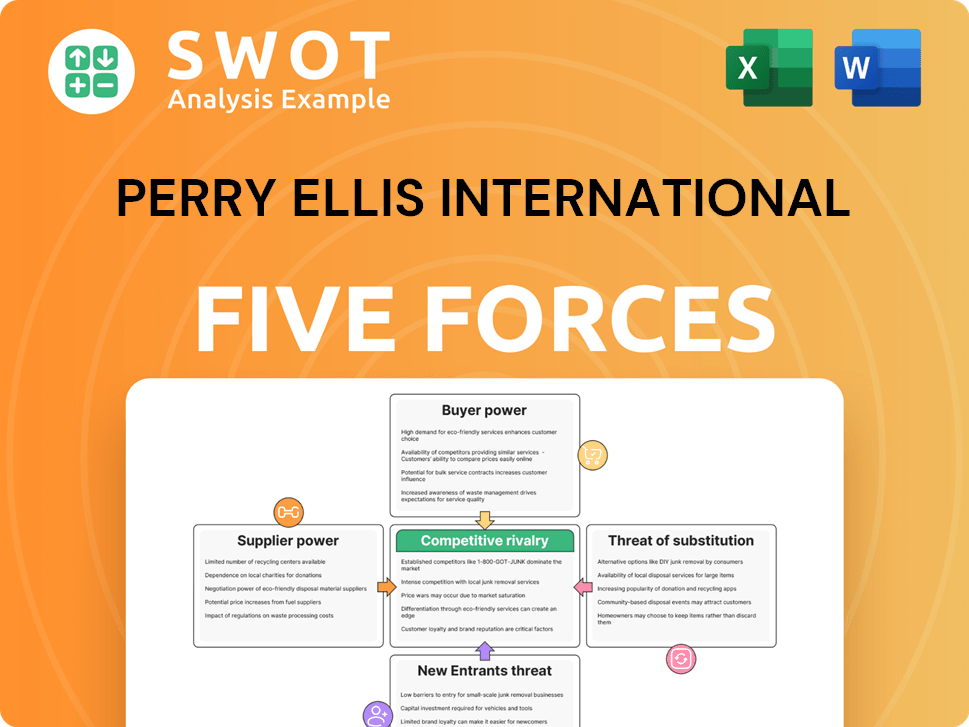
Perry Ellis International Porter's Five Forces Analysis
- Covers All 5 Competitive Forces in Detail
- Structured for Consultants, Students, and Founders
- 100% Editable in Microsoft Word & Excel
- Instant Digital Download – Use Immediately
- Compatible with Mac & PC – Fully Unlocked
Related Blogs

- What are Mission Vision & Core Values of Perry Ellis International Company?
- What is Growth Strategy and Future Prospects of Perry Ellis International Company?
- How Does Perry Ellis International Company Work?
- What is Sales and Marketing Strategy of Perry Ellis International Company?
- What is Brief History of Perry Ellis International Company?
- Who Owns Perry Ellis International Company?
- What is Customer Demographics and Target Market of Perry Ellis International Company?
Disclaimer
All information, articles, and product details provided on this website are for general informational and educational purposes only. We do not claim any ownership over, nor do we intend to infringe upon, any trademarks, copyrights, logos, brand names, or other intellectual property mentioned or depicted on this site. Such intellectual property remains the property of its respective owners, and any references here are made solely for identification or informational purposes, without implying any affiliation, endorsement, or partnership.
We make no representations or warranties, express or implied, regarding the accuracy, completeness, or suitability of any content or products presented. Nothing on this website should be construed as legal, tax, investment, financial, medical, or other professional advice. In addition, no part of this site—including articles or product references—constitutes a solicitation, recommendation, endorsement, advertisement, or offer to buy or sell any securities, franchises, or other financial instruments, particularly in jurisdictions where such activity would be unlawful.
All content is of a general nature and may not address the specific circumstances of any individual or entity. It is not a substitute for professional advice or services. Any actions you take based on the information provided here are strictly at your own risk. You accept full responsibility for any decisions or outcomes arising from your use of this website and agree to release us from any liability in connection with your use of, or reliance upon, the content or products found herein.