

Patrick Bundle

Can Patrick Company Maintain Its Leading Edge in a Shifting Market?
The RV and marine industries are experiencing a period of significant transformation, fueled by evolving consumer demands and technological innovation. As a key supplier, Patrick Industries plays a crucial role in these dynamic sectors, but how does it stack up against its rivals? Understanding the Patrick SWOT Analysis is key to grasping its position.

This market analysis will dissect the competitive landscape of Patrick Company, providing a detailed industry analysis to inform your business strategy. We'll explore the company's competitive advantages, examine its market position, and compare its product offerings against key competitors. This comprehensive overview will help you understand the challenges and opportunities facing Patrick Company, providing actionable insights for investors and strategists alike, including its company overview.
Where Does Patrick’ Stand in the Current Market?
Patrick Industries operates primarily within the RV, marine, and manufactured housing sectors, with a growing presence in industrial markets. The company's core operations involve manufacturing and distributing a wide array of components and solutions, including laminated products, cabinet doors, flooring, electrical components, and plumbing, among others. This diverse product portfolio supports its position as a key supplier to its target markets.
The company's value proposition centers on providing comprehensive solutions to its customers, offering a broad range of products that cater to the specific needs of the RV, marine, and manufactured housing industries. By maintaining a strong presence across North America through strategic manufacturing and distribution facilities, it ensures efficient service and strong client relationships. This approach allows the company to offer integrated solutions, supporting its customers' manufacturing processes and enhancing their product offerings.
 Market Share and Revenue
While specific market share details for individual component categories are proprietary, the company's consistent revenue generation indicates a leading role in many segments. For the fiscal year 2023, the company reported net sales of approximately $4.0 billion, highlighting its substantial scale within the industry. This financial performance underscores its strong market position and ability to compete effectively.
Geographic Presence and Expansion
The company maintains a robust presence across North America, with manufacturing and distribution facilities strategically positioned to serve its diverse customer base. Over time, it has demonstrated a clear strategy of diversification, expanding beyond manufactured housing to become a dominant force in the RV and marine markets. This expansion is supported by both organic growth and strategic acquisitions.
Financial Health and Profitability
The company's financial health remains solid, reflecting its ability to navigate market fluctuations and sustain profitability. The gross profit for 2023 was reported at $699.2 million, with an operating income of $381.1 million. These figures indicate strong operational efficiency compared to industry averages, showcasing its financial stability and effective management.
Strategic Acquisitions and Market Penetration
The company's acquisition strategy has enabled it to enter new product categories and strengthen its position in existing ones. This strategy has allowed the company to expand its product offerings and penetrate new market segments. The company continuously seeks opportunities for expansion and diversification to mitigate risks associated with cyclical industries, particularly in the competitive landscape.

Competitive Advantages
The company's competitive advantages stem from its diversified product offerings, strong North American presence, and strategic acquisition strategy. Its ability to serve multiple sectors, including RV, marine, and manufactured housing, helps mitigate risks and capitalize on market opportunities. A detailed competitive analysis of Patrick Company would reveal its strengths in these areas.
- Diversified product portfolio catering to multiple sectors.
- Strategic manufacturing and distribution network across North America.
- Proven track record of successful acquisitions and market penetration.
- Strong financial performance and operational efficiency.
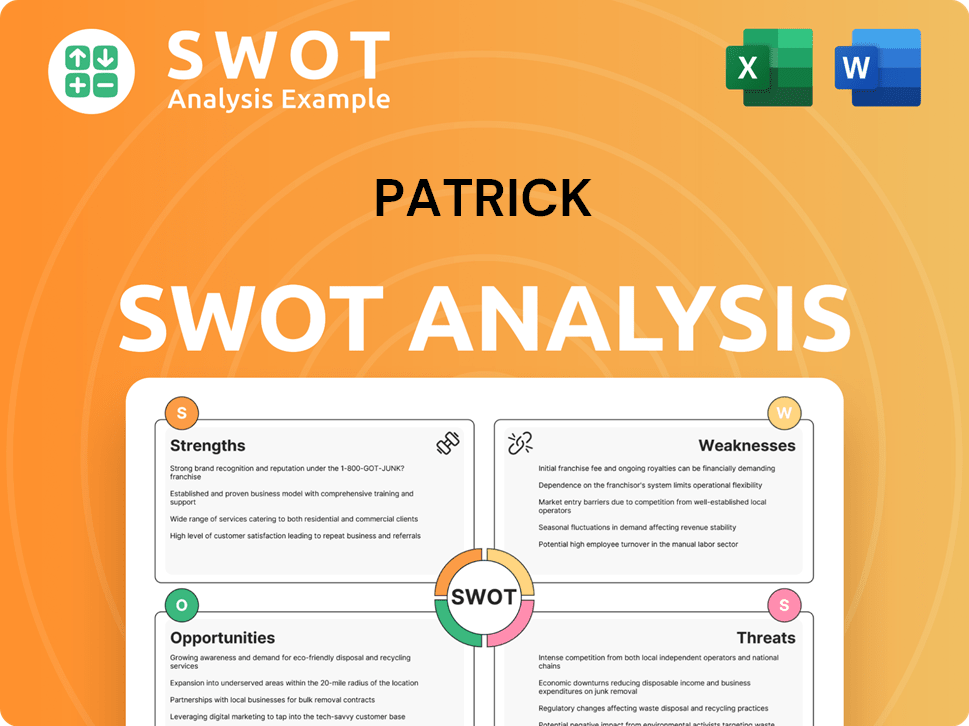
Patrick SWOT Analysis
- Complete SWOT Breakdown
- Fully Customizable
- Editable in Excel & Word
- Professional Formatting
- Investor-Ready Format
Who Are the Main Competitors Challenging Patrick?
The competitive landscape for Patrick Industries is multifaceted, encompassing both large, diversified manufacturers and smaller, specialized suppliers. This environment is particularly dynamic, shaped by the RV, marine, manufactured housing, and industrial markets. Understanding this competitive environment is crucial for strategic decision-making and market analysis.
Key direct competitors vary depending on the specific product line and market segment. These rivals often compete on scale, distribution networks, and the breadth of product offerings. The competitive dynamics are also influenced by new entrants, advanced manufacturing techniques, and mergers and acquisitions.
For a deeper dive into the financial aspects, consider exploring the Revenue Streams & Business Model of Patrick.

Lippert Components
Lippert Components, a subsidiary of LCI Industries, is a significant competitor. It offers a broad range of components for RVs and marine vessels. Lippert often challenges through its extensive product portfolio and customer relationships.
Dexter Axle Company
Dexter Axle Company is a key competitor, particularly in the chassis and axle components for RVs and trailers. Dexter competes directly with similar product offerings.
Smaller, Specialized Manufacturers
Numerous smaller, specialized manufacturers focus on niche products or regional markets. These companies compete on price, specialized innovation, or highly tailored solutions.
Indirect Competition
Indirect competition can arise from customers who choose to produce certain components in-house or from alternative materials and technologies. This impacts the overall competitive landscape.
Impact of Mergers and Acquisitions
Mergers and acquisitions within the industry reshape market share and competitive advantages. Ongoing consolidation in the RV and marine industries leads to larger, more integrated competitors.
New Entrants and Innovation
The entry of new players, particularly those leveraging advanced manufacturing techniques or sustainable materials, also influences the competitive landscape. Innovation plays a crucial role.
The competitive landscape for Patrick Company is complex, with various factors influencing its market position. Understanding these dynamics is essential for effective business strategy and industry analysis. The company must navigate challenges such as competition from larger players and the impact of industry consolidation, while also capitalizing on growth opportunities in its core markets.
Key Competitive Factors
Several factors determine the competitive position of Patrick Company. These include product offerings, market share, and financial performance compared to competitors. Recent acquisitions and marketing strategies also play a significant role.
- Product Breadth: The range of products offered compared to competitors.
- Market Share: Patrick Company's market share in the RV, marine, and manufactured housing sectors.
- Financial Performance: Comparing revenue, profitability, and growth rates with key competitors.
- Strategic Acquisitions: The impact of recent acquisitions on market position and competitive advantages.
- Marketing Strategies: How Patrick Company's marketing efforts compare to those of its competitors.
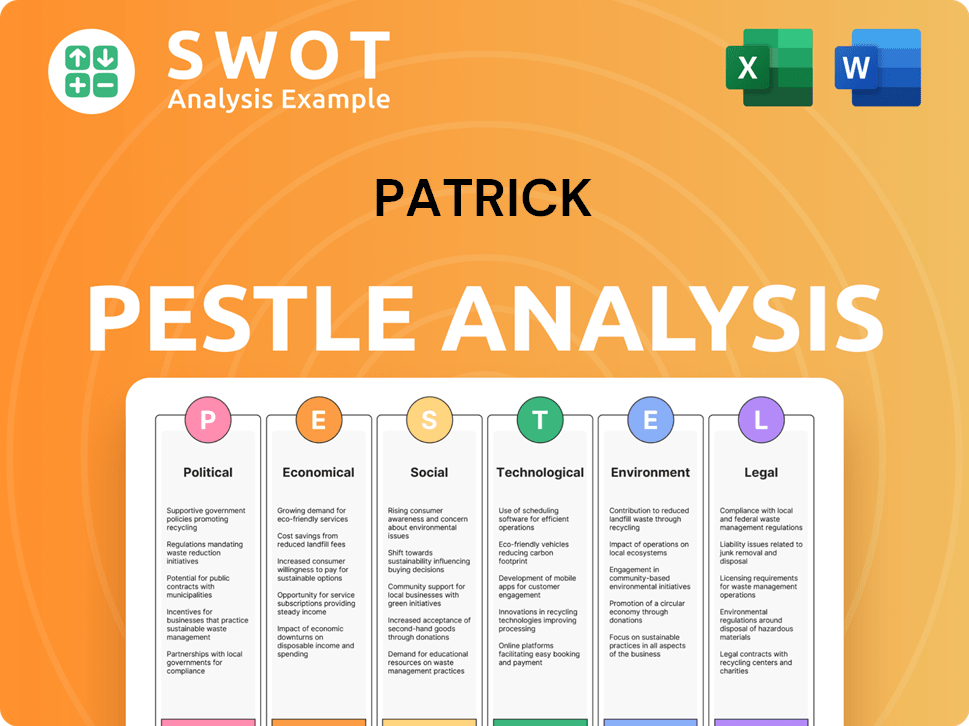
Patrick PESTLE Analysis
- Covers All 6 PESTLE Categories
- No Research Needed – Save Hours of Work
- Built by Experts, Trusted by Consultants
- Instant Download, Ready to Use
- 100% Editable, Fully Customizable
What Gives Patrick a Competitive Edge Over Its Rivals?
Understanding the competitive landscape of Patrick Company requires a deep dive into its strengths. The company has cultivated a robust position through strategic moves and a focus on operational excellence. A key part of its strategy involves a diversified product portfolio, which helps to mitigate risks across different markets.
Patrick Company’s competitive edge is further solidified by its extensive distribution network and strategic acquisitions. These moves have enabled it to expand its market share and enhance its manufacturing capabilities. By focusing on customer service and adapting to market changes, Patrick Company continues to strengthen its position.
For a deeper understanding of the company's target audience, consider reading about the Target Market of Patrick.
Diversified Product Portfolio
Patrick Company offers a wide range of component solutions across multiple end markets, including RV, marine, manufactured housing, and industrial sectors. This diversification reduces dependency on any single industry. This approach allows for a comprehensive 'one-stop shop' for customers, which strengthens relationships and simplifies procurement.
Strategic Acquisitions
Patrick Company has used acquisitions to expand into new product categories and consolidate market share. These acquisitions have helped to gain economies of scale and enhance manufacturing capabilities. The company has integrated supply chains, leading to cost efficiencies and improved product offerings.
Robust Distribution Network
Patrick Company has a strong distribution network across North America, with numerous manufacturing and distribution centers. This network ensures timely delivery and responsive service to a widespread customer base. The localized presence enables the company to meet regional demands and foster strong client partnerships.
Customer Service and Adaptability
Patrick Company focuses on customer service and adapts to changing market demands, such as the shift towards sustainable materials. This adaptability helps maintain a competitive edge. The company’s financial strength supports continuous investment in research and development and strategic growth initiatives.
Key Competitive Advantages
Patrick Company's competitive advantages include its diversified product portfolio, robust distribution network, and strategic acquisitions. These elements contribute to its strong market position. The company's focus on customer service and adaptability further strengthens its competitive edge.
- Extensive and diversified product offerings across multiple end markets.
- A robust distribution network and operational footprint across North America.
- Strategic acquisitions that enable expansion and market share consolidation.
- Focus on customer service and adaptability to evolving market demands.
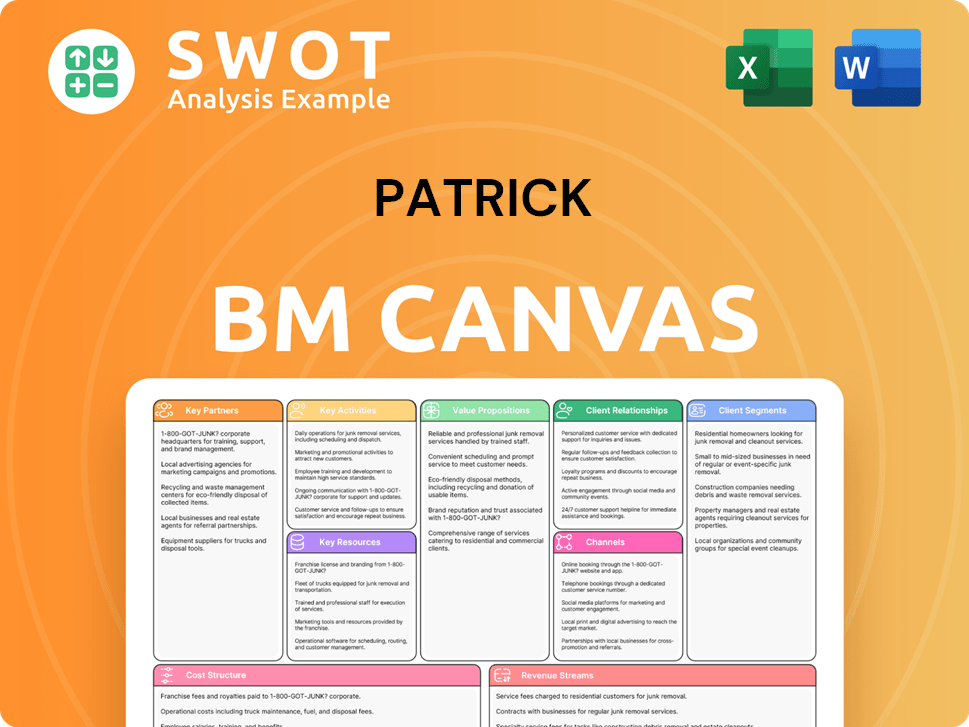
Patrick Business Model Canvas
- Complete 9-Block Business Model Canvas
- Effortlessly Communicate Your Business Strategy
- Investor-Ready BMC Format
- 100% Editable and Customizable
- Clear and Structured Layout
What Industry Trends Are Reshaping Patrick’s Competitive Landscape?
The competitive landscape for Patrick Company is significantly shaped by industry trends, future challenges, and emerging opportunities. A thorough market analysis reveals that the company's position is influenced by technological advancements, shifting consumer preferences, and evolving regulatory environments. Understanding these factors is crucial for formulating effective business strategies and making informed investment decisions.
Risks include potential disruptions from new market entrants and economic downturns, while opportunities lie in product innovation and strategic partnerships. The ability of Patrick Company to adapt to these dynamics will determine its long-term success and competitive advantage. This requires a proactive approach to managing supply chains, investing in research and development, and responding to changes in the market.
Industry Trends
Technological advancements are driving changes in product design and manufacturing, with a focus on smart features and sustainable solutions. Regulatory changes, particularly in environmental standards, require continuous adaptation. Consumer preferences are shifting towards more customizable and eco-friendly products, influencing the demand for innovative offerings.
Future Challenges
Potential disruptions include new market entrants with innovative technologies, such as electric RVs. Changing business models, like direct-to-consumer sales, could impact traditional supply chains. Economic downturns and increased competition pose threats to market share. Fluctuations in material costs can directly affect manufacturing profitability.
Opportunities
Growth opportunities exist in emerging markets, driven by rising disposable incomes and increased leisure activities. Product innovations, like advanced composites and integrated smart home systems, present avenues for differentiation. Strategic partnerships with technology companies can unlock new revenue streams.
Competitive Advantages
Patrick's ability to embrace technological shifts and adapt to consumer demands is crucial. Effective supply chain management and operational efficiencies are essential for maintaining a competitive edge. Continued investment in R&D and strategic acquisitions will broaden capabilities and enhance market position.
Detailed Competitive Analysis
The competitive landscape of Patrick Company is dynamic, with key players vying for market share. The company's performance is influenced by its ability to innovate and respond to market changes. This analysis includes a look at recent acquisitions and their impact on the company's strategic direction.
- Market Share Dynamics: Analyzing how Patrick Company's market share compares to its competitors in specific industries.
- Product Offerings: Comparing Patrick Company's product offerings vs. competitors, focusing on features, pricing, and market positioning.
- Strategic Initiatives: Examining Patrick Company's key competitors and their strategies, including their marketing and expansion plans.
- Financial Performance: Evaluating Patrick Company's financial performance compared to competitors, including revenue growth and profitability.
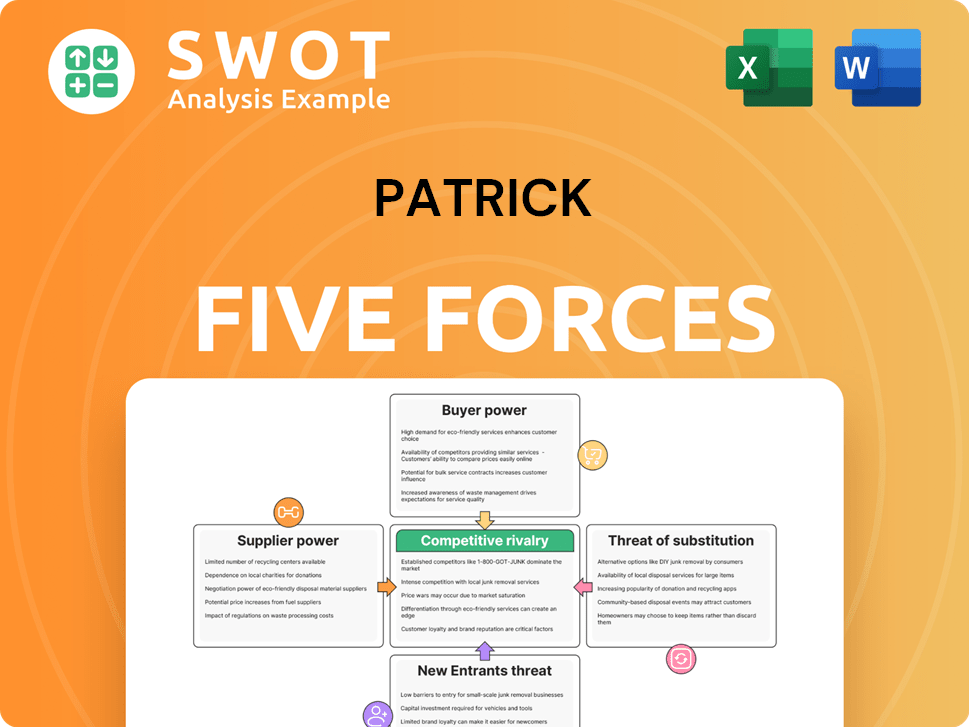
Patrick Porter's Five Forces Analysis
- Covers All 5 Competitive Forces in Detail
- Structured for Consultants, Students, and Founders
- 100% Editable in Microsoft Word & Excel
- Instant Digital Download – Use Immediately
- Compatible with Mac & PC – Fully Unlocked
Related Blogs

- What are Mission Vision & Core Values of Patrick Company?
- What is Growth Strategy and Future Prospects of Patrick Company?
- How Does Patrick Company Work?
- What is Sales and Marketing Strategy of Patrick Company?
- What is Brief History of Patrick Company?
- Who Owns Patrick Company?
- What is Customer Demographics and Target Market of Patrick Company?
Disclaimer
All information, articles, and product details provided on this website are for general informational and educational purposes only. We do not claim any ownership over, nor do we intend to infringe upon, any trademarks, copyrights, logos, brand names, or other intellectual property mentioned or depicted on this site. Such intellectual property remains the property of its respective owners, and any references here are made solely for identification or informational purposes, without implying any affiliation, endorsement, or partnership.
We make no representations or warranties, express or implied, regarding the accuracy, completeness, or suitability of any content or products presented. Nothing on this website should be construed as legal, tax, investment, financial, medical, or other professional advice. In addition, no part of this site—including articles or product references—constitutes a solicitation, recommendation, endorsement, advertisement, or offer to buy or sell any securities, franchises, or other financial instruments, particularly in jurisdictions where such activity would be unlawful.
All content is of a general nature and may not address the specific circumstances of any individual or entity. It is not a substitute for professional advice or services. Any actions you take based on the information provided here are strictly at your own risk. You accept full responsibility for any decisions or outcomes arising from your use of this website and agree to release us from any liability in connection with your use of, or reliance upon, the content or products found herein.