

Park Systems Bundle

How Does Park Systems Dominate the Atomic Force Microscopy Arena?
The Park Systems SWOT Analysis reveals a fascinating story of innovation and strategic prowess in the booming atomic force microscopy (AFM) market. As nanotechnology continues to reshape industries, understanding the competitive landscape of key players like Park Systems becomes crucial. This analysis dives deep into the company's position, its rivals, and the factors driving its success in this cutting-edge field.

The AFM market is a dynamic space, and a thorough Park Systems market analysis is essential for investors and industry professionals alike. We'll dissect the company's competitive advantages, compare its offerings with those of its key Park Systems competitors, and assess its potential market threats. Furthermore, we will investigate Park Systems AFM technology advancements, and how it is positioned for future growth within the nanotechnology industry.
Where Does Park Systems’ Stand in the Current Market?
Park Systems holds a significant position within the global atomic force microscopy (AFM) market. The company is recognized as a leader in providing automated AFM solutions, particularly within the semiconductor and data storage industries. Its core operations revolve around the design, manufacture, and sale of AFM systems, catering to both research and industrial applications.
The value proposition of Park Systems lies in its ability to deliver high-precision, automated AFM solutions that enhance efficiency and accuracy in various applications. Their systems are designed to meet the stringent requirements of industries like semiconductors, where precise measurements and high throughput are essential. This focus on automation and advanced technology allows Park Systems to offer solutions that optimize workflows and improve overall productivity for its customers.
Park Systems has a strong global presence, with direct sales and service offices in key regions including the US, Europe, and Asia, serving a diverse customer base that spans academic institutions, government laboratories, and leading industrial corporations. Over time, Park Systems has strategically shifted its positioning to emphasize not just high-performance research tools but also robust, automated solutions for industrial applications, reflecting a diversification of its offerings to capture a broader market segment.
 Market Share and Size
While specific market share figures for 2024 or 2025 are not readily available in public domains, industry reports from 2023 indicate that the global AFM market size was valued at approximately USD 600 million. The market is projected to grow at a compound annual growth rate (CAGR) of around 6-8% from 2024 to 2030. This suggests a continuously expanding market for Park Systems to operate within, offering opportunities for growth and expansion.
Product Portfolio
Park Systems' primary product lines include a range of research-grade AFMs, industrial AFMs for quality control and process monitoring, and specialized systems for materials and life sciences applications. The company's product offerings are designed to cater to a wide array of applications, from fundamental research to industrial quality control. This diverse portfolio allows Park Systems to serve a broad customer base and capture a larger share of the AFM market.
Geographic Presence
Park Systems is particularly strong in regions with advanced semiconductor manufacturing and nanotechnology research, such as South Korea, Taiwan, and the United States. The company's global presence is supported by direct sales and service offices in key regions, ensuring strong customer support and market penetration. This strategic geographic focus allows Park Systems to capitalize on the growing demand for AFM technology in these high-growth markets.
Financial Health and Strategy
The company's financial health, as reflected in its consistent investment in R&D and global expansion, suggests a stable and growing enterprise within the industry. Park Systems focuses on continuous innovation and strategic market expansion to maintain its competitive edge. This approach is crucial for navigating the dynamic Park Systems' brief history and the broader nanotechnology industry.

Key Market Position Highlights
Park Systems' competitive landscape is defined by its focus on automated AFM solutions and its strong presence in key markets. The company's market analysis reveals a strategic emphasis on industrial applications, particularly in the semiconductor industry. This positioning allows Park Systems to differentiate itself from competitors and capture a significant share of the AFM market.
- Strong in Semiconductor and Data Storage: Specializes in automated AFM solutions for high-precision industries.
- Global Presence: Operates with direct sales and service offices in the US, Europe, and Asia.
- Strategic Shift: Emphasizes automated solutions for industrial applications, expanding market reach.
- Financial Stability: Consistent investment in R&D and global expansion indicates a growing enterprise.
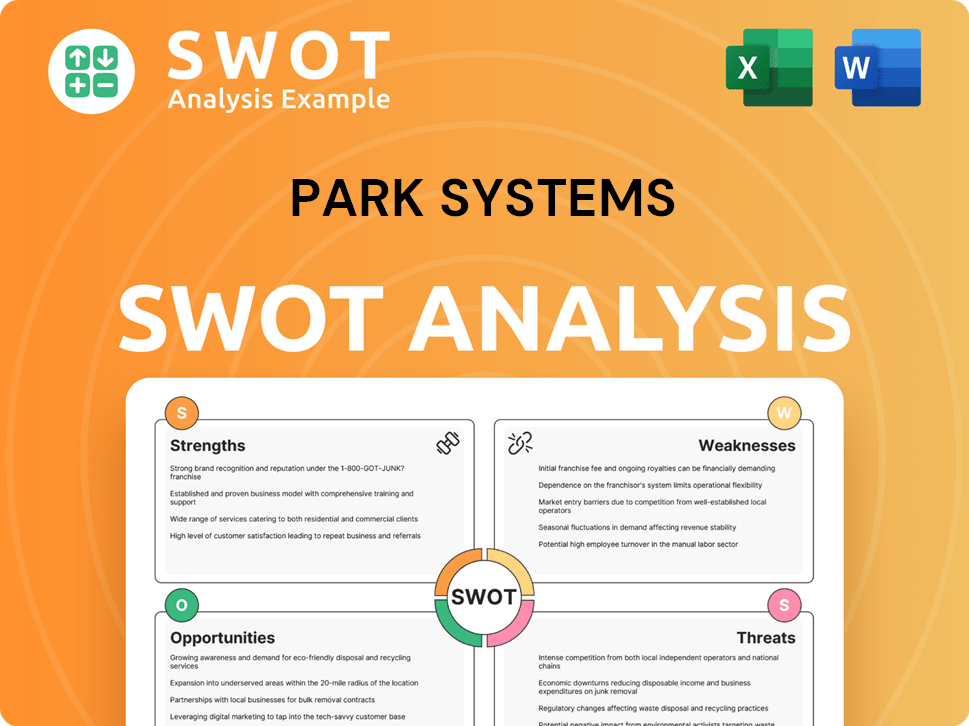
Park Systems SWOT Analysis
- Complete SWOT Breakdown
- Fully Customizable
- Editable in Excel & Word
- Professional Formatting
- Investor-Ready Format
Who Are the Main Competitors Challenging Park Systems?
The competitive landscape for Park Systems is characterized by a specialized market with a mix of established and emerging players. Understanding the dynamics of this market is crucial for assessing Park Systems' position and potential for growth. The AFM market, where Park Systems operates, is influenced by technological advancements, customer needs, and the strategic moves of its competitors.
Key competitors in the Park Systems competitive landscape include major players like Bruker Corporation, Oxford Instruments, and Hitachi High-Tech. These companies, along with others, continuously vie for market share through product innovation, strategic partnerships, and geographic expansion. The competition is intense, with each company striving to offer superior solutions and capture a larger portion of the atomic force microscopy market.
The Park Systems market analysis reveals a dynamic environment where companies compete on various fronts, including product breadth, technological innovation, and customer service. The ability to secure contracts for large-scale deployments and win bids for cutting-edge research projects is a key indicator of competitive success. Furthermore, the nanotechnology industry's rapid evolution means that companies must continually adapt to stay ahead.

Bruker Corporation
Bruker Corporation is a significant competitor, offering a wide range of analytical instruments, including AFMs. Their extensive global presence and diverse product portfolio give them a strong competitive edge. In 2024, Bruker reported revenues of approximately $3.1 billion, highlighting their substantial market share.
Oxford Instruments
Oxford Instruments specializes in high-performance scientific tools, with a strong focus on nanotechnology and materials research. They often differentiate themselves through customized solutions. In the fiscal year 2024, Oxford Instruments reported revenues of £460.7 million, demonstrating their solid position in the market.
Hitachi High-Tech
Hitachi High-Tech provides advanced microscopy solutions, including AFMs, often integrated into broader metrology systems. Their focus on industrial applications, particularly in the semiconductor industry, is a key competitive factor. Hitachi High-Tech's revenue for the fiscal year 2024 was approximately ¥1.3 trillion.
Emerging Players
Smaller, innovative startups can disrupt the market by introducing novel technologies. These companies often focus on niche applications, offering specialized performance. The emergence of these players adds to the dynamism of the AFM market.
Competitive Strategies
Competitors employ various strategies, including product breadth, specialized applications, and integrated solutions. Securing large contracts and winning research bids are crucial. The Park Systems AFM system competitors must continually innovate to stay competitive.
Market Dynamics
Mergers and acquisitions, such as larger companies acquiring smaller AFM developers, impact the market. These actions consolidate market share and intellectual property. The Park Systems market share analysis 2024 shows the impact of these strategic moves.
Key Competitive Factors
Several factors influence the competitive landscape. These include technological innovation, market presence, and customer relationships. Understanding these factors is essential for assessing Park Systems' competitive advantages and disadvantages.
- Product Innovation: Continuous development of advanced AFM technologies.
- Market Reach: Establishing a strong presence in key geographic regions.
- Customer Service: Providing excellent support and building strong customer relationships.
- Strategic Partnerships: Collaborating with other companies to expand capabilities.
- Application Focus: Targeting specific industries, such as semiconductors or materials science.
For a deeper dive into how Park Systems approaches the market, consider reading about the Marketing Strategy of Park Systems.
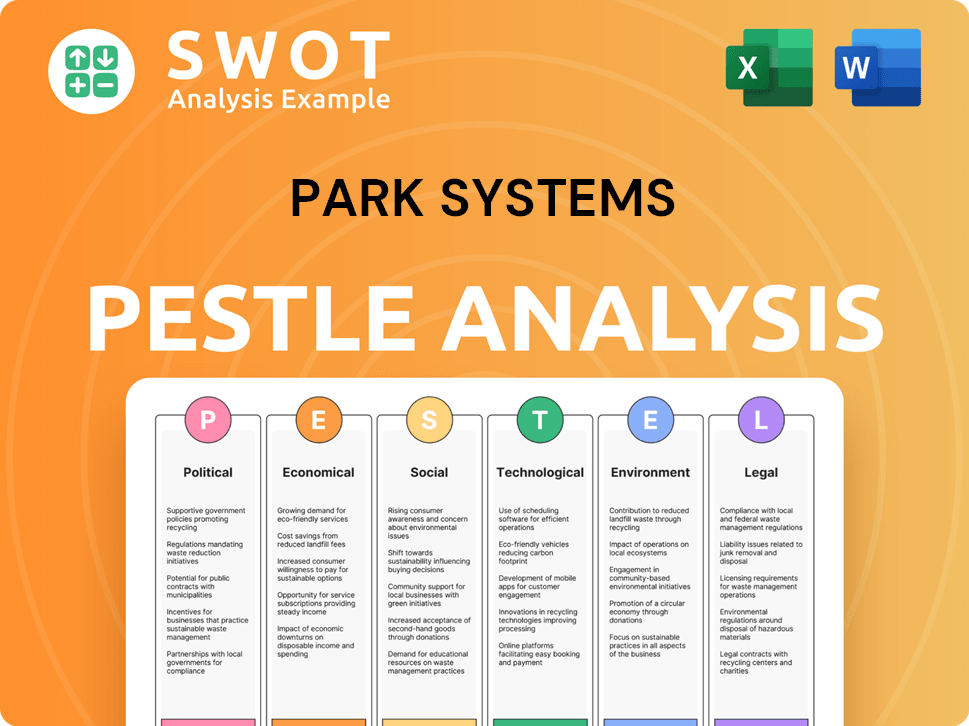
Park Systems PESTLE Analysis
- Covers All 6 PESTLE Categories
- No Research Needed – Save Hours of Work
- Built by Experts, Trusted by Consultants
- Instant Download, Ready to Use
- 100% Editable, Fully Customizable
What Gives Park Systems a Competitive Edge Over Its Rivals?
Understanding the competitive landscape of Park Systems involves assessing its key advantages. These advantages have allowed the company to carve a niche in the AFM market. Analyzing the company's strengths helps in understanding its position relative to its competitors.
Park Systems' success is built on a foundation of technological innovation, customer focus, and strategic market positioning. These elements combine to create a robust competitive edge. The company's ability to innovate and adapt to market changes is critical for its continued success.
The company's competitive advantages are key to its market position. These advantages are continuously refined through research and development. This focus on innovation ensures that Park Systems remains at the forefront of the AFM market.
True Non-Contact Mode Technology
Park Systems differentiates itself through its True Non-Contact Mode technology. This technology reduces wear and tear on the AFM tips. It provides higher resolution imaging capabilities, which extends the life of the tips.
User-Friendly Systems
Park Systems emphasizes user-friendliness and automation in its AFM systems. Features like SmartScan software and automated tip exchange simplify operation. This reduces the learning curve and increases efficiency, especially in industrial settings.
Strong Brand Equity
Park Systems has built a strong brand reputation for precision and reliability. This reputation has fostered customer loyalty, particularly in the semiconductor and data storage industries. This loyalty provides a significant competitive advantage.
Continuous R&D Investment
The company continuously invests in research and development. This includes enhancing existing technologies and introducing new features. This commitment to innovation helps address evolving customer needs and maintain a competitive edge.
Key Competitive Advantages
Park Systems' competitive advantages include proprietary technology, user-friendly designs, a strong brand, and continuous investment in R&D. These elements contribute to its success in the AFM market. The company's focus on innovation and customer satisfaction is crucial.
- Proprietary Technology: True Non-Contact Mode provides superior imaging.
- User-Friendly Design: Automation features reduce the learning curve.
- Strong Brand: Reputation for precision and reliability fosters customer loyalty.
- R&D Investment: Continuous innovation addresses evolving customer needs.
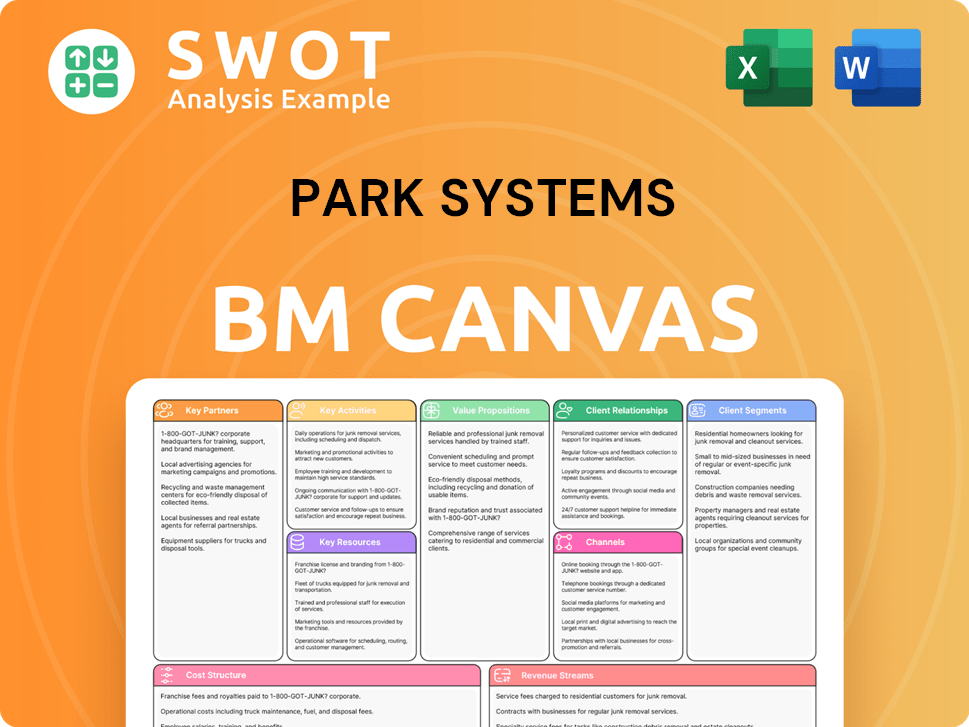
Park Systems Business Model Canvas
- Complete 9-Block Business Model Canvas
- Effortlessly Communicate Your Business Strategy
- Investor-Ready BMC Format
- 100% Editable and Customizable
- Clear and Structured Layout
What Industry Trends Are Reshaping Park Systems’s Competitive Landscape?
The competitive landscape for atomic force microscopy (AFM) is dynamic, influenced by technological advancements, evolving market demands, and the strategic initiatives of key players. The AFM market, a segment within the broader nanotechnology industry, is experiencing growth driven by the increasing need for nanoscale characterization across various sectors, including materials science, semiconductors, and life sciences. Understanding the trends, challenges, and opportunities is crucial for assessing the future prospects of companies like Park Systems.
Analyzing the Park Systems competitive landscape involves evaluating its position relative to competitors, identifying potential risks, and anticipating future market dynamics. This analysis is essential for investors, business strategists, and researchers seeking to understand the company's potential for growth and sustainability within the AFM market. The following sections will delve into the key industry trends, challenges, and opportunities that shape the competitive environment for Park Systems.
Industry Trends
Several trends are significantly impacting the AFM market. Technological advancements in automation, artificial intelligence (AI), and machine learning (ML) are transforming AFM operation and data analysis. There's a growing demand for in-situ measurements and environmental control AFMs, driven by research in advanced materials and biological systems. The miniaturization of electronic components and the development of novel nanomaterials are fueling the need for higher-resolution and versatile AFM solutions.
Future Challenges
Park Systems faces several challenges. Continuous investment in R&D is needed to keep pace with rapid technological advancements. New market entrants leveraging disruptive technologies pose a threat. Regulatory changes, particularly concerning data privacy and intellectual property in collaborative research, could also create hurdles. Competition from well-established companies and emerging players will intensify the pressure to innovate and maintain market share.
Opportunities
Significant opportunities exist for Park Systems. Expanding into emerging markets, particularly in developing economies where nanotechnology research is growing, presents a chance for growth. Product innovations, such as AI integration for automated defect detection and specialized AFMs for drug discovery, offer substantial growth potential. Strategic partnerships with other scientific instrument manufacturers or research institutions can open new avenues for market penetration.
Strategic Outlook
The company's strategy is likely to involve continued investment in AI and automation, expanding its global footprint, and forging strategic alliances. The competitive position will likely evolve towards offering more integrated, intelligent, and automated solutions. Capitalizing on the burgeoning demand for nanoscale characterization is key. The company needs to focus on Park Systems market analysis to identify and exploit growth opportunities.
Key Strategic Considerations
To remain competitive, Park Systems should focus on several key areas. These include technological innovation, strategic partnerships, and geographic expansion. A deep understanding of the Park Systems competitors and their strategies is crucial for making informed decisions.
- Technological Innovation: Continuous investment in R&D, particularly in AI and automation, is crucial.
- Strategic Partnerships: Collaborations with other instrument manufacturers and research institutions can enhance market reach and technological capabilities.
- Geographic Expansion: Targeting emerging markets with growing nanotechnology sectors can unlock new growth avenues.
- Product Diversification: Developing specialized AFM solutions for various applications, such as semiconductor inspection and drug discovery, can broaden the customer base.
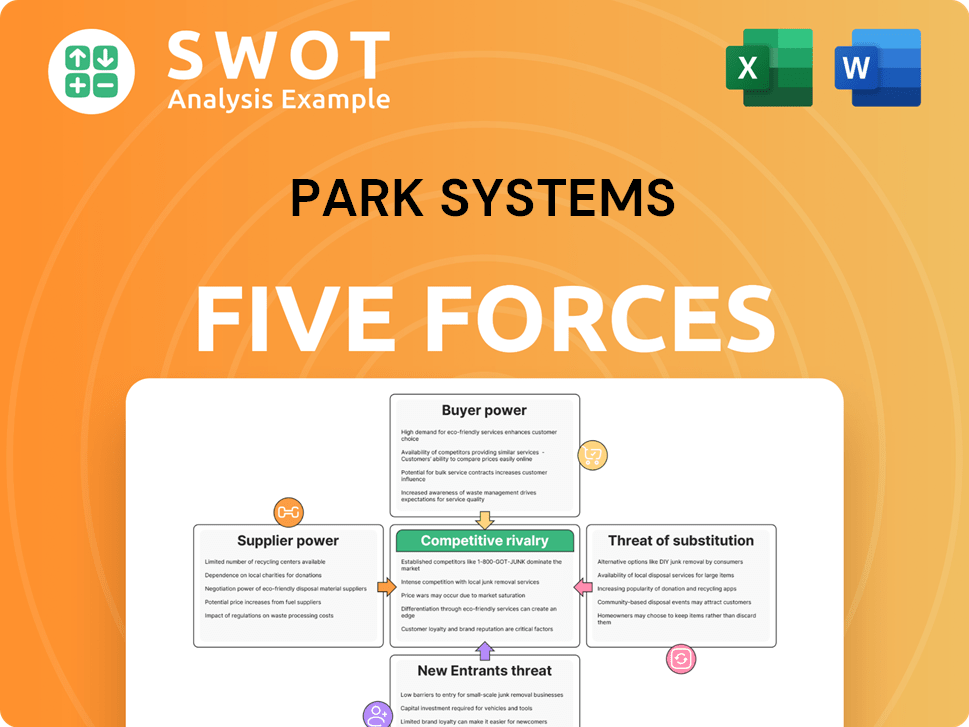
Park Systems Porter's Five Forces Analysis
- Covers All 5 Competitive Forces in Detail
- Structured for Consultants, Students, and Founders
- 100% Editable in Microsoft Word & Excel
- Instant Digital Download – Use Immediately
- Compatible with Mac & PC – Fully Unlocked
Related Blogs

- What are Mission Vision & Core Values of Park Systems Company?
- What is Growth Strategy and Future Prospects of Park Systems Company?
- How Does Park Systems Company Work?
- What is Sales and Marketing Strategy of Park Systems Company?
- What is Brief History of Park Systems Company?
- Who Owns Park Systems Company?
- What is Customer Demographics and Target Market of Park Systems Company?
Disclaimer
All information, articles, and product details provided on this website are for general informational and educational purposes only. We do not claim any ownership over, nor do we intend to infringe upon, any trademarks, copyrights, logos, brand names, or other intellectual property mentioned or depicted on this site. Such intellectual property remains the property of its respective owners, and any references here are made solely for identification or informational purposes, without implying any affiliation, endorsement, or partnership.
We make no representations or warranties, express or implied, regarding the accuracy, completeness, or suitability of any content or products presented. Nothing on this website should be construed as legal, tax, investment, financial, medical, or other professional advice. In addition, no part of this site—including articles or product references—constitutes a solicitation, recommendation, endorsement, advertisement, or offer to buy or sell any securities, franchises, or other financial instruments, particularly in jurisdictions where such activity would be unlawful.
All content is of a general nature and may not address the specific circumstances of any individual or entity. It is not a substitute for professional advice or services. Any actions you take based on the information provided here are strictly at your own risk. You accept full responsibility for any decisions or outcomes arising from your use of this website and agree to release us from any liability in connection with your use of, or reliance upon, the content or products found herein.