

Olympus Bundle

How Does Olympus Navigate Its Competitive Arena?
Olympus Corporation's journey from optics to medical technology is a fascinating case study in strategic adaptation. This transformation has reshaped the company's competitive landscape, making it a key player in the healthcare sector. Understanding Olympus's current position requires a deep dive into its rivals and market dynamics.

Founded in 1919, Olympus has evolved significantly, especially after its strategic shift towards medical devices. This Olympus SWOT Analysis reveals the company's strengths, weaknesses, and opportunities within the Olympus industry. This analysis explores the company's market share and business strategy, offering insights into its competitive advantages and future outlook. A thorough Olympus market analysis will reveal the key competitors and strategic partnerships that shape its future.
Where Does Olympus’ Stand in the Current Market?
Olympus Corporation maintains a strong market position, particularly in the medical technology sector. Its core operations revolve around the development, manufacturing, and sale of medical devices, scientific solutions, and, historically, cameras. The company's value proposition centers on providing high-quality, innovative products that improve healthcare outcomes and support scientific advancements.
The company has strategically focused on its medical business, making it a key player in the Olympus competitive landscape. This shift has allowed Olympus to concentrate on its strengths in areas such as endoscopy and surgical devices, driving revenue and market share growth. This strategic pivot has solidified its position in the global market.
Olympus's global presence is significant, with operations and sales spread across North America, Europe, and Asia. This wide reach enables it to serve hospitals, clinics, and research institutions worldwide, enhancing its market share and influence. The company's focus on innovation and strategic partnerships further strengthens its competitive edge in the Olympus industry.
 Market Leadership in Endoscopy
Olympus holds a leading global market share in gastrointestinal endoscopes, a key segment within its medical business. This dominance is a result of its advanced technology, extensive product portfolio, and strong relationships with healthcare providers. The company's focus on innovation and quality has cemented its position as a leader in this critical area.
Strategic Focus on Medical Technology
The divestiture of its consumer camera business allowed Olympus to concentrate on its medical technology segment. This move has enabled the company to allocate more resources to research and development in healthcare. This strategic shift has boosted the company's financial performance and market share in the medical device industry.
Global Presence and Expansion
Olympus has a robust global presence, with significant operations and sales in North America, Europe, and Asia. This broad geographical reach allows the company to serve a diverse customer base. The company continuously seeks to expand its presence in emerging markets to drive further growth.
Financial Performance and Revenue
Olympus reported strong financial performance in its medical segment, with revenue growth driven by strong demand for its endoscopy and therapeutic solutions. For the fiscal year ending March 31, 2024, the medical business recorded revenues of ¥773.5 billion (approximately $5.2 billion USD). This demonstrates the company's focus and success in the medical device market.

Key Market Dynamics and Strategic Initiatives
Olympus faces a dynamic competitive landscape, with rivals such as Fujifilm, Medtronic, and others vying for market share. The company's strategies include continuous innovation in its product lines, strategic partnerships, and a focus on expanding its presence in key markets. The company's ability to adapt and innovate is crucial for maintaining its market position.
- Endoscopy Market Share Analysis: Olympus maintains a dominant position in the global endoscopy market, driven by technological advancements and a strong product portfolio.
- Strategic Partnerships: Olympus has formed strategic partnerships to enhance its market reach and product offerings.
- Recent Acquisitions: Olympus has made strategic acquisitions to strengthen its position in the medical devices market.
- Global Expansion: The company continues to expand its presence in emerging markets to capitalize on growth opportunities.
For a deeper understanding of Olympus's strategic approach, consider exploring the Growth Strategy of Olympus. This analysis provides valuable insights into the company's long-term goals and initiatives.
Olympus SWOT Analysis
- Complete SWOT Breakdown
- Fully Customizable
- Editable in Excel & Word
- Professional Formatting
- Investor-Ready Format

Who Are the Main Competitors Challenging Olympus?
The Owners & Shareholders of Olympus company, a prominent player in the medical and imaging sectors, faces a complex and dynamic competitive landscape. This landscape is shaped by a variety of direct and indirect competitors, technological advancements, and evolving market demands. Understanding these competitive dynamics is crucial for assessing the company's market position, strategic challenges, and growth opportunities.
The company's competitive environment is characterized by intense rivalry, particularly in the medical devices segment. This segment is a significant revenue driver, and the company competes with both established and emerging players. The company's ability to innovate, adapt, and maintain its market share depends heavily on its response to these competitive pressures.
The company's competitive strategy involves continuous innovation, strategic partnerships, and a focus on customer needs. The company aims to maintain its competitive edge through technological advancements, product diversification, and global expansion. The company's success depends on its ability to navigate these challenges effectively and capitalize on emerging opportunities.

Direct Competitors in Endoscopy
The company's primary direct competitors in the endoscopy market include Karl Storz SE & Co. KG, Fujifilm Holdings Corporation, and Pentax Medical (a division of Hoya Corporation). These companies compete directly in the endoscopy market, offering a range of products and services.
Karl Storz SE & Co. KG
Karl Storz is a major rival, offering a broad range of endoscopes and surgical instruments. They often compete on comprehensive solutions and specialized surgical applications. The company's strength lies in its comprehensive product offerings and focus on specialized surgical applications.
Fujifilm Holdings Corporation
Fujifilm is a strong contender in diagnostic imaging and endoscopes, leveraging its expertise in optics and imaging technology. They are a significant player in the diagnostic imaging and endoscope market. Fujifilm's competitive advantage comes from its expertise in optics and imaging technology.
Pentax Medical (Hoya Corporation)
Pentax Medical competes directly in the gastrointestinal endoscopy space, often challenging the company on image quality and specific procedural features. They focus on gastrointestinal endoscopy, competing on image quality and procedural features. Pentax Medical's competitive strategy emphasizes image quality and specialized procedural features.
Competitive Dynamics
These competitors engage in high-profile 'battles' over market share through continuous innovation in scope design, imaging capabilities, and integration with surgical systems. The competitive landscape is shaped by continuous innovation in scope design, imaging capabilities, and integration with surgical systems.
Broader Medical Device Competition
Beyond direct endoscopy rivals, the company competes with a broader array of medical device companies in specific therapeutic areas. This includes companies in surgical energy devices and other therapeutic solutions. The company faces competition from a wide range of medical device companies.
Key Competitors in Surgical and Therapeutic Solutions
In surgical energy devices and other therapeutic solutions, key competitors include Medtronic, Ethicon (Johnson & Johnson), and Stryker Corporation. These companies offer a wide range of medical devices and compete for market share. The competitive landscape is dynamic, with mergers, acquisitions, and technological advancements constantly reshaping the industry.
- Medtronic: A global leader offering a vast portfolio including surgical instruments and advanced energy devices. They compete on scale, global reach, and integrated hospital solutions. In 2024, Medtronic reported revenues of approximately $32 billion.
- Ethicon (Johnson & Johnson): A strong competitor in surgical stapling, energy, and wound closure. They are a significant player in surgical devices, with a focus on innovation and product development.
- Stryker Corporation: Prominent in orthopedics and surgical equipment, including visualization systems. Stryker's competitive advantage lies in its strong presence in orthopedics and surgical equipment. In 2024, Stryker's net sales were around $21.6 billion.
- Emerging Players: New and emerging players in minimally invasive surgery and AI-powered diagnostics also present disruptive threats, often focusing on niche innovations or more cost-effective solutions. These companies introduce new technologies and business models.
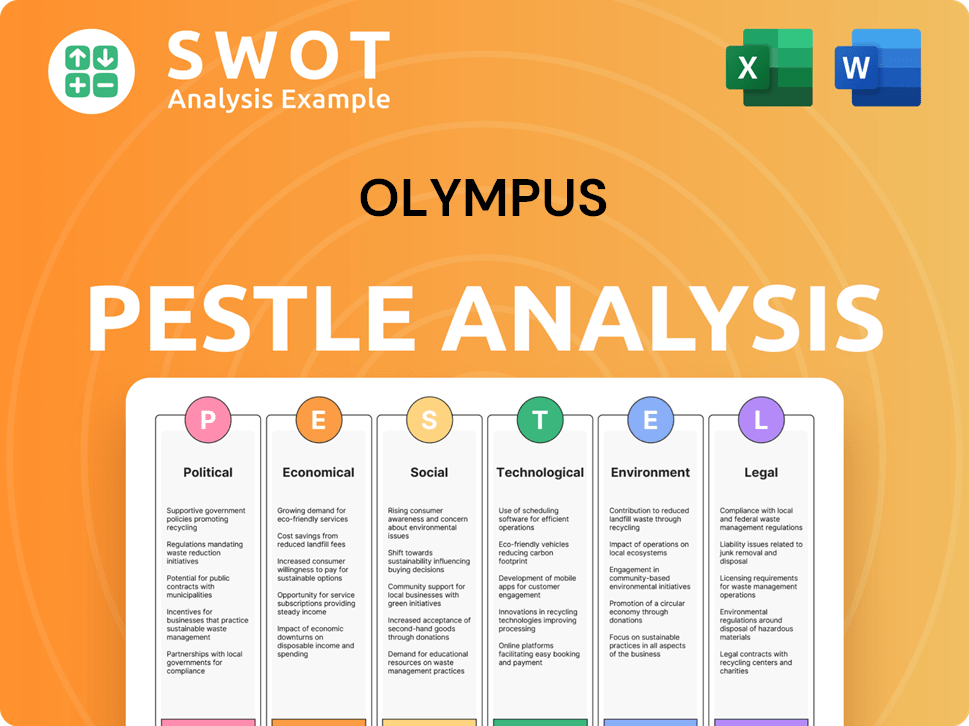
Olympus PESTLE Analysis
- Covers All 6 PESTLE Categories
- No Research Needed – Save Hours of Work
- Built by Experts, Trusted by Consultants
- Instant Download, Ready to Use
- 100% Editable, Fully Customizable
What Gives Olympus a Competitive Edge Over Its Rivals?
The competitive advantages of the company are deeply rooted in its expertise in optics, precision engineering, and a strong focus on research and development, particularly in medical technology. A key advantage lies in its endoscopy technology, especially in gastrointestinal endoscopes, where it's recognized for superior image quality and advanced diagnostic capabilities. This is supported by a robust portfolio of patents, protecting its innovations from direct imitation. Its brand equity, built over decades, fosters strong customer loyalty among healthcare professionals globally. For a detailed look at their marketing strategies, consider reading about the Marketing Strategy of Olympus.
Economies of scale in manufacturing and a well-established global distribution network, especially within hospitals and clinics, further solidify its market position. The company leverages its extensive sales and service infrastructure to ensure product availability and provide crucial post-sales support. The company's talent pool, comprising specialized engineers, researchers, and clinical experts, drives continuous product innovation and adaptation to evolving medical needs. The company's culture emphasizes precision, quality, and improving patient outcomes, influencing product development and customer relationships. These advantages have evolved from its optical expertise, transitioning from cameras to specialized medical devices, allowing focus on high-growth, high-margin segments.
The company's competitive landscape is influenced by factors such as technological advancements, aggressive competitor strategies, and economic conditions. The company continually invests in research and development to maintain its lead and mitigate these threats. Analysis of its market share and financial performance compared to competitors provides insights into its strengths and weaknesses. Understanding the company's global market presence and expansion plans is crucial for assessing its future outlook and competitive threats. The company's strategies to compete with rivals such as Sony and Canon in the camera market and other medical devices rivals are also important factors.
Core Competencies
The company's core competencies include optics, precision engineering, and medical technology. These are key to its competitive advantage. Its strong focus on research and development is also a critical element.
Technological Leadership
The company excels in endoscopy, particularly in gastrointestinal endoscopes. Its proprietary technology and patents protect its innovations. Superior image quality and diagnostic capabilities are key differentiators.
Brand and Market Position
The company has a strong brand built over decades, fostering customer loyalty. A well-established global distribution network ensures widespread product availability. Its market position is further strengthened by economies of scale.
Strategic Advantages
The company leverages its sales and service infrastructure for post-sales support. A skilled talent pool drives continuous innovation. The company's culture emphasizes precision and improving patient outcomes.
Key Competitive Strengths
The company's competitive advantages stem from its technological expertise, brand reputation, and global presence. These strengths enable it to compete effectively in the medical devices market. Continuous investment in research and development is crucial for maintaining its competitive edge.
- Proprietary Endoscopy Technology: Leading in image quality and diagnostic capabilities.
- Strong Brand Equity: Built over decades, fostering customer loyalty.
- Global Distribution Network: Ensuring widespread product availability.
- Talent Pool: Highly specialized engineers and clinical experts drive innovation.
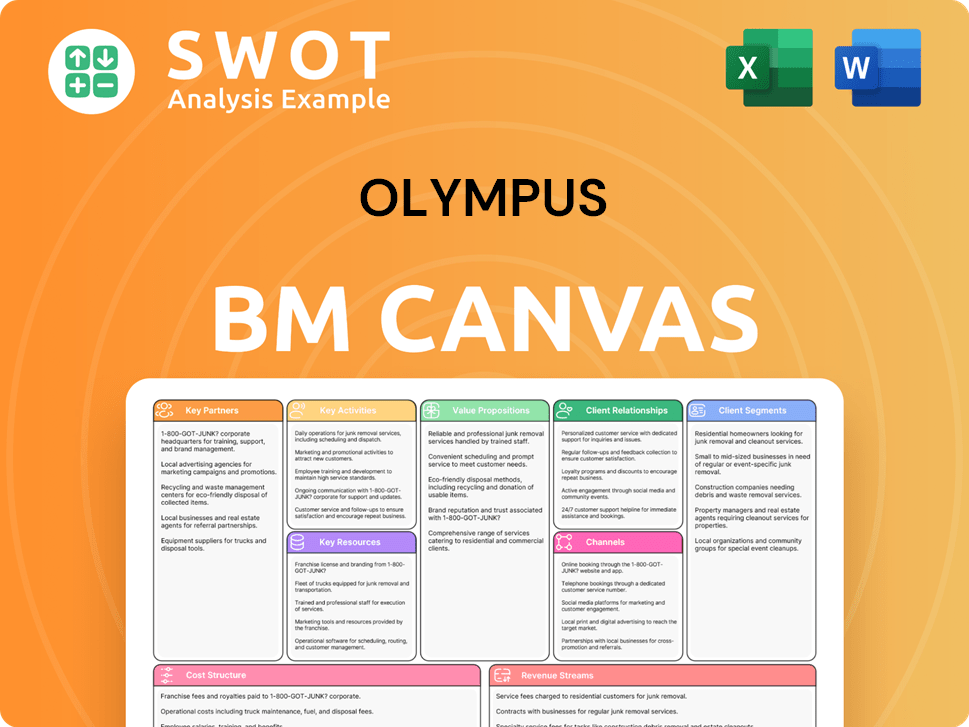
Olympus Business Model Canvas
- Complete 9-Block Business Model Canvas
- Effortlessly Communicate Your Business Strategy
- Investor-Ready BMC Format
- 100% Editable and Customizable
- Clear and Structured Layout
What Industry Trends Are Reshaping Olympus’s Competitive Landscape?
The competitive landscape for Olympus is shaped by dynamic industry trends, including rapid technological advancements, evolving regulatory environments, demographic shifts, and the growing preference for minimally invasive procedures. These factors present both challenges and opportunities for the company, which must adapt to maintain its market position. A comprehensive Olympus market analysis reveals the critical need for strategic agility to navigate this complex environment.
The Olympus competitive landscape is also influenced by economic factors and global market dynamics. The company faces the need to balance innovation with cost-effectiveness while expanding its global presence. Understanding these trends is crucial for assessing Olympus's future outlook and competitive threats.
Industry Trends
Technological advancements are driving significant changes in the medical device industry. Olympus must integrate AI, robotics, and digital solutions into its products. The shift towards minimally invasive procedures is also a key trend, aligning with Olympus's core business. These trends impact the Olympus industry significantly.
Future Challenges
Stricter regulatory guidelines in major markets require substantial investment in compliance. Increased competition from new entrants leveraging disruptive technologies poses a threat. Downward pressure on pricing due to healthcare cost containment efforts is another challenge. These factors influence Olympus competitors.
Opportunities
Emerging markets offer significant growth opportunities due to increasing healthcare infrastructure investments. Strategic partnerships with technology companies and healthcare providers can drive innovation. Demographic shifts, such as an aging global population, increase demand for medical procedures. These opportunities shape Olympus business strategy.
Strategic Responses
Olympus is focusing on targeted R&D, digital transformation, and strategic mergers and acquisitions. The company aims to maintain its competitive edge and capitalize on evolving industry dynamics. These strategies are crucial for Olympus market share and overall performance.
Strategic Implications
Olympus must continue to innovate and adapt to the changing landscape. The company's ability to form strategic partnerships and expand into emerging markets will be critical. Focusing on digital transformation and strategic acquisitions can enhance its competitive position. For more insights, read about the Revenue Streams & Business Model of Olympus.
- Invest in AI and robotics for advanced diagnostics and surgical interventions.
- Prioritize regulatory compliance and product approval processes in key markets.
- Explore strategic partnerships to co-develop integrated solutions.
- Expand into emerging markets with high growth potential.
Olympus Porter's Five Forces Analysis
- Covers All 5 Competitive Forces in Detail
- Structured for Consultants, Students, and Founders
- 100% Editable in Microsoft Word & Excel
- Instant Digital Download – Use Immediately
- Compatible with Mac & PC – Fully Unlocked

Related Blogs

- What are Mission Vision & Core Values of Olympus Company?
- What is Growth Strategy and Future Prospects of Olympus Company?
- How Does Olympus Company Work?
- What is Sales and Marketing Strategy of Olympus Company?
- What is Brief History of Olympus Company?
- Who Owns Olympus Company?
- What is Customer Demographics and Target Market of Olympus Company?
Disclaimer
All information, articles, and product details provided on this website are for general informational and educational purposes only. We do not claim any ownership over, nor do we intend to infringe upon, any trademarks, copyrights, logos, brand names, or other intellectual property mentioned or depicted on this site. Such intellectual property remains the property of its respective owners, and any references here are made solely for identification or informational purposes, without implying any affiliation, endorsement, or partnership.
We make no representations or warranties, express or implied, regarding the accuracy, completeness, or suitability of any content or products presented. Nothing on this website should be construed as legal, tax, investment, financial, medical, or other professional advice. In addition, no part of this site—including articles or product references—constitutes a solicitation, recommendation, endorsement, advertisement, or offer to buy or sell any securities, franchises, or other financial instruments, particularly in jurisdictions where such activity would be unlawful.
All content is of a general nature and may not address the specific circumstances of any individual or entity. It is not a substitute for professional advice or services. Any actions you take based on the information provided here are strictly at your own risk. You accept full responsibility for any decisions or outcomes arising from your use of this website and agree to release us from any liability in connection with your use of, or reliance upon, the content or products found herein.