

Moog Bundle

Can Moog Maintain Its Dominance in a Dynamic Market?
Moog Inc. stands as a titan in precision motion control, serving critical sectors like aerospace, defense, and industrial automation. Founded in 1951, the company has consistently innovated, evolving from its roots to become a global leader. With impressive financial results, including a 9% sales increase in fiscal year 2024 and a projected $3.7 billion in net sales for fiscal year 2025, understanding the Moog SWOT Analysis is crucial.

This analysis of the Moog competitive landscape will dissect the company's market position, identify key Moog competitors, and evaluate its competitive advantages within the Moog industry. We'll explore Moog's business strategy, examining how it navigates challenges and capitalizes on opportunities in the aerospace market, defense industry, and beyond. Furthermore, we'll assess Moog's market share and financial performance compared to rivals, offering insights into its growth potential and competitive pricing strategies.
Where Does Moog’ Stand in the Current Market?
Moog Inc. holds a strong market position as a designer, manufacturer, and integrator of high-performance precision motion control components and systems. It primarily serves the aerospace and defense, and industrial markets. Its products include flight controls, systems for industrial automation, and medical devices. The company's focus on these specialized areas allows it to maintain a competitive edge.
The company's value proposition lies in its ability to provide highly engineered, reliable, and precise motion control solutions. These solutions are critical for the performance and safety of its customers' products. Moog's deep engineering expertise and commitment to quality are key differentiators in the market. This focus helps Moog maintain a strong position in the Moog competitive landscape.
Moog's key customers include major players like Boeing, Lockheed Martin, and the U.S. Government, which collectively accounted for 29% of Moog's 2024 sales. This concentration of sales with key customers highlights the importance of maintaining strong relationships and providing high-quality products. This is a critical aspect of understanding the Moog company analysis.
 Geographic Presence
Moog has a significant global presence, with facilities in North America, Europe, and Asia. This expansive distribution network allows Moog to efficiently serve its diverse customer base. The company's global footprint supports its ability to compete effectively in various markets.
Financial Performance
Moog has demonstrated consistent financial growth, with revenue reaching $904.74 million in Q3 2024, a 6% increase year-over-year. The company's adjusted operating margin reached 12.3% in Q3 2024, significantly above the industry average. In Q2 2025, total net sales were $935 million, indicating sustained demand.
Market Segment Performance
In Q2 2025, Military Aircraft sales were up 6% to $214 million, and Commercial Aircraft sales were up 4% to $216 million. Industrial sales saw a 7% decline to $234 million due to strategic exits, which paradoxically improved margins. These figures highlight the company's diverse revenue streams.
Profitability and Backlog
Moog's Return on Assets (ROA) of 5.13% in Q3 2024 was consistently above the industry average, indicating strong profitability. The company's backlog remained steady at $2.5 billion as of Q2 2025, suggesting sustained demand and a positive outlook for future revenue.

Key Strengths and Strategies
Moog's strengths include its specialized expertise, strong customer relationships, and global presence. The company's focus on innovation and strategic market positioning allows it to maintain a competitive advantage. For more information on Moog's strategic direction, see the Growth Strategy of Moog.
- Focus on high-performance precision motion control.
- Strong relationships with major aerospace and defense customers.
- Global presence with facilities in key markets.
- Consistent financial performance and profitability.
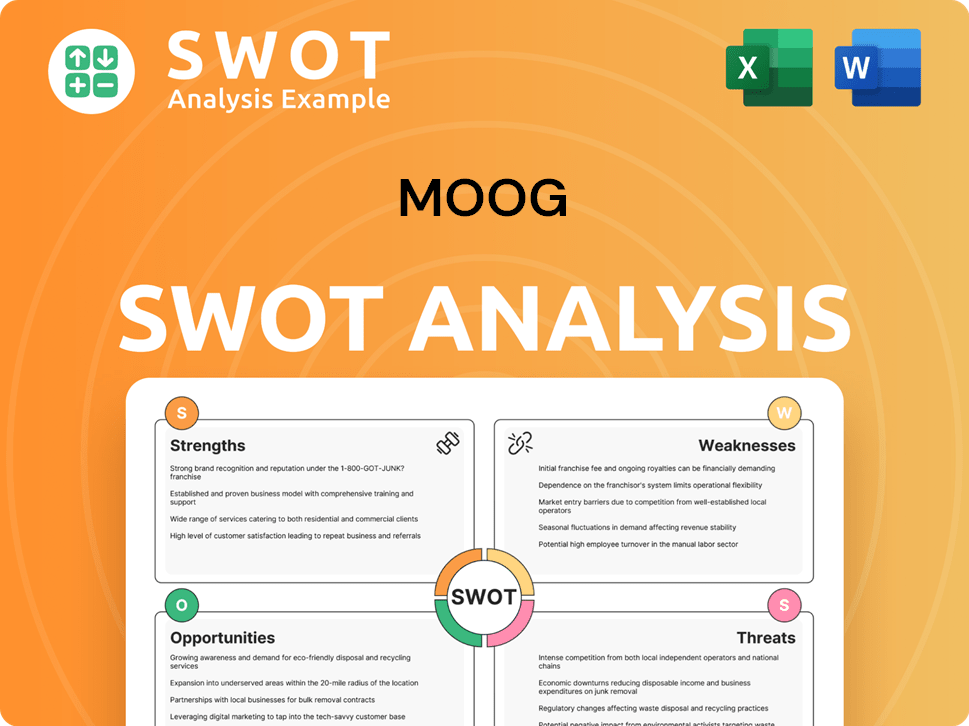
Moog SWOT Analysis
- Complete SWOT Breakdown
- Fully Customizable
- Editable in Excel & Word
- Professional Formatting
- Investor-Ready Format
Who Are the Main Competitors Challenging Moog?
The Moog competitive landscape is shaped by its operations in the aerospace, defense, and industrial sectors, where it faces a diverse array of competitors. These rivals compete on various fronts, including product quality, pricing, design, engineering capabilities, and customer support. Understanding the competitive dynamics is crucial for evaluating Moog's market share and its overall business strategy.
Moog's ability to maintain its position depends on its capacity to innovate and adapt to market changes. The company's strategic partnerships and contract wins, such as the recent agreement with Lockheed Martin, are essential for sustaining its competitive advantage. This proactive approach is vital for navigating the challenges posed by its competitors and capitalizing on growth opportunities.
The competitive environment for Moog is dynamic, with established players and emerging companies vying for market share. The company's success hinges on its ability to effectively compete in these diverse markets, which requires a keen understanding of its rivals and a robust Moog company analysis.

Key Competitors
Moog's primary competitors in precision controls manufacturing include Woodward, Inc. (WWD) and National Presto Industries, Inc. (NPK). These companies compete directly with Moog's offerings in the industrial and aerospace sectors.
Aerospace and Defense Competitors
In the aerospace and defense industries, Moog faces competition from companies such as Curtiss-Wright (CW), Textron (TXT), and Huntington Ingalls Industries (HII). These competitors often have significant resources and market presence.
Industrial Sector Rivals
Moog also competes with major players in the industrial sector, including Parker-Hannifin, Siemens, and Schneider Electric. These companies offer a wide range of products and services, posing a challenge to Moog's market share.
Competitive Factors
Competition is based on product quality, price, and design capabilities. Moog also competes on the quality of support after the sale and the timeliness of delivery. These factors are crucial for winning and retaining customers.
Emerging Threats
New players, especially in areas like humanoid robotics, could disrupt the competitive landscape. Moog's expertise in precision motion controls makes it a target for these emerging competitors.
Strategic Moves
Mergers and alliances can shift competitive dynamics, as can long-term sole-source positions. Moog's recent partnerships and contracts are vital for maintaining its competitive edge. For more information, see Target Market of Moog.
Competitive Advantages and Strategies
Moog's competitive advantages include its expertise in precision motion control and its strong relationships with key customers in the aerospace and industrial sectors. The company's strategies focus on innovation, strategic partnerships, and securing long-term contracts to maintain its market position. Moog's recent contract with Lockheed Martin, valued at over $100 million, demonstrates its ability to secure significant projects and adapt to evolving market demands.
- Innovation: Continuous investment in research and development to create advanced products.
- Strategic Partnerships: Collaborations with other companies to expand its product offerings and market reach.
- Customer Focus: Providing high-quality products and excellent customer support to build and maintain strong relationships.
- Market Diversification: Operating in multiple sectors to reduce the impact of economic downturns in any single market.
Moog PESTLE Analysis
- Covers All 6 PESTLE Categories
- No Research Needed – Save Hours of Work
- Built by Experts, Trusted by Consultants
- Instant Download, Ready to Use
- 100% Editable, Fully Customizable

What Gives Moog a Competitive Edge Over Its Rivals?
The competitive landscape for Moog Inc. is shaped by its specialization in precision motion and fluid control systems. Its strategic focus on high-performance components gives it a significant technological edge across diverse sectors. This is evident in its advanced flight controls for military and commercial aircraft, missile steering controls, satellite avionics, and industrial automation systems. A detailed Moog company analysis reveals how the company leverages its strengths to maintain a strong market position.
Moog's competitive advantages stem from its proprietary technologies and strong customer relationships. The company's expertise in designing, manufacturing, and integrating these components is a key differentiator. Moreover, Moog's consistent innovation and R&D capabilities contribute to its 'Narrow Moat - Strong narrow moat' rating, highlighting its clear competitive edge. Understanding who are Moog's main rivals is crucial for assessing its market position.
Moog's brand equity and customer loyalty are also key advantages. Long-standing relationships with major customers like Boeing, Lockheed Martin, and the U.S. Government, which accounted for 29% of its 2024 sales, underscore the trust and reliance placed on its high-performance solutions. Continuous investment in innovation and operational excellence is required to counter imitation and industry shifts. For more insights into Moog's business model, consider reading about Revenue Streams & Business Model of Moog.
Technological Edge
Moog's expertise in designing, manufacturing, and integrating high-performance components provides a significant technological edge. This is evident in its advanced flight controls, missile steering controls, and industrial automation systems. Its Fin Control Actuation System (CAS) successfully performed in a guided flight test of the Black Arrow Small Cruise Missile in November 2024.
Proprietary Technologies
Moog relies on internally developed and acquired patents, trademarks, copyrights, trade secrets, and proprietary know-how. The company's investment in facility upgrades to achieve production economies of scale, automation, and line adaptability further strengthens its operational efficiencies. These technologies are central to Moog's competitive edge.
Customer Relationships
Moog has long-standing relationships with major customers like Boeing and the U.S. Government. The company's commitment to quality of support after the sale and timeliness of delivery are crucial competitive factors. These relationships underscore the trust and reliance placed on its high-performance solutions.
Operational Adaptability
Moog adapts its operating processes to modern commercial acquisition models and tactical solutions. It is dedicated to addressing warfighter threat responsive architectures, reinforcing its position as a trusted partner. This adaptability is key to its competitive strategy in the Moog competitive landscape.
Moog's Competitive Advantages
Moog's competitive advantages are multifaceted, encompassing technological expertise, proprietary technologies, and strong customer relationships. The company's ability to innovate and adapt to market changes is crucial for maintaining its position. Understanding Moog's market share and its strategies for dealing with competition is essential.
- Specialized precision motion and fluid control systems.
- Proprietary technologies and patents.
- Strong customer relationships with key industry players.
- Adaptability to modern acquisition models.
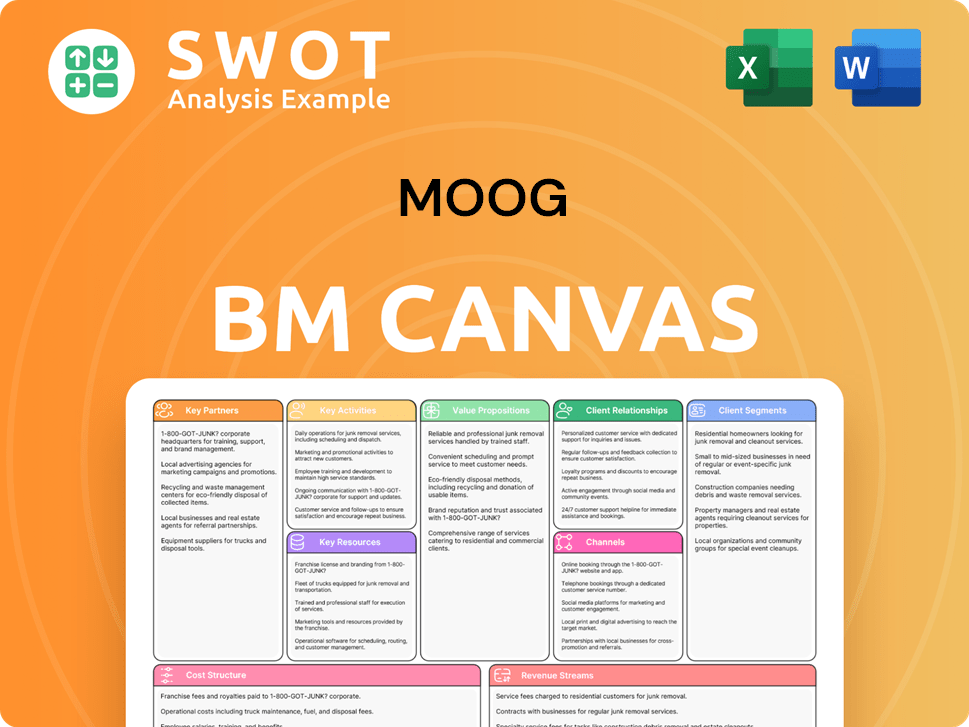
Moog Business Model Canvas
- Complete 9-Block Business Model Canvas
- Effortlessly Communicate Your Business Strategy
- Investor-Ready BMC Format
- 100% Editable and Customizable
- Clear and Structured Layout
What Industry Trends Are Reshaping Moog’s Competitive Landscape?
The competitive landscape of Moog Inc. is shaped by dynamic industry trends, presenting both opportunities and challenges. As a key player in motion control technologies, Moog's strategic positioning is influenced by advancements in aerospace, defense, and industrial sectors. Understanding these trends is crucial for assessing Moog's future prospects and its ability to maintain and grow its market share.
Moog faces risks related to supply chain disruptions and economic shifts, while also benefiting from increased military spending and technological innovations. The company's ability to navigate these complexities will determine its financial performance and competitive standing. This includes adapting to regulatory changes and managing the impact of global economic factors, such as tariffs and geopolitical tensions.
Industry Trends
The aerospace and defense industries are experiencing technological advancements, including electric aircraft and space systems, which Moog is actively involved in. The humanoid robotics industry, with a projected CAGR of 45.5% through 2030, is also a significant long-term opportunity for Moog. Regulatory changes and global economic shifts, such as increased military spending, are critical trends impacting Moog.
Future Challenges
Moog faces challenges such as aerospace supply chain disruptions and inflationary pressures, which can impact costs and profitability. Tariffs on Chinese imports pose a concern, potentially reducing operating profit by $10–$20 million in 2025. Cybersecurity threats also present risks to operations and the company's reputation. These factors influence Moog's financial performance.
Opportunities
Strong demand in aerospace and defense end markets, driven by increased military spending and aircraft production, continues to be a growth driver. Moog's strategic focus on high-growth segments, with a $2.5 billion backlog as of Q2 2025, positions it well. Strategic acquisitions, divestitures, and restructuring initiatives are helping reshape the company's portfolio.
Strategic Initiatives
Moog is actively diversifying suppliers and accelerating nearshoring to mitigate tariff risks. Investments in innovation, such as the Black Arrow Small Cruise Missile, and alignment with defense modernization efforts are also key. Management expects free cash flow to improve significantly in the latter half of fiscal year 2025, driven by optimizing working capital and investing in high-return projects.
Moog's Competitive Landscape Analysis
Moog's competitive landscape is significantly influenced by its ability to adapt to industry trends and mitigate challenges. The company's business strategy involves focusing on high-growth segments and strategic initiatives. For more insights into Moog's marketing approach, consider reading this analysis: Marketing Strategy of Moog.
- The demand in aerospace and defense end markets, driven by increased military spending, continues to be a growth driver.
- Moog's strategic focus on high-growth segments, evidenced by a $2.5 billion backlog as of Q2 2025, positions it well.
- The company is actively reshaping its portfolio through strategic acquisitions and divestitures.
- Moog's consistent investment in innovation, as seen with its work on the Black Arrow Small Cruise Missile, will be crucial for sustained growth.
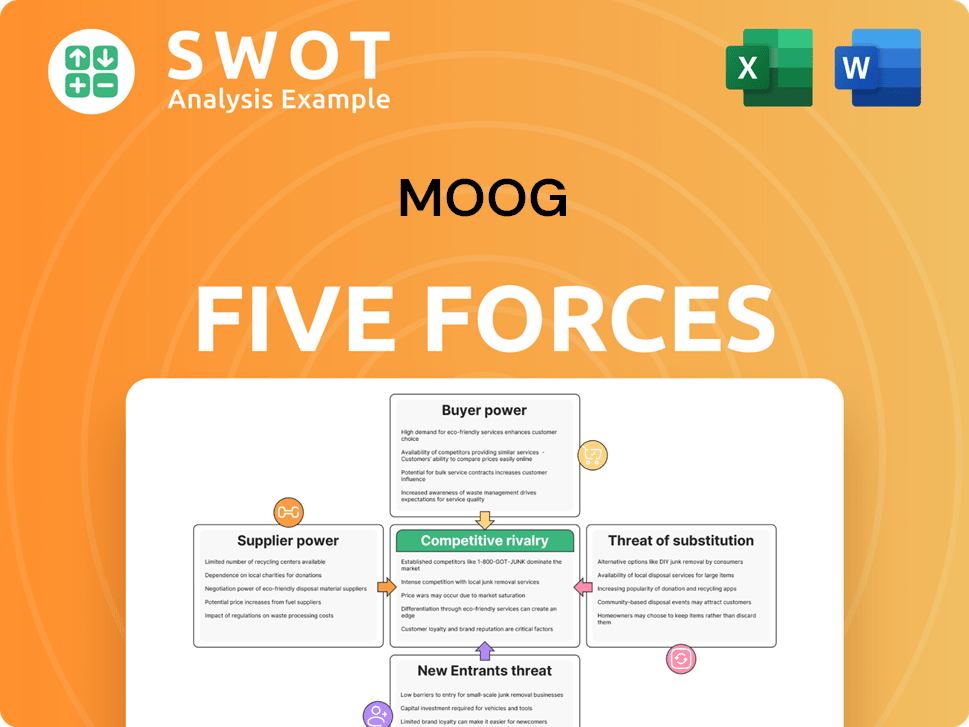
Moog Porter's Five Forces Analysis
- Covers All 5 Competitive Forces in Detail
- Structured for Consultants, Students, and Founders
- 100% Editable in Microsoft Word & Excel
- Instant Digital Download – Use Immediately
- Compatible with Mac & PC – Fully Unlocked
Related Blogs

- What are Mission Vision & Core Values of Moog Company?
- What is Growth Strategy and Future Prospects of Moog Company?
- How Does Moog Company Work?
- What is Sales and Marketing Strategy of Moog Company?
- What is Brief History of Moog Company?
- Who Owns Moog Company?
- What is Customer Demographics and Target Market of Moog Company?
Disclaimer
All information, articles, and product details provided on this website are for general informational and educational purposes only. We do not claim any ownership over, nor do we intend to infringe upon, any trademarks, copyrights, logos, brand names, or other intellectual property mentioned or depicted on this site. Such intellectual property remains the property of its respective owners, and any references here are made solely for identification or informational purposes, without implying any affiliation, endorsement, or partnership.
We make no representations or warranties, express or implied, regarding the accuracy, completeness, or suitability of any content or products presented. Nothing on this website should be construed as legal, tax, investment, financial, medical, or other professional advice. In addition, no part of this site—including articles or product references—constitutes a solicitation, recommendation, endorsement, advertisement, or offer to buy or sell any securities, franchises, or other financial instruments, particularly in jurisdictions where such activity would be unlawful.
All content is of a general nature and may not address the specific circumstances of any individual or entity. It is not a substitute for professional advice or services. Any actions you take based on the information provided here are strictly at your own risk. You accept full responsibility for any decisions or outcomes arising from your use of this website and agree to release us from any liability in connection with your use of, or reliance upon, the content or products found herein.