

Logan Property Holdings Bundle

How Does Logan Property Holdings Navigate China's Volatile Real Estate Market?
The Chinese real estate market presents both vast opportunities and considerable risks, making it crucial to understand the players shaping its trajectory. Logan Property Holdings SWOT Analysis can help you understand the company's position. Logan Group Company Limited, a major property developer, has established itself by focusing on residential properties, particularly for first-time buyers and those looking to upgrade, while also diversifying into commercial properties and property management. Established to capitalize on China's rapid urbanization, Logan Group has become a key player, especially within the dynamic Guangdong-Hong Kong-Macau Greater Bay Area.

Understanding the competitive landscape of Logan Property Holdings is vital for investors and analysts alike. This analysis will explore how Logan Group competes within the real estate market, identifying its main rivals and the factors that differentiate it. Examining Logan Property Holdings' market share, competitive advantages, and recent projects offers critical insights into its strategic positioning. This deep dive into Logan Group's business model and growth strategy will provide a comprehensive market analysis.
Where Does Logan Property Holdings’ Stand in the Current Market?
The market position of Logan Group Company Limited within the Chinese property development sector is significant, particularly in the Guangdong-Hong Kong-Macau Greater Bay Area. The company has historically been recognized among the top developers in its target regions. Its primary focus is on residential properties, catering to a diverse customer base, including first-time homebuyers and those seeking upgrades.
In addition to residential developments, Logan Group has expanded into commercial properties, hotels, and property management services, broadening its revenue streams and market reach. This diversification helps in navigating the cyclical nature of the real estate market. The company's strategic focus on the Greater Bay Area has allowed it to leverage regional economic growth and urban development initiatives, providing a competitive advantage through localized expertise and established relationships.
Over time, Logan has adapted its positioning, responding to market demands by offering a range of residential products from affordable housing to more premium developments. The company's financial health, while subject to broader challenges facing the Chinese property sector, is supported by its strategic land bank and project pipeline. For more details, you can read about the Growth Strategy of Logan Property Holdings.
 Market Share and Ranking
While specific market share figures for 2024-2025 are dynamic, Logan Group has consistently aimed to maintain a strong presence in its core markets. The company's position is influenced by its project pipeline, sales performance, and overall economic conditions. It's crucial to monitor quarterly and annual reports for the most current market share data.
Product and Service Portfolio
Logan Group's primary offerings include residential properties, ranging from affordable to luxury segments. They also offer commercial properties, hotels, and property management services, diversifying their revenue streams. This diversified portfolio helps in attracting a wider customer base and mitigating risks associated with market fluctuations.
Geographic Focus
The Greater Bay Area remains a strategic focus for Logan Group, leveraging regional economic growth and urban development. This concentration allows for specialized knowledge and established relationships. The company's success is closely tied to the economic performance of this region.
Financial Performance
In 2023, Logan Group reported contracted sales of approximately RMB 36.1 billion. Recent financial strategies have focused on asset disposal and debt restructuring. The company's financial health is subject to the broader challenges affecting the Chinese property sector, including market volatility and regulatory changes.

Key Strengths and Challenges
Logan Group's strengths include its strong presence in the Greater Bay Area and a diversified portfolio. Challenges include the overall slowdown in the Chinese real estate market and debt management. The company's ability to adapt to changing market conditions and maintain financial stability is crucial.
- Strategic Land Bank: A significant land bank supports future projects.
- Market Adaptation: Ability to adjust product offerings to meet diverse customer needs.
- Financial Restructuring: Ongoing efforts to manage debt and improve financial health.
- Regional Focus: Concentration in the Greater Bay Area provides a competitive edge.
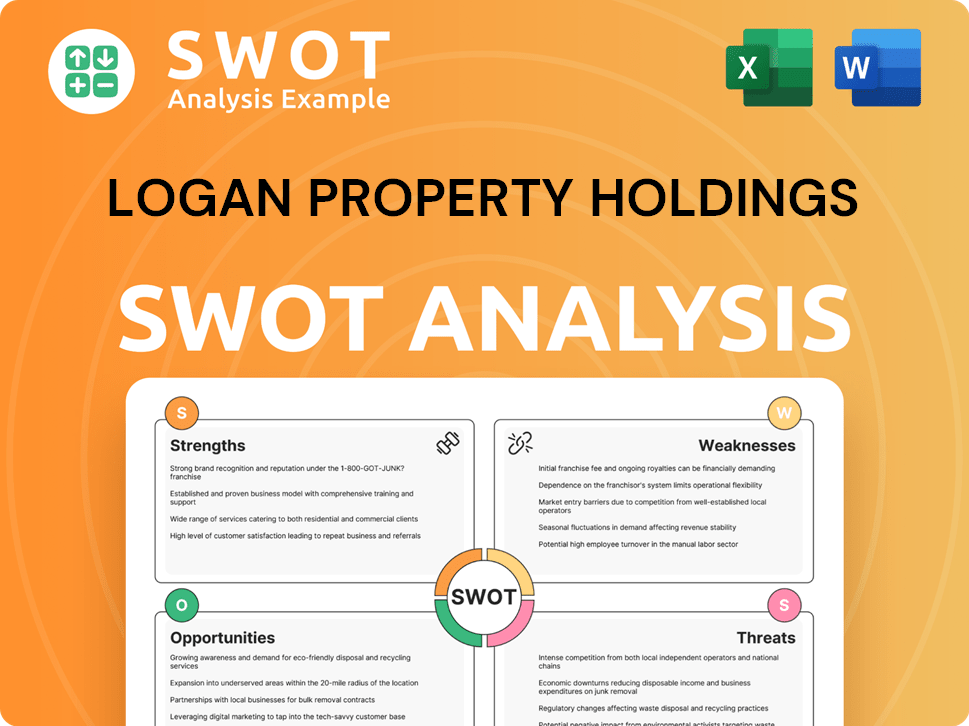
Logan Property Holdings SWOT Analysis
- Complete SWOT Breakdown
- Fully Customizable
- Editable in Excel & Word
- Professional Formatting
- Investor-Ready Format
Who Are the Main Competitors Challenging Logan Property Holdings?
The competitive landscape for Logan Property Holdings is intense, shaped by a dynamic Chinese real estate market. The company faces both direct and indirect competitors, ranging from massive national developers to more specialized regional players. Understanding these competitors is crucial for evaluating Logan Property Holdings' market position and future prospects. A thorough market analysis reveals the key challenges and opportunities within this highly competitive environment.
The company's success hinges on its ability to differentiate itself amidst strong rivals. The competitive dynamics are further complicated by ongoing deleveraging efforts and financial restructuring within the Chinese property sector. This creates both risks and opportunities, as some competitors face significant challenges while others may seek to expand their market share. For investors and stakeholders, assessing the competitive landscape is essential for informed decision-making regarding Owners & Shareholders of Logan Property Holdings.
Direct competitors of Logan Property Holdings often include major developers with a significant presence in the Guangdong-Hong Kong-Macau Greater Bay Area. These companies challenge Logan through their scale, diversified portfolios, brand recognition, and extensive land banks. Indirect competition comes from smaller, specialized developers and the evolving PropTech sector.

China Vanke Co., Ltd.
China Vanke, a state-backed developer, boasts a broad national footprint. It has strong financial backing, enabling large-scale projects and investments in new technologies. In 2024, Vanke's contracted sales reached approximately CNY 376.1 billion, demonstrating its continued market presence.
China Evergrande Group
China Evergrande Group, although currently undergoing restructuring, historically competed on a massive scale. Its vast project portfolio and extensive land holdings were significant factors. The company's financial difficulties have reshaped the competitive landscape.
Country Garden Holdings Company Limited
Country Garden historically competed on volume and a strong presence in lower-tier cities. Despite recent financial challenges, it remains a major player. In 2024, Country Garden reported contracted sales of approximately CNY 154.8 billion.
Poly Developments and Holdings Group Co., Ltd.
Poly Developments and Holdings Group competes with a diversified portfolio and strong government backing. It focuses on various property types, including residential, commercial, and mixed-use developments. The company's revenue in 2024 reached approximately CNY 272.7 billion.
Smaller, Specialized Developers
These developers focus on niche markets or urban regeneration projects within the Greater Bay Area. They may offer specialized products or target specific customer segments. Their agility can pose a competitive challenge.
PropTech Companies and New Business Models
PropTech companies and build-to-rent initiatives indirectly compete by altering consumer preferences. They introduce innovative technologies and business models. This includes companies focusing on smart home technologies and online property platforms.
Key Competitive Factors
The competitive landscape is shaped by several factors that influence the success of Logan Property Holdings and its rivals. These include brand recognition, access to capital, land bank size, project diversification, and operational efficiency.
- Brand Recognition: Established brands often have a competitive edge.
- Access to Capital: Strong financial backing enables developers to undertake larger projects.
- Land Bank Size: Extensive land holdings provide a pipeline for future projects.
- Project Diversification: A diverse portfolio reduces risk and caters to different market segments.
- Operational Efficiency: Efficient operations improve profitability and competitiveness.
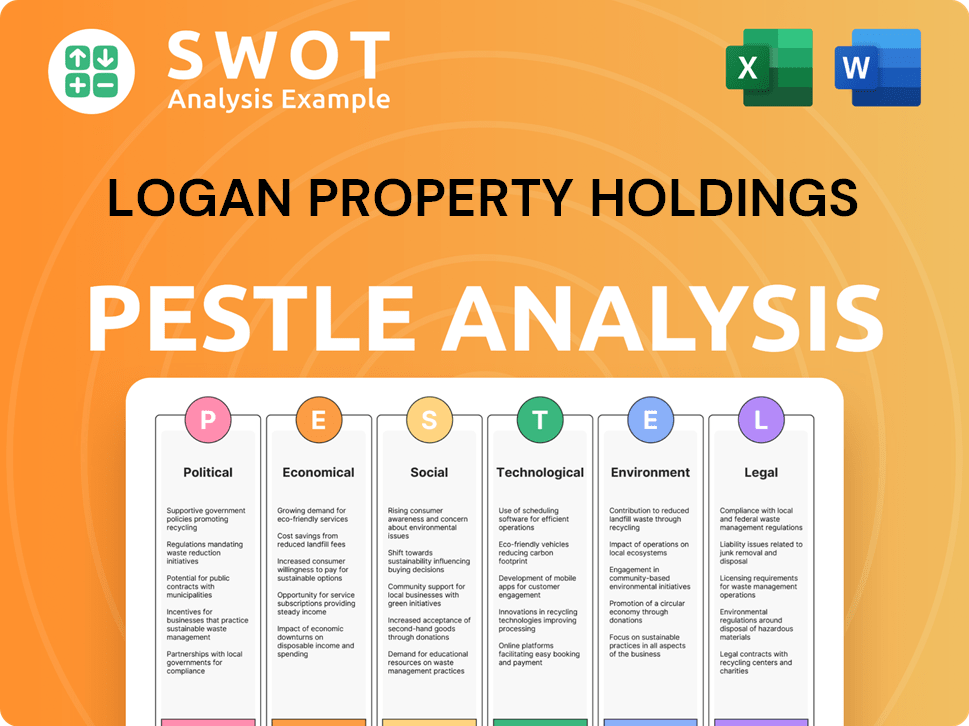
Logan Property Holdings PESTLE Analysis
- Covers All 6 PESTLE Categories
- No Research Needed – Save Hours of Work
- Built by Experts, Trusted by Consultants
- Instant Download, Ready to Use
- 100% Editable, Fully Customizable
What Gives Logan Property Holdings a Competitive Edge Over Its Rivals?
Understanding the Competitive Landscape of Logan Property Holdings requires a close look at its core strengths. The company has carved out a significant niche in the Chinese real estate market. Its strategic focus and operational efficiency provide a solid foundation for sustained performance.
A key aspect of Logan Property Holdings' strategy is its deep market penetration within the Guangdong-Hong Kong-Macau Greater Bay Area, which has been a primary area of focus. This regional specialization allows Logan to develop extensive local knowledge. The company's expertise in residential property development allows it to cater to a consistent and substantial demand segment.
Furthermore, Logan Group has historically demonstrated a capability in land acquisition and development. Its integrated business model, which includes commercial properties, hotels, and property management services, provides diversification and potential for recurring revenue streams. This diversification enhances its financial resilience compared to purely residential developers.
Strategic Focus
Logan Property Holdings concentrates its efforts within the Guangdong-Hong Kong-Macau Greater Bay Area. This regional focus allows for efficient supply chain networks. This strategic concentration supports timely project completion and cost control.
Market Expertise
The company has a strong track record in developing residential properties. Logan caters to first-time homebuyers and those looking to upgrade. This specialization builds a solid brand reputation within a key demographic.
Integrated Business Model
Logan Property Holdings operates an integrated business model. This model includes commercial properties, hotels, and property management. This diversification provides multiple revenue streams.
Financial Resilience
The integrated model enhances Logan's financial resilience. The company's ability to engage in debt restructuring demonstrates a proactive approach. This strategic maneuverability contributes to maintaining customer confidence.
Key Competitive Advantages
Logan Property Holdings benefits from several competitive advantages. These include a strong regional focus and expertise in residential property development. The company's integrated business model also contributes to its resilience.
- Strategic Focus: Concentrated efforts in the Greater Bay Area.
- Market Specialization: Expertise in residential property for specific demographics.
- Integrated Model: Diversified revenue streams from commercial and property management.
- Financial Management: Proactive debt restructuring and asset disposal strategies.
For an in-depth look at how Logan Property Holdings generates revenue, consider reading the article Revenue Streams & Business Model of Logan Property Holdings.
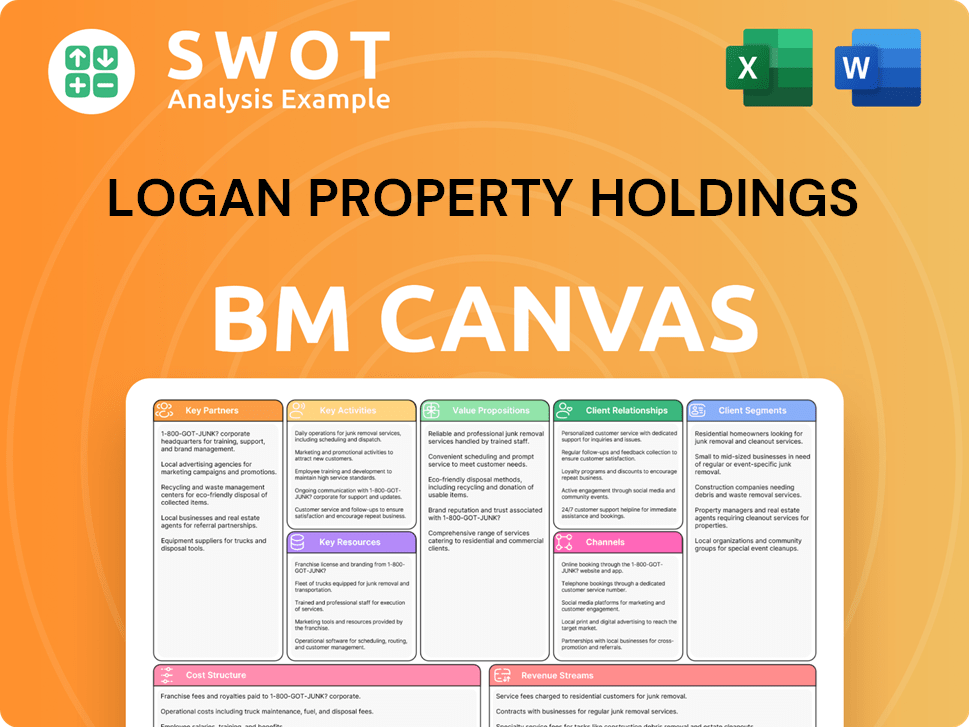
Logan Property Holdings Business Model Canvas
- Complete 9-Block Business Model Canvas
- Effortlessly Communicate Your Business Strategy
- Investor-Ready BMC Format
- 100% Editable and Customizable
- Clear and Structured Layout
What Industry Trends Are Reshaping Logan Property Holdings’s Competitive Landscape?
The Chinese real estate market is currently undergoing a significant transformation, impacting companies like Logan Property Holdings. This shift is driven by government deleveraging efforts and evolving consumer preferences. The Brief History of Logan Property Holdings highlights the company's journey through these changing market dynamics.
Logan Group faces challenges related to financing, debt repayment, and maintaining liquidity, as evidenced by its financial performance. The company's ability to adapt to these shifts while optimizing project delivery and financial management will be crucial for its long-term competitive position in the real estate market.
Industry Trends
The primary trend is the government's deleveraging campaign, leading to tighter financing and increased scrutiny on debt levels. Consumer preferences are evolving towards higher-quality, greener, and technologically advanced properties. Regulatory changes, particularly those focused on housing affordability, are also shaping the market.
Future Challenges
Challenges include fundraising difficulties, debt repayment pressures, and maintaining liquidity. Declining property sales, increased competition from state-backed developers, and asset value depreciation pose additional risks. The company's financial results for 2023, showing a net loss of RMB 10.9 billion, highlight these challenges.
Opportunities
Opportunities lie in focusing on the Greater Bay Area, strategic partnerships, and urban renewal projects. Potential government support for specific housing initiatives could also provide growth avenues. The company's restructuring support agreement with bondholders in 2024 indicates ongoing efforts to navigate these opportunities.
Strategic Adaptations
Logan Group is likely to continue asset disposal, debt restructuring, and focusing on project completion to generate cash flow. Adapting to macroeconomic and regulatory shifts while optimizing project delivery and financial management is crucial. The company's focus on the Greater Bay Area remains a key strategic element.
Key Strategies for Logan Group
To maintain its competitive position, Logan Property Holdings must navigate the evolving real estate market by focusing on several key areas. These strategic adaptations are essential for long-term success and resilience against market pressures. The company's focus on asset disposal, debt restructuring, and project completion is a key strategy.
- Prioritize debt restructuring to manage financial obligations effectively.
- Focus on completing existing projects to generate cash flow.
- Capitalize on opportunities within the Greater Bay Area.
- Adapt to changing consumer preferences by innovating in design and technology.
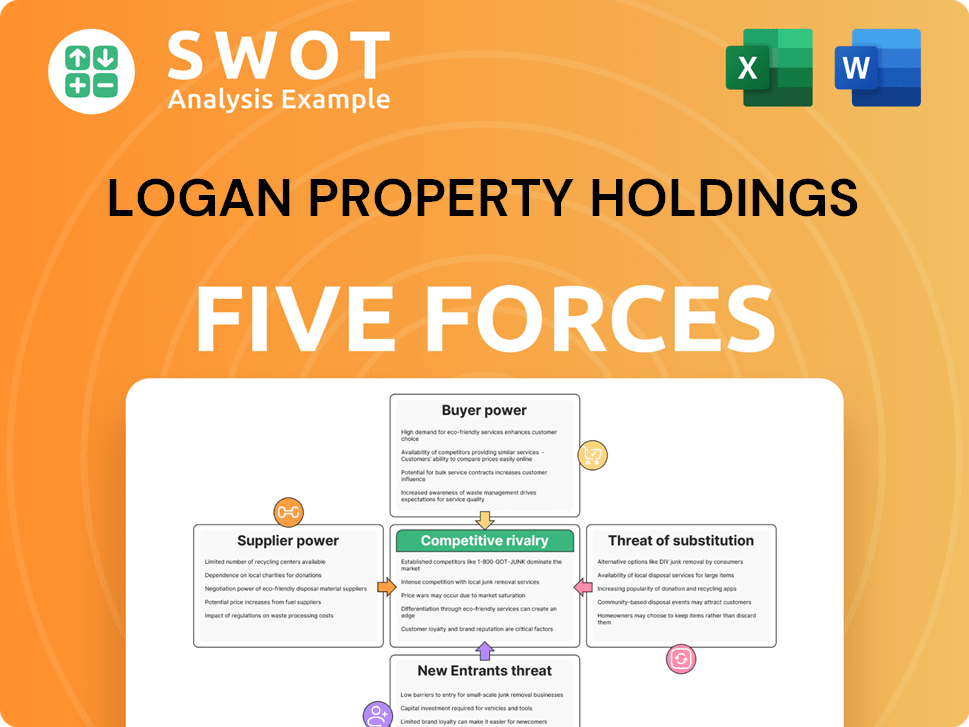
Logan Property Holdings Porter's Five Forces Analysis
- Covers All 5 Competitive Forces in Detail
- Structured for Consultants, Students, and Founders
- 100% Editable in Microsoft Word & Excel
- Instant Digital Download – Use Immediately
- Compatible with Mac & PC – Fully Unlocked
Related Blogs

- What are Mission Vision & Core Values of Logan Property Holdings Company?
- What is Growth Strategy and Future Prospects of Logan Property Holdings Company?
- How Does Logan Property Holdings Company Work?
- What is Sales and Marketing Strategy of Logan Property Holdings Company?
- What is Brief History of Logan Property Holdings Company?
- Who Owns Logan Property Holdings Company?
- What is Customer Demographics and Target Market of Logan Property Holdings Company?
Disclaimer
All information, articles, and product details provided on this website are for general informational and educational purposes only. We do not claim any ownership over, nor do we intend to infringe upon, any trademarks, copyrights, logos, brand names, or other intellectual property mentioned or depicted on this site. Such intellectual property remains the property of its respective owners, and any references here are made solely for identification or informational purposes, without implying any affiliation, endorsement, or partnership.
We make no representations or warranties, express or implied, regarding the accuracy, completeness, or suitability of any content or products presented. Nothing on this website should be construed as legal, tax, investment, financial, medical, or other professional advice. In addition, no part of this site—including articles or product references—constitutes a solicitation, recommendation, endorsement, advertisement, or offer to buy or sell any securities, franchises, or other financial instruments, particularly in jurisdictions where such activity would be unlawful.
All content is of a general nature and may not address the specific circumstances of any individual or entity. It is not a substitute for professional advice or services. Any actions you take based on the information provided here are strictly at your own risk. You accept full responsibility for any decisions or outcomes arising from your use of this website and agree to release us from any liability in connection with your use of, or reliance upon, the content or products found herein.