

Kubota Bundle

How Does Kubota Dominate Its Industry?
From humble beginnings in 1890, Kubota Corporation has transformed from a metal casting business into a global industrial powerhouse. With revenues in the trillions and a presence in over 130 countries, Kubota's impact on agriculture, construction, and environmental solutions is undeniable. But how does this Japanese giant maintain its competitive edge?

To understand Kubota's success, we'll delve into its Kubota SWOT Analysis, examining its competitive landscape, including key Kubota competitors and the company's strategic positioning. This Kubota market analysis will reveal how Kubota tractors and other Kubota equipment stack up against rivals, exploring its market share, competitive advantages, and strategies for continued growth in the Kubota industry. We will also explore Kubota's global market position and recent performance, including the latest financial data from March 31, 2025, to provide a comprehensive view of its competitive dynamics.
Where Does Kubota’ Stand in the Current Market?
Kubota Corporation maintains a strong market position, especially in compact tractors (up to 40 horsepower), mini-excavators, and diesel engines under 100 horsepower. It leads in North America, Japan, and Thailand, which together account for approximately 70% of its machinery segment sales. Kubota's diverse product lines include agricultural and construction equipment, engines, and industrial products.
For the year ended December 31, 2024, Kubota's revenue was ¥3,016.3 billion, with overseas revenue representing 79.0% of the total. For the three months ended March 31, 2025, revenue was ¥712.6 billion, although this was an 8.1% decrease compared to the same period the previous year. The company's trailing 12-month revenue as of March 31, 2025, was $19.4 billion.
Kubota's revenue growth is expected to slow to 0.4% annually until the end of 2025, down from a historical 12% p.a. over the last five years. However, it projects a 5% revenue growth in fiscal 2025, driven by new home sales and increased farming activity. This demonstrates Kubota's resilience and strategic adaptability within the Kubota competitive landscape.
 Market Leadership
Kubota is a market leader in compact tractors, mini-excavators, and diesel engines in key regions. These regions include North America, Japan, and Thailand. The company's strong market position is supported by its diverse product offerings and global presence.
Financial Performance
Kubota reported revenues of JPY 3,020.7 billion in FY2023, showcasing robust growth. The company's revenue for the year ended December 31, 2024, was ¥3,016.3 billion. Kubota's revenue for the three months ended March 31, 2025, was ¥712.6 billion, though there was a decrease from the prior year.
Strategic Initiatives
Kubota is focusing on digital transformation and expanding its product lineup. It plans to introduce a new Compact Track Loader (CTL) in 2025. The company is also targeting emerging markets like India to boost its market share.
Market Outlook
Kubota anticipates market recovery in 2026 for construction machinery globally. This is driven by urbanization and public works projects. While there are near-term headwinds, Kubota is strategically positioned for long-term growth.
Kubota's strategies for market dominance include expanding its product range and focusing on emerging markets. For example, the introduction of a new Compact Track Loader (CTL) in 2025 is designed to increase market share. Furthermore, the company is actively pursuing digital transformation to enhance its operations. To gain further insight into the company's growth strategies, you can read more in the Growth Strategy of Kubota. The company's competitive pricing strategies and distribution network are also key factors in maintaining its strong position within the Kubota industry.

Key Market Highlights
Kubota's market position is characterized by its leadership in key product categories and geographic regions. The company's financial performance and strategic initiatives are focused on sustained growth and market expansion. Kubota faces challenges and opportunities within the competitive landscape.
- Market leader in compact tractors and mini-excavators.
- Focus on digital transformation and product expansion.
- Targeting emerging markets like India for growth.
- Anticipated market recovery in 2026 for construction machinery.
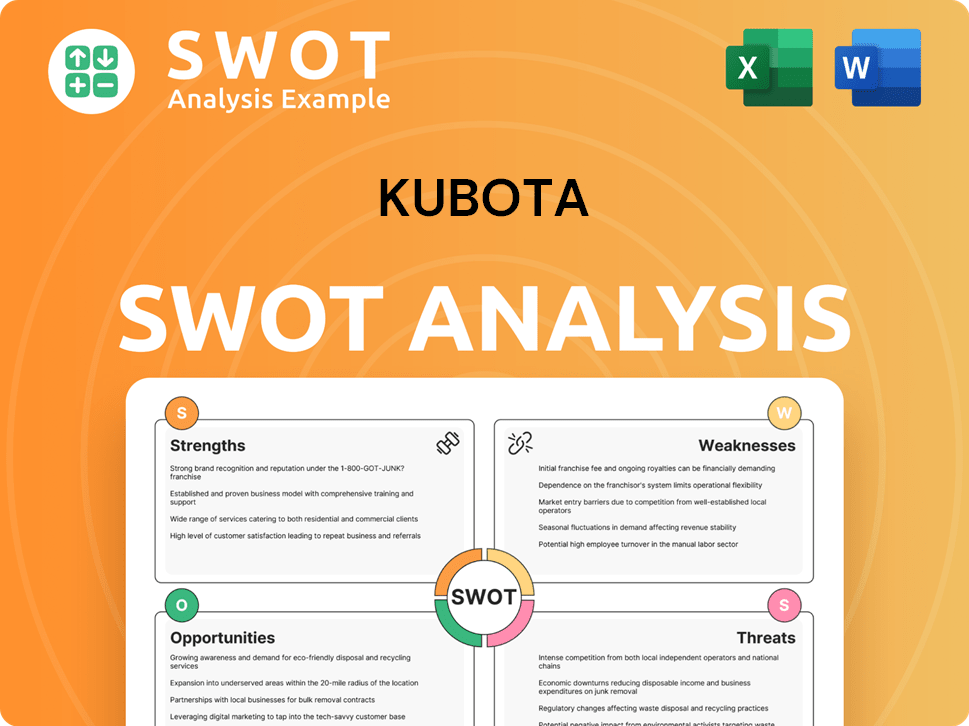
Kubota SWOT Analysis
- Complete SWOT Breakdown
- Fully Customizable
- Editable in Excel & Word
- Professional Formatting
- Investor-Ready Format
Who Are the Main Competitors Challenging Kubota?
The Kubota competitive landscape is shaped by a diverse array of competitors across its various product segments, from agriculture to construction equipment. Key rivals challenge Kubota through innovation, pricing strategies, and extensive distribution networks. The industry dynamics are further influenced by technological advancements and market shifts, requiring Kubota to adapt and innovate to maintain its market position.
Kubota's competitive environment is characterized by both direct and indirect competitors. These companies compete on factors such as product offerings, technological advancements, and global market presence. The company faces continuous pressure to innovate and offer competitive pricing to maintain or grow its market share.
The competitive battles within the industry are evident through market share fluctuations and product introductions. The global agriculture equipment market is expected to experience a slight decrease in year-on-year deliveries for 2025, which intensifies the competitive environment. Kubota's strategic responses, such as showcasing advanced technologies at industry events and forming strategic partnerships, are crucial for maintaining its competitive edge.

Key Competitors
Kubota's primary competitors include John Deere, Caterpillar, and Komatsu. These companies are major players in the agricultural and construction machinery sectors.
Agricultural Equipment Rivals
Additional significant competitors in the agricultural equipment market include New Holland, AGCO Corporation, CLAAS Group, and CNH Industrial. These companies compete with Kubota in terms of product offerings, pricing, and market share.
Construction Equipment Competitors
Caterpillar and Komatsu are dominant forces in the construction and mining equipment sectors. They offer extensive product lines and global distribution networks.
Other Notable Competitors
YANMAR Holdings, Xugong Group Construction Machinery, Sampo Rosenlew, Iseki & Co., Wacker Neuson, Astec Industries, and SDF Group also pose competitive challenges. These companies operate in specific segments, offering specialized products.
Market Share Dynamics
While Kubota has seen growth in its Compact Track Loader (CTL) market share, increasing by 2.6 points in the past year, it faces continuous price competition in the compact tractor market.
Technological and Strategic Responses
Kubota is focusing on advanced automation and data integration, showcasing electric tractor concepts and autonomous equipment. Strategic partnerships, such as the one with Liebherr, are also shaping the competitive landscape.
Competitive Strategies and Market Trends
The Kubota competitive landscape is influenced by several factors, including market share dynamics, technological advancements, and strategic partnerships. The company's ability to adapt to these changes will be crucial for its continued success.
- Market Share Analysis: Kubota's market share in the Compact Track Loader (CTL) segment has increased, while it faces price competition in the compact tractor market.
- Industry Trends: The agriculture equipment market is expected to see a slight decrease in deliveries in 2025 due to subdued demand and pressure on farm incomes.
- Technological Advancements: The industry is moving towards electric and sustainable fuel-powered equipment. Kubota showcased an electric tractor concept and autonomous equipment at CES 2025.
- Strategic Partnerships: Kubota has partnered with Liebherr for OEM supply and procured excavators from Sumitomo Construction Machinery to expand its product offerings.
- Competitive Pricing: Kubota's pricing strategies are crucial in the compact tractor market, where competition is intense.
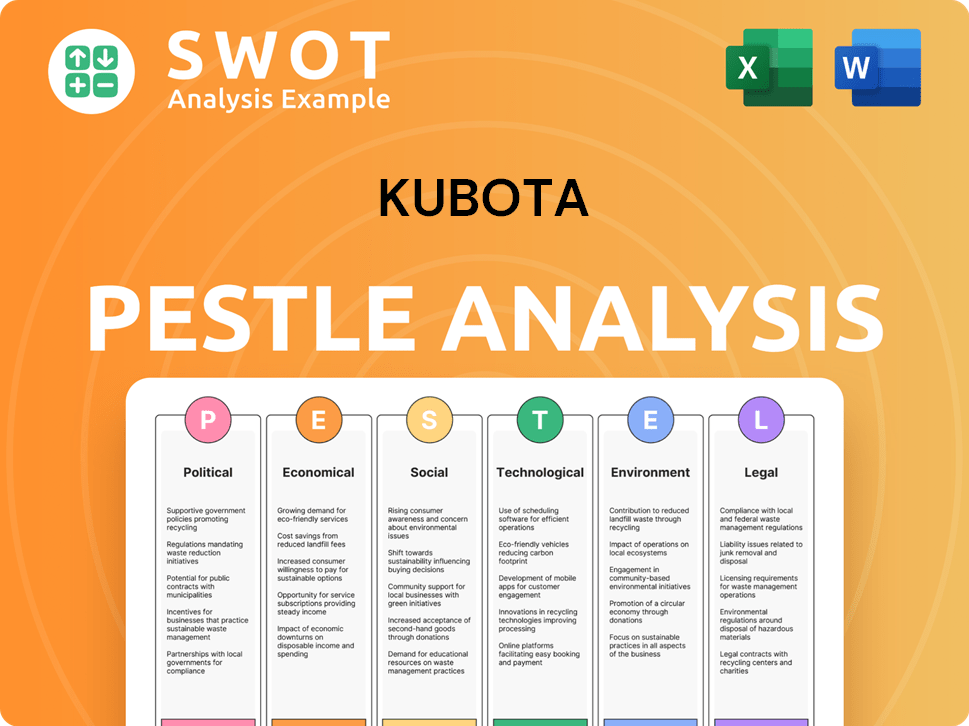
Kubota PESTLE Analysis
- Covers All 6 PESTLE Categories
- No Research Needed – Save Hours of Work
- Built by Experts, Trusted by Consultants
- Instant Download, Ready to Use
- 100% Editable, Fully Customizable
What Gives Kubota a Competitive Edge Over Its Rivals?
The competitive landscape for Kubota Corporation is shaped by its significant advantages in the agricultural and construction machinery sectors. The company has cultivated a robust global dealer network and strong brand equity, which are crucial for after-sales service and customer retention. This established support structure creates high switching costs for customers, as they face additional expenses when changing brands. Understanding the Brief History of Kubota provides context for its current market position.
Kubota's competitive edge also comes from its proprietary technologies and continuous investment in research and development. The company is a leading manufacturer of compact engines, known for fuel efficiency and durability. In 2024, Kubota tractors showed a 20% reduction in fuel consumption compared to similar models. Kubota is actively investing in innovative agricultural technologies, including its 'Smart Agriculture Grand Design' initiative, and showcased advanced innovations at CES 2025.
Economies of scale contribute to cost efficiencies, especially in key markets like North America, Japan, and Thailand, where Kubota leads in compact tractors and mini-excavators. Kubota's manufacturing capabilities and commitment to R&D further solidify its market standing. These advantages are generally sustainable due to the significant investments needed to build comparable dealer networks and develop proprietary technology. However, they face threats from rapid technological imitation and evolving industry shifts towards electrification and autonomous solutions, which Kubota is actively addressing through R&D and strategic partnerships.
Strong Dealer Network
Kubota's extensive global dealer network ensures excellent after-sales service and builds customer loyalty. This network is a key factor in the company's ability to maintain customer relationships. The established support system creates high switching costs for customers.
Technological Innovation
Kubota continuously invests in research and development, leading to innovations in engine technology and agricultural machinery. Its engines are known for fuel efficiency and durability. Recent advancements include electric tractor concepts and autonomous solutions.
Economies of Scale
Kubota benefits from economies of scale, particularly in its core markets. This leads to cost efficiencies and competitive pricing. The company's manufacturing capabilities and extensive product portfolio enhance its market position.
Brand Reputation
Kubota has a strong brand reputation built on a long history of innovation and quality. This reputation fosters trust and loyalty among customers. The company's commitment to meeting customer needs further solidifies its market standing.
Key Advantages in the Kubota Competitive Landscape
Kubota's competitive advantages are multifaceted, encompassing a strong global presence, technological innovation, and operational efficiency. These factors contribute to its ability to compete effectively in the agricultural and construction machinery markets. Understanding these advantages is crucial for analyzing the Kubota competitive landscape.
- Robust Dealer Network: Provides superior after-sales service and builds customer loyalty.
- Technological Leadership: Continuous investment in R&D, leading to fuel-efficient engines and innovative machinery.
- Economies of Scale: Benefits from cost efficiencies in key markets, supporting competitive pricing.
- Strong Brand Equity: A long-standing reputation for quality and innovation, fostering customer trust.
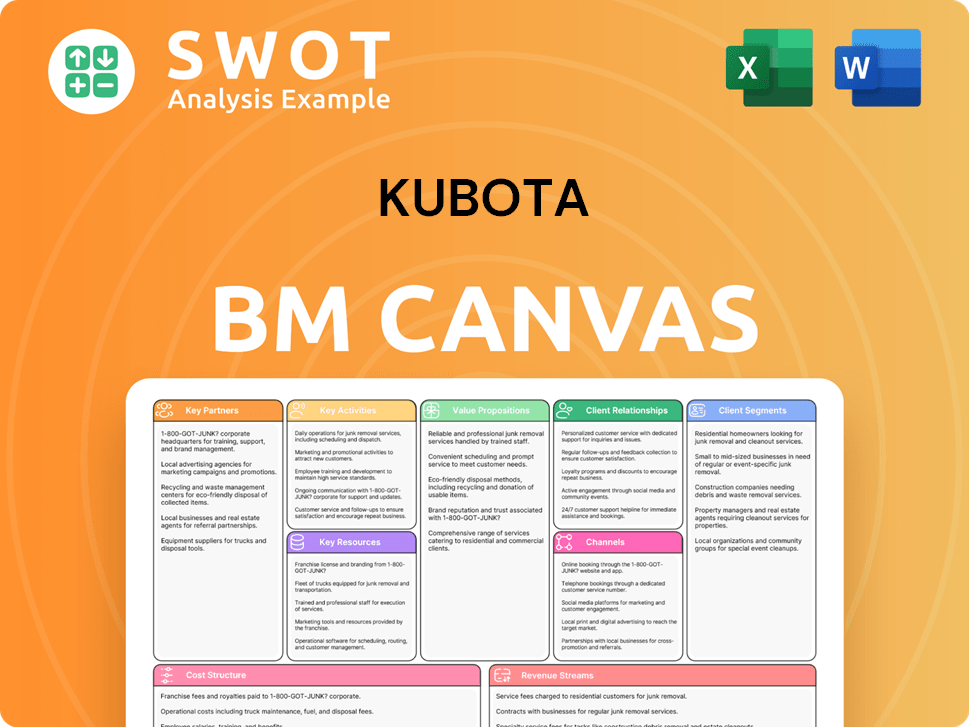
Kubota Business Model Canvas
- Complete 9-Block Business Model Canvas
- Effortlessly Communicate Your Business Strategy
- Investor-Ready BMC Format
- 100% Editable and Customizable
- Clear and Structured Layout
What Industry Trends Are Reshaping Kubota’s Competitive Landscape?
The Revenue Streams & Business Model of Kubota is significantly influenced by the evolving competitive landscape of the agricultural and construction equipment industries. The company faces a dynamic environment shaped by technological advancements, sustainability demands, and fluctuating economic conditions. Understanding these factors is crucial for assessing Kubota's market position, identifying potential risks, and evaluating future growth prospects. A comprehensive analysis includes an examination of industry trends, challenges, and emerging opportunities.
The agricultural equipment market is poised for substantial growth, driven by the rising global population and the need for increased food production. Kubota's strategic focus on innovation, market expansion, and supply chain management will be critical in maintaining its competitive edge. The company's proactive approach to R&D and technological integration will ensure long-term profitability and market leadership.
Industry Trends
The industry is witnessing a surge in smart agriculture, digital transformation, and automation, with a focus on sustainable solutions. Kubota is at the forefront, showcasing electric tractors, autonomous sprayers, and robotic pruners. Strategic alliances, such as the one with Microsoft, are driving digital transformation using generative AI and communication tools. The company is also expanding its presence in emerging markets, particularly India, and accelerating the introduction of new models to capitalize on modernization efforts.
Future Challenges
The global agricultural equipment market is projected to see a slight decrease in year-on-year deliveries for 2025 due to subdued demand and pressure on farm incomes. Rising material and logistics costs, along with geopolitical tensions and climate change, pose significant challenges. For instance, Kubota's construction equipment business experienced a 16.3% decline in sales for March 2025, due to increased costs.
Opportunities
The increasing global population, expected to reach 10 billion by 2050, is driving up food production demands. The agricultural machinery market is anticipated to grow at a CAGR of approximately 5% through 2030. Emerging markets, such as India, offer substantial growth potential as agricultural practices modernize. The burgeoning global demand for biomass energy also presents an avenue for expansion, aligning with Kubota's commitment to sustainability.
Strategies
Kubota is investing in innovative agricultural technologies, expanding its market presence in emerging economies, and enhancing global supply chain management. The company plans to strengthen its production structure for construction equipment and basic tractors, anticipating market recovery from 2026 onward and aiming for a 30% market share in major products. The Mid-Term Business Plan 2025 emphasizes ESG management, foundational growth, business expansion, profit margin improvements, and sustainable growth infrastructure, all supported by digital transformation.
Kubota Competitive Landscape Analysis
The Kubota competitive landscape is shaped by technological advancements, sustainability demands, and economic fluctuations. Key competitors include major players in the agricultural and construction equipment sectors. Kubota's strategies focus on innovation, market expansion, and supply chain management to navigate challenges and capitalize on opportunities.
- Focus on smart agriculture and digital transformation to enhance product offerings.
- Expansion into emerging markets, particularly India, to tap into high-growth potential.
- Strengthening supply chain management to mitigate rising costs and geopolitical risks.
- Investing in R&D and technological integration to maintain a competitive edge.
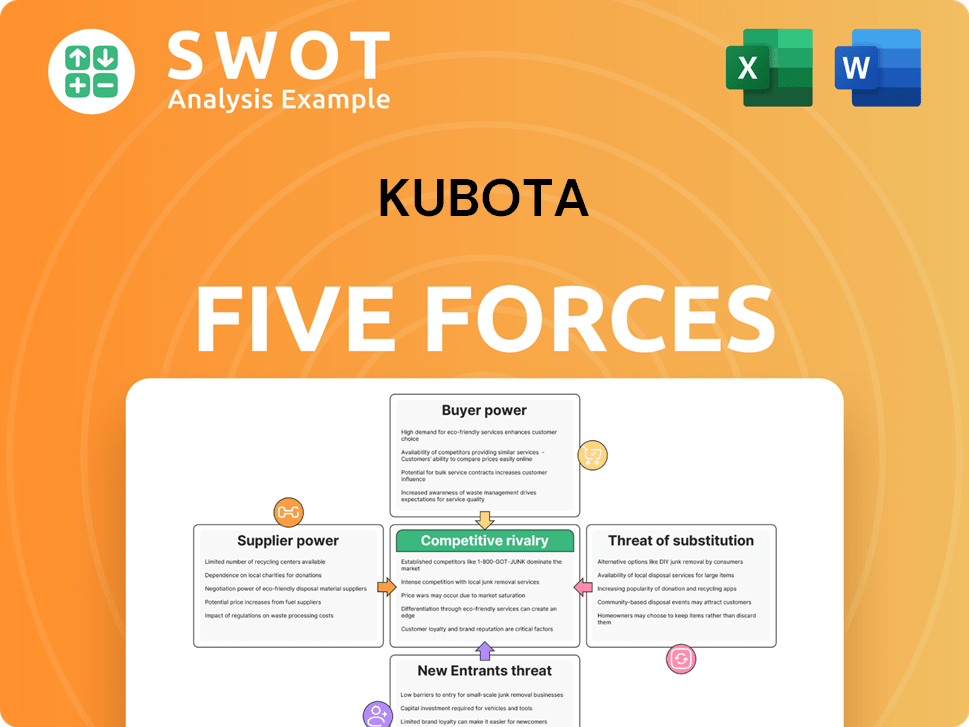
Kubota Porter's Five Forces Analysis
- Covers All 5 Competitive Forces in Detail
- Structured for Consultants, Students, and Founders
- 100% Editable in Microsoft Word & Excel
- Instant Digital Download – Use Immediately
- Compatible with Mac & PC – Fully Unlocked
Related Blogs

- What are Mission Vision & Core Values of Kubota Company?
- What is Growth Strategy and Future Prospects of Kubota Company?
- How Does Kubota Company Work?
- What is Sales and Marketing Strategy of Kubota Company?
- What is Brief History of Kubota Company?
- Who Owns Kubota Company?
- What is Customer Demographics and Target Market of Kubota Company?
Disclaimer
All information, articles, and product details provided on this website are for general informational and educational purposes only. We do not claim any ownership over, nor do we intend to infringe upon, any trademarks, copyrights, logos, brand names, or other intellectual property mentioned or depicted on this site. Such intellectual property remains the property of its respective owners, and any references here are made solely for identification or informational purposes, without implying any affiliation, endorsement, or partnership.
We make no representations or warranties, express or implied, regarding the accuracy, completeness, or suitability of any content or products presented. Nothing on this website should be construed as legal, tax, investment, financial, medical, or other professional advice. In addition, no part of this site—including articles or product references—constitutes a solicitation, recommendation, endorsement, advertisement, or offer to buy or sell any securities, franchises, or other financial instruments, particularly in jurisdictions where such activity would be unlawful.
All content is of a general nature and may not address the specific circumstances of any individual or entity. It is not a substitute for professional advice or services. Any actions you take based on the information provided here are strictly at your own risk. You accept full responsibility for any decisions or outcomes arising from your use of this website and agree to release us from any liability in connection with your use of, or reliance upon, the content or products found herein.