

IWG Bundle

Can IWG Thrive in the Cutthroat Flexible Workspace Arena?
The future of work is flexible, and IWG is at the forefront of this revolution. But in a market brimming with innovation and ambitious rivals, understanding the IWG SWOT Analysis is crucial for navigating the complexities of the IWG competitive landscape. This analysis will dissect the company's strategic positioning, evaluate its key differentiators, and explore the dynamics of the flexible workspace competition.

From its inception, IWG has faced a constantly evolving competitive environment. This deep dive into IWG's market analysis will identify its primary competitors, including Regus competitors and other coworking space rivals, and assess their impact on IWG's market share. We will also examine IWG's expansion strategy and how it aims to maintain its position as a leader in the flexible workspace industry, considering its financial performance versus competitors and the challenges it faces.
Where Does IWG’ Stand in the Current Market?
IWG firmly holds a leading position within the global flexible workspace industry. As of early 2024, the company operates a vast network of over 3,500 locations, spanning across more than 120 countries and 1,000 cities. This widespread presence, encompassing major business hubs and emerging markets, is a key differentiator for IWG.
The company primarily offers serviced offices, coworking spaces, and virtual office solutions. This caters to a diverse clientele, including individual entrepreneurs, small and medium-sized enterprises (SMEs), and large corporations seeking agile real estate strategies. IWG's ability to provide varied workspace options allows it to capture a broad segment of the market.
While specific market share figures for 2024-2025 are still emerging, IWG consistently ranks among the top providers. It often competes directly with WeWork and various regional and local operators. Over time, IWG has adapted its positioning by introducing distinct brands like Regus, known for its traditional serviced offices, and Spaces, which targets a more vibrant, community-focused coworking experience. This diversification allows IWG to address different customer segments and preferences within the flexible workspace market.
 Geographic Footprint
IWG's extensive global presence is a significant strength, with locations in over 120 countries. This wide reach allows the company to serve clients with international needs and capitalize on diverse market opportunities. The company's expansion strategy includes both organic growth and strategic partnerships to increase its footprint.
Service Offerings
IWG provides a comprehensive suite of flexible workspace solutions, including serviced offices, coworking spaces, and virtual offices. This diversified portfolio caters to a broad range of customer needs, from startups to large corporations. The company's ability to offer varied workspace options allows it to capture a broad segment of the market.
Brand Portfolio
IWG operates multiple brands, including Regus and Spaces, each targeting different market segments. Regus focuses on traditional serviced offices, while Spaces emphasizes a community-focused coworking experience. This multi-brand strategy enables IWG to address diverse customer preferences and maintain a competitive edge.
Financial Performance
IWG reported strong financial results in 2023, with significant revenue growth. This positive performance reflects the increasing demand for flexible work solutions. The company's financial health is also supported by its asset-light franchise model, which allows for faster expansion with reduced capital outlay.

Competitive Strengths and Market Position
IWG's competitive advantages include its extensive global network, diverse brand portfolio, and comprehensive service offerings. The company's asset-light franchise model also contributes to its scalability and financial performance. IWG's market position is further enhanced by its strong presence in established business centers across Europe, North America, and parts of Asia.
- Global Network: IWG's vast network of locations provides a significant advantage over competitors.
- Brand Diversification: The multi-brand strategy allows IWG to cater to different customer segments.
- Service Variety: Offering a range of workspace solutions meets diverse client needs.
- Financial Performance: Strong revenue growth and an asset-light model support IWG's position.
For a deeper understanding of IWG's target market, consider reading about the Target Market of IWG. This article provides valuable insights into the customer segments IWG serves and how it tailors its offerings to meet their needs. The competitive landscape of IWG involves understanding its main rivals, such as WeWork, and various regional and local operators. Analyzing the IWG competitive landscape reveals the company's strengths and weaknesses in the flexible workspace competition. IWG's market analysis shows its ability to adapt and thrive in a dynamic industry.
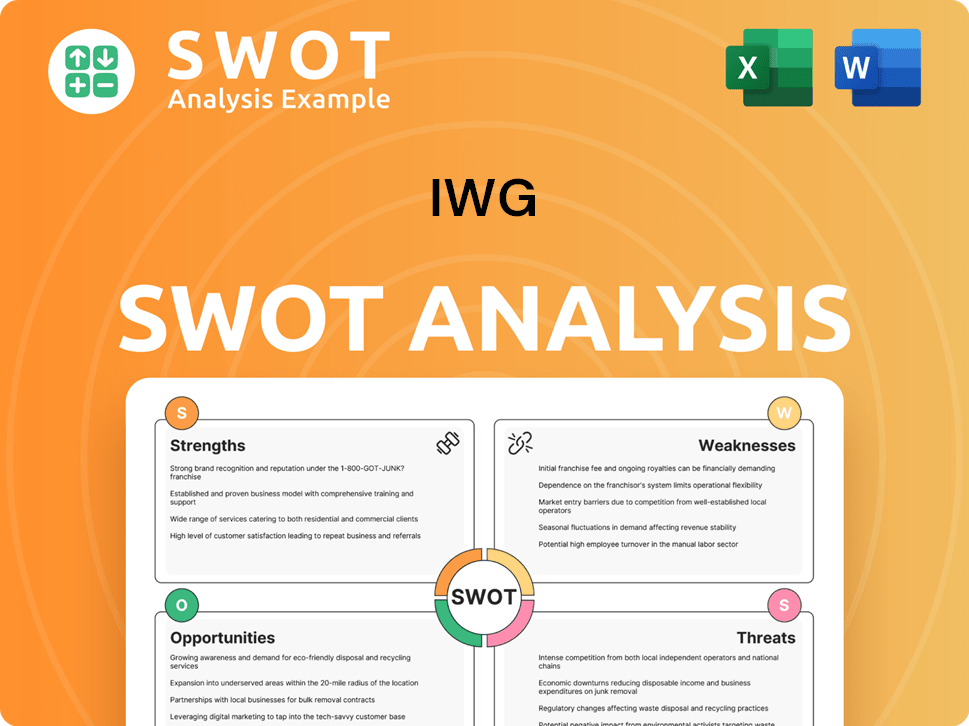
IWG SWOT Analysis
- Complete SWOT Breakdown
- Fully Customizable
- Editable in Excel & Word
- Professional Formatting
- Investor-Ready Format
Who Are the Main Competitors Challenging IWG?
The IWG competitive landscape is multifaceted, involving global, regional, and niche players. Understanding the dynamics of IWG competitors is crucial for assessing its market position and strategic choices. The flexible workspace market is constantly evolving, with new entrants and shifting strategies among existing providers, which impacts IWG's market analysis.
Regus competitors and other flexible workspace providers compete on various fronts, including location, pricing, and the range of services offered. This competition influences IWG's expansion strategy and competition, as well as its ability to attract and retain clients. The constant evolution of the market requires continuous adaptation and innovation.
IWG's competitive threats and opportunities are shaped by the actions of rivals and the changing demands of the market. The company must continually assess its strengths and weaknesses relative to its competitors to maintain its position. For more detailed information, you can explore Owners & Shareholders of IWG.

WeWork
WeWork is one of IWG's biggest rivals globally, operating a significant number of coworking spaces. Despite past financial challenges, WeWork remains a major player, particularly in the technology and creative sectors. It competes directly with IWG in many markets.
Smaller, Localized Providers
A growing number of smaller, localized flexible workspace providers also compete with IWG. These include independent coworking spaces and boutique serviced offices. They often target specific market demands or geographic areas, offering specialized services.
Traditional Commercial Real Estate Companies
Traditional commercial real estate companies are increasingly entering the flexible workspace sector. They either form partnerships or develop their own flexible offerings. This presents a new form of competition for IWG.
Hotel Chains
Hotel chains are exploring flexible workspace offerings, converting underutilized spaces into work-friendly environments. This adds another layer of indirect competition, particularly in urban areas. This trend is growing as hotels seek to maximize space utilization.
Competitive Dynamics
The competitive landscape is characterized by 'battles' over prime locations and pricing. The ability to attract and retain corporate clients is a key factor. The market is highly dynamic, with constant shifts in strategies and offerings.
Market Share and Financial Performance
Assessing IWG's market share compared to competitors and its financial performance vs competitors is essential. This involves analyzing revenue, profitability, and growth rates. Understanding these metrics provides insights into IWG's competitive position.
Key Differentiators
Identifying IWG's key differentiators is crucial for understanding its competitive advantages. These differentiators often include:
- Extensive global reach and a wide network of locations.
- A broad range of workspace options, including serviced offices and coworking spaces.
- Established relationships with corporate clients.
- Focus on providing comprehensive flexible workspace solutions.
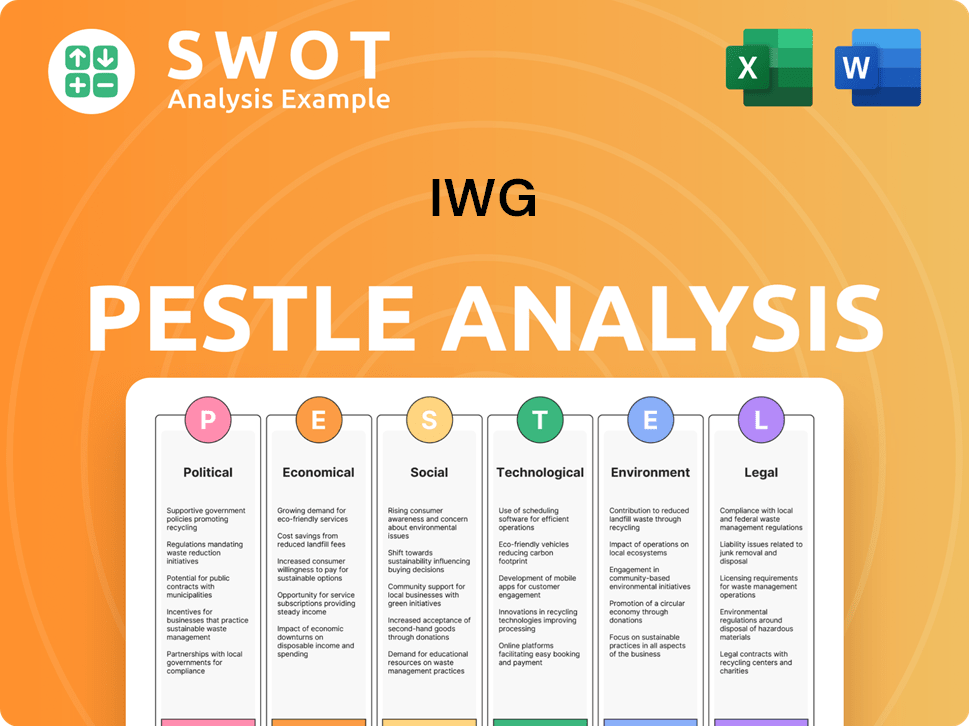
IWG PESTLE Analysis
- Covers All 6 PESTLE Categories
- No Research Needed – Save Hours of Work
- Built by Experts, Trusted by Consultants
- Instant Download, Ready to Use
- 100% Editable, Fully Customizable
What Gives IWG a Competitive Edge Over Its Rivals?
Understanding the IWG competitive landscape requires a deep dive into its strengths. IWG, a major player in the flexible workspace industry, has cultivated several key advantages that set it apart. These advantages are crucial for its market position and future growth. This analysis will explore these competitive advantages, offering insights into how IWG maintains its edge in a dynamic market.
IWG's market analysis reveals a company built on a foundation of global scale and a diverse brand portfolio. Its widespread presence and varied offerings allow it to serve a wide range of clients, from startups to multinational corporations. The company’s strategic moves, including its asset-light franchise model, have further strengthened its position, enabling faster expansion and operational efficiency. These factors are essential for navigating the challenges of the flexible workspace competition.
The company's adaptability and strategic vision have been key in maintaining its competitive edge. IWG continues to invest in technology and service improvements to meet the evolving demands of hybrid work solutions. This proactive approach is critical in a market where innovation and customer satisfaction are paramount. For more details on the company's financial aspects, consider reading about the Revenue Streams & Business Model of IWG.
Global Footprint
IWG's extensive global network, with over 3,500 locations in more than 120 countries, provides a significant advantage. This broad reach allows IWG to serve multinational clients effectively, offering consistent workspace solutions across different geographies. This large-scale presence is difficult for smaller IWG competitors to replicate.
Diverse Brand Portfolio
The company's diverse brand portfolio, including brands like Regus and Spaces, allows it to target different customer segments. This strategy enables IWG to offer tailored workspace solutions, from traditional serviced offices to modern coworking environments. This versatility helps IWG capture a broader market share in the flexible workspace competition.
Asset-Light Franchise Model
IWG's asset-light franchise model supports sustainable growth by reducing capital expenditure. This model enhances operational efficiencies and enables faster market penetration. The franchise model allows IWG to expand its reach while managing financial risk effectively. This is a key element of its competitive strategy.
Technological Infrastructure
IWG's technological infrastructure supports virtual office services and booking platforms, streamlining operations and enhancing the customer experience. This includes advanced booking systems and digital tools that improve efficiency. These tech-driven solutions are critical for maintaining a competitive edge in the market.
Key Differentiators
IWG's competitive advantages are centered on its global scale, diverse brand offerings, and strategic operational models. These differentiators are crucial for its success in the flexible workspace market. IWG's ability to adapt to changing market demands is also a key factor.
- Global Presence: A network of over 3,500 locations across more than 120 countries.
- Brand Diversity: Multiple brands targeting different customer segments.
- Franchise Model: Asset-light approach for sustainable growth.
- Technological Advancements: Streamlined operations and improved customer experience.
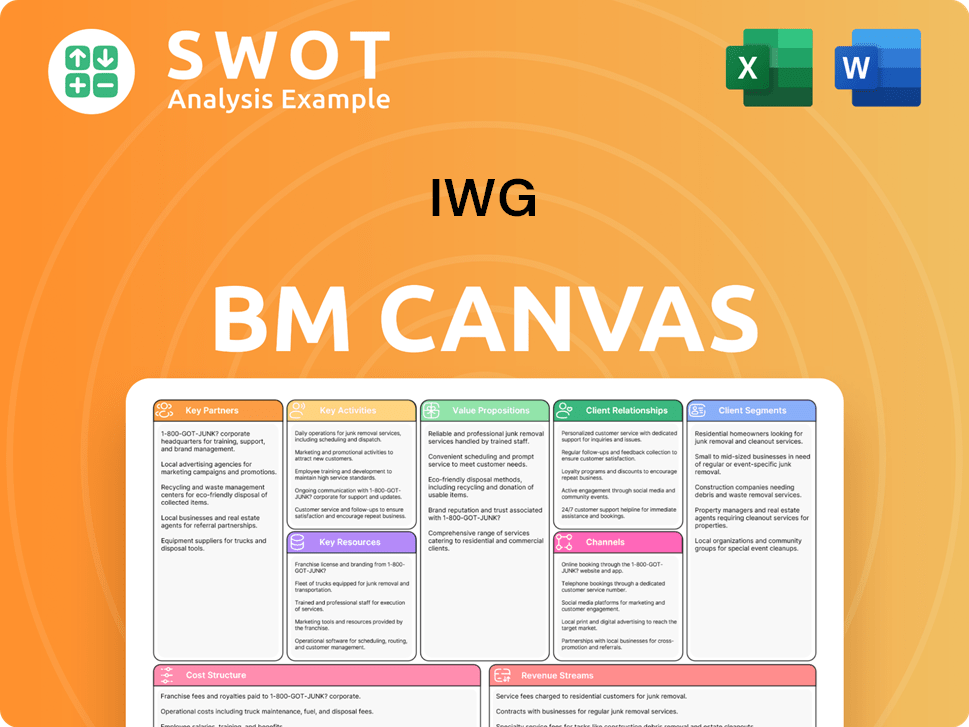
IWG Business Model Canvas
- Complete 9-Block Business Model Canvas
- Effortlessly Communicate Your Business Strategy
- Investor-Ready BMC Format
- 100% Editable and Customizable
- Clear and Structured Layout
What Industry Trends Are Reshaping IWG’s Competitive Landscape?
The flexible workspace industry is experiencing significant shifts, driven by the adoption of hybrid work models, technological advancements, and evolving regulatory landscapes. This dynamic environment presents both challenges and opportunities for companies like IWG, which must navigate intense competition while adapting to changing market demands. Understanding the IWG competitive landscape is crucial for assessing its future prospects.
IWG faces a competitive market with various players, including established firms and smaller coworking spaces. The ability to innovate, differentiate offerings, and adapt to economic fluctuations will be critical for success. The growing demand for flexible workspaces globally offers significant growth potential, particularly in emerging markets. The Growth Strategy of IWG provides further insights into the company's approach to these challenges and opportunities.
Industry Trends
Hybrid work models are driving demand for flexible workspaces. Technological advancements, such as AI-powered platforms, are enhancing user experiences. Regulatory changes and health standards also influence workspace design and operations. The flexible workspace competition is intensifying as more businesses seek adaptable solutions.
Future Challenges
Intense competition from established players and smaller coworking spaces poses a significant challenge. Adapting to fluctuating economic conditions and managing corporate real estate budgets is crucial. Maintaining a competitive edge requires continuous innovation and differentiation. IWG must navigate these challenges to sustain its market position.
Opportunities
Global demand for flexible workspaces provides substantial growth potential, especially in emerging markets. Expanding the network, developing franchise models, and enhancing digital platforms are key strategies. Strategic partnerships with landlords and technology providers offer avenues for service diversification. IWG's expansion strategy and competition will be key factors.
IWG's Competitive Advantages
IWG's global scale and established brand provide a competitive edge. Its ability to adapt its business model and embrace technological innovation is crucial. Differentiating its offerings and providing integrated solutions for hybrid work are vital. Analyzing the competitive landscape of Regus and other rivals helps identify key differentiators.
Key Considerations for IWG
IWG's success hinges on its ability to adapt to evolving market dynamics. The company must focus on innovation, strategic partnerships, and global expansion. Addressing the challenges posed by competitors and economic volatility is crucial.
- Enhance digital platforms for integrated solutions.
- Expand into emerging markets and secondary cities.
- Develop strategic partnerships with landlords and tech providers.
- Continuously innovate and differentiate offerings.
IWG Porter's Five Forces Analysis
- Covers All 5 Competitive Forces in Detail
- Structured for Consultants, Students, and Founders
- 100% Editable in Microsoft Word & Excel
- Instant Digital Download – Use Immediately
- Compatible with Mac & PC – Fully Unlocked

Related Blogs

- What are Mission Vision & Core Values of IWG Company?
- What is Growth Strategy and Future Prospects of IWG Company?
- How Does IWG Company Work?
- What is Sales and Marketing Strategy of IWG Company?
- What is Brief History of IWG Company?
- Who Owns IWG Company?
- What is Customer Demographics and Target Market of IWG Company?
Disclaimer
All information, articles, and product details provided on this website are for general informational and educational purposes only. We do not claim any ownership over, nor do we intend to infringe upon, any trademarks, copyrights, logos, brand names, or other intellectual property mentioned or depicted on this site. Such intellectual property remains the property of its respective owners, and any references here are made solely for identification or informational purposes, without implying any affiliation, endorsement, or partnership.
We make no representations or warranties, express or implied, regarding the accuracy, completeness, or suitability of any content or products presented. Nothing on this website should be construed as legal, tax, investment, financial, medical, or other professional advice. In addition, no part of this site—including articles or product references—constitutes a solicitation, recommendation, endorsement, advertisement, or offer to buy or sell any securities, franchises, or other financial instruments, particularly in jurisdictions where such activity would be unlawful.
All content is of a general nature and may not address the specific circumstances of any individual or entity. It is not a substitute for professional advice or services. Any actions you take based on the information provided here are strictly at your own risk. You accept full responsibility for any decisions or outcomes arising from your use of this website and agree to release us from any liability in connection with your use of, or reliance upon, the content or products found herein.