

Edison International Bundle

How Does Edison International Navigate the Energy Sector's Competitive Waters?
Edison International (EIX), through its subsidiary Southern California Edison (SCE), is a major player in the U.S. electric utility sector, serving millions across Southern California. Its history mirrors the evolution of the energy industry itself, from its late 19th-century roots to its current focus on adapting to a changing energy landscape. But who are its main rivals, and how does it maintain its position?

To understand Edison International's strategic position, a deep dive into its Edison International SWOT Analysis is essential. This analysis reveals the complex dynamics of the competitive landscape, including industry rivals and emerging trends in the energy sector. This examination is critical for anyone seeking to understand the company's future, from its market analysis to its response to climate change and investment in infrastructure.
Where Does Edison International’ Stand in the Current Market?
Edison International, through its primary subsidiary Southern California Edison (SCE), occupies a significant market position within its service territory in Southern California. As a regulated utility, SCE operates as the sole provider of electricity transmission and distribution services within its designated area. This near-monopoly status provides a stable foundation for its operations, subject to oversight by the California Public Utilities Commission (CPUC).
SCE's core operations revolve around the reliable delivery of electricity to a diverse customer base, including residential, commercial, industrial, and agricultural sectors. The company also plays a crucial role in integrating renewable energy sources and promoting energy efficiency programs. This focus aligns with California's ambitious decarbonization goals and the broader shift towards sustainable energy solutions. The Brief History of Edison International sheds light on the company's evolution and its commitment to innovation in the energy sector.
Edison International's value proposition lies in providing essential utility services while adapting to the evolving energy landscape. This includes investing in infrastructure upgrades, grid modernization, and wildfire mitigation efforts, all of which are critical for ensuring the safety and reliability of its services. The company's financial health, with a reported net income of $888 million for the first quarter of 2024, supports these investments and strategic initiatives.
 Market Share and Customer Base
SCE serves approximately 15 million customers across a 50,000-square-mile service area. While specific market share figures are not reported in the same way as in competitive markets, its extensive customer base highlights its dominance in the region. The company's large customer base provides a stable revenue stream.
Financial Performance
Edison International's financial performance remains robust. The company's strong financial position enables continued investment in infrastructure and renewable energy projects. The company's financial health is key to its ability to adapt to the changing energy landscape.
Strategic Focus
Edison International's strategic priorities include grid reliability, wildfire mitigation, and the integration of clean energy sources. The company is actively working to modernize its infrastructure and reduce its environmental impact. This focus aligns with California's decarbonization goals.
Regulatory Environment
As a regulated utility, Edison International operates under the oversight of the California Public Utilities Commission (CPUC). This regulatory framework ensures that the company provides reliable service while adhering to environmental and safety standards. The CPUC plays a key role in setting rates and overseeing the company's operations.

Edison International's Competitive Advantages
Edison International's primary competitive advantage lies in its regulated monopoly status within its service territory. This provides a stable revenue stream and allows for long-term investment in infrastructure. The company's focus on renewable energy and grid modernization further strengthens its position.
- Dominant market position in Southern California.
- Stable revenue stream due to regulated status.
- Focus on renewable energy and grid modernization.
- Strong financial performance supporting investments.
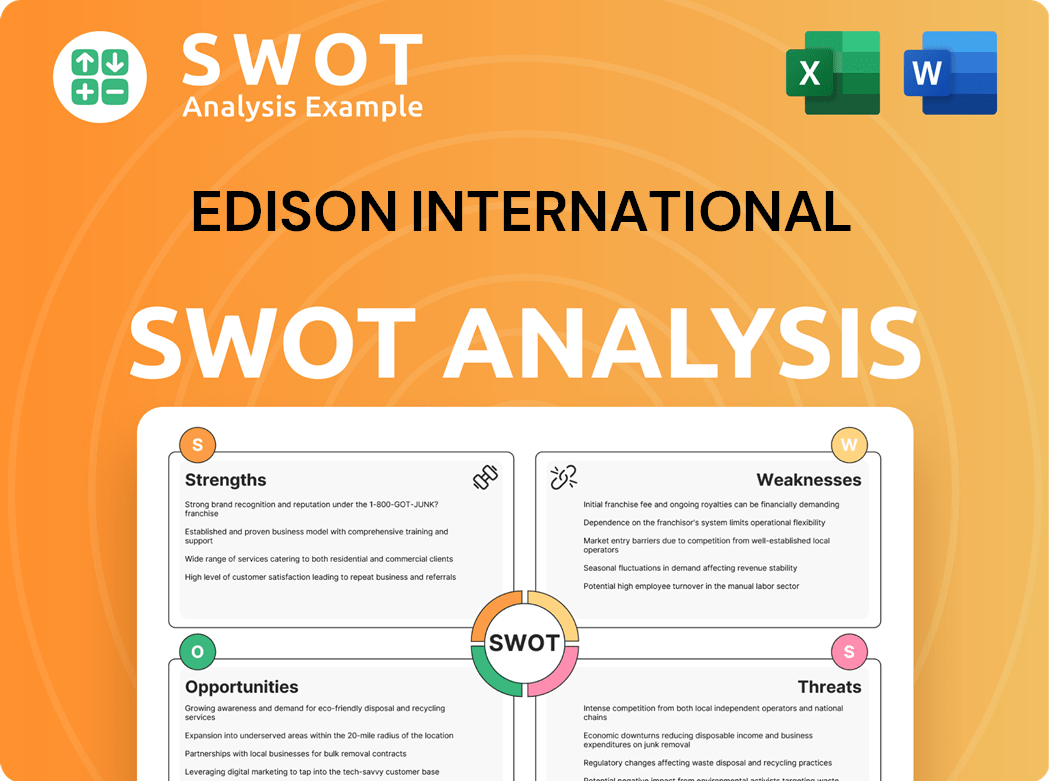
Edison International SWOT Analysis
- Complete SWOT Breakdown
- Fully Customizable
- Editable in Excel & Word
- Professional Formatting
- Investor-Ready Format
Who Are the Main Competitors Challenging Edison International?
The competitive landscape for Edison International is multifaceted, encompassing traditional utilities and emerging players in the energy sector. While Southern California Edison (SCE) operates as a regulated utility, its parent company faces competition across its various business interests. Understanding the competitive dynamics is crucial for a thorough market analysis of Edison International.
The energy industry is constantly evolving, with renewable energy and distributed generation reshaping the competitive environment. This article examines the key competitors of Edison International, considering both established and emerging rivals. The analysis includes direct competitors in power generation and transmission, as well as companies involved in renewable energy projects and distributed energy resources.
The competitive environment for Edison International is shaped by several key players. These competitors range from traditional utilities to independent power producers and companies specializing in renewable energy and distributed energy resources. The dynamics of the energy sector are constantly evolving, influenced by technological advancements, regulatory changes, and consumer preferences. Understanding this landscape is critical for assessing Edison International's strategic position and future prospects.

Investor-Owned Utilities (IOUs)
Direct competition comes from other investor-owned utilities (IOUs) operating in California. These companies, such as Pacific Gas and Electric Company (PG&E) and San Diego Gas & Electric (SDG&E), operate in distinct geographic areas but share similar regulatory and operational challenges.
Independent Power Producers (IPPs)
IPPs and renewable energy developers compete to develop and sell power to utilities. Companies like NextEra Energy Resources, Clearway Energy Group, and AES Corporation are key players in this space. These companies focus on solar, wind, and battery storage projects.
Renewable Energy Developers
The rise of renewable energy has created competition from developers specializing in solar, wind, and battery storage. These companies compete for contracts to supply power to utilities like SCE.
Distributed Energy Resources (DERs)
Companies offering distributed energy resources (DERs), such as rooftop solar and behind-the-meter battery storage, also pose competition. Sunrun and Tesla Energy are examples of companies that enable customers to generate and store their own electricity.
Mergers and Alliances
Mergers and acquisitions, such as utility acquisitions of renewable energy developers, impact competitive dynamics. These moves consolidate market power and expertise, influencing the competitive landscape.
Regulatory Environment
The regulatory environment in California significantly influences the competitive landscape. Policies related to renewable energy mandates, grid modernization, and energy storage incentives affect the strategic decisions of all players in the market.
Key Competitive Factors
The competitive landscape for Edison International is dynamic, influenced by various factors. These include the shift towards renewable energy, the integration of advanced grid technologies, and the evolving regulatory environment. Understanding these factors is critical for a comprehensive competitive analysis.
- Renewable Energy Integration: The ability to integrate renewable energy sources efficiently.
- Grid Modernization: Investments in smart grid technologies and infrastructure.
- Customer Service: Quality of service and customer satisfaction.
- Financial Performance: Profitability, revenue growth, and return on investment.
- Strategic Partnerships: Collaborations and alliances within the industry.
For a deeper dive into the company's strategy, consider exploring the Growth Strategy of Edison International. This analysis provides insights into how the company navigates the competitive landscape and pursues its strategic objectives.
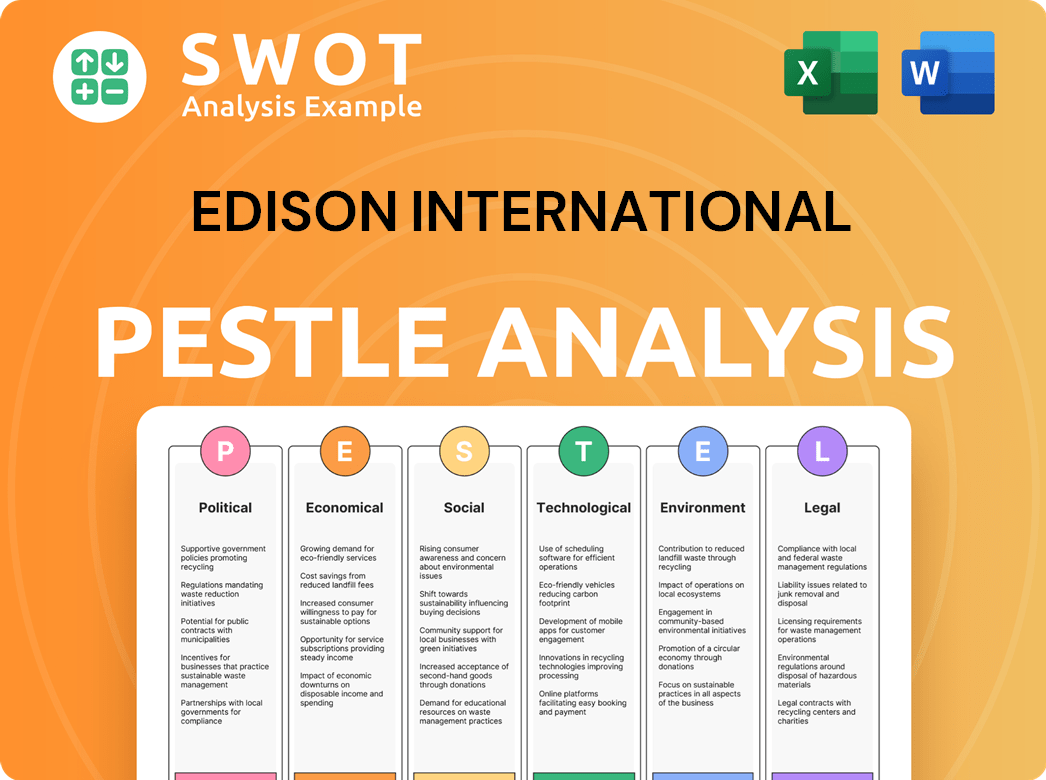
Edison International PESTLE Analysis
- Covers All 6 PESTLE Categories
- No Research Needed – Save Hours of Work
- Built by Experts, Trusted by Consultants
- Instant Download, Ready to Use
- 100% Editable, Fully Customizable
What Gives Edison International a Competitive Edge Over Its Rivals?
Understanding the competitive landscape of Edison International requires a deep dive into its strengths. The company, through Southern California Edison (SCE), holds a significant advantage due to its regulated status. This guarantees a stable revenue stream, a critical factor in the volatile energy sector. This stability allows for long-term strategic planning and investments, setting it apart from competitors.
Edison International's extensive infrastructure in Southern California is a major barrier to entry for new players. This established network, serving approximately 15 million people, is a considerable asset. The company's expertise in grid management, including wildfire mitigation, further strengthens its market position. These operational efficiencies are vital in maintaining reliability and adapting to environmental challenges.
Edison International's focus on renewable energy and grid modernization is also a key competitive advantage. The company's commitment to integrating renewable sources positions it well for future growth. This proactive approach, combined with strong regulatory relationships, allows Edison International to adapt to changing market dynamics and maintain its leadership in the utility industry.
Regulatory Advantage
SCE operates under a regulated rate-of-return model approved by the California Public Utilities Commission (CPUC). This regulatory framework provides a predictable revenue stream, which is crucial for long-term investment and stability. This predictability is a significant advantage in the energy sector.
Infrastructure and Scale
The vast transmission and distribution network in Southern California represents a substantial barrier to entry. Serving approximately 15 million people, this infrastructure is a proprietary asset. Replicating this network would be extremely costly and time-consuming, giving Edison International a significant competitive edge.
Operational Expertise
SCE's deep operational expertise in grid management, reliability, and emergency response, including wildfire mitigation, provides a significant advantage. The company's investments in grid modernization, including smart grid technologies, enhance its efficiency. This operational excellence is key to maintaining a competitive edge.
Renewable Energy Focus
Edison International's commitment to renewable energy development, through Edison Energy, positions it favorably. This proactive approach to clean energy transition, coupled with a strong regulatory relationship, allows Edison International to adapt to evolving industry trends. This focus is crucial for long-term sustainability.
Key Competitive Advantages
Edison International's competitive advantages are multifaceted, including its regulated utility status, extensive infrastructure, and operational expertise. These strengths are essential for its market position. The company's focus on renewable energy further enhances its competitiveness.
- Regulated Revenue Stream: Provides financial stability and predictability.
- Extensive Infrastructure: High barrier to entry for competitors.
- Operational Expertise: Efficient grid management and emergency response.
- Renewable Energy Initiatives: Positions the company for future growth.
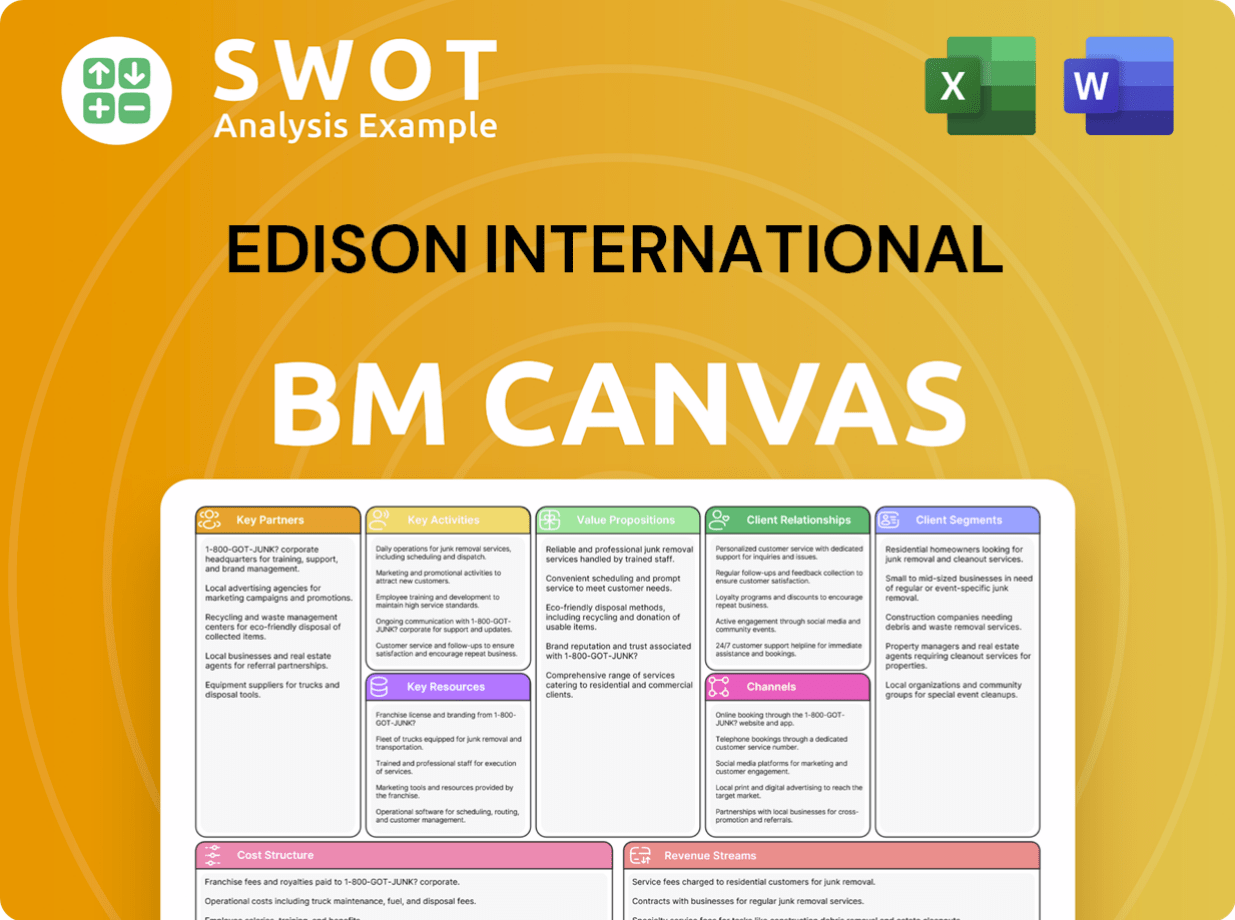
Edison International Business Model Canvas
- Complete 9-Block Business Model Canvas
- Effortlessly Communicate Your Business Strategy
- Investor-Ready BMC Format
- 100% Editable and Customizable
- Clear and Structured Layout
What Industry Trends Are Reshaping Edison International’s Competitive Landscape?
The electric utility industry is undergoing a significant transformation, presenting both challenges and opportunities for companies like Edison International. Key trends include technological advancements in renewable energy and smart grid technologies, alongside regulatory pressures driving decarbonization. These factors are reshaping how electricity is generated, distributed, and consumed, influencing the competitive landscape of the energy sector.
Edison International's strategic direction is heavily influenced by California's aggressive decarbonization goals, including the mandate for 100% clean electricity by 2045. This context necessitates substantial investments in grid modernization and renewable energy sources. The company must navigate increased regulation, particularly concerning wildfire mitigation and grid hardening, which can impact profitability. The rise of distributed energy resources and the threat of cyberattacks further complicate the environment.
Industry Trends
The industry is experiencing rapid technological advancements in renewable energy, battery storage, and smart grid technologies. Regulatory changes, such as California's push for clean energy, are driving significant shifts. These trends are reshaping power generation, distribution, and consumption across the utility company sector.
Future Challenges
Increased regulation, especially concerning wildfire mitigation, poses financial challenges. The adoption of distributed energy resources may reduce demand for grid-delivered electricity. Cyberattacks on critical infrastructure also represent a significant threat. These factors require strategic adaptation and investment.
Opportunities
Opportunities exist in electric vehicle charging infrastructure, energy storage solutions, and AI integration for grid optimization. Investing in grid resiliency and clean energy integration can enhance market position. Focusing on customer-centric solutions is also key to success.
Strategic Focus
Edison International must prioritize grid resiliency, clean energy integration, and customer-centric solutions. The company's competitive position depends on adapting to evolving trends. Strategic investments and partnerships are crucial for long-term sustainability.
Edison International's Strategic Adaptation
Edison International is strategically positioned to navigate the evolving energy landscape. The company is making significant investments in grid modernization and renewable energy to meet California's clean energy goals. This includes expanding its renewable energy portfolio through Edison Energy and focusing on grid resiliency. For a deeper dive into the company's approach, explore the Marketing Strategy of Edison International.
- Renewable Energy Investments: Focusing on solar, wind, and energy storage projects.
- Grid Modernization: Upgrading infrastructure to support renewable energy integration.
- Customer Solutions: Developing programs to enhance customer engagement and satisfaction.
- Wildfire Mitigation: Implementing measures to reduce wildfire risks.
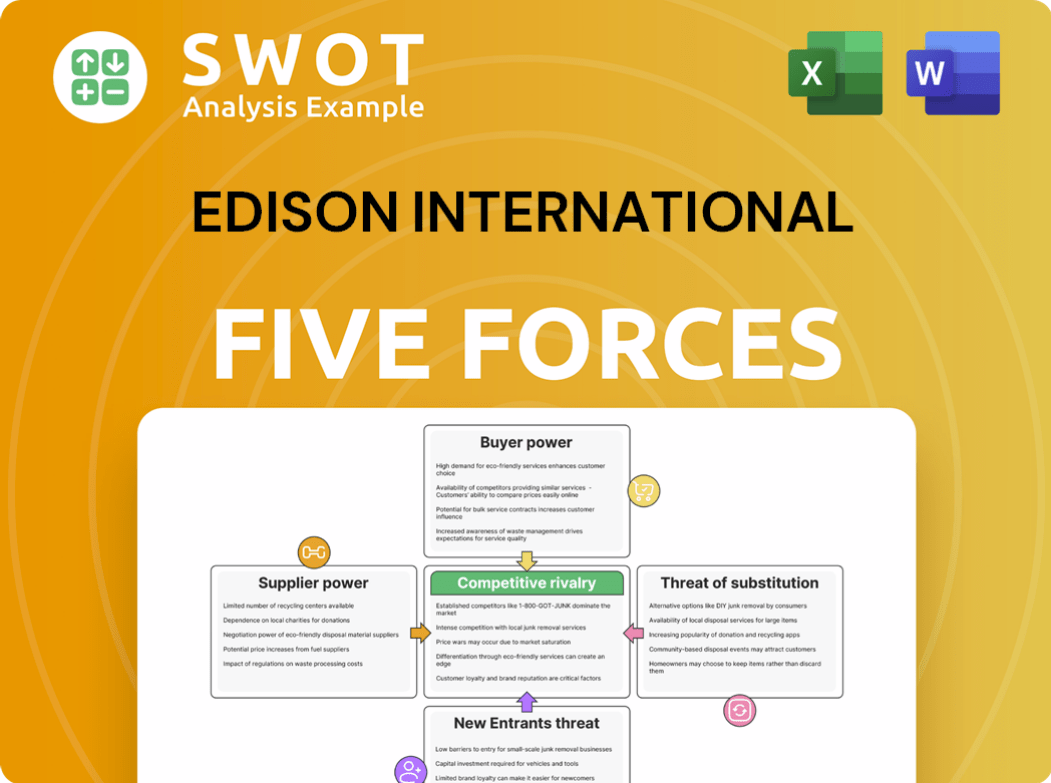
Edison International Porter's Five Forces Analysis
- Covers All 5 Competitive Forces in Detail
- Structured for Consultants, Students, and Founders
- 100% Editable in Microsoft Word & Excel
- Instant Digital Download – Use Immediately
- Compatible with Mac & PC – Fully Unlocked
Related Blogs

- What are Mission Vision & Core Values of Edison International Company?
- What is Growth Strategy and Future Prospects of Edison International Company?
- How Does Edison International Company Work?
- What is Sales and Marketing Strategy of Edison International Company?
- What is Brief History of Edison International Company?
- Who Owns Edison International Company?
- What is Customer Demographics and Target Market of Edison International Company?
Disclaimer
All information, articles, and product details provided on this website are for general informational and educational purposes only. We do not claim any ownership over, nor do we intend to infringe upon, any trademarks, copyrights, logos, brand names, or other intellectual property mentioned or depicted on this site. Such intellectual property remains the property of its respective owners, and any references here are made solely for identification or informational purposes, without implying any affiliation, endorsement, or partnership.
We make no representations or warranties, express or implied, regarding the accuracy, completeness, or suitability of any content or products presented. Nothing on this website should be construed as legal, tax, investment, financial, medical, or other professional advice. In addition, no part of this site—including articles or product references—constitutes a solicitation, recommendation, endorsement, advertisement, or offer to buy or sell any securities, franchises, or other financial instruments, particularly in jurisdictions where such activity would be unlawful.
All content is of a general nature and may not address the specific circumstances of any individual or entity. It is not a substitute for professional advice or services. Any actions you take based on the information provided here are strictly at your own risk. You accept full responsibility for any decisions or outcomes arising from your use of this website and agree to release us from any liability in connection with your use of, or reliance upon, the content or products found herein.