

Camil Alimentos Bundle

How Does Camil Alimentos Navigate the Brazilian Food Industry's Competitive Arena?
The Brazilian food market is a dynamic environment, constantly reshaped by consumer tastes and agricultural advancements. Camil Alimentos S.A. has become a major player in this landscape, particularly in essential food categories. Recent mergers and acquisitions in late 2023 and early 2024 within the Latin American food sector highlight the intense competition Camil faces as it strives to expand and consolidate its market position amid economic pressures.

Founded in 1963, Camil Alimentos has evolved from a rice and beans supplier into a diversified food conglomerate. This Camil Alimentos SWOT Analysis will provide a comprehensive overview of the company's market position, its key rivals, and the competitive advantages that have fueled its growth. Understanding the Camil Alimentos Competitive Landscape is crucial for investors and strategists alike. This analysis will delve into the Camil Alimentos Market Analysis, including its competitors and the broader Food Industry Brazil dynamics.
Where Does Camil Alimentos’ Stand in the Current Market?
Camil Alimentos maintains a strong market position within the Latin American food industry, particularly in its core categories of rice and beans. The company is a leader in the processing, marketing, and distribution of these staples, holding significant market share in key countries such as Brazil, Uruguay, Chile, Peru, and Argentina. The company's primary product lines also encompass sugar, coffee, and pasta, with a growing presence in these segments. Camil serves a broad customer base, ranging from individual consumers through retail channels to food service providers.
Over time, Camil has strategically shifted its positioning, moving beyond solely commodity-driven sales to emphasize branded products and value-added offerings. This has included investments in premium lines and a focus on digital transformation to enhance distribution and consumer engagement. The company's geographic presence is particularly strong in South America, where it leverages established supply chains and brand recognition. Camil's focus on branded products and value-added offerings helps it to differentiate itself in the competitive Camil Alimentos growth strategy.
Camil Alimentos reported net revenue of R$2.7 billion in the third quarter of 2023, showcasing its substantial scale and ability to generate significant sales. This financial performance highlights its strong market position within the food industry, particularly in the Brazilian Food Market. The company actively seeks to strengthen its position through acquisitions, as evidenced by its recent purchase of businesses in Uruguay and Chile, aiming to consolidate its leadership in rice and expand its presence in other categories.
 Market Share Leadership
Camil Alimentos has consistently held a dominant share in the Brazilian rice market. The company's strong market position is further reinforced by its significant presence in other key Latin American countries. This leadership is a key factor in the overall Camil Alimentos Competitive Landscape.
Strategic Positioning
Camil has strategically shifted its focus from commodity-driven sales to branded products. This move has allowed Camil to enhance its value-added offerings. The company's focus on premium lines and digital transformation has improved distribution and consumer engagement.
Geographic Strength
Camil Alimentos has a strong presence in South America, leveraging established supply chains and brand recognition. The company's geographic focus is particularly strong, which supports its market position. This regional strength is vital for understanding Camil Alimentos Market Analysis.
Financial Performance
In the third quarter of 2023, Camil Alimentos reported net revenue of R$2.7 billion. This financial performance showcases the company's substantial scale and its ability to generate significant sales. This financial success is a key aspect of the Camil Alimentos Industry.

Growth Strategies and Acquisitions
Camil actively seeks to strengthen its market position through strategic acquisitions. Recent purchases in Uruguay and Chile aim to consolidate its leadership in rice. These acquisitions also help expand its presence in other product categories. This strategy is crucial for understanding Camil Alimentos and its rivals.
- Acquisitions in Uruguay and Chile to consolidate rice leadership.
- Expansion into new product categories through strategic purchases.
- Ongoing efforts to enhance market share and competitive advantages.
- Focus on both organic growth and inorganic expansion.
Camil Alimentos SWOT Analysis
- Complete SWOT Breakdown
- Fully Customizable
- Editable in Excel & Word
- Professional Formatting
- Investor-Ready Format

Who Are the Main Competitors Challenging Camil Alimentos?
The competitive landscape for Camil Alimentos is multifaceted, shaped by both large multinational corporations and agile local players. As a major participant in the Brazilian and South American food markets, Camil faces constant pressure from rivals across various product segments, including rice, beans, sugar, coffee, and pasta. Understanding these competitors is crucial for evaluating Camil's market position and strategic challenges.
The company's ability to maintain and grow its market share is directly influenced by its competitive advantages, such as brand recognition, distribution networks, and pricing strategies. A thorough Marketing Strategy of Camil Alimentos is essential for navigating the complexities of the food industry and responding effectively to competitive pressures.
The food industry in Brazil is dynamic, with shifts in consumer preferences and economic conditions impacting the competitive environment. This analysis examines the key competitors across Camil's primary product categories, highlighting their strengths and the challenges they pose.

Rice and Beans Competitors
In the rice and beans segments, Camil's main rivals include Josapar (owner of Tio João rice) and Urbano Agroindustrial. These companies compete by leveraging established brand loyalty and extensive distribution networks. Aggressive pricing strategies also play a significant role in this competitive arena.
Sugar Market Competitors
Camil competes with major players like Raízen and São Martinho in the sugar market. These companies benefit from large-scale production and integrated sugar-energy operations. Their size and efficiency allow them to exert significant influence.
Coffee Market Competitors
In the coffee segment, Camil faces strong national brands such as 3 Corações and Melitta. These competitors have significant brand equity and deep market penetration. They often invest heavily in marketing and product innovation.
Pasta Market Competitors
The pasta market sees competition from companies like M. Dias Branco, a dominant force in the Brazilian pasta and biscuit sectors. They leverage economies of scale and diverse product portfolios. This allows them to offer a wide range of products.
Indirect Competition and Emerging Threats
Beyond direct product-level competition, Camil also contends with indirect competition from private label brands offered by major retailers. Emerging players focusing on niche markets, healthy food options, or sustainable sourcing also pose a potential threat. These companies often capitalize on changing consumer preferences.
Mergers and Acquisitions
Mergers and acquisitions within the industry can shift competitive dynamics. The acquisition of smaller regional players by larger companies creates larger, more diversified rivals. This consolidation can intensify competition.
Key Competitive Factors
Understanding the competitive landscape of Camil Alimentos is crucial for investors and stakeholders. The company's market position is influenced by various factors, including brand recognition, distribution capabilities, and pricing strategies. The Brazilian food market is subject to constant change, and Camil must adapt to maintain its competitive edge.
- Brand Loyalty: Established brands often have a significant advantage.
- Distribution Networks: Extensive reach is essential for market penetration.
- Pricing Strategies: Competitive pricing can attract consumers.
- Product Innovation: Continuous innovation helps to meet consumer demands.
- Marketing Campaigns: Effective marketing builds brand awareness.
- Retail Partnerships: Strong relationships with retailers are important.
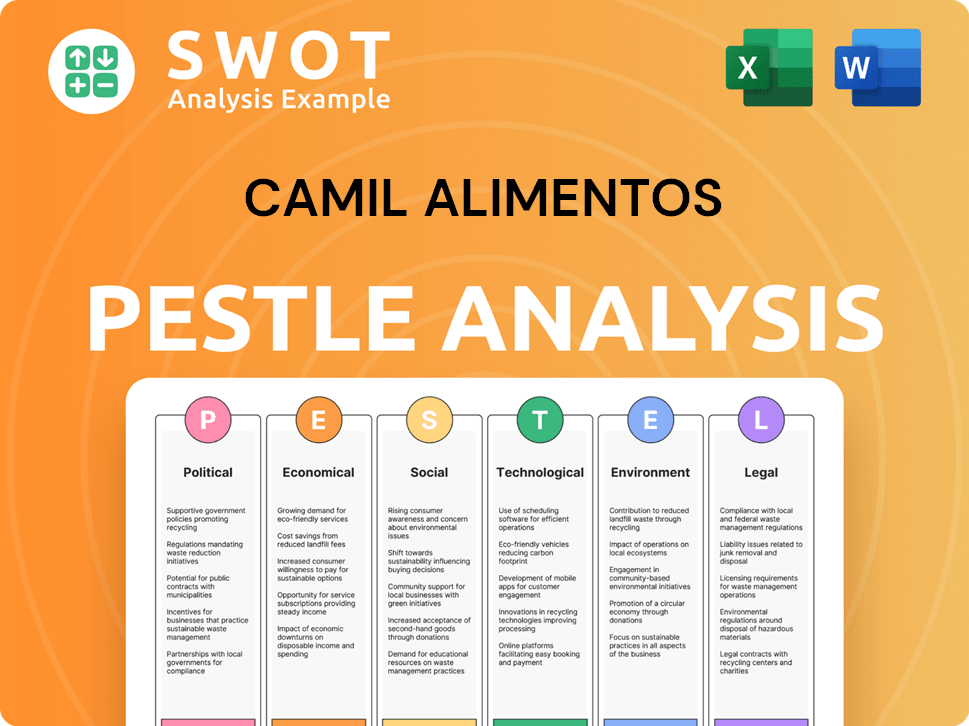
Camil Alimentos PESTLE Analysis
- Covers All 6 PESTLE Categories
- No Research Needed – Save Hours of Work
- Built by Experts, Trusted by Consultants
- Instant Download, Ready to Use
- 100% Editable, Fully Customizable
What Gives Camil Alimentos a Competitive Edge Over Its Rivals?
Analyzing the Camil Alimentos competitive landscape reveals several key strengths that position it favorably within the Brazilian food market and broader Latin American food industry. The company has strategically built its operations to secure a strong foothold in essential food categories. A deep dive into its strategies and market position helps to understand its sustained success.
Camil Alimentos' market analysis highlights its robust distribution network and brand recognition. This extensive reach and customer loyalty are critical in a competitive environment. Furthermore, the company's focus on operational efficiency and strategic acquisitions has significantly contributed to its competitive edge, allowing it to adapt and grow.
Understanding the Camil Alimentos' key competitors 2024 and their strategies is vital to assess its market position. Its ability to maintain a diversified product portfolio and adapt to market changes further solidifies its competitive advantage. This overview provides a comprehensive look at the company's strengths and how it navigates the challenges of the food industry.
Extensive Distribution Network
One of the primary competitive advantages of Camil Alimentos is its expansive distribution network. This network spans key markets, including Brazil, Uruguay, Chile, Peru, and Argentina. This extensive reach ensures that its products are readily available to a vast consumer base, enhancing market penetration and sales.
Strong Brand Equity
Camil Alimentos benefits from strong brand equity, with several of its brands being household names. This recognition fosters significant customer loyalty in the competitive Brazilian food market. This brand recognition reduces marketing costs and boosts consumer trust, which is essential for sustained market success.
Economies of Scale
As a large-scale processor and distributor of staples like rice and beans, Camil Alimentos benefits from significant economies of scale. This allows the company to achieve cost efficiencies in sourcing, processing, and logistics. These efficiencies enable the company to offer competitive pricing while maintaining profitability, which is crucial in the food industry.
Diversified Product Portfolio
Camil Alimentos boasts a diversified product portfolio, which includes rice, beans, sugar, coffee, and pasta. This diversification reduces its reliance on any single product category. It allows for cross-selling opportunities and provides a buffer against market fluctuations affecting individual product lines.
Strategic Acquisitions and Operational Efficiency
Camil Alimentos has consistently used strategic acquisitions to expand its reach and product offerings. Recent acquisitions, such as the SLC Alimentos rice and bean unit in Brazil, have strengthened its market share. The company's focus on operational efficiency and a robust supply chain management system ensures consistent product quality and timely delivery.
- Acquisitions have expanded geographic reach and product offerings.
- Operational efficiency ensures consistent product quality and timely delivery.
- Supply chain management is crucial for maintaining competitive advantages.
- These strategies contribute to the company's ability to compete effectively.
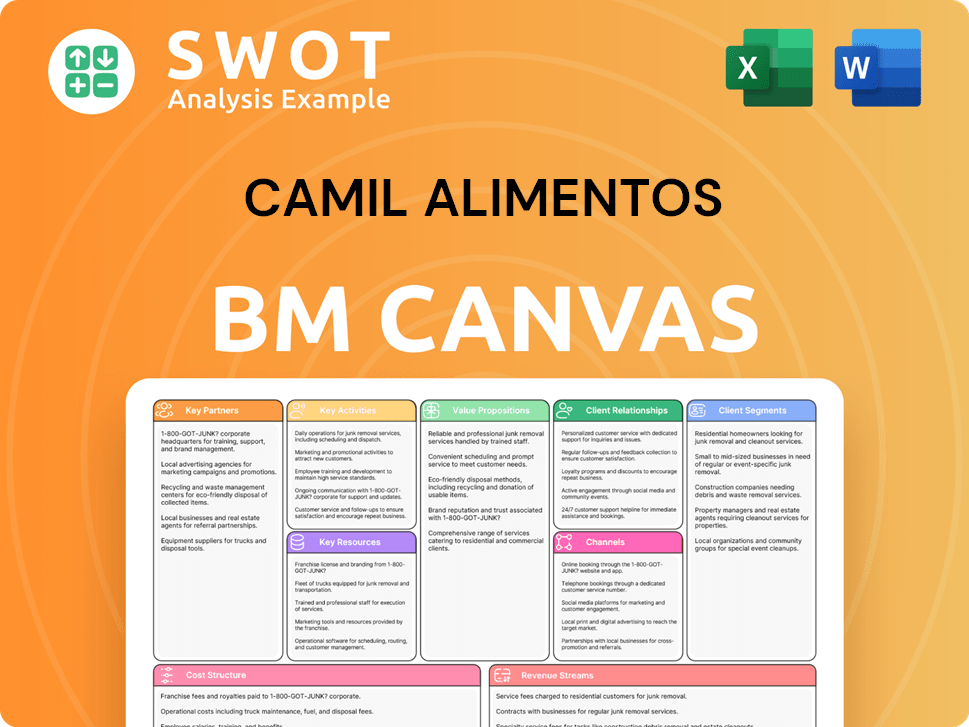
Camil Alimentos Business Model Canvas
- Complete 9-Block Business Model Canvas
- Effortlessly Communicate Your Business Strategy
- Investor-Ready BMC Format
- 100% Editable and Customizable
- Clear and Structured Layout
What Industry Trends Are Reshaping Camil Alimentos’s Competitive Landscape?
The Camil Alimentos Competitive Landscape is significantly influenced by evolving industry trends, potential future challenges, and emerging opportunities. The Camil Alimentos Market Analysis reveals a dynamic environment shaped by consumer preferences, technological advancements, and regulatory changes. Understanding these factors is crucial for assessing Camil Alimentos's strategic positioning and future prospects within the Brazilian and broader Latin American food markets. The Brazilian Food Market specifically presents unique dynamics that impact Camil's operations and strategic decisions.
The food industry in Latin America is undergoing a transformation. Increased demand for healthier and sustainable food options, coupled with the rise of e-commerce, is reshaping the competitive landscape. This shift requires companies like Camil to adapt their product offerings, distribution channels, and supply chain management. Navigating these changes is essential for maintaining market share and ensuring long-term profitability. For a deeper dive into their operational strategies, consider exploring the Revenue Streams & Business Model of Camil Alimentos.
Industry Trends Impacting Camil Alimentos
Technological advancements in logistics and supply chain management are pushing for greater efficiency and traceability. Regulatory changes related to food safety and sustainability are becoming more stringent, affecting operational costs. Consumer preferences are shifting towards healthier, more sustainable, and convenient food options. These trends require continuous adaptation and investment.
Future Challenges for Camil Alimentos
Increased prominence of e-commerce and direct-to-consumer models could disrupt traditional distribution channels. New market entrants, particularly startups focused on niche products, may challenge market share. Sustained inflationary pressures impacting raw material costs and consumer purchasing power pose risks. Fluctuations in commodity prices, such as rice and beans, present profitability challenges.
Growth Opportunities for Camil Alimentos
The expanding middle class and urbanization in Latin America present a larger consumer base for processed foods. Expanding the portfolio of value-added products and exploring new distribution channels can drive growth. Innovation in product development, such as functional foods, can open new revenue streams. Strategic partnerships can enhance supply chain efficiency and product offerings.
Strategic Adaptations for Camil Alimentos
Camil Alimentos is likely to evolve towards a more diversified and digitally integrated model. Strategies will focus on M&A for market consolidation and sustainable sourcing. Continuous product innovation is essential to remain resilient in a dynamic market. These adaptations will help them navigate the competitive landscape effectively.
Key Considerations for Camil Alimentos
Camil Alimentos's success hinges on its ability to adapt to changing market dynamics. The company must focus on operational efficiency, product innovation, and strategic partnerships. Understanding the competitive landscape and anticipating future trends is crucial for long-term sustainability and growth.
- Embrace digital transformation to optimize distribution and reach consumers directly.
- Invest in sustainable sourcing practices to meet consumer demand and regulatory requirements.
- Develop a diversified product portfolio, including healthier and value-added options.
- Explore strategic acquisitions and partnerships to strengthen market position and expand reach.
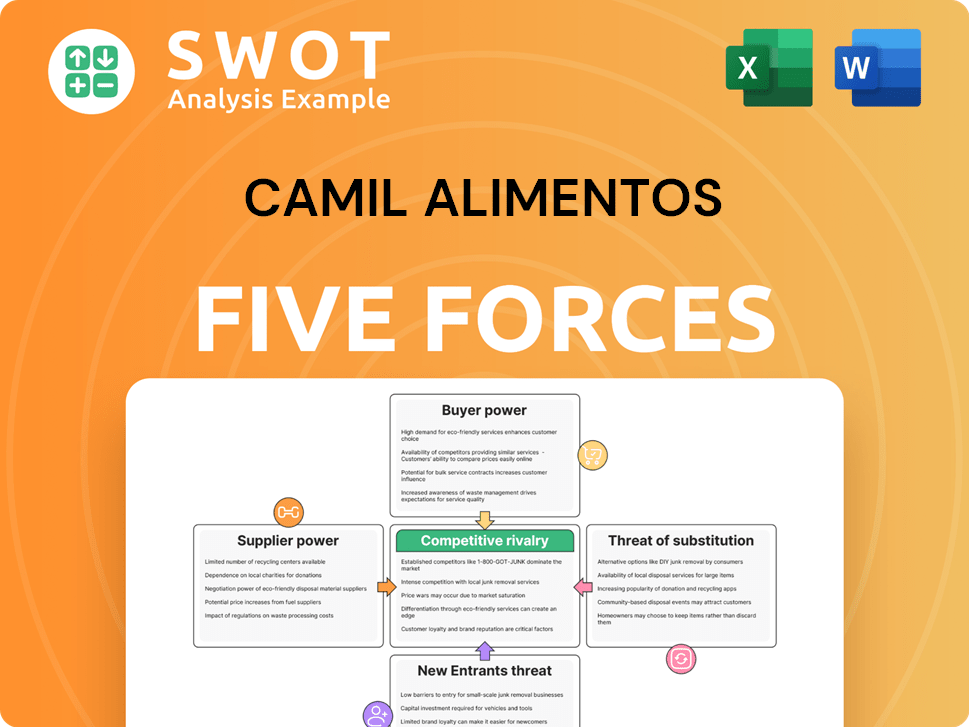
Camil Alimentos Porter's Five Forces Analysis
- Covers All 5 Competitive Forces in Detail
- Structured for Consultants, Students, and Founders
- 100% Editable in Microsoft Word & Excel
- Instant Digital Download – Use Immediately
- Compatible with Mac & PC – Fully Unlocked
Related Blogs

- What are Mission Vision & Core Values of Camil Alimentos Company?
- What is Growth Strategy and Future Prospects of Camil Alimentos Company?
- How Does Camil Alimentos Company Work?
- What is Sales and Marketing Strategy of Camil Alimentos Company?
- What is Brief History of Camil Alimentos Company?
- Who Owns Camil Alimentos Company?
- What is Customer Demographics and Target Market of Camil Alimentos Company?
Disclaimer
All information, articles, and product details provided on this website are for general informational and educational purposes only. We do not claim any ownership over, nor do we intend to infringe upon, any trademarks, copyrights, logos, brand names, or other intellectual property mentioned or depicted on this site. Such intellectual property remains the property of its respective owners, and any references here are made solely for identification or informational purposes, without implying any affiliation, endorsement, or partnership.
We make no representations or warranties, express or implied, regarding the accuracy, completeness, or suitability of any content or products presented. Nothing on this website should be construed as legal, tax, investment, financial, medical, or other professional advice. In addition, no part of this site—including articles or product references—constitutes a solicitation, recommendation, endorsement, advertisement, or offer to buy or sell any securities, franchises, or other financial instruments, particularly in jurisdictions where such activity would be unlawful.
All content is of a general nature and may not address the specific circumstances of any individual or entity. It is not a substitute for professional advice or services. Any actions you take based on the information provided here are strictly at your own risk. You accept full responsibility for any decisions or outcomes arising from your use of this website and agree to release us from any liability in connection with your use of, or reliance upon, the content or products found herein.