

Bank Of Ireland Group Bundle

How Does Bank of Ireland Navigate the Shifting Financial Terrain?
The Irish banking sector is undergoing a significant transformation, with recent consolidation reshaping the playing field for established institutions like Bank of Ireland Group. This dynamic environment presents both challenges and opportunities, demanding a keen understanding of the Bank Of Ireland Group SWOT Analysis and its competitive positioning. Founded in 1783, Bank of Ireland has a rich history, evolving from a foundational financial institution to a diversified services group.

This analysis delves into the Bank of Ireland competitive landscape, examining its key rivals and the strategic advantages that define its market presence. Understanding the Bank of Ireland competitors and their strategies is crucial for assessing its Bank of Ireland financial performance and future growth prospects within the Irish banking sector. We'll explore the Bank of Ireland strategy to provide a comprehensive Bank of Ireland market analysis.
Where Does Bank Of Ireland Group’ Stand in the Current Market?
Bank of Ireland Group maintains a strong market position within the Irish financial services industry. This strength has been reinforced by recent market exits, which have consolidated its standing. The bank has absorbed a substantial portion of loan and deposit books from departing competitors. This has propelled it into a de facto duopoly with AIB in several key segments, particularly in retail banking in Ireland.
Its primary product lines include retail banking (mortgages, personal loans, deposits), corporate banking (lending, treasury services), and wealth management. Geographically, its core presence is in the Republic of Ireland and the United Kingdom, with a more focused international reach for corporate and treasury services. Bank of Ireland serves a wide array of customer segments, including individuals, small and medium-sized enterprises (SMEs), large corporations, and institutional clients.
Over time, Bank of Ireland has undergone a significant digital transformation, investing heavily in its online and mobile banking platforms to meet evolving customer preferences and compete with digital-first challengers. This shift reflects a strategic move towards enhanced customer experience and operational efficiency. To understand more about the history, you can read Brief History of Bank Of Ireland Group.
 Market Share and Competitive Positioning
Bank of Ireland's market share in Ireland has been significantly boosted by acquisitions. The bank acquired a circa €8.8 billion portfolio of performing mortgages from KBC Bank Ireland in late 2022. This has solidified its position as a dominant player alongside AIB and Permanent TSB. The bank's strong market position is a key aspect of the Bank of Ireland competitive landscape.
Key Competitors and Rivals
The main competitors for Bank of Ireland are AIB and Permanent TSB. These banks compete across various segments, including retail and corporate banking. Competition is also emerging from digital-first challengers, which are impacting the Irish banking sector. Understanding the Bank of Ireland competitors is crucial for market analysis.
Financial Performance and Strategy
Bank of Ireland's financial performance has been robust, with underlying profit before tax of €1,438 million in 2023, up from €1,178 million in 2022. Net interest income grew by 27% to €3,446 million in 2023. The bank's strategy includes significant investments in digital transformation to improve customer experience and operational efficiency.
Customer Base and Market Segments
Bank of Ireland serves a diverse customer base, including individuals, SMEs, large corporations, and institutional clients. The bank's retail banking segment offers mortgages, personal loans, and deposit accounts. Its corporate banking segment provides lending and treasury services. Analyzing the Bank of Ireland customer base is important for understanding its market positioning.

Competitive Advantages and Challenges
Bank of Ireland's competitive advantages include its strong market position, diversified product offerings, and significant investments in digital banking. The bank faces challenges such as competition from AIB and digital-first challengers. The regulatory environment and economic conditions also pose potential challenges. Bank of Ireland competitive advantages are key to its success.
- Market Consolidation: Benefit from the exit of competitors, increasing market share.
- Digital Transformation: Investments in online and mobile banking platforms.
- Financial Health: Strong profitability and capital position, with a CET1 ratio of 16.5% at the end of 2023.
- Strategic Focus: Emphasis on customer experience and operational efficiency.
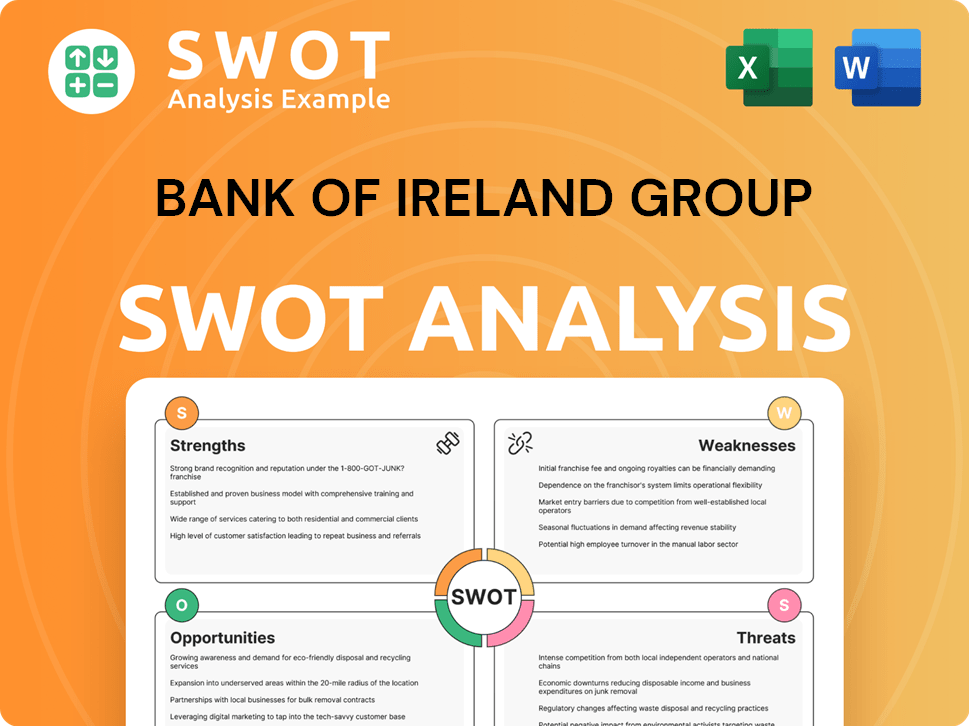
Bank Of Ireland Group SWOT Analysis
- Complete SWOT Breakdown
- Fully Customizable
- Editable in Excel & Word
- Professional Formatting
- Investor-Ready Format
Who Are the Main Competitors Challenging Bank Of Ireland Group?
The Bank of Ireland competitive landscape is shaped by a mix of traditional and emerging players. The financial institution faces significant competition in both the Irish and UK markets, as well as from fintech companies. Understanding these competitive dynamics is crucial for assessing the Bank of Ireland's financial performance and strategic positioning.
In Ireland, the Bank of Ireland's competitors include established banks like AIB and Permanent TSB. The UK market presents a different set of challenges, with major high street banks and a growing number of challenger banks vying for market share. The rise of fintech firms adds another layer of complexity to the competitive environment, forcing the Bank of Ireland to innovate and adapt to maintain its customer base.
The Bank of Ireland's market analysis reveals a sector undergoing constant change, driven by technological advancements and shifts in consumer behavior. This requires the bank to continuously evaluate its strategies and offerings to stay competitive. For a deeper dive into the bank's financial strategies, consider exploring Revenue Streams & Business Model of Bank Of Ireland Group.

Key Competitors in Ireland
AIB (Allied Irish Banks) is a primary competitor, offering a wide range of financial services. PTSB (Permanent TSB) also competes, particularly in retail banking. These banks challenge Bank of Ireland across various product lines.
UK Market Competitors
In the UK, the Bank of Ireland faces competition from major high street banks like Lloyds Banking Group, Barclays, HSBC, and NatWest Group. Challenger banks and building societies also play a role in the competitive landscape.
Fintech Disruptors
Fintech companies such as Revolut and N26 are gaining traction, especially among younger demographics. These firms offer specialized services and often have lower fees, challenging traditional revenue streams.
Indirect Competitors
Non-bank lenders and credit unions also pose a competitive threat, particularly in the personal and SME lending segments. These entities often provide more flexible or localized services.
Market Dynamics
The competitive dynamics are influenced by potential new entrants leveraging advanced technologies. Ongoing consolidation within the sector could lead to further market share shifts and intensified competition.
Competitive Strategies
Bank of Ireland's strategy includes focusing on specific niches in the UK market, such as mortgage lending and partnerships. The bank is also investing in digital offerings to compete with fintech companies.
Key Competitive Factors
The Bank of Ireland's competitive positioning is influenced by several factors, including interest rates, digital service offerings, and branch network accessibility. The bank's ability to adapt to changing market conditions and customer preferences is crucial for its success.
- Bank of Ireland's key rivals, such as AIB and PTSB, often compete on interest rates and fees.
- Digital banking services are a critical area of competition, with fintech companies leading the way in innovation.
- Branch network accessibility remains important, although the trend is towards digital banking.
- Bank of Ireland's challenges and opportunities include managing the impact of economic downturns and regulatory changes.
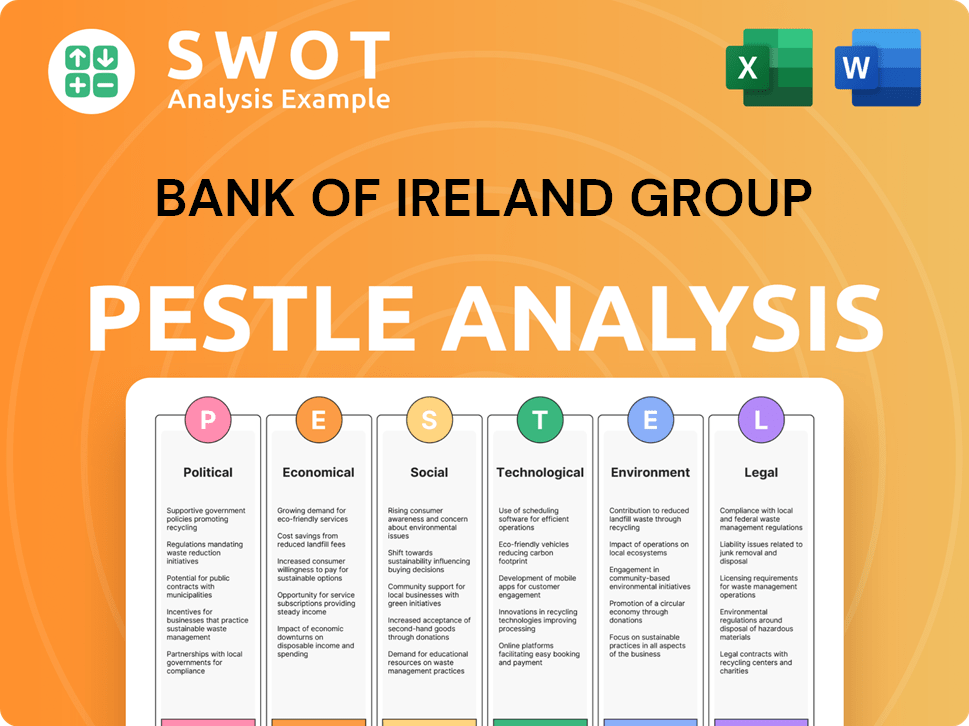
Bank Of Ireland Group PESTLE Analysis
- Covers All 6 PESTLE Categories
- No Research Needed – Save Hours of Work
- Built by Experts, Trusted by Consultants
- Instant Download, Ready to Use
- 100% Editable, Fully Customizable
What Gives Bank Of Ireland Group a Competitive Edge Over Its Rivals?
Understanding the Bank of Ireland competitive landscape involves assessing its key strengths and how it stacks up against its rivals in the Irish banking sector. The bank's competitive advantages are rooted in its long-standing presence, extensive distribution network, and economies of scale. These factors play a critical role in shaping its market position and influencing its financial performance.
Bank of Ireland's strategic moves, including investments in digital transformation and customer-centric initiatives, are designed to maintain its competitive edge. The bank continuously adapts to market dynamics and regulatory changes, ensuring it remains relevant and resilient. This adaptability is crucial for navigating the challenges and opportunities within the financial services industry.
A deep dive into Bank of Ireland's competitive advantages reveals a multifaceted approach to maintaining its market position. The bank’s ability to leverage its brand equity, extensive network, and operational efficiencies allows it to compete effectively with both established and emerging players. This comprehensive strategy is essential for sustained growth and success.
Brand Equity and Trust
Bank of Ireland benefits from over two centuries of operations, fostering significant customer trust and loyalty. This long-standing presence is particularly strong in the Irish market. This historical legacy translates into a robust customer base and high brand recognition, making it difficult for new entrants to compete.
Extensive Distribution Network
The bank has a comprehensive distribution network with a broad branch presence across Ireland and a growing digital footprint. This hybrid approach caters to diverse customer preferences, offering both traditional and technologically advanced banking solutions. Investments in digital transformation enhance online and mobile banking platforms.
Economies of Scale
As one of Ireland's largest banks, Bank of Ireland achieves lower per-unit costs in operations, technology, and compliance. This scale allows for greater investment in technology and regulatory adherence. Diversified revenue streams across retail, corporate, and wealth management provide resilience against downturns.
Strong Capital Position
Bank of Ireland's robust CET1 ratio enhances its ability to absorb economic shocks and pursue growth opportunities. A strong capital base is crucial for stability and strategic expansion. This financial strength allows the bank to navigate economic uncertainties effectively.
Key Competitive Advantages in Detail
Bank of Ireland's competitive advantages are multifaceted, contributing to its strong market position. These advantages include brand recognition, a wide distribution network, economies of scale, and a solid capital base, all of which are crucial for its sustained success. These factors are essential for its long-term growth and resilience. For more insights, check out the Marketing Strategy of Bank Of Ireland Group.
- Brand Trust: Two centuries of operation have built significant customer trust.
- Extensive Network: A broad branch network and growing digital presence offer accessibility.
- Operational Efficiency: Economies of scale allow for lower costs and greater investment.
- Financial Stability: A strong CET1 ratio enhances the bank's ability to withstand economic shocks.
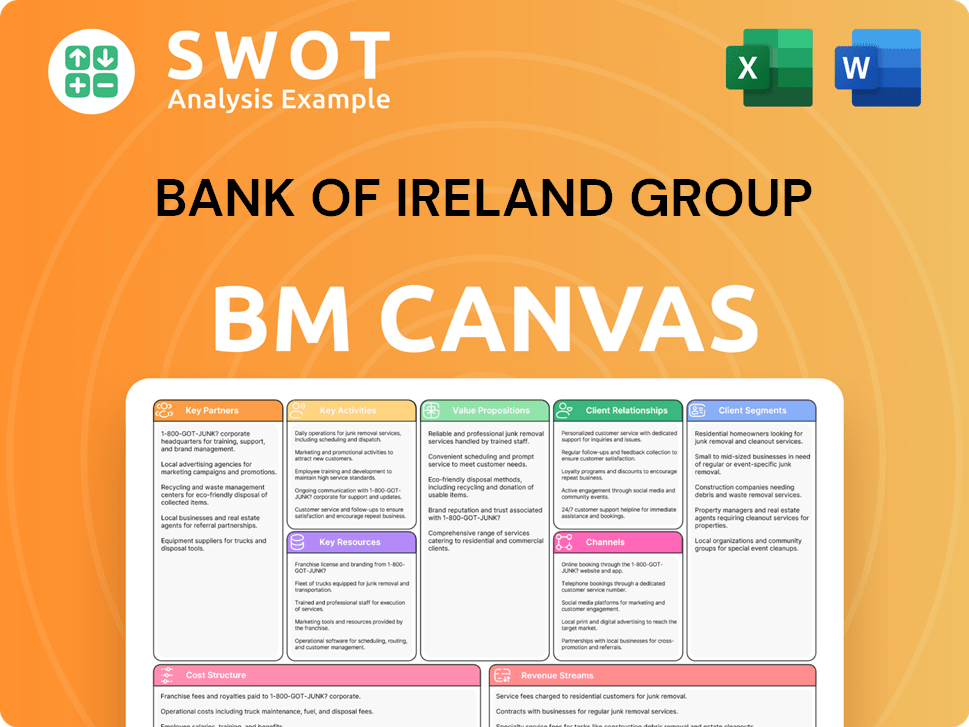
Bank Of Ireland Group Business Model Canvas
- Complete 9-Block Business Model Canvas
- Effortlessly Communicate Your Business Strategy
- Investor-Ready BMC Format
- 100% Editable and Customizable
- Clear and Structured Layout
What Industry Trends Are Reshaping Bank Of Ireland Group’s Competitive Landscape?
The financial services landscape is undergoing significant transformation, impacting the competitive dynamics for institutions like Bank of Ireland. Key trends include technological advancements, evolving consumer preferences, and regulatory changes. These factors create both challenges and opportunities for banks operating in the Irish banking sector, influencing their strategic priorities and future growth prospects. A thorough Bank of Ireland market analysis is essential to understand its position.
Bank of Ireland faces a dynamic environment, influenced by economic shifts, market consolidation, and the rise of fintechs. The bank's ability to adapt to these changes, manage risks, and capitalize on opportunities will be crucial for its long-term success. Understanding the Bank of Ireland competitive landscape is vital for stakeholders, as highlighted in this analysis of Owners & Shareholders of Bank Of Ireland Group.
Industry Trends
Technological advancements, including AI and blockchain, are reshaping banking. Regulatory changes, such as those related to data privacy and capital requirements, are also impacting the industry. Evolving consumer preferences, with a focus on digital and personalized services, are driving banks to adapt.
Future Challenges
Increased competition from challenger banks and fintechs poses a threat. Managing legacy IT systems while integrating new technologies is a significant challenge. Adapting to ESG considerations and increasing customer demand for sustainable finance is also crucial. Bank of Ireland financial performance can be affected.
Opportunities
Market consolidation in Ireland creates opportunities for expansion. Innovation in product offerings, particularly in sustainable finance, can attract customers. Strategic partnerships with fintechs can enable rapid technology adoption and innovation. Exploring Bank of Ireland future growth prospects is essential.
Strategic Responses
Focus on digital transformation, cost management, and strengthening capital positions is crucial. Strategic partnerships and acquisitions may be pursued. Adapting to regulatory changes and ESG demands is essential. This will impact Bank of Ireland strategy.
Key Considerations
The Bank of Ireland competitive landscape is shaped by both internal and external factors. The bank's ability to navigate these challenges and capitalize on opportunities will determine its future success. Understanding the Bank of Ireland competitors and their strategies is critical for effective decision-making.
- Market Consolidation: The exits of KBC and Ulster Bank have reshaped the market.
- Digital Transformation: Investment in digital infrastructure is crucial for competitiveness.
- Regulatory Compliance: Adapting to new regulations, such as Basel IV, is essential.
- Sustainable Finance: Meeting the growing demand for ESG-focused products is important.
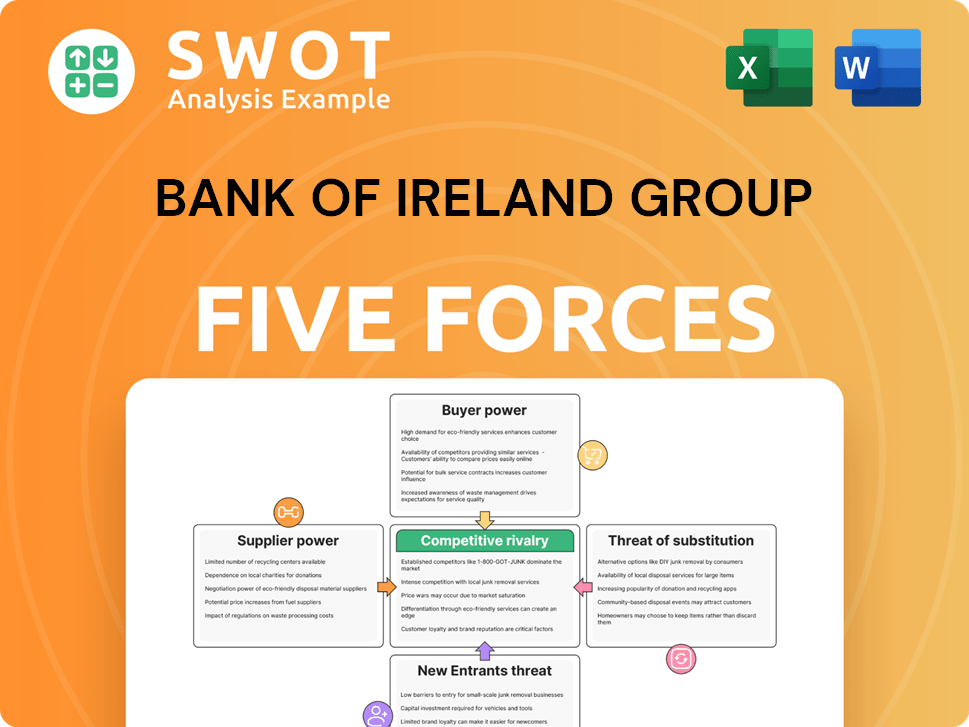
Bank Of Ireland Group Porter's Five Forces Analysis
- Covers All 5 Competitive Forces in Detail
- Structured for Consultants, Students, and Founders
- 100% Editable in Microsoft Word & Excel
- Instant Digital Download – Use Immediately
- Compatible with Mac & PC – Fully Unlocked
Related Blogs

- What are Mission Vision & Core Values of Bank Of Ireland Group Company?
- What is Growth Strategy and Future Prospects of Bank Of Ireland Group Company?
- How Does Bank Of Ireland Group Company Work?
- What is Sales and Marketing Strategy of Bank Of Ireland Group Company?
- What is Brief History of Bank Of Ireland Group Company?
- Who Owns Bank Of Ireland Group Company?
- What is Customer Demographics and Target Market of Bank Of Ireland Group Company?
Disclaimer
All information, articles, and product details provided on this website are for general informational and educational purposes only. We do not claim any ownership over, nor do we intend to infringe upon, any trademarks, copyrights, logos, brand names, or other intellectual property mentioned or depicted on this site. Such intellectual property remains the property of its respective owners, and any references here are made solely for identification or informational purposes, without implying any affiliation, endorsement, or partnership.
We make no representations or warranties, express or implied, regarding the accuracy, completeness, or suitability of any content or products presented. Nothing on this website should be construed as legal, tax, investment, financial, medical, or other professional advice. In addition, no part of this site—including articles or product references—constitutes a solicitation, recommendation, endorsement, advertisement, or offer to buy or sell any securities, franchises, or other financial instruments, particularly in jurisdictions where such activity would be unlawful.
All content is of a general nature and may not address the specific circumstances of any individual or entity. It is not a substitute for professional advice or services. Any actions you take based on the information provided here are strictly at your own risk. You accept full responsibility for any decisions or outcomes arising from your use of this website and agree to release us from any liability in connection with your use of, or reliance upon, the content or products found herein.