

Tobu Railway Co. Bundle

How has Tobu Railway shaped Tokyo's landscape?
Journey back in time to uncover the remarkable story of Tobu Railway Co., a company that has indelibly shaped the Greater Tokyo area. From its inception in 1897, Tobu Railway didn't just build railways; it envisioned entire communities, intertwining transportation with real estate development. Discover how this pioneering spirit fueled the growth of a diversified enterprise, far exceeding its initial railway ambitions.

The Tobu Railway Co. SWOT Analysis provides a comprehensive understanding of the company's strengths, weaknesses, opportunities, and threats. Explore the Tobu Line's impact on Tokyo transportation and delve into the Japanese Railways landscape to understand Tobu Company's pivotal role. This exploration of the brief history of Tobu Railway Co. will highlight its strategic expansions, key milestones, and enduring influence on tourism and regional development, offering insights into its financial performance and future plans.
What is the Tobu Railway Co. Founding Story?
The story of Tobu Railway Co., Ltd., begins on October 1, 1897. This marked the official founding of a company that would become a significant player in the Japanese railway landscape. The establishment was a direct response to the growing need for better transportation to support Japan's rapid development during the Meiji era.
The primary goal of the founders was to improve connectivity, particularly between Tokyo and the northern Kanto region. This was crucial for economic growth and the efficient movement of both people and goods. While the exact individuals who spearheaded the initiative may not be as prominently highlighted as in some Western companies, the creation of the company was a collaborative effort involving key business leaders and investors who recognized the potential of railway development.
The initial business model was simple: build and operate railway lines. This would facilitate both passenger and freight transport, serving as the core service. Funding for the project likely came from a mix of private investments from wealthy individuals and financial institutions, a common approach for major infrastructure projects at the time. The name 'Tobu,' meaning 'East-North,' clearly indicated the company's intended service area, focusing on connecting Tokyo with the eastern and northern regions of Japan. This period was characterized by a strong national push for modernization, and railway companies like Tobu were seen as essential for this progress. They faced challenges such as acquiring land rights and securing substantial capital.

Key Aspects of Tobu Railway's Founding
The founding of Tobu Railway was a critical step in Japan's modernization, addressing the need for improved transportation infrastructure.
- Founding Date: October 1, 1897.
- Primary Goal: To improve transportation between Tokyo and the northern Kanto region.
- Business Model: Construct and operate railway lines for passenger and freight transport.
- Funding: Primarily from private investments.
- Name Origin: 'Tobu' (East-North) reflects the service area.
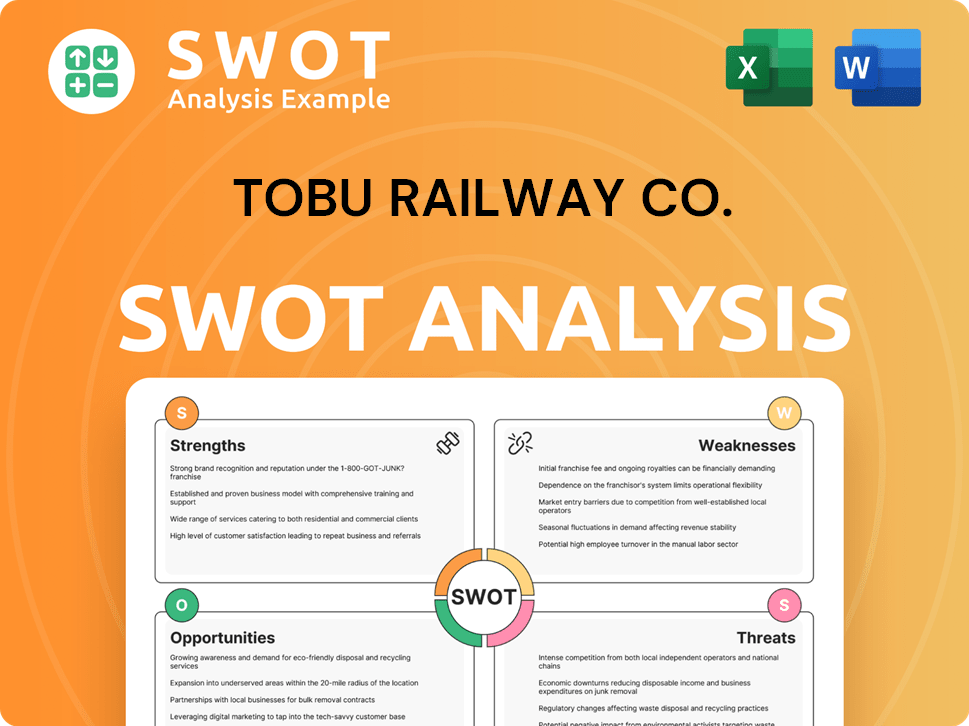
Tobu Railway Co. SWOT Analysis
- Complete SWOT Breakdown
- Fully Customizable
- Editable in Excel & Word
- Professional Formatting
- Investor-Ready Format
What Drove the Early Growth of Tobu Railway Co.?
The early growth of the Tobu Railway was marked by strategic expansion and diversification. Following its establishment in 1897, the Tobu Company steadily extended its railway network, including the Isesaki Line and the Nikko Line. These initial routes quickly gained popularity, serving a growing number of passengers and freight, and setting the stage for future development within the Japanese Railways landscape.
 Strategic Expansion of Tobu Line
A key decision was the early recognition of the synergy between railway operations and real estate development. Starting in the 1920s, Tobu Railway began developing residential areas along its lines, which continues to be a core business strategy. This involved acquiring land, building housing, and creating commercial facilities, boosting ridership and generating additional revenue streams. This approach distinguished Tobu from many of its contemporaries within Tokyo Transportation.
Diversification into Related Businesses
The company also expanded into bus services and leisure facilities, solidifying its presence in the regions it served. Key leadership transitions occurred as the company matured, with successive leaders championing the integrated business model. Market reception to Tobu's services was generally positive, fueled by the growing demand for efficient transportation and modern living spaces. By the mid-20th century, Tobu Railway had transformed into a comprehensive regional developer.
Key Milestones and Market Position
The competitive landscape included other private railway companies, but Tobu's expansion and diversified portfolio allowed it to carve out a significant market share. The completion of the Nikko Line to Nikko in 1929 was a pivotal moment, enhancing connectivity to a major tourist destination. This strategic shift laid the foundation for its future success, transforming it from a nascent railway operator into a regional developer. The Brief history of Tobu Railway Co. shows a remarkable strategic shift.
Early Financial Performance Indicators
While specific early financial data from the late 19th and early 20th centuries is limited, the success of the Isesaki Line and Nikko Line suggests increasing passenger numbers and freight volume, which would have translated into growing revenue. The early investment in real estate development along the Tobu Line also provided an additional revenue stream, contributing to the company's financial stability and growth. The Tobu Railway's early years were marked by strategic investments.
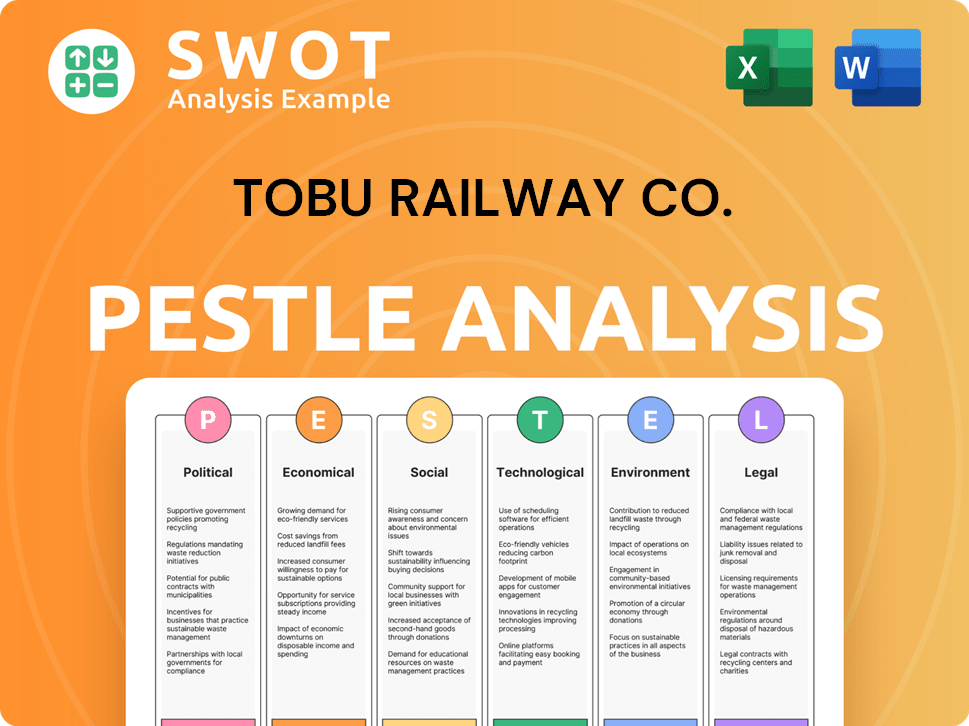
Tobu Railway Co. PESTLE Analysis
- Covers All 6 PESTLE Categories
- No Research Needed – Save Hours of Work
- Built by Experts, Trusted by Consultants
- Instant Download, Ready to Use
- 100% Editable, Fully Customizable
What are the key Milestones in Tobu Railway Co. history?
The history of Tobu Railway is marked by significant milestones that showcase its evolution from a regional railway to a major player in Tokyo transportation. These milestones highlight the company's growth, strategic expansions, and adaptation to changing market dynamics, solidifying its position within the Japanese Railways landscape.
| Year | Milestone |
|---|---|
| 1897 | Founded as the Tobu Railway Company, marking the beginning of its operations. |
| 1899 | The first railway line, linking Kita-Senju and Kuki, commenced operations, establishing the foundation of the Tobu Line network. |
| 1920s-1930s | Expansion of the railway network, including the extension of lines and the acquisition of smaller railway companies. |
| 1960s | Introduction of express trains and the modernization of rolling stock to enhance passenger services. |
| 2012 | Completion of the Tokyo Skytree, a major project that integrated transportation, commercial, and leisure facilities, boosting tourism and regional development. |
Tobu Railway has consistently embraced innovations to enhance its services and expand its business. A key innovation has been its 'railway-side development' model, integrating residential and commercial properties along its lines. This strategy not only increased ridership but also created sustainable revenue streams.

Integrated Urban Development
Tobu Railway pioneered the concept of developing residential and commercial properties alongside its railway lines. This approach boosted ridership and created additional revenue streams, contributing to regional growth.
Technological Advancements
Continuous upgrades in rolling stock and signaling systems have improved safety and efficiency. These advancements have enhanced the overall passenger experience and operational reliability.
Strategic Partnerships
Collaborations with local governments and businesses have facilitated large-scale urban development projects. These partnerships have been crucial for expanding the company's reach and influence.
Tourism Initiatives
Focus on attracting international tourists and developing new leisure offerings, such as the development of the Nikko area, has diversified revenue streams. This focus has been particularly important in response to demographic changes.
Digital Integration
Implementation of digital ticketing systems and information services to enhance customer convenience. This includes mobile ticketing and real-time train information, improving the overall travel experience.
Sustainable Practices
Efforts to incorporate sustainable practices, such as energy-efficient trains and eco-friendly station designs, have reduced environmental impact. These initiatives align with global sustainability goals.
Tobu Railway has faced several challenges throughout its history, including economic downturns and evolving commuter preferences. The company has responded to these challenges through strategic adjustments and diversification.
Economic Fluctuations
Economic downturns, such as the bursting of Japan's economic bubble in the early 1990s, significantly impacted real estate values and passenger numbers. These fluctuations required strategic financial planning and operational adjustments.
Changing Commuter Preferences
Evolving commuter preferences and increased competition from other transportation providers have necessitated adjustments in service offerings. This includes adapting to changing work patterns and leisure activities.
Demographic Shifts
Declining birthrates and an aging population in Japan have impacted ridership and required a shift in focus towards attracting international tourists. This demographic shift has prompted the development of new tourism-related offerings.
Competition
Competition from other railway companies and alternative modes of transport has required constant innovation and service improvements. This includes enhancing the overall travel experience and offering competitive pricing.
Operational Efficiency
The need to optimize railway operations and reduce costs to maintain profitability has been a constant challenge. This involves improving efficiency in areas such as energy consumption and maintenance.
Regulatory Changes
Adapting to changes in government regulations and safety standards has required continuous investment and operational adjustments. Compliance with these regulations is crucial for maintaining safety and operational integrity.
For more insights into the company's strategic approach, consider reading about the Growth Strategy of Tobu Railway Co..
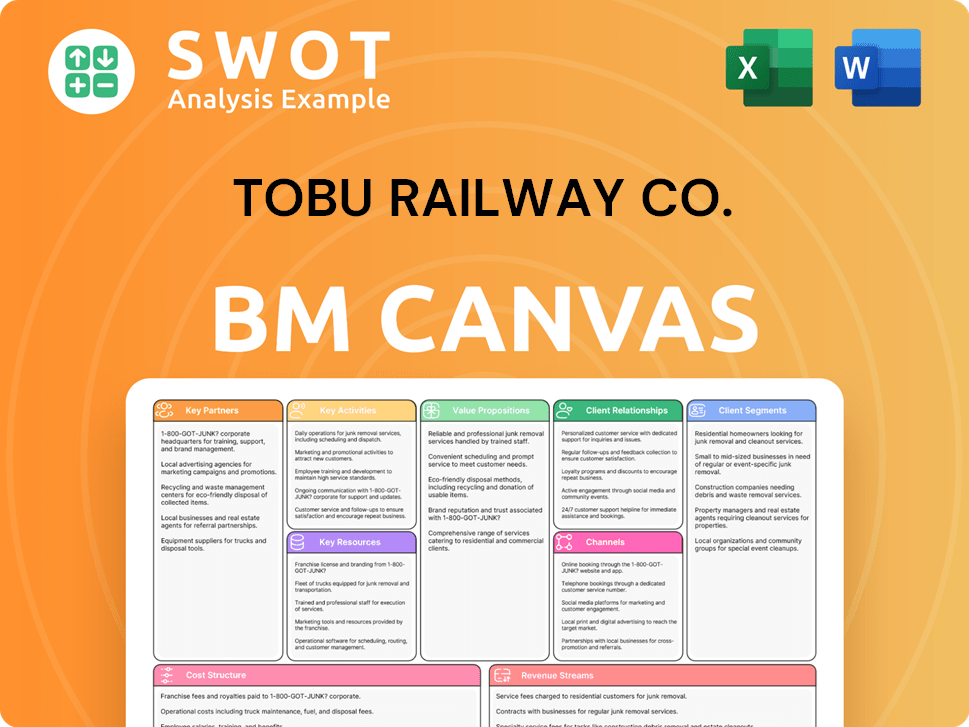
Tobu Railway Co. Business Model Canvas
- Complete 9-Block Business Model Canvas
- Effortlessly Communicate Your Business Strategy
- Investor-Ready BMC Format
- 100% Editable and Customizable
- Clear and Structured Layout
What is the Timeline of Key Events for Tobu Railway Co.?
The Competitors Landscape of Tobu Railway Co., or Tobu Company, has a rich history, evolving from its early days to become a major player in Japanese railways. Key milestones mark its growth, including the completion of vital railway lines and strategic diversifications into real estate, tourism, and urban development. This expansion has significantly shaped Tokyo's transportation network and contributed to regional development.
| Year | Key Event |
|---|---|
| 1897 | Tobu Railway Co., Ltd. was founded, marking the beginning of its journey. |
| 1900 | The Isesaki Line was completed, extending the railway to Isesaki. |
| 1929 | The Nikko Line was completed, providing access to the popular tourist destination of Nikko. |
| 1950s-1960s | Tobu Railway expanded its services with bus operations and real estate development along its railway lines. |
| 1980s | The company diversified further into leisure and tourism, including the development of theme parks. |
| 2000s | Tobu focused on urban redevelopment projects, particularly around major stations. |
| 2012 | The Tokyo Skytree, a major tourist attraction developed by Tobu, opened. |
| 2017 | The SL Taiju steam locomotive service was introduced, enhancing tourism offerings. |
| 2023 | Tobu Railway announced plans for further sustainable urban development and smart city initiatives. |
| 2024-2025 | Continued investment in digitalization and enhanced customer experience for railway services, alongside expansion of hotel and resort properties. |
Sustainable Urban Development
Tobu Railway is leveraging its real estate holdings for sustainable urban development. This includes integrating transportation, housing, and digital services to create smart cities. These initiatives align with broader trends in Japan, where railway companies are becoming comprehensive lifestyle providers. The company is expected to focus on regional revitalization.
Tourism and Leisure Expansion
Tobu plans to enhance its tourism and leisure segments to attract more international visitors, particularly with the anticipated recovery of global tourism. This includes developing new hotels and resorts and promoting unique cultural experiences along its lines. The company aims to capitalize on the increasing demand for travel.
Digitalization and Passenger Experience
In the railway sector, Tobu is investing in digitalization to improve operational efficiency and enhance the passenger experience. This includes advanced ticketing systems and real-time information. These improvements aim to streamline operations and provide better services to passengers.
Financial Outlook and Community Commitment
While specific analyst predictions for Tobu's future revenue are subject to market conditions, the company's diversified business model and strategic focus on regional revitalization are expected to contribute to stable growth. Leadership statements emphasize a commitment to contributing to the communities it serves, a vision that directly ties back to its founding principle of connecting and developing regions, ensuring its continued relevance and impact in the Greater Tokyo area and beyond.
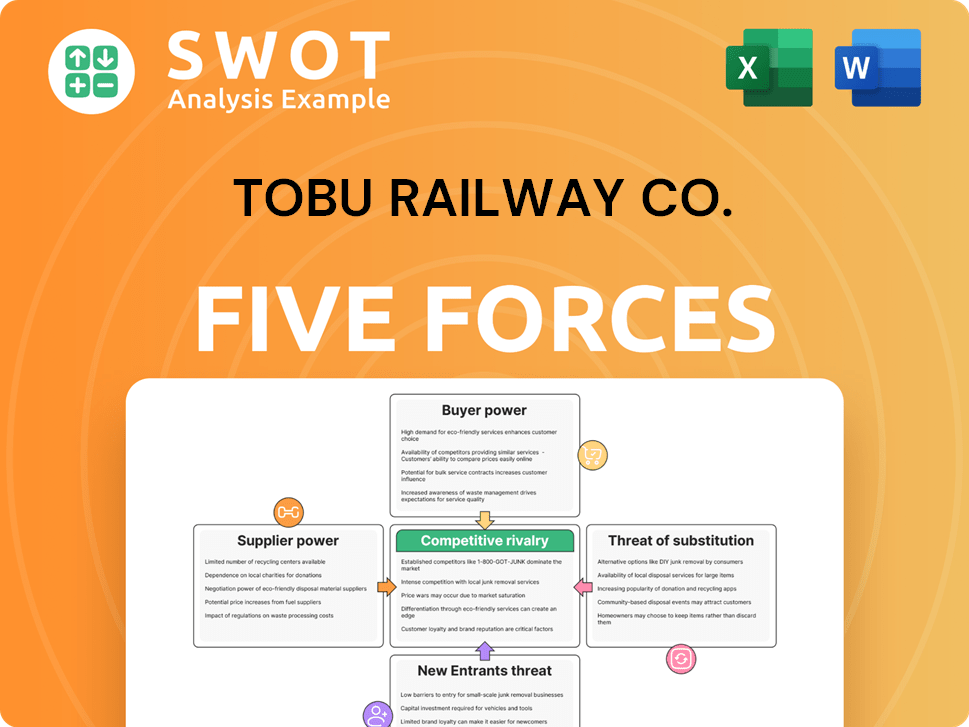
Tobu Railway Co. Porter's Five Forces Analysis
- Covers All 5 Competitive Forces in Detail
- Structured for Consultants, Students, and Founders
- 100% Editable in Microsoft Word & Excel
- Instant Digital Download – Use Immediately
- Compatible with Mac & PC – Fully Unlocked
Related Blogs

- What is Competitive Landscape of Tobu Railway Co. Company?
- What is Growth Strategy and Future Prospects of Tobu Railway Co. Company?
- How Does Tobu Railway Co. Company Work?
- What is Sales and Marketing Strategy of Tobu Railway Co. Company?
- What is Brief History of Tobu Railway Co. Company?
- Who Owns Tobu Railway Co. Company?
- What is Customer Demographics and Target Market of Tobu Railway Co. Company?
Disclaimer
All information, articles, and product details provided on this website are for general informational and educational purposes only. We do not claim any ownership over, nor do we intend to infringe upon, any trademarks, copyrights, logos, brand names, or other intellectual property mentioned or depicted on this site. Such intellectual property remains the property of its respective owners, and any references here are made solely for identification or informational purposes, without implying any affiliation, endorsement, or partnership.
We make no representations or warranties, express or implied, regarding the accuracy, completeness, or suitability of any content or products presented. Nothing on this website should be construed as legal, tax, investment, financial, medical, or other professional advice. In addition, no part of this site—including articles or product references—constitutes a solicitation, recommendation, endorsement, advertisement, or offer to buy or sell any securities, franchises, or other financial instruments, particularly in jurisdictions where such activity would be unlawful.
All content is of a general nature and may not address the specific circumstances of any individual or entity. It is not a substitute for professional advice or services. Any actions you take based on the information provided here are strictly at your own risk. You accept full responsibility for any decisions or outcomes arising from your use of this website and agree to release us from any liability in connection with your use of, or reliance upon, the content or products found herein.