

Snap-on Bundle

How did a simple idea revolutionize the tool industry and build the Snap-on empire?
From its humble beginnings in 1920, the Snap-on SWOT Analysis reveals a fascinating journey of innovation and strategic prowess. This Snap-on company, initially focused on providing mechanics with more efficient tools, quickly reshaped the automotive sector. Its introduction of interchangeable sockets and wrench handles was a pivotal moment, setting the stage for its enduring success. This is the Snap-on history.

The story of Snap-on tools is a testament to the power of customer-centric solutions and continuous innovation. Today, the Snap-on company stands as a global leader, its market capitalization reflecting its strong financial health and widespread influence. By exploring its evolution, we uncover the strategic decisions and cultural values that have defined this iconic tool company.
What is the Snap-on Founding Story?
The story of Snap-on began on September 28, 1920, in Milwaukee, Wisconsin. Founded by Joseph Johnson and William Seidemann, the company emerged from a clear need in the burgeoning automotive repair sector. Their innovative approach revolutionized how mechanics worked, setting the stage for a lasting impact on the tool industry.
Johnson, a sales manager, and Seidemann, an engineer, saw the inefficiencies of existing tools. Their solution was a system of interchangeable handles and sockets, designed to be 'snapped on' together. This concept, which gave the company its name, offered mechanics a versatile and space-saving alternative to the cumbersome tools of the time. This innovation directly addressed the needs of the growing automotive industry, providing a more efficient way to work.
The initial product offering consisted of a set of 10 sockets and 5 handles. This simple yet effective design formed the foundation of their direct sales model, focusing on professional users. Johnson personally demonstrated the tools to mechanics, emphasizing the immediate value and efficiency they provided. This direct-to-customer strategy was key to establishing their market presence. The early success of Snap-on was fueled by the rapid expansion of the automotive industry in the 1920s, creating a strong demand for specialized tools.

Snap-on's Founding: A Brief History
Snap-on was founded in 1920 by Joseph Johnson and William Seidemann, addressing inefficiencies in the automotive repair industry. Their innovation was a system of interchangeable handles and sockets. This 'Snap-on' design offered mechanics a versatile, space-saving solution.
- The company's name reflects the ease of use of its tools.
- Initial funding was primarily through bootstrapping by the founders.
- Direct sales to customers were key to establishing their early market presence.
- The growth of the automotive industry in the 1920s created demand.
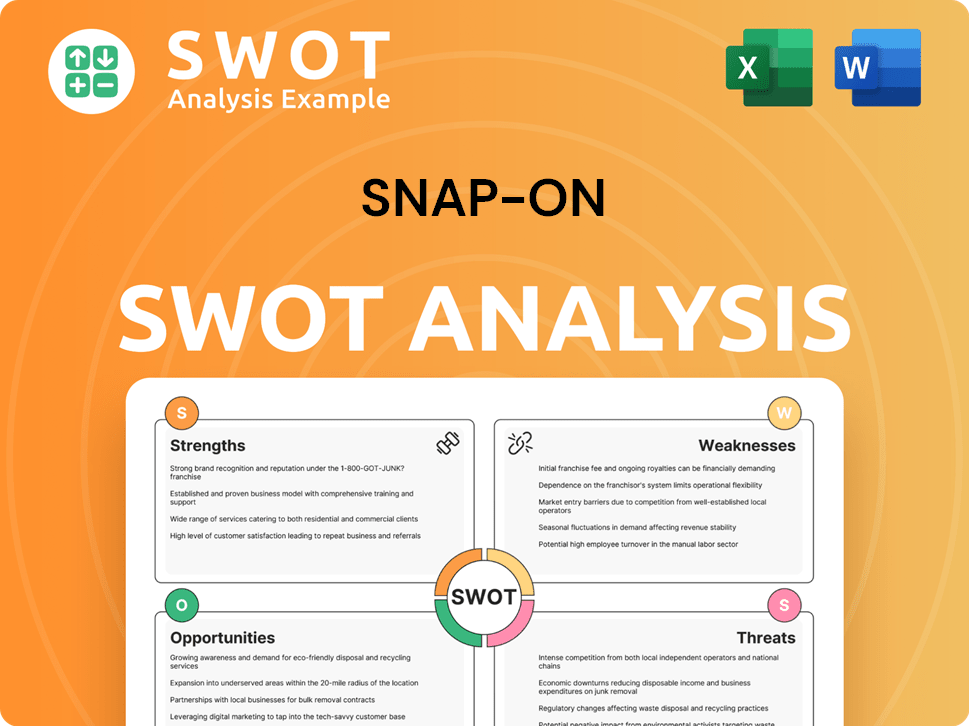
Snap-on SWOT Analysis
- Complete SWOT Breakdown
- Fully Customizable
- Editable in Excel & Word
- Professional Formatting
- Investor-Ready Format
What Drove the Early Growth of Snap-on?
The early growth of the company, a leading tool company, was marked by a strong focus on direct sales and expanding product lines. Following the success of their initial interchangeable socket sets, the company quickly broadened its offerings to include a wider range of hand tools and specialty tools. This strategy allowed for immediate customer feedback and rapid product iteration, solidifying its position in the market.
 Direct Sales and Product Diversification
The company's initial success stemmed from direct sales, where salesmen demonstrated tools directly to mechanics. This approach allowed for immediate customer feedback, crucial for product improvement. By the mid-1920s, the company had already expanded its product line, including more hand tools and specialty tools, catering to a broader customer base.
Geographical Expansion and Manufacturing
In the 1930s, the company expanded its geographical reach across the United States, establishing branch offices and warehouses. The company's commitment to manufacturing excellence led to the opening of its first manufacturing plant in Kenosha, Wisconsin, in 1930. This facility remains a significant operational hub, underscoring the company's dedication to quality and production.
World War II and Tool Manufacturing
During World War II, the company played a crucial role in supporting the war effort by providing tools to the military. This period further solidified its reputation for durability and reliability. The company's contribution to the war effort highlighted its ability to meet critical demands and its commitment to quality.
Franchise System and International Expansion
By the 1950s, the company formalized its unique franchise system, empowering independent dealers to sell directly to professional users. This strategic shift significantly amplified their market penetration. The company also began to explore international markets, making its first forays into Canada and other regions, expanding its global footprint.
The company's history is a testament to its adaptability and commitment to its customers. The company's evolution, from its early days to its current global presence, reflects a strategic focus on quality, innovation, and customer service. For more insights into the company's marketing strategies, consider reading about the Marketing Strategy of Snap-on.
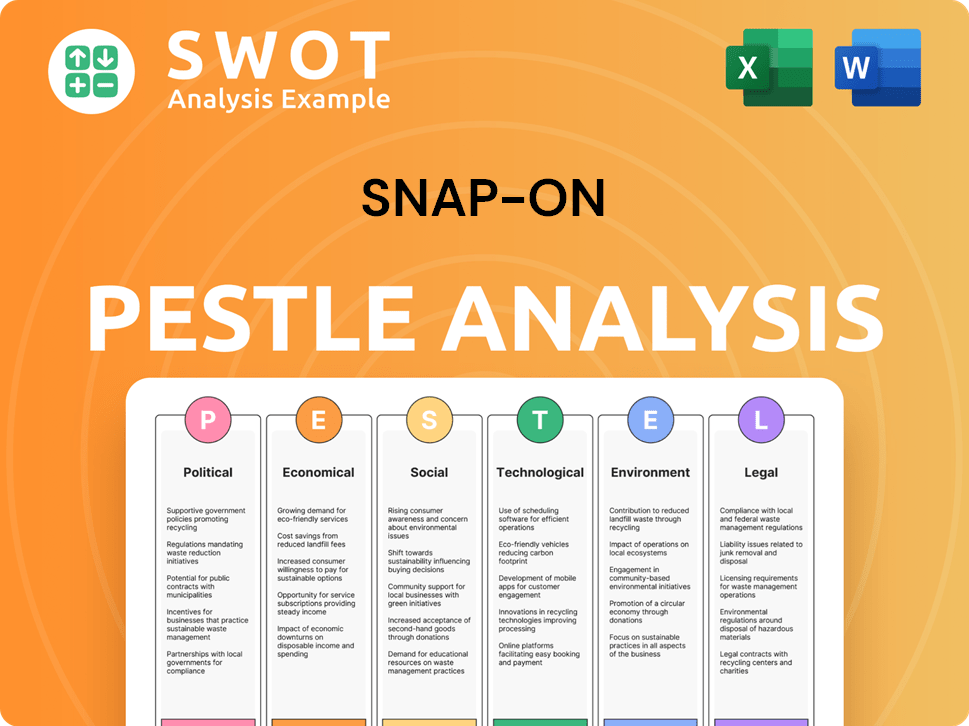
Snap-on PESTLE Analysis
- Covers All 6 PESTLE Categories
- No Research Needed – Save Hours of Work
- Built by Experts, Trusted by Consultants
- Instant Download, Ready to Use
- 100% Editable, Fully Customizable
What are the key Milestones in Snap-on history?
The Snap-on company has a rich history marked by significant milestones that have shaped its trajectory as a leading tool company. From its inception, the company has consistently evolved, adapting to market demands and technological advancements while maintaining a commitment to quality and innovation. This evolution is a testament to the company's resilience and strategic foresight.
| Year | Milestone |
|---|---|
| 1920 | The company was founded with the innovative concept of interchangeable sockets. |
| 1970s | Introduction of the Flank Drive wrenching system, enhancing turning power and reducing slippage. |
| 2000s | Expansion into advanced diagnostic equipment and software solutions, such as the MODIS and VERUS platforms. |
| 2024 | Continued expansion of digital solutions, including cloud-based diagnostics and training programs. |
The Snap-on tools has consistently pushed the boundaries of tool design and functionality. These innovations have not only improved the efficiency and effectiveness of professional users but have also set industry standards.

Flank Drive Wrenching System
This innovation, introduced in the 1970s, provided greater turning power and reduced fastener slippage, becoming an industry standard.
MODIS and VERUS Platforms
These diagnostic platforms offer advanced vehicle diagnostics and repair information, crucial for modern automotive systems.
Digital Integration
Enhanced cloud-based diagnostic solutions and training programs reflect the industry's shift towards digital integration.
Partnerships with Automotive Manufacturers
These partnerships have allowed the company to develop specialized tools and diagnostic capabilities tailored to new vehicle technologies.
Despite its successes, the Snap-on history includes facing various challenges. Economic downturns and competitive pressures have required strategic adjustments, while maintaining quality and managing a vast franchise network has presented unique complexities.
Economic Downturns
Recessions in the early 1980s and the 2008 financial crisis impacted sales, necessitating cost-cutting measures and diversification.
Competitive Threats
Competition from lower-cost manufacturers has challenged the company to uphold its value proposition through superior quality and innovation.
Product Recalls
Product failures, though rare, have led to swift recalls and a renewed focus on quality control.
Franchise Network Management
Managing a vast and independent franchise network requires ongoing support, training, and communication to maintain brand consistency and operational efficiency.
Snap-on Business Model Canvas
- Complete 9-Block Business Model Canvas
- Effortlessly Communicate Your Business Strategy
- Investor-Ready BMC Format
- 100% Editable and Customizable
- Clear and Structured Layout

What is the Timeline of Key Events for Snap-on?
The Snap-on company's rich history is a testament to its evolution and innovation in the tool industry. Founded in 1920 by Joseph Johnson and William Seidemann, the company began with a focus on interchangeable sockets and wrench handles, quickly establishing itself as a leader in hand tools. Over the decades, it expanded its product range, manufacturing capabilities, and distribution networks, solidifying its position as a premier tool company. Key milestones include the introduction of the mobile franchise system in the 1950s, the development of the Flank Drive wrenching system in the 1970s, and significant investments in electronic diagnostic equipment starting in the 1990s. These strategic moves have enabled Snap-on to adapt to changing market demands and maintain its competitive edge.
| Year | Key Event |
|---|---|
| 1920 | Founded in Milwaukee, Wisconsin, introducing interchangeable sockets and wrench handles. |
| 1930 | Opened its first manufacturing plant in Kenosha, Wisconsin. |
| 1950s | Formalized the iconic mobile franchise system, revolutionizing tool distribution. |
| 1970s | Introduced the patented Flank Drive wrenching system, enhancing tool performance. |
| 1980s | Expanded into industrial markets, diversifying its customer base beyond automotive. |
| 1990s | Began significant investment in electronic diagnostic equipment and software. |
| 2000s | Launched advanced diagnostic platforms like MODIS and VERUS, integrating repair information. |
| 2008 | Navigated the global financial crisis through strategic cost management and continued innovation. |
| 2010s | Expanded its global footprint and focused on digital solutions for professional technicians. |
| 2020 | Celebrated its 100th anniversary, reaffirming its commitment to innovation. |
| 2024 | Continued to enhance its digital ecosystem, including cloud-based diagnostic solutions and remote support capabilities. |
| 2025 | Expected to further leverage AI and data analytics in its diagnostic tools, aiming for predictive maintenance capabilities. |
Digital Transformation
The company is heavily investing in digital transformation. This includes integrating advanced technologies such as artificial intelligence and augmented reality into its diagnostic and repair solutions. The focus is on developing predictive maintenance capabilities and enhanced connectivity for its tools and equipment, ensuring professional users have the most advanced solutions.
Global Market Expansion
Expansion is planned, particularly in emerging economies. The company aims to strengthen its existing presence in established markets. This strategic move is designed to capitalize on growth opportunities. The goal is to increase the availability of Snap-on tools and services worldwide.
Sustainability Initiatives
There is a strong emphasis on sustainability. The company is focused on reducing environmental impact across its operations and supply chain. These efforts include initiatives aimed at minimizing waste and promoting environmentally friendly practices. This reflects a commitment to corporate responsibility.
Financial Performance and Outlook
Analyst predictions for 2025 suggest continued strong performance, driven by its robust franchise model and ongoing product innovation. The expanding digital offerings are expected to contribute to revenue growth. The company's leadership consistently reiterates its commitment to empowering professional users with advanced and efficient solutions.
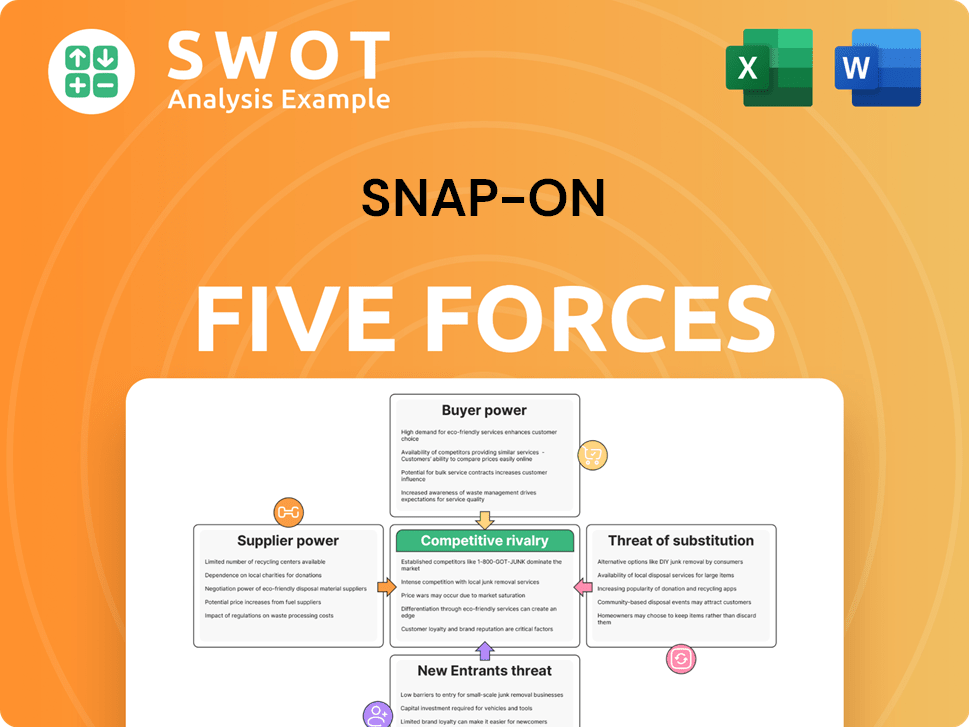
Snap-on Porter's Five Forces Analysis
- Covers All 5 Competitive Forces in Detail
- Structured for Consultants, Students, and Founders
- 100% Editable in Microsoft Word & Excel
- Instant Digital Download – Use Immediately
- Compatible with Mac & PC – Fully Unlocked
Related Blogs

- What is Competitive Landscape of Snap-on Company?
- What is Growth Strategy and Future Prospects of Snap-on Company?
- How Does Snap-on Company Work?
- What is Sales and Marketing Strategy of Snap-on Company?
- What is Brief History of Snap-on Company?
- Who Owns Snap-on Company?
- What is Customer Demographics and Target Market of Snap-on Company?
Disclaimer
All information, articles, and product details provided on this website are for general informational and educational purposes only. We do not claim any ownership over, nor do we intend to infringe upon, any trademarks, copyrights, logos, brand names, or other intellectual property mentioned or depicted on this site. Such intellectual property remains the property of its respective owners, and any references here are made solely for identification or informational purposes, without implying any affiliation, endorsement, or partnership.
We make no representations or warranties, express or implied, regarding the accuracy, completeness, or suitability of any content or products presented. Nothing on this website should be construed as legal, tax, investment, financial, medical, or other professional advice. In addition, no part of this site—including articles or product references—constitutes a solicitation, recommendation, endorsement, advertisement, or offer to buy or sell any securities, franchises, or other financial instruments, particularly in jurisdictions where such activity would be unlawful.
All content is of a general nature and may not address the specific circumstances of any individual or entity. It is not a substitute for professional advice or services. Any actions you take based on the information provided here are strictly at your own risk. You accept full responsibility for any decisions or outcomes arising from your use of this website and agree to release us from any liability in connection with your use of, or reliance upon, the content or products found herein.