

Sato Holdings Bundle

How did Sato Holdings Company revolutionize the world of data collection?
Dive into the captivating Sato Holdings SWOT Analysis to uncover the story of a global leader in auto-identification and data collection (AIDC) solutions. From its humble beginnings in 1940 Tokyo, Japan, Sato's journey is a testament to innovation, starting with the invention of the first hand-labeling machine. Explore the Sato history and understand how Sato Company transformed inventory management and pricing.

The Sato Holdings Company story is one of continuous evolution and adaptation. Tracing the Sato Group's key milestones reveals how it established a strong market position, offering solutions like Sato barcode printers and software. Understanding the Sato Corporation's origins and its impact on diverse sectors from manufacturing to healthcare provides valuable insights into its current status and future prospects.
What is the Sato Holdings Founding Story?
The story of Sato Holdings Company began on October 29, 1940, in Tokyo, Japan. Yo Sato, the company's founder, launched the business with a clear vision: to revolutionize product labeling and improve operational efficiency. His engineering background equipped him to identify and address the inefficiencies prevalent in the retail and manufacturing sectors of the time.
Sato's early focus was on designing and manufacturing machinery, laying the groundwork for its future in auto-identification. This strategic direction was a direct response to the needs of a rapidly evolving industrial landscape. The company's initial product offerings were centered on industrial machinery.
The early days of Sato were marked by innovation and a keen understanding of market needs. The development of the hand-labeling machine in 1962 was a pivotal moment, fundamentally changing how products were priced and managed. This invention showcased Sato's commitment to providing practical solutions. Initial funding likely came from bootstrapping and personal investments.

Sato Holdings Company: Founding and Early Days
Yo Sato established Sato Holdings Company in 1940 in Tokyo, Japan.
- Yo Sato, an engineer, identified inefficiencies in product labeling.
- The company's initial focus was on manufacturing machinery.
- The hand-labeling machine, introduced in 1962, was a key innovation.
- The company's name reflects its founder's commitment to quality.
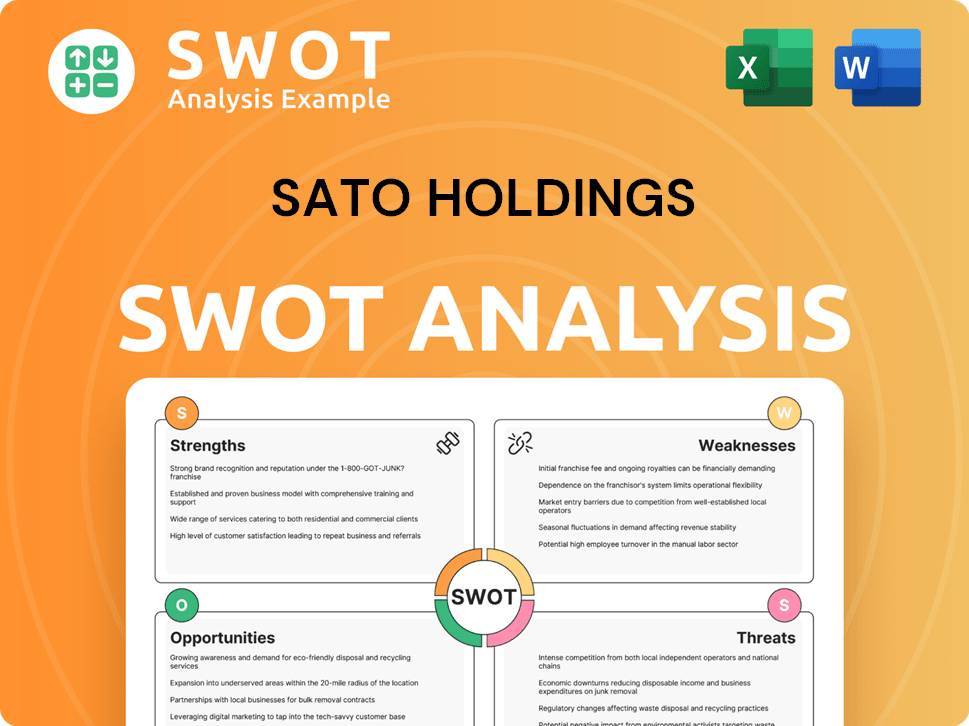
Sato Holdings SWOT Analysis
- Complete SWOT Breakdown
- Fully Customizable
- Editable in Excel & Word
- Professional Formatting
- Investor-Ready Format
What Drove the Early Growth of Sato Holdings?
The early growth of Sato Holdings Company was characterized by a strategic focus on innovation and market penetration. Building on the success of its hand-labeling machine, the company expanded its product portfolio to meet diverse industry needs. The 1960s and 1970s saw Sato history establish its presence across Japan, securing major clients in retail and manufacturing.
 Product Portfolio Expansion
Following the invention of its hand-labeling machine in 1962, Sato Company rapidly broadened its offerings. This expansion included a wider range of labeling solutions, catering to various industry requirements. The focus was on providing efficient and effective solutions for clients in the retail and manufacturing sectors.
Technological Advancements
The 1970s brought significant technological advancements for Sato Corporation. The development of the world's first thermal transfer barcode printer in 1979 was a pivotal moment. This innovation propelled Sato barcode into the rapidly expanding barcode technology market, marking a shift towards more sophisticated AIDC solutions.
International Expansion
Sato Group began its international expansion in the 1980s, recognizing the global potential for its AIDC technologies. This expansion was driven by strategic partnerships and the establishment of overseas subsidiaries, particularly in North America and Europe. The company's growth during this period was marked by a keen understanding of evolving market demands.
Market Strategy
The company's early success was built on a strong understanding of market needs. Sato Holdings Company focused on engineering and sales, which were crucial for product development and market outreach. This approach allowed the company to maintain a competitive edge in a rapidly changing landscape. For more details, you can explore the Competitors Landscape of Sato Holdings.
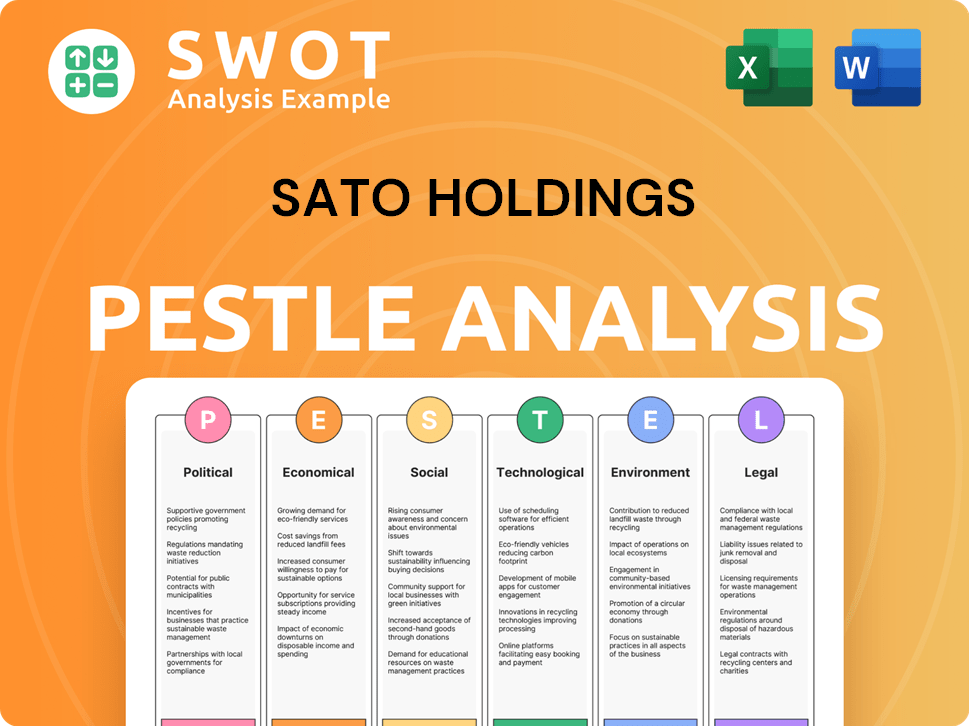
Sato Holdings PESTLE Analysis
- Covers All 6 PESTLE Categories
- No Research Needed – Save Hours of Work
- Built by Experts, Trusted by Consultants
- Instant Download, Ready to Use
- 100% Editable, Fully Customizable
What are the key Milestones in Sato Holdings history?
The Sato Holdings Company boasts a rich history marked by significant milestones that have shaped its evolution and impact on the industry. From its origins, the company has consistently pushed boundaries, achieving several firsts that have cemented its legacy in the automatic identification and data capture (AIDC) sector.
| Year | Milestone |
|---|---|
| 1962 | Invented the world's first hand-labeling machine, revolutionizing manual labeling processes. |
| 1979 | Developed the world's first thermal transfer barcode printer, establishing a leadership position in printing technology. |
| Ongoing | Secured numerous patents for AIDC solutions, including advanced barcode and RFID printing technologies. |
| Ongoing | Formed major partnerships with leading technology providers, expanding reach and integrating solutions into broader enterprise systems. |
| Ongoing | Received prestigious recognition for product design, environmental initiatives, and overall business excellence. |
Throughout its history, the

Hand-Labeling Machine
The invention of the hand-labeling machine in 1962 was a pivotal moment in the
Thermal Transfer Barcode Printer
In 1979,
Advanced Barcode and RFID Technologies
Continuous innovation has led to the development of advanced barcode and RFID printing technologies, enhancing tracking and data management capabilities. These technologies have become indispensable in supply chain management, retail, and logistics.
Strategic Partnerships
Strategic partnerships with leading technology providers have expanded the company's reach and integrated its solutions into broader enterprise systems. These collaborations have enhanced the company's ability to provide comprehensive solutions.
Eco-Friendly Label and Printer Development
The commitment to sustainability has driven the development of eco-friendly labels and energy-efficient printers, reflecting the company's response to global environmental concerns. This initiative underscores the company's dedication to environmental responsibility.
Product Design and Business Excellence
The company has received prestigious recognition for its product design, environmental initiatives, and overall business excellence. This recognition highlights the company's commitment to quality and innovation.
Despite its successes,
Economic Downturns
Economic fluctuations have posed challenges, requiring the company to adapt its strategies to maintain profitability and market share. These periods have tested the company's resilience and adaptability.
Competitive Threats
Intense competition from established players and emerging startups has necessitated continuous innovation and differentiation. The company has had to stay ahead of the curve to maintain its market position.
Digital Transformation
Adapting to the rapid shift towards digital transformation and cloud-based solutions has required significant investment in research and development. This has involved strategic pivots to meet evolving market demands.
Global Supply Chains
Navigating the complexities of global supply chains has presented logistical challenges, requiring efficient management and strategic partnerships. These challenges have tested the company's operational capabilities.
Restructuring and Rebranding
Continuous restructuring and rebranding efforts have been crucial to align with evolving market perceptions and maintain relevance. These efforts have helped the company stay competitive.
Leadership Changes
Strategic leadership changes have been implemented to guide the company through periods of transformation and ensure continued growth. These changes have provided fresh perspectives and strategic direction.
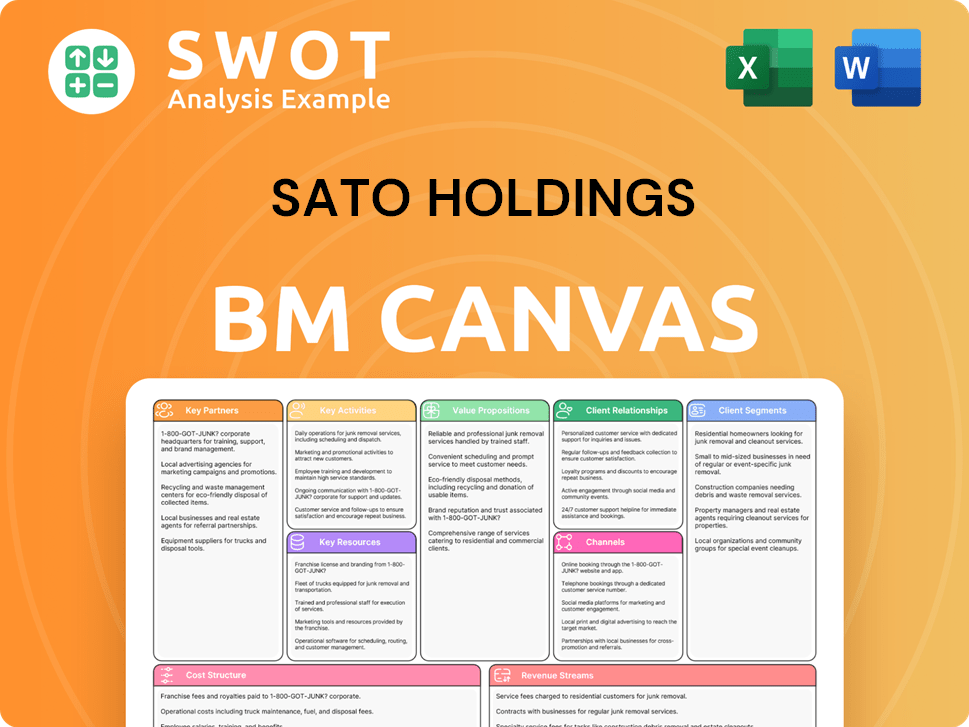
Sato Holdings Business Model Canvas
- Complete 9-Block Business Model Canvas
- Effortlessly Communicate Your Business Strategy
- Investor-Ready BMC Format
- 100% Editable and Customizable
- Clear and Structured Layout
What is the Timeline of Key Events for Sato Holdings?
The Sato Holdings Company boasts a rich history, marked by innovative milestones and strategic expansions. From its inception in Tokyo to its global presence today, the
| Year | Key Event |
|---|---|
| 1940 | Yo Sato founds SATO in Tokyo, Japan, marking the beginning of the |
| 1962 | SATO invents the world's first hand-labeling machine, revolutionizing the labeling process. |
| 1979 | SATO develops the world's first thermal transfer barcode printer, a significant advancement in |
| 1980s | SATO begins international expansion, establishing a presence in North America and Europe. |
| 1990s | SATO expands into RFID technology and develops advanced printing solutions. |
| 2000s | Focus shifts to integrated AIDC solutions, including software and consumables. |
| 2010s | Emphasis on IoT solutions and cloud connectivity for its devices. |
| 2016 | SATO acquires major stakes in companies like DataLase, expanding its digital printing capabilities. |
| 2020s | Accelerates sustainable product development and solutions for enhanced supply chain visibility. |
Strategic Expansion in Asia-Pacific
SATO aims to strengthen its position in the Asia-Pacific region, a key growth market. This includes expanding its distribution network and tailoring solutions to meet regional demands. This strategic focus aligns with the increasing demand for advanced AIDC solutions in the area, projecting a potential market share growth of up to 15% by 2026.
Innovation in Smart Labeling
Investment in smart labeling technologies is a core focus, including the development of advanced RFID solutions. SATO is actively exploring AI-powered data analytics to enhance the intelligence of its products. The smart labeling market is expected to reach $40 billion by 2027, creating substantial opportunities for growth.
Sustainable Solutions
SATO is committed to developing sustainable products and solutions, aligning with global environmental trends. This includes reducing waste and enhancing supply chain efficiency. The company aims to increase its revenue from sustainable products by 20% by 2025, reflecting its dedication to environmental responsibility.
Cloud-Based Services Enhancement
Enhancing cloud-based services is a key strategic initiative for SATO, improving data accessibility and operational efficiency. This includes developing integrated platforms for data management and device connectivity. The cloud services market for AIDC solutions is growing rapidly, with an estimated annual growth rate of 18% through 2028.
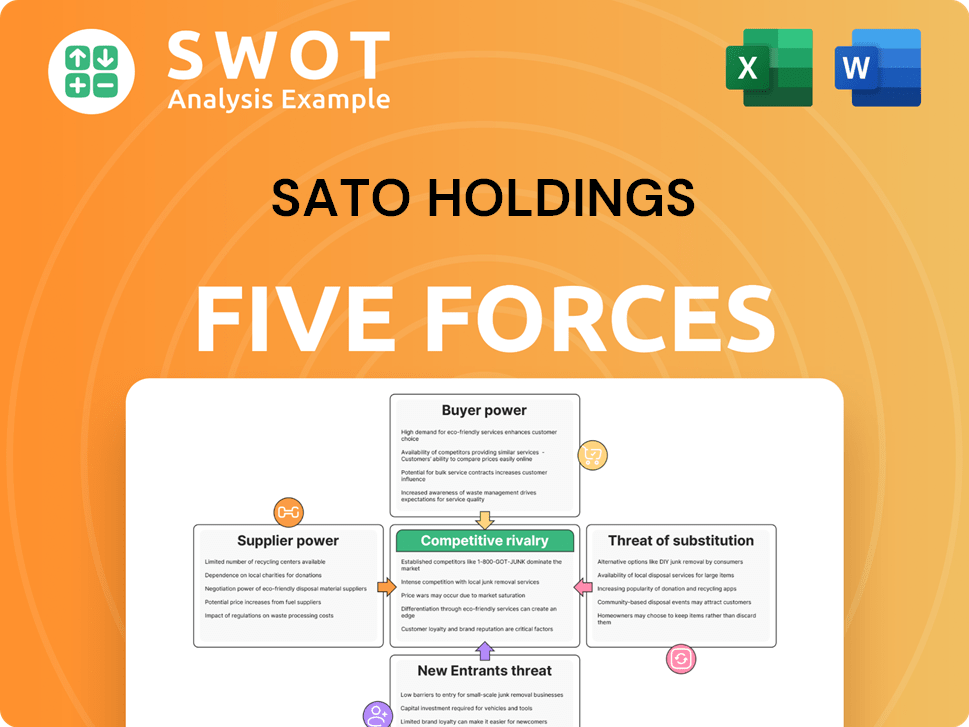
Sato Holdings Porter's Five Forces Analysis
- Covers All 5 Competitive Forces in Detail
- Structured for Consultants, Students, and Founders
- 100% Editable in Microsoft Word & Excel
- Instant Digital Download – Use Immediately
- Compatible with Mac & PC – Fully Unlocked
Related Blogs

- What is Competitive Landscape of Sato Holdings Company?
- What is Growth Strategy and Future Prospects of Sato Holdings Company?
- How Does Sato Holdings Company Work?
- What is Sales and Marketing Strategy of Sato Holdings Company?
- What is Brief History of Sato Holdings Company?
- Who Owns Sato Holdings Company?
- What is Customer Demographics and Target Market of Sato Holdings Company?
Disclaimer
All information, articles, and product details provided on this website are for general informational and educational purposes only. We do not claim any ownership over, nor do we intend to infringe upon, any trademarks, copyrights, logos, brand names, or other intellectual property mentioned or depicted on this site. Such intellectual property remains the property of its respective owners, and any references here are made solely for identification or informational purposes, without implying any affiliation, endorsement, or partnership.
We make no representations or warranties, express or implied, regarding the accuracy, completeness, or suitability of any content or products presented. Nothing on this website should be construed as legal, tax, investment, financial, medical, or other professional advice. In addition, no part of this site—including articles or product references—constitutes a solicitation, recommendation, endorsement, advertisement, or offer to buy or sell any securities, franchises, or other financial instruments, particularly in jurisdictions where such activity would be unlawful.
All content is of a general nature and may not address the specific circumstances of any individual or entity. It is not a substitute for professional advice or services. Any actions you take based on the information provided here are strictly at your own risk. You accept full responsibility for any decisions or outcomes arising from your use of this website and agree to release us from any liability in connection with your use of, or reliance upon, the content or products found herein.