

Rocky Brands Bundle

What's the Story Behind Rocky Brands?
From humble beginnings in Ohio, Rocky Brands has carved a remarkable path in the footwear industry. This Rocky Brands SWOT Analysis reveals how a commitment to quality transformed a small-town manufacturer into a global powerhouse. Explore the fascinating journey of Rocky Boots, a testament to American brands' enduring appeal and strategic growth.

Delving into the brief history of Rocky Brands company offers insights into its evolution. Understanding the company's timeline, from its founding as The William Brooks Shoe Co. in 1932 to its current status, reveals the strategic decisions that shaped its success. Discover how Rocky Boots, a leading boot manufacturer, navigated market changes and expanded its product lines to become a household name.
What is the Rocky Brands Founding Story?
The story of Rocky Brands began on September 2, 1932, in Nelsonville, Ohio. Founded by William Brooks and his brother, John Brooks, the company emerged from a clear market need for durable and comfortable footwear. Their vision was to provide high-quality boots, especially for the working class and outdoor enthusiasts.
The initial focus was on crafting robust work boots, setting the stage for a reputation built on craftsmanship and longevity. The company, originally named The William Brooks Shoe Co., reflected the founders' direct involvement and commitment to quality. This early dedication laid the groundwork for a significant footwear enterprise.
The economic backdrop of the Great Depression played a crucial role in shaping the company's beginnings. The demand for long-lasting, practical goods was high, and the Brooks brothers were well-positioned to meet this need. Their ability to bootstrap and leverage their existing expertise was key to their early success.

Key Founding Aspects of Rocky Brands
Here's a look at the key aspects that shaped the early days of Rocky Boots.
- Founding Date: September 2, 1932.
- Founders: William Brooks and John Brooks.
- Location: Nelsonville, Ohio.
- Initial Focus: Manufacturing durable work boots.
- Company Name: The William Brooks Shoe Co.
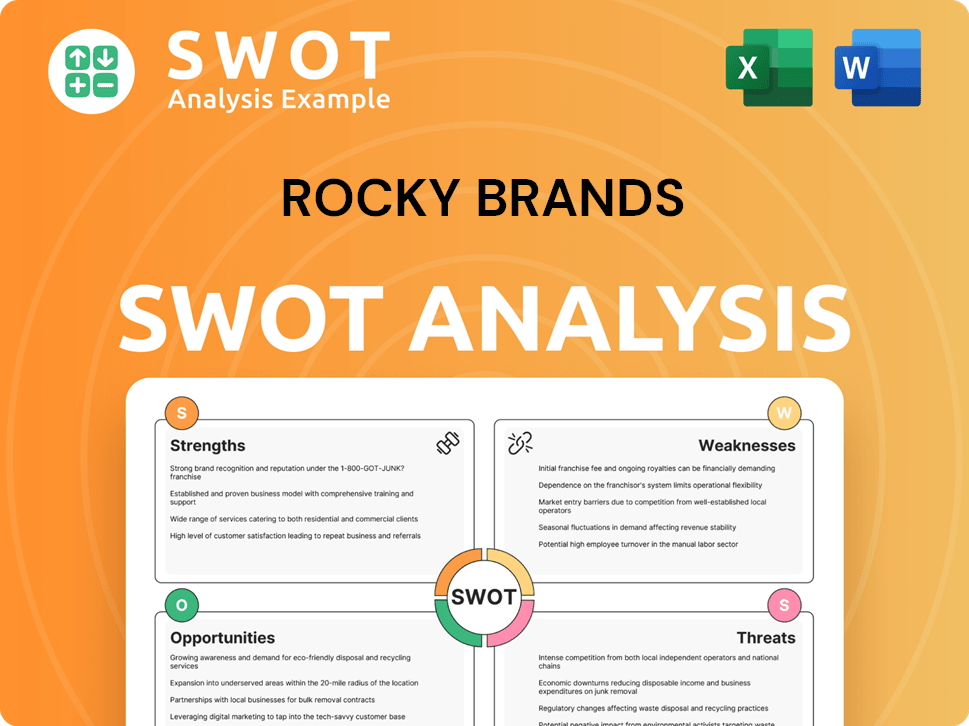
Rocky Brands SWOT Analysis
- Complete SWOT Breakdown
- Fully Customizable
- Editable in Excel & Word
- Professional Formatting
- Investor-Ready Format
What Drove the Early Growth of Rocky Brands?
The early years of the William Brooks Shoe Co., later known as Rocky Brands, were focused on establishing a reputation for quality work boots. Initial product launches were well-received by the market, which facilitated consistent growth. The company progressively expanded its manufacturing operations within Nelsonville, Ohio. As demand increased, the company started to diversify its product offerings, moving beyond basic work boots into more specialized footwear for outdoor and western markets.
 Rebranding and Expansion
A key development in the company's history was its rebranding to Rocky Brands in 1975, a name that better suited its expanding product lines and adventurous spirit. This period also saw the company begin to explore new distribution channels, moving beyond direct sales to wholesale partnerships. This strategic shift helped broaden its market reach.
Leadership and Strategic Moves
Leadership transitions, including the involvement of Mike Brooks, William Brooks' grandson, steered the Rocky Company towards strategic acquisitions and market diversification. These efforts transformed Rocky Brands into a multifaceted footwear and apparel company. This set the stage for its future industry leadership. The company's ability to adapt to changing consumer needs was crucial.
Manufacturing and Product Diversification
The company's focus on manufacturing in Nelsonville, Ohio, was a cornerstone of its early operations. This commitment to domestic production helped build a strong foundation. As the Boot manufacturer expanded, it introduced new product lines to cater to different market segments. This included specialized footwear for outdoor activities and the western market.
Distribution and Market Reach
Early distribution strategies involved direct sales, but the company soon adopted wholesale partnerships to broaden its market reach. This shift allowed Rocky Boots to access a wider customer base. The ability to adapt its distribution model was key to its growth. This helped the company compete effectively.
Rocky Brands PESTLE Analysis
- Covers All 6 PESTLE Categories
- No Research Needed – Save Hours of Work
- Built by Experts, Trusted by Consultants
- Instant Download, Ready to Use
- 100% Editable, Fully Customizable

What are the key Milestones in Rocky Brands history?
Rocky Brands has a rich history marked by significant milestones, strategic innovations, and the ability to navigate various challenges within the competitive footwear industry. The Rocky Company has consistently adapted to market changes, solidifying its position as a key player in the boot manufacturer sector.
| Year | Milestone |
|---|---|
| 1932 | The company, initially known as the William Brooks Shoe Company, is founded in Nelsonville, Ohio, marking the beginning of its journey in the footwear industry. |
| 1970s | The company introduces the Rocky Boots brand, focusing on durable and high-quality outdoor footwear designed for various demanding environments. |
| 1993 | The company goes public, enabling further expansion and investment in product development and market reach. |
| 2000s | Rocky Brands expands its product lines through strategic acquisitions, including the purchase of several other footwear brands, broadening its market presence. |
| 2023 | The company continues to innovate and adapt, focusing on sustainability and expanding its e-commerce presence to meet evolving consumer demands. |
Rocky Brands has been at the forefront of innovation within the footwear industry, particularly in the realm of outdoor and work boots. These innovations include the integration of advanced materials and technologies to enhance durability, comfort, and protection in its products, setting new standards for the industry.

Waterproof Technologies
Rocky Boots has pioneered the use of waterproof technologies, such as GORE-TEX, in its footwear, ensuring that boots remain dry and comfortable in wet conditions. This technology has been a key differentiator, appealing to outdoor enthusiasts and workers alike.
Insulation Innovations
The company has developed and incorporated advanced insulation materials, like Thinsulate, to provide warmth in cold environments. This innovation has been critical for the brand's success, particularly in regions with harsh winters.
Durable Materials
Rocky Brands has consistently used high-quality, durable materials in its boots, such as full-grain leather and rugged outsoles, to enhance the lifespan and performance of its products. These materials are selected to withstand the rigors of outdoor and work environments.
Protective Features
The company has incorporated protective features, including steel toes and electrical hazard protection, to meet the safety needs of workers in various industries. These features have been essential for its work boot lines.
Ergonomic Design
Rocky Brands has focused on ergonomic designs to provide comfort and support, reducing fatigue during long hours of wear. This has been achieved through features like cushioned footbeds and supportive midsoles.
Patent Portfolio
Rocky Brands has secured numerous patents for its innovative designs and materials, demonstrating its commitment to technological advancement in footwear. This has helped protect its intellectual property and maintain a competitive edge.
The company has faced several challenges, including economic downturns that have impacted consumer spending, and increased competition from both domestic and international brands. The company has also had to navigate shifts in consumer preferences and adapt its marketing strategies to maintain market relevance, as discussed in the target market analysis.
Market Downturns
Economic recessions have affected consumer spending on non-essential items, requiring Rocky Brands to adapt its production and marketing strategies. This has involved adjusting inventory levels and focusing on value-driven product offerings.
Competitive Pressures
Intense competition from both established and emerging brands has necessitated continuous innovation and differentiation. This has driven the company to invest in research and development to stay ahead of the curve.
Supply Chain Management
Managing a complex supply chain, including sourcing materials and manufacturing products, has presented logistical challenges. Rocky Brands has worked to optimize its supply chain for greater efficiency and resilience.
Changing Consumer Preferences
Evolving consumer preferences, including a growing demand for sustainable and ethically sourced products, have required the company to adjust its product offerings and marketing messages. This includes exploring eco-friendly materials and practices.
Brand Portfolio Management
Effectively managing a diverse brand portfolio, including various sub-brands and product lines, has been crucial for maintaining market share and profitability. This involves strategic brand positioning and marketing efforts.
E-commerce Challenges
The growth of e-commerce has presented both opportunities and challenges, requiring the company to invest in its online presence and compete with digital-native brands. This includes optimizing its website and enhancing its digital marketing strategies.
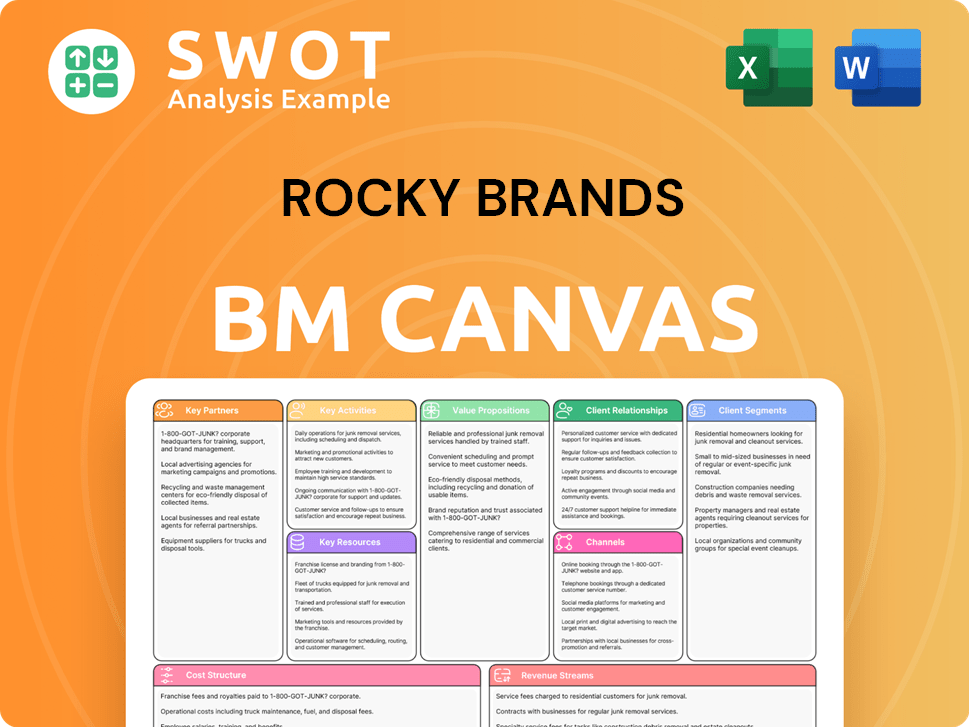
Rocky Brands Business Model Canvas
- Complete 9-Block Business Model Canvas
- Effortlessly Communicate Your Business Strategy
- Investor-Ready BMC Format
- 100% Editable and Customizable
- Clear and Structured Layout
What is the Timeline of Key Events for Rocky Brands?
The brief history of Rocky Brands company showcases its evolution from a small shoe manufacturer to a prominent player in the footwear industry. Starting in 1932 as The William Brooks Shoe Co., the company has consistently adapted to market demands, expanding its product lines and distribution channels. The journey of Rocky Boots reflects a commitment to quality and innovation, solidifying its position among leading American brands.
| Year | Key Event |
|---|---|
| 1932 | William Brooks and John Brooks establish The William Brooks Shoe Co. in Nelsonville, Ohio. |
| 1975 | The company officially rebrands as Rocky Brands, reflecting its expanding product lines. |
| 1980s | Expansion into outdoor and western footwear markets. |
| 1993 | Rocky Brands goes public, listing on the NASDAQ. |
| 2000s | Several key acquisitions, including Georgia Boot and Durango, significantly expand its brand portfolio. |
| 2010s | Increased focus on e-commerce and direct-to-consumer sales channels. |
| 2021 | Acquisition of the performance and lifestyle footwear business from Honeywell, including The Original Muck Boot Company, XTRATUF, and Servus, further diversifying its offerings. |
| 2022 | Rocky Brands reports net sales of $306.9 million for the fiscal year ended December 31, 2022. |
| 2023 | The company continues to navigate supply chain challenges and inflationary pressures, focusing on inventory management and strategic pricing. |
| 2024 | Rocky Brands projects continued growth in its key segments, driven by innovation and market expansion. |
| 2025 | Strategic initiatives include further leveraging digital platforms for sales and marketing, expanding international presence, and continuing to integrate sustainable practices into its manufacturing processes. |
Market Expansion
The company is focused on expanding its global footprint, particularly in emerging markets. This strategic move aims to capitalize on the growing demand for durable footwear. International expansion is a key component of Rocky Brands’s long-term growth strategy.
Innovation and Technology
Continued innovation in footwear technology is a priority for Rocky Brands. The company aims to enhance product performance and meet evolving customer needs. This includes exploring new materials and designs to improve durability and comfort.
Sustainability Initiatives
Rocky Brands is integrating sustainable practices into its manufacturing processes. This includes sourcing eco-friendly materials and reducing waste. The company is committed to minimizing its environmental impact.
Digital Platforms
Further leveraging digital platforms for sales and marketing is a key initiative. This involves enhancing e-commerce capabilities and improving online customer engagement. Digital strategies are crucial for reaching a wider audience.
Rocky Brands Porter's Five Forces Analysis
- Covers All 5 Competitive Forces in Detail
- Structured for Consultants, Students, and Founders
- 100% Editable in Microsoft Word & Excel
- Instant Digital Download – Use Immediately
- Compatible with Mac & PC – Fully Unlocked

Related Blogs

- What is Competitive Landscape of Rocky Brands Company?
- What is Growth Strategy and Future Prospects of Rocky Brands Company?
- How Does Rocky Brands Company Work?
- What is Sales and Marketing Strategy of Rocky Brands Company?
- What is Brief History of Rocky Brands Company?
- Who Owns Rocky Brands Company?
- What is Customer Demographics and Target Market of Rocky Brands Company?
Disclaimer
All information, articles, and product details provided on this website are for general informational and educational purposes only. We do not claim any ownership over, nor do we intend to infringe upon, any trademarks, copyrights, logos, brand names, or other intellectual property mentioned or depicted on this site. Such intellectual property remains the property of its respective owners, and any references here are made solely for identification or informational purposes, without implying any affiliation, endorsement, or partnership.
We make no representations or warranties, express or implied, regarding the accuracy, completeness, or suitability of any content or products presented. Nothing on this website should be construed as legal, tax, investment, financial, medical, or other professional advice. In addition, no part of this site—including articles or product references—constitutes a solicitation, recommendation, endorsement, advertisement, or offer to buy or sell any securities, franchises, or other financial instruments, particularly in jurisdictions where such activity would be unlawful.
All content is of a general nature and may not address the specific circumstances of any individual or entity. It is not a substitute for professional advice or services. Any actions you take based on the information provided here are strictly at your own risk. You accept full responsibility for any decisions or outcomes arising from your use of this website and agree to release us from any liability in connection with your use of, or reliance upon, the content or products found herein.